Interactional hypothesis
• The Interaction hypothesis -> 
Second Language Acquisition 
• by face-to-face interaction
•1980 
•Michael Long
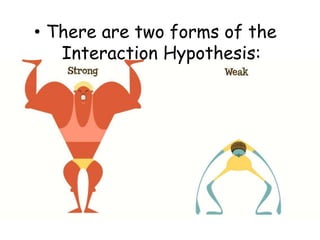
• There are two forms of the 
Interaction Hypothesis:
• The interaction hypothesis claims 
that comprehensible input is 
important for language learning. 
(increased when learners 
have to negotiate 
for meaning)
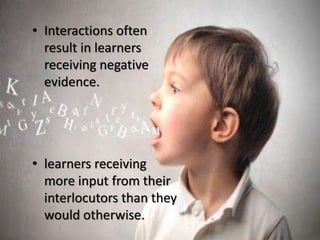
• Interactions often 
result in learners 
receiving negative 
evidence. 
• learners receiving 
more input from their 
interlocutors than they 
would otherwise.
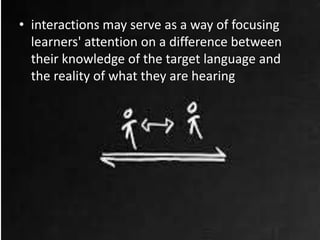
• interactions may serve as a way of focusing 
learners' attention on a difference between 
their knowledge of the target language and 
the reality of what they are hearing
Primacy of interaction
Larsen-Freeman / 
Long: 
• interaction is not 
necessary for 
language acquisition 
Gass and Selinker 
• it may also 
function as a 
priming device
• Ellis notes that interaction 
is not always positive 
• The role of interaction in 
language acquisition is a 
complex one
Interactionist/developmental 
perspectives 
Cognitive and developmental 
psychologists -> innatists place to 
much emphasis on the ‘final 
state’.
Developmental psychologists and psycholinguists 
have focused on the interplay between the 
innate learning ability of children and the 
environment in which they develop.
• https://www.youtube.com/watch?v=HekZlFJ- 
9Uc
Works Cited 
• Ellis, Rod (1984). Classroom Second Language 
Development: A Study of Classroom Interaction 
and Language Acquisition. Oxford, UK: Pergamon. 
• Long, Michael (1985). "Input and Second 
Language Acquisition Theory". In Gass, Susan; 
Madden, Carolyn. Input in second language 
acquisition. Rowley, Mass: Newbury House. 
• https://www.youtube.com/watch?v=HekZlFJ-9Uc
Interaction hypothesis

Interaction hypothesis

  • 1.
  • 2.
    • The Interactionhypothesis -> Second Language Acquisition • by face-to-face interaction
  • 3.
  • 4.
    • There aretwo forms of the Interaction Hypothesis:
  • 5.
    • The interactionhypothesis claims that comprehensible input is important for language learning. (increased when learners have to negotiate for meaning)
  • 6.
    • Interactions often result in learners receiving negative evidence. • learners receiving more input from their interlocutors than they would otherwise.
  • 7.
    • interactions mayserve as a way of focusing learners' attention on a difference between their knowledge of the target language and the reality of what they are hearing
  • 8.
  • 9.
    Larsen-Freeman / Long: • interaction is not necessary for language acquisition Gass and Selinker • it may also function as a priming device
  • 10.
    • Ellis notesthat interaction is not always positive • The role of interaction in language acquisition is a complex one
  • 11.
    Interactionist/developmental perspectives Cognitiveand developmental psychologists -> innatists place to much emphasis on the ‘final state’.
  • 12.
    Developmental psychologists andpsycholinguists have focused on the interplay between the innate learning ability of children and the environment in which they develop.
  • 13.
  • 14.
    Works Cited •Ellis, Rod (1984). Classroom Second Language Development: A Study of Classroom Interaction and Language Acquisition. Oxford, UK: Pergamon. • Long, Michael (1985). "Input and Second Language Acquisition Theory". In Gass, Susan; Madden, Carolyn. Input in second language acquisition. Rowley, Mass: Newbury House. • https://www.youtube.com/watch?v=HekZlFJ-9Uc