HOW YOUR BRAIN WORKS 
Every animal you can think of -- mammals, birds, reptiles, fish, 
amphibians -- has a brain. But the human brain is unique. Although 
it's not the largest, it gives us the power to speak, imagine and 
problem solve. It is truly an amazing organ. 
The brain performs an incredible number of tasks including the 
following: 
It controls body temperature, blood pressure, heart rate and 
breathing. 
It accepts a flood of information about the world around you from 
your various senses (seeing, hearing, smelling, tastingand touching). 
It handles your physical movement when walking, talking, standing or 
sitting. 
It lets you think, dream, reason and experience emotions. 
All of these tasks are coordinated, controlled and regulated by an 
organ that is about the size of a small head of cauliflower.
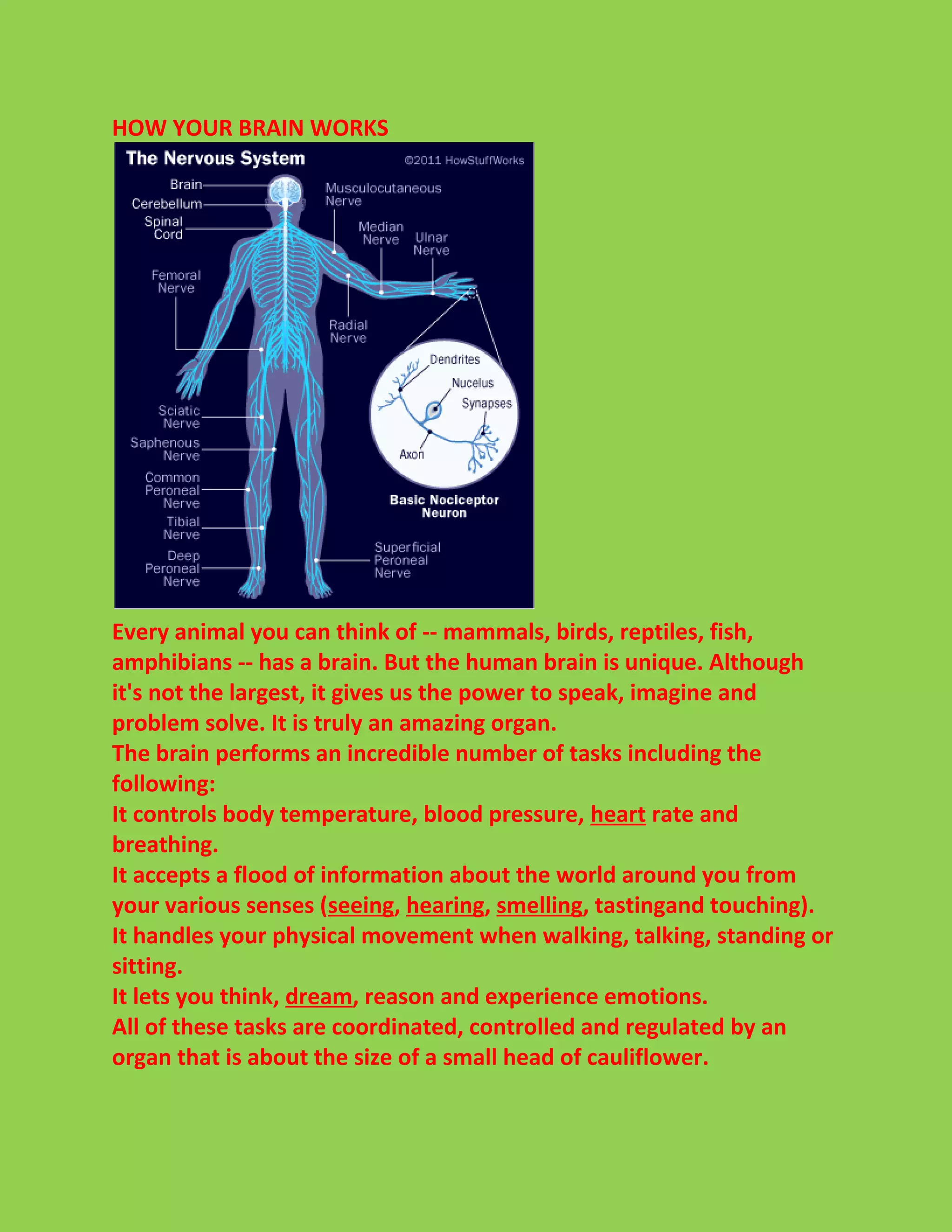
Your brain, spinal cord and peripheral nerves make up a complex, 
integrated information-processing and control system known 
as your central nervous system. In tandem, they regulate all the 
conscious and unconscious facets of your life. The scientific study of 
the brain and nervous system is called neuroscience or neurobiology. 
Because the field of neuroscience is so vast -- and the brain and 
nervous system are so complex -- this article will start with the basics 
and give you an overview of this complicated organ. 
We'll examine the structures of the brain and how each section 
controls our daily functions, including motor control, visual 
processing, auditory processing, sensation, learning, memory and 
emotions. 
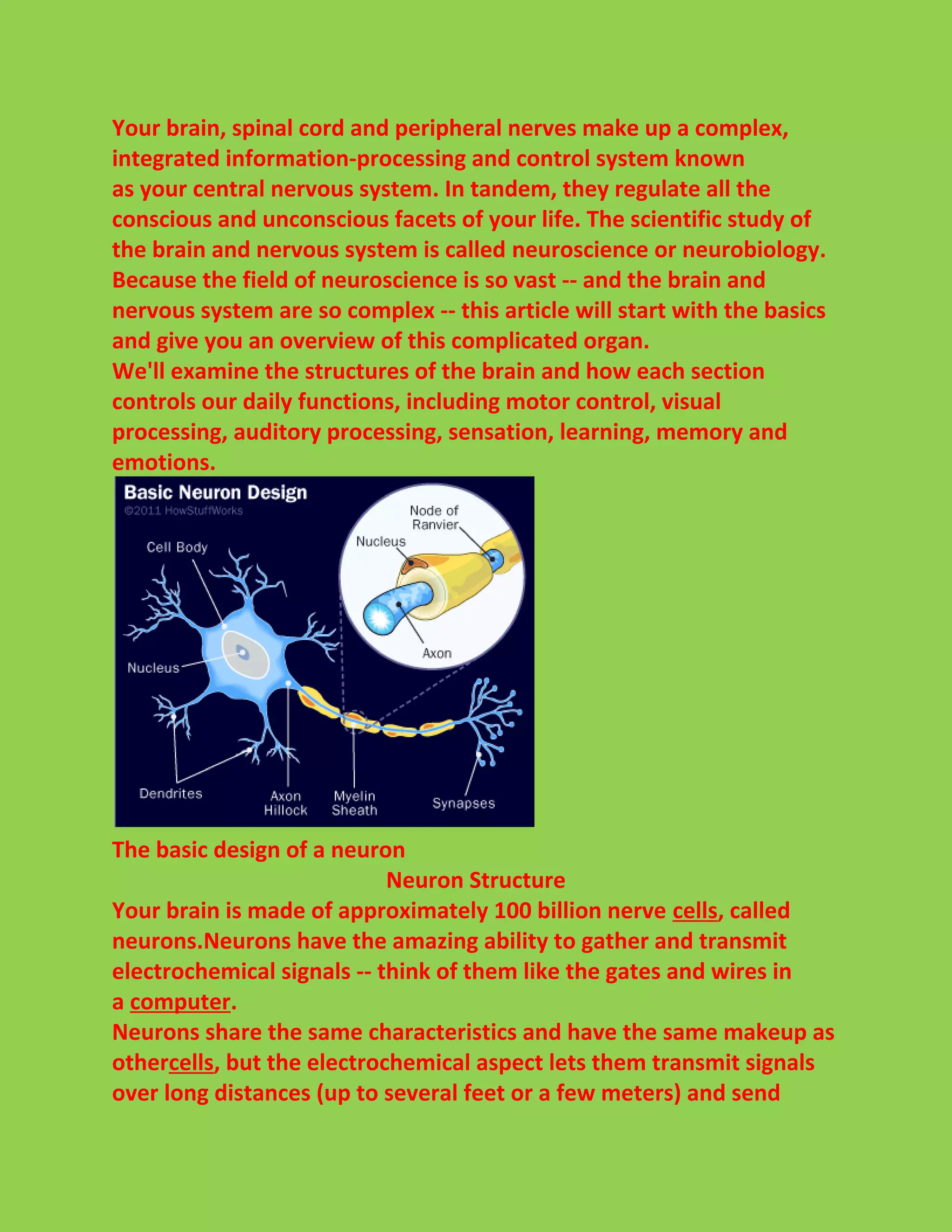
The basic design of a neuron 
Neuron Structure 
Your brain is made of approximately 100 billion nerve cells, called 
neurons.Neurons have the amazing ability to gather and transmit 
electrochemical signals -- think of them like the gates and wires in 
a computer. 
Neurons share the same characteristics and have the same makeup as 
othercells, but the electrochemical aspect lets them transmit signals 
over long distances (up to several feet or a few meters) and send
messages to each other. 
Neurons have three basic parts: 
Cell body or soma. This main part has all of the necessary components 
of the cell, such as the nucleus (which contains DNA), endoplasmic 
reticulum and ribosomes (for building proteins) and mitochondria (for 
making energy). If the cell body dies, the neuron dies. 
Axon . This long, cablelike projection of the cell carries the 
electrochemical message (nerve impulse or action potential) along 
the length of the cell. Depending upon the type of neuron, axons 
can be covered with a thin layer of myelin sheath, like an insulated 
electrical wire. Myelin is made of fat and protein, and it helps to 
speed transmission of a nerve impulse down a long axon. Myelinated 
neurons are typically found in the peripheral nerves (sensory and 
motor neurons), while non-myelinated neurons are found in the brain 
and spinal cord. 
Dendrites or nerve endings. These small, branchlike projections of the 
cell make connections to other cells and allow the neuron to talk with 
other cells or perceive the environment. Dendrites can be located on 
one or both ends of a cell. 
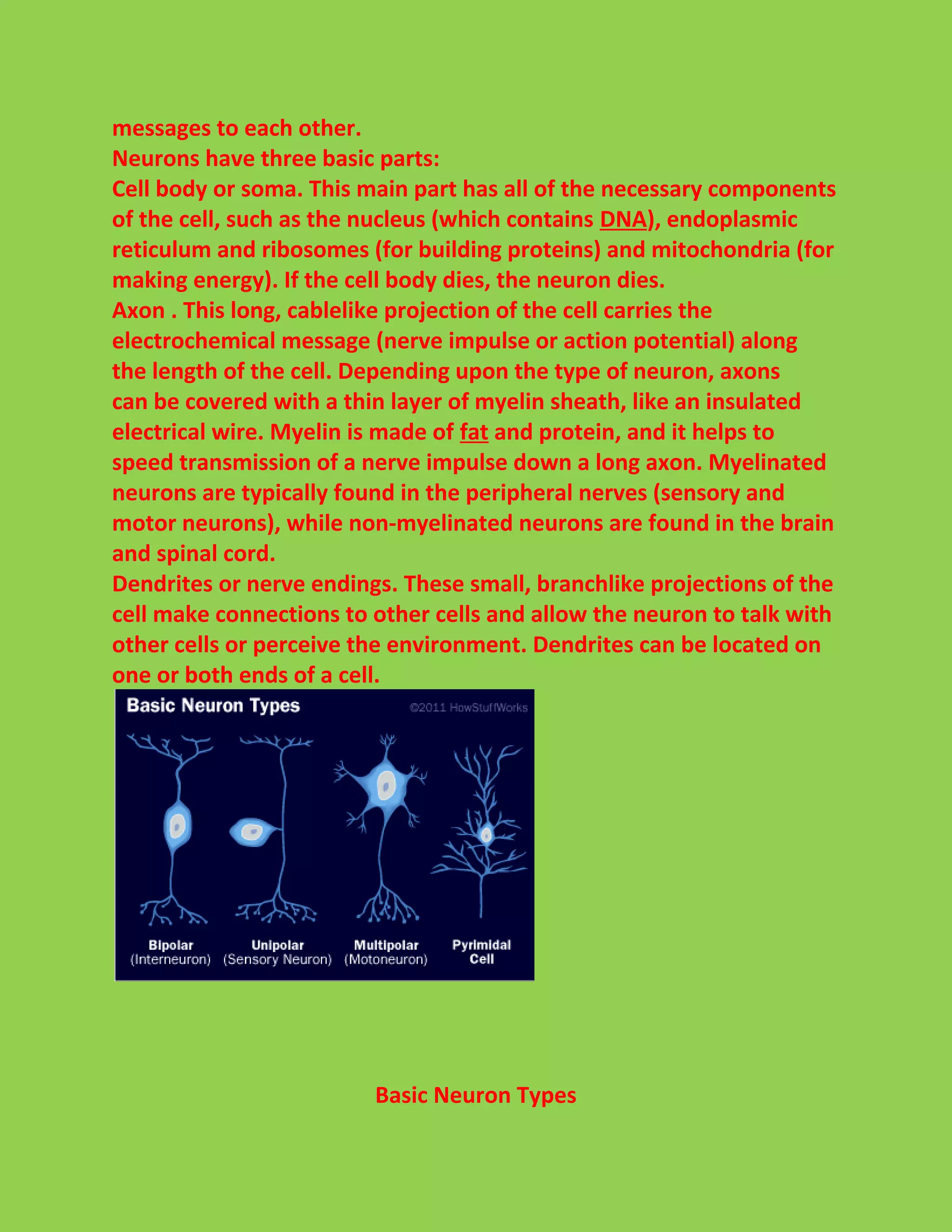
Basic Neuron Types
Neurons come in many sizes. For example, a single sensory neuron 
from your fingertip has an axon that extends the length of your arm, 
while neurons within the brain may extend only a few millimeters. 
They also have different shapes depending on their functions. Motor 
neurons that control muscle contractions have a cell body on one end, 
a long axon in the middle and dendrites on the other end. Sensory 
neurons have dendrites on both ends, connected by a long axon with 
a cell body in the middle. Interneurons, or associative neurons, carry 
information between motor and sensory neurons. 
These fundamental members of the nervous system also vary with 
respect to their functions. 
Sensory neurons carry signals from the outer parts of your body 
(periphery) into the central nervous system. 
Motor neurons (motoneurons) carry signals from the central nervous 
system to the outer parts (muscles, skin, glands) of your body. 
Interneurons connect various neurons within the brain and spinal 
cord. 
The simplest type of neural pathway is a monosynaptic (single 
connection) reflex pathway, like the knee-jerk reflex. When the 
doctor taps the right spot on your knee with a rubber hammer, 
receptors send a signal into the spinal cord through a sensory neuron. 
The sensory neuron passes the message to a motor neuron that 
controls your leg muscles. Nerve impulses travel down the motor 
neuron and stimulate the appropriate leg muscle to contract. The 
response is a muscular jerk that happens quickly and does not involve 
your brain. Humans have lots of hardwired reflexes like this, but 
as tasks become more complex, the pathway circuitry gets more 
complicated and the brain gets involved.
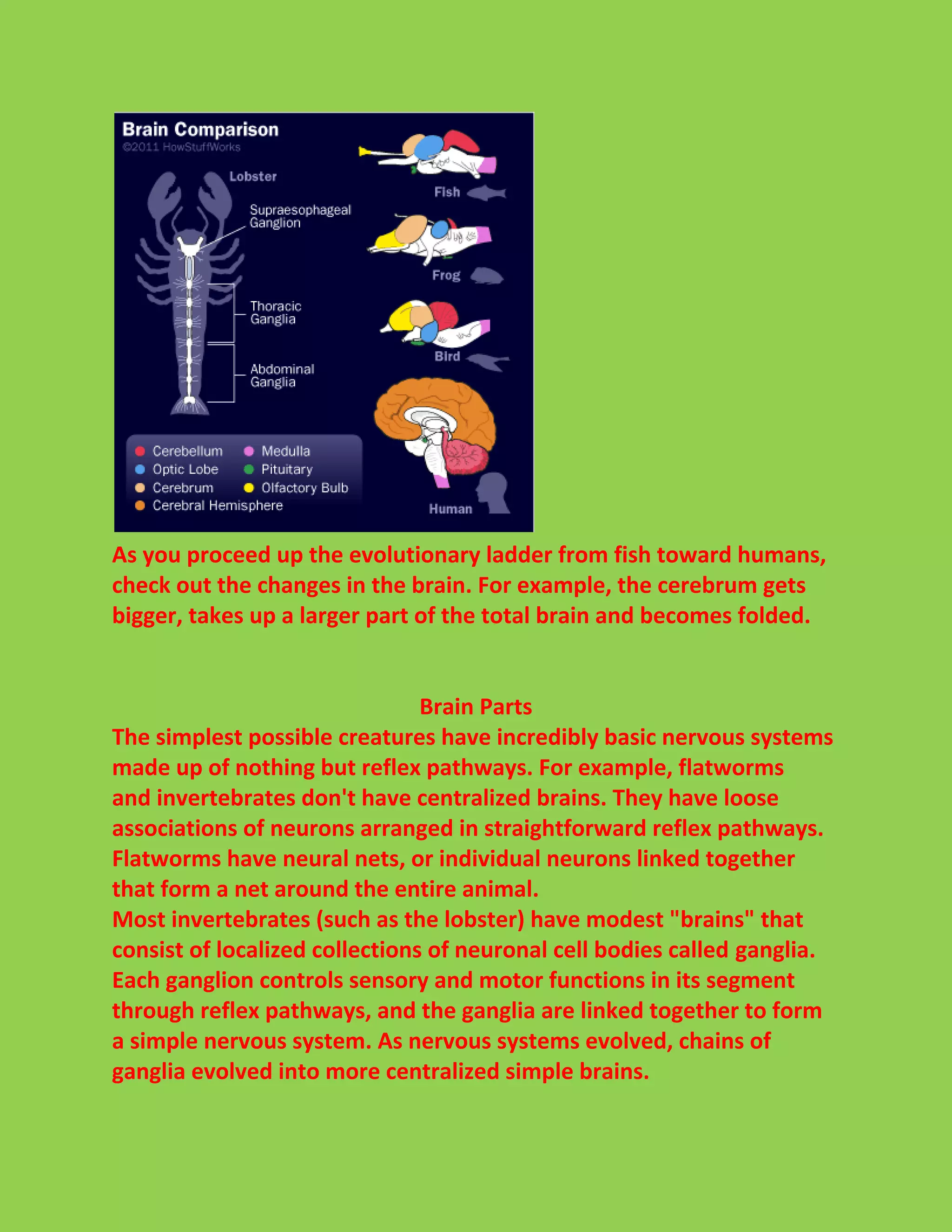
As you proceed up the evolutionary ladder from fish toward humans, 
check out the changes in the brain. For example, the cerebrum gets 
bigger, takes up a larger part of the total brain and becomes folded. 
Brain Parts 
The simplest possible creatures have incredibly basic nervous systems 
made up of nothing but reflex pathways. For example, flatworms 
and invertebrates don't have centralized brains. They have loose 
associations of neurons arranged in straightforward reflex pathways. 
Flatworms have neural nets, or individual neurons linked together 
that form a net around the entire animal. 
Most invertebrates (such as the lobster) have modest "brains" that 
consist of localized collections of neuronal cell bodies called ganglia. 
Each ganglion controls sensory and motor functions in its segment 
through reflex pathways, and the ganglia are linked together to form 
a simple nervous system. As nervous systems evolved, chains of 
ganglia evolved into more centralized simple brains.
Brains evolved from ganglia of invertebrates. Regardless of the 
animal, brains have the following parts: 
The brain stem, which consists of the medulla (an enlarged portion 
of the upper spinal cord), pons andmidbrain (lower animals have 
only a medulla). The brain stem controls the reflexes and automatic 
functions (heart rate, blood pressure), limb movements and visceral 
functions (digestion, urination). 
The cerebellum integrates information from the vestibular system 
that indicates position and movement and uses this data to 
coordinate limb movements. 
The hypothalamus and pituitary gland are responsible for visceral 
functions, body temperature and behavioral responses such as 
feeding, drinking, sexual response, aggression and pleasure. 
The cerebrum (also called the cerebral cortex or just the cortex) 
consists of the cortex, large fiber tracts (corpus callosum) and some 
deeper structures (basal ganglia, amygdala and hippocampus). It 
integrates info from all of the sense organs, initiates motor functions, 
controls emotions and holds memory and thought processes 
(emotional expression and thinking are more prevalent in higher 
mammals)
Here we're looking at the underside of the brain, showing the brain 
stem and cranial nerves. 
Brains for Instinct 
Lower animals, such as fish, amphibians, reptiles and birds, don't do 
much "thinking," but instead concern themselves with the everyday 
business of gathering food, eating, drinking, sleeping, reproducing and 
defending themselves. 
These are instinctual processes [source:National Geographic]. 
Therefore, their brains are organized along the major centers that 
control these functions. 
We humans perform these functions as well, and so have a "reptilian" 
brain built into us. That means we have the same parts of the brain 
found in reptiles, namely the brain stem and the cerebellum. 
Ready to learn about the lower brain? We'll discuss that on the next 
page.
Lower Brain 
The basic lower brain consists of thespinal cord, brain 
stem anddiencephalon (the cerebellum and cortex are also present, 
but will be discussed in later sections). In turn, the brain stem 
comprises the medulla, pons, midbrain, hypothalamus and thalamus 
[source: Health Pages]. 
Within each of these structures are centers of neuronal cell bodies, 
callednuclei, which are specialized for particular functions 
(breathing, heart-rate regulation, sleep): 
Medulla -- The medulla contains nuclei for regulating blood pressure 
and breathing, as well as nuclei for relaying information from the 
sense organs that comes in from the cranial nerves. It's also the most 
ancient part of the brain. 
Pons -- The pons contains nuclei that relay movement and position 
information from the cerebellum to the cortex. It also contains 
nuclei that are involved in breathing, taste and sleep, and physically 
connects medulla to the midbrain. 
Midbrain -- The midbrain contains nuclei that link the various sections 
of the brain involved in motor functions (cerebellum, basal ganglia,
cerebral cortex), eye movements and auditory control. One portion, 
called the substantia nigra, is involved in voluntary movements; 
when it does not function, you have the tremored movements 
of Parkinson's disease. 
Thalamus -- The thalamus relays incoming sensory pathways 
to appropriate areas of the cortex, determines which sensory 
information actually reaches consciousness and participates in motor-information 
exchange between the cerebellum, basal ganglia and 
cortex. 
Hypothalamus -- The hypothalamus contains nuclei that control 
hormonal secretions from the pituitary gland. These centers 
govern sexual reproduction, eating, drinking, growth, and maternal 
behavior such aslactation (milk-production in mammals). The 
hypothalamus is also involved in almost all aspects of behavior, 
including your biological "clock," which is linked to the daily light-dark 
cycle (circadian rhythms). 
SPINAL CORD 
The spinal cord can be viewed as a separate entity from the brain, 
or merely as a downward extension of the brain stem. It contains 
sensory and motor pathways from the body, as well as ascending and 
descending pathways from the brain. It has reflex pathways that react 
independently of the brain, as in the knee-jerk reflex. 
THE VESTIBULAR SYSTEM 
The vestibular system is responsible for maintaining posture, balance 
and spatial orientation. Part of the system is located in the inner ear. 
It also includes the vestibulocochlear nerve (the eighth cranial nerve) 
and certain parts of the brain that interpret the information the 
vestibulocochlear nerve receives. 
Balancing Act 
The cerebellum, also known as the "little brain" because it's folded 
into many lobes, lies above and behind the pons. As the second 
biggest area of the brain, it receives sensory input from the spinal 
cord, motor input from the cortex and basal ganglia, and position
information from the vestibular system. 
The "little brain" then integrates this information and influences 
outgoing motor pathways from the brain to coordinate movements. 
To demonstrate this, reach out and touch a point in front of you, such 
as the computer monitor -- your hand makes one smooth motion. 
If your cerebellum were damaged, that same motion would be very 
jerky, as your cortex initiated a series of small muscle contractions to 
home in on the target point. The cerebellum may also be involved in 
language (fine muscle contractions of the lips and larynx), as well as 
other cognitive functions. 
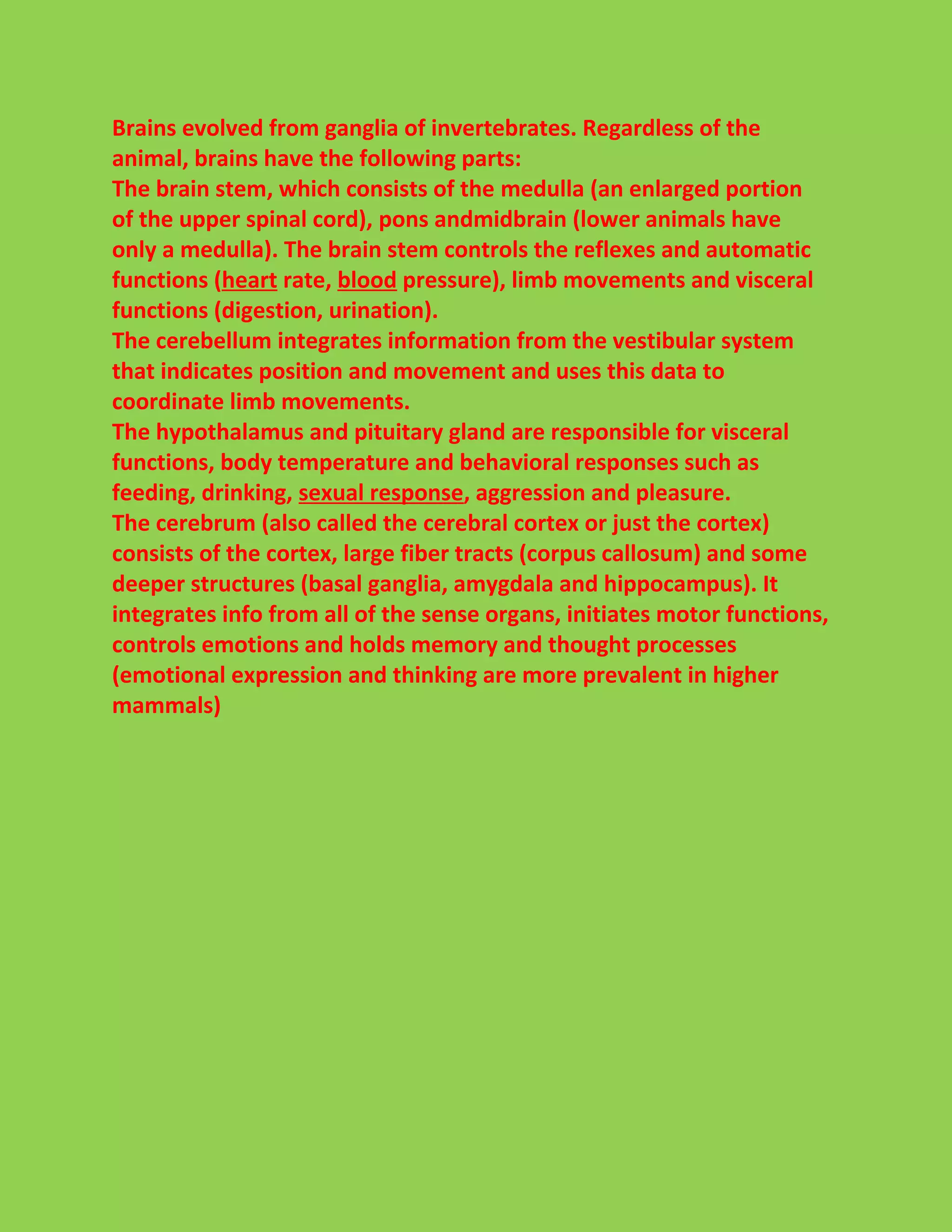
External parts of the human brain 
Higher Brains
The cerebrum is the largest part of the human brain. It contains all of 
the centers that receive and interpret sensory information, initiate 
movement, analyze information, reason and experience emotions. 
The centers for these tasks are located in different parts of the 
cerebral cortex, which is the outside layer of the cerebellum and is 
comprised of gray matter. The inside is made up of white matter. 
Major Parts of the Cerebral Cortex 
The cortex dominates the exterior surface of the brain. The surface 
area of the brain is about 233 to 465 square inches (1,500 to 2,000 
cm2), which is about the size of one to two pages of a newspaper. 
To fit this surface area within the skull, the cortex is folded, forming 
folds (gyri) and grooves (sulci). Several large sulci divide the cerebral 
cortex into various lobes: the frontal lobe, parietal lobe, occipital 
lobe and temporal lobe. Each lobe has a different function. 
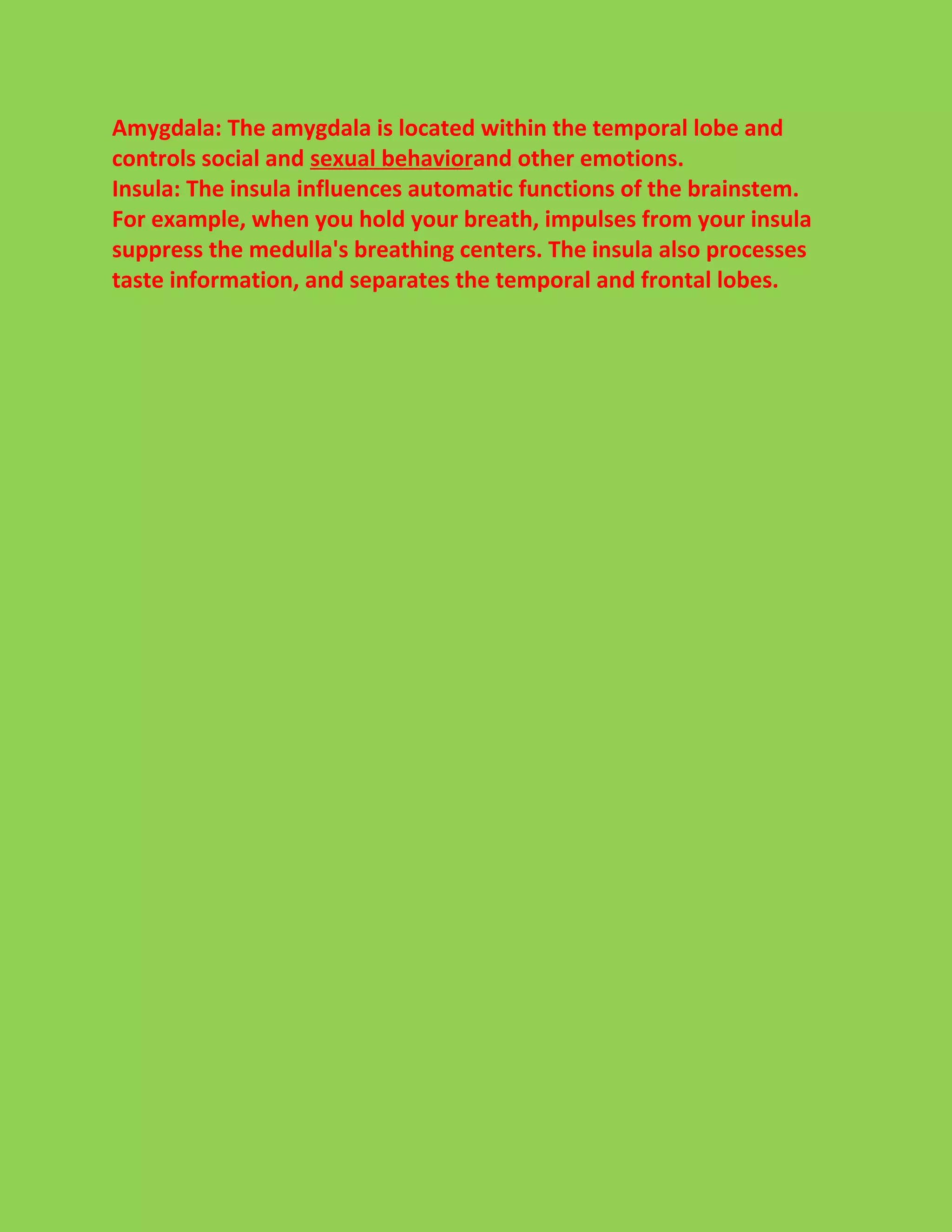
Get to know the interior of your brain a bit better. 
When viewed from above, a large groove (interhemispheric fissure) 
separates the brain into left and right halves. The halves talk to 
each other through a tract of white-matter fibers called the corpus 
callosum. Also, the right and left temporal lobes communicate
through another tract of fibers near the rear of the brain called 
theanterior commissure. 
If you look at a cutaway view of the brain, you see that the cortical 
area above the corpus callosum is divided by a groove. This groove 
is called the cingulate sulcus. The area between that groove and 
the corpus callosum is called the cingulate gyrus, also referred to as 
the limbic system or limbic lobe. Deep within the cerebrum are the 
basal ganglia, amygdala and hippocampus. 
This ends our tour of the major structures of the cortex. Now, let's see 
what those structures do. 
Hard-wired 
The brain is hard-wired with connections, much like 
a skyscraper or airplane is hard-wired with electrical wiring. In the 
case of the brain, the connections are made by neurons that link the 
sensory inputs and motor outputs with centers in the various lobes 
of the cerebral cortex. There are also linkages between these cortical 
centers and other parts of the brain. 
Several areas of the cerebral cortexhave specialized functions: 
Parietal lobe -- The parietal lobe receives and processes 
allsomatosensory input from the body (touch, pain). 
Fibers from the spinal cord are distributed by the thalamus to various 
parts of the parietal lobe. 
The connections form a map of the body's surface on the parietal 
lobe. This map is called ahomunculus. 
The rear of the parietal lobe (next to the temporal lobe) has a section 
called Wernicke's area, which is important for understanding the 
sensory (auditory and visual) information associated with language. 
Damage to this area of the brain produces what is called sensory 
aphasia, in which patients cannot understand language but can still 
produce sounds. 
Frontal lobe -- The frontal lobe is involved in motor skills (including 
speech) and cognitive functions.
The motor center of the brain (pre-central gyrus) is located in the 
rear of the frontal lobe, just in front of the parietal lobe. It receives 
connections from the somatosensory portion in the parietal lobe and 
processes and initiates motor functions. Like the homunculus in the 
parietal lobe, the pre-central gyrus has a motor map of the brain (for 
details, see A Science Odyssey: You Try It: Probe the Brain Activity). 
An area on the left side of the frontal lobe, called Broca's area, 
processes language by controlling themuscles that make sounds 
(mouth, lips and larynx). Damage to this area results in motor aphasia, 
in which patients can understand language but cannot produce 
meaningful or appropriate sounds. 
Remaining areas of the frontal lobe perform associative processes 
(thought, learning, memory). 
Occipital lobe -- The occipital lobe receives and processes visual 
information directly from the eyes and relates this information to the 
parietal lobe (Wernicke's area) and motor cortex (frontal lobe). One of 
the things it must do is interpret the upside-down images of the world 
that are projected onto the retina by the lens of the eye. 
Temporal lobe -- The temporal lobe processes auditory information 
from the ears and relates it to Wernicke's area of the parietal lobe 
and the motor cortex of the frontal lobe. 
Basal ganglia: Also located within the temporal lobe, the basal 
ganglia work with the cerebellum to coordinate fine motions, such as 
fingertip movements. 
Limbic system: Located deep within the temporal lobe, the 
limbic system is important in emotional behavior and controlling 
movements of visceral muscles (muscles of the digestive tract and 
body cavities). The limbic system is comprised of the cingulate gyrus, 
corpus callosum, mammillary body, olfactory tract, amygdala and 
hippocampus. 
Hippocampus: The hippocampus is located within the temporal lobe 
and is important for short-term memory.
Amygdala: The amygdala is located within the temporal lobe and 
controls social and sexual behaviorand other emotions. 
Insula: The insula influences automatic functions of the brainstem. 
For example, when you hold your breath, impulses from your insula 
suppress the medulla's breathing centers. The insula also processes 
taste information, and separates the temporal and frontal lobes.

How to brain learn

  • 1.
    HOW YOUR BRAINWORKS Every animal you can think of -- mammals, birds, reptiles, fish, amphibians -- has a brain. But the human brain is unique. Although it's not the largest, it gives us the power to speak, imagine and problem solve. It is truly an amazing organ. The brain performs an incredible number of tasks including the following: It controls body temperature, blood pressure, heart rate and breathing. It accepts a flood of information about the world around you from your various senses (seeing, hearing, smelling, tastingand touching). It handles your physical movement when walking, talking, standing or sitting. It lets you think, dream, reason and experience emotions. All of these tasks are coordinated, controlled and regulated by an organ that is about the size of a small head of cauliflower.
  • 2.
    Your brain, spinalcord and peripheral nerves make up a complex, integrated information-processing and control system known as your central nervous system. In tandem, they regulate all the conscious and unconscious facets of your life. The scientific study of the brain and nervous system is called neuroscience or neurobiology. Because the field of neuroscience is so vast -- and the brain and nervous system are so complex -- this article will start with the basics and give you an overview of this complicated organ. We'll examine the structures of the brain and how each section controls our daily functions, including motor control, visual processing, auditory processing, sensation, learning, memory and emotions. The basic design of a neuron Neuron Structure Your brain is made of approximately 100 billion nerve cells, called neurons.Neurons have the amazing ability to gather and transmit electrochemical signals -- think of them like the gates and wires in a computer. Neurons share the same characteristics and have the same makeup as othercells, but the electrochemical aspect lets them transmit signals over long distances (up to several feet or a few meters) and send
  • 3.
    messages to eachother. Neurons have three basic parts: Cell body or soma. This main part has all of the necessary components of the cell, such as the nucleus (which contains DNA), endoplasmic reticulum and ribosomes (for building proteins) and mitochondria (for making energy). If the cell body dies, the neuron dies. Axon . This long, cablelike projection of the cell carries the electrochemical message (nerve impulse or action potential) along the length of the cell. Depending upon the type of neuron, axons can be covered with a thin layer of myelin sheath, like an insulated electrical wire. Myelin is made of fat and protein, and it helps to speed transmission of a nerve impulse down a long axon. Myelinated neurons are typically found in the peripheral nerves (sensory and motor neurons), while non-myelinated neurons are found in the brain and spinal cord. Dendrites or nerve endings. These small, branchlike projections of the cell make connections to other cells and allow the neuron to talk with other cells or perceive the environment. Dendrites can be located on one or both ends of a cell. Basic Neuron Types
  • 4.
    Neurons come inmany sizes. For example, a single sensory neuron from your fingertip has an axon that extends the length of your arm, while neurons within the brain may extend only a few millimeters. They also have different shapes depending on their functions. Motor neurons that control muscle contractions have a cell body on one end, a long axon in the middle and dendrites on the other end. Sensory neurons have dendrites on both ends, connected by a long axon with a cell body in the middle. Interneurons, or associative neurons, carry information between motor and sensory neurons. These fundamental members of the nervous system also vary with respect to their functions. Sensory neurons carry signals from the outer parts of your body (periphery) into the central nervous system. Motor neurons (motoneurons) carry signals from the central nervous system to the outer parts (muscles, skin, glands) of your body. Interneurons connect various neurons within the brain and spinal cord. The simplest type of neural pathway is a monosynaptic (single connection) reflex pathway, like the knee-jerk reflex. When the doctor taps the right spot on your knee with a rubber hammer, receptors send a signal into the spinal cord through a sensory neuron. The sensory neuron passes the message to a motor neuron that controls your leg muscles. Nerve impulses travel down the motor neuron and stimulate the appropriate leg muscle to contract. The response is a muscular jerk that happens quickly and does not involve your brain. Humans have lots of hardwired reflexes like this, but as tasks become more complex, the pathway circuitry gets more complicated and the brain gets involved.
  • 5.
    As you proceedup the evolutionary ladder from fish toward humans, check out the changes in the brain. For example, the cerebrum gets bigger, takes up a larger part of the total brain and becomes folded. Brain Parts The simplest possible creatures have incredibly basic nervous systems made up of nothing but reflex pathways. For example, flatworms and invertebrates don't have centralized brains. They have loose associations of neurons arranged in straightforward reflex pathways. Flatworms have neural nets, or individual neurons linked together that form a net around the entire animal. Most invertebrates (such as the lobster) have modest "brains" that consist of localized collections of neuronal cell bodies called ganglia. Each ganglion controls sensory and motor functions in its segment through reflex pathways, and the ganglia are linked together to form a simple nervous system. As nervous systems evolved, chains of ganglia evolved into more centralized simple brains.
  • 6.
    Brains evolved fromganglia of invertebrates. Regardless of the animal, brains have the following parts: The brain stem, which consists of the medulla (an enlarged portion of the upper spinal cord), pons andmidbrain (lower animals have only a medulla). The brain stem controls the reflexes and automatic functions (heart rate, blood pressure), limb movements and visceral functions (digestion, urination). The cerebellum integrates information from the vestibular system that indicates position and movement and uses this data to coordinate limb movements. The hypothalamus and pituitary gland are responsible for visceral functions, body temperature and behavioral responses such as feeding, drinking, sexual response, aggression and pleasure. The cerebrum (also called the cerebral cortex or just the cortex) consists of the cortex, large fiber tracts (corpus callosum) and some deeper structures (basal ganglia, amygdala and hippocampus). It integrates info from all of the sense organs, initiates motor functions, controls emotions and holds memory and thought processes (emotional expression and thinking are more prevalent in higher mammals)
  • 7.
    Here we're lookingat the underside of the brain, showing the brain stem and cranial nerves. Brains for Instinct Lower animals, such as fish, amphibians, reptiles and birds, don't do much "thinking," but instead concern themselves with the everyday business of gathering food, eating, drinking, sleeping, reproducing and defending themselves. These are instinctual processes [source:National Geographic]. Therefore, their brains are organized along the major centers that control these functions. We humans perform these functions as well, and so have a "reptilian" brain built into us. That means we have the same parts of the brain found in reptiles, namely the brain stem and the cerebellum. Ready to learn about the lower brain? We'll discuss that on the next page.
  • 8.
    Lower Brain Thebasic lower brain consists of thespinal cord, brain stem anddiencephalon (the cerebellum and cortex are also present, but will be discussed in later sections). In turn, the brain stem comprises the medulla, pons, midbrain, hypothalamus and thalamus [source: Health Pages]. Within each of these structures are centers of neuronal cell bodies, callednuclei, which are specialized for particular functions (breathing, heart-rate regulation, sleep): Medulla -- The medulla contains nuclei for regulating blood pressure and breathing, as well as nuclei for relaying information from the sense organs that comes in from the cranial nerves. It's also the most ancient part of the brain. Pons -- The pons contains nuclei that relay movement and position information from the cerebellum to the cortex. It also contains nuclei that are involved in breathing, taste and sleep, and physically connects medulla to the midbrain. Midbrain -- The midbrain contains nuclei that link the various sections of the brain involved in motor functions (cerebellum, basal ganglia,
  • 9.
    cerebral cortex), eyemovements and auditory control. One portion, called the substantia nigra, is involved in voluntary movements; when it does not function, you have the tremored movements of Parkinson's disease. Thalamus -- The thalamus relays incoming sensory pathways to appropriate areas of the cortex, determines which sensory information actually reaches consciousness and participates in motor-information exchange between the cerebellum, basal ganglia and cortex. Hypothalamus -- The hypothalamus contains nuclei that control hormonal secretions from the pituitary gland. These centers govern sexual reproduction, eating, drinking, growth, and maternal behavior such aslactation (milk-production in mammals). The hypothalamus is also involved in almost all aspects of behavior, including your biological "clock," which is linked to the daily light-dark cycle (circadian rhythms). SPINAL CORD The spinal cord can be viewed as a separate entity from the brain, or merely as a downward extension of the brain stem. It contains sensory and motor pathways from the body, as well as ascending and descending pathways from the brain. It has reflex pathways that react independently of the brain, as in the knee-jerk reflex. THE VESTIBULAR SYSTEM The vestibular system is responsible for maintaining posture, balance and spatial orientation. Part of the system is located in the inner ear. It also includes the vestibulocochlear nerve (the eighth cranial nerve) and certain parts of the brain that interpret the information the vestibulocochlear nerve receives. Balancing Act The cerebellum, also known as the "little brain" because it's folded into many lobes, lies above and behind the pons. As the second biggest area of the brain, it receives sensory input from the spinal cord, motor input from the cortex and basal ganglia, and position
  • 10.
    information from thevestibular system. The "little brain" then integrates this information and influences outgoing motor pathways from the brain to coordinate movements. To demonstrate this, reach out and touch a point in front of you, such as the computer monitor -- your hand makes one smooth motion. If your cerebellum were damaged, that same motion would be very jerky, as your cortex initiated a series of small muscle contractions to home in on the target point. The cerebellum may also be involved in language (fine muscle contractions of the lips and larynx), as well as other cognitive functions. External parts of the human brain Higher Brains
  • 11.
    The cerebrum isthe largest part of the human brain. It contains all of the centers that receive and interpret sensory information, initiate movement, analyze information, reason and experience emotions. The centers for these tasks are located in different parts of the cerebral cortex, which is the outside layer of the cerebellum and is comprised of gray matter. The inside is made up of white matter. Major Parts of the Cerebral Cortex The cortex dominates the exterior surface of the brain. The surface area of the brain is about 233 to 465 square inches (1,500 to 2,000 cm2), which is about the size of one to two pages of a newspaper. To fit this surface area within the skull, the cortex is folded, forming folds (gyri) and grooves (sulci). Several large sulci divide the cerebral cortex into various lobes: the frontal lobe, parietal lobe, occipital lobe and temporal lobe. Each lobe has a different function. Get to know the interior of your brain a bit better. When viewed from above, a large groove (interhemispheric fissure) separates the brain into left and right halves. The halves talk to each other through a tract of white-matter fibers called the corpus callosum. Also, the right and left temporal lobes communicate
  • 12.
    through another tractof fibers near the rear of the brain called theanterior commissure. If you look at a cutaway view of the brain, you see that the cortical area above the corpus callosum is divided by a groove. This groove is called the cingulate sulcus. The area between that groove and the corpus callosum is called the cingulate gyrus, also referred to as the limbic system or limbic lobe. Deep within the cerebrum are the basal ganglia, amygdala and hippocampus. This ends our tour of the major structures of the cortex. Now, let's see what those structures do. Hard-wired The brain is hard-wired with connections, much like a skyscraper or airplane is hard-wired with electrical wiring. In the case of the brain, the connections are made by neurons that link the sensory inputs and motor outputs with centers in the various lobes of the cerebral cortex. There are also linkages between these cortical centers and other parts of the brain. Several areas of the cerebral cortexhave specialized functions: Parietal lobe -- The parietal lobe receives and processes allsomatosensory input from the body (touch, pain). Fibers from the spinal cord are distributed by the thalamus to various parts of the parietal lobe. The connections form a map of the body's surface on the parietal lobe. This map is called ahomunculus. The rear of the parietal lobe (next to the temporal lobe) has a section called Wernicke's area, which is important for understanding the sensory (auditory and visual) information associated with language. Damage to this area of the brain produces what is called sensory aphasia, in which patients cannot understand language but can still produce sounds. Frontal lobe -- The frontal lobe is involved in motor skills (including speech) and cognitive functions.
  • 13.
    The motor centerof the brain (pre-central gyrus) is located in the rear of the frontal lobe, just in front of the parietal lobe. It receives connections from the somatosensory portion in the parietal lobe and processes and initiates motor functions. Like the homunculus in the parietal lobe, the pre-central gyrus has a motor map of the brain (for details, see A Science Odyssey: You Try It: Probe the Brain Activity). An area on the left side of the frontal lobe, called Broca's area, processes language by controlling themuscles that make sounds (mouth, lips and larynx). Damage to this area results in motor aphasia, in which patients can understand language but cannot produce meaningful or appropriate sounds. Remaining areas of the frontal lobe perform associative processes (thought, learning, memory). Occipital lobe -- The occipital lobe receives and processes visual information directly from the eyes and relates this information to the parietal lobe (Wernicke's area) and motor cortex (frontal lobe). One of the things it must do is interpret the upside-down images of the world that are projected onto the retina by the lens of the eye. Temporal lobe -- The temporal lobe processes auditory information from the ears and relates it to Wernicke's area of the parietal lobe and the motor cortex of the frontal lobe. Basal ganglia: Also located within the temporal lobe, the basal ganglia work with the cerebellum to coordinate fine motions, such as fingertip movements. Limbic system: Located deep within the temporal lobe, the limbic system is important in emotional behavior and controlling movements of visceral muscles (muscles of the digestive tract and body cavities). The limbic system is comprised of the cingulate gyrus, corpus callosum, mammillary body, olfactory tract, amygdala and hippocampus. Hippocampus: The hippocampus is located within the temporal lobe and is important for short-term memory.
  • 14.
    Amygdala: The amygdalais located within the temporal lobe and controls social and sexual behaviorand other emotions. Insula: The insula influences automatic functions of the brainstem. For example, when you hold your breath, impulses from your insula suppress the medulla's breathing centers. The insula also processes taste information, and separates the temporal and frontal lobes.