Cold War: Korean War
         (1950 – 1953)
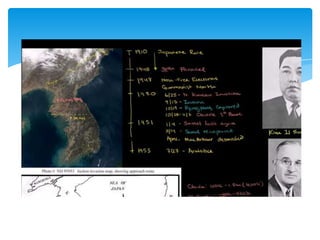
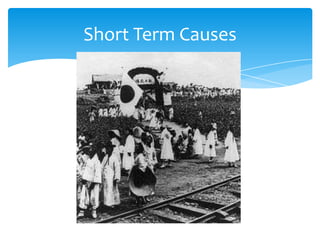
    From 1910, Korea was invaded by Japan. In order to stop this
   invasion during the Second World War, USA and USSR came to
Korea. However, the long tension between USA and USSR for their
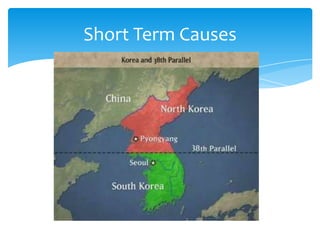
claim for ideology: capitalism and communism, made them to divide
 Korea by 38th parallel. Now they are trying to make a proxy war in
            order to get Korea unified with their ideology.
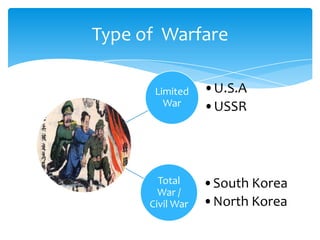
Type of Warfare

       Limited    •U.S.A
         War      •USSR


        Total     •South Korea
        War /
      Civil War   •North Korea
Causes of the Korean War
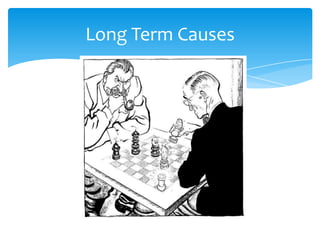
Long Term Causes
Short Term Causes
Short Term Causes
Immediate Causes
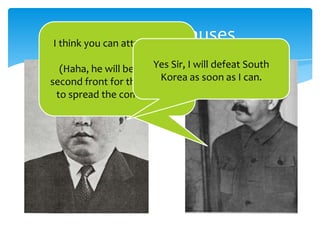
I think you can attack Korea.

  (Haha, he will become my I will defeat South
                       Yes Sir,
second front for the Cold War as soon as I can.
                         Korea
 to spread the communism)
Immediate Causes
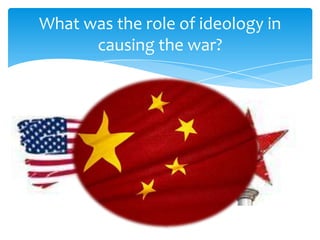
What was the role of ideology in
      causing the war?
Nature of the Korean War
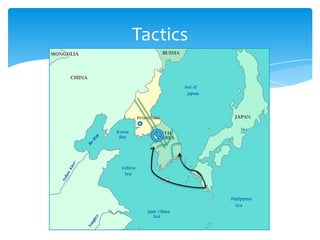
Tactics
Tactics


“another oversight on Stalin’s part – was that there
was no Soviet representative present in the Security
Council to veto United Nations action: he had been
withdrawn, some months earlier, as a protest against
the organisation’s refusal to seat the Chinese
communists. With U.N. approval, then, the
international community mobilises within day sot
counter this new threat to international security”
Tactics
Did Stalin Lure the United States into the Korean War?
   New Evidence on the Origins of the Korean War
            Donggil Kim and William Stueck
Technology
Foreign Involvement
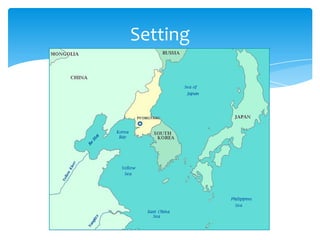
Setting
Civilians


Resistance
     American citizens were resisting about the fact that there were too
     many American soldiers being sacrificed for the Korean War. ‘The
     American people had no understanding of the significance of the
     Korean War, nor did they understand the horrors that were taking
     place in it or the hardships that [American] servicemen women had to
     endure while serving in Korea.”
Home front
     The Korean gave a fear to the citizens that nuclear might occur. Using
     this belief, Republicans tried to gain votes during the election.
     Korean people were following the radio and tried to follow every
     directions on the radio
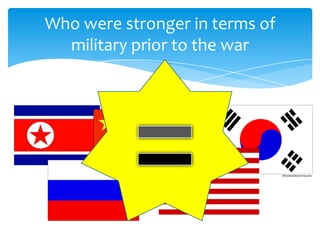
Who were stronger in terms of
  military prior to the war
Effect
Casualties


1.5 ~ 3m deaths (2m consensus) of civilians
33,686 battle deaths, 2,830 non-battle deaths, 8136
MIA for USA
400 thousand Chinese soldiers
510 thousand North Korean soldiers
415 thousand South Korean soldiers
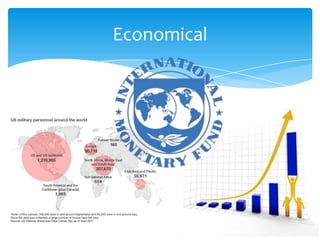
Economical
Political


In a short term, since the president stayed the
same, political status stayed the same.
North Korea are in the same status for until these
days by turning
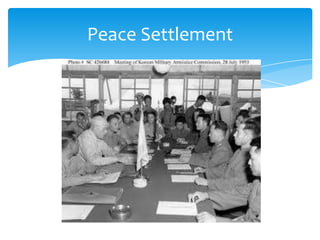
Peace Settlement
Bibliography

Major Sources

    Phillips, Steve. "Chapter 6: The Korean War 1950-3." The Cold War: Conflict in Europe and Asia. Oxford: Heinemann, 2001. 68-77.
    Print.
    Kissinger, Henry. "Chapter Nineteen. The Dilemma of Containment: The Korean War." Diplomacy. New York: Simon &
    Schuster, 1994. 473-92. Print.
    Gaddis, John Lewis. "Chapter One: The Return of Fear, VII." The Cold War: A New History. New York: Penguin, 2005. 40-46. Print.
    Gilbert, Martin. "1952, 1953." Challenge to Civilization: A History of the Twentieth Century, 1952-1999. London: HarperCollins, 2000.
    5+. Print.

Minor Sources

    Kim, Donggil, and William Stuek. "NKIDP E-Dossier No. 1: Did Stalin Lure the United States into the Korean War? New Evidence on
    the Origins of the Korean War | Wilson Center." Woodrow Wilson International Center for Scholars. Woodrow Wilson International
    Center for Scholars. Web. 15 May 2012. <http://www.wilsoncenter.org/publication/nkidp-e-dossier-no-1-did-stalin-lure-the-united-
    states-the-korean-war-new-evidence-the>.
    "The Korean War (1950-1953)." SparkNotes.com. SparkNotes LLC. Web. 15 May 2012.
    <http://www.sparknotes.com/history/american/koreanwar/>.
    Lieberman, Dan. "The Origins of the Korean War." The Origins of the Korean War. Alternative In Sight, June 2000. Web. 15 May
    2012. <http://www.alternativeinsight.com/Korean_War.html>.
    "Korean War Educator: Home Front." Korean War Educator: Home Front. Korean War Educator. Web. 15 May 2012.
    <http://www.koreanwar-educator.org/topics/homefront/index.htm>.

Korean War 1950-1953

  • 1.
    Cold War: KoreanWar (1950 – 1953) From 1910, Korea was invaded by Japan. In order to stop this invasion during the Second World War, USA and USSR came to Korea. However, the long tension between USA and USSR for their claim for ideology: capitalism and communism, made them to divide Korea by 38th parallel. Now they are trying to make a proxy war in order to get Korea unified with their ideology.
  • 3.
    Type of Warfare Limited •U.S.A War •USSR Total •South Korea War / Civil War •North Korea
  • 4.
    Causes of theKorean War
  • 5.
  • 6.
  • 7.
  • 8.
    Immediate Causes I thinkyou can attack Korea. (Haha, he will become my I will defeat South Yes Sir, second front for the Cold War as soon as I can. Korea to spread the communism)
  • 9.
  • 10.
    What was therole of ideology in causing the war?
  • 11.
    Nature of theKorean War
  • 12.
  • 13.
    Tactics “another oversight onStalin’s part – was that there was no Soviet representative present in the Security Council to veto United Nations action: he had been withdrawn, some months earlier, as a protest against the organisation’s refusal to seat the Chinese communists. With U.N. approval, then, the international community mobilises within day sot counter this new threat to international security”
  • 14.
  • 15.
    Did Stalin Lurethe United States into the Korean War? New Evidence on the Origins of the Korean War Donggil Kim and William Stueck
  • 16.
  • 17.
  • 18.
  • 19.
    Civilians Resistance American citizens were resisting about the fact that there were too many American soldiers being sacrificed for the Korean War. ‘The American people had no understanding of the significance of the Korean War, nor did they understand the horrors that were taking place in it or the hardships that [American] servicemen women had to endure while serving in Korea.” Home front The Korean gave a fear to the citizens that nuclear might occur. Using this belief, Republicans tried to gain votes during the election. Korean people were following the radio and tried to follow every directions on the radio
  • 20.
    Who were strongerin terms of military prior to the war
  • 21.
  • 22.
    Casualties 1.5 ~ 3mdeaths (2m consensus) of civilians 33,686 battle deaths, 2,830 non-battle deaths, 8136 MIA for USA 400 thousand Chinese soldiers 510 thousand North Korean soldiers 415 thousand South Korean soldiers
  • 23.
  • 24.
    Political In a shortterm, since the president stayed the same, political status stayed the same. North Korea are in the same status for until these days by turning
  • 25.
  • 26.
    Bibliography Major Sources Phillips, Steve. "Chapter 6: The Korean War 1950-3." The Cold War: Conflict in Europe and Asia. Oxford: Heinemann, 2001. 68-77. Print. Kissinger, Henry. "Chapter Nineteen. The Dilemma of Containment: The Korean War." Diplomacy. New York: Simon & Schuster, 1994. 473-92. Print. Gaddis, John Lewis. "Chapter One: The Return of Fear, VII." The Cold War: A New History. New York: Penguin, 2005. 40-46. Print. Gilbert, Martin. "1952, 1953." Challenge to Civilization: A History of the Twentieth Century, 1952-1999. London: HarperCollins, 2000. 5+. Print. Minor Sources Kim, Donggil, and William Stuek. "NKIDP E-Dossier No. 1: Did Stalin Lure the United States into the Korean War? New Evidence on the Origins of the Korean War | Wilson Center." Woodrow Wilson International Center for Scholars. Woodrow Wilson International Center for Scholars. Web. 15 May 2012. <http://www.wilsoncenter.org/publication/nkidp-e-dossier-no-1-did-stalin-lure-the-united- states-the-korean-war-new-evidence-the>. "The Korean War (1950-1953)." SparkNotes.com. SparkNotes LLC. Web. 15 May 2012. <http://www.sparknotes.com/history/american/koreanwar/>. Lieberman, Dan. "The Origins of the Korean War." The Origins of the Korean War. Alternative In Sight, June 2000. Web. 15 May 2012. <http://www.alternativeinsight.com/Korean_War.html>. "Korean War Educator: Home Front." Korean War Educator: Home Front. Korean War Educator. Web. 15 May 2012. <http://www.koreanwar-educator.org/topics/homefront/index.htm>.