The Korean War
June 25th, 1950 - July 27th, 1953
In 1948 two different
governments were established
on the Korean Peninsula,
fixing the South-North division
of Korea. The Republic of
Korea (South Korea) was born
south of the 38th parallel and
the Democratic People's
Republic of Korea (North
Korea) north of it.
On August 15, 1948, the
Republic of Korea (R.O.K.)
was established. Syngman
Rhee became the republic's
first president. On
September 9, 1948, the
Democratic People's Republic
of Korea (D.P.R.K.) was
established in the north
under Kim Il Sung.
Syngman
Rhee
Guerrilla fighting in the
south and clashes between
southern and northern
forces along the 38th
parallel intensified during
1948-50.
North Korea, having obtained
a massive amount of
weapons from the Soviet
Union and the Chinese
Communist Party, prepared
to invade the South to
establish communism in the
entire peninsula.
By mid-1950 North Korean
forces numbered between
150,000 and 200,000 troops,
with 210 fighter planes and 280
tanks. Soviet equipment had
also been pouring into North
Korea in early 1950.
These forces were to fight
the ill-equipped South
Korean army of less than
100,000 men--an army
lacking in tanks, heavy
artillery, and combat
airplanes, plus a coast guard
of 4,000 men and a police
force of 45,000 men.
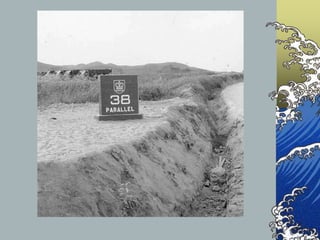
In the predawn hours of
Sunday, June 25, 1950, the
North Korean forces,
spearheaded by tanks and
self-propelled guns,
unleashed all-out attacks
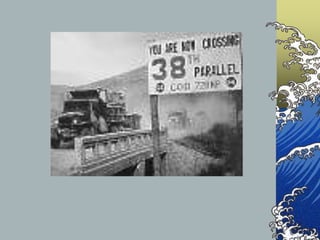
across the 38th parallel.
The US, with the United
Nations, came to the aid of
South Korea, fearing that
inaction in Korea would be
interpreted as appeasement
of communist aggression
elsewhere in the world.
When the Soviets made the
mistake of walking out of an
emergency session of the
United Nations Security
Council, that body directed
that the United Nations
would send troops to South
Korea. A 3-year "police
action" resulted.
The North Koreans quickly
crushed South Korean
defenses at the 38th
parallel. South Korea's
army was simply
overwhelmed. The capital
of Seoul fell in three days.
The suburbs
of Seoul,
destroyed by
artillery and
air strikes.
Photo taken
08/20/1951.
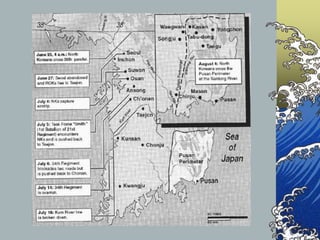
By early August, South
Korean forces were confined
in the southeastern corner of
the peninsula. Fifty miles
short of the sea, a defensive
perimeter (labeled the
"Pusan Perimeter") was
formed. The rest of the
territory was in the hands of
the North Korean army.
General MacArthur felt that
the North Koreans were
vulnerable to an amphibious
envelopment. A landing at
Inch'on, the Yellow Sea port
just twenty-five miles west of
Seoul, would cut North
Korean supply routes.
The assault on Inch'on on
15 September 1950
encountered light
resistance and UN forces
steadily pushed inland.
This was a huge confidence
builder for the forces and
particularly MacArthur.
The course of the war
changed abruptly, and
within weeks much of North
Korea was taken by United
States and South Korean
forces. In October, the
North Korean capital of
Pyongyang was captured
and ROK troops reached the
Yalu River.
MacArthur ordered an advance
to the northern Korean border
with China at the Yalu River.
Victory seemed at hand, but
within 24 hours the situation
suddenly changed. When
Kim's regime was nearly dead,
the Soviet Union did very little
to save it -- China picked up
the pieces.
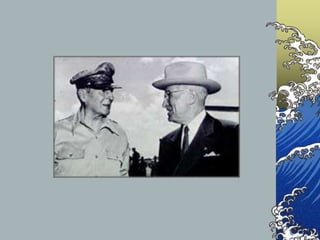
Truman and MacArthur
The Chinese Army massed
850,000 troops north of the
Yalu River. The UN force's
advance had continued
despite warnings of a
massive Chinese
intervention.
Mao Tse Tung feared that
the Allies would not stop in
Korea, but would continue
across the Yalu River into
China and attempt to
overthrow communism in
mainland China.
The US Eighth Army counter-
attacked, recapturing Seoul
by mid-March 1951, and then
advancing to just below the
38th parallel.
MacArthur had Truman’s
consent to take over all of
North Korea. However, the
President did not agree to his
suggestions of bombing
China, including use of the
atomic bomb. After MacArthur
publicly advocated widening
the war, Truman fired him.
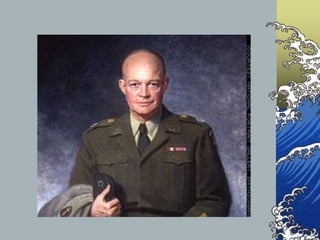
In November 1952 Dwight
D. Eisenhower was elected
President on the campaign
pledge to "go to Korea."
President-
elect
Eisenhower
during his
visit to the
Korea,
December
4, 1952
The truce talks remained
stalemated and hostilities
continued until an armistice
was finally concluded in July
1953.
On that date at Panmunjom,
the military commanders of
the North Korean Army, the
Chinese People's Volunteers,
and the United Nations
Command signed an
armistice agreement.
The war lasted three years
and one month and
devastated almost the
entire Korean Peninsula.
The war left indelible marks
on the Korean Peninsula and
the world surrounding it. The
entire peninsula was reduced
to rubble, and casualties on
both sides were enormous.
Combatant death alone
included 180,000 South
Korean and UN troops.
The number of Americans
killed in the conflict was
36,940. Estimates of the
number of Communist
soldiers killed range as high
as 1,420,000 -- 520,000
North Koreans and 900,000
Chinese -- though these
claims were surely inflated.
Chinese sources report that
only 110,000 Chinese
soldiers were killed in action
with another 35,000 dying
of wounds and disease.
July 27, 1953: Peace Treaty signed at
Panmunjom
38th parallel reset as boundary
between communist North and anti-
communist South.
Cold War tensions continue
unabated.
Gen. Mark W. Clark says he has
"the unenviable distinction of being
the first US Army commander to
sign an armistice without victory."

Korean War

  • 1.
    The Korean War June25th, 1950 - July 27th, 1953
  • 2.
    In 1948 twodifferent governments were established on the Korean Peninsula, fixing the South-North division of Korea. The Republic of Korea (South Korea) was born south of the 38th parallel and the Democratic People's Republic of Korea (North Korea) north of it.
  • 4.
    On August 15,1948, the Republic of Korea (R.O.K.) was established. Syngman Rhee became the republic's first president. On September 9, 1948, the Democratic People's Republic of Korea (D.P.R.K.) was established in the north under Kim Il Sung.
  • 5.
  • 6.
    Guerrilla fighting inthe south and clashes between southern and northern forces along the 38th parallel intensified during 1948-50.
  • 7.
    North Korea, havingobtained a massive amount of weapons from the Soviet Union and the Chinese Communist Party, prepared to invade the South to establish communism in the entire peninsula.
  • 8.
    By mid-1950 NorthKorean forces numbered between 150,000 and 200,000 troops, with 210 fighter planes and 280 tanks. Soviet equipment had also been pouring into North Korea in early 1950.
  • 9.
    These forces wereto fight the ill-equipped South Korean army of less than 100,000 men--an army lacking in tanks, heavy artillery, and combat airplanes, plus a coast guard of 4,000 men and a police force of 45,000 men.
  • 10.
    In the predawnhours of Sunday, June 25, 1950, the North Korean forces, spearheaded by tanks and self-propelled guns, unleashed all-out attacks across the 38th parallel.
  • 12.
    The US, withthe United Nations, came to the aid of South Korea, fearing that inaction in Korea would be interpreted as appeasement of communist aggression elsewhere in the world.
  • 13.
    When the Sovietsmade the mistake of walking out of an emergency session of the United Nations Security Council, that body directed that the United Nations would send troops to South Korea. A 3-year "police action" resulted.
  • 15.
    The North Koreansquickly crushed South Korean defenses at the 38th parallel. South Korea's army was simply overwhelmed. The capital of Seoul fell in three days.
  • 17.
    The suburbs of Seoul, destroyedby artillery and air strikes. Photo taken 08/20/1951.
  • 18.
    By early August,South Korean forces were confined in the southeastern corner of the peninsula. Fifty miles short of the sea, a defensive perimeter (labeled the "Pusan Perimeter") was formed. The rest of the territory was in the hands of the North Korean army.
  • 21.
    General MacArthur feltthat the North Koreans were vulnerable to an amphibious envelopment. A landing at Inch'on, the Yellow Sea port just twenty-five miles west of Seoul, would cut North Korean supply routes.
  • 23.
    The assault onInch'on on 15 September 1950 encountered light resistance and UN forces steadily pushed inland. This was a huge confidence builder for the forces and particularly MacArthur.
  • 24.
    The course ofthe war changed abruptly, and within weeks much of North Korea was taken by United States and South Korean forces. In October, the North Korean capital of Pyongyang was captured and ROK troops reached the Yalu River.
  • 25.
    MacArthur ordered anadvance to the northern Korean border with China at the Yalu River. Victory seemed at hand, but within 24 hours the situation suddenly changed. When Kim's regime was nearly dead, the Soviet Union did very little to save it -- China picked up the pieces.
  • 26.
  • 27.
    The Chinese Armymassed 850,000 troops north of the Yalu River. The UN force's advance had continued despite warnings of a massive Chinese intervention.
  • 28.
    Mao Tse Tungfeared that the Allies would not stop in Korea, but would continue across the Yalu River into China and attempt to overthrow communism in mainland China.
  • 30.
    The US EighthArmy counter- attacked, recapturing Seoul by mid-March 1951, and then advancing to just below the 38th parallel.
  • 33.
    MacArthur had Truman’s consentto take over all of North Korea. However, the President did not agree to his suggestions of bombing China, including use of the atomic bomb. After MacArthur publicly advocated widening the war, Truman fired him.
  • 35.
    In November 1952Dwight D. Eisenhower was elected President on the campaign pledge to "go to Korea."
  • 37.
  • 38.
    The truce talksremained stalemated and hostilities continued until an armistice was finally concluded in July 1953.
  • 39.
    On that dateat Panmunjom, the military commanders of the North Korean Army, the Chinese People's Volunteers, and the United Nations Command signed an armistice agreement.
  • 41.
    The war lastedthree years and one month and devastated almost the entire Korean Peninsula.
  • 42.
    The war leftindelible marks on the Korean Peninsula and the world surrounding it. The entire peninsula was reduced to rubble, and casualties on both sides were enormous. Combatant death alone included 180,000 South Korean and UN troops.
  • 43.
    The number ofAmericans killed in the conflict was 36,940. Estimates of the number of Communist soldiers killed range as high as 1,420,000 -- 520,000 North Koreans and 900,000 Chinese -- though these claims were surely inflated.
  • 44.
    Chinese sources reportthat only 110,000 Chinese soldiers were killed in action with another 35,000 dying of wounds and disease.
  • 47.
    July 27, 1953:Peace Treaty signed at Panmunjom 38th parallel reset as boundary between communist North and anti- communist South. Cold War tensions continue unabated. Gen. Mark W. Clark says he has "the unenviable distinction of being the first US Army commander to sign an armistice without victory."