

Kuliah 1 Proses KomunikasiOleh Coky Fauzi Alficokyfauzialfi.wordpress.comKonsep Dasar Komunikasi
TopicsDefining CommunicationModels of CommunicationThe Value of Understanding Communication Theory
Defining Communication
In the most fundamental way, communication depends on our ability tounderstand one another.
Communication is a social process in whichindividuals employ symbols to establishand interpret meaning in their environment.
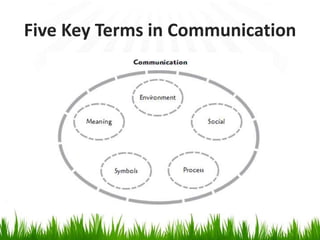
Five Key Terms in Communication
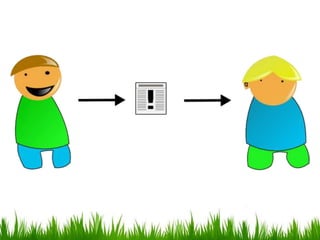
When interpretingcommunication as social, it involves two people, whoact as senders and receivers.Communication is a process means that it isongoing and unending.The process nature of communication also means that much canhappenfrom the beginning of a conversation to the end.
Communication is symbols. A symbol is anarbitrary label or representation ofphenomena.Concrete symbolsis the symbol represents an object
Abstractsymbolsis the symbol stands for a thought or ideaMeaning is what people extract from amessage.In communication episodes, messages can have more than one meaning andeven multiple layers of meaning.
Environment is the situation or context in which communication occurs. Theenvironment includes a number ofelements, including time, place, historicalperiod, relationship, and a speaker’s and listener’s cultural backgrounds.
Models of Communication
The linearmodel ofcommunicationThe interactionalmodelof communicationThe transactional model of communication
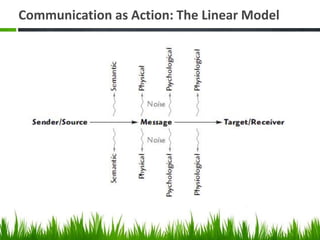
Communication as Action: The Linear Model
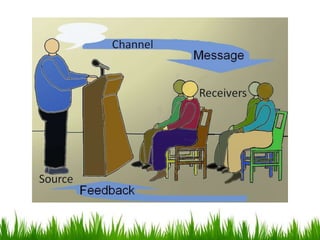
Claude Shannon and Warren Weaver (1949) described communication as a linear process.They were concerned with radio and telephone technology and wanted todevelop a model that could explain how information passed through various channels.Examples: a letter, email, text message, lecture.
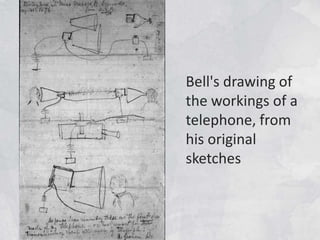
Bell's drawing of the workings of a telephone, from his original sketches
Communication as Interaction: The Interactional Model
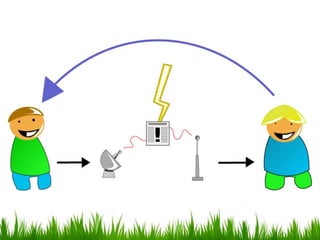
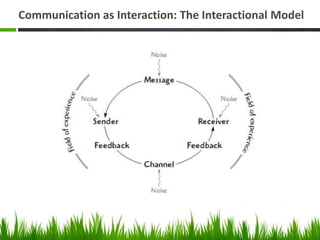
Wilbur Schramm (1954) conceptualized the  interactional modelof communication, which emphasizes the two-waycommunication process betweencommunicators.In other words, communication goes intwo directions: from sender to receiver and from receiver to sender.Examples: instant messaging or a question/answer session
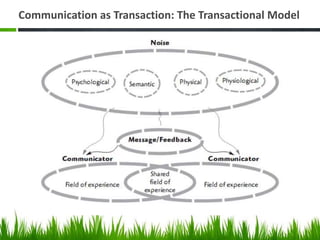
Communication as Transaction: The Transactional Model
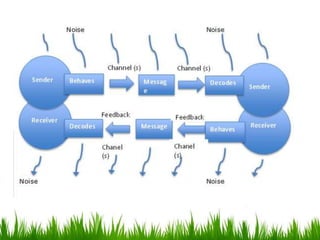
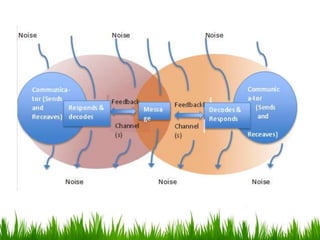
Dean  Barnlund (1970) :The transactional model of communicationunderscores the simultaneous sending andreceiving of messages in a communication episode.Communication is transactional means that the process is cooperative; the sender and thereceiver are mutually responsible for the effect and the effectiveness of communication.Examples: talking/listening to friends
The Value of Understanding Communication Theory
Understanding communicationtheory cultivatescriticalthinkingskillsUnderstanding communicationtheoryhelpsyouto recognize the breadth and depth of researchUnderstanding communicationtheoryhelps to makesense of personallifeexperiencesCommunication theory fosters self-awareness
© 2011cokyfauzialfi.wordpress.comWhat’s Your Message?

Konsep Dasar Komunikasi

  • 1.
    Kuliah 1 ProsesKomunikasiOleh Coky Fauzi Alficokyfauzialfi.wordpress.comKonsep Dasar Komunikasi
  • 2.
    TopicsDefining CommunicationModels ofCommunicationThe Value of Understanding Communication Theory
  • 3.
  • 5.
    In the mostfundamental way, communication depends on our ability tounderstand one another.
  • 6.
    Communication is asocial process in whichindividuals employ symbols to establishand interpret meaning in their environment.
  • 7.
    Five Key Termsin Communication
  • 8.
    When interpretingcommunication associal, it involves two people, whoact as senders and receivers.Communication is a process means that it isongoing and unending.The process nature of communication also means that much canhappenfrom the beginning of a conversation to the end.
  • 9.
    Communication is symbols.A symbol is anarbitrary label or representation ofphenomena.Concrete symbolsis the symbol represents an object
  • 10.
    Abstractsymbolsis the symbolstands for a thought or ideaMeaning is what people extract from amessage.In communication episodes, messages can have more than one meaning andeven multiple layers of meaning.
  • 11.
    Environment is thesituation or context in which communication occurs. Theenvironment includes a number ofelements, including time, place, historicalperiod, relationship, and a speaker’s and listener’s cultural backgrounds.
  • 12.
  • 13.
    The linearmodel ofcommunicationTheinteractionalmodelof communicationThe transactional model of communication
  • 14.
    Communication as Action:The Linear Model
  • 16.
    Claude Shannon andWarren Weaver (1949) described communication as a linear process.They were concerned with radio and telephone technology and wanted todevelop a model that could explain how information passed through various channels.Examples: a letter, email, text message, lecture.
  • 17.
    Bell's drawing ofthe workings of a telephone, from his original sketches
  • 18.
    Communication as Interaction:The Interactional Model
  • 20.
    Wilbur Schramm (1954)conceptualized the interactional modelof communication, which emphasizes the two-waycommunication process betweencommunicators.In other words, communication goes intwo directions: from sender to receiver and from receiver to sender.Examples: instant messaging or a question/answer session
  • 21.
    Communication as Transaction:The Transactional Model
  • 23.
    Dean Barnlund(1970) :The transactional model of communicationunderscores the simultaneous sending andreceiving of messages in a communication episode.Communication is transactional means that the process is cooperative; the sender and thereceiver are mutually responsible for the effect and the effectiveness of communication.Examples: talking/listening to friends
  • 25.
    The Value ofUnderstanding Communication Theory
  • 26.
    Understanding communicationtheory cultivatescriticalthinkingskillsUnderstandingcommunicationtheoryhelpsyouto recognize the breadth and depth of researchUnderstanding communicationtheoryhelps to makesense of personallifeexperiencesCommunication theory fosters self-awareness
  • 27.