Knowledge Sharing in
Integrated Product
Development
Hong, P., F. D. Williams, et al.
(2004). "Knowledge sharing in
integrated product development."
European Journal of Innovation
Management 7(2): 102-112.
Integration in Product Development
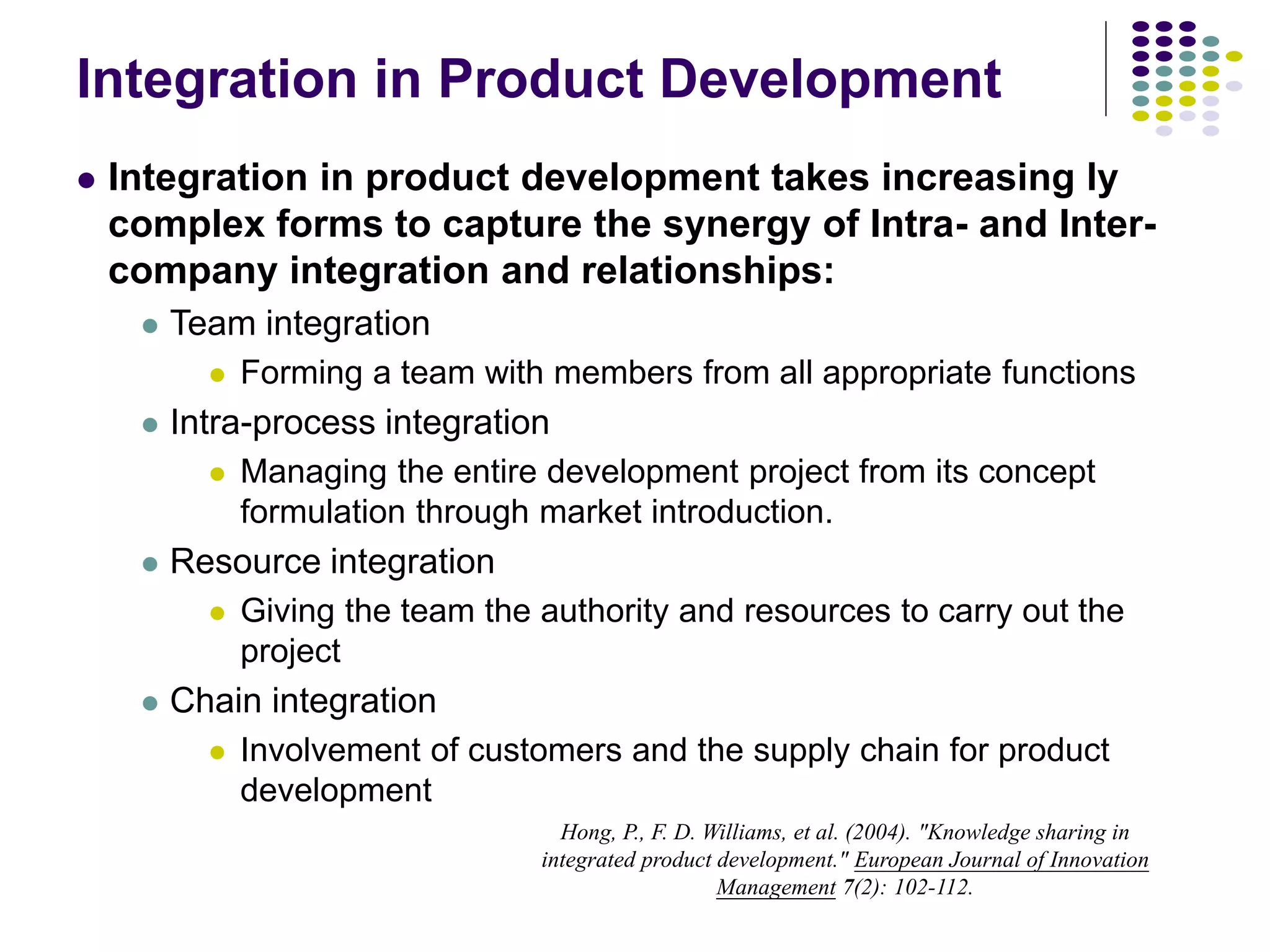
 Integration in product development takes increasing ly
complex forms to capture the synergy of Intra- and Inter-
company integration and relationships:
 Team integration
 Forming a team with members from all appropriate functions
 Intra-process integration
 Managing the entire development project from its concept
formulation through market introduction.
 Resource integration
 Giving the team the authority and resources to carry out the
project
 Chain integration
 Involvement of customers and the supply chain for product
development
Hong, P., F. D. Williams, et al. (2004). "Knowledge sharing in
integrated product development." European Journal of Innovation
Management 7(2): 102-112.
Matching customer requirement with
engineering and manufacturing capabilities
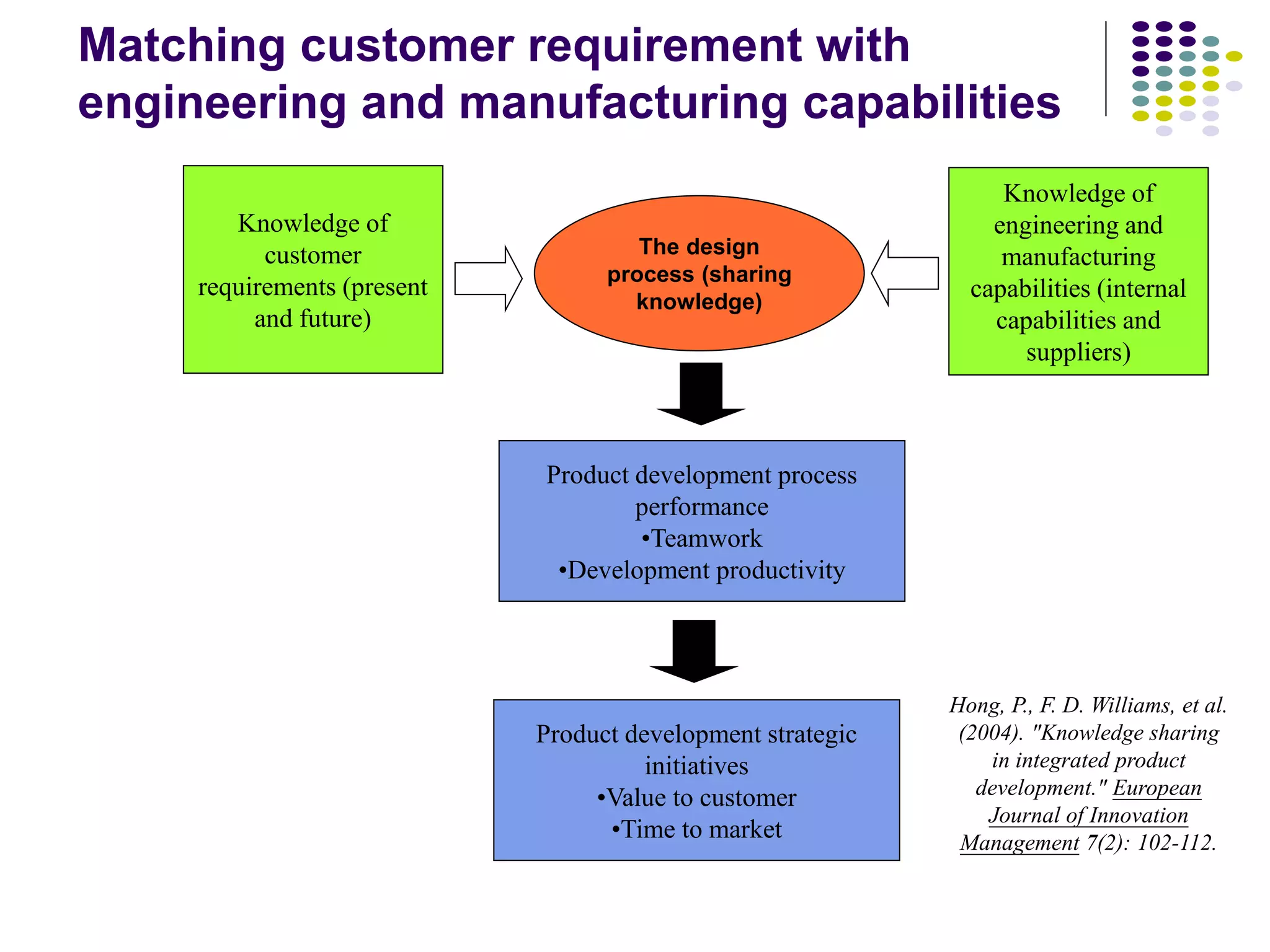
The design
process (sharing
knowledge)
Knowledge of
customer
requirements (present
and future)
Knowledge of
engineering and
manufacturing
capabilities (internal
capabilities and
suppliers)
Product development process
performance
•Teamwork
•Development productivity
Product development strategic
initiatives
•Value to customer
•Time to market
Hong, P., F. D. Williams, et al.
(2004). "Knowledge sharing
in integrated product
development." European
Journal of Innovation
Management 7(2): 102-112.
3 Types of Knowledge Sharing in NPD
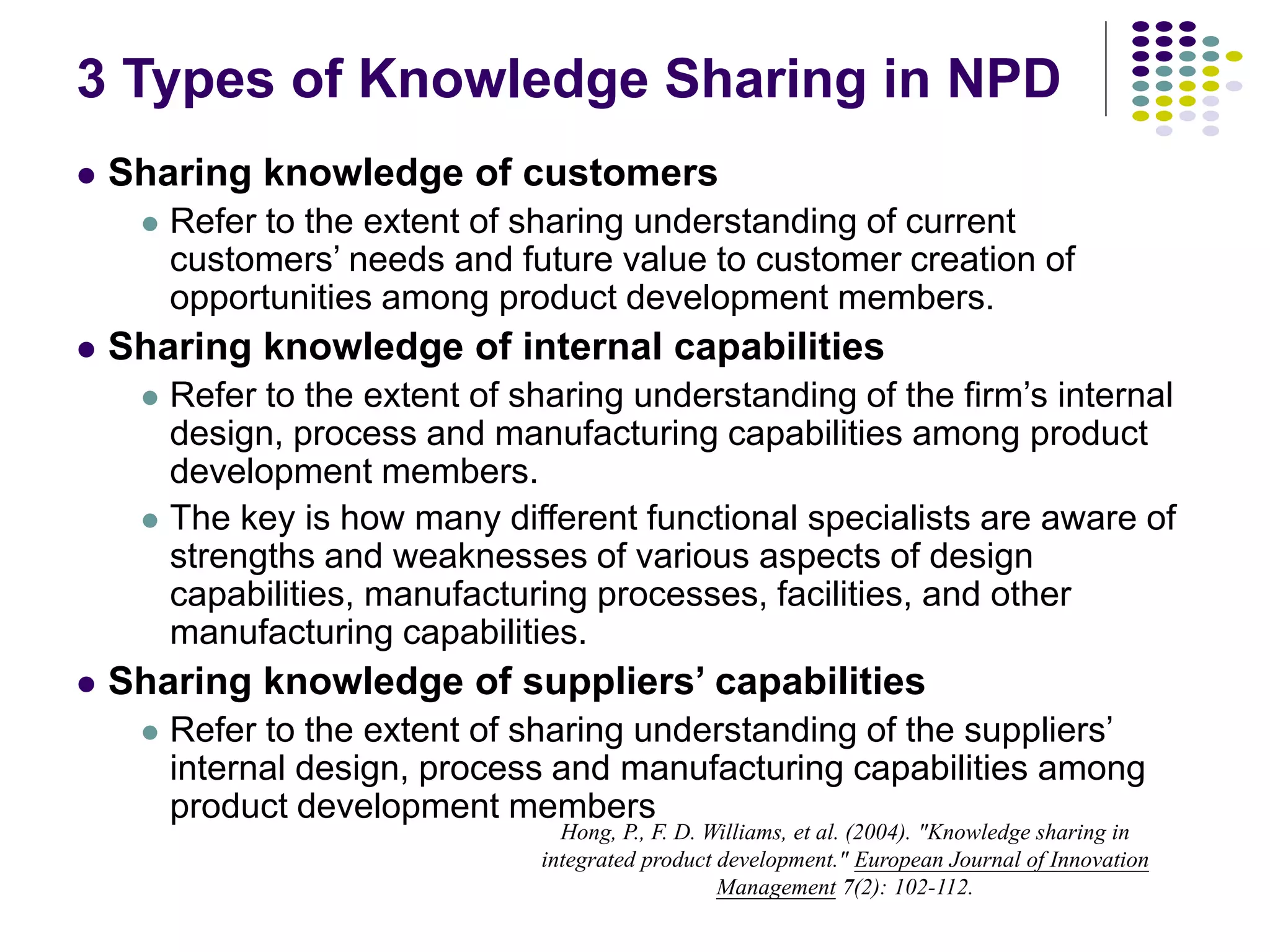
 Sharing knowledge of customers
 Refer to the extent of sharing understanding of current
customers’ needs and future value to customer creation of
opportunities among product development members.
 Sharing knowledge of internal capabilities
 Refer to the extent of sharing understanding of the firm’s internal
design, process and manufacturing capabilities among product
development members.
 The key is how many different functional specialists are aware of
strengths and weaknesses of various aspects of design
capabilities, manufacturing processes, facilities, and other
manufacturing capabilities.
 Sharing knowledge of suppliers’ capabilities
 Refer to the extent of sharing understanding of the suppliers’
internal design, process and manufacturing capabilities among
product development members
Hong, P., F. D. Williams, et al. (2004). "Knowledge sharing in
integrated product development." European Journal of Innovation
Management 7(2): 102-112.
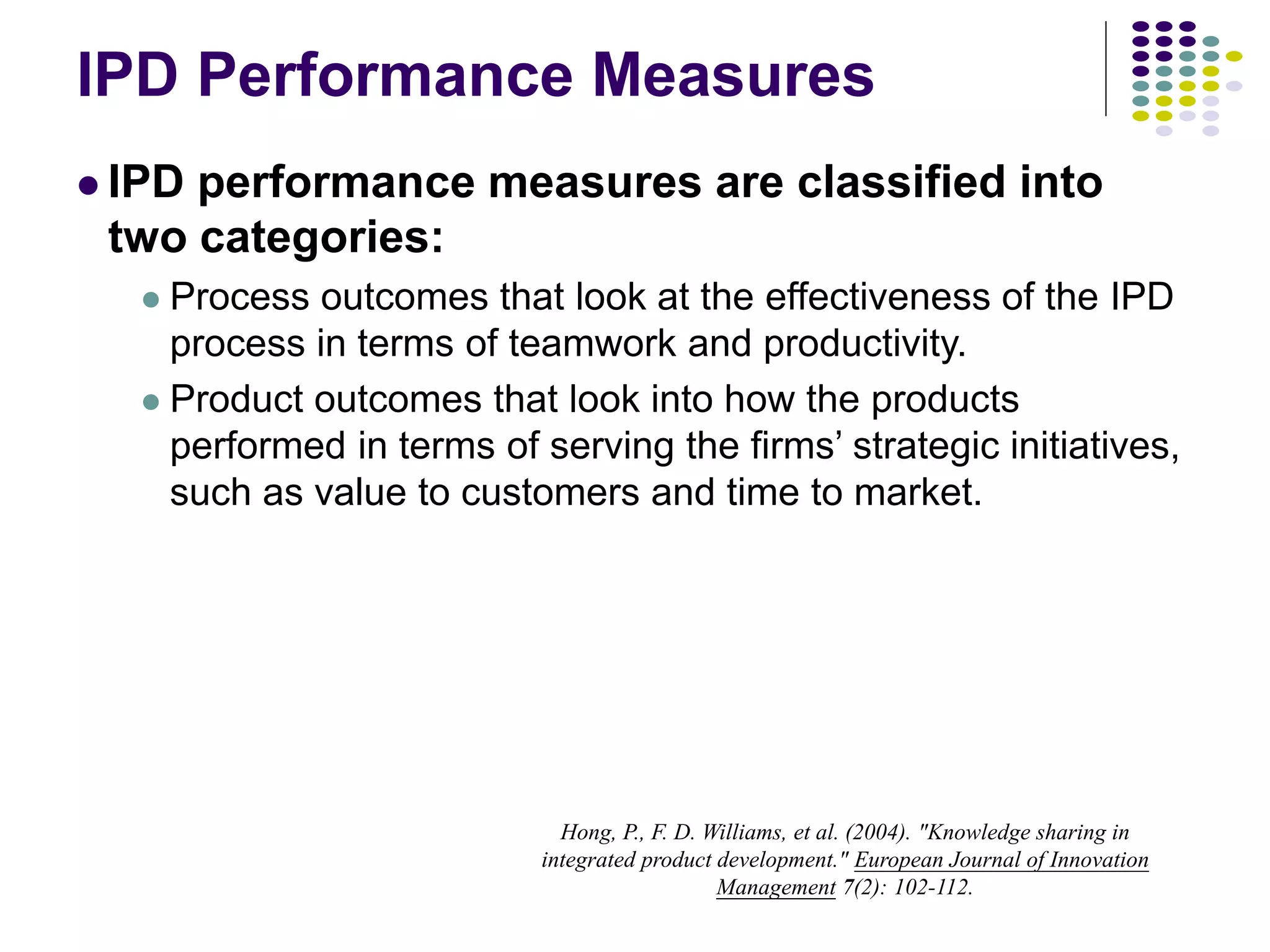
IPD Performance Measures
 IPD performance measures are classified into
two categories:
 Process outcomes that look at the effectiveness of the IPD
process in terms of teamwork and productivity.
 Product outcomes that look into how the products
performed in terms of serving the firms’ strategic initiatives,
such as value to customers and time to market.
Hong, P., F. D. Williams, et al. (2004). "Knowledge sharing in
integrated product development." European Journal of Innovation
Management 7(2): 102-112.
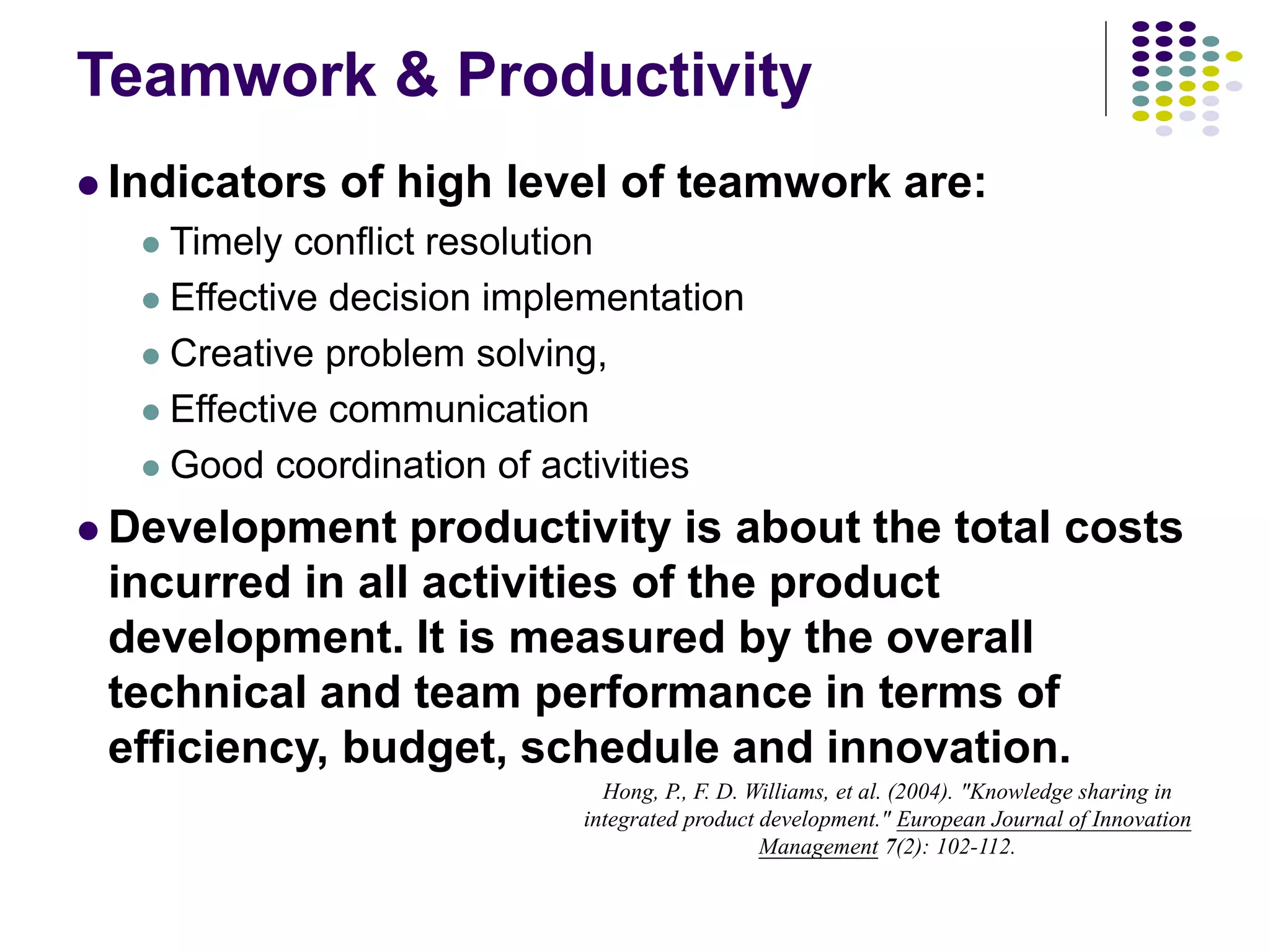
Teamwork & Productivity
 Indicators of high level of teamwork are:
 Timely conflict resolution
 Effective decision implementation
 Creative problem solving,
 Effective communication
 Good coordination of activities
 Development productivity is about the total costs
incurred in all activities of the product
development. It is measured by the overall
technical and team performance in terms of
efficiency, budget, schedule and innovation.
Hong, P., F. D. Williams, et al. (2004). "Knowledge sharing in
integrated product development." European Journal of Innovation
Management 7(2): 102-112.
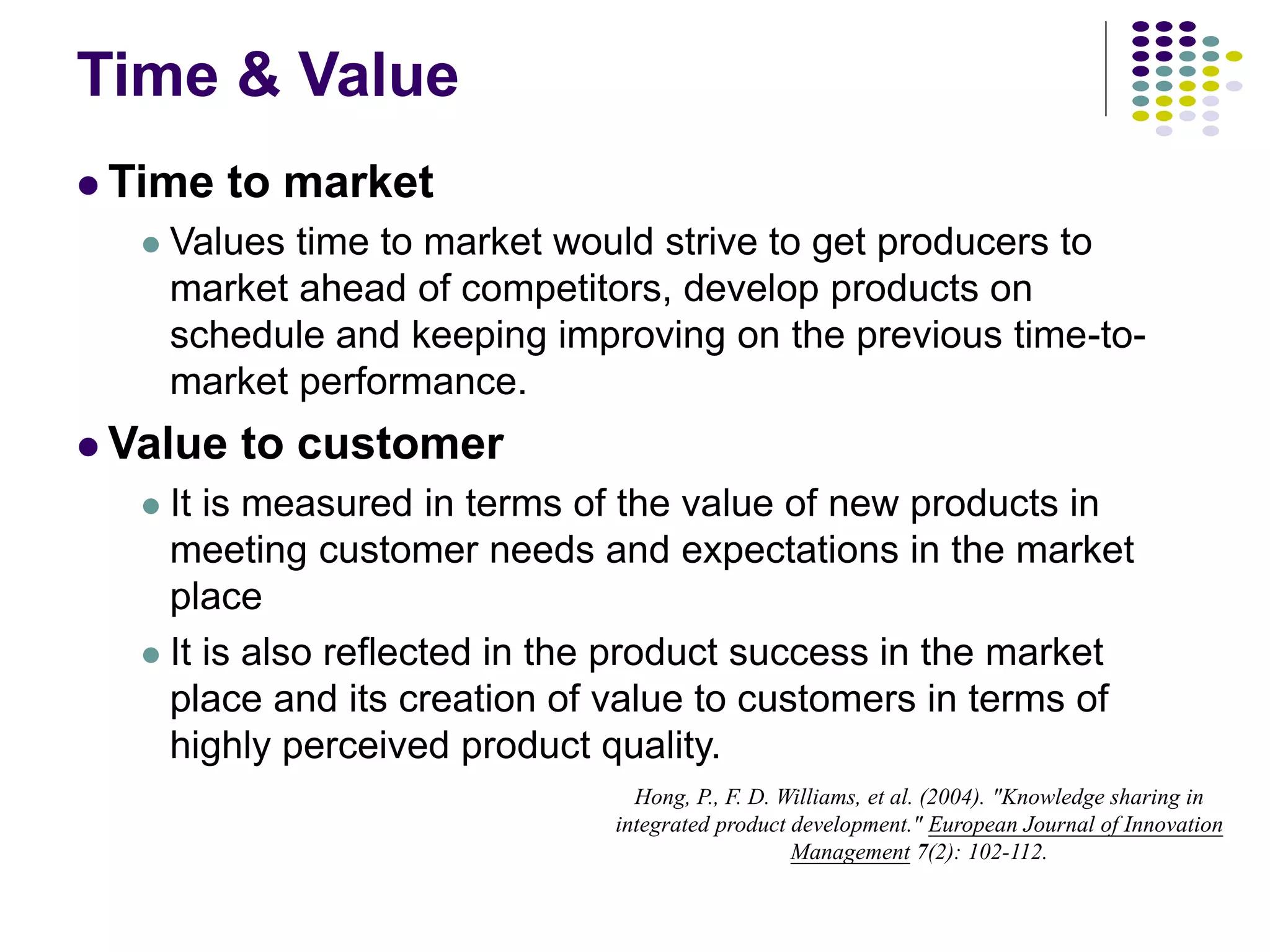
Time & Value
 Time to market
 Values time to market would strive to get producers to
market ahead of competitors, develop products on
schedule and keeping improving on the previous time-to-
market performance.
 Value to customer
 It is measured in terms of the value of new products in
meeting customer needs and expectations in the market
place
 It is also reflected in the product success in the market
place and its creation of value to customers in terms of
highly perceived product quality.
Hong, P., F. D. Williams, et al. (2004). "Knowledge sharing in
integrated product development." European Journal of Innovation
Management 7(2): 102-112.
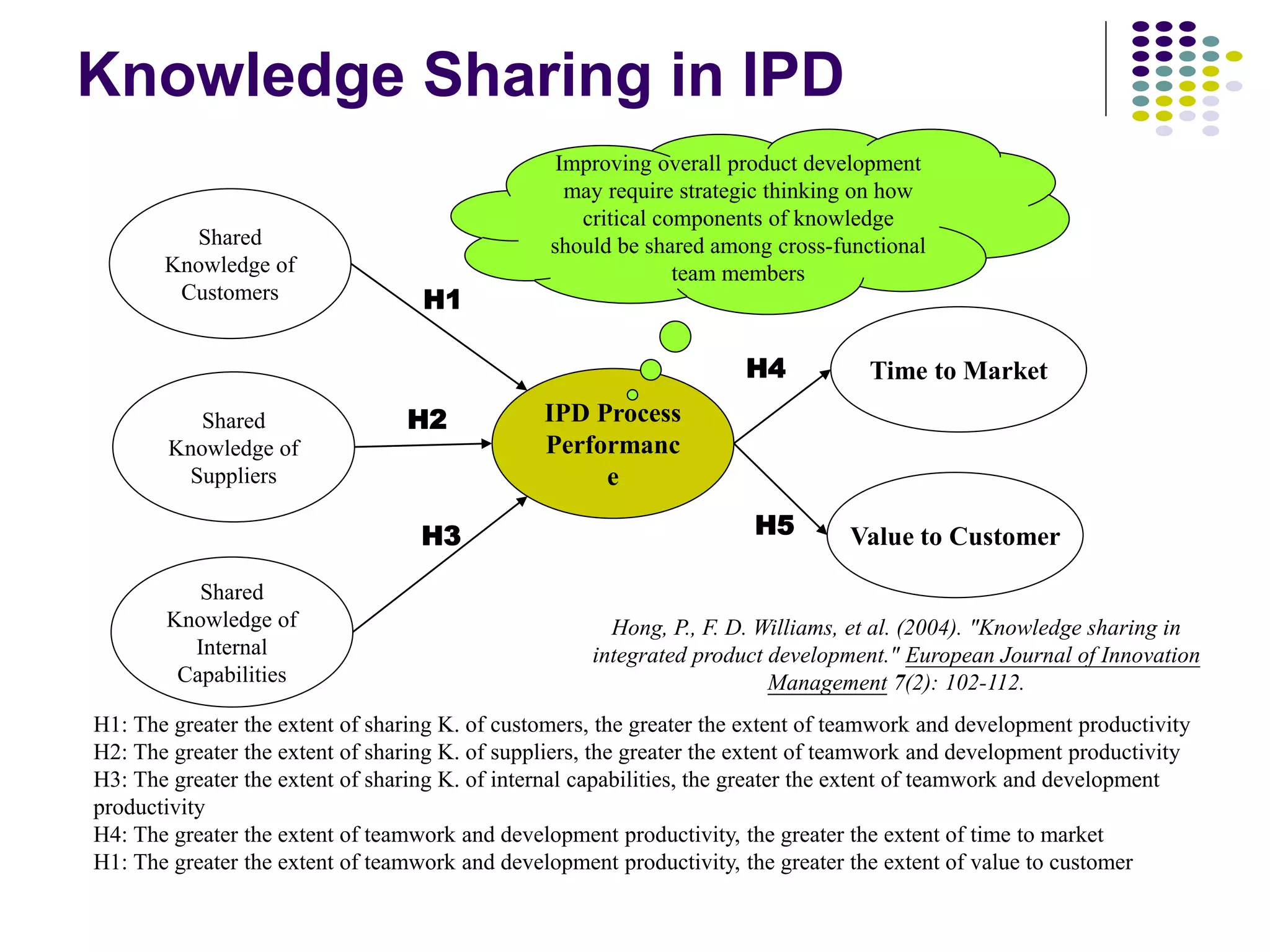
Knowledge Sharing in IPD
Shared
Knowledge of
Customers
Shared
Knowledge of
Suppliers
Shared
Knowledge of
Internal
Capabilities
IPD Process
Performanc
e
Time to Market
Value to Customer
H1
H2
H3
H4
H5
H1: The greater the extent of sharing K. of customers, the greater the extent of teamwork and development productivity
H2: The greater the extent of sharing K. of suppliers, the greater the extent of teamwork and development productivity
H3: The greater the extent of sharing K. of internal capabilities, the greater the extent of teamwork and development
productivity
H4: The greater the extent of teamwork and development productivity, the greater the extent of time to market
H1: The greater the extent of teamwork and development productivity, the greater the extent of value to customer
Improving overall product development
may require strategic thinking on how
critical components of knowledge
should be shared among cross-functional
team members
Hong, P., F. D. Williams, et al. (2004). "Knowledge sharing in
integrated product development." European Journal of Innovation
Management 7(2): 102-112.

Knowledge sharing in integrated product development

  • 1.
    Knowledge Sharing in IntegratedProduct Development Hong, P., F. D. Williams, et al. (2004). "Knowledge sharing in integrated product development." European Journal of Innovation Management 7(2): 102-112.
  • 2.
    Integration in ProductDevelopment  Integration in product development takes increasing ly complex forms to capture the synergy of Intra- and Inter- company integration and relationships:  Team integration  Forming a team with members from all appropriate functions  Intra-process integration  Managing the entire development project from its concept formulation through market introduction.  Resource integration  Giving the team the authority and resources to carry out the project  Chain integration  Involvement of customers and the supply chain for product development Hong, P., F. D. Williams, et al. (2004). "Knowledge sharing in integrated product development." European Journal of Innovation Management 7(2): 102-112.
  • 3.
    Matching customer requirementwith engineering and manufacturing capabilities The design process (sharing knowledge) Knowledge of customer requirements (present and future) Knowledge of engineering and manufacturing capabilities (internal capabilities and suppliers) Product development process performance •Teamwork •Development productivity Product development strategic initiatives •Value to customer •Time to market Hong, P., F. D. Williams, et al. (2004). "Knowledge sharing in integrated product development." European Journal of Innovation Management 7(2): 102-112.
  • 4.
    3 Types ofKnowledge Sharing in NPD  Sharing knowledge of customers  Refer to the extent of sharing understanding of current customers’ needs and future value to customer creation of opportunities among product development members.  Sharing knowledge of internal capabilities  Refer to the extent of sharing understanding of the firm’s internal design, process and manufacturing capabilities among product development members.  The key is how many different functional specialists are aware of strengths and weaknesses of various aspects of design capabilities, manufacturing processes, facilities, and other manufacturing capabilities.  Sharing knowledge of suppliers’ capabilities  Refer to the extent of sharing understanding of the suppliers’ internal design, process and manufacturing capabilities among product development members Hong, P., F. D. Williams, et al. (2004). "Knowledge sharing in integrated product development." European Journal of Innovation Management 7(2): 102-112.
  • 5.
    IPD Performance Measures IPD performance measures are classified into two categories:  Process outcomes that look at the effectiveness of the IPD process in terms of teamwork and productivity.  Product outcomes that look into how the products performed in terms of serving the firms’ strategic initiatives, such as value to customers and time to market. Hong, P., F. D. Williams, et al. (2004). "Knowledge sharing in integrated product development." European Journal of Innovation Management 7(2): 102-112.
  • 6.
    Teamwork & Productivity Indicators of high level of teamwork are:  Timely conflict resolution  Effective decision implementation  Creative problem solving,  Effective communication  Good coordination of activities  Development productivity is about the total costs incurred in all activities of the product development. It is measured by the overall technical and team performance in terms of efficiency, budget, schedule and innovation. Hong, P., F. D. Williams, et al. (2004). "Knowledge sharing in integrated product development." European Journal of Innovation Management 7(2): 102-112.
  • 7.
    Time & Value Time to market  Values time to market would strive to get producers to market ahead of competitors, develop products on schedule and keeping improving on the previous time-to- market performance.  Value to customer  It is measured in terms of the value of new products in meeting customer needs and expectations in the market place  It is also reflected in the product success in the market place and its creation of value to customers in terms of highly perceived product quality. Hong, P., F. D. Williams, et al. (2004). "Knowledge sharing in integrated product development." European Journal of Innovation Management 7(2): 102-112.
  • 8.
    Knowledge Sharing inIPD Shared Knowledge of Customers Shared Knowledge of Suppliers Shared Knowledge of Internal Capabilities IPD Process Performanc e Time to Market Value to Customer H1 H2 H3 H4 H5 H1: The greater the extent of sharing K. of customers, the greater the extent of teamwork and development productivity H2: The greater the extent of sharing K. of suppliers, the greater the extent of teamwork and development productivity H3: The greater the extent of sharing K. of internal capabilities, the greater the extent of teamwork and development productivity H4: The greater the extent of teamwork and development productivity, the greater the extent of time to market H1: The greater the extent of teamwork and development productivity, the greater the extent of value to customer Improving overall product development may require strategic thinking on how critical components of knowledge should be shared among cross-functional team members Hong, P., F. D. Williams, et al. (2004). "Knowledge sharing in integrated product development." European Journal of Innovation Management 7(2): 102-112.