Download as PDF, PPTX












The document outlines a comprehensive approach to new product development, detailing stages from idea generation to prototype testing. It emphasizes key principles such as customer engagement, innovation through empathetic design, teamwork, and quality management. Additionally, it highlights the importance of early supplier involvement and structured processes to ensure successful product launches.
Introduction to product development and the new product development funnel.
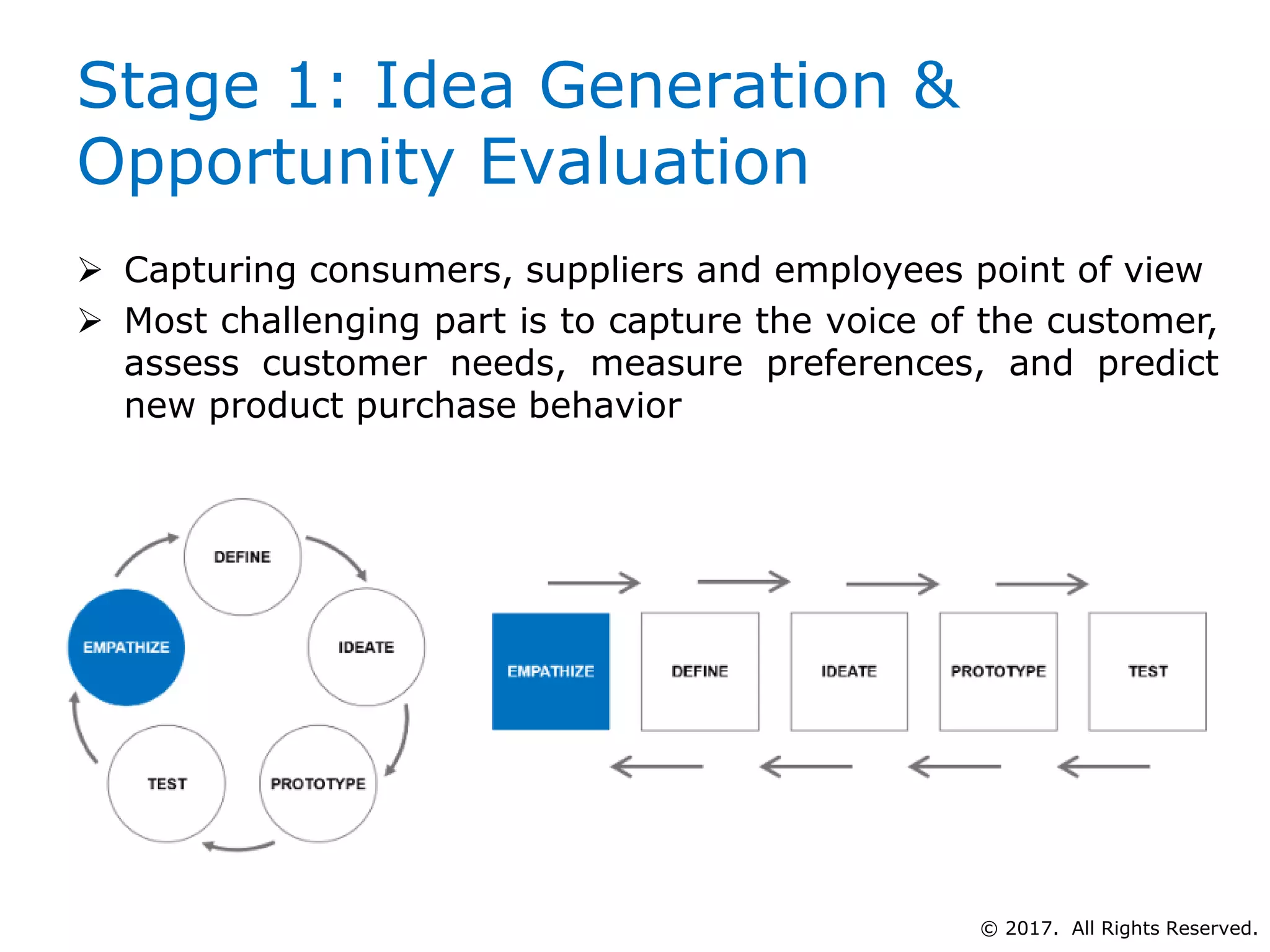
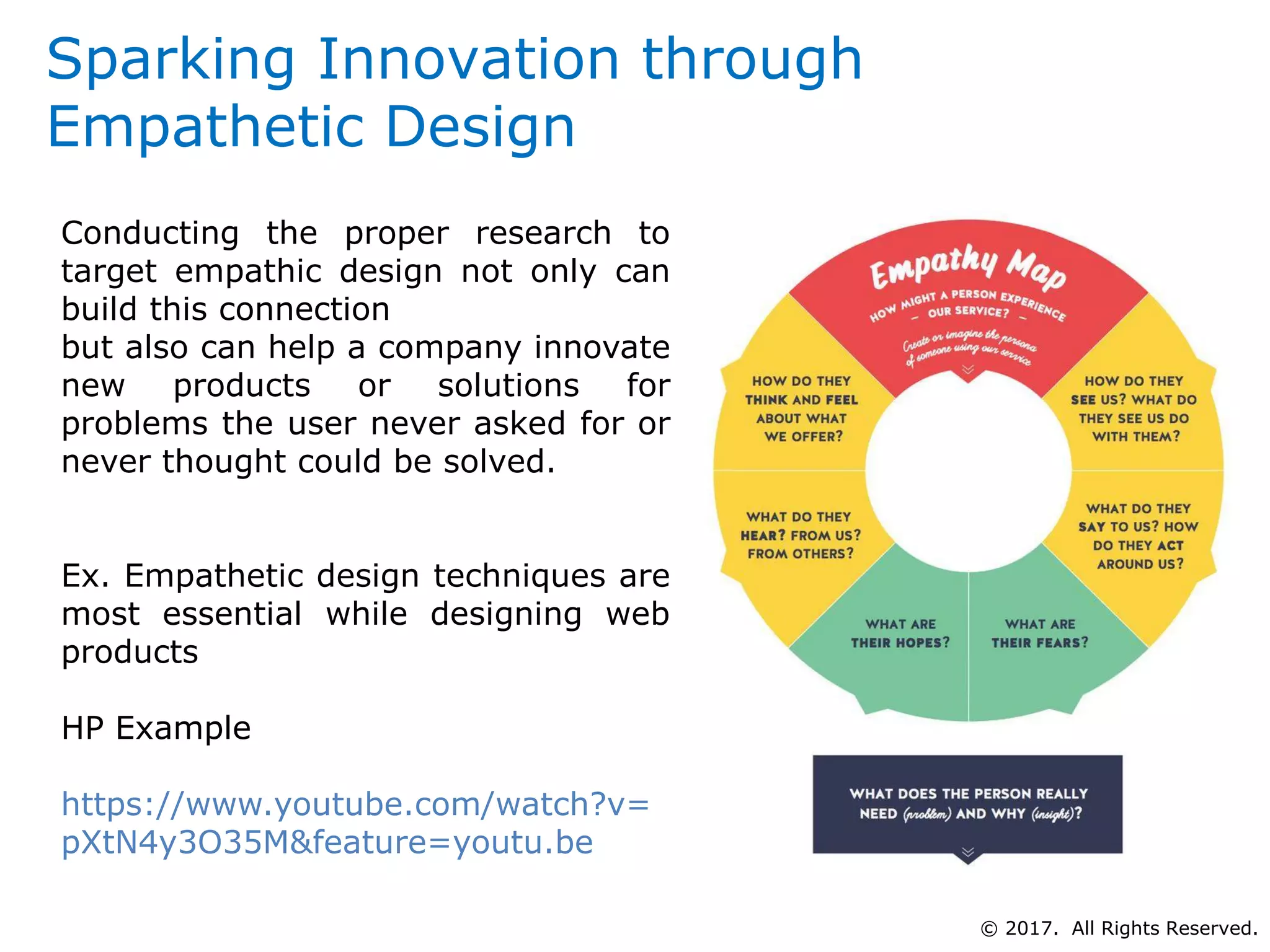
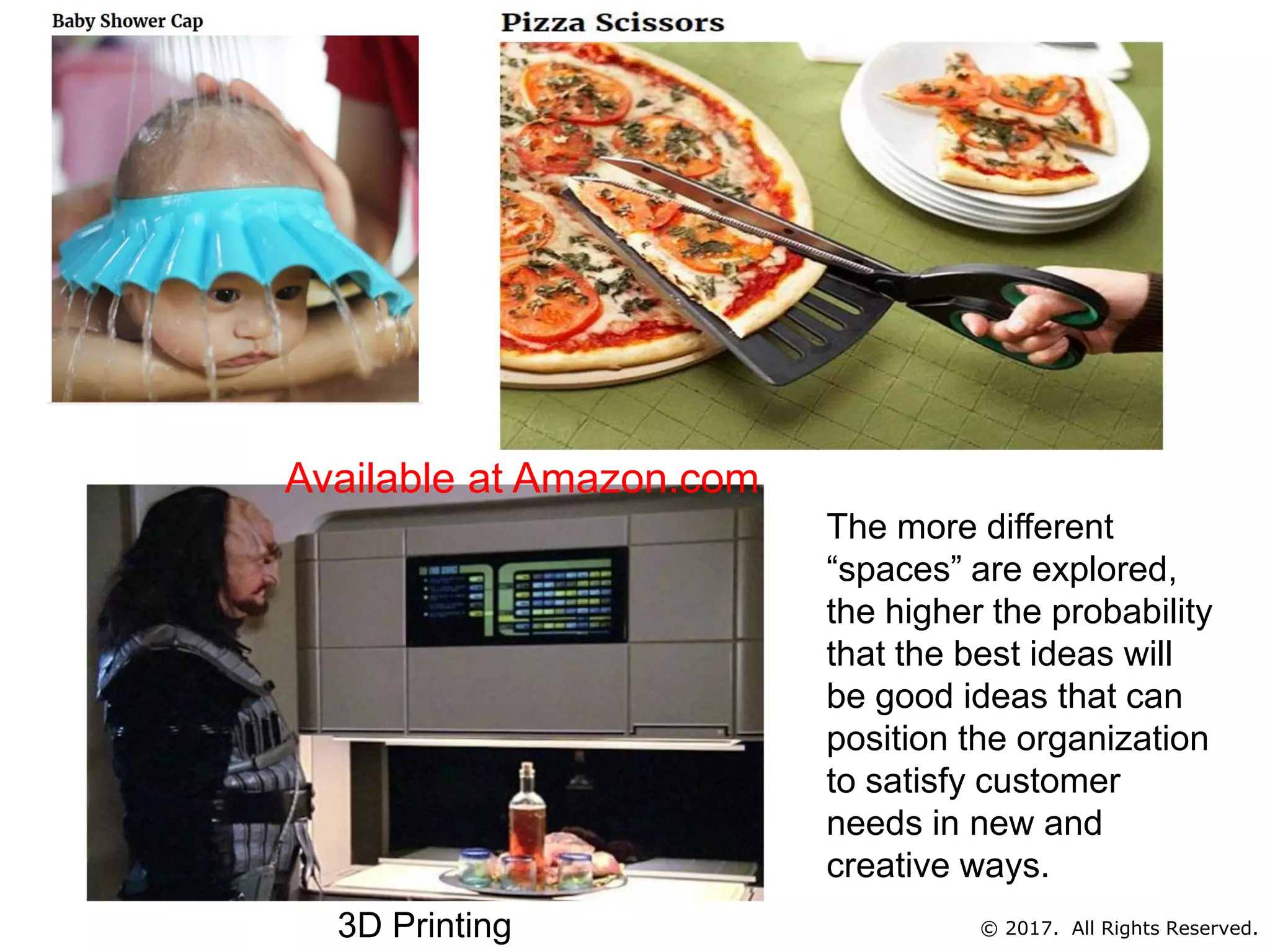
Stages of product development, including opportunities evaluation, empathetic design, and brainstorming techniques.
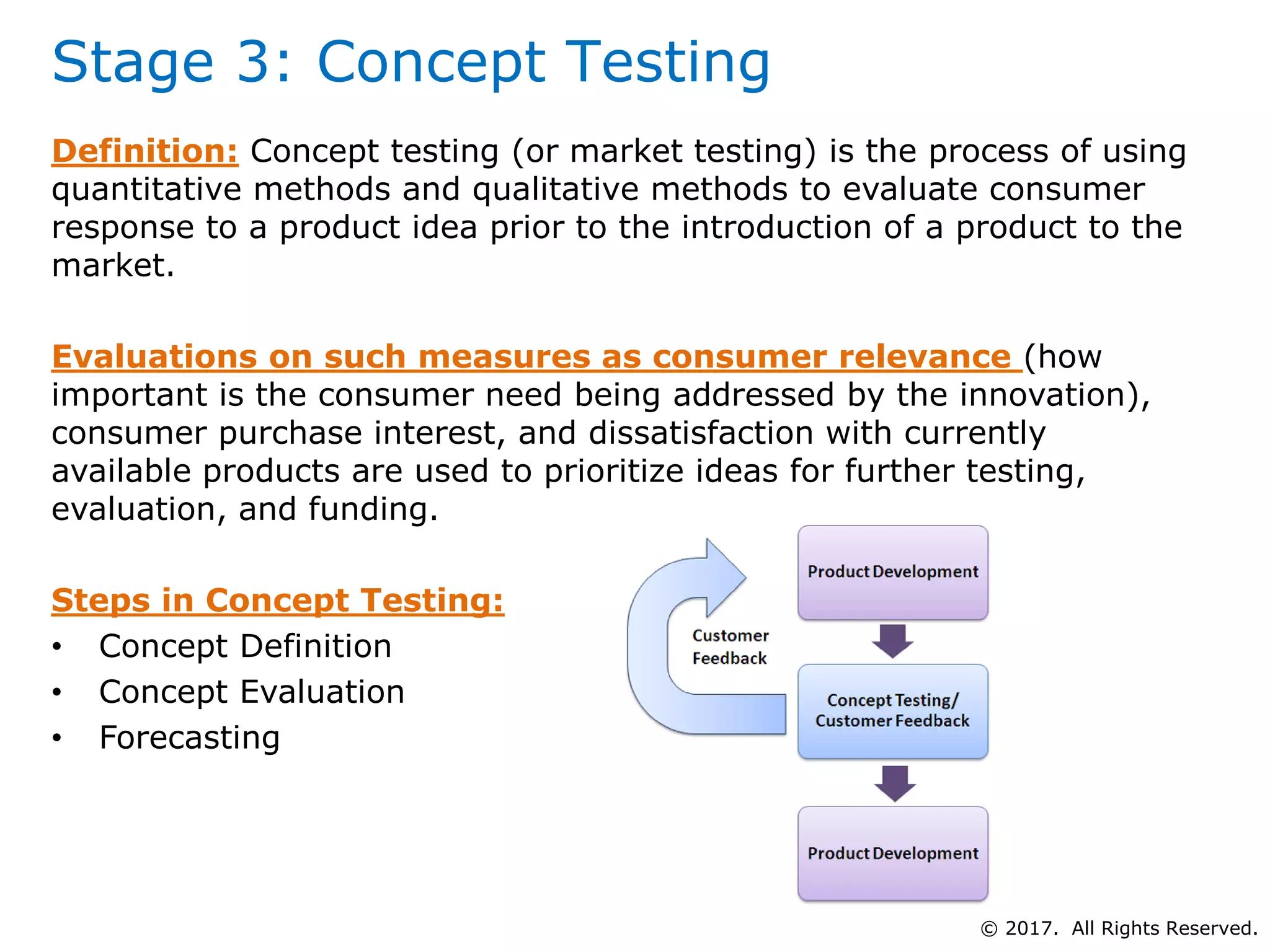
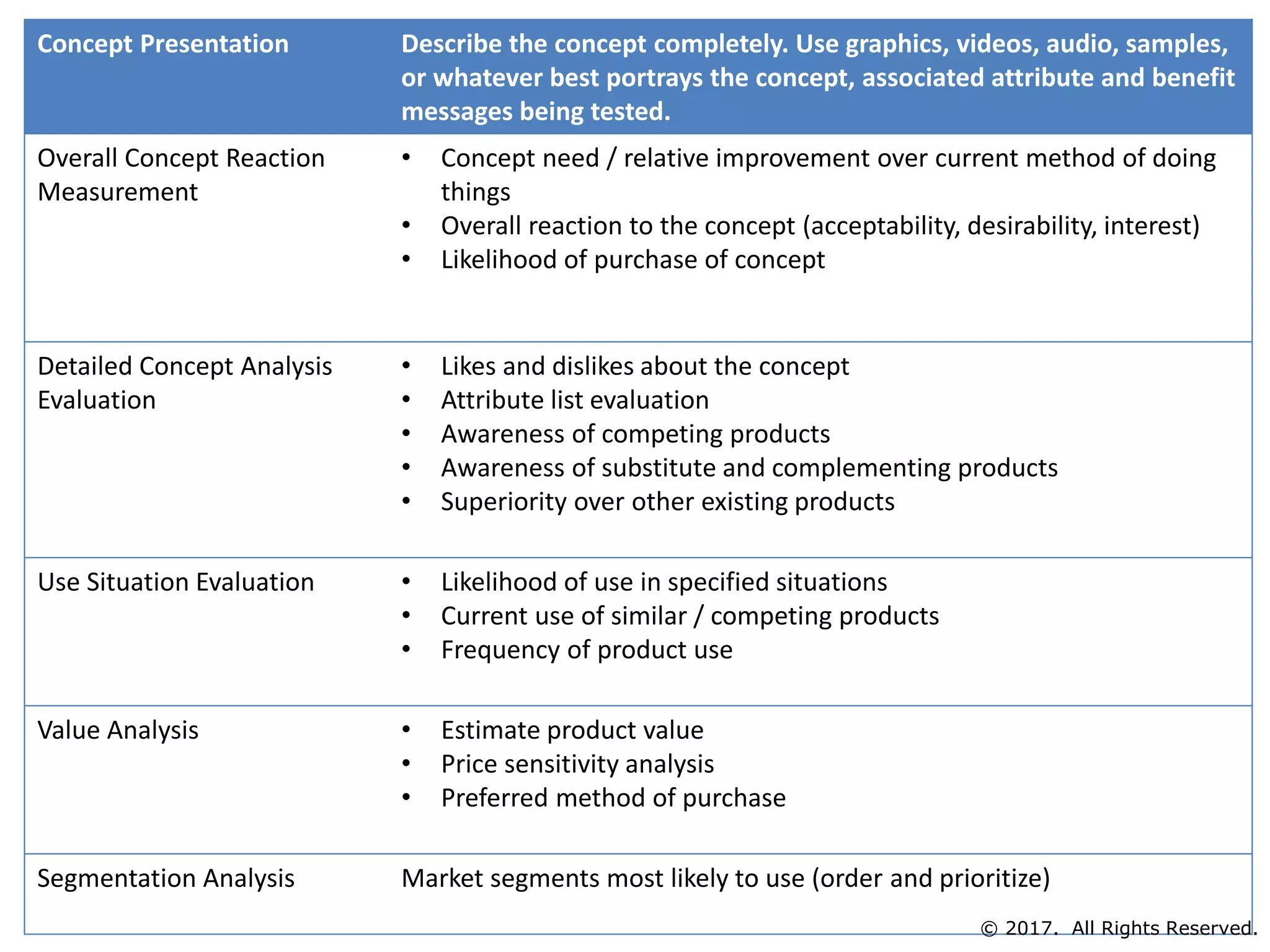
Methods for evaluating consumer response to new product ideas before market introduction.
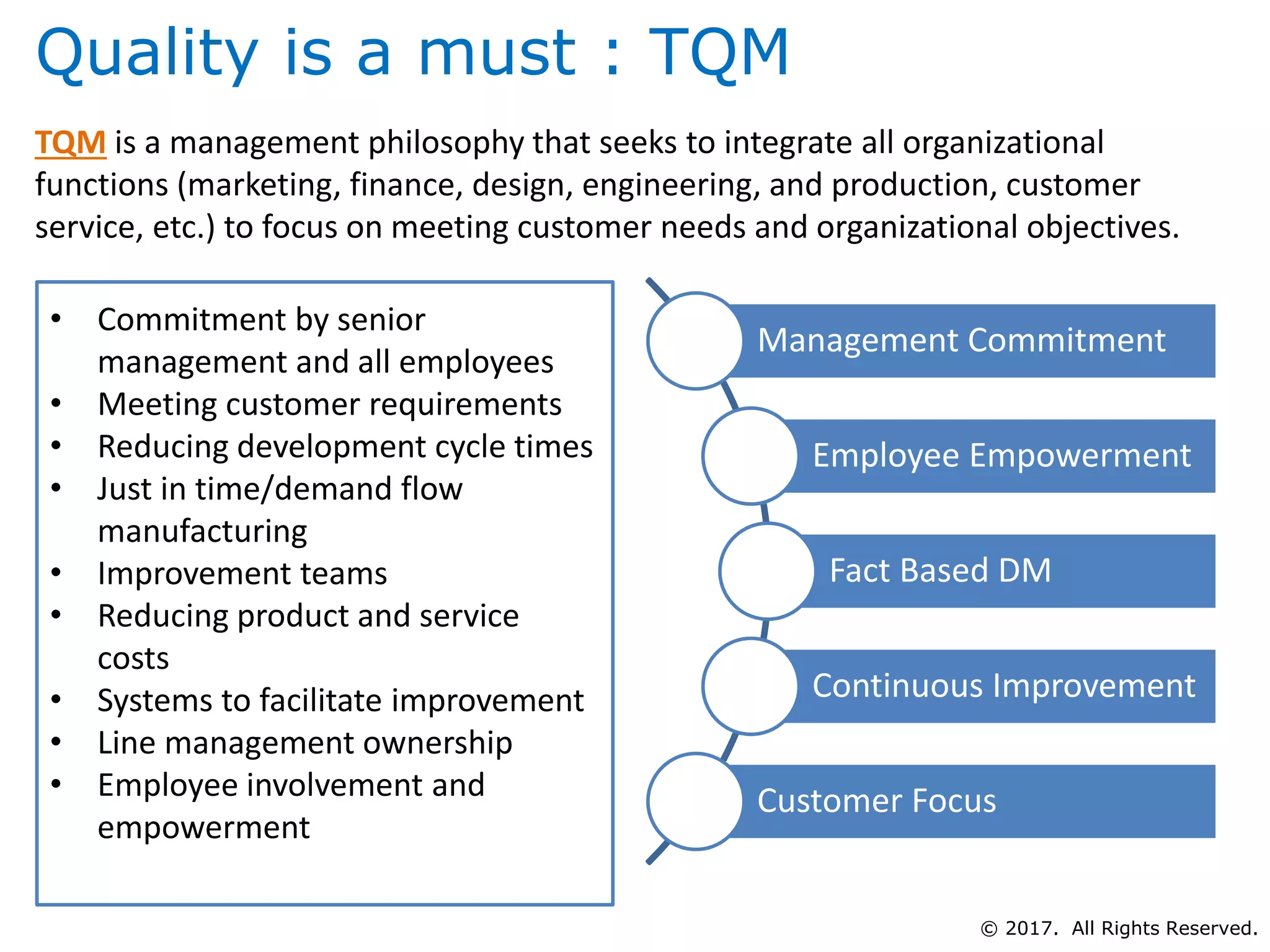
TQM philosophy focuses on meeting customer needs, improving quality, and involving employees.
The importance of early supplier involvement for enhancing design and manufacturing processes.
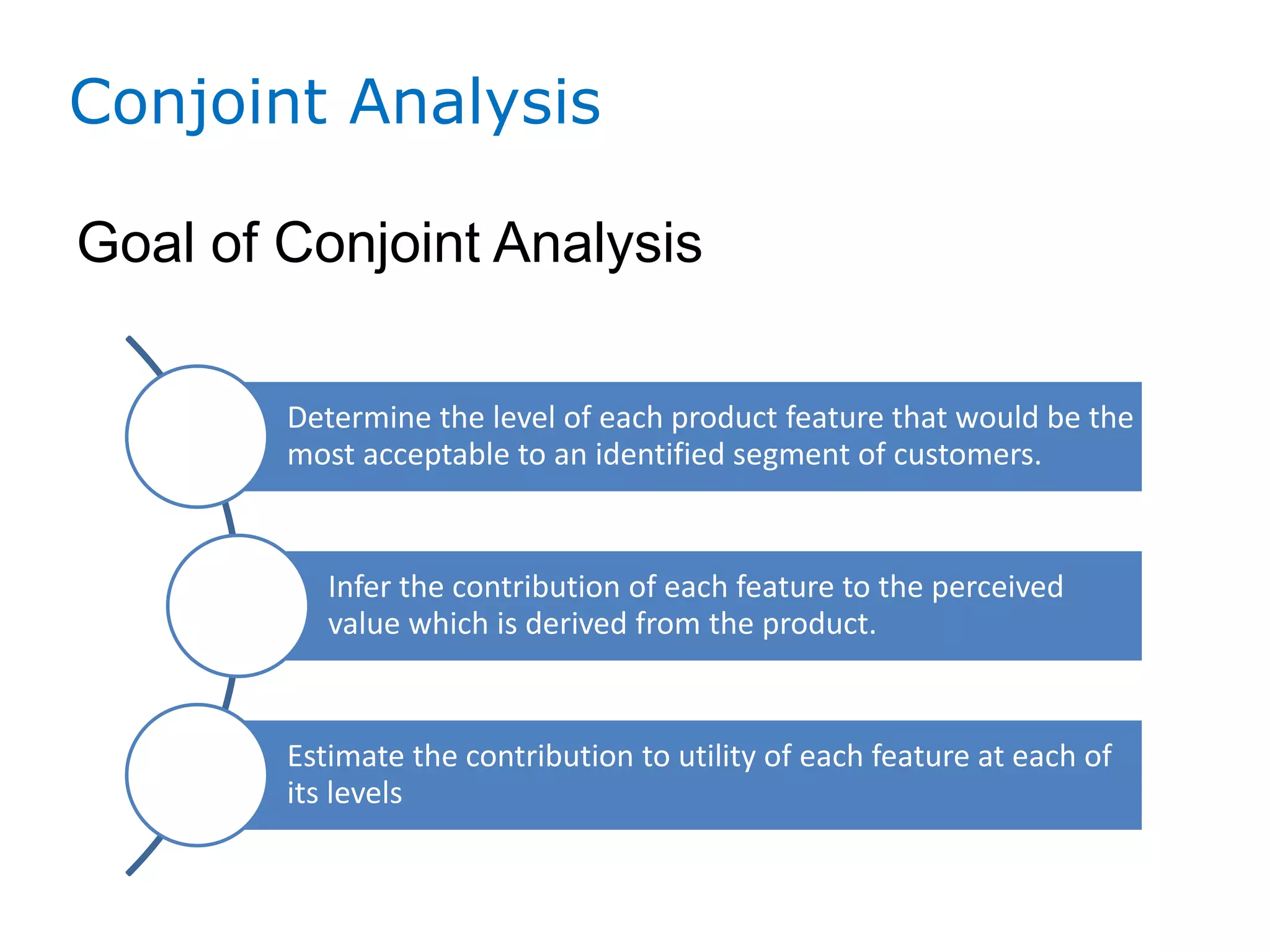
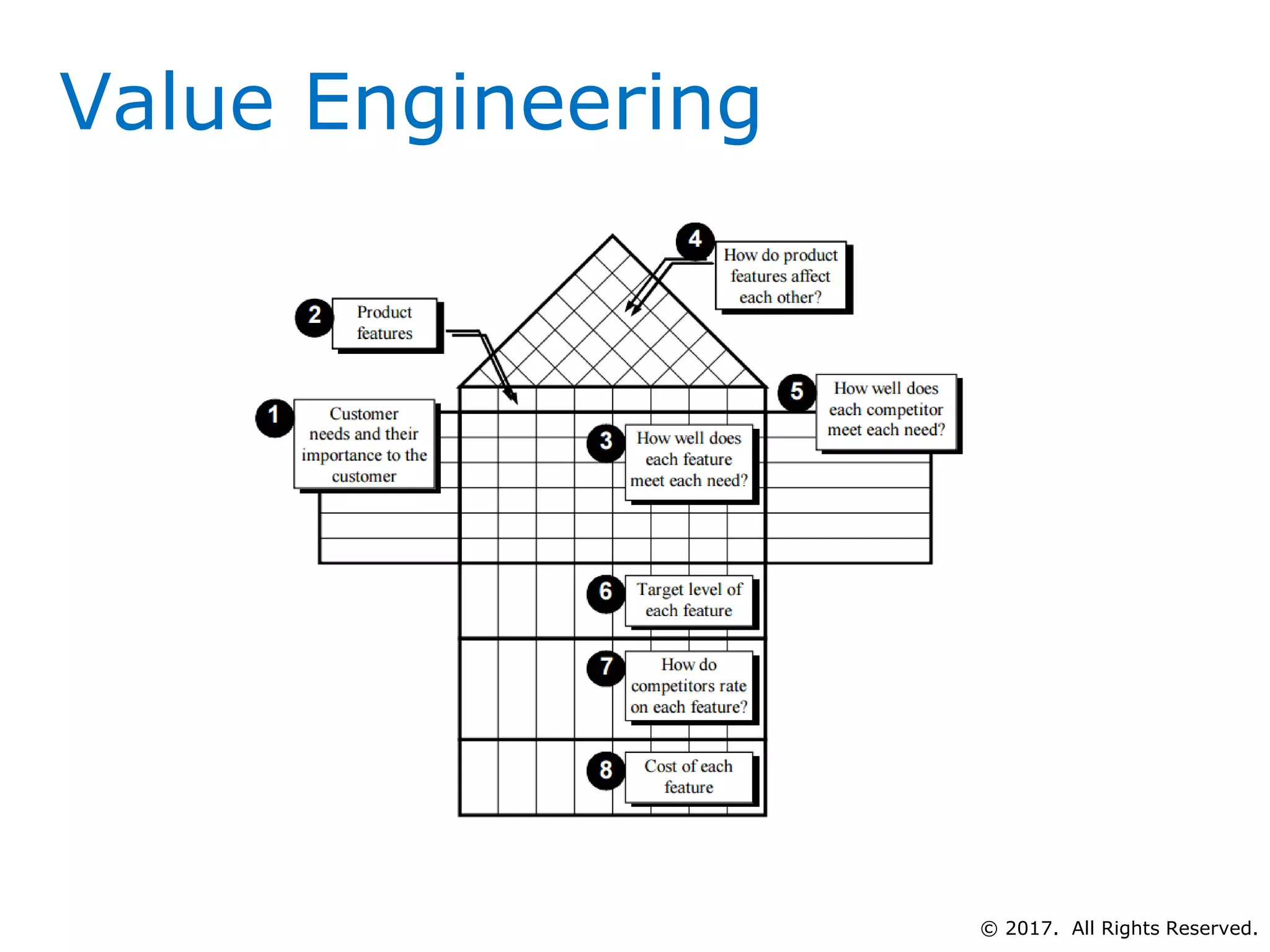
Engineering techniques like Conjoint Analysis and Value Engineering for effective product design.
Importance of target costing and the benefits of reducing unit production costs.
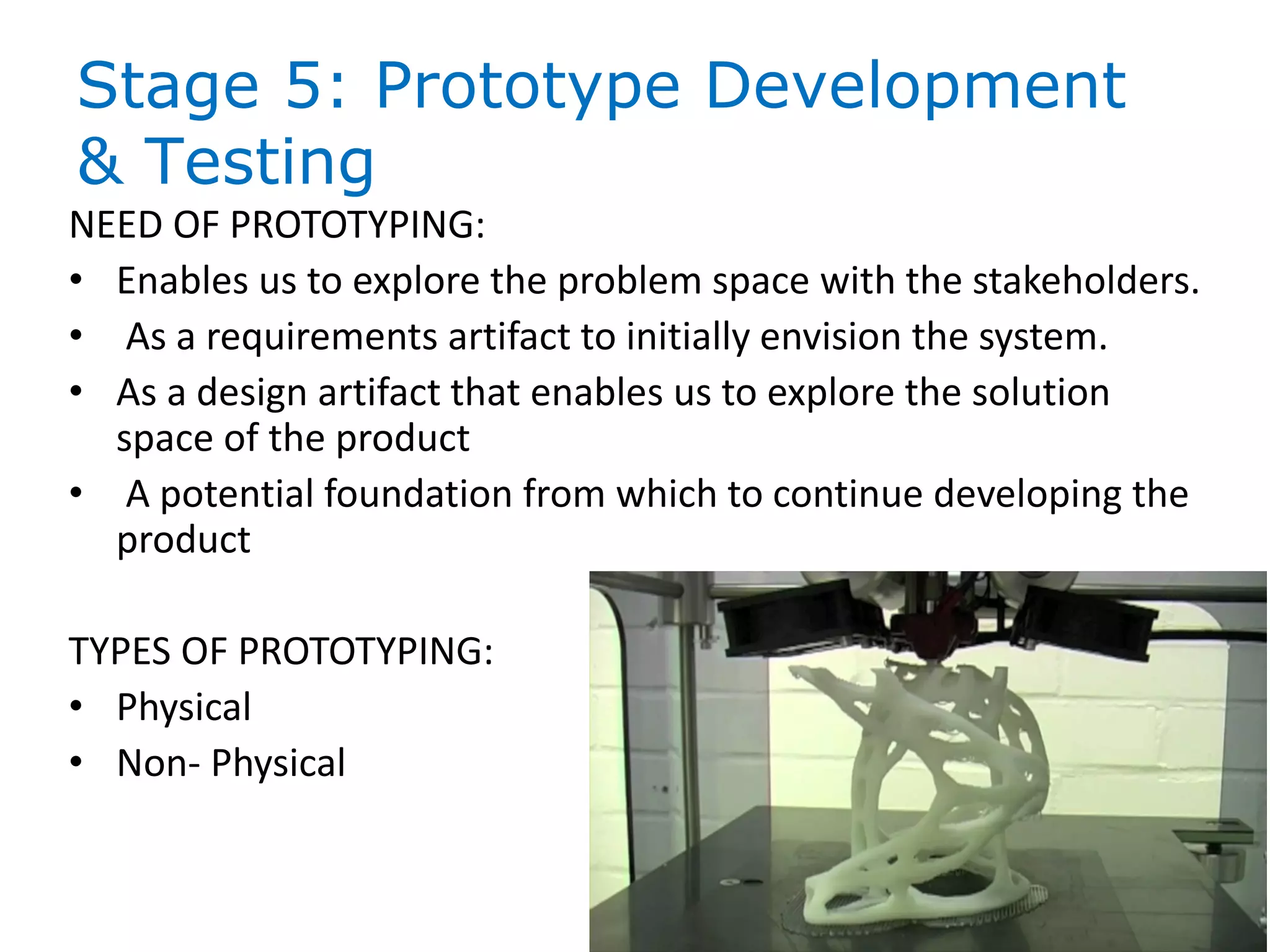
Prototyping methods and testing approaches to validate product design and functionality.
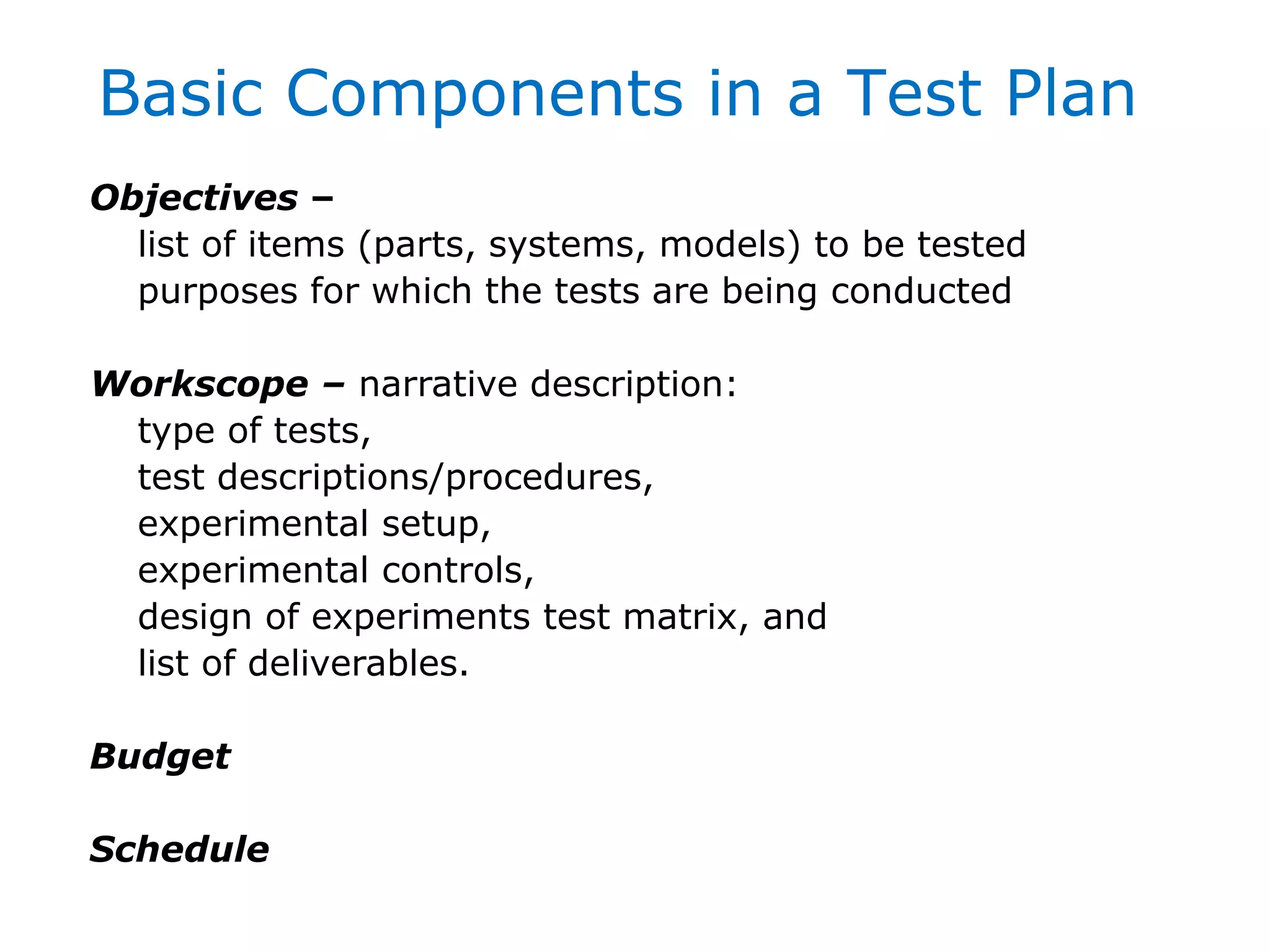
Detailed components of test plans including objectives, workscope, budget, and schedule.
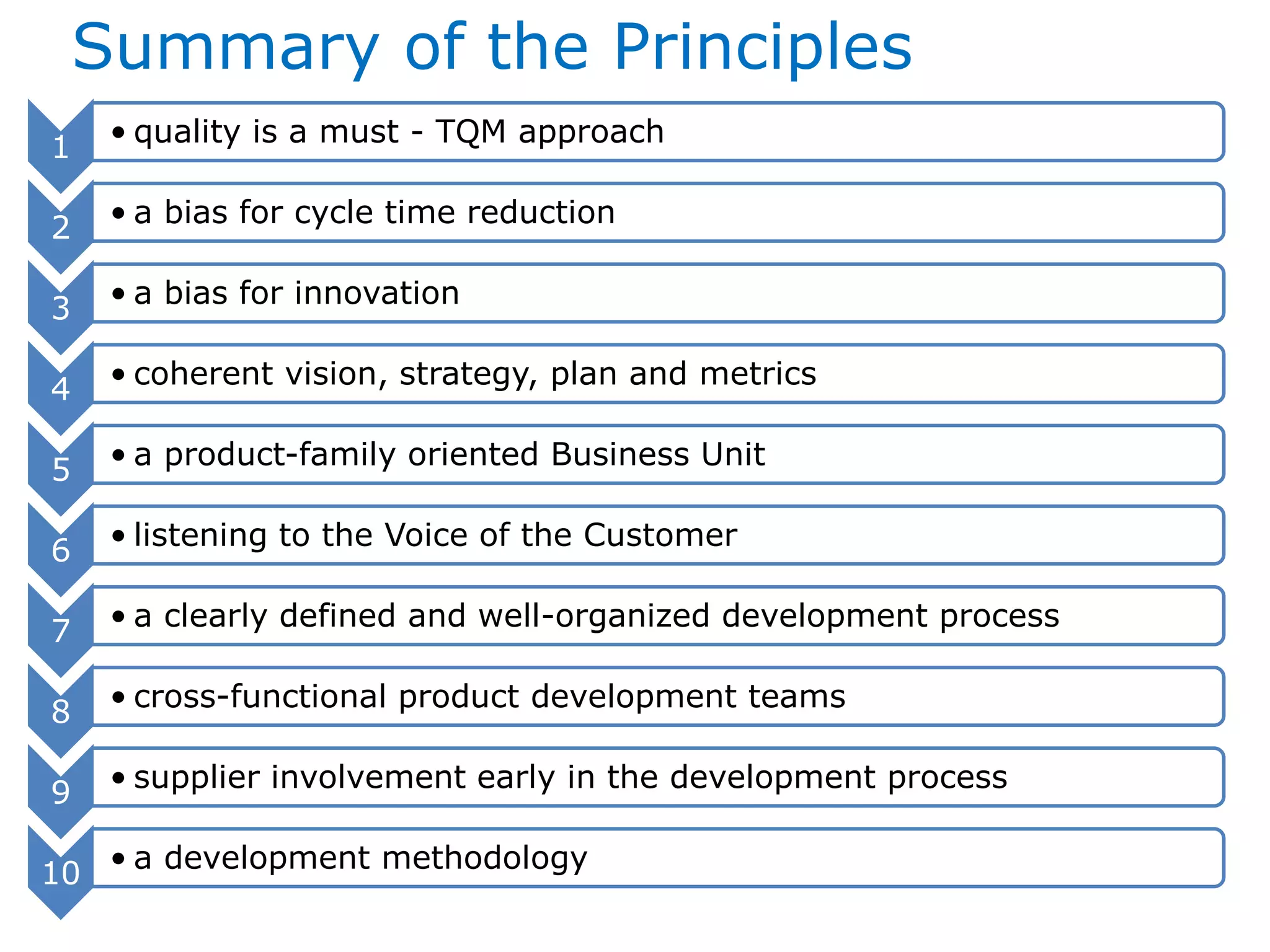
Key principles of product development including TQM, customer focus, and collaboration.
References cited in the presentation for further reading on product development.


