
1
Introduction:
In textile industry, a lot of faults observed in knit fabric from its manufacturing process to dyeing
finishing which are totally unexpected. These types of faults decrease the total quality of the knit
fabric which ultimately creates a significant impact on the profit percentage. So, a Knitwear
Technologist should have sufficient idea about all the knit fabric faults which are mentioned in
Below with correct images.
Defects in Knitted Fabric:
Faults in knit fabric can be produced at the three stages from its manufacturing to dyeing and
finishing. Here we Discuss About Knitting Basic Defect’s. All the Defect with Appropriate Picture Are
Given below:
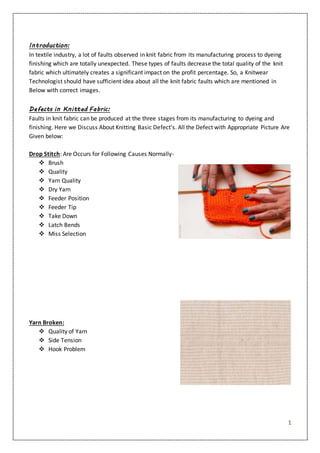
Drop Stitch: Are Occurs for Following Causes Normally-
 Brush
 Quality
 Yarn Quality
 Dry Yarn
 Feeder Position
 Feeder Tip
 Take Down
 Latch Bends
 Miss Selection
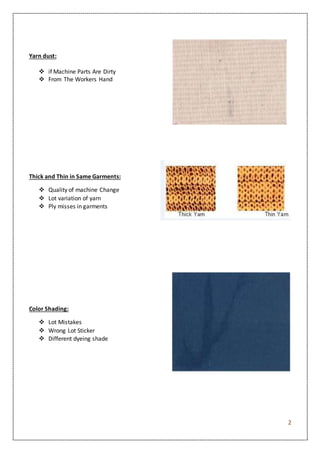
Yarn Broken:
 Quality of Yarn
 Side Tension
 Hook Problem
2
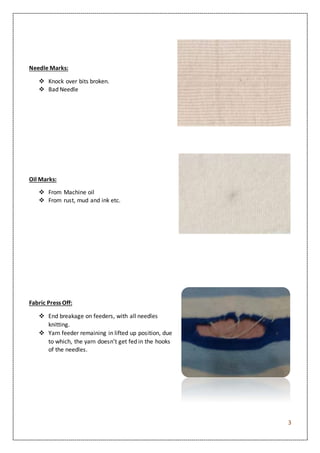
Yarn dust:
 if Machine Parts Are Dirty
 From The Workers Hand
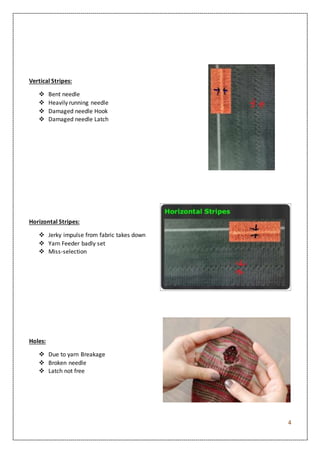
Thick and Thin in Same Garments:
 Quality of machine Change
 Lot variation of yarn
 Ply misses in garments
Color Shading:
 Lot Mistakes
 Wrong Lot Sticker
 Different dyeing shade
3
Needle Marks:
 Knock over bits broken.
 Bad Needle
Oil Marks:
 From Machine oil
 From rust, mud and ink etc.
Fabric Press Off:
 End breakage on feeders, with all needles
knitting.
 Yarn feeder remaining in lifted up position, due
to which, the yarn doesn’t get fed in the hooks
of the needles.
4
Vertical Stripes:
 Bent needle
 Heavily running needle
 Damaged needle Hook
 Damaged needle Latch
Horizontal Stripes:
 Jerky impulse from fabric takes down
 Yarn Feeder badly set
 Miss-selection
Holes:
 Due to yarn Breakage
 Broken needle
 Latch not free
5
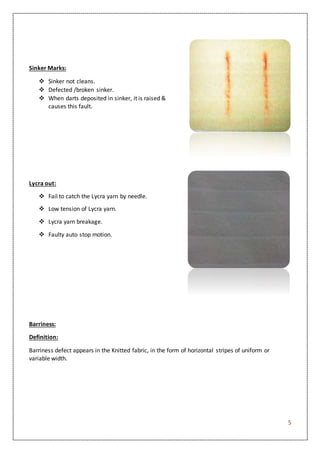
Sinker Marks:
 Sinker not cleans.
 Defected /broken sinker.
 When darts deposited in sinker, it is raised &
causes this fault.
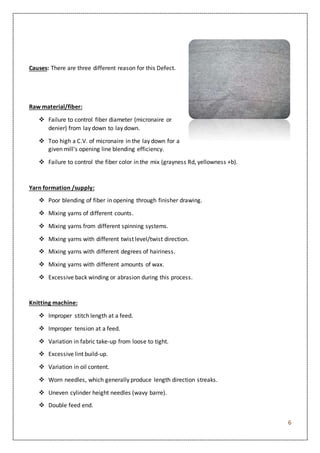
Lycra out:
 Fail to catch the Lycra yarn by needle.
 Low tension of Lycra yarn.
 Lycra yarn breakage.
 Faulty auto stop motion.
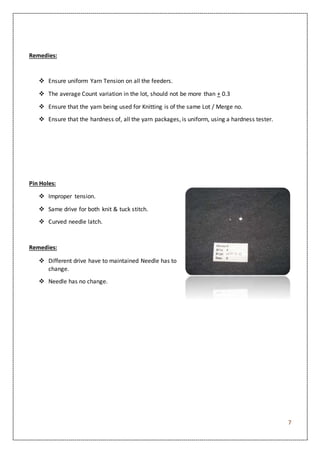
Barriness:
Definition:
Barriness defect appears in the Knitted fabric, in the form of horizontal stripes of uniform or
variable width.
6
Causes: There are three different reason for this Defect.
Raw material/fiber:
 Failure to control fiber diameter (micronaire or
denier) from lay down to lay down.
 Too high a C.V. of micronaire in the lay down for a
given mill's opening line blending efficiency.
 Failure to control the fiber color in the mix (grayness Rd, yellowness +b).
Yarn formation /supply:
 Poor blending of fiber in opening through finisher drawing.
 Mixing yarns of different counts.
 Mixing yarns from different spinning systems.
 Mixing yarns with different twist level/twist direction.
 Mixing yarns with different degrees of hairiness.
 Mixing yarns with different amounts of wax.
 Excessive back winding or abrasion during this process.
Knitting machine:
 Improper stitch length at a feed.
 Improper tension at a feed.
 Variation in fabric take-up from loose to tight.
 Excessive lint build-up.
 Variation in oil content.
 Worn needles, which generally produce length direction streaks.
 Uneven cylinder height needles (wavy barre).
 Double feed end.
7
Remedies:
 Ensure uniform Yarn Tension on all the feeders.
 The average Count variation in the lot, should not be more than + 0.3
 Ensure that the yarn being used for Knitting is of the same Lot / Merge no.
 Ensure that the hardness of, all the yarn packages, is uniform, using a hardness tester.
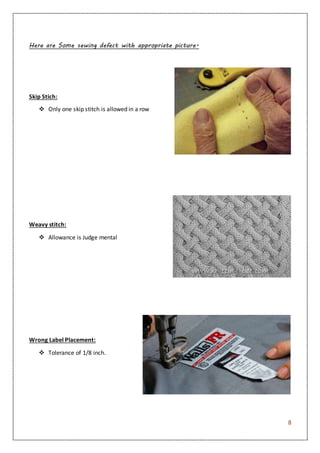
Pin Holes:
 Improper tension.
 Same drive for both knit & tuck stitch.
 Curved needle latch.
Remedies:
 Different drive have to maintained Needle has to
change.
 Needle has no change.
8
Here are Some sewing defect with appropriate picture-
Skip Stich:
 Only one skip stitch is allowed in a row
Weavy stitch:
 Allowance is Judge mental
Wrong Label Placement:
 Tolerance of 1/8 inch.
9
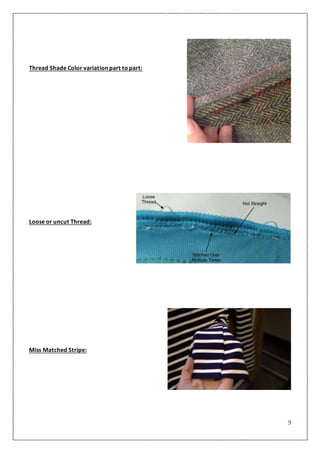
Thread Shade Color variation part topart:
Loose or uncut Thread:
Miss Matched Stripe:
10
Conclusion:
Detection of faults during production of knitted fabric is crucial for improved quality and
productivity.
This presentation will present and discuss the detection of faults and malfunctions during the
production remedies of knitted fabric.
We believe that our work will help the knitters to identify the source of detected faults & proposes
specific solutions for theses faults causes. So Knitters can take necessary remedial steps to
overcome the faults.

Knit and sewing defects

  • 1.
    1 Introduction: In textile industry,a lot of faults observed in knit fabric from its manufacturing process to dyeing finishing which are totally unexpected. These types of faults decrease the total quality of the knit fabric which ultimately creates a significant impact on the profit percentage. So, a Knitwear Technologist should have sufficient idea about all the knit fabric faults which are mentioned in Below with correct images. Defects in Knitted Fabric: Faults in knit fabric can be produced at the three stages from its manufacturing to dyeing and finishing. Here we Discuss About Knitting Basic Defect’s. All the Defect with Appropriate Picture Are Given below: Drop Stitch: Are Occurs for Following Causes Normally-  Brush  Quality  Yarn Quality  Dry Yarn  Feeder Position  Feeder Tip  Take Down  Latch Bends  Miss Selection Yarn Broken:  Quality of Yarn  Side Tension  Hook Problem
  • 2.
    2 Yarn dust:  ifMachine Parts Are Dirty  From The Workers Hand Thick and Thin in Same Garments:  Quality of machine Change  Lot variation of yarn  Ply misses in garments Color Shading:  Lot Mistakes  Wrong Lot Sticker  Different dyeing shade
  • 3.
    3 Needle Marks:  Knockover bits broken.  Bad Needle Oil Marks:  From Machine oil  From rust, mud and ink etc. Fabric Press Off:  End breakage on feeders, with all needles knitting.  Yarn feeder remaining in lifted up position, due to which, the yarn doesn’t get fed in the hooks of the needles.
  • 4.
    4 Vertical Stripes:  Bentneedle  Heavily running needle  Damaged needle Hook  Damaged needle Latch Horizontal Stripes:  Jerky impulse from fabric takes down  Yarn Feeder badly set  Miss-selection Holes:  Due to yarn Breakage  Broken needle  Latch not free
  • 5.
    5 Sinker Marks:  Sinkernot cleans.  Defected /broken sinker.  When darts deposited in sinker, it is raised & causes this fault. Lycra out:  Fail to catch the Lycra yarn by needle.  Low tension of Lycra yarn.  Lycra yarn breakage.  Faulty auto stop motion. Barriness: Definition: Barriness defect appears in the Knitted fabric, in the form of horizontal stripes of uniform or variable width.
  • 6.
    6 Causes: There arethree different reason for this Defect. Raw material/fiber:  Failure to control fiber diameter (micronaire or denier) from lay down to lay down.  Too high a C.V. of micronaire in the lay down for a given mill's opening line blending efficiency.  Failure to control the fiber color in the mix (grayness Rd, yellowness +b). Yarn formation /supply:  Poor blending of fiber in opening through finisher drawing.  Mixing yarns of different counts.  Mixing yarns from different spinning systems.  Mixing yarns with different twist level/twist direction.  Mixing yarns with different degrees of hairiness.  Mixing yarns with different amounts of wax.  Excessive back winding or abrasion during this process. Knitting machine:  Improper stitch length at a feed.  Improper tension at a feed.  Variation in fabric take-up from loose to tight.  Excessive lint build-up.  Variation in oil content.  Worn needles, which generally produce length direction streaks.  Uneven cylinder height needles (wavy barre).  Double feed end.
  • 7.
    7 Remedies:  Ensure uniformYarn Tension on all the feeders.  The average Count variation in the lot, should not be more than + 0.3  Ensure that the yarn being used for Knitting is of the same Lot / Merge no.  Ensure that the hardness of, all the yarn packages, is uniform, using a hardness tester. Pin Holes:  Improper tension.  Same drive for both knit & tuck stitch.  Curved needle latch. Remedies:  Different drive have to maintained Needle has to change.  Needle has no change.
  • 8.
    8 Here are Somesewing defect with appropriate picture- Skip Stich:  Only one skip stitch is allowed in a row Weavy stitch:  Allowance is Judge mental Wrong Label Placement:  Tolerance of 1/8 inch.
  • 9.
    9 Thread Shade Colorvariation part topart: Loose or uncut Thread: Miss Matched Stripe:
  • 10.
    10 Conclusion: Detection of faultsduring production of knitted fabric is crucial for improved quality and productivity. This presentation will present and discuss the detection of faults and malfunctions during the production remedies of knitted fabric. We believe that our work will help the knitters to identify the source of detected faults & proposes specific solutions for theses faults causes. So Knitters can take necessary remedial steps to overcome the faults.