Presented By:
Md. Mamun Mia ID. 142-23-148
OUTLINE OF PRESENTATION
 Introduction
 Description
 Findings
 Conclusion
Introduction
Fabric Inspection ?
 Fabric inspection is visual Examination of the fabric
to detect fabric defects.
 To ensure the garments are produced as per the
quality expected.
 Identify the critical points where inspection should
be conducted.
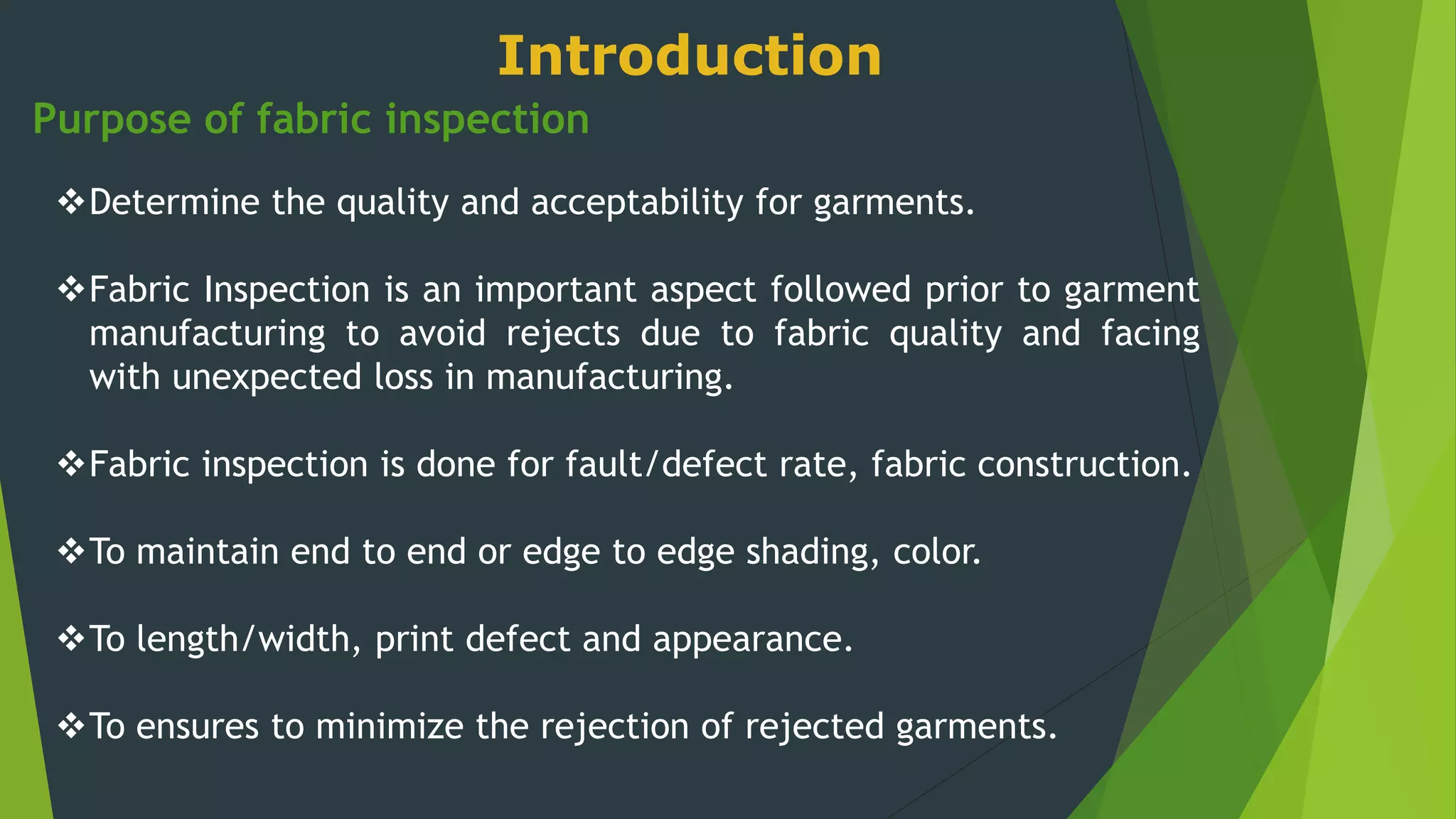
Purpose of fabric inspection
Determine the quality and acceptability for garments.
Fabric Inspection is an important aspect followed prior to garment
manufacturing to avoid rejects due to fabric quality and facing
with unexpected loss in manufacturing.
Fabric inspection is done for fault/defect rate, fabric construction.
To maintain end to end or edge to edge shading, color.
To length/width, print defect and appearance.
To ensures to minimize the rejection of rejected garments.
Introduction
Introduction
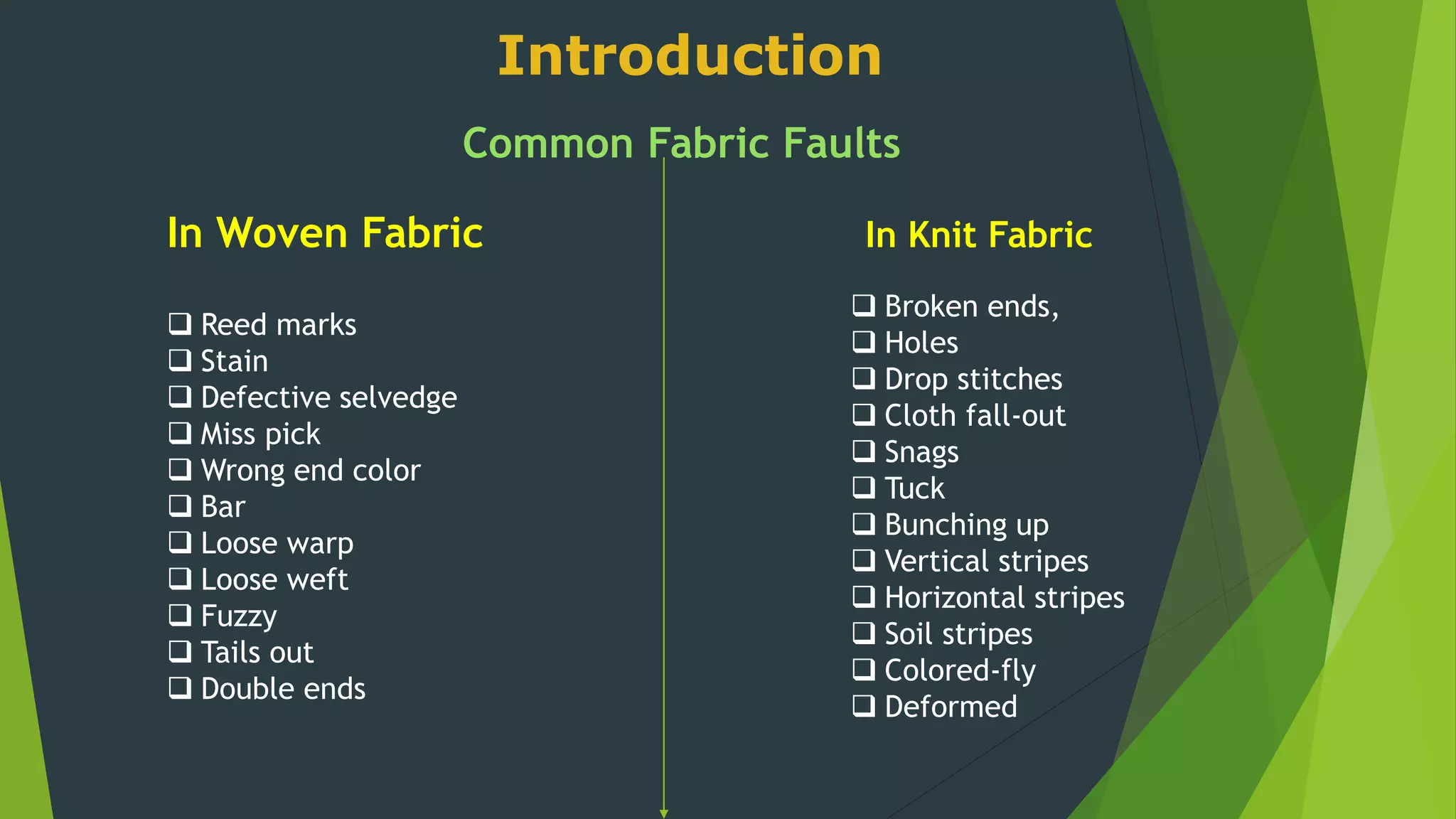
Common Fabric Faults
In Woven Fabric In Knit Fabric
 Reed marks
 Stain
 Defective selvedge
 Miss pick
 Wrong end color
 Bar
 Loose warp
 Loose weft
 Fuzzy
 Tails out
 Double ends
 Broken ends,
 Holes
 Drop stitches
 Cloth fall-out
 Snags
 Tuck
 Bunching up
 Vertical stripes
 Horizontal stripes
 Soil stripes
 Colored-fly
 Deformed
Introduction
Inspection
Detect
Defects
Inform
concerned
authority
Identify
the cause of
the defect
Rectify the
defects
Inspection Loop
Introduction
Fabric inspection systems:
4- Points
System
10- Points
System
Description
 This standard is issued by the American Society for Testing and
Materials with reference to the designation ASTM D5430-04.
 Fabric defects are assigned points based on the length or width of the
defect as per the following classification:
4- Points System
Points Defect Sizes
1 3 Inch or Less
2 Over 3 but not over 6
inches
3 Over 6 but not over 9
inches
4 Over 9 onched
Description
4- Points System
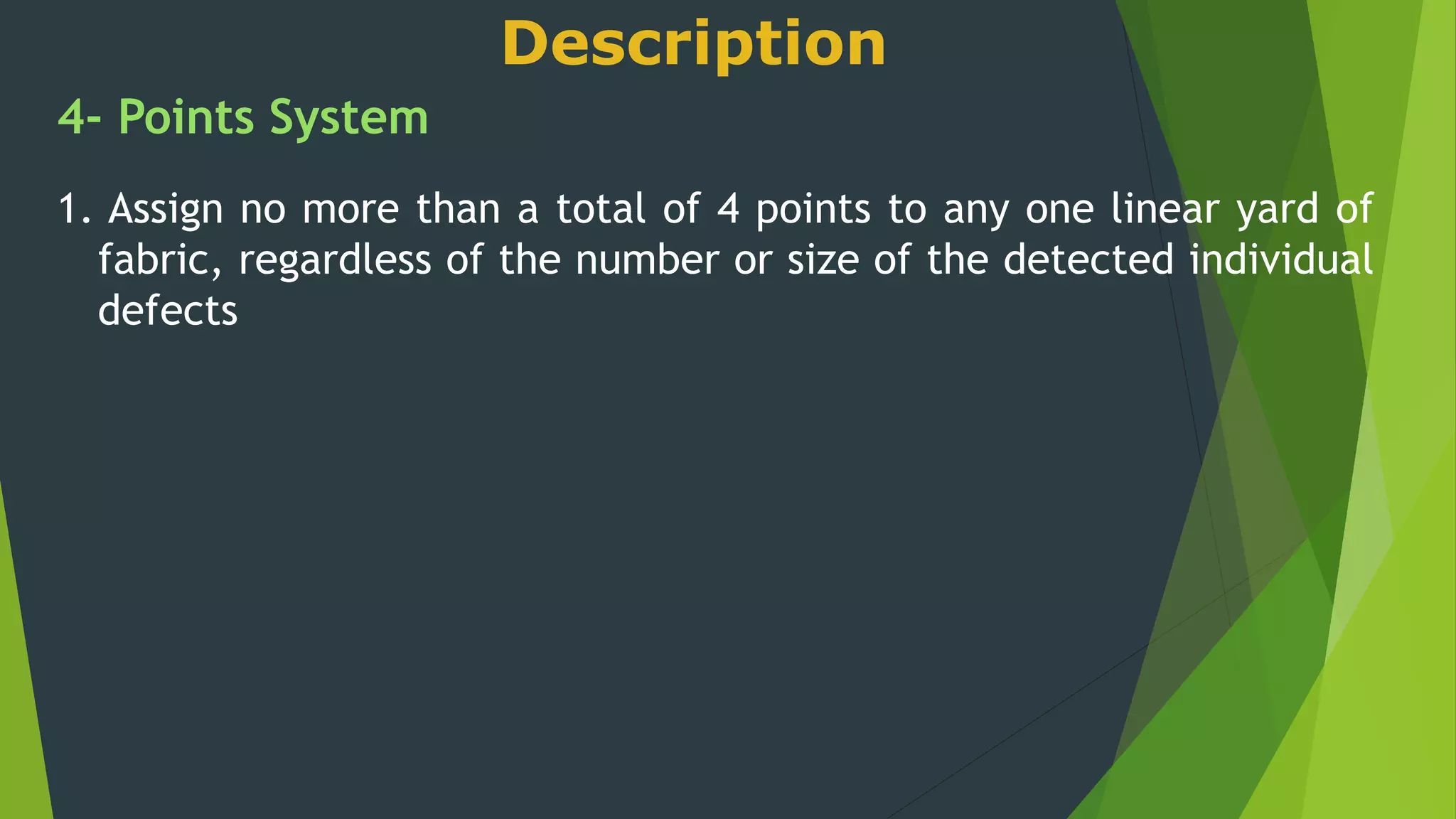
1. Assign no more than a total of 4 points to any one linear yard of
fabric, regardless of the number or size of the detected individual
defects
Description
4- Points System
2. Assign 4 points to each consecutive linear yard in which a
continuous running defect exceeds 9inches.
Description
4- Points System
3. Assign 4 points to each linear yard of fabric where the cuttable width is less
than the minimum specified.
Description
4- Points System
4. Assign 4-points to each splice or full width defect
Description
10- Points System
The 10 point method is a point per fault system, which gives a measurable guide to
quality grading per roll. In 1955s “Ten Points” piece goods evaluation was adapted by
the Textile Distributors and National Federation of Textiles.
Warp Defects Weft Defects
Size of defects Penalty
Up to 1 inch 1 point
1 to 5 inches 3 points
5 to 10 inches 5 points
10 to 36 inches 10 points
Size of defects Penalty
Up to 1 inch 1 point
1 to 5 inches 3 points
5 inches to half the width 5 points
Half to Full width 10 points
Description
The system assigns penalty points to each defect as per
following guideline,
Description
10- Points System
Working Procedure :
Under the 10 Points system, a piece is graded as “First”, if the total
penalty points do not exceed the total yardage of the piece.
In case of a fabric wider than 50 inches; “First” quality is considered
if the total defect points do not exceed the total yardage of the
fabric.
A piece is graded as “Second” if the total penalty points exceed the
total yardage of the piece.
Description
10- Points System
Basic Grading Criteria :
If total defect points < yardage of the fabric
piece inspected, then the fabric is given the
‘First’ or ‘A’ Grade.
If total defects points > fabric yardage then
the fabric is graded as ‘Second’ or ‘B’ Grade.
Findings
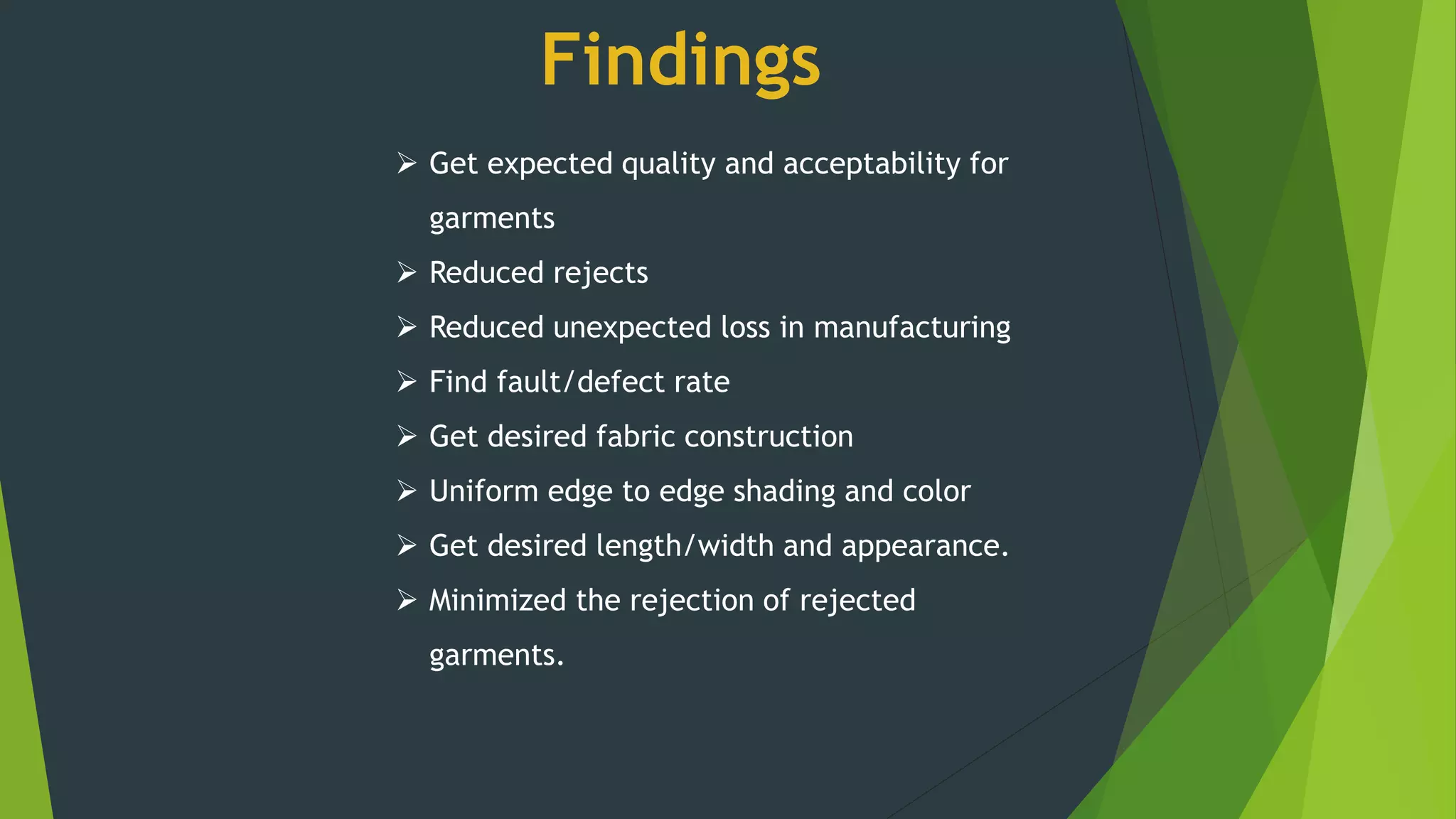
 Get expected quality and acceptability for
garments
 Reduced rejects
 Reduced unexpected loss in manufacturing
 Find fault/defect rate
 Get desired fabric construction
 Uniform edge to edge shading and color
 Get desired length/width and appearance.
 Minimized the rejection of rejected
garments.
Conclusion
Apparel manufacturers inspect the fabric stock upon arrival, so
that any fabric irregularities are caught early in the production
process. After identification of fabric defects, a system needs to
be followed to grade the defects to ascertain its acceptance or
rejection. 4-Point fabric inspection system is mostly used in textile
industry around the globe now
So the fabric inspection system is very important in manufacturing
process for get desirable quality of garments.
Fabric Inspection System (TTQC)

Fabric Inspection System (TTQC)

  • 1.
    Presented By: Md. MamunMia ID. 142-23-148
  • 2.
    OUTLINE OF PRESENTATION Introduction  Description  Findings  Conclusion
  • 3.
    Introduction Fabric Inspection ? Fabric inspection is visual Examination of the fabric to detect fabric defects.  To ensure the garments are produced as per the quality expected.  Identify the critical points where inspection should be conducted.
  • 4.
    Purpose of fabricinspection Determine the quality and acceptability for garments. Fabric Inspection is an important aspect followed prior to garment manufacturing to avoid rejects due to fabric quality and facing with unexpected loss in manufacturing. Fabric inspection is done for fault/defect rate, fabric construction. To maintain end to end or edge to edge shading, color. To length/width, print defect and appearance. To ensures to minimize the rejection of rejected garments. Introduction
  • 5.
    Introduction Common Fabric Faults InWoven Fabric In Knit Fabric  Reed marks  Stain  Defective selvedge  Miss pick  Wrong end color  Bar  Loose warp  Loose weft  Fuzzy  Tails out  Double ends  Broken ends,  Holes  Drop stitches  Cloth fall-out  Snags  Tuck  Bunching up  Vertical stripes  Horizontal stripes  Soil stripes  Colored-fly  Deformed
  • 6.
  • 7.
    Introduction Fabric inspection systems: 4-Points System 10- Points System
  • 8.
    Description  This standardis issued by the American Society for Testing and Materials with reference to the designation ASTM D5430-04.  Fabric defects are assigned points based on the length or width of the defect as per the following classification: 4- Points System Points Defect Sizes 1 3 Inch or Less 2 Over 3 but not over 6 inches 3 Over 6 but not over 9 inches 4 Over 9 onched
  • 9.
    Description 4- Points System 1.Assign no more than a total of 4 points to any one linear yard of fabric, regardless of the number or size of the detected individual defects
  • 10.
    Description 4- Points System 2.Assign 4 points to each consecutive linear yard in which a continuous running defect exceeds 9inches.
  • 11.
    Description 4- Points System 3.Assign 4 points to each linear yard of fabric where the cuttable width is less than the minimum specified.
  • 12.
    Description 4- Points System 4.Assign 4-points to each splice or full width defect
  • 13.
    Description 10- Points System The10 point method is a point per fault system, which gives a measurable guide to quality grading per roll. In 1955s “Ten Points” piece goods evaluation was adapted by the Textile Distributors and National Federation of Textiles.
  • 14.
    Warp Defects WeftDefects Size of defects Penalty Up to 1 inch 1 point 1 to 5 inches 3 points 5 to 10 inches 5 points 10 to 36 inches 10 points Size of defects Penalty Up to 1 inch 1 point 1 to 5 inches 3 points 5 inches to half the width 5 points Half to Full width 10 points Description The system assigns penalty points to each defect as per following guideline,
  • 15.
    Description 10- Points System WorkingProcedure : Under the 10 Points system, a piece is graded as “First”, if the total penalty points do not exceed the total yardage of the piece. In case of a fabric wider than 50 inches; “First” quality is considered if the total defect points do not exceed the total yardage of the fabric. A piece is graded as “Second” if the total penalty points exceed the total yardage of the piece.
  • 16.
    Description 10- Points System BasicGrading Criteria : If total defect points < yardage of the fabric piece inspected, then the fabric is given the ‘First’ or ‘A’ Grade. If total defects points > fabric yardage then the fabric is graded as ‘Second’ or ‘B’ Grade.
  • 17.
    Findings  Get expectedquality and acceptability for garments  Reduced rejects  Reduced unexpected loss in manufacturing  Find fault/defect rate  Get desired fabric construction  Uniform edge to edge shading and color  Get desired length/width and appearance.  Minimized the rejection of rejected garments.
  • 18.
    Conclusion Apparel manufacturers inspectthe fabric stock upon arrival, so that any fabric irregularities are caught early in the production process. After identification of fabric defects, a system needs to be followed to grade the defects to ascertain its acceptance or rejection. 4-Point fabric inspection system is mostly used in textile industry around the globe now So the fabric inspection system is very important in manufacturing process for get desirable quality of garments.