Md. Nahian Rahman
M.Sc (Nutrition andFood Science)
INFS,University of Dhaka.
 It is a high fat, low carbohydrate and adequate
protein diet used in the treatment of intractable
epilepsy
 It aims to decrease the number and severity of the
patients’ seizures
 Therefore improving the quality of life and hopefully
reducing medication use
What is the ketogenic
diet?
 Intractable childhood epilepsy*
*incomplete seizure control despite > 2 AED
 GLUT 1 deficiency syndrome
 PDH deficiency
 Consider as early treatment for myoclonic astatic
epilepsy
 Age not a barrier but works well in younger
children, e.g. under 10years
Indications for use
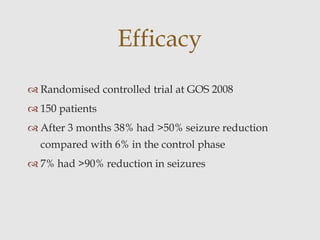
 Randomised controlled trial at GOS 2008
 150 patients
 After 3 months 38% had >50% seizure reduction
compared with 6% in the control phase
 7% had >90% reduction in seizures
Efficacy
 Study also compared the Classical and MCT
(Medium Chain Triglyceride) diets
 Results showed no difference in efficacy or
tolerability between the 2 diets after 3,6, and 12
months
 Those on the MCT version had a little more nausea
Efficacy
 Family agree to a 3 month commitment period on
the diet as there is a huge investment of professional
time
 3 months is the best time scale to determine
outcomes
 Diet usually advised for up to 2 years
 Expectations from medical team and families need to
be discussed to assist future monitoring
Once selected
 To achieve ketosis by providing fat for metabolism
 To ensure that growth is adequate
 To ensure nutritional well being is not compromised
 To implement a dietary regimen that is palatable and
possible to comply with
The dietetic aims
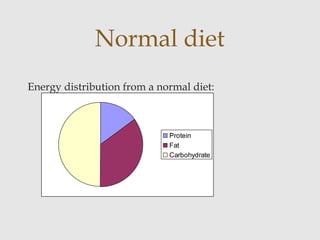
Energy distribution from a normal diet:
Normal diet
Protein
Fat
Carbohydrate
Energy distribution from a classical ketogenic diet:
Ketogenic diet
Protein
Fat
Carbohydrate
 Classical 4:1 and 3:1 ratio
i.e. Calorie controlled with 4 or 3 parts fat to 1 part
protein and carbohydrate combined
 MCT diet (medium chain triglycerides)
Calorie controlled 40-60% energy from MCT allows a
little more flexibility but high MCT intake can lead to
nausea
Types of Ketogenic Diet
 Modified Ketogenic diet
60% fat 30% protein 10% CHO
The carbohydrate intake is limited to approximately
20g per day
Less strict still needs good knowledge of foods to
choose
Energy intake monitored for weight control
 Low Glycaemic Index (GI) diet
Energy distribution as above but choice of foods
with GI less than 50 typically high fibre foods
Total carbohydrate load 40-60g per day
Types of Ketogenic Diet
Protein
lean meats
small amount
of lentils
fish
eggs
Cheddar
cheese
small amount of
nuts
Fatcream cheese
double cream
mayonnaise
oils
(e.g. olive oil, sunflower oil)
avocado
butter
or margarine
Liquigen
Calogen
Carbohydrate
carrots
swede
tomatoes
mushrooms
raspberries
strawberries
peaches
pear
broccoliceleriac
Preferred sources of carbohydrate
Carbohydrate
Sources of carbohydrate to avoid
bread
peaches
sweets
cake
rice
pasta
chocolate
biscuits
sugar
 F
Example of Foods
Examples of foods
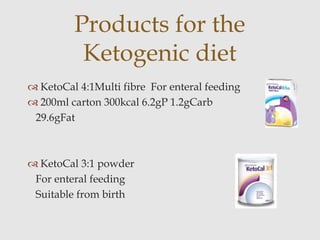
 KetoCal 4:1Multi fibre For enteral feeding
 200ml carton 300kcal 6.2gP 1.2gCarb
29.6gFat
 KetoCal 3:1 powder
For enteral feeding
Suitable from birth
Products for the
Ketogenic diet
 Calogen 50% LCT fat
 CarbZero 20% LCT fat
 Liquigen 50% MCT fat
 Betaquik 20% MCT fat
 Vitamin and Minerals e.g. Fruitivits Phlexy Vits
Supplementation
Products
 Growth: weight, height, and well being
 Bloods, urine other tests e.g. ECG, renal USS
 Record of seizures
 Record of ketosis
-Blood use Abbott meter Freestyle Optium Neo (need lancets & ketone strips) aim 2-5mmol/l
-Urine use Ketostix aim for (+2 to +4)
or 8-16mmol/l
Monitoring
 Nausea
 Vomiting
 Hypoglycaemia
 Acidosis
 Sleepiness
 Dehydration
 Diet refusal
Short term problems
 Constipation
 Renal stones
 Abnormal lipid profile
 Growth
 Bone demineralization and fractures
Long term problems
 Rapid panting or breathing
 Facial flushing, vomiting
 Irritability and unexpected tiredness
 Acidosis
 Blood ketone reading 6mmol/l or “Hi” with
symptoms
Treat with 1-2 tablespoons of sweet drink If no
improvement after 15 minutes repeat and contact Dr
Excess ketosis
 If IV fluids needed use 0.9% saline
 4 hourly blood glucose
 Avoid sugar and carbohydrate containing drugs and
IV solutions
Illness
 Carnitine
It is a protein which is necessary to carry fat into the
mitochondria to be broken down to energy (ATP)
KD high in fat therefore ↑need
KD low in lysine + methionine needed to synthesize
carnitine
↑Excretion of acylcarnitine with ketosis
Other considerations
Keto santa’s!

Keto diet

  • 1.
    Md. Nahian Rahman M.Sc(Nutrition andFood Science) INFS,University of Dhaka.
  • 2.
     It isa high fat, low carbohydrate and adequate protein diet used in the treatment of intractable epilepsy  It aims to decrease the number and severity of the patients’ seizures  Therefore improving the quality of life and hopefully reducing medication use What is the ketogenic diet?
  • 3.
     Intractable childhoodepilepsy* *incomplete seizure control despite > 2 AED  GLUT 1 deficiency syndrome  PDH deficiency  Consider as early treatment for myoclonic astatic epilepsy  Age not a barrier but works well in younger children, e.g. under 10years Indications for use
  • 4.
     Randomised controlledtrial at GOS 2008  150 patients  After 3 months 38% had >50% seizure reduction compared with 6% in the control phase  7% had >90% reduction in seizures Efficacy
  • 5.
     Study alsocompared the Classical and MCT (Medium Chain Triglyceride) diets  Results showed no difference in efficacy or tolerability between the 2 diets after 3,6, and 12 months  Those on the MCT version had a little more nausea Efficacy
  • 6.
     Family agreeto a 3 month commitment period on the diet as there is a huge investment of professional time  3 months is the best time scale to determine outcomes  Diet usually advised for up to 2 years  Expectations from medical team and families need to be discussed to assist future monitoring Once selected
  • 7.
     To achieveketosis by providing fat for metabolism  To ensure that growth is adequate  To ensure nutritional well being is not compromised  To implement a dietary regimen that is palatable and possible to comply with The dietetic aims
  • 8.
    Energy distribution froma normal diet: Normal diet Protein Fat Carbohydrate
  • 9.
    Energy distribution froma classical ketogenic diet: Ketogenic diet Protein Fat Carbohydrate
  • 10.
     Classical 4:1and 3:1 ratio i.e. Calorie controlled with 4 or 3 parts fat to 1 part protein and carbohydrate combined  MCT diet (medium chain triglycerides) Calorie controlled 40-60% energy from MCT allows a little more flexibility but high MCT intake can lead to nausea Types of Ketogenic Diet
  • 11.
     Modified Ketogenicdiet 60% fat 30% protein 10% CHO The carbohydrate intake is limited to approximately 20g per day Less strict still needs good knowledge of foods to choose Energy intake monitored for weight control  Low Glycaemic Index (GI) diet Energy distribution as above but choice of foods with GI less than 50 typically high fibre foods Total carbohydrate load 40-60g per day Types of Ketogenic Diet
  • 12.
    Protein lean meats small amount oflentils fish eggs Cheddar cheese small amount of nuts
  • 13.
    Fatcream cheese double cream mayonnaise oils (e.g.olive oil, sunflower oil) avocado butter or margarine Liquigen Calogen
  • 14.
  • 15.
    Carbohydrate Sources of carbohydrateto avoid bread peaches sweets cake rice pasta chocolate biscuits sugar
  • 16.
  • 17.
  • 18.
     KetoCal 4:1Multifibre For enteral feeding  200ml carton 300kcal 6.2gP 1.2gCarb 29.6gFat  KetoCal 3:1 powder For enteral feeding Suitable from birth Products for the Ketogenic diet
  • 19.
     Calogen 50%LCT fat  CarbZero 20% LCT fat  Liquigen 50% MCT fat  Betaquik 20% MCT fat  Vitamin and Minerals e.g. Fruitivits Phlexy Vits Supplementation Products
  • 20.
     Growth: weight,height, and well being  Bloods, urine other tests e.g. ECG, renal USS  Record of seizures  Record of ketosis -Blood use Abbott meter Freestyle Optium Neo (need lancets & ketone strips) aim 2-5mmol/l -Urine use Ketostix aim for (+2 to +4) or 8-16mmol/l Monitoring
  • 21.
     Nausea  Vomiting Hypoglycaemia  Acidosis  Sleepiness  Dehydration  Diet refusal Short term problems
  • 22.
     Constipation  Renalstones  Abnormal lipid profile  Growth  Bone demineralization and fractures Long term problems
  • 23.
     Rapid pantingor breathing  Facial flushing, vomiting  Irritability and unexpected tiredness  Acidosis  Blood ketone reading 6mmol/l or “Hi” with symptoms Treat with 1-2 tablespoons of sweet drink If no improvement after 15 minutes repeat and contact Dr Excess ketosis
  • 24.
     If IVfluids needed use 0.9% saline  4 hourly blood glucose  Avoid sugar and carbohydrate containing drugs and IV solutions Illness
  • 25.
     Carnitine It isa protein which is necessary to carry fat into the mitochondria to be broken down to energy (ATP) KD high in fat therefore ↑need KD low in lysine + methionine needed to synthesize carnitine ↑Excretion of acylcarnitine with ketosis Other considerations
  • 26.