Downloaded 17 times

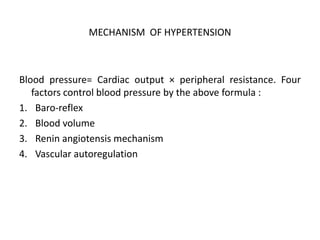
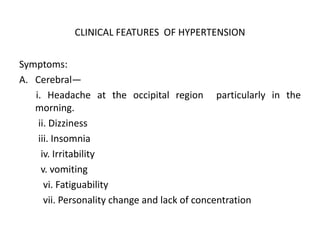
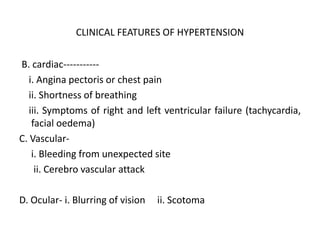
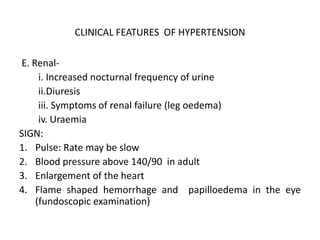

This document discusses hypertension, including its causes, mechanisms, clinical features, investigations, and treatment. It defines hypertension as a persistent blood pressure above 140/90 mm Hg. The causes are primarily essential (80-90%) or secondary (10-20%), which can be renal, endocrine, metabolic, drug-related, congenital, or psychogenic. Hypertension occurs via increased cardiac output or peripheral resistance. Clinical features involve the cerebral, cardiac, vascular, ocular, and renal systems. Investigations include urine tests, imaging, and blood tests. Treatment involves lifestyle changes and medications like diuretics, adrenergic blockers, or vasodilators. Treatment duration is typically lifelong.


![Acute heart failure [MBBS]](https://cdn.slidesharecdn.com/ss_thumbnails/acuteheartfailure-170323061012-thumbnail.jpg?width=640&height=640&fit=bounds)


