Eating Disorders
Md. Nahian Rahman
M.Sc (Nutrition and Food
Science)
INFS, University of Dhaka.
Epidemiology
 Onset of Anorexia is bimodal, puberty (12-15y) and late
teens to early 20s.
 Bulimia appears during late teens to mid-20s.
 Anorexia: 1-2% female, 0.1-0.2% male
 Bulimia: 4-20% female, 0.1-0.2% male
 Binge Eating Disorder: 3-30% adults (40% male)
 10 million females and 1 million males are affected by
eating disorders.
 Most researchers agree these numbers are grossly
underestimated.
Dieting
High percentage of population is on a “diet”
at any one time.
95 % of those who lose weight will regain
within 5 years.
billion pound industry.
Dieting has become a “normal” way of eating.
35% of “normal dieters” will develop some
form of an eating disorder.
What’s really scary?
 80% of women dissatisfied with their body
 In one study, 45% of healthy, normal weight third
through sixth graders said that they wanted to be
thinner
 40% of them had actually tried to lose weight
 7% of them scored within the high risk range of an
"eating attitude" test that detects or predicts eating
disorder behavior.
Exploring the Underlying Causes● Sociocultural factors (mass media, friends, occupations, athletics)
● Psychological factors (perfectionist, need for control, “all or none”
thinking, low self-esteem, difficulty expressing negative emotion,
difficulty resolving conflict, mood disorders, personality disorders,
substance abuse, sexual trauma)
● Family factors (perfectionist, controlling, repress anger, rigid)
● Biological factors (serotonin, genetic predisposition)
HISTORY
Diet restriction – number of calories
Purging behaviours – vomiting, laxatives,
diuretics
Excessive exercise
Menstruation
‘fear of fatness’ (‘do you worry excessively about
your weight?’)
Any previous treatment
Co morbidity, risks of DSH, pregnancy
Recognizing the signs and symptoms
 General (skips meals, preoccupation w/food, unable to express
feelings, worries about other’s opinions, perfectionist, overly
critical of self and others)
 Anorexia (wt. loss, strict dieting, perceives being overweight,
denies hunger, rituals, excessive exercise)
 Bulimia (visits restroom after meals, eats large amounts without
gaining wt., eats rapidly, mood swings, unexplained disappearance
of food, empty wrappers)
 Binge Eating d/o (weight gain, eats large amounts rapidly, eats
in isolation, eats to point of being overly full)
Physical Symptoms of Anorexia
 Dry skin
 Cold intolerance
 Blue hands and feet
 Constipation
 Bloating
 Delayed puberty
 Primary or secondary
amenorrhea
 Nerve compression
 Fainting
 Orthostatic hypotension
 Lanugo hair
 Scalp hair loss
 Early satiety
 Weakness, fatigue
 Osteopenia
 Breast atrophy
 Atrophic vaginitis
 Pitting edema
 Cardiac murmurs
 Sinus brady
 hypothermia
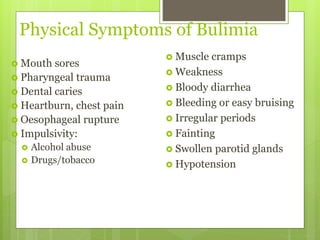
Physical Symptoms of Bulimia
 Mouth sores
 Pharyngeal trauma
 Dental caries
 Heartburn, chest pain
 Oesophageal rupture
 Impulsivity:
 Alcohol abuse
 Drugs/tobacco
 Muscle cramps
 Weakness
 Bloody diarrhea
 Bleeding or easy bruising
 Irregular periods
 Fainting
 Swollen parotid glands
 Hypotension
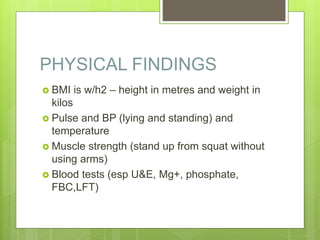
PHYSICAL FINDINGS
 BMI is w/h2 – height in metres and weight in
kilos
 Pulse and BP (lying and standing) and
temperature
 Muscle strength (stand up from squat without
using arms)
 Blood tests (esp U&E, Mg+, phosphate,
FBC,LFT)
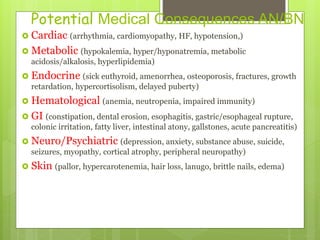
Potential Medical Consequences AN/BN
 Cardiac (arrhythmia, cardiomyopathy, HF, hypotension,)
 Metabolic (hypokalemia, hyper/hyponatremia, metabolic
acidosis/alkalosis, hyperlipidemia)
 Endocrine (sick euthyroid, amenorrhea, osteoporosis, fractures, growth
retardation, hypercortisolism, delayed puberty)
 Hematological (anemia, neutropenia, impaired immunity)
 GI (constipation, dental erosion, esophagitis, gastric/esophageal rupture,
colonic irritation, fatty liver, intestinal atony, gallstones, acute pancreatitis)
 Neuro/Psychiatric (depression, anxiety, substance abuse, suicide,
seizures, myopathy, cortical atrophy, peripheral neuropathy)
 Skin (pallor, hypercarotenemia, hair loss, lanugo, brittle nails, edema)
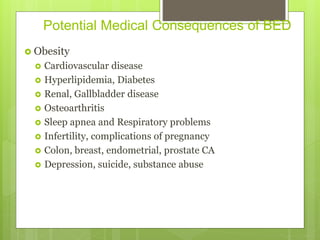
Potential Medical Consequences of BED
 Obesity
 Cardiovascular disease
 Hyperlipidemia, Diabetes
 Renal, Gallbladder disease
 Osteoarthritis
 Sleep apnea and Respiratory problems
 Infertility, complications of pregnancy
 Colon, breast, endometrial, prostate CA
 Depression, suicide, substance abuse
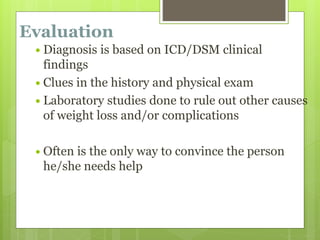
Evaluation
 Diagnosis is based on ICD/DSM clinical
findings
 Clues in the history and physical exam
 Laboratory studies done to rule out other causes
of weight loss and/or complications
 Often is the only way to convince the person
he/she needs help
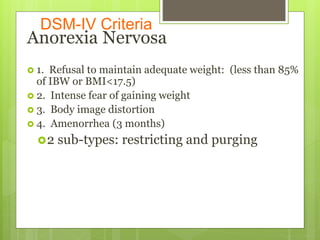
DSM-IV Criteria
Anorexia Nervosa
 1. Refusal to maintain adequate weight: (less than 85%
of IBW or BMI<17.5)
 2. Intense fear of gaining weight
 3. Body image distortion
 4. Amenorrhea (3 months)
2 sub-types: restricting and purging
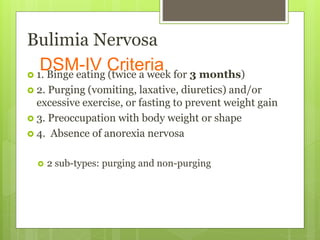
DSM-IV Criteria
Bulimia Nervosa
 1. Binge eating (twice a week for 3 months)
 2. Purging (vomiting, laxative, diuretics) and/or
excessive exercise, or fasting to prevent weight gain
 3. Preoccupation with body weight or shape
 4. Absence of anorexia nervosa
 2 sub-types: purging and non-purging
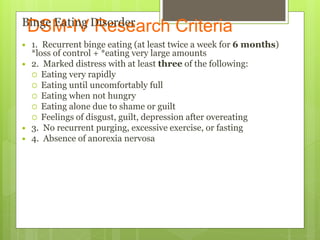
DSM-IV Research CriteriaBinge Eating Disorder
 1. Recurrent binge eating (at least twice a week for 6 months)
*loss of control + *eating very large amounts
 2. Marked distress with at least three of the following:
 Eating very rapidly
 Eating until uncomfortably full
 Eating when not hungry
 Eating alone due to shame or guilt
 Feelings of disgust, guilt, depression after overeating
 3. No recurrent purging, excessive exercise, or fasting
 4. Absence of anorexia nervosa
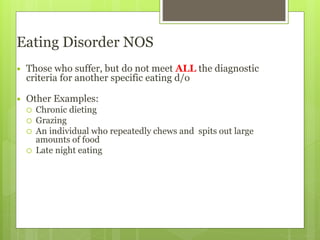
Eating Disorder NOS
 Those who suffer, but do not meet ALL the diagnostic
criteria for another specific eating d/o
 Other Examples:
 Chronic dieting
 Grazing
 An individual who repeatedly chews and spits out large
amounts of food
 Late night eating
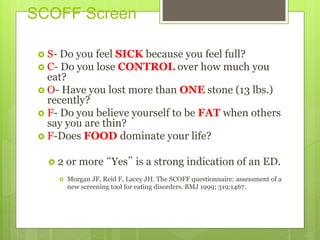
SCOFF Screen
 S- Do you feel SICK because you feel full?
 C- Do you lose CONTROL over how much you
eat?
 O- Have you lost more than ONE stone (13 lbs.)
recently?
 F- Do you believe yourself to be FAT when others
say you are thin?
 F-Does FOOD dominate your life?
 2 or more “Yes” is a strong indication of an ED.
 Morgan JF, Reid F, Lacey JH. The SCOFF questionnaire: assessment of a
new screening tool for eating disorders. BMJ 1999; 319:1467.
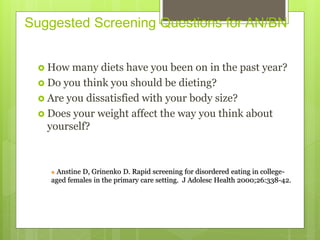
Suggested Screening Questions for AN/BN
 How many diets have you been on in the past year?
 Do you think you should be dieting?
 Are you dissatisfied with your body size?
 Does your weight affect the way you think about
yourself?
 Anstine D, Grinenko D. Rapid screening for disordered eating in college-
aged females in the primary care setting. J Adolesc Health 2000;26:338-42.
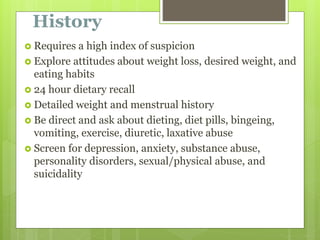
History
 Requires a high index of suspicion
 Explore attitudes about weight loss, desired weight, and
eating habits
 24 hour dietary recall
 Detailed weight and menstrual history
 Be direct and ask about dieting, diet pills, bingeing,
vomiting, exercise, diuretic, laxative abuse
 Screen for depression, anxiety, substance abuse,
personality disorders, sexual/physical abuse, and
suicidality
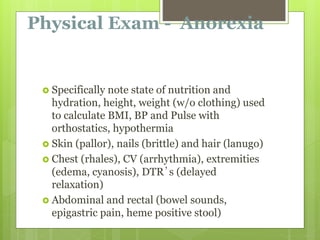
Physical Exam - Anorexia
 Specifically note state of nutrition and
hydration, height, weight (w/o clothing) used
to calculate BMI, BP and Pulse with
orthostatics, hypothermia
 Skin (pallor), nails (brittle) and hair (lanugo)
 Chest (rhales), CV (arrhythmia), extremities
(edema, cyanosis), DTR’s (delayed
relaxation)
 Abdominal and rectal (bowel sounds,
epigastric pain, heme positive stool)
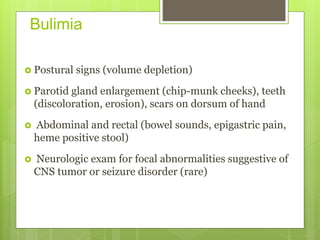
Bulimia
 Postural signs (volume depletion)
 Parotid gland enlargement (chip-munk cheeks), teeth
(discoloration, erosion), scars on dorsum of hand
 Abdominal and rectal (bowel sounds, epigastric pain,
heme positive stool)
 Neurologic exam for focal abnormalities suggestive of
CNS tumor or seizure disorder (rare)
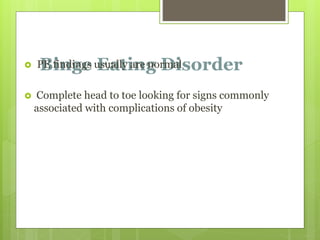
Binge Eating Disorder PE findings usually are normal
 Complete head to toe looking for signs commonly
associated with complications of obesity
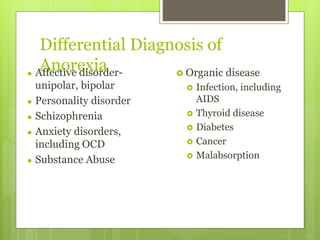
Differential Diagnosis of
Anorexia● Affective disorder-
unipolar, bipolar
● Personality disorder
● Schizophrenia
● Anxiety disorders,
including OCD
● Substance Abuse
 Organic disease
 Infection, including
AIDS
 Thyroid disease
 Diabetes
 Cancer
 Malabsorption
Differential Diagnosis of Bulimia
 Affective disorders-
unipolar, bipolar
 Personality disorders
 Schizophrenia
 Anxiety disorders,
including OCD
 Common obesity-
“compulsive eating”
 Instrumental vomiting
 Organic disease
 Infection
 Thyroid disease
 Diabetes
 Cancer chemotherapy
 Malabsorption syndromes
 GI problems, IBS,
gastroparesis, mass lesions
 Brain tumor
 Migraine, Epilepsy
Differential Diagnosis of
Obesity
 Hypothyroidism
 Hypercortisolism
 Deficiencies of growth hormone or gonadal steroids
 Medications
 Long-term glucocorticoid treatment
 Immunosuppression after transplantation
 Cancer chemotherapy
 Intensive glycemic control with insulin, a
sulfonylurea, or a thiazolidinedione
 Neuropsychotropic drugs, particularly newer
antipsychotic and antiseizure medications
Laboratory Evaluation Glucose
 LFT’s, amylase
 Lipids
 EKG
 TFT’s
 LH, FSH, Prolactin, Estrogen (?)
 Bone Mineral Density
Treatment Options for AN/BN
 Inpatient hospitalization
 Outpatient psychotherapy (CBT and other)
 Medication (SSRI’s)
 Self-help/Support Groups (A/B, OA)
 Family therapy
 Bibliotherapy
 Nutritional education
 Stress management
 Hypnotherapy, guided imagery, reality imaging
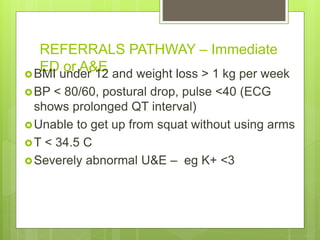
REFERRALS PATHWAY – Immediate
ED or A&EBMI under 12 and weight loss > 1 kg per week
BP < 80/60, postural drop, pulse <40 (ECG
shows prolonged QT interval)
Unable to get up from squat without using arms
T < 34.5 C
Severely abnormal U&E – eg K+ <3
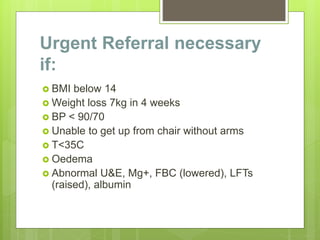
Urgent Referral necessary
if:
 BMI below 14
 Weight loss 7kg in 4 weeks
 BP < 90/70
 Unable to get up from chair without arms
 T<35C
 Oedema
 Abnormal U&E, Mg+, FBC (lowered), LFTs
(raised), albumin
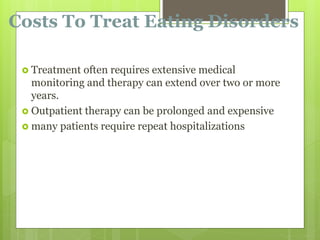
Costs To Treat Eating Disorders
 Treatment often requires extensive medical
monitoring and therapy can extend over two or more
years.
 Outpatient therapy can be prolonged and expensive
 many patients require repeat hospitalizations
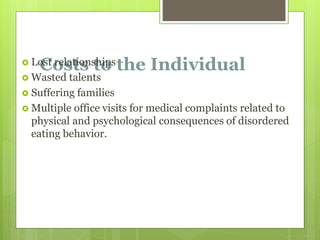
Costs to the Individual Lost relationships
 Wasted talents
 Suffering families
 Multiple office visits for medical complaints related to
physical and psychological consequences of disordered
eating behavior.
Role of Primary Care
Provider Team coordinator
 Rule out other causes of weight loss and/or
complications
 Obtain early psychiatric and nutritional consultations
and coordinate a multidisciplinary team approach to
management
 Educate the patient about the medical complications of
the illness
ANOREXIA
Cognitive behavioral therapy
 Emphasizes the relationship of thoughts
and feelings to behavior, learn to recognize
and change pattern of false beliefs and
reactions to them
 Limited efficacy
Interdisciplinary care team
 Medical provider
 Dietician with experience in ED
Psychological Therapies
 Guided self-help
 CBT
 CAT
 No longer couple therapy
 Psychodynamic therapy
 Family therapy
 Group psychotherapy
MEDICATIONS
 Overall, disappointing results
 Effective only for treating comorbid
conditions of depression and OCD
 Anxiolytics may be helpful before meals to
suppress the anxiety associated with eating
 Case reports in the literature supporting the
use of antipsychotics (e.g. Olanzapine)
Notes on NICE for A.N.
 Psychological therapies incl CAT, CBT, IPT and family
interventions – with the aim of encouraging wt gain and
healthy eating
 Most people with A.N. should be treated as out pt
 Family members should be considered in all cases
because of the effects of AN on the family
 Medication is not the primary tx of AN
A.N.
 Caution should be used when treating
comorbid mental health problems –
depression may resolve with wt gain alone –
QT prolongation
 In most pts with AN an average weekly wt
gain of 0.5 – 1kg in in pts, and 0.5 kg in out pt
settings should be the aim
 Feeding against pt will is tx of last resort
under MHA
Notes on NICE on B.N.
Pts should be advised to reduce
laxative use and informed that laxatives
do not signif reduce calorie intake
Pts who vomit need regular dental
reviews, avoid brushing after vomiting,
rinse with non-acidic mouthwash, limit
acidic foods
Self-help programme, CBT-BN or IPT
(which needs 8-12 mths)
SSRIs (esp fluoxetene) reduce binging
and purging – work rapidly
There is a limited role for in pt tx
BINGE EATING DISORDER
 Self help programme, CBT-BED, or IPT, or
modified DBT
 All psychological interventions have a limited
effect on body wt
 Trial of SSRI
ANOREXIASet medical guidelines for outpatient
management:
 minimum acceptable weight
 weight goal
 weight gain of 1-2 lbs. a week for underweight
patients
 maintenance of normal electrolytes
BULIMIA
 Cognitive behavioral therapy is effective
 Pharmacotherapy—high success rate
 Fluoxetine—studies reveal up to a 67% reduction in binge
eating and a 56% reduction in vomiting
 TCAs
 Topiramate—reduced binge eating by 94% and average wt.
loss of 6.2 kg
 Ondansetron, 24 mg/day
Anorexia/Bulimia Monitor weight, postural signs, cardiac rhythm,
and electrolytes
 Address any metabolic or endocrinologic
complications.
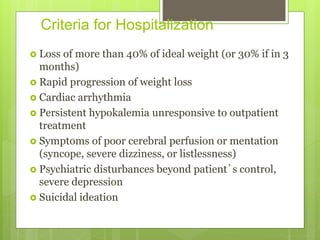
Criteria for Hospitalization
 Loss of more than 40% of ideal weight (or 30% if in 3
months)
 Rapid progression of weight loss
 Cardiac arrhythmia
 Persistent hypokalemia unresponsive to outpatient
treatment
 Symptoms of poor cerebral perfusion or mentation
(syncope, severe dizziness, or listlessness)
 Psychiatric disturbances beyond patient’s control,
severe depression
 Suicidal ideation
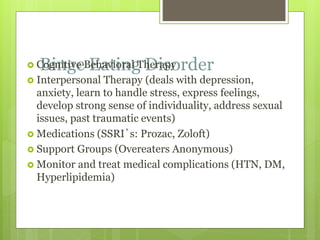
Binge Eating Disorder Cognitive Behavioral Therapy
 Interpersonal Therapy (deals with depression,
anxiety, learn to handle stress, express feelings,
develop strong sense of individuality, address sexual
issues, past traumatic events)
 Medications (SSRI’s: Prozac, Zoloft)
 Support Groups (Overeaters Anonymous)
 Monitor and treat medical complications (HTN, DM,
Hyperlipidemia)
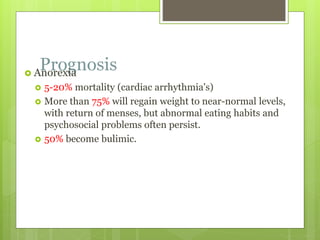
Prognosis Anorexia
 5-20% mortality (cardiac arrhythmia's)
 More than 75% will regain weight to near-normal levels,
with return of menses, but abnormal eating habits and
psychosocial problems often persist.
 50% become bulimic.
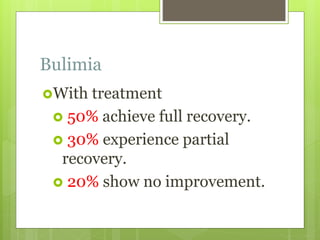
Bulimia
With treatment
 50% achieve full recovery.
 30% experience partial
recovery.
 20% show no improvement.
Binge Eating Disorder
 Tends to be a chronic condition for those not in therapy
or support group.
 50% remission for those treated with CBT.
 Morbidity and mortality are directly related to the many
diseases associated with obesity.
Taking ACTION!
 How can family and friends help?
 How can you help yourself?
 What other resources are available?
“10 Commandments”1. It’s not a diet problem.
2. No one is to blame for the problem. It’s no one’s fault.
3. Understand that he/she needs to eat three meals a day,
but do not take responsibility for her eating. Don’t hide
food from him/her or push food on her. When offering
food to others, don’t exclude him/her.
4. Let him/her know you are willing to provide support if
she needs it.
5. If you have questions about the ED, ask him/her
directly. He/She can determine what he/she is
comfortable sharing.
“10 Commandments”6. Do not share your opinions or judgments on his/her size
or weight, even if teasing.
7. Do not encourage any type of diet.
8. Share freely and directly with him/her concerns or other
feelings you have which regard him/her.
9. Understand that he/she is also working on
communicating more directly.
10. Understand that he/she is not cured. He/She will be
struggling with the ED for quite a while and will need
continuing work on issues which cause and perpetuate it.
*S. Sobel. Eating Disorders. CME Resource. 2004-2005.
How to help yourself
 ADMIT to yourself that you may have an eating
problem or disorder and be in need of help
 TELL someone—a friend, family member, family
physician, or counselor—about your concerns
 LEARN that asking for help is a sign of strength
rather than weakness. Learn to recognize your
needs and be open about them to yourself and
others.
Summary, Take home messages:
 Eating Disorders are extremely common.
 Often underdiagnosed.
 They are the prototypical biopsychosocial diseases.
 It has little to do with food and a lot to do with underlying
thoughts and feelings.
 Dieting is THE BIGGEST risk factor.
 Focus on prevention and early intervention.
 Most effective treatment involves a multifactorial
approach.
 The earlier treatment begins, the better the chance of
recovery.

Eating disorders

  • 1.
    Eating Disorders Md. NahianRahman M.Sc (Nutrition and Food Science) INFS, University of Dhaka.
  • 2.
    Epidemiology  Onset ofAnorexia is bimodal, puberty (12-15y) and late teens to early 20s.  Bulimia appears during late teens to mid-20s.  Anorexia: 1-2% female, 0.1-0.2% male  Bulimia: 4-20% female, 0.1-0.2% male  Binge Eating Disorder: 3-30% adults (40% male)  10 million females and 1 million males are affected by eating disorders.  Most researchers agree these numbers are grossly underestimated.
  • 3.
    Dieting High percentage ofpopulation is on a “diet” at any one time. 95 % of those who lose weight will regain within 5 years. billion pound industry. Dieting has become a “normal” way of eating. 35% of “normal dieters” will develop some form of an eating disorder.
  • 4.
    What’s really scary? 80% of women dissatisfied with their body  In one study, 45% of healthy, normal weight third through sixth graders said that they wanted to be thinner  40% of them had actually tried to lose weight  7% of them scored within the high risk range of an "eating attitude" test that detects or predicts eating disorder behavior.
  • 5.
    Exploring the UnderlyingCauses● Sociocultural factors (mass media, friends, occupations, athletics) ● Psychological factors (perfectionist, need for control, “all or none” thinking, low self-esteem, difficulty expressing negative emotion, difficulty resolving conflict, mood disorders, personality disorders, substance abuse, sexual trauma) ● Family factors (perfectionist, controlling, repress anger, rigid) ● Biological factors (serotonin, genetic predisposition)
  • 6.
    HISTORY Diet restriction –number of calories Purging behaviours – vomiting, laxatives, diuretics Excessive exercise Menstruation ‘fear of fatness’ (‘do you worry excessively about your weight?’) Any previous treatment Co morbidity, risks of DSH, pregnancy
  • 7.
    Recognizing the signsand symptoms  General (skips meals, preoccupation w/food, unable to express feelings, worries about other’s opinions, perfectionist, overly critical of self and others)  Anorexia (wt. loss, strict dieting, perceives being overweight, denies hunger, rituals, excessive exercise)  Bulimia (visits restroom after meals, eats large amounts without gaining wt., eats rapidly, mood swings, unexplained disappearance of food, empty wrappers)  Binge Eating d/o (weight gain, eats large amounts rapidly, eats in isolation, eats to point of being overly full)
  • 8.
    Physical Symptoms ofAnorexia  Dry skin  Cold intolerance  Blue hands and feet  Constipation  Bloating  Delayed puberty  Primary or secondary amenorrhea  Nerve compression  Fainting  Orthostatic hypotension  Lanugo hair  Scalp hair loss  Early satiety  Weakness, fatigue  Osteopenia  Breast atrophy  Atrophic vaginitis  Pitting edema  Cardiac murmurs  Sinus brady  hypothermia
  • 9.
    Physical Symptoms ofBulimia  Mouth sores  Pharyngeal trauma  Dental caries  Heartburn, chest pain  Oesophageal rupture  Impulsivity:  Alcohol abuse  Drugs/tobacco  Muscle cramps  Weakness  Bloody diarrhea  Bleeding or easy bruising  Irregular periods  Fainting  Swollen parotid glands  Hypotension
  • 10.
    PHYSICAL FINDINGS  BMIis w/h2 – height in metres and weight in kilos  Pulse and BP (lying and standing) and temperature  Muscle strength (stand up from squat without using arms)  Blood tests (esp U&E, Mg+, phosphate, FBC,LFT)
  • 11.
    Potential Medical ConsequencesAN/BN  Cardiac (arrhythmia, cardiomyopathy, HF, hypotension,)  Metabolic (hypokalemia, hyper/hyponatremia, metabolic acidosis/alkalosis, hyperlipidemia)  Endocrine (sick euthyroid, amenorrhea, osteoporosis, fractures, growth retardation, hypercortisolism, delayed puberty)  Hematological (anemia, neutropenia, impaired immunity)  GI (constipation, dental erosion, esophagitis, gastric/esophageal rupture, colonic irritation, fatty liver, intestinal atony, gallstones, acute pancreatitis)  Neuro/Psychiatric (depression, anxiety, substance abuse, suicide, seizures, myopathy, cortical atrophy, peripheral neuropathy)  Skin (pallor, hypercarotenemia, hair loss, lanugo, brittle nails, edema)
  • 12.
    Potential Medical Consequencesof BED  Obesity  Cardiovascular disease  Hyperlipidemia, Diabetes  Renal, Gallbladder disease  Osteoarthritis  Sleep apnea and Respiratory problems  Infertility, complications of pregnancy  Colon, breast, endometrial, prostate CA  Depression, suicide, substance abuse
  • 13.
    Evaluation  Diagnosis isbased on ICD/DSM clinical findings  Clues in the history and physical exam  Laboratory studies done to rule out other causes of weight loss and/or complications  Often is the only way to convince the person he/she needs help
  • 14.
    DSM-IV Criteria Anorexia Nervosa 1. Refusal to maintain adequate weight: (less than 85% of IBW or BMI<17.5)  2. Intense fear of gaining weight  3. Body image distortion  4. Amenorrhea (3 months) 2 sub-types: restricting and purging
  • 15.
    DSM-IV Criteria Bulimia Nervosa 1. Binge eating (twice a week for 3 months)  2. Purging (vomiting, laxative, diuretics) and/or excessive exercise, or fasting to prevent weight gain  3. Preoccupation with body weight or shape  4. Absence of anorexia nervosa  2 sub-types: purging and non-purging
  • 16.
    DSM-IV Research CriteriaBingeEating Disorder  1. Recurrent binge eating (at least twice a week for 6 months) *loss of control + *eating very large amounts  2. Marked distress with at least three of the following:  Eating very rapidly  Eating until uncomfortably full  Eating when not hungry  Eating alone due to shame or guilt  Feelings of disgust, guilt, depression after overeating  3. No recurrent purging, excessive exercise, or fasting  4. Absence of anorexia nervosa
  • 17.
    Eating Disorder NOS Those who suffer, but do not meet ALL the diagnostic criteria for another specific eating d/o  Other Examples:  Chronic dieting  Grazing  An individual who repeatedly chews and spits out large amounts of food  Late night eating
  • 18.
    SCOFF Screen  S-Do you feel SICK because you feel full?  C- Do you lose CONTROL over how much you eat?  O- Have you lost more than ONE stone (13 lbs.) recently?  F- Do you believe yourself to be FAT when others say you are thin?  F-Does FOOD dominate your life?  2 or more “Yes” is a strong indication of an ED.  Morgan JF, Reid F, Lacey JH. The SCOFF questionnaire: assessment of a new screening tool for eating disorders. BMJ 1999; 319:1467.
  • 19.
    Suggested Screening Questionsfor AN/BN  How many diets have you been on in the past year?  Do you think you should be dieting?  Are you dissatisfied with your body size?  Does your weight affect the way you think about yourself?  Anstine D, Grinenko D. Rapid screening for disordered eating in college- aged females in the primary care setting. J Adolesc Health 2000;26:338-42.
  • 20.
    History  Requires ahigh index of suspicion  Explore attitudes about weight loss, desired weight, and eating habits  24 hour dietary recall  Detailed weight and menstrual history  Be direct and ask about dieting, diet pills, bingeing, vomiting, exercise, diuretic, laxative abuse  Screen for depression, anxiety, substance abuse, personality disorders, sexual/physical abuse, and suicidality
  • 21.
    Physical Exam -Anorexia  Specifically note state of nutrition and hydration, height, weight (w/o clothing) used to calculate BMI, BP and Pulse with orthostatics, hypothermia  Skin (pallor), nails (brittle) and hair (lanugo)  Chest (rhales), CV (arrhythmia), extremities (edema, cyanosis), DTR’s (delayed relaxation)  Abdominal and rectal (bowel sounds, epigastric pain, heme positive stool)
  • 22.
    Bulimia  Postural signs(volume depletion)  Parotid gland enlargement (chip-munk cheeks), teeth (discoloration, erosion), scars on dorsum of hand  Abdominal and rectal (bowel sounds, epigastric pain, heme positive stool)  Neurologic exam for focal abnormalities suggestive of CNS tumor or seizure disorder (rare)
  • 23.
    Binge Eating DisorderPE findings usually are normal  Complete head to toe looking for signs commonly associated with complications of obesity
  • 24.
    Differential Diagnosis of Anorexia●Affective disorder- unipolar, bipolar ● Personality disorder ● Schizophrenia ● Anxiety disorders, including OCD ● Substance Abuse  Organic disease  Infection, including AIDS  Thyroid disease  Diabetes  Cancer  Malabsorption
  • 25.
    Differential Diagnosis ofBulimia  Affective disorders- unipolar, bipolar  Personality disorders  Schizophrenia  Anxiety disorders, including OCD  Common obesity- “compulsive eating”  Instrumental vomiting  Organic disease  Infection  Thyroid disease  Diabetes  Cancer chemotherapy  Malabsorption syndromes  GI problems, IBS, gastroparesis, mass lesions  Brain tumor  Migraine, Epilepsy
  • 26.
    Differential Diagnosis of Obesity Hypothyroidism  Hypercortisolism  Deficiencies of growth hormone or gonadal steroids  Medications  Long-term glucocorticoid treatment  Immunosuppression after transplantation  Cancer chemotherapy  Intensive glycemic control with insulin, a sulfonylurea, or a thiazolidinedione  Neuropsychotropic drugs, particularly newer antipsychotic and antiseizure medications
  • 27.
    Laboratory Evaluation Glucose LFT’s, amylase  Lipids  EKG  TFT’s  LH, FSH, Prolactin, Estrogen (?)  Bone Mineral Density
  • 28.
    Treatment Options forAN/BN  Inpatient hospitalization  Outpatient psychotherapy (CBT and other)  Medication (SSRI’s)  Self-help/Support Groups (A/B, OA)  Family therapy  Bibliotherapy  Nutritional education  Stress management  Hypnotherapy, guided imagery, reality imaging
  • 29.
    REFERRALS PATHWAY –Immediate ED or A&EBMI under 12 and weight loss > 1 kg per week BP < 80/60, postural drop, pulse <40 (ECG shows prolonged QT interval) Unable to get up from squat without using arms T < 34.5 C Severely abnormal U&E – eg K+ <3
  • 30.
    Urgent Referral necessary if: BMI below 14  Weight loss 7kg in 4 weeks  BP < 90/70  Unable to get up from chair without arms  T<35C  Oedema  Abnormal U&E, Mg+, FBC (lowered), LFTs (raised), albumin
  • 31.
    Costs To TreatEating Disorders  Treatment often requires extensive medical monitoring and therapy can extend over two or more years.  Outpatient therapy can be prolonged and expensive  many patients require repeat hospitalizations
  • 32.
    Costs to theIndividual Lost relationships  Wasted talents  Suffering families  Multiple office visits for medical complaints related to physical and psychological consequences of disordered eating behavior.
  • 33.
    Role of PrimaryCare Provider Team coordinator  Rule out other causes of weight loss and/or complications  Obtain early psychiatric and nutritional consultations and coordinate a multidisciplinary team approach to management  Educate the patient about the medical complications of the illness
  • 34.
    ANOREXIA Cognitive behavioral therapy Emphasizes the relationship of thoughts and feelings to behavior, learn to recognize and change pattern of false beliefs and reactions to them  Limited efficacy Interdisciplinary care team  Medical provider  Dietician with experience in ED
  • 35.
    Psychological Therapies  Guidedself-help  CBT  CAT  No longer couple therapy  Psychodynamic therapy  Family therapy  Group psychotherapy
  • 36.
    MEDICATIONS  Overall, disappointingresults  Effective only for treating comorbid conditions of depression and OCD  Anxiolytics may be helpful before meals to suppress the anxiety associated with eating  Case reports in the literature supporting the use of antipsychotics (e.g. Olanzapine)
  • 37.
    Notes on NICEfor A.N.  Psychological therapies incl CAT, CBT, IPT and family interventions – with the aim of encouraging wt gain and healthy eating  Most people with A.N. should be treated as out pt  Family members should be considered in all cases because of the effects of AN on the family  Medication is not the primary tx of AN
  • 38.
    A.N.  Caution shouldbe used when treating comorbid mental health problems – depression may resolve with wt gain alone – QT prolongation  In most pts with AN an average weekly wt gain of 0.5 – 1kg in in pts, and 0.5 kg in out pt settings should be the aim  Feeding against pt will is tx of last resort under MHA
  • 39.
    Notes on NICEon B.N. Pts should be advised to reduce laxative use and informed that laxatives do not signif reduce calorie intake Pts who vomit need regular dental reviews, avoid brushing after vomiting, rinse with non-acidic mouthwash, limit acidic foods Self-help programme, CBT-BN or IPT (which needs 8-12 mths) SSRIs (esp fluoxetene) reduce binging and purging – work rapidly There is a limited role for in pt tx
  • 40.
    BINGE EATING DISORDER Self help programme, CBT-BED, or IPT, or modified DBT  All psychological interventions have a limited effect on body wt  Trial of SSRI
  • 41.
    ANOREXIASet medical guidelinesfor outpatient management:  minimum acceptable weight  weight goal  weight gain of 1-2 lbs. a week for underweight patients  maintenance of normal electrolytes
  • 42.
    BULIMIA  Cognitive behavioraltherapy is effective  Pharmacotherapy—high success rate  Fluoxetine—studies reveal up to a 67% reduction in binge eating and a 56% reduction in vomiting  TCAs  Topiramate—reduced binge eating by 94% and average wt. loss of 6.2 kg  Ondansetron, 24 mg/day
  • 43.
    Anorexia/Bulimia Monitor weight,postural signs, cardiac rhythm, and electrolytes  Address any metabolic or endocrinologic complications.
  • 44.
    Criteria for Hospitalization Loss of more than 40% of ideal weight (or 30% if in 3 months)  Rapid progression of weight loss  Cardiac arrhythmia  Persistent hypokalemia unresponsive to outpatient treatment  Symptoms of poor cerebral perfusion or mentation (syncope, severe dizziness, or listlessness)  Psychiatric disturbances beyond patient’s control, severe depression  Suicidal ideation
  • 45.
    Binge Eating DisorderCognitive Behavioral Therapy  Interpersonal Therapy (deals with depression, anxiety, learn to handle stress, express feelings, develop strong sense of individuality, address sexual issues, past traumatic events)  Medications (SSRI’s: Prozac, Zoloft)  Support Groups (Overeaters Anonymous)  Monitor and treat medical complications (HTN, DM, Hyperlipidemia)
  • 46.
    Prognosis Anorexia  5-20%mortality (cardiac arrhythmia's)  More than 75% will regain weight to near-normal levels, with return of menses, but abnormal eating habits and psychosocial problems often persist.  50% become bulimic.
  • 47.
    Bulimia With treatment  50%achieve full recovery.  30% experience partial recovery.  20% show no improvement.
  • 48.
    Binge Eating Disorder Tends to be a chronic condition for those not in therapy or support group.  50% remission for those treated with CBT.  Morbidity and mortality are directly related to the many diseases associated with obesity.
  • 49.
    Taking ACTION!  Howcan family and friends help?  How can you help yourself?  What other resources are available?
  • 50.
    “10 Commandments”1. It’snot a diet problem. 2. No one is to blame for the problem. It’s no one’s fault. 3. Understand that he/she needs to eat three meals a day, but do not take responsibility for her eating. Don’t hide food from him/her or push food on her. When offering food to others, don’t exclude him/her. 4. Let him/her know you are willing to provide support if she needs it. 5. If you have questions about the ED, ask him/her directly. He/She can determine what he/she is comfortable sharing.
  • 51.
    “10 Commandments”6. Donot share your opinions or judgments on his/her size or weight, even if teasing. 7. Do not encourage any type of diet. 8. Share freely and directly with him/her concerns or other feelings you have which regard him/her. 9. Understand that he/she is also working on communicating more directly. 10. Understand that he/she is not cured. He/She will be struggling with the ED for quite a while and will need continuing work on issues which cause and perpetuate it. *S. Sobel. Eating Disorders. CME Resource. 2004-2005.
  • 52.
    How to helpyourself  ADMIT to yourself that you may have an eating problem or disorder and be in need of help  TELL someone—a friend, family member, family physician, or counselor—about your concerns  LEARN that asking for help is a sign of strength rather than weakness. Learn to recognize your needs and be open about them to yourself and others.
  • 53.
    Summary, Take homemessages:  Eating Disorders are extremely common.  Often underdiagnosed.  They are the prototypical biopsychosocial diseases.  It has little to do with food and a lot to do with underlying thoughts and feelings.  Dieting is THE BIGGEST risk factor.  Focus on prevention and early intervention.  Most effective treatment involves a multifactorial approach.  The earlier treatment begins, the better the chance of recovery.