Epidermal Naevi
Introduction
• Latin : ‘maternal impression’ / ‘birthmark’
• Developmental Defect
• Cutaenous Hamartoma
• Well-circumscribed, fixed
• non-neoplastic skin / mucosal lesion
• usually present at or soon after birth
• qualified according to origin
Aetiology
• Environmental
– Intrauterine Infections
– Ionizing Radiation
– Teratogenic Drugs
– Alcohol / Smoking
– Nutritional Deficiencies
– Maternal Disease
– Parental Exposure
• Genetic
– Microdeletion
– Chromosomal Syndromes
– Mutations
– Genetic Mosaicism
Classification
• Based on level of defect
Epidermal / Dermal / Subcutaneous
• Based on Component Cell
Vascular / Connective Tissue / Melanocytic
• Congenital / Acquired
Classification : Epidermal
Keratinocyte naevi
• Verrucous epidermal naevus (VEN)
– Epidermolytic VEN
– Non-epidermolytic VEN
Sebaceous naevi
• Naevus sebaceus
Follicular naevi
• True hair-follicle naevus
• Comedo naevus
• ‘Acne-free’ naevus
• Basaloid follicular hamartoma
• Dilated pore naevus
• Hairy malformation of the palms and soles
Apocrine naevi
• True apocrine naevus
• Syringocystadenoma papilliferum
Eccrine naevi
• True eccrine naevus
• Eccrine angiomatous hamartoma
• Porokeratotic eccrine ostial and dermal duct naevus
Becker’s naevus
Inflammatory epidermal naevi
• CHILD naevus
• ILVEN
Other naevoid epidermal disorders
• Naevoid psoriasis
• Linear lichen planus
• Darier-like epidermal naevus
• Hailey–Hailey-like epidermal naevus
• Linear porokeratosis
• Atrophoderma of Moulin
• ‘Blaschkitis’
Epidermal naevus syndrome
Classification : Subepidermal
Connective tissue naevi
Collagen naevi
• Familial cutaneous collagenoma
• Eruptive collagenoma
• Shagreen patch
• Other collagenomas
Elastic naevi
• Perforating elastoma
• Juvenile elastoma
• Buschke–Ollendorff syndrome
• Papular elastorrhexis
• Naevus anelasticans
• Other elastomas
Proteoglycan naevi
• Mucinous naevus
• Fibrous hamartoma of infancy
Muscle naevi
• Infantile myofibroma
• Congenital smooth muscle hamartoma
• Diffuse smooth muscle hamartoma
• Congenital leiomyoma
• Striated muscle naevi
Fat naevi
• Naevi lipomatodes cutaneous superficialis
• Lipoblastoma
• Encephalocraniocutaneous lipomatosis
• Congenital lipomatosis
• Neurolipomatosis
• ‘Michelin tyre’ baby
Keratinocyte Nevi
Verrucous epidermal naevi
Syn : Nevus Verrucosus / Nevus Unius Lateris
• Cutaneous hamartomas comprising keratinocytes
• Congenital
• non- inflammatory
• Prevalence 0.1–0.5%
• M:F = 1:1
• Epidermolytic / Non-Epidermolytic types
Epidermolytic VEN
• Mutations on genes KRT1 / KRT10
• Associated with BIE
• Insignificant Malignant Potential
• No association with extracutaneous
abnormalities keratin genes are expressed
only in epithelia
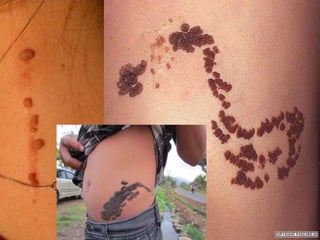
Clinical Features
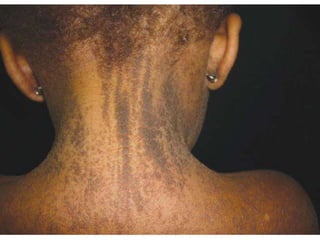
• Slightly pigmented brown velvety or warty
streaks or plaques
• Hyperpigmented and more warty with age
• Flexural lesions  macerated and foul smelling
• Rarely :- blisters at birth  verrucous with age
• Striate palmoplantar keratoderma / Ainhum
reported in a child with extensive systematized
VEN
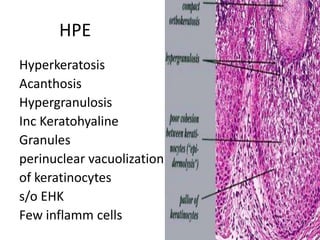
HPE
Hyperkeratosis
Acanthosis
Hypergranulosis
Inc Keratohyaline
Granules
perinuclear vacuolization
of keratinocytes
s/o EHK
Few inflamm cells
Non-Epidermolytic VEN
• Mosaic Chr 06 Trisomy
• FGFR3 Mutation
• Assoc with PIC3CA and PTEN mutations
• Significant Malignant Potential > 40 yrs
• Associated with extracutaneous manifestations
Clinical Features
• present at birth / childhood / 55 yrs of age
• Crusted, hyperkeratotic plaques on the head and
upper trunk
• Birth  white macerated appearance  pink /
slightly pigmented, velvety streaks or plaques 
darken and the surface becomes more warty
• Flexural lesions  macerated and foul smelling
• aa
Associations :
• Nail fold  Paronychia / ridging / splitting /
discoloration or dystrophy
• Wooly-Hair
• Megalopinna
• Aplasia Cutis
• Epidermal Nevus Syndrome
• Proteus Syndrome
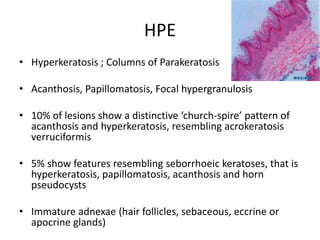
HPE
• Hyperkeratosis ; Columns of Parakeratosis
• Acanthosis, Papillomatosis, Focal hypergranulosis
• 10% of lesions show a distinctive ‘church-spire’ pattern of
acanthosis and hyperkeratosis, resembling acrokeratosis
verruciformis
• 5% show features resembling seborrhoeic keratoses, that is
hyperkeratosis, papillomatosis, acanthosis and horn
pseudocysts
• Immature adnexae (hair follicles, sebaceous, eccrine or
apocrine glands)
Treatment
Topical applications
• SA / LA / RA preparations  Decrease Hyperkeratosis
• Podophyllum
• 5-fluorouracil
• calcipotriol and calcitriol
Systemic retinoid therapy. Isotretinoin / etretinate / Acitretin can 
reduction of hyperkeratosis (in epidermolytic lesions)
Dermabrasion
Lasers
overcomes problems such as hypertrophic scarring, pigmentary
changes and partial recurrence
Argon laser is helpful for softer, less hyperkeratotic lesions
Continuous-wave CO2 laser vaporization  Extensive VEN
Pulsed CO2  thinner and softer VEN
Er:YAG lasers with greater coagulative capacity – Lower recurrence
Pulsed Ruby Laser
Surgery
Multi-modal, Multi-stage Dermis removal only effective
THANK YOU

Epidermal nevus

  • 1.
  • 2.
    Introduction • Latin :‘maternal impression’ / ‘birthmark’ • Developmental Defect • Cutaenous Hamartoma • Well-circumscribed, fixed • non-neoplastic skin / mucosal lesion • usually present at or soon after birth • qualified according to origin
  • 3.
    Aetiology • Environmental – IntrauterineInfections – Ionizing Radiation – Teratogenic Drugs – Alcohol / Smoking – Nutritional Deficiencies – Maternal Disease – Parental Exposure • Genetic – Microdeletion – Chromosomal Syndromes – Mutations – Genetic Mosaicism
  • 4.
    Classification • Based onlevel of defect Epidermal / Dermal / Subcutaneous • Based on Component Cell Vascular / Connective Tissue / Melanocytic • Congenital / Acquired
  • 5.
    Classification : Epidermal Keratinocytenaevi • Verrucous epidermal naevus (VEN) – Epidermolytic VEN – Non-epidermolytic VEN Sebaceous naevi • Naevus sebaceus Follicular naevi • True hair-follicle naevus • Comedo naevus • ‘Acne-free’ naevus • Basaloid follicular hamartoma • Dilated pore naevus • Hairy malformation of the palms and soles
  • 6.
    Apocrine naevi • Trueapocrine naevus • Syringocystadenoma papilliferum Eccrine naevi • True eccrine naevus • Eccrine angiomatous hamartoma • Porokeratotic eccrine ostial and dermal duct naevus Becker’s naevus Inflammatory epidermal naevi • CHILD naevus • ILVEN Other naevoid epidermal disorders • Naevoid psoriasis • Linear lichen planus • Darier-like epidermal naevus • Hailey–Hailey-like epidermal naevus • Linear porokeratosis • Atrophoderma of Moulin • ‘Blaschkitis’ Epidermal naevus syndrome
  • 7.
    Classification : Subepidermal Connectivetissue naevi Collagen naevi • Familial cutaneous collagenoma • Eruptive collagenoma • Shagreen patch • Other collagenomas Elastic naevi • Perforating elastoma • Juvenile elastoma • Buschke–Ollendorff syndrome • Papular elastorrhexis • Naevus anelasticans • Other elastomas
  • 8.
    Proteoglycan naevi • Mucinousnaevus • Fibrous hamartoma of infancy Muscle naevi • Infantile myofibroma • Congenital smooth muscle hamartoma • Diffuse smooth muscle hamartoma • Congenital leiomyoma • Striated muscle naevi Fat naevi • Naevi lipomatodes cutaneous superficialis • Lipoblastoma • Encephalocraniocutaneous lipomatosis • Congenital lipomatosis • Neurolipomatosis • ‘Michelin tyre’ baby
  • 9.
    Keratinocyte Nevi Verrucous epidermalnaevi Syn : Nevus Verrucosus / Nevus Unius Lateris • Cutaneous hamartomas comprising keratinocytes • Congenital • non- inflammatory • Prevalence 0.1–0.5% • M:F = 1:1 • Epidermolytic / Non-Epidermolytic types
  • 10.
    Epidermolytic VEN • Mutationson genes KRT1 / KRT10 • Associated with BIE • Insignificant Malignant Potential • No association with extracutaneous abnormalities keratin genes are expressed only in epithelia
  • 11.
    Clinical Features • Slightlypigmented brown velvety or warty streaks or plaques • Hyperpigmented and more warty with age • Flexural lesions  macerated and foul smelling • Rarely :- blisters at birth  verrucous with age • Striate palmoplantar keratoderma / Ainhum reported in a child with extensive systematized VEN
  • 13.
  • 14.
    Non-Epidermolytic VEN • MosaicChr 06 Trisomy • FGFR3 Mutation • Assoc with PIC3CA and PTEN mutations • Significant Malignant Potential > 40 yrs • Associated with extracutaneous manifestations
  • 15.
    Clinical Features • presentat birth / childhood / 55 yrs of age • Crusted, hyperkeratotic plaques on the head and upper trunk • Birth  white macerated appearance  pink / slightly pigmented, velvety streaks or plaques  darken and the surface becomes more warty • Flexural lesions  macerated and foul smelling
  • 16.
  • 17.
    Associations : • Nailfold  Paronychia / ridging / splitting / discoloration or dystrophy • Wooly-Hair • Megalopinna • Aplasia Cutis • Epidermal Nevus Syndrome • Proteus Syndrome
  • 18.
    HPE • Hyperkeratosis ;Columns of Parakeratosis • Acanthosis, Papillomatosis, Focal hypergranulosis • 10% of lesions show a distinctive ‘church-spire’ pattern of acanthosis and hyperkeratosis, resembling acrokeratosis verruciformis • 5% show features resembling seborrhoeic keratoses, that is hyperkeratosis, papillomatosis, acanthosis and horn pseudocysts • Immature adnexae (hair follicles, sebaceous, eccrine or apocrine glands)
  • 19.
    Treatment Topical applications • SA/ LA / RA preparations  Decrease Hyperkeratosis • Podophyllum • 5-fluorouracil • calcipotriol and calcitriol Systemic retinoid therapy. Isotretinoin / etretinate / Acitretin can  reduction of hyperkeratosis (in epidermolytic lesions) Dermabrasion
  • 20.
    Lasers overcomes problems suchas hypertrophic scarring, pigmentary changes and partial recurrence Argon laser is helpful for softer, less hyperkeratotic lesions Continuous-wave CO2 laser vaporization  Extensive VEN Pulsed CO2  thinner and softer VEN Er:YAG lasers with greater coagulative capacity – Lower recurrence Pulsed Ruby Laser Surgery Multi-modal, Multi-stage Dermis removal only effective
  • 21.