Download as PDF, PPTX


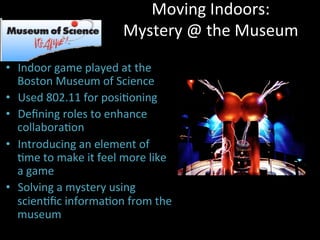
![Mystery
@
The
Museum
-‐
Game
Play
Parents
and
Kids
CollaboraJng
Fostering
CollaboraJon
Through
Roles
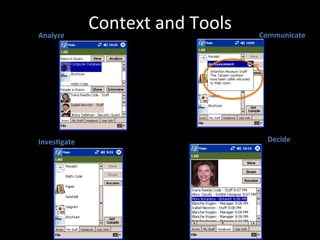
CollecJng
Virtual
Samples
Using
Contextual
Information
“[The
game]
was
fun.
This
was
the
longest
I’ve
spent
with
my
[teenage]
son
without
arguing
with
him...”
-‐parent](https://image.slidesharecdn.com/judyperry-130826131752-phpapp01/85/Judy-Perry-MIT-Scheller-Teacher-Education-Program-Lab-31-320.jpg)
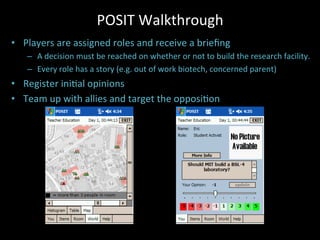
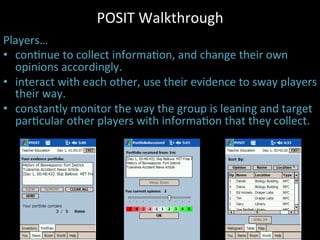
![1st
POSIT
Game
Overview
– Briefing
-‐
PotenJal
biohazard
facility
in
Boston
– Roles
-‐
Playing
realisJc
roles
from
scienJst
to
resident
– IniPal
Opinion
-‐
Opinions
“in
role”
are
registered
– CollecPng
Data
-‐
Players
collect
informaJon
from
virtual
characters,
and
real
arJfacts/places
– Sharing
Opinions
-‐
Players
share
informaJon
that
they
have
collected
to
convince
others
of
their
[character’s]
point
of
view
– Influencing
Others
and
Changing
Opinions
-‐
Influence
key
individuals
to
sway
the
vote
– Final
Decision
-‐
voJng
Game
is
focused
around
a
single
yes/no
policy
ques?on
(fic?onalized).
E.g.,
“Should
we
build
a
biohazard
level
4
research
facility
in
our
community?”](https://image.slidesharecdn.com/judyperry-130826131752-phpapp01/85/Judy-Perry-MIT-Scheller-Teacher-Education-Program-Lab-34-320.jpg)
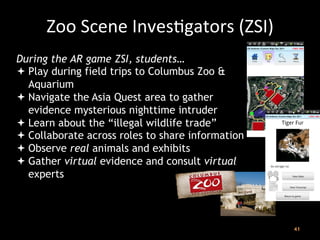
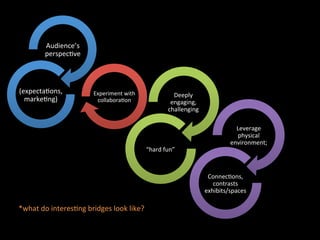
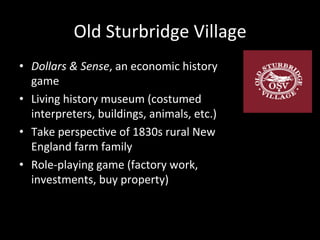
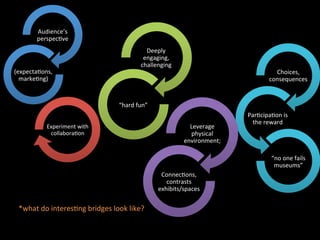

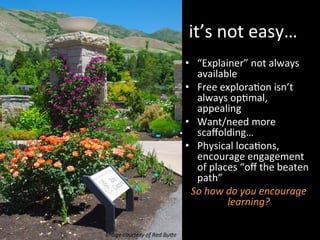
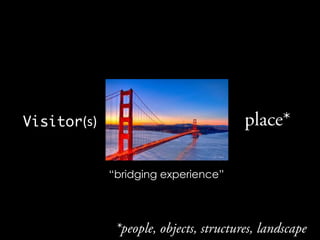
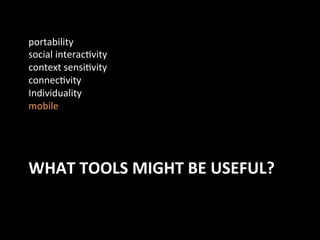
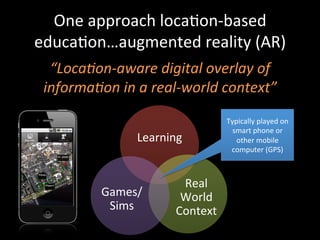
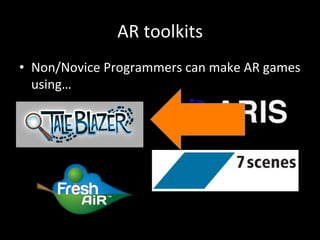
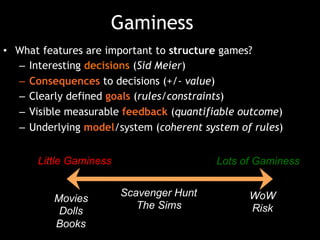
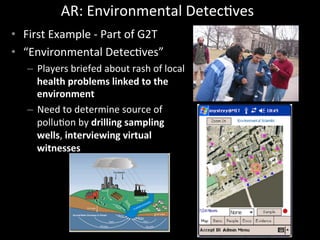
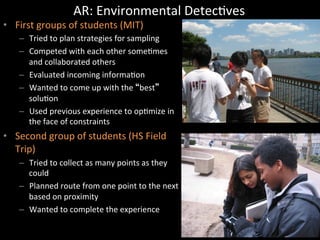
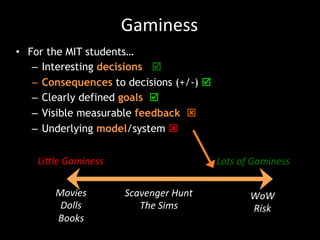
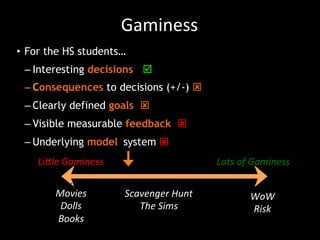
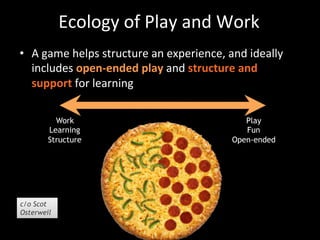
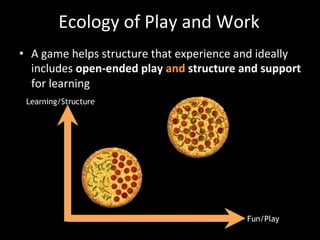
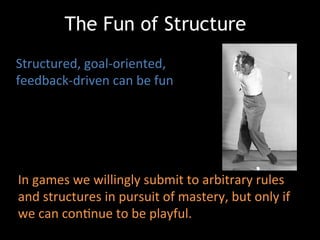
The document discusses using mobile augmented reality (AR) games to foster informal learning in real-world spaces. It describes how AR games can create "bridges" between visitors and places by overlaying digital information and gameplay. The author provides examples of an environmental detective AR game used with MIT students and high school students. For the MIT students, the game exhibited some elements of gaminess like interesting decisions, but lacked clear goals and feedback. For the high school students, the game was more focused on completion than problem-solving. The author advocates designing AR games that balance structured learning and open-ended play to cultivate both fun and deeper understanding.


