FROM CURIOUS
TO CREATIVE
@brianhousand
SLIDES AVAILABLE AFTER THE PRESENTATION
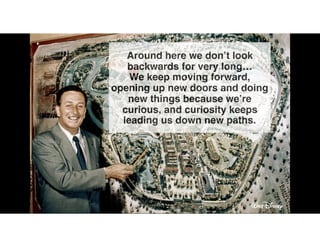
Around here we don’t look
backwards for very long…
We keep moving forward,
opening up new doors and doing
new things because we’re
curious, and curiosity keeps
leading us down new paths.
!
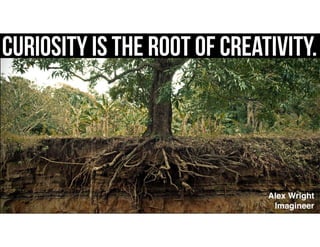
Curiosity is the root of creativity.
Alex Wright
Imagineer
2005
Stay hungry.
Stay foolish.
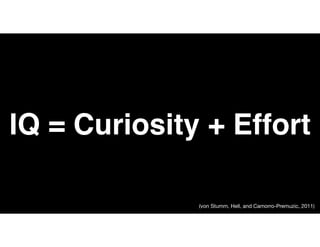
IQ = Curiosity + Effort
(von Stumm, Hell, and Camorro-Premuzic, 2011)
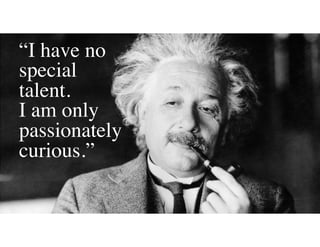
“I have no
special
talent.
I am only
passionately
curious.”
Why are kids so
much better at
this than adults?
Thinking
Like a child
GO
GO
EXPLORE
THE GARDEN
EXPLORE
THE GARDEN
https://i.ytimg.com/vi/A7Eq9PEuDQk/maxresdefault.jpg
INTEREST PASSION
thekidshouldseethis.com
wonderopolis.org/wonders
curiosity.com
curious.com
atlasobscura.com
#carpetdiem
I didn’t know I was
interested in that.
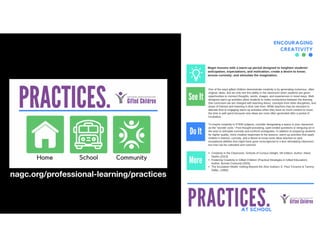
AT SCHOOL
ENCOURAGING
CREATIVITY
Begin lessons with a warm-up period designed to heighten students’
anticipation, expectations, and motivation; create a desire to know;
arouse curiosity; and stimulate the imagination.
One of the ways gifted children demonstrate creativity is by generating numerous, often
original, ideas. But we only see this ability in the classroom when students are given
opportunities to connect thoughts, words, images, and experiences in novel ways. Well-
designed warm-up activities allow students to make connections between the learning
(the curriculum we are charged with teaching them), concepts from other disciplines, and
areas of interest and meaning in their own lives. While teachers may be reluctant to
allocate time to engaging warm-up activities when they have so much content to cover,
the time is well spent because new ideas are most often generated after a period of
incubation.
To inspire creativity in STEM subjects, consider designating a space in your classroom
as the "wonder zone." Post thought-provoking, open-ended questions or intriguing art in
the area to stimulate curiosity and confront ambiguities. In addition to preparing students
for higher quality, more creative responses to the lessons, warm-up activities that spark
children’s interest, curiosity, and a desire to know more allow teachers to spot
exceptional abilities that might have gone unrecognized in a less stimulating classroom,
but now can be cultivated and nurtured.
Creativity in the Classroom: Schools of Curious Delight, 5th Edition. Author: Alane
Starko (2013)
Fostering Creativity in Gifted Children (Practical Strategies in Gifted Education).
Author: Bonnie Cramond (2005)
The Incubation Model: Getting Beyond the Aha! Authors: E. Paul Torrance & Tammy
Safter, (1990).
nagc.org/professional-learning/practices
Confusion
is a
part of
Innovation
visiblethinkingpz.org
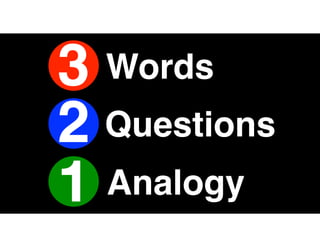
3
2
1
Words
Questions
Analogy
menti.com
14 08 08
Know it All
Know it AllLEARN
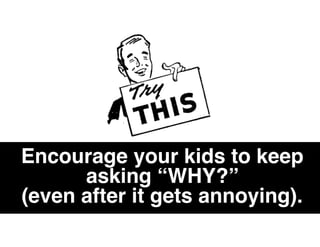
Encourage your kids to keep
asking “WHY?”
(even after it gets annoying).
豊田 佐吉
Sakichi Toyoda
What if…?
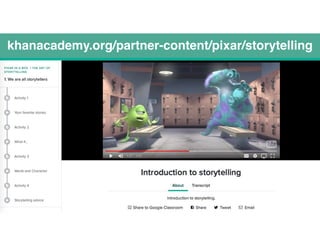
khanacademy.org/partner-content/pixar/storytelling
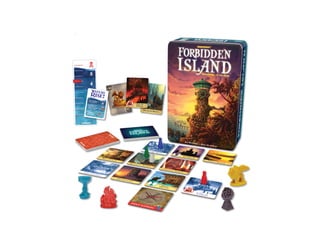
Identify the three films
that you would take to a
deserted island….
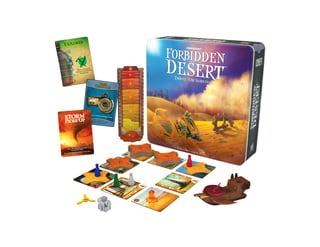
Provide challenges that will
probably result in failure.
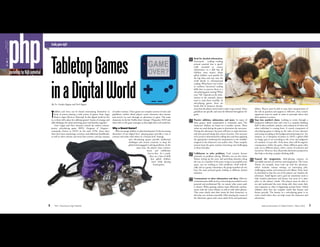
16 PHP | Parenting for High Potential
familygamenight
TabletopGames
inaDigitalWorldBy Dr. Carolyn Ragatz and Zach Ragatz
Toddlers and teens can be found entertaining themselves in
front of screens playing a wide variety of games, from Angry
Birds to Super Mario to Minecraft. In this digital world we live
in, is there still a place for tabletop games? Games of strategy and
skill challenge the mind and bring peers and families together.1
Gary Gygax and Dave Arneson created the earliest contem-
porary role-playing game (RPG) Dungeons & Dragons—
commonly known as D&D—in the early 1970s. Since then,
there have been reprintings, revisions, and additional handbooks,
as well as other systems and story lines written, and the creation
of online versions. These games are complex systems of rules and
guidelines, within which players create characters that interact
and survive (or not) through an adventure or quest. The main
characters in the hit Netflix show Stranger Things play D&D and
often refer to the game strategies as they fight their real-world foe.
Why a Board Game?
Why encourage children to play board games? In the increasing
disconnect of our digital lives,2
playing games provides a way to
connect and relate with others on a human level. Strategy
and role-playing games provide intellectual
challenges and stretch creativity to keep the
gifted mind engaged in solving problems. At the
same time, the players must commu-
nicate and collaborate
face-to-face. As a result,
there are a host of skills
that gifted children
learn while playing
board games.
GAME
OVER?
17National Association for Gifted Children | March 2018
Read for detailed information.
Functional reading—reading
printed material that is specif-
ically intended to convey
information—is a skill that all
children must master. Many
gifted children read quickly for
the big ideas and may miss the
small details in informational
reading. What better way is there
to reinforce functional reading
skills than to practice them in a
role-playing game setting? When
your “life” depends on the infor-
mation in the manuals, players
tend to read them carefully. In
role-playing games, there are
books full of character descrip-
tions that the players must read in order to get started. These
guidelines are specific and must be followed throughout the
game.
Practice addition, subtraction, and more. In many of
these games, math computation is constantly used. The
characters’ abilities are based on a number system. These
values are used during the game to determine the outcomes.
During the adventure, the party will have to make decisions
and then proceed along that course of action. The outcome
of an action is determined by rolling dice and then applying
the appropriate mathematical computation to the modifier
assigned to the character’s race and/or class. These complex
systems keep the game sessions interesting and challenging
to those that play.
Collaborate to solve problems. Each scenario focuses
primarily on problem solving. Whether you are the Game
Master setting up the story and providing obstacles along
the way, or a member of the party trying to accomplish your
quest, you are working to solve problems—both individ-
ually and as a group. Sometimes, the group members do not
have the same personal goals, leading to different desired
solutions.
Communicate to share information and ideas. Effective
communication skills are key to becoming successful in one’s
personal and professional life, no matter what career path
is chosen. When gaming, players must effectively commu-
nicate with the Game Master, as well as with other players.
They must clearly state their intent for their characters, so
that play can continue smoothly. Often during the course of
the adventure, game rules come under lively and passionate
debate. Players must be able to state their interpretation of
the rule in question and support it. Effective, clear, concise
arguments must be made in order to persuade others that
their opinion is correct.
Step into another’s shoes. Looking at events through a
perspective different than one’s own is a complex thinking
skill. It takes synthesis, analysis, and evaluation of where the
other individual is coming from. A crucial component of
role-playing games is taking on the value of your character
and acting according to his background and perspective. For
instance, as a Champion of Justice in D&D, a gifted child
no longer gets to act according to the views and judgment
of a modern 12-year-old—if she does, there will be negative
consequences within the game. Many different game titles
exist, set in different places, with a variety of scenarios and
incentives. However, they all provide alternative perspectives
that help to develop complex thinking skills.
Expand the imagination. Role-playing requires an
incredible amount of creativity and imagination. The Game
Master, for example, must come up with the adventure,
which includes various settings, an interesting plot,
challenging combat, and numerous evil villains. These must
be described so that the rest of the players can visualize the
adventure. Small figures and a grid are sometimes used to
help visualize placement and layout, but most of it takes
place in the players’ minds. The players must be able to
see and understand the story being told, then create their
own responses to what is happening around them. Gifted
children often love the complex world that fantasy and
fiction provide. The fantasy in a role-playing game is an
entire world where they can help create the characters and
adventures.
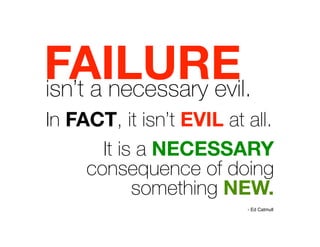
FAILURE 

isn’t a necessary evil.
In FACT, it isn’t EVIL at all.
It is a NECESSARY
consequence of doing
something NEW.
- Ed Catmull
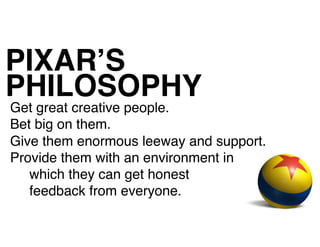
Get great creative people.
Bet big on them.
Give them enormous leeway and support.
Provide them with an environment in
which they can get honest
feedback from everyone.
PIXAR’S
PHILOSOPHY
candorn. the state or quality of being
frank, open, and sincere in
speech or expression
TRUST
https://hbr.org/resources/images/article_assets/hbr/0809/R0809D_B.gif
YOU ARE NOT YOUR IDEA
Early on,
all of our movies suck.
Ed Catmull
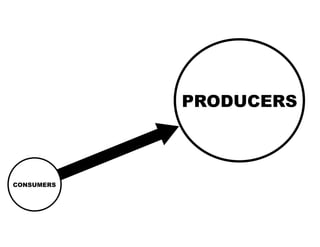
CONSUMERS
PRODUCERS
YOUR
COMFORT
ZONE
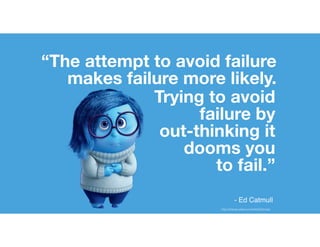
“The attempt to avoid failure
makes failure more likely.
Trying to avoid
failure by
out-thinking it
dooms you
to fail.”
http://disney.wikia.com/wiki/Sadness
- Ed Catmull
Stay hungry.
Stay foolish.
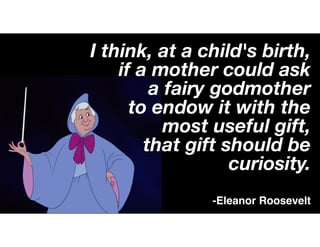
I think, at a child's birth,
if a mother could ask
a fairy godmother
to endow it with the
most useful gift,
that gift should be
curiosity.
-Eleanor Roosevelt
https://s-media-cache-ak0.pinimg.com/736x/81/2a/37/812a37b72010cf72cf208519a6e13e24.jpg
brianhousand.com/nagc-grayson
brianhousand@gmail.com
@brianhousand
brian.housand
bc1000
FROM CURIOUS TO CREATIVE

FROM CURIOUS TO CREATIVE

  • 1.
  • 2.
    SLIDES AVAILABLE AFTERTHE PRESENTATION
  • 3.
    Around here wedon’t look backwards for very long… We keep moving forward, opening up new doors and doing new things because we’re curious, and curiosity keeps leading us down new paths. !
  • 4.
    Curiosity is theroot of creativity. Alex Wright Imagineer
  • 6.
  • 14.
  • 15.
    IQ = Curiosity+ Effort (von Stumm, Hell, and Camorro-Premuzic, 2011)
  • 16.
    “I have no special talent. Iam only passionately curious.”
  • 22.
    Why are kidsso much better at this than adults?
  • 25.
  • 26.
  • 27.
  • 29.
  • 30.
  • 31.
  • 32.
  • 33.
  • 34.
  • 35.
  • 36.
  • 37.
  • 38.
    I didn’t knowI was interested in that.
  • 39.
    AT SCHOOL ENCOURAGING CREATIVITY Begin lessonswith a warm-up period designed to heighten students’ anticipation, expectations, and motivation; create a desire to know; arouse curiosity; and stimulate the imagination. One of the ways gifted children demonstrate creativity is by generating numerous, often original, ideas. But we only see this ability in the classroom when students are given opportunities to connect thoughts, words, images, and experiences in novel ways. Well- designed warm-up activities allow students to make connections between the learning (the curriculum we are charged with teaching them), concepts from other disciplines, and areas of interest and meaning in their own lives. While teachers may be reluctant to allocate time to engaging warm-up activities when they have so much content to cover, the time is well spent because new ideas are most often generated after a period of incubation. To inspire creativity in STEM subjects, consider designating a space in your classroom as the "wonder zone." Post thought-provoking, open-ended questions or intriguing art in the area to stimulate curiosity and confront ambiguities. In addition to preparing students for higher quality, more creative responses to the lessons, warm-up activities that spark children’s interest, curiosity, and a desire to know more allow teachers to spot exceptional abilities that might have gone unrecognized in a less stimulating classroom, but now can be cultivated and nurtured. Creativity in the Classroom: Schools of Curious Delight, 5th Edition. Author: Alane Starko (2013) Fostering Creativity in Gifted Children (Practical Strategies in Gifted Education). Author: Bonnie Cramond (2005) The Incubation Model: Getting Beyond the Aha! Authors: E. Paul Torrance & Tammy Safter, (1990). nagc.org/professional-learning/practices
  • 41.
  • 42.
  • 43.
  • 45.
  • 47.
  • 48.
  • 49.
    Encourage your kidsto keep asking “WHY?” (even after it gets annoying).
  • 50.
  • 51.
  • 52.
  • 53.
    Identify the threefilms that you would take to a deserted island….
  • 55.
    Provide challenges thatwill probably result in failure.
  • 60.
    16 PHP |Parenting for High Potential familygamenight TabletopGames inaDigitalWorldBy Dr. Carolyn Ragatz and Zach Ragatz Toddlers and teens can be found entertaining themselves in front of screens playing a wide variety of games, from Angry Birds to Super Mario to Minecraft. In this digital world we live in, is there still a place for tabletop games? Games of strategy and skill challenge the mind and bring peers and families together.1 Gary Gygax and Dave Arneson created the earliest contem- porary role-playing game (RPG) Dungeons & Dragons— commonly known as D&D—in the early 1970s. Since then, there have been reprintings, revisions, and additional handbooks, as well as other systems and story lines written, and the creation of online versions. These games are complex systems of rules and guidelines, within which players create characters that interact and survive (or not) through an adventure or quest. The main characters in the hit Netflix show Stranger Things play D&D and often refer to the game strategies as they fight their real-world foe. Why a Board Game? Why encourage children to play board games? In the increasing disconnect of our digital lives,2 playing games provides a way to connect and relate with others on a human level. Strategy and role-playing games provide intellectual challenges and stretch creativity to keep the gifted mind engaged in solving problems. At the same time, the players must commu- nicate and collaborate face-to-face. As a result, there are a host of skills that gifted children learn while playing board games. GAME OVER? 17National Association for Gifted Children | March 2018 Read for detailed information. Functional reading—reading printed material that is specif- ically intended to convey information—is a skill that all children must master. Many gifted children read quickly for the big ideas and may miss the small details in informational reading. What better way is there to reinforce functional reading skills than to practice them in a role-playing game setting? When your “life” depends on the infor- mation in the manuals, players tend to read them carefully. In role-playing games, there are books full of character descrip- tions that the players must read in order to get started. These guidelines are specific and must be followed throughout the game. Practice addition, subtraction, and more. In many of these games, math computation is constantly used. The characters’ abilities are based on a number system. These values are used during the game to determine the outcomes. During the adventure, the party will have to make decisions and then proceed along that course of action. The outcome of an action is determined by rolling dice and then applying the appropriate mathematical computation to the modifier assigned to the character’s race and/or class. These complex systems keep the game sessions interesting and challenging to those that play. Collaborate to solve problems. Each scenario focuses primarily on problem solving. Whether you are the Game Master setting up the story and providing obstacles along the way, or a member of the party trying to accomplish your quest, you are working to solve problems—both individ- ually and as a group. Sometimes, the group members do not have the same personal goals, leading to different desired solutions. Communicate to share information and ideas. Effective communication skills are key to becoming successful in one’s personal and professional life, no matter what career path is chosen. When gaming, players must effectively commu- nicate with the Game Master, as well as with other players. They must clearly state their intent for their characters, so that play can continue smoothly. Often during the course of the adventure, game rules come under lively and passionate debate. Players must be able to state their interpretation of the rule in question and support it. Effective, clear, concise arguments must be made in order to persuade others that their opinion is correct. Step into another’s shoes. Looking at events through a perspective different than one’s own is a complex thinking skill. It takes synthesis, analysis, and evaluation of where the other individual is coming from. A crucial component of role-playing games is taking on the value of your character and acting according to his background and perspective. For instance, as a Champion of Justice in D&D, a gifted child no longer gets to act according to the views and judgment of a modern 12-year-old—if she does, there will be negative consequences within the game. Many different game titles exist, set in different places, with a variety of scenarios and incentives. However, they all provide alternative perspectives that help to develop complex thinking skills. Expand the imagination. Role-playing requires an incredible amount of creativity and imagination. The Game Master, for example, must come up with the adventure, which includes various settings, an interesting plot, challenging combat, and numerous evil villains. These must be described so that the rest of the players can visualize the adventure. Small figures and a grid are sometimes used to help visualize placement and layout, but most of it takes place in the players’ minds. The players must be able to see and understand the story being told, then create their own responses to what is happening around them. Gifted children often love the complex world that fantasy and fiction provide. The fantasy in a role-playing game is an entire world where they can help create the characters and adventures.
  • 62.
    FAILURE isn’t anecessary evil. In FACT, it isn’t EVIL at all. It is a NECESSARY consequence of doing something NEW. - Ed Catmull
  • 63.
    Get great creativepeople. Bet big on them. Give them enormous leeway and support. Provide them with an environment in which they can get honest feedback from everyone. PIXAR’S PHILOSOPHY
  • 64.
    candorn. the stateor quality of being frank, open, and sincere in speech or expression
  • 65.
  • 66.
  • 67.
    Early on, all ofour movies suck. Ed Catmull
  • 68.
  • 69.
  • 70.
    “The attempt toavoid failure makes failure more likely. Trying to avoid failure by out-thinking it dooms you to fail.” http://disney.wikia.com/wiki/Sadness - Ed Catmull
  • 71.
  • 72.
    I think, ata child's birth, if a mother could ask a fairy godmother to endow it with the most useful gift, that gift should be curiosity. -Eleanor Roosevelt
  • 73.
  • 74.