Experimental Photography 
Mel Storey 
1
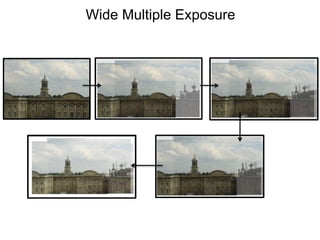
Wide Multiple Exposure
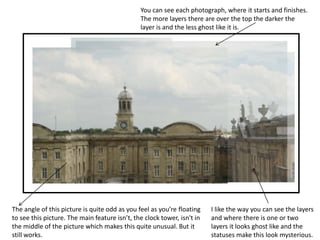
You can see each photograph, where it starts and finishes. 
The more layers there are over the top the darker the 
layer is and the less ghost like it is. 
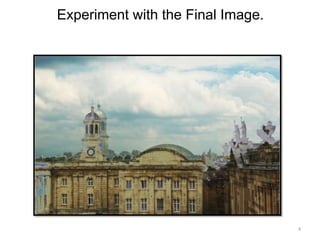
The angle of this picture is quite odd as you feel as you’re floating 
to see this picture. The main feature isn’t, the clock tower, isn't in 
the middle of the picture which makes this quite unusual. But it 
still works. 
I like the way you can see the layers 
and where there is one or two 
layers it looks ghost like and the 
statuses make this look mysterious.
4 
Experiment with the Final Image.
Evaluate: ideas eg analysis, results; 
How well do you feel you have realised your ideas and intentions and what results have 
you got? Ensure you talk critically (compare, contrast, assess) about your work. You 
should reference your influences and assess how your work compares. 
Qualities: 
Consider the aesthetic qualities of your work. How does it look? What do you like about 
it? What are the strongest and weakest elements from an aesthetic point of view? 
5 
Consider the technical qualities of your work? How well done is it? What elements are 
strongest and which could need further work and development? Be sure to use 
technical terms in your work such as exposure, shutter speed, aperture and talk 
specifically about any post-production techniques you have used.
How could you improve your work? Could you develop your work further with 
additional work? What would you try to achieve with this? Could you undertake further 
experiments? If so, what would they be? 
When talking about your work, consider formal elements such as lines, shapes and 
patterns as well as the colour and contrast and also tone of your image. Think about the 
composition of your work and where this could be developed. 
6 
Finally you should consider if the images you have produced fulfil the brief you were 
set. Do they match the theme? Are they experimental? Explain your answers using 
specific examples.
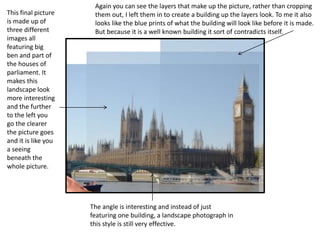
Wide Multiple Exposure
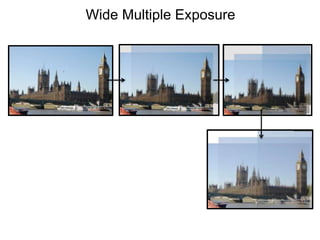
This final picture 
is made up of 
three different 
images all 
featuring big 
ben and part of 
the houses of 
parliament. It 
makes this 
landscape look 
more interesting 
and the further 
to the left you 
go the clearer 
the picture goes 
and it is like you 
a seeing 
beneath the 
whole picture. 
Again you can see the layers that make up the picture, rather than cropping 
them out, I left them in to create a building up the layers look. To me it also 
looks like the blue prints of what the building will look like before it is made. 
But because it is a well known building it sort of contradicts itself. 
The angle is interesting and instead of just 
featuring one building, a landscape photograph in 
this style is still very effective.
9 
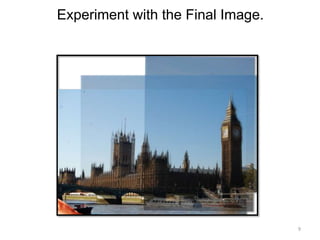
Experiment with the Final Image.
Evaluate: ideas eg analysis, results; 
How well do you feel you have realised your ideas and intentions and what results have 
you got? Ensure you talk critically (compare, contrast, assess) about your work. You 
should reference your influences and assess how your work compares. 
Qualities: 
Consider the aesthetic qualities of your work. How does it look? What do you like about 
it? What are the strongest and weakest elements from an aesthetic point of view? 
10 
Consider the technical qualities of your work? How well done is it? What elements are 
strongest and which could need further work and development? Be sure to use 
technical terms in your work such as exposure, shutter speed, aperture and talk 
specifically about any post-production techniques you have used.
How could you improve your work? Could you develop your work further with 
additional work? What would you try to achieve with this? Could you undertake further 
experiments? If so, what would they be? 
When talking about your work, consider formal elements such as lines, shapes and 
patterns as well as the colour and contrast and also tone of your image. Think about the 
composition of your work and where this could be developed. 
11 
Finally you should consider if the images you have produced fulfil the brief you were 
set. Do they match the theme? Are they experimental? Explain your answers using 
specific examples.
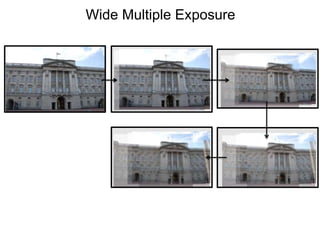
Wide Multiple Exposure
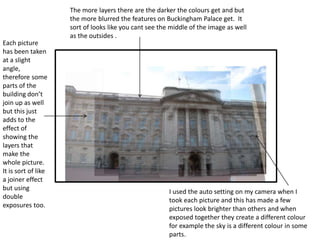
The more layers there are the darker the colours get and but 
the more blurred the features on Buckingham Palace get. It 
sort of looks like you cant see the middle of the image as well 
as the outsides . 
Each picture 
has been taken 
at a slight 
angle, 
therefore some 
parts of the 
building don’t 
join up as well 
but this just 
adds to the 
effect of 
showing the 
layers that 
make the 
whole picture. 
It is sort of like 
a joiner effect 
but using 
double 
exposures too. 
I used the auto setting on my camera when I 
took each picture and this has made a few 
pictures look brighter than others and when 
exposed together they create a different colour 
for example the sky is a different colour in some 
parts.
Evaluate: ideas eg analysis, results; 
How well do you feel you have realised your ideas and intentions and what results have 
you got? Ensure you talk critically (compare, contrast, assess) about your work. You 
should reference your influences and assess how your work compares. 
Qualities: 
Consider the aesthetic qualities of your work. How does it look? What do you like about 
it? What are the strongest and weakest elements from an aesthetic point of view? 
14 
Consider the technical qualities of your work? How well done is it? What elements are 
strongest and which could need further work and development? Be sure to use 
technical terms in your work such as exposure, shutter speed, aperture and talk 
specifically about any post-production techniques you have used.
How could you improve your work? Could you develop your work further with 
additional work? What would you try to achieve with this? Could you undertake further 
experiments? If so, what would they be? 
When talking about your work, consider formal elements such as lines, shapes and 
patterns as well as the colour and contrast and also tone of your image. Think about the 
composition of your work and where this could be developed. 
15 
Finally you should consider if the images you have produced fulfil the brief you were 
set. Do they match the theme? Are they experimental? Explain your answers using 
specific examples.

Joiner Eveluation

  • 1.
  • 2.
  • 3.
    You can seeeach photograph, where it starts and finishes. The more layers there are over the top the darker the layer is and the less ghost like it is. The angle of this picture is quite odd as you feel as you’re floating to see this picture. The main feature isn’t, the clock tower, isn't in the middle of the picture which makes this quite unusual. But it still works. I like the way you can see the layers and where there is one or two layers it looks ghost like and the statuses make this look mysterious.
  • 4.
    4 Experiment withthe Final Image.
  • 5.
    Evaluate: ideas eganalysis, results; How well do you feel you have realised your ideas and intentions and what results have you got? Ensure you talk critically (compare, contrast, assess) about your work. You should reference your influences and assess how your work compares. Qualities: Consider the aesthetic qualities of your work. How does it look? What do you like about it? What are the strongest and weakest elements from an aesthetic point of view? 5 Consider the technical qualities of your work? How well done is it? What elements are strongest and which could need further work and development? Be sure to use technical terms in your work such as exposure, shutter speed, aperture and talk specifically about any post-production techniques you have used.
  • 6.
    How could youimprove your work? Could you develop your work further with additional work? What would you try to achieve with this? Could you undertake further experiments? If so, what would they be? When talking about your work, consider formal elements such as lines, shapes and patterns as well as the colour and contrast and also tone of your image. Think about the composition of your work and where this could be developed. 6 Finally you should consider if the images you have produced fulfil the brief you were set. Do they match the theme? Are they experimental? Explain your answers using specific examples.
  • 7.
  • 8.
    This final picture is made up of three different images all featuring big ben and part of the houses of parliament. It makes this landscape look more interesting and the further to the left you go the clearer the picture goes and it is like you a seeing beneath the whole picture. Again you can see the layers that make up the picture, rather than cropping them out, I left them in to create a building up the layers look. To me it also looks like the blue prints of what the building will look like before it is made. But because it is a well known building it sort of contradicts itself. The angle is interesting and instead of just featuring one building, a landscape photograph in this style is still very effective.
  • 9.
    9 Experiment withthe Final Image.
  • 10.
    Evaluate: ideas eganalysis, results; How well do you feel you have realised your ideas and intentions and what results have you got? Ensure you talk critically (compare, contrast, assess) about your work. You should reference your influences and assess how your work compares. Qualities: Consider the aesthetic qualities of your work. How does it look? What do you like about it? What are the strongest and weakest elements from an aesthetic point of view? 10 Consider the technical qualities of your work? How well done is it? What elements are strongest and which could need further work and development? Be sure to use technical terms in your work such as exposure, shutter speed, aperture and talk specifically about any post-production techniques you have used.
  • 11.
    How could youimprove your work? Could you develop your work further with additional work? What would you try to achieve with this? Could you undertake further experiments? If so, what would they be? When talking about your work, consider formal elements such as lines, shapes and patterns as well as the colour and contrast and also tone of your image. Think about the composition of your work and where this could be developed. 11 Finally you should consider if the images you have produced fulfil the brief you were set. Do they match the theme? Are they experimental? Explain your answers using specific examples.
  • 12.
  • 13.
    The more layersthere are the darker the colours get and but the more blurred the features on Buckingham Palace get. It sort of looks like you cant see the middle of the image as well as the outsides . Each picture has been taken at a slight angle, therefore some parts of the building don’t join up as well but this just adds to the effect of showing the layers that make the whole picture. It is sort of like a joiner effect but using double exposures too. I used the auto setting on my camera when I took each picture and this has made a few pictures look brighter than others and when exposed together they create a different colour for example the sky is a different colour in some parts.
  • 14.
    Evaluate: ideas eganalysis, results; How well do you feel you have realised your ideas and intentions and what results have you got? Ensure you talk critically (compare, contrast, assess) about your work. You should reference your influences and assess how your work compares. Qualities: Consider the aesthetic qualities of your work. How does it look? What do you like about it? What are the strongest and weakest elements from an aesthetic point of view? 14 Consider the technical qualities of your work? How well done is it? What elements are strongest and which could need further work and development? Be sure to use technical terms in your work such as exposure, shutter speed, aperture and talk specifically about any post-production techniques you have used.
  • 15.
    How could youimprove your work? Could you develop your work further with additional work? What would you try to achieve with this? Could you undertake further experiments? If so, what would they be? When talking about your work, consider formal elements such as lines, shapes and patterns as well as the colour and contrast and also tone of your image. Think about the composition of your work and where this could be developed. 15 Finally you should consider if the images you have produced fulfil the brief you were set. Do they match the theme? Are they experimental? Explain your answers using specific examples.