Evaluations
AS Photography
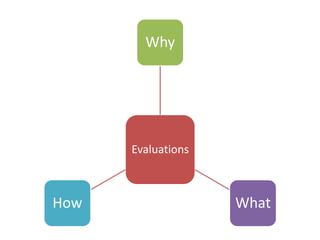
Why

Evaluations

How

What
BOTHER?
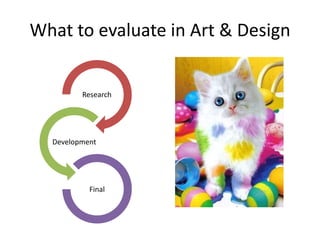
What to evaluate in Art & Design

Research

Development

Final
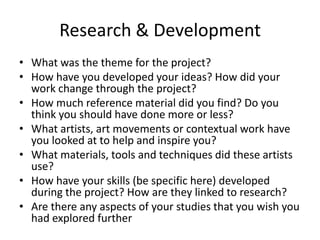
Research & Development
• What was the theme for the project?
• How have you developed your ideas? How did your
work change through the project?
• How much reference material did you find? Do you
think you should have done more or less?
• What artists, art movements or contextual work have
you looked at to help and inspire you?
• What materials, tools and techniques did these artists
use?
• How have your skills (be specific here) developed
during the project? How are they linked to research?
• Are there any aspects of your studies that you wish you
had explored further
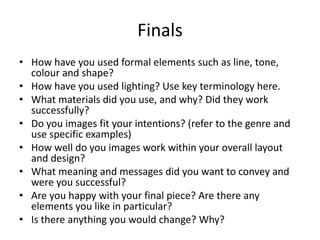
Finals
• How have you used formal elements such as line, tone,
colour and shape?
• How have you used lighting? Use key terminology here.
• What materials did you use, and why? Did they work
successfully?
• Do you images fit your intentions? (refer to the genre and
use specific examples)
• How well do you images work within your overall layout
and design?
• What meaning and messages did you want to convey and
were you successful?
• Are you happy with your final piece? Are there any
elements you like in particular?
• Is there anything you would change? Why?
CAN I DO THIS?
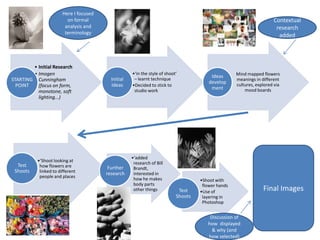
Here I focused
on formal
analysis and
terminology

• Initial Research
• Imogen
STARTING Cunningham
POINT
(focus on form,
monotone, soft
lighting...)

Test
Shoots

•‘Shoot looking at
how flowers are
linked to different
people and places

Contextual
research
added

Initial
Ideas

Further
research

•‘in the style of shoot’
– learnt technique
•Decided to stick to
studio work

•‘added
research of Bill
Brandt,
interested in
how he makes
body parts
other things

Test
Shoots

Ideas
develop
ment

Mind mapped flowers
meanings in different
cultures, explored via
mood boards

•Shoot with
flower hands
•Use of
layering in
Photoshop

Discussion of
how displayed
& why (and
how selected)

Final Images
Summary
• Tell someone you don’t normally
speak to why you should do
evaluations, what you should
include and how you can do this.
You have one minute to prepare and
one minute to present
Task
• The rest of the session is an open
workshop. You must set a target which is
achievable within the time left. This could
be drafting the first part of your evaluation,
finalising research or planning one more
shoot… It is up to you but it must be achieved.
• Remember – achieved targets win

prizes
ALL FOLDERS IN MONDAY
- NO EXCEPTIONS –
WE WILL WORK ON SELF
ASSESSING AGAINST
ASSESSMENT OBJECTIVES

Evalauations why what how

  • 1.
  • 2.
  • 3.
  • 4.
    What to evaluatein Art & Design Research Development Final
  • 5.
    Research & Development •What was the theme for the project? • How have you developed your ideas? How did your work change through the project? • How much reference material did you find? Do you think you should have done more or less? • What artists, art movements or contextual work have you looked at to help and inspire you? • What materials, tools and techniques did these artists use? • How have your skills (be specific here) developed during the project? How are they linked to research? • Are there any aspects of your studies that you wish you had explored further
  • 6.
    Finals • How haveyou used formal elements such as line, tone, colour and shape? • How have you used lighting? Use key terminology here. • What materials did you use, and why? Did they work successfully? • Do you images fit your intentions? (refer to the genre and use specific examples) • How well do you images work within your overall layout and design? • What meaning and messages did you want to convey and were you successful? • Are you happy with your final piece? Are there any elements you like in particular? • Is there anything you would change? Why?
  • 7.
    CAN I DOTHIS?
  • 8.
    Here I focused onformal analysis and terminology • Initial Research • Imogen STARTING Cunningham POINT (focus on form, monotone, soft lighting...) Test Shoots •‘Shoot looking at how flowers are linked to different people and places Contextual research added Initial Ideas Further research •‘in the style of shoot’ – learnt technique •Decided to stick to studio work •‘added research of Bill Brandt, interested in how he makes body parts other things Test Shoots Ideas develop ment Mind mapped flowers meanings in different cultures, explored via mood boards •Shoot with flower hands •Use of layering in Photoshop Discussion of how displayed & why (and how selected) Final Images
  • 9.
    Summary • Tell someoneyou don’t normally speak to why you should do evaluations, what you should include and how you can do this. You have one minute to prepare and one minute to present
  • 10.
    Task • The restof the session is an open workshop. You must set a target which is achievable within the time left. This could be drafting the first part of your evaluation, finalising research or planning one more shoot… It is up to you but it must be achieved. • Remember – achieved targets win prizes
  • 11.
    ALL FOLDERS INMONDAY - NO EXCEPTIONS – WE WILL WORK ON SELF ASSESSING AGAINST ASSESSMENT OBJECTIVES

Editor's Notes

  • #4 In groups of 4-5 students must write an answer down, this is then passed to the next person who amends/changes/edits that answer. Each person is encouraged to add a point based on AO’s . The final person in line creates the final answer and delivers that back. Lecturer writes this on the board. Think about it a bit like Chinese whispers
  • #6 Students take notes and lecturer asks students to answer the questions randomly based on their work
  • #8 Evaluations don’t have to be written documents like essays. They do have to contain formal language but can be laid out in a variety of ways. Students work in small groups to come up with a variety of appropriate methods making sure they take the above into account. Students feedback.