Experimental Photography 3 
Melissa Storey 
1
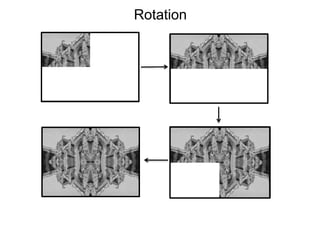
Rotation
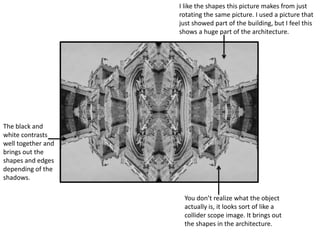
I like the shapes this picture makes from just 
rotating the same picture. I used a picture that 
just showed part of the building, but I feel this 
shows a huge part of the architecture. 
The black and 
white contrasts 
well together and 
brings out the 
shapes and edges 
depending of the 
shadows. 
You don’t realize what the object 
actually is, it looks sort of like a 
collider scope image. It brings out 
the shapes in the architecture.
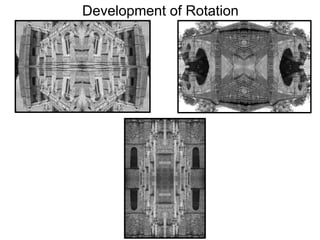
Development of Rotation
5 
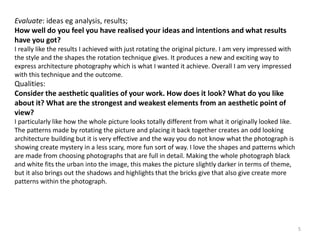
Evaluate: ideas eg analysis, results; 
How well do you feel you have realised your ideas and intentions and what results 
have you got? 
I really like the results I achieved with just rotating the original picture. I am very impressed with 
the style and the shapes the rotation technique gives. It produces a new and exciting way to 
express architecture photography which is what I wanted it achieve. Overall I am very impressed 
with this technique and the outcome. 
Qualities: 
Consider the aesthetic qualities of your work. How does it look? What do you like 
about it? What are the strongest and weakest elements from an aesthetic point of 
view? 
I particularly like how the whole picture looks totally different from what it originally looked like. 
The patterns made by rotating the picture and placing it back together creates an odd looking 
architecture building but it is very effective and the way you do not know what the photograph is 
showing create mystery in a less scary, more fun sort of way. I love the shapes and patterns which 
are made from choosing photographs that are full in detail. Making the whole photograph black 
and white fits the urban into the image, this makes the picture slightly darker in terms of theme, 
but it also brings out the shadows and highlights that the bricks give that also give create more 
patterns within the photograph.
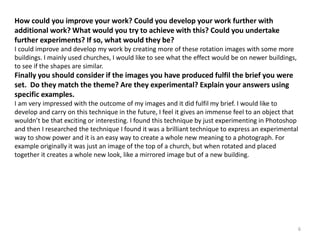
How could you improve your work? Could you develop your work further with 
additional work? What would you try to achieve with this? Could you undertake 
further experiments? If so, what would they be? 
I could improve and develop my work by creating more of these rotation images with some more 
buildings. I mainly used churches, I would like to see what the effect would be on newer buildings, 
to see if the shapes are similar. 
Finally you should consider if the images you have produced fulfil the brief you were 
set. Do they match the theme? Are they experimental? Explain your answers using 
specific examples. 
I am very impressed with the outcome of my images and it did fulfil my brief. I would like to 
develop and carry on this technique in the future, I feel it gives an immense feel to an object that 
wouldn’t be that exciting or interesting. I found this technique by just experimenting in Photoshop 
and then I researched the technique I found it was a brilliant technique to express an experimental 
way to show power and it is an easy way to create a whole new meaning to a photograph. For 
example originally it was just an image of the top of a church, but when rotated and placed 
together it creates a whole new look, like a mirrored image but of a new building. 
6
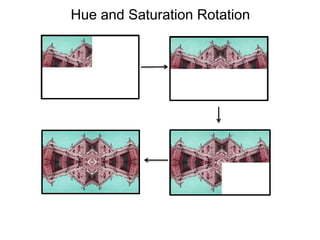
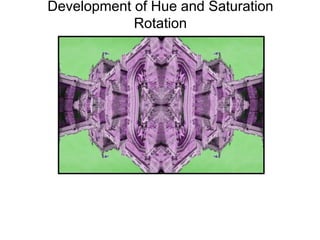
Hue and Saturation Rotation
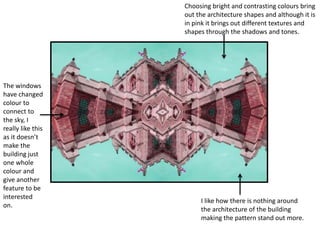
Choosing bright and contrasting colours bring 
out the architecture shapes and although it is 
in pink it brings out different textures and 
shapes through the shadows and tones. 
I like how there is nothing around 
the architecture of the building 
making the pattern stand out more. 
The windows 
have changed 
colour to 
connect to 
the sky, I 
really like this 
as it doesn’t 
make the 
building just 
one whole 
colour and 
give another 
feature to be 
interested 
on.
Development of Hue and Saturation 
Rotation
Evaluate: ideas eg analysis, results; 
How well do you feel you have realised your ideas and intentions and what results 
have you got? 
I wanted to develop the last rotation idea, by this I wanted to add more colour and by 
experimenting with the Hue and Saturation tool I found a way of introducing new and exciting 
colours into a photograph full of experimental patterns. The colours connect to the unusual 
patterns in the photograph, not making the photograph too weird, but abstract. 
Qualities: 
Consider the aesthetic qualities of your work. How does it look? What do you like 
about it? What are the strongest and weakest elements from an aesthetic point of 
view? 
I like the unusual abstract look, to do with the content and the unusual colours. I did this by using 
the Hue and Saturation tool, this changes the colours to brighter and more vibrant colours. I do like 
how this effect has used different shades of pink to create more patterns in the photograph 
instead of just a block colour. A weakness could be that it might not 
appeal to a large audience and the bright colours makes it less towards 
an urban environment. 
10
How could you improve your work? Could you develop your work further with 
additional work? What would you try to achieve with this? Could you undertake 
further experiments? If so, what would they be? 
I could improve me work by making it look more towards an urban theme, like the brief said. This 
colour be by using darker colours such as dark blues, purples to contrast with a grey colour 
scheme. Although I do like the bright colour scheme, it does not fit with the brief set for me. 
Finally you should consider if the images you have produced fulfil the brief you were 
set. Do they match the theme? Are they experimental? Explain your answers using 
specific examples. 
The bright colours have stepped away from the urban theme but they are experimental and do 
develop from what I have previously done. By just toning them down slightly they colour look more 
urban like. I feel they are experimental because I found this look by experimenting with the Hue 
and Saturation tool, seeing what that would do to the plane colours in the original image. 
11
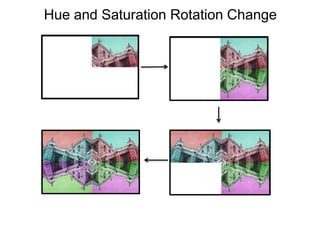
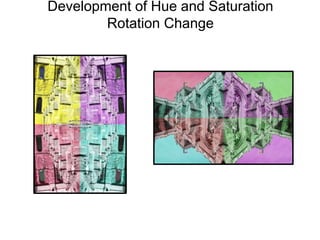
Hue and Saturation Rotation Change
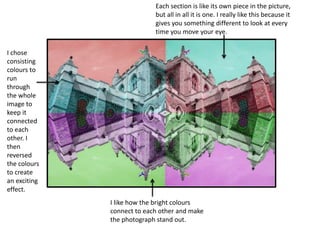
Each section is like its own piece in the picture, 
but all in all it is one. I really like this because it 
gives you something different to look at every 
time you move your eye. 
I chose 
consisting 
colours to 
run 
through 
the whole 
image to 
keep it 
connected 
to each 
other. I 
then 
reversed 
the colours 
to create 
an exciting 
effect. 
I like how the bright colours 
connect to each other and make 
the photograph stand out.
Development of Hue and Saturation 
Rotation Change
Evaluate: ideas eg analysis, results; 
How well do you feel you have realised your ideas and intentions and what results 
have you got? 
My intentions of this photograph was to carry on developing from the first rotation and still bring 
in the Hue and Saturation techniques to see if it can still be developed on from. I am pleased with 
the results as it has developed from my first looks into Hue and 
Saturation and developed to create a new feel. 
Qualities: 
Consider the aesthetic qualities of your work. How does it 
look? What do you like about it? What are the strongest 
and weakest elements from an aesthetic point of view? 
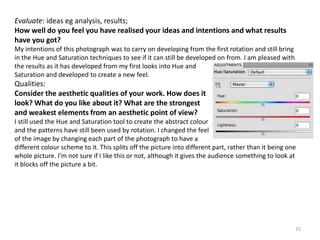
I still used the Hue and Saturation tool to create the abstract colour 
and the patterns have still been used by rotation. I changed the feel 
of the image by changing each part of the photograph to have a 
different colour scheme to it. This splits off the picture into different part, rather than it being one 
whole picture. I’m not sure if I like this or not, although it gives the audience something to look at 
it blocks off the picture a bit. 
15
How could you improve your work? Could you develop your work further with 
additional work? What would you try to achieve with this? Could you undertake 
further experiments? If so, what would they be? 
I would develop my work, again by making it more urban themed. Personally I prefer the first set of 
rotation images (the black and white abstract ones) as they produce a new and abstract pattern 
and the black and white effect still makes it urban and mysterious. Although this is a good effect to 
keep people looking at your photograph and keep them interested, it does not quite fit into my 
theme. 
Finally you should consider if the images you have produced fulfil the brief you were 
set. Do they match the theme? Are they experimental? Explain your answers using 
specific examples. 
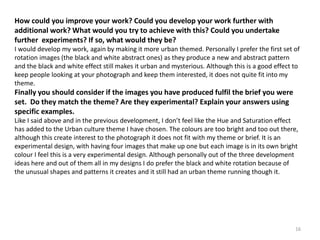
Like I said above and in the previous development, I don’t feel like the Hue and Saturation effect 
has added to the Urban culture theme I have chosen. The colours are too bright and too out there, 
although this create interest to the photograph it does not fit with my theme or brief. It is an 
experimental design, with having four images that make up one but each image is in its own bright 
colour I feel this is a very experimental design. Although personally out of the three development 
ideas here and out of them all in my designs I do prefer the black and white rotation because of 
the unusual shapes and patterns it creates and it still had an urban theme running though it. 
16
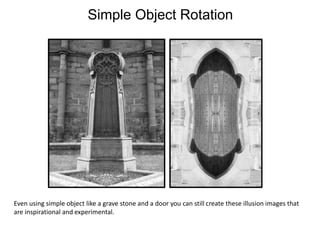
Simple Object Rotation 
Even using simple object like a grave stone and a door you can still create these illusion images that 
are inspirational and experimental.

Task 6 evaluations rotation

  • 1.
    Experimental Photography 3 Melissa Storey 1
  • 2.
  • 3.
    I like theshapes this picture makes from just rotating the same picture. I used a picture that just showed part of the building, but I feel this shows a huge part of the architecture. The black and white contrasts well together and brings out the shapes and edges depending of the shadows. You don’t realize what the object actually is, it looks sort of like a collider scope image. It brings out the shapes in the architecture.
  • 4.
  • 5.
    5 Evaluate: ideaseg analysis, results; How well do you feel you have realised your ideas and intentions and what results have you got? I really like the results I achieved with just rotating the original picture. I am very impressed with the style and the shapes the rotation technique gives. It produces a new and exciting way to express architecture photography which is what I wanted it achieve. Overall I am very impressed with this technique and the outcome. Qualities: Consider the aesthetic qualities of your work. How does it look? What do you like about it? What are the strongest and weakest elements from an aesthetic point of view? I particularly like how the whole picture looks totally different from what it originally looked like. The patterns made by rotating the picture and placing it back together creates an odd looking architecture building but it is very effective and the way you do not know what the photograph is showing create mystery in a less scary, more fun sort of way. I love the shapes and patterns which are made from choosing photographs that are full in detail. Making the whole photograph black and white fits the urban into the image, this makes the picture slightly darker in terms of theme, but it also brings out the shadows and highlights that the bricks give that also give create more patterns within the photograph.
  • 6.
    How could youimprove your work? Could you develop your work further with additional work? What would you try to achieve with this? Could you undertake further experiments? If so, what would they be? I could improve and develop my work by creating more of these rotation images with some more buildings. I mainly used churches, I would like to see what the effect would be on newer buildings, to see if the shapes are similar. Finally you should consider if the images you have produced fulfil the brief you were set. Do they match the theme? Are they experimental? Explain your answers using specific examples. I am very impressed with the outcome of my images and it did fulfil my brief. I would like to develop and carry on this technique in the future, I feel it gives an immense feel to an object that wouldn’t be that exciting or interesting. I found this technique by just experimenting in Photoshop and then I researched the technique I found it was a brilliant technique to express an experimental way to show power and it is an easy way to create a whole new meaning to a photograph. For example originally it was just an image of the top of a church, but when rotated and placed together it creates a whole new look, like a mirrored image but of a new building. 6
  • 7.
  • 8.
    Choosing bright andcontrasting colours bring out the architecture shapes and although it is in pink it brings out different textures and shapes through the shadows and tones. I like how there is nothing around the architecture of the building making the pattern stand out more. The windows have changed colour to connect to the sky, I really like this as it doesn’t make the building just one whole colour and give another feature to be interested on.
  • 9.
    Development of Hueand Saturation Rotation
  • 10.
    Evaluate: ideas eganalysis, results; How well do you feel you have realised your ideas and intentions and what results have you got? I wanted to develop the last rotation idea, by this I wanted to add more colour and by experimenting with the Hue and Saturation tool I found a way of introducing new and exciting colours into a photograph full of experimental patterns. The colours connect to the unusual patterns in the photograph, not making the photograph too weird, but abstract. Qualities: Consider the aesthetic qualities of your work. How does it look? What do you like about it? What are the strongest and weakest elements from an aesthetic point of view? I like the unusual abstract look, to do with the content and the unusual colours. I did this by using the Hue and Saturation tool, this changes the colours to brighter and more vibrant colours. I do like how this effect has used different shades of pink to create more patterns in the photograph instead of just a block colour. A weakness could be that it might not appeal to a large audience and the bright colours makes it less towards an urban environment. 10
  • 11.
    How could youimprove your work? Could you develop your work further with additional work? What would you try to achieve with this? Could you undertake further experiments? If so, what would they be? I could improve me work by making it look more towards an urban theme, like the brief said. This colour be by using darker colours such as dark blues, purples to contrast with a grey colour scheme. Although I do like the bright colour scheme, it does not fit with the brief set for me. Finally you should consider if the images you have produced fulfil the brief you were set. Do they match the theme? Are they experimental? Explain your answers using specific examples. The bright colours have stepped away from the urban theme but they are experimental and do develop from what I have previously done. By just toning them down slightly they colour look more urban like. I feel they are experimental because I found this look by experimenting with the Hue and Saturation tool, seeing what that would do to the plane colours in the original image. 11
  • 12.
    Hue and SaturationRotation Change
  • 13.
    Each section islike its own piece in the picture, but all in all it is one. I really like this because it gives you something different to look at every time you move your eye. I chose consisting colours to run through the whole image to keep it connected to each other. I then reversed the colours to create an exciting effect. I like how the bright colours connect to each other and make the photograph stand out.
  • 14.
    Development of Hueand Saturation Rotation Change
  • 15.
    Evaluate: ideas eganalysis, results; How well do you feel you have realised your ideas and intentions and what results have you got? My intentions of this photograph was to carry on developing from the first rotation and still bring in the Hue and Saturation techniques to see if it can still be developed on from. I am pleased with the results as it has developed from my first looks into Hue and Saturation and developed to create a new feel. Qualities: Consider the aesthetic qualities of your work. How does it look? What do you like about it? What are the strongest and weakest elements from an aesthetic point of view? I still used the Hue and Saturation tool to create the abstract colour and the patterns have still been used by rotation. I changed the feel of the image by changing each part of the photograph to have a different colour scheme to it. This splits off the picture into different part, rather than it being one whole picture. I’m not sure if I like this or not, although it gives the audience something to look at it blocks off the picture a bit. 15
  • 16.
    How could youimprove your work? Could you develop your work further with additional work? What would you try to achieve with this? Could you undertake further experiments? If so, what would they be? I would develop my work, again by making it more urban themed. Personally I prefer the first set of rotation images (the black and white abstract ones) as they produce a new and abstract pattern and the black and white effect still makes it urban and mysterious. Although this is a good effect to keep people looking at your photograph and keep them interested, it does not quite fit into my theme. Finally you should consider if the images you have produced fulfil the brief you were set. Do they match the theme? Are they experimental? Explain your answers using specific examples. Like I said above and in the previous development, I don’t feel like the Hue and Saturation effect has added to the Urban culture theme I have chosen. The colours are too bright and too out there, although this create interest to the photograph it does not fit with my theme or brief. It is an experimental design, with having four images that make up one but each image is in its own bright colour I feel this is a very experimental design. Although personally out of the three development ideas here and out of them all in my designs I do prefer the black and white rotation because of the unusual shapes and patterns it creates and it still had an urban theme running though it. 16
  • 17.
    Simple Object Rotation Even using simple object like a grave stone and a door you can still create these illusion images that are inspirational and experimental.