

Job Evaluation and
Work Flow
Importance of a Job Title
•Similar jobs performing similar duties and
responsibilities must have the same job titles
•Must show clearly the area of the area of job
activity
•Must show its relationships with the other
jobs in the department
•The specific titles will clarify the employees’
line of movements in the organizational
structure
The following are suggested guidelines in job
title selection:
1. The title must be the standard used in the
industry
2. It must be suggestive of the nature and
functions of the job.
3. It must be different from other jobs and
based on major duties of employees who
hold the position
4. The job title must be brief but suggestive
of its fucntions
The nature of Job
Analysis Information
Job analysis focuses on two important data or
information that managers must have the right
information about the nature of the employee’s job.
This information is reflective of what the employee
does daily, weekly, monthly or annually. It also reflects
the conditions or the working environment in the
organization. These two important factors are:
The Job Description
The results of any job
analysis program is the
writing
of
the
job
description.
The
job
description contains the
tasks,
duties,
and
responsibilities that the job
entails. This information is
derived from the job
analysis report.
The following are the uses of job descriptions:
a. It help identify and distinguish one job from
the other jobs.
b. It is used as a tool in the proper employee
recruitment, selection and training
c. It helps establish job relationships within the
salary bracket
d. It serves as a guide in structural
departmentalization
e. It could be used as a guide in the horizontal
and vertical promotion of employees thereby
developing and promoting morale.
The Job Specification
contains
information
about
the
employee’s
qualifications
and
traits
requires in the effective
performance of the work
assigned. It specifies the
qualification
as
to
education, training, experien
ce, and the statement as to
the
nature
of
the
environment
where
the
employee is assigned.
This information could be used in the following
personnel activities:
a. It serves as a guide in interviewing
applicants
b. It is a guide in the proper selection of the
employees as to his qualifications for the
proposed vacant position
c. It is used in the assessment of employees for
training and development.
Job Analysis Method
There is no best method in
job analysis. The method to
used depends upon the
purpose of the analysis, the
time element devoted to it,
and the amount of money
that the company would
like to spend for the
activity.
The Job Questionnaire Method
The accuracy of job information
is necessary. The job analyst prepares
the questionnaire based on the
purpose of the job analysis. The form
to be used is carefully prepared based
on the simple understanding of the
employees who will answer them. The
set of questions contains information
as
to
its
purpose,
clear-cut
instructions, and the procedure on
how to accomplish the questionnaire.
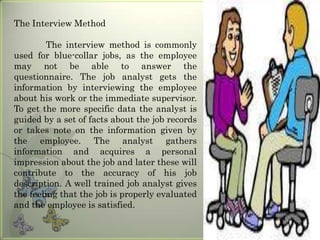
The Interview Method
The interview method is commonly
used for blue-collar jobs, as the employee
may not be able to answer the
questionnaire. The job analyst gets the
information by interviewing the employee
about his work or the immediate supervisor.
To get the more specific data the analyst is
guided by a set of facts about the job records
or takes note on the information given by
the employee. The analyst gathers
information and acquires a personal
impression about the job and later these will
contribute to the accuracy of his job
description. A well trained job analyst gives
the feeling that the job is properly evaluated
and the employee is satisfied.
The Combination of interview and
Questionnaire Methods
Under this method, the job analyst
gives the questionnaire and then
conducts the interview later. The
analyst verifies the information from
the employee’s immediate supervisor
thru a structured interview. To verify
further information, the analyst
interviews the employee concerned.
The content of the questionnaire and
the verified information
are the
bases for the writing of the job
description.
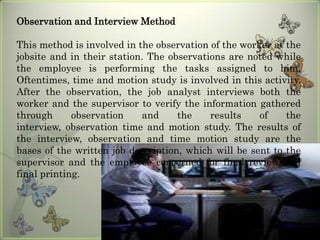
Observation and Interview Method
This method is involved in the observation of the worker at the
jobsite and in their station. The observations are noted while
the employee is performing the tasks assigned to him.
Oftentimes, time and motion study is involved in this activity.
After the observation, the job analyst interviews both the
worker and the supervisor to verify the information gathered
through
observation
and
the
results
of
the
interview, observation time and motion study. The results of
the interview, observation and time motion study are the
bases of the written job description, which will be sent to the
supervisor and the employee concerned for final review and
final printing.

Job Evaluation & Workflow - Part 1

  • 1.
  • 2.
    Importance of aJob Title •Similar jobs performing similar duties and responsibilities must have the same job titles •Must show clearly the area of the area of job activity •Must show its relationships with the other jobs in the department •The specific titles will clarify the employees’ line of movements in the organizational structure
  • 3.
    The following aresuggested guidelines in job title selection: 1. The title must be the standard used in the industry 2. It must be suggestive of the nature and functions of the job. 3. It must be different from other jobs and based on major duties of employees who hold the position 4. The job title must be brief but suggestive of its fucntions
  • 4.
    The nature ofJob Analysis Information Job analysis focuses on two important data or information that managers must have the right information about the nature of the employee’s job. This information is reflective of what the employee does daily, weekly, monthly or annually. It also reflects the conditions or the working environment in the organization. These two important factors are:
  • 5.
    The Job Description Theresults of any job analysis program is the writing of the job description. The job description contains the tasks, duties, and responsibilities that the job entails. This information is derived from the job analysis report.
  • 6.
    The following arethe uses of job descriptions: a. It help identify and distinguish one job from the other jobs. b. It is used as a tool in the proper employee recruitment, selection and training c. It helps establish job relationships within the salary bracket d. It serves as a guide in structural departmentalization e. It could be used as a guide in the horizontal and vertical promotion of employees thereby developing and promoting morale.
  • 7.
    The Job Specification contains information about the employee’s qualifications and traits requiresin the effective performance of the work assigned. It specifies the qualification as to education, training, experien ce, and the statement as to the nature of the environment where the employee is assigned.
  • 8.
    This information couldbe used in the following personnel activities: a. It serves as a guide in interviewing applicants b. It is a guide in the proper selection of the employees as to his qualifications for the proposed vacant position c. It is used in the assessment of employees for training and development.
  • 9.
    Job Analysis Method Thereis no best method in job analysis. The method to used depends upon the purpose of the analysis, the time element devoted to it, and the amount of money that the company would like to spend for the activity.
  • 10.
    The Job QuestionnaireMethod The accuracy of job information is necessary. The job analyst prepares the questionnaire based on the purpose of the job analysis. The form to be used is carefully prepared based on the simple understanding of the employees who will answer them. The set of questions contains information as to its purpose, clear-cut instructions, and the procedure on how to accomplish the questionnaire.
  • 11.
    The Interview Method Theinterview method is commonly used for blue-collar jobs, as the employee may not be able to answer the questionnaire. The job analyst gets the information by interviewing the employee about his work or the immediate supervisor. To get the more specific data the analyst is guided by a set of facts about the job records or takes note on the information given by the employee. The analyst gathers information and acquires a personal impression about the job and later these will contribute to the accuracy of his job description. A well trained job analyst gives the feeling that the job is properly evaluated and the employee is satisfied.
  • 12.
    The Combination ofinterview and Questionnaire Methods Under this method, the job analyst gives the questionnaire and then conducts the interview later. The analyst verifies the information from the employee’s immediate supervisor thru a structured interview. To verify further information, the analyst interviews the employee concerned. The content of the questionnaire and the verified information are the bases for the writing of the job description.
  • 13.
    Observation and InterviewMethod This method is involved in the observation of the worker at the jobsite and in their station. The observations are noted while the employee is performing the tasks assigned to him. Oftentimes, time and motion study is involved in this activity. After the observation, the job analyst interviews both the worker and the supervisor to verify the information gathered through observation and the results of the interview, observation time and motion study. The results of the interview, observation and time motion study are the bases of the written job description, which will be sent to the supervisor and the employee concerned for final review and final printing.