“Integrated Pest Management
           (IPM)”


                        By
                Jitendra Kumar Singh
                     M.Phil/Ph.D
             School of Environment and
              Sustainable Development
            Central University of Gujarat
 Integrated Pest management (IPM) is defined as a pest management system
   that utilizes suitable techniques and methods against the pests in as
   compatible manner with the environment as possible and thus, maintaining
   the pest population levels below those causing economic injury.
 IPM is a vital component of sustainable agriculture.
 It reduces the emphasis on pesticides by including cultural, biological, and
   mechanical controls.
 IPM related activities are being implemented through 26 Central Integrated
   Pest Management Centers (CIPMCs) located in 23 States and Union
   Territories.
Crop Losses due to pests


Average 18% of the crop yield is lost due to pests.

Annual monetary loss in India is: Rs.60,000 Crores.
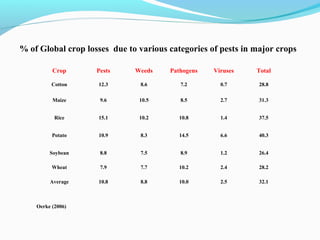
% of Global crop losses due to various categories of pests in major crops

          Crop      Pests     Weeds    Pathogens   Viruses    Total

          Cotton    12.3       8.6        7.2        0.7       28.8

          Maize      9.6       10.5       8.5        2.7       31.3


           Rice     15.1       10.2       10.8       1.4       37.5


          Potato    10.9       8.3        14.5       6.6       40.3


         Soybean     8.8       7.5        8.9        1.2       26.4

          Wheat      7.9       7.7        10.2       2.4       28.2

         Average    10.8       8.8        10.0       2.5       32.1


    Oerke (2006)
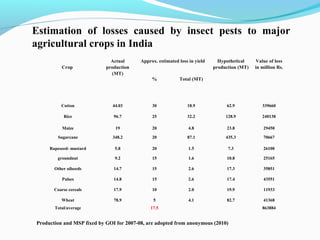
Estimation of losses caused by insect pests to major
agricultural crops in India
                              Actual      Approx. estimated loss in yield     Hypothetical     Value of loss
          Crop              production                                      production (MT)   in million Rs.
                              (MT)
                                               %            Total (MT)


          Cotton              44.03            30               18.9             62.9            339660

           Rice                96.7            25               32.2             128.9           240138

           Maize                19             20                4.8             23.8             29450

        Sugarcane             348.2            20               87.1             435.3            70667

     Rapeseed- mustard         5.8             20                1.5              7.3             26100

        groundnut              9.2             15                1.6             10.8             25165

       Other oilseeds          14.7            15                2.6             17.3             35851

           Pulses              14.8            15                2.6             17.4             43551

       Coarse cereals          17.9            10                2.0             19.9             11933

          Wheat                78.9             5                4.1             82.7             41368
       Total/average                          17.5                                               863884


Production and MSP fixed by GOI for 2007-08, are adopted from anonymous (2010)
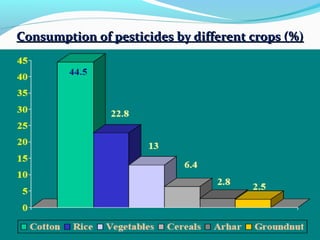
Consumption of pesticides by different crops (%)
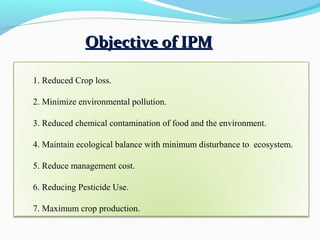
Objective of IPM

1. Reduced Crop loss.

2. Minimize environmental pollution.

3. Reduced chemical contamination of food and the environment.

4. Maintain ecological balance with minimum disturbance to ecosystem.

5. Reduce management cost.

6. Reducing Pesticide Use.

7. Maximum crop production.
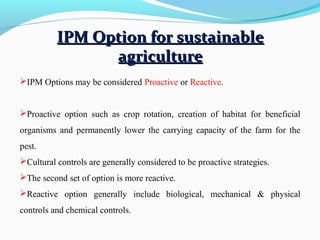
IPM Option for sustainable
                agriculture
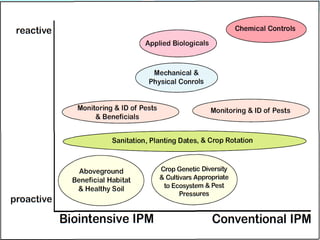
IPM Options may be considered Proactive or Reactive.


Proactive option such as crop rotation, creation of habitat for beneficial
organisms and permanently lower the carrying capacity of the farm for the
pest.
Cultural controls are generally considered to be proactive strategies.
The second set of option is more reactive.
Reactive option generally include biological, mechanical & physical
controls and chemical controls.
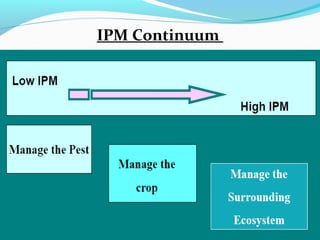
IPM Continuum
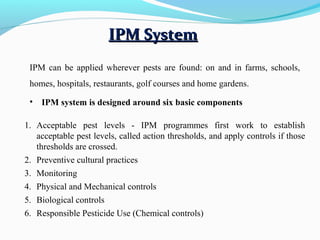
IPM System
 IPM can be applied wherever pests are found: on and in farms, schools,
 homes, hospitals, restaurants, golf courses and home gardens.

 •   IPM system is designed around six basic components

1. Acceptable pest levels - IPM programmes first work to establish
   acceptable pest levels, called action thresholds, and apply controls if those
   thresholds are crossed.
2. Preventive cultural practices
3. Monitoring
4. Physical and Mechanical controls
5. Biological controls
6. Responsible Pesticide Use (Chemical controls)
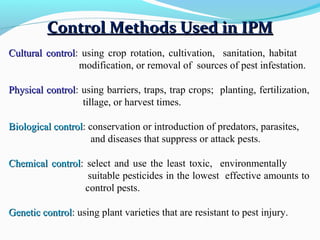
Control Methods Used in IPM
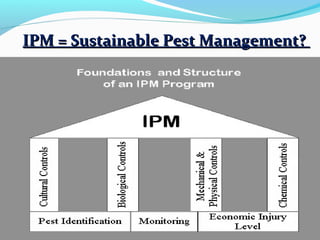
Cultural control: using crop rotation, cultivation, sanitation, habitat
         control
                 modification, or removal of sources of pest infestation.

Physical control: using barriers, traps, trap crops; planting, fertilization,
         control
                  tillage, or harvest times.

Biological control: conservation or introduction of predators, parasites,
           control
                     and diseases that suppress or attack pests.

Chemical control: select and use the least toxic, environmentally
         control
                   suitable pesticides in the lowest effective amounts to
                  control pests.

Genetic control: using plant varieties that are resistant to pest injury.
        control
IPM = Sustainable Pest Management?
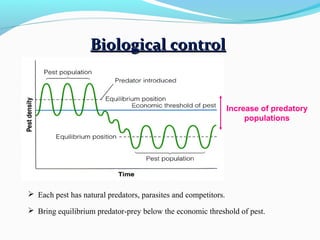
Biological control


                                                                Increase of predatory
                                                                     populations


 Each pest has natural predators, parasites and competitors.

 Bring equilibrium predator-prey below the economic threshold of pest.
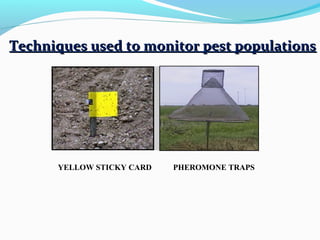
Techniques used to monitor pest populations


      YELLOW STICKY CARD   PHEROMONE TRAPS
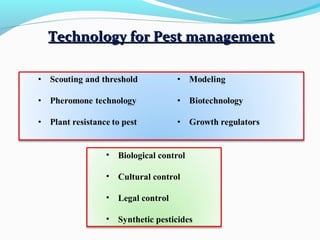
Technology for Pest management


       •   Biological control

       •   Cultural control

       •   Legal control

       •   Synthetic pesticides
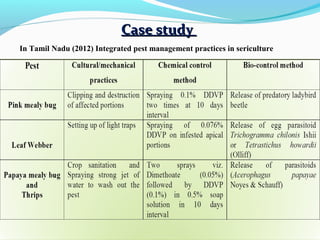
Case study
In Tamil Nadu (2012) Integrated pest management practices in sericulture
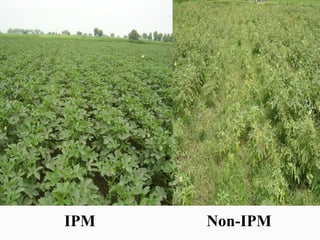
IPM   Non-IPM
Benefits/Advantage of integrated pest management

   IPM protects the environment and our health.

   IPM is less damaging to essential soil health and nutrient cycling.

   Better plant health giving improved quality and production.

   Decreased use of chemical application may result in a financial savings.

   Ecological sustainability by conserving natural enemy species, biodiversity, and
     genetic diversity.
Future IPM Research

1. Biotechnological approaches for pest management
    • Marker-assisted selection
    • Exploitation of wild relatives for resistance to insect pests and diseases
    • Genetic engineering of crop plants for resistance
2. Characterization and diagnosis of plant pathogens and insect pests, and
    environmental biosafety of transgenic crops.
3. Host plant resistance and integrated pest management
    • Introgression of resistance genes into high yielding varieties and hybrid
      parents
    • Strategic research to improve the efficiency of genetic enhancement
    • Integrate IPM components and validate their effectiveness for insect pest
IPM   technology   can   provide   green   and   eco-friendly
alternatives for environment and agricultural management
without harming the nature by the help of pest controlling
methods.
Many case studies concluded that Benefit Cost Ratio (BC

Ratio) was more for IPM farm, compared to Non-IPM farms.
THANK
 YOU

Jitendra presentation on IIPM

  • 1.
    “Integrated Pest Management (IPM)” By Jitendra Kumar Singh M.Phil/Ph.D School of Environment and Sustainable Development Central University of Gujarat
  • 2.
     Integrated Pestmanagement (IPM) is defined as a pest management system that utilizes suitable techniques and methods against the pests in as compatible manner with the environment as possible and thus, maintaining the pest population levels below those causing economic injury.  IPM is a vital component of sustainable agriculture.  It reduces the emphasis on pesticides by including cultural, biological, and mechanical controls.  IPM related activities are being implemented through 26 Central Integrated Pest Management Centers (CIPMCs) located in 23 States and Union Territories.
  • 3.
    Crop Losses dueto pests Average 18% of the crop yield is lost due to pests. Annual monetary loss in India is: Rs.60,000 Crores.
  • 4.
    % of Globalcrop losses due to various categories of pests in major crops Crop Pests Weeds Pathogens Viruses Total Cotton 12.3 8.6 7.2 0.7 28.8 Maize 9.6 10.5 8.5 2.7 31.3 Rice 15.1 10.2 10.8 1.4 37.5 Potato 10.9 8.3 14.5 6.6 40.3 Soybean 8.8 7.5 8.9 1.2 26.4 Wheat 7.9 7.7 10.2 2.4 28.2 Average 10.8 8.8 10.0 2.5 32.1 Oerke (2006)
  • 5.
    Estimation of lossescaused by insect pests to major agricultural crops in India Actual Approx. estimated loss in yield Hypothetical Value of loss Crop production production (MT) in million Rs. (MT) % Total (MT) Cotton 44.03 30 18.9 62.9 339660 Rice 96.7 25 32.2 128.9 240138 Maize 19 20 4.8 23.8 29450 Sugarcane 348.2 20 87.1 435.3 70667 Rapeseed- mustard 5.8 20 1.5 7.3 26100 groundnut 9.2 15 1.6 10.8 25165 Other oilseeds 14.7 15 2.6 17.3 35851 Pulses 14.8 15 2.6 17.4 43551 Coarse cereals 17.9 10 2.0 19.9 11933 Wheat 78.9 5 4.1 82.7 41368 Total/average 17.5 863884 Production and MSP fixed by GOI for 2007-08, are adopted from anonymous (2010)
  • 6.
    Consumption of pesticidesby different crops (%)
  • 7.
    Objective of IPM 1.Reduced Crop loss. 2. Minimize environmental pollution. 3. Reduced chemical contamination of food and the environment. 4. Maintain ecological balance with minimum disturbance to ecosystem. 5. Reduce management cost. 6. Reducing Pesticide Use. 7. Maximum crop production.
  • 8.
    IPM Option forsustainable agriculture IPM Options may be considered Proactive or Reactive. Proactive option such as crop rotation, creation of habitat for beneficial organisms and permanently lower the carrying capacity of the farm for the pest. Cultural controls are generally considered to be proactive strategies. The second set of option is more reactive. Reactive option generally include biological, mechanical & physical controls and chemical controls.
  • 10.
  • 11.
    IPM System IPMcan be applied wherever pests are found: on and in farms, schools, homes, hospitals, restaurants, golf courses and home gardens. • IPM system is designed around six basic components 1. Acceptable pest levels - IPM programmes first work to establish acceptable pest levels, called action thresholds, and apply controls if those thresholds are crossed. 2. Preventive cultural practices 3. Monitoring 4. Physical and Mechanical controls 5. Biological controls 6. Responsible Pesticide Use (Chemical controls)
  • 12.
    Control Methods Usedin IPM Cultural control: using crop rotation, cultivation, sanitation, habitat control modification, or removal of sources of pest infestation. Physical control: using barriers, traps, trap crops; planting, fertilization, control tillage, or harvest times. Biological control: conservation or introduction of predators, parasites, control and diseases that suppress or attack pests. Chemical control: select and use the least toxic, environmentally control suitable pesticides in the lowest effective amounts to control pests. Genetic control: using plant varieties that are resistant to pest injury. control
  • 13.
    IPM = SustainablePest Management?
  • 14.
    Biological control Increase of predatory populations  Each pest has natural predators, parasites and competitors.  Bring equilibrium predator-prey below the economic threshold of pest.
  • 15.
    Techniques used tomonitor pest populations YELLOW STICKY CARD PHEROMONE TRAPS
  • 16.
    Technology for Pestmanagement • Biological control • Cultural control • Legal control • Synthetic pesticides
  • 17.
    Case study In TamilNadu (2012) Integrated pest management practices in sericulture
  • 18.
    IPM Non-IPM
  • 19.
    Benefits/Advantage of integratedpest management  IPM protects the environment and our health.  IPM is less damaging to essential soil health and nutrient cycling.  Better plant health giving improved quality and production.  Decreased use of chemical application may result in a financial savings.  Ecological sustainability by conserving natural enemy species, biodiversity, and genetic diversity.
  • 20.
    Future IPM Research 1.Biotechnological approaches for pest management • Marker-assisted selection • Exploitation of wild relatives for resistance to insect pests and diseases • Genetic engineering of crop plants for resistance 2. Characterization and diagnosis of plant pathogens and insect pests, and environmental biosafety of transgenic crops. 3. Host plant resistance and integrated pest management • Introgression of resistance genes into high yielding varieties and hybrid parents • Strategic research to improve the efficiency of genetic enhancement • Integrate IPM components and validate their effectiveness for insect pest
  • 21.
    IPM technology can provide green and eco-friendly alternatives for environment and agricultural management without harming the nature by the help of pest controlling methods. Many case studies concluded that Benefit Cost Ratio (BC Ratio) was more for IPM farm, compared to Non-IPM farms.
  • 22.