1
Integrated Pest Management
from an Urban Pest
Management Perspective
2
Integrated Pest Management
(IPM) Defined
• A sustainable model of managing pest
pressure.
• Employs biological, cultural, physical,
and least toxic pest control products.
• Long-term results.
• Minimize economic, health and
environmental exposure.
3
Methods
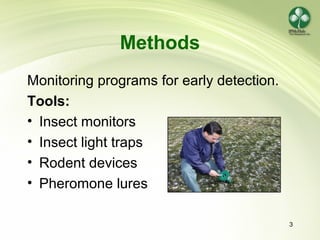
Monitoring programs for early detection.
Tools:
• Insect monitors
• Insect light traps
• Rodent devices
• Pheromone lures
4
Examples of
control methodology
• Physical: (HEPA Vacuums, etc.)
• Cultural: (Climate Control, etc.)
• Biological: (Insecticidal Soaps, etc.)
• Pest Management Products:
(Natural plant-based derivatives, etc.)
5
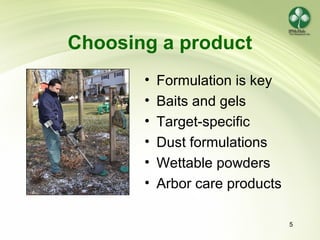
Choosing a product
• Formulation is key
• Baits and gels
• Target-specific
• Dust formulations
• Wettable powders
• Arbor care products
6
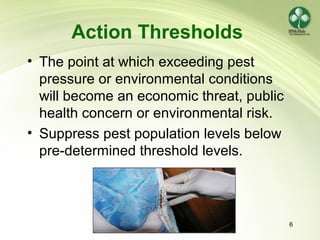
Action Thresholds
• The point at which exceeding pest
pressure or environmental conditions
will become an economic threat, public
health concern or environmental risk.
• Suppress pest population levels below
pre-determined threshold levels.
7
Urban Pest Management
(UPM)
• Deals with social and economic
conditions in their entirety.
• Public Health, Economics and
Aesthetics are the core principles.
• Pre-determined action thresholds are
very often zero!
8
Agricultural
Pest Management (APM)
• APM practices accepted as necessary
in the production of food, fiber and
animal husbandry.
• APM thresholds vary; low levels of pest
populations tolerated.
• APM: production trumps aesthetics.
9
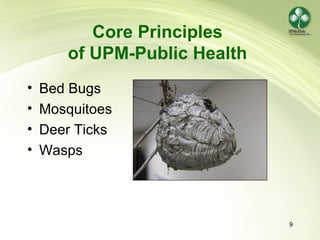
Core Principles
of UPM-Public Health
• Bed Bugs
• Mosquitoes
• Deer Ticks
• Wasps
10
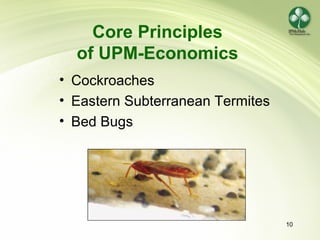
Core Principles
of UPM-Economics
• Cockroaches
• Eastern Subterranean Termites
• Bed Bugs
11
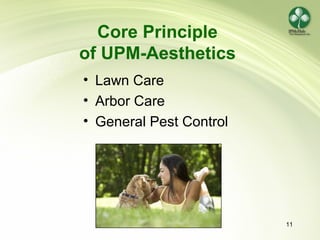
Core Principle
of UPM-Aesthetics
• Lawn Care
• Arbor Care
• General Pest Control
12
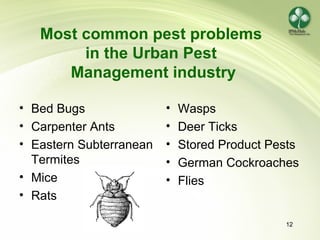
Most common pest problems
in the Urban Pest
Management industry
• Bed Bugs
• Carpenter Ants
• Eastern Subterranean
Termites
• Mice
• Rats
• Wasps
• Deer Ticks
• Stored Product Pests
• German Cockroaches
• Flies
13
Residential Market
• 3-4 visits annually.
• Homes examined for all types of pests.
• Identify vulnerable conditions to
infestation.
• Target seasonal pests.
• Treat potential harborage sites;
seal avenues of entry.
14
Commercial Market
• Brand and reputation.
• Early detection and awareness.
• Access to data and information.
• Monitoring programs more aggressive.
• All monitoring devices cleaned, dated
and examined every visit.
• Work may need to be done discretely,
at night.
15
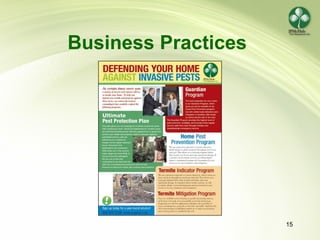
Business Practices
16
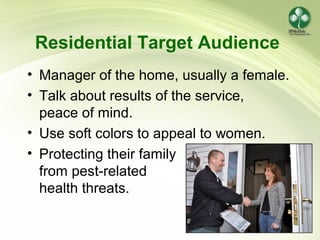
Residential Target Audience
• Manager of the home, usually a female.
• Talk about results of the service,
peace of mind.
• Use soft colors to appeal to women.
• Protecting their family
from pest-related
health threats.
17
Commercial Target Audience
• Property Manager, Business Owner,
Director of Housekeeping, General
Manager, Purchasing Agent
• Brand Protection/Reputation
• Partnership between client and us.
• Flexible scheduling, same technician,
easy access to reports, etc.
18
Keys to success
in Urban Pest Management
• Consumer perception:
commoditized
• Brand building and
innovation
• Effective marketing
and information
19
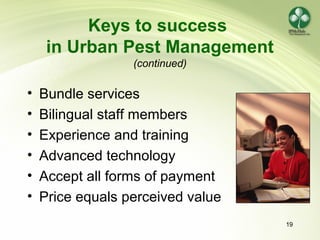
Keys to success
in Urban Pest Management
(continued)
• Bundle services
• Bilingual staff members
• Experience and training
• Advanced technology
• Accept all forms of payment
• Price equals perceived value
20
Guarantees
• Complimentary visits in between
regularly scheduled examinations.
• Money-back guarantees for
dissatisfaction.
• Because of methodology, home will be
relatively free of pests.
21
THANK YOU!

Integrated Pest Management

  • 1.
    1 Integrated Pest Management froman Urban Pest Management Perspective
  • 2.
    2 Integrated Pest Management (IPM)Defined • A sustainable model of managing pest pressure. • Employs biological, cultural, physical, and least toxic pest control products. • Long-term results. • Minimize economic, health and environmental exposure.
  • 3.
    3 Methods Monitoring programs forearly detection. Tools: • Insect monitors • Insect light traps • Rodent devices • Pheromone lures
  • 4.
    4 Examples of control methodology •Physical: (HEPA Vacuums, etc.) • Cultural: (Climate Control, etc.) • Biological: (Insecticidal Soaps, etc.) • Pest Management Products: (Natural plant-based derivatives, etc.)
  • 5.
    5 Choosing a product •Formulation is key • Baits and gels • Target-specific • Dust formulations • Wettable powders • Arbor care products
  • 6.
    6 Action Thresholds • Thepoint at which exceeding pest pressure or environmental conditions will become an economic threat, public health concern or environmental risk. • Suppress pest population levels below pre-determined threshold levels.
  • 7.
    7 Urban Pest Management (UPM) •Deals with social and economic conditions in their entirety. • Public Health, Economics and Aesthetics are the core principles. • Pre-determined action thresholds are very often zero!
  • 8.
    8 Agricultural Pest Management (APM) •APM practices accepted as necessary in the production of food, fiber and animal husbandry. • APM thresholds vary; low levels of pest populations tolerated. • APM: production trumps aesthetics.
  • 9.
    9 Core Principles of UPM-PublicHealth • Bed Bugs • Mosquitoes • Deer Ticks • Wasps
  • 10.
    10 Core Principles of UPM-Economics •Cockroaches • Eastern Subterranean Termites • Bed Bugs
  • 11.
    11 Core Principle of UPM-Aesthetics •Lawn Care • Arbor Care • General Pest Control
  • 12.
    12 Most common pestproblems in the Urban Pest Management industry • Bed Bugs • Carpenter Ants • Eastern Subterranean Termites • Mice • Rats • Wasps • Deer Ticks • Stored Product Pests • German Cockroaches • Flies
  • 13.
    13 Residential Market • 3-4visits annually. • Homes examined for all types of pests. • Identify vulnerable conditions to infestation. • Target seasonal pests. • Treat potential harborage sites; seal avenues of entry.
  • 14.
    14 Commercial Market • Brandand reputation. • Early detection and awareness. • Access to data and information. • Monitoring programs more aggressive. • All monitoring devices cleaned, dated and examined every visit. • Work may need to be done discretely, at night.
  • 15.
  • 16.
    16 Residential Target Audience •Manager of the home, usually a female. • Talk about results of the service, peace of mind. • Use soft colors to appeal to women. • Protecting their family from pest-related health threats.
  • 17.
    17 Commercial Target Audience •Property Manager, Business Owner, Director of Housekeeping, General Manager, Purchasing Agent • Brand Protection/Reputation • Partnership between client and us. • Flexible scheduling, same technician, easy access to reports, etc.
  • 18.
    18 Keys to success inUrban Pest Management • Consumer perception: commoditized • Brand building and innovation • Effective marketing and information
  • 19.
    19 Keys to success inUrban Pest Management (continued) • Bundle services • Bilingual staff members • Experience and training • Advanced technology • Accept all forms of payment • Price equals perceived value
  • 20.
    20 Guarantees • Complimentary visitsin between regularly scheduled examinations. • Money-back guarantees for dissatisfaction. • Because of methodology, home will be relatively free of pests.
  • 21.