
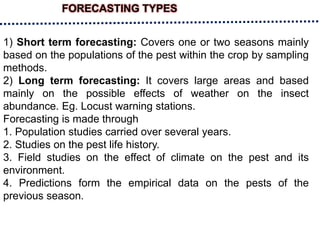
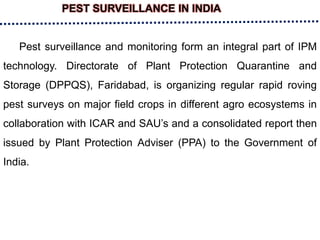
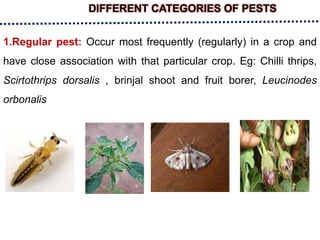
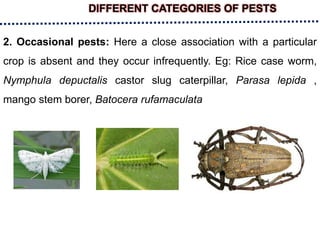
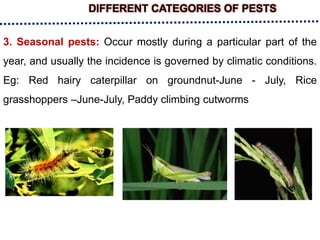



This document provides information on pest surveillance and forecasting. It discusses how pest surveillance involves monitoring biotic and abiotic factors to predict pest outbreaks. The key advantages of pest surveillance are that it allows for understanding pest population dynamics, devising appropriate management strategies, forecasting pest infestations, and initiating timely control measures. Components of pest surveillance include identifying the pest, assessing distribution and severity, population dynamics, weather, and natural enemies. Pest forecasting serves to predict forthcoming infestation levels and find critical stages for insecticide application. There are short-term and long-term forecasting types based on crop sampling and weather effects, respectively. Pest surveillance plays an integral role in India's IPM programs through monitoring


