1/25/2020
THERMODYNAMICS LAB ASSIGNMENT
MUHAMMAD ADNAN
DEFINE
A jet engine is a type of reaction engine discharging
a fast-moving jet that generates thrust by jet
propulsion. While this broad definition can include
rocket, water jet, and hybrid propulsion, the term "jet
engine" typically refers to an airbreathing jet engine
All jet engines, which are also called gas
turbines, work on the same principle.
The engine sucks air in at the front with a fan. ...
The burning gases expand and blast out through the
nozzle, at the back of the engine. As the jets of gas
shoot backward, the engine and the aircraft are
thrust forward.
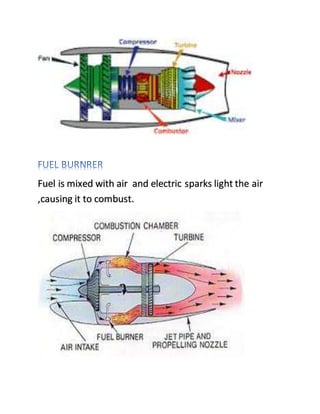
Fuel is mixed with air and electric sparks light the air
,causing it to combust.
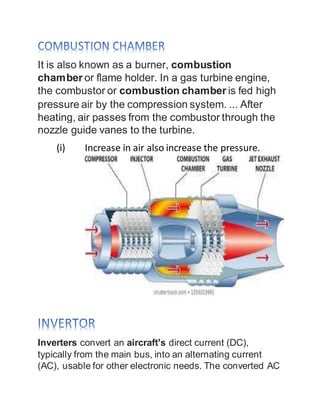
It is also known as a burner, combustion
chamber or flame holder. In a gas turbine engine,
the combustor or combustion chamber is fed high
pressure air by the compression system. ... After
heating, air passes from the combustor through the
nozzle guide vanes to the turbine.
(i) Increase in air also increase the pressure.
Inverters convert an aircraft's direct current (DC),
typically from the main bus, into an alternating current
(AC), usable for other electronic needs. The converted AC
is usually a 24-volt system for aircraft that combines the
use of appropriate transformers, switching and control
circuits
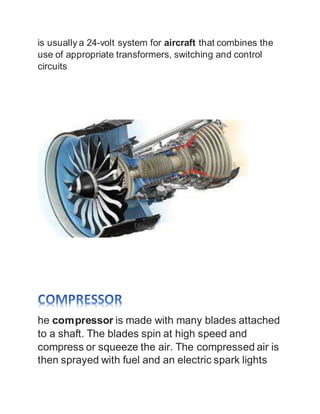
he compressor is made with many blades attached
to a shaft. The blades spin at high speed and
compress or squeeze the air. The compressed air is
then sprayed with fuel and an electric spark lights
the mixture. The burning gases expand and blast out
through the nozzle, at the back of the engine.
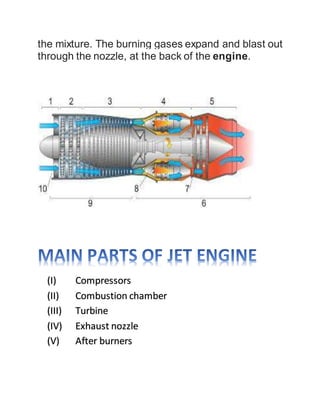
(I) Compressors
(II) Combustion chamber
(III) Turbine
(IV) Exhaust nozzle
(V) After burners
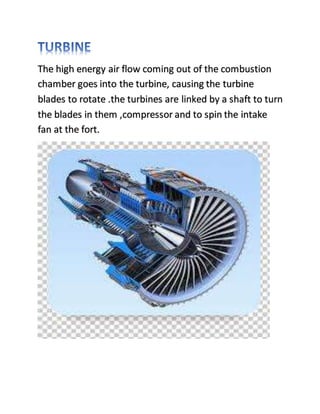
The high energy air flow coming out of the combustion
chamber goes into the turbine, causing the turbine
blades to rotate .the turbines are linked by a shaft to turn
the blades in them ,compressor and to spin the intake
fan at the fort.
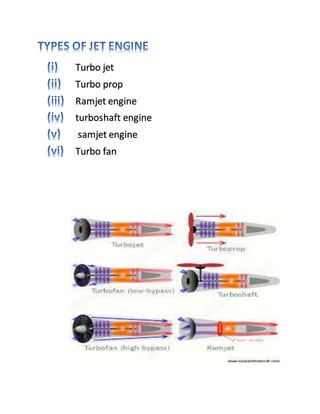
Turbo jet
Turbo prop
Ramjet engine
turboshaft engine
samjet engine
Turbo fan
A turboprop engine is a turbine engine that
drives an aircraft propeller. In its simplest form a
turboprop consists of an intake, compressor,
combustor, turbine, and a propelling nozzle. Air is
drawn into the intake and compressed by the
compressor.
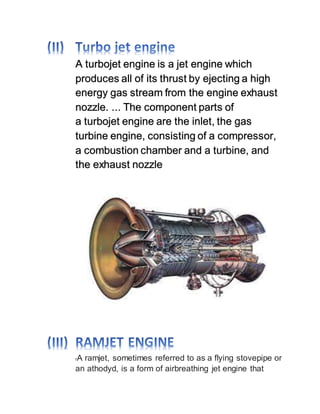
A turbojet engine is a jet engine which
produces all of its thrust by ejecting a high
energy gas stream from the engine exhaust
nozzle. ... The component parts of
a turbojet engine are the inlet, the gas
turbine engine, consisting of a compressor,
a combustion chamber and a turbine, and
the exhaust nozzle
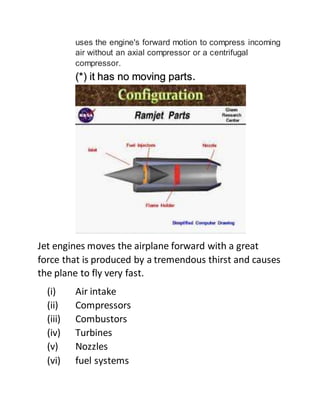
rA ramjet, sometimes referred to as a flying stovepipe or
an athodyd, is a form of airbreathing jet engine that
uses the engine's forward motion to compress incoming
air without an axial compressor or a centrifugal
compressor.
(*) it has no moving parts.
Jet engines moves the airplane forward with a great
force that is produced by a tremendous thirst and causes
the plane to fly very fast.
(i) Air intake
(ii) Compressors
(iii) Combustors
(iv) Turbines
(v) Nozzles
(vi) fuel systems
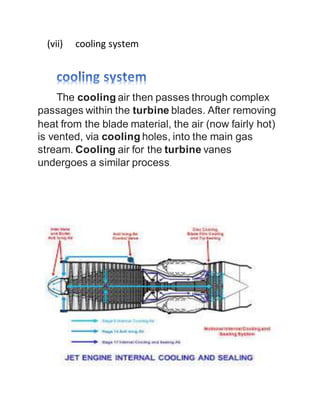
(vii) cooling system
The cooling air then passes through complex
passages within the turbine blades. After removing
heat from the blade material, the air (now fairly hot)
is vented, via cooling holes, into the main gas
stream. Cooling air for the turbine vanes
undergoes a similar process.
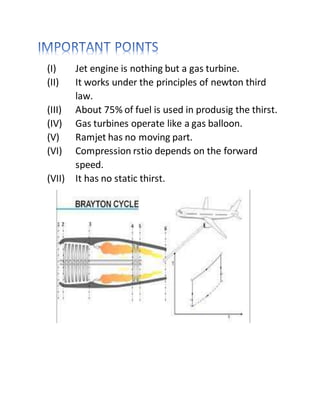
(I) Jet engine is nothing but a gas turbine.
(II) It works under the principles of newton third
law.
(III) About 75% of fuel is used in produsig the thirst.
(IV) Gas turbines operate like a gas balloon.
(V) Ramjet has no moving part.
(VI) Compression rstio depends on the forward
speed.
(VII) It has no static thirst.
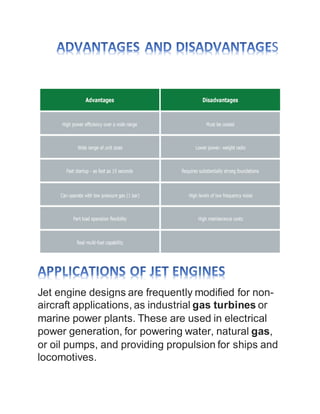
Jet engine designs are frequently modified for non-
aircraft applications, as industrial gas turbines or
marine power plants. These are used in electrical
power generation, for powering water, natural gas,
or oil pumps, and providing propulsion for ships and
locomotives.
Jet engines

Jet engines

  • 1.
  • 2.
    DEFINE A jet engineis a type of reaction engine discharging a fast-moving jet that generates thrust by jet propulsion. While this broad definition can include rocket, water jet, and hybrid propulsion, the term "jet engine" typically refers to an airbreathing jet engine All jet engines, which are also called gas turbines, work on the same principle. The engine sucks air in at the front with a fan. ... The burning gases expand and blast out through the nozzle, at the back of the engine. As the jets of gas shoot backward, the engine and the aircraft are thrust forward.
  • 3.
    Fuel is mixedwith air and electric sparks light the air ,causing it to combust.
  • 4.
    It is alsoknown as a burner, combustion chamber or flame holder. In a gas turbine engine, the combustor or combustion chamber is fed high pressure air by the compression system. ... After heating, air passes from the combustor through the nozzle guide vanes to the turbine. (i) Increase in air also increase the pressure. Inverters convert an aircraft's direct current (DC), typically from the main bus, into an alternating current (AC), usable for other electronic needs. The converted AC
  • 5.
    is usually a24-volt system for aircraft that combines the use of appropriate transformers, switching and control circuits he compressor is made with many blades attached to a shaft. The blades spin at high speed and compress or squeeze the air. The compressed air is then sprayed with fuel and an electric spark lights
  • 6.
    the mixture. Theburning gases expand and blast out through the nozzle, at the back of the engine. (I) Compressors (II) Combustion chamber (III) Turbine (IV) Exhaust nozzle (V) After burners
  • 7.
    The high energyair flow coming out of the combustion chamber goes into the turbine, causing the turbine blades to rotate .the turbines are linked by a shaft to turn the blades in them ,compressor and to spin the intake fan at the fort.
  • 8.
    Turbo jet Turbo prop Ramjetengine turboshaft engine samjet engine Turbo fan
  • 9.
    A turboprop engineis a turbine engine that drives an aircraft propeller. In its simplest form a turboprop consists of an intake, compressor, combustor, turbine, and a propelling nozzle. Air is drawn into the intake and compressed by the compressor.
  • 10.
    A turbojet engineis a jet engine which produces all of its thrust by ejecting a high energy gas stream from the engine exhaust nozzle. ... The component parts of a turbojet engine are the inlet, the gas turbine engine, consisting of a compressor, a combustion chamber and a turbine, and the exhaust nozzle rA ramjet, sometimes referred to as a flying stovepipe or an athodyd, is a form of airbreathing jet engine that
  • 11.
    uses the engine'sforward motion to compress incoming air without an axial compressor or a centrifugal compressor. (*) it has no moving parts. Jet engines moves the airplane forward with a great force that is produced by a tremendous thirst and causes the plane to fly very fast. (i) Air intake (ii) Compressors (iii) Combustors (iv) Turbines (v) Nozzles (vi) fuel systems
  • 12.
    (vii) cooling system Thecooling air then passes through complex passages within the turbine blades. After removing heat from the blade material, the air (now fairly hot) is vented, via cooling holes, into the main gas stream. Cooling air for the turbine vanes undergoes a similar process.
  • 13.
    (I) Jet engineis nothing but a gas turbine. (II) It works under the principles of newton third law. (III) About 75% of fuel is used in produsig the thirst. (IV) Gas turbines operate like a gas balloon. (V) Ramjet has no moving part. (VI) Compression rstio depends on the forward speed. (VII) It has no static thirst.
  • 14.
    Jet engine designsare frequently modified for non- aircraft applications, as industrial gas turbines or marine power plants. These are used in electrical power generation, for powering water, natural gas, or oil pumps, and providing propulsion for ships and locomotives.