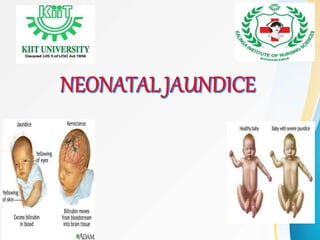
At the end of the session the student will
be able To:
Define Neonatal jaundice and ROP
State Risk factors,Etiology,Types and
Diagnostic Evaluation of Neonatal
jaundice and ROP
.
Apply the management of Neonatal
jaundice and ROP at their clinical set-up
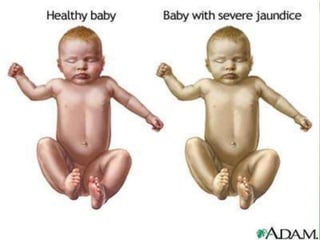
Definition: Hyperbilirubinemia refers to
an excessive level of bilirubin in the blood
and is characterized by a yellowish
discoloration of the skin, sclerae, mucous
membranes and nails.
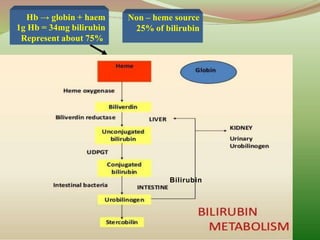
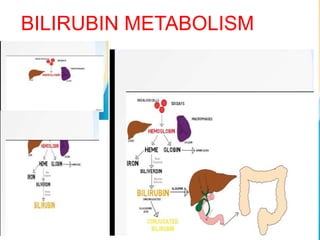
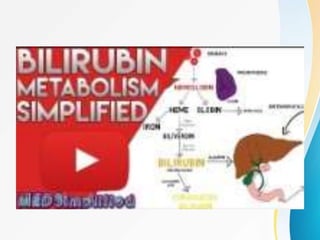
Bilirubin is the end product of heme
degradation
Heme biliverdin bilirubin
Bilirubin is released and bound to serum
albumin
Hb → globin + haem
1g Hb = 34mg bilirubin
Represent about 75%
Non – heme source
25% of bilirubin
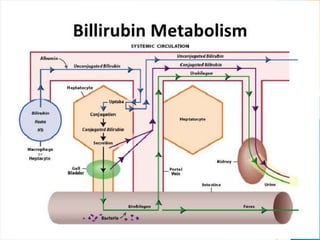
Bilirubin
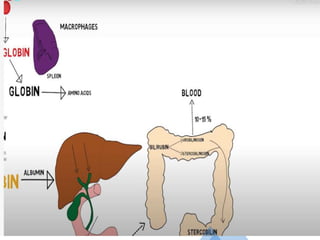
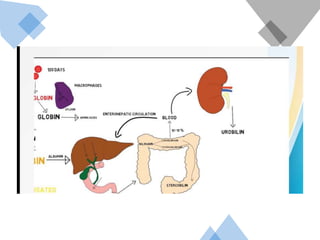
BILIRUBIN METABOLISM
Normally s. bilirubin level vary between 0.3
- 1.2mg/dl. A bilirubin level of more than 2
mg/dl manifest biochemically where as level
of >5 mg/dL manifests clinically in neonates
UNCONJUGATED B.
Insoluble in water can not be excreted in
urine
Tightly compounded to s. albumin
Toxic
CONJUGATED B.
Water soluble& can be excreted in urine
Loosely bound to albumin.
MAJOR RISK FACTORS
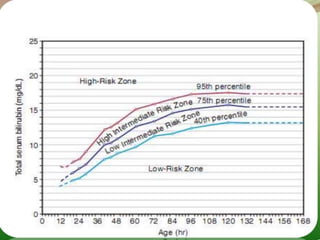
Pre discharge TSB or TCB level in the high-
risk zone
Jaundice observed in the first 24 hours
Blood group incompatibility with positive
direct coombs test, other known hemolytic
disease (glucose-6-phosphate dehydrogenase
deficiency).
Cephalo-hematoma or significant
bruising
Exclusive breast-feeding, particularly if
nursing is not going well and weight
loss is excessive
East Asian race*
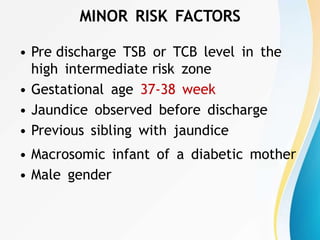
MINOR RISK FACTORS
• Pre discharge TSB or TCB level in the
high intermediate risk zone
• Gestational age 37-38 week
• Jaundice observed before discharge
• Previous sibling with jaundice
• Macrosomic infant of a diabetic mother
• Male gender
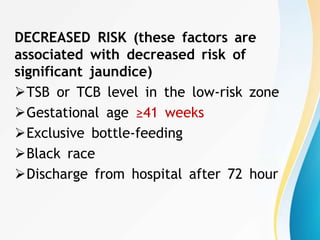
DECREASED RISK (these factors are
associated with decreased risk of
significant jaundice)
TSB or TCB level in the low-risk zone
Gestational age ≥41 weeks
Exclusive bottle-feeding
Black race
Discharge from hospital after 72 hour
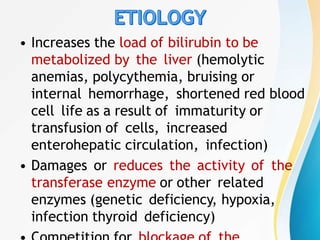
• Increases the load of bilirubin to be
metabolized by the liver (hemolytic
anemias, polycythemia, bruising or
internal hemorrhage, shortened red blood
cell life as a result of immaturity or
transfusion of cells, increased
enterohepatic circulation, infection)
• Damages or reduces the activity of the
transferase enzyme or other related
enzymes (genetic deficiency, hypoxia,
infection thyroid deficiency)
• Absence or decreased amounts of the
enzyme or reduction of bilirubin uptake
by liver cells (genetic defect, and
prematurity).
• Hypo proteinuria
• Displacement of bilirubin from its
binding sites on albumin by competitive
binding of drugs such as Sulfafurazole
and moxalactam, acidosis, and increased
free fatty acid concentration secondary
to hypoglycemia, starvation, or
A) PHYSIOLOGICAL
 In new born babies bilirubin metabolism
is immature which results in the
occurrence of hyperbilirubinemia in the
first few days of life.
 Many factors are implicated:
increased destruction of RBC
increase enterohepatic circulation
decreased ability of the liver to conjugate
bilirubin
decreased uptake by the liver due to low
• First appears between 24-72hours of age
• Maximum intensity seen on 4-5th day in
term and 7th day in preterm neonates
• Does not exceed 15 mg/dl
• Clinically undetectable after 14 days.
• No treatment is required but baby should
be observed closely for signs of worsening
jaundice
• Does not rise more than 5mg/dl/day
B) PATHOLOGICAL
Appears within 24 hours of age
Increase of bilirubin > 5 mg / dl / day
Serum bilirubin > 15 mg / dl
Jaundice persisting after 14 days
Stool clay / white colored and urine
staining clothes yellow
Direct bilirubin> 2 mg / dl
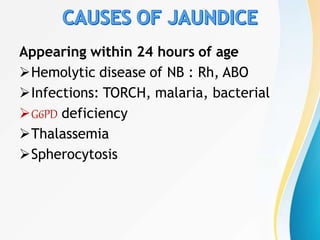
Appearing within 24 hours of age
Hemolytic disease of NB : Rh, ABO
Infections: TORCH, malaria, bacterial
G6PD deficiency
Thalassemia
Spherocytosis
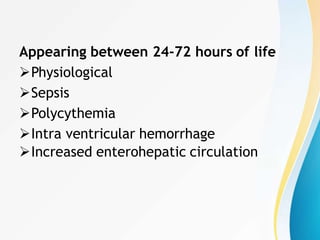
Appearing between 24-72 hours of life
Physiological
Sepsis
Polycythemia
Intra ventricular hemorrhage
Increased enterohepatic circulation
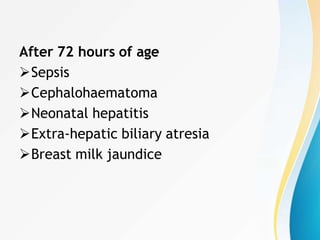
After 72 hours of age
Sepsis
Cephalohaematoma
Neonatal hepatitis
Extra-hepatic biliary atresia
Breast milk jaundice
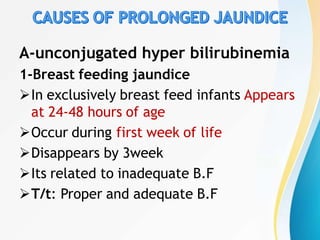
A-unconjugated hyper bilirubinemia
1-Breast feeding jaundice
In exclusively breast feed infants Appears
at 24-48 hours of age
Occur during first week of life
Disappears by 3week
Its related to inadequate B.F
T/t: Proper and adequate B.F
2-Breast milk jaundice
In 2-4 % EBF babies after the 7th day of
life SBR>10mg/dl beyond 3-4week.Due to
prasence of beta-glucuronidase in milk
Should be differentiated from Hemolytic
jaundice, hypothyroidism, G6PDdeficiency
T/t: Some babies may require PT
Continue breast feeding
Usually declines over a period of time
3-Congenital hypothyroidism
4-Spsis
5-Intestinal stasis.
6-Criggler najjar syndrome
B-Conjugated hyperbilirubinemia: fraction
>10% of total SBR
Infection
Galactosemia, fructosemia, tyrosinemia
Cystic fibrosis
Dubin johnson syndrome
Rotors syndrome
Idiopathic neonatal hepatitis
Alpha 1 anti-trypsin deficiency
Hypothyroidism, hypopitutarism
Kernicterus is a neurologic syndrome
resulting from the deposition of
unconjugated (indirect) bilirubin in the
basal ganglia and brainstem nuclei.
There is neuronal loss ,necrosis & giliosis .
The pathogenesis of kernicterus is
multifactorial and involves an interaction
between unconjugated bilirubin levels,
albumin binding and unbound bilirubin
levels, passage across the blood-brain
barrier, and neuronal susceptibility to
Brain damage caused by bilirubin depends
on:
Level of S.bilirubin & albumin
Bilirubin binding by albumin
Status of BBB
Susceptibility of the CNS
Asphyxia
Acidosis
Hypoglycemia
Prematurity
Severe hyper bilirubinemia
G6PD deficiency
7-Crigler-Najjar syndrome type I
Gilbert's syndrome
ACUTE FORM
Phase 1 (1st 1-2 days): poor suck,
stupor, seizures
Phase 2 (middle of 1st week):
hypertonia of extensor muscles,
opisthotonus, fever, high pitched cry,
retracted neck
Phase 3 (after the 1st week): hypotonia
CHRONIC FORM
1st year: hypertonia, active deep
tendon reflexes, delayed motor skills
After 1st year: movement disorders
Early discharge (<48 hr) with no early
follow-up (within 48 hr of discharge); this
problem is particularly important in near-
term infants (35-37 wk of gestation)
Failure to check the bilirubin level in an
infant noted to be jaundiced in the first 24
hr
Failure to recognize the presence of risk
factors for hyperbilirubinemia
Underestimation of the severity of
jaundice by clinical (visual) assessment
Lack of concern regarding the presence of
jaundice
Delay in measuring the serum bilirubin
level despite marked jaundice or delay in
initiating phototherapy in the presence of
elevated bilirubin levels
Failure to respond to parental concern
regarding jaundice, poor feeding, or
lethargy
Onset/ duration
Pain
Nausea and vomiting
Loss of weight
Itching
Colour of stool
Colour of urine
Past history
Family history
Colour of skin
Severity of jaundice
Anemia
Liver
Spleen
Gall bladder
Ascites
Rash or petechiae
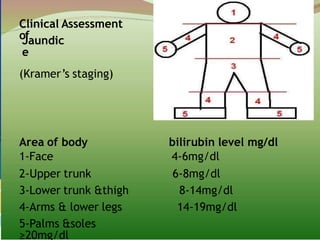
Clinical Assessment
of
Jaundic
e
(Kramer’s staging)
Area of body bilirubin level mg/dl
1-Face 4-6mg/dl
2-Upper trunk 6-8mg/dl
3-Lower trunk &thigh 8-14mg/dl
4-Arms & lower legs 14-19mg/dl
5-Palms &soles
≥20mg/dl
it depend on the suspected cause and
include
S. bilirubin (total, direct ,indirect)
ABO & Rh of baby and mother
Hb ,blood film
Coombs test, G6PD assay
Blood culture
TORCH screen
LFT
Blood sugar
Promote & support breastfeeding
Perform a thorough risk assessment for all
infant
Provide parents with written & verbal
information. About newborn jaundice
Provide appropriate follow-up
Identify preterm infant and provide close
monitoring
Interpret all bilirubin levels according to
infant age in hours
Establish nursery protocols for identifying
& evaluating hyperbilirubinemia
Recognize that visual assessment of
bilirubin levels is inaccurate
Measure bilirubin levels in all infants with
jaundice in the first 24 hours after
delivery
Treat newborns as indicated with
physiotherapy or exchange transfusion
Purposes:
Reduce level of serum bilirubin and
prevent bilirubin toxicity
Prevention of hyperbilirubinemia: early
feeds, adequate hydration
Reduction of bilirubin levels either by
phototherapy or exchange transfusion
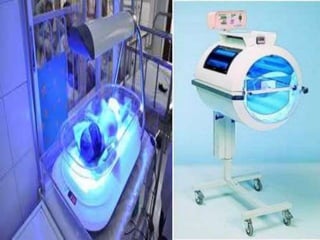
Phototherapy: refers to the use of light
to convert bilirubin molecules in the body
into water soluble isomers that can be
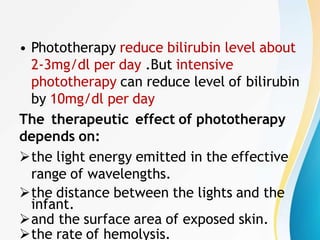
• Phototherapy reduce bilirubin level about
2-3mg/dl per day .But intensive
phototherapy can reduce level of bilirubin
by 10mg/dl per day
The therapeutic effect of phototherapy
depends on:
the light energy emitted in the effective
range of wavelengths.
the distance between the lights and the
infant.
and the surface area of exposed skin.
the rate of hemolysis.
Serum bilirubin levels and hematocrit should
be monitored every 4-8 hr in infants with
hemolytic disease and those with bilirubin
levels near toxic range for the individual
infant. Serum bilirubin monitoring should
continue for at least 24 hr after cessation of
phototherapy.
Complication:
loose stools, erythematous macular rash,
purpuric rash
overheating, dehydration (increased
Bronze baby syndrome occurs in the
presence of direct hyperbilirubinemia ,
The term bronze baby syndrome refers
dark, grayish brown skin discoloration
in infants undergoing phototherapy.
Almost all infants observed with this
syndrome have had significant elevation
of direct- reacting bilirubin and other
evidence of obstructive liver disease. The
discoloration may be due to photo-
induced modification of porphyrins
Skin damage
Skin rash
Damage to immature retina
Blocked nose
Hypocalcaemia
Decrease LV output which lead to
decrease renal perfusion
Agitation & distress
B-Exchange transfusion:
Double-volume exchange transfusion is
performed if intensive phototherapy has
failed to reduce bilirubin levels to a safe
range and if the risk of kernicterus exceeds
the risk of the procedure. ET replace 85% of
infant blood & reduce bilirubin level by 50%.
It should be used for any newborn with a
total serum bilirubin of greater than 428
μ.mol/l ( 25 mg/dL )
Complication:
hypoglycemia
hypocalcemia
thrombocytopenia
volume overload
arrhythmias
infection
B-late complication:
late onset anemia
GVH disease
portal hypertension & portal vein
thrombosis
Intravenous immunoglobulin: 500mg/kg
especially in coombs +ve test
Metalloporphyrins: The mechanism of
action is competitive enzymatic
inhibition of conversion of heme protein
to biliverdin.
A single intramuscular dose on the 1st day
of life may reduce the need for
subsequent phototherapy.particularly in
patients with ABO incompatibility or G6PD
deficiency.
Complications from metalloporphyrins
include transient erythema if the infant is
receiving phototherapy
phenobarbital: promote liver enzymes and
protein synthesis to induce hepatic bilirubin
metabolism
protoporphyrin: inhibit conversion of
biliverdin to bilirubin by heme oxygenase
Early recognition and treatment of
hyperbilirubinemia prevents severe brain
damage. But brain damage due to kernicterus
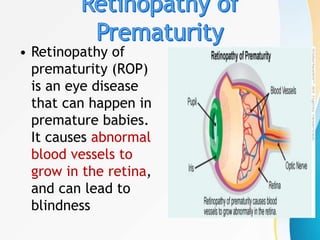
• Retinopathy of
prematurity (ROP)
is an eye disease
that can happen in
premature babies.
It causes abnormal
blood vessels to
grow in the retina,
and can lead to
blindness
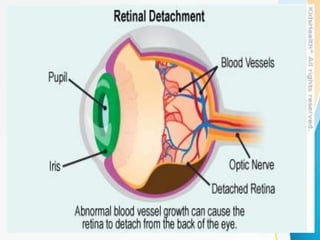
• Retinopathy (ret-in-AH-puh-thee) of
prematurity makes blood vessels grow
abnormally and randomly in the eye.
These vessels tend to leak or bleed,
leading to scarring of the retina, the
layer of nerve tissue in the eye.
• When the scars shrink, they pull on the
retina, detaching it from the back of the
eye. Because the retina is a vital part of
vision, its detachment will cause
blindness.
The onset of ROP progresses in two phases:
Involves an initial insult such as hyperoxia ,
hypoxia or hypotension at a critical point in
retinal vascularization - causes
vasoconstriction and decreased blood supply
to the developing retina with subsequent
arrest in vascular development.
Neovascularization occurs(regulated by the
hypoxic avascular retina).
New vessels growing through the retina into
the vitreous.
Are permeable leading to hemorrhage and
edema.
Extensive and severe extra retinal fibro
vascular proliferation leads to retinal
detachment and abnormal retinal function
Prematurity / low gestational age < 30
weeks
Retinal immaturity
Low birth weight(1500gm)
Hyperoxia / Hypoxia/hypercarbia
ROP has no signs or symptoms when it
first develops in a newborn.
The only way to detect it is through an
eye exam by an ophthalmologist
Ophthalmologic examination by an expert
examiner usually confirms the diagnosis.
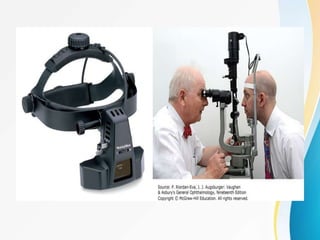
Binocular indirect ophthalmoscopy (BIO) is
generally used.
Newer digital camera technology
demonstrated 100% sensitivity in detecting
ROP requiring treatment. But it does not
permit adequate assessment of retinal
 Some cases of ROP are mild and correct
themselves. But others progress to scarring,
pulling the retina away from the rest of the eye.
These cases need surgery to prevent vision loss or
blindness
 ROP surgery stops the growth of abnormal blood
vessels. Treatment focuses on the peripheral
retina (the sides of the retina) to preserve the
central retina (the most important part of the
retina). ROP surgery involves scarring areas on the
peripheral retina to stop the abnormal growth and
eliminate pulling on the retina.
• Because surgery focuses on the peripheral
retina, some amount of peripheral vision
may be lost. However, by preserving the
central retina, the eye can still do vital
functions like seeing straight ahead,
distinguishing colors, reading, etc
The most common methods of ROP surgery
are:-
This is done most often for ROP. Small laser
beams scar the peripheral retina. This
procedure (also called laser therapy or
photocoagulation) lasts about 30–45 minutes
for each eye.
A medicine is injected into the eye. This
might be done as an alternative to, or along
with, laser surgery. This is a newer
treatment and results are promising, often
allowing the blood vessels to grow more
normally. Research is ongoing to determine
the long-term side effects of the medicine
on premature infants.
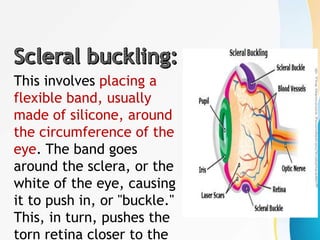
This involves placing a
flexible band, usually
made of silicone, around
the circumference of the
eye. The band goes
around the sclera, or the
white of the eye, causing
it to push in, or "buckle."
This, in turn, pushes the
torn retina closer to the
This complex surgery involves replacing the
vitreous (the clear gel in the center of the
eye) with a saline (salt) solution. This
allows for the removal of scar tissue and
eases tugging on the retina, which stops it
from pulling away. Vitrectomy can take
several hours
• Neonatal jaundice is a yellowish
discoloration of the white part of the
eyes and skin in a newborn baby due to
high bilirubin levels. Other symptoms
may include excess sleepiness or poor
feeding. Complications may include
seizures, cerebral palsy or kernicterus.
• Retinopathy of prematurity (ROP) is an
eye disease that can happen in
premature babies. It causes abnormal
blood vessels to grow in the retina, and
 Datta parul,’paediatric nursing”,2nd edition,jaypee
brothers medical publishers(p)ltd,new delhi,page
no:36-46
 Marlow dorothy r,”text book of paediatrics nursing”,6th
edition,elsevier publication,noida,page no:647-652.
 Sharma rimple,”essential of paediatrics nursing”,1st
edition,jaypee publication,new delhi,page no:456-
467..
 Park k,”textbook of preventive and social
medicine”22nd edition,m/s bansidhar bharat
publishers,newdelhi,page no:97-108.
 http://www.childrenshospital.org/conditions-and-
treatments/conditions/r/retinopathy-of-prematurity-
rop/testing-and-diagnosis
JAUNDICE.pptx

JAUNDICE.pptx

  • 3.
    At the endof the session the student will be able To: Define Neonatal jaundice and ROP State Risk factors,Etiology,Types and Diagnostic Evaluation of Neonatal jaundice and ROP . Apply the management of Neonatal jaundice and ROP at their clinical set-up
  • 4.
    Definition: Hyperbilirubinemia refersto an excessive level of bilirubin in the blood and is characterized by a yellowish discoloration of the skin, sclerae, mucous membranes and nails. Bilirubin is the end product of heme degradation Heme biliverdin bilirubin Bilirubin is released and bound to serum albumin
  • 6.
    Hb → globin+ haem 1g Hb = 34mg bilirubin Represent about 75% Non – heme source 25% of bilirubin Bilirubin
  • 7.
  • 11.
    Normally s. bilirubinlevel vary between 0.3 - 1.2mg/dl. A bilirubin level of more than 2 mg/dl manifest biochemically where as level of >5 mg/dL manifests clinically in neonates UNCONJUGATED B. Insoluble in water can not be excreted in urine Tightly compounded to s. albumin Toxic CONJUGATED B. Water soluble& can be excreted in urine Loosely bound to albumin.

  • 12.
    MAJOR RISK FACTORS Predischarge TSB or TCB level in the high- risk zone Jaundice observed in the first 24 hours Blood group incompatibility with positive direct coombs test, other known hemolytic disease (glucose-6-phosphate dehydrogenase deficiency).
  • 13.
    Cephalo-hematoma or significant bruising Exclusivebreast-feeding, particularly if nursing is not going well and weight loss is excessive East Asian race*
  • 14.
    MINOR RISK FACTORS •Pre discharge TSB or TCB level in the high intermediate risk zone • Gestational age 37-38 week • Jaundice observed before discharge • Previous sibling with jaundice • Macrosomic infant of a diabetic mother • Male gender
  • 15.
    DECREASED RISK (thesefactors are associated with decreased risk of significant jaundice) TSB or TCB level in the low-risk zone Gestational age ≥41 weeks Exclusive bottle-feeding Black race Discharge from hospital after 72 hour
  • 17.
    • Increases theload of bilirubin to be metabolized by the liver (hemolytic anemias, polycythemia, bruising or internal hemorrhage, shortened red blood cell life as a result of immaturity or transfusion of cells, increased enterohepatic circulation, infection) • Damages or reduces the activity of the transferase enzyme or other related enzymes (genetic deficiency, hypoxia, infection thyroid deficiency)
  • 18.
    • Absence ordecreased amounts of the enzyme or reduction of bilirubin uptake by liver cells (genetic defect, and prematurity). • Hypo proteinuria • Displacement of bilirubin from its binding sites on albumin by competitive binding of drugs such as Sulfafurazole and moxalactam, acidosis, and increased free fatty acid concentration secondary to hypoglycemia, starvation, or
  • 19.
    A) PHYSIOLOGICAL  Innew born babies bilirubin metabolism is immature which results in the occurrence of hyperbilirubinemia in the first few days of life.  Many factors are implicated: increased destruction of RBC increase enterohepatic circulation decreased ability of the liver to conjugate bilirubin decreased uptake by the liver due to low
  • 20.
    • First appearsbetween 24-72hours of age • Maximum intensity seen on 4-5th day in term and 7th day in preterm neonates • Does not exceed 15 mg/dl • Clinically undetectable after 14 days. • No treatment is required but baby should be observed closely for signs of worsening jaundice • Does not rise more than 5mg/dl/day
  • 21.
    B) PATHOLOGICAL Appears within24 hours of age Increase of bilirubin > 5 mg / dl / day Serum bilirubin > 15 mg / dl Jaundice persisting after 14 days Stool clay / white colored and urine staining clothes yellow Direct bilirubin> 2 mg / dl
  • 22.
    Appearing within 24hours of age Hemolytic disease of NB : Rh, ABO Infections: TORCH, malaria, bacterial G6PD deficiency Thalassemia Spherocytosis
  • 23.
    Appearing between 24-72hours of life Physiological Sepsis Polycythemia Intra ventricular hemorrhage Increased enterohepatic circulation
  • 24.
    After 72 hoursof age Sepsis Cephalohaematoma Neonatal hepatitis Extra-hepatic biliary atresia Breast milk jaundice
  • 25.
    A-unconjugated hyper bilirubinemia 1-Breastfeeding jaundice In exclusively breast feed infants Appears at 24-48 hours of age Occur during first week of life Disappears by 3week Its related to inadequate B.F T/t: Proper and adequate B.F
  • 26.
    2-Breast milk jaundice In2-4 % EBF babies after the 7th day of life SBR>10mg/dl beyond 3-4week.Due to prasence of beta-glucuronidase in milk Should be differentiated from Hemolytic jaundice, hypothyroidism, G6PDdeficiency T/t: Some babies may require PT Continue breast feeding Usually declines over a period of time
  • 27.
  • 28.
    B-Conjugated hyperbilirubinemia: fraction >10%of total SBR Infection Galactosemia, fructosemia, tyrosinemia Cystic fibrosis Dubin johnson syndrome Rotors syndrome Idiopathic neonatal hepatitis Alpha 1 anti-trypsin deficiency Hypothyroidism, hypopitutarism
  • 29.
    Kernicterus is aneurologic syndrome resulting from the deposition of unconjugated (indirect) bilirubin in the basal ganglia and brainstem nuclei. There is neuronal loss ,necrosis & giliosis . The pathogenesis of kernicterus is multifactorial and involves an interaction between unconjugated bilirubin levels, albumin binding and unbound bilirubin levels, passage across the blood-brain barrier, and neuronal susceptibility to
  • 30.
    Brain damage causedby bilirubin depends on: Level of S.bilirubin & albumin Bilirubin binding by albumin Status of BBB Susceptibility of the CNS
  • 31.
    Asphyxia Acidosis Hypoglycemia Prematurity Severe hyper bilirubinemia G6PDdeficiency 7-Crigler-Najjar syndrome type I Gilbert's syndrome
  • 32.
    ACUTE FORM Phase 1(1st 1-2 days): poor suck, stupor, seizures Phase 2 (middle of 1st week): hypertonia of extensor muscles, opisthotonus, fever, high pitched cry, retracted neck Phase 3 (after the 1st week): hypotonia CHRONIC FORM 1st year: hypertonia, active deep tendon reflexes, delayed motor skills After 1st year: movement disorders
  • 33.
    Early discharge (<48hr) with no early follow-up (within 48 hr of discharge); this problem is particularly important in near- term infants (35-37 wk of gestation) Failure to check the bilirubin level in an infant noted to be jaundiced in the first 24 hr Failure to recognize the presence of risk factors for hyperbilirubinemia Underestimation of the severity of jaundice by clinical (visual) assessment
  • 34.
    Lack of concernregarding the presence of jaundice Delay in measuring the serum bilirubin level despite marked jaundice or delay in initiating phototherapy in the presence of elevated bilirubin levels Failure to respond to parental concern regarding jaundice, poor feeding, or lethargy
  • 35.
    Onset/ duration Pain Nausea andvomiting Loss of weight Itching Colour of stool Colour of urine Past history Family history
  • 37.
    Colour of skin Severityof jaundice Anemia Liver Spleen Gall bladder Ascites Rash or petechiae
  • 38.
    Clinical Assessment of Jaundic e (Kramer’s staging) Areaof body bilirubin level mg/dl 1-Face 4-6mg/dl 2-Upper trunk 6-8mg/dl 3-Lower trunk &thigh 8-14mg/dl 4-Arms & lower legs 14-19mg/dl 5-Palms &soles ≥20mg/dl
  • 39.
    it depend onthe suspected cause and include S. bilirubin (total, direct ,indirect) ABO & Rh of baby and mother Hb ,blood film Coombs test, G6PD assay Blood culture TORCH screen LFT Blood sugar
  • 40.
    Promote & supportbreastfeeding Perform a thorough risk assessment for all infant Provide parents with written & verbal information. About newborn jaundice Provide appropriate follow-up Identify preterm infant and provide close monitoring Interpret all bilirubin levels according to infant age in hours
  • 41.
    Establish nursery protocolsfor identifying & evaluating hyperbilirubinemia Recognize that visual assessment of bilirubin levels is inaccurate Measure bilirubin levels in all infants with jaundice in the first 24 hours after delivery Treat newborns as indicated with physiotherapy or exchange transfusion
  • 42.
    Purposes: Reduce level ofserum bilirubin and prevent bilirubin toxicity Prevention of hyperbilirubinemia: early feeds, adequate hydration Reduction of bilirubin levels either by phototherapy or exchange transfusion Phototherapy: refers to the use of light to convert bilirubin molecules in the body into water soluble isomers that can be
  • 43.
    • Phototherapy reducebilirubin level about 2-3mg/dl per day .But intensive phototherapy can reduce level of bilirubin by 10mg/dl per day The therapeutic effect of phototherapy depends on: the light energy emitted in the effective range of wavelengths. the distance between the lights and the infant. and the surface area of exposed skin. the rate of hemolysis.
  • 45.
    Serum bilirubin levelsand hematocrit should be monitored every 4-8 hr in infants with hemolytic disease and those with bilirubin levels near toxic range for the individual infant. Serum bilirubin monitoring should continue for at least 24 hr after cessation of phototherapy. Complication: loose stools, erythematous macular rash, purpuric rash overheating, dehydration (increased
  • 46.
    Bronze baby syndromeoccurs in the presence of direct hyperbilirubinemia , The term bronze baby syndrome refers dark, grayish brown skin discoloration in infants undergoing phototherapy. Almost all infants observed with this syndrome have had significant elevation of direct- reacting bilirubin and other evidence of obstructive liver disease. The discoloration may be due to photo- induced modification of porphyrins
  • 47.
    Skin damage Skin rash Damageto immature retina Blocked nose Hypocalcaemia Decrease LV output which lead to decrease renal perfusion Agitation & distress
  • 48.
    B-Exchange transfusion: Double-volume exchangetransfusion is performed if intensive phototherapy has failed to reduce bilirubin levels to a safe range and if the risk of kernicterus exceeds the risk of the procedure. ET replace 85% of infant blood & reduce bilirubin level by 50%. It should be used for any newborn with a total serum bilirubin of greater than 428 μ.mol/l ( 25 mg/dL ) Complication:
  • 49.
  • 50.
    Intravenous immunoglobulin: 500mg/kg especiallyin coombs +ve test Metalloporphyrins: The mechanism of action is competitive enzymatic inhibition of conversion of heme protein to biliverdin. A single intramuscular dose on the 1st day of life may reduce the need for subsequent phototherapy.particularly in patients with ABO incompatibility or G6PD deficiency.
  • 51.
    Complications from metalloporphyrins includetransient erythema if the infant is receiving phototherapy phenobarbital: promote liver enzymes and protein synthesis to induce hepatic bilirubin metabolism protoporphyrin: inhibit conversion of biliverdin to bilirubin by heme oxygenase Early recognition and treatment of hyperbilirubinemia prevents severe brain damage. But brain damage due to kernicterus
  • 53.
    • Retinopathy of prematurity(ROP) is an eye disease that can happen in premature babies. It causes abnormal blood vessels to grow in the retina, and can lead to blindness
  • 54.
    • Retinopathy (ret-in-AH-puh-thee)of prematurity makes blood vessels grow abnormally and randomly in the eye. These vessels tend to leak or bleed, leading to scarring of the retina, the layer of nerve tissue in the eye. • When the scars shrink, they pull on the retina, detaching it from the back of the eye. Because the retina is a vital part of vision, its detachment will cause blindness.
  • 56.
    The onset ofROP progresses in two phases: Involves an initial insult such as hyperoxia , hypoxia or hypotension at a critical point in retinal vascularization - causes vasoconstriction and decreased blood supply to the developing retina with subsequent arrest in vascular development.
  • 57.
    Neovascularization occurs(regulated bythe hypoxic avascular retina). New vessels growing through the retina into the vitreous. Are permeable leading to hemorrhage and edema. Extensive and severe extra retinal fibro vascular proliferation leads to retinal detachment and abnormal retinal function
  • 58.
    Prematurity / lowgestational age < 30 weeks Retinal immaturity Low birth weight(1500gm) Hyperoxia / Hypoxia/hypercarbia
  • 59.
    ROP has nosigns or symptoms when it first develops in a newborn. The only way to detect it is through an eye exam by an ophthalmologist
  • 60.
    Ophthalmologic examination byan expert examiner usually confirms the diagnosis. Binocular indirect ophthalmoscopy (BIO) is generally used. Newer digital camera technology demonstrated 100% sensitivity in detecting ROP requiring treatment. But it does not permit adequate assessment of retinal
  • 62.
     Some casesof ROP are mild and correct themselves. But others progress to scarring, pulling the retina away from the rest of the eye. These cases need surgery to prevent vision loss or blindness  ROP surgery stops the growth of abnormal blood vessels. Treatment focuses on the peripheral retina (the sides of the retina) to preserve the central retina (the most important part of the retina). ROP surgery involves scarring areas on the peripheral retina to stop the abnormal growth and eliminate pulling on the retina.
  • 63.
    • Because surgeryfocuses on the peripheral retina, some amount of peripheral vision may be lost. However, by preserving the central retina, the eye can still do vital functions like seeing straight ahead, distinguishing colors, reading, etc
  • 64.
    The most commonmethods of ROP surgery are:- This is done most often for ROP. Small laser beams scar the peripheral retina. This procedure (also called laser therapy or photocoagulation) lasts about 30–45 minutes for each eye.
  • 65.
    A medicine isinjected into the eye. This might be done as an alternative to, or along with, laser surgery. This is a newer treatment and results are promising, often allowing the blood vessels to grow more normally. Research is ongoing to determine the long-term side effects of the medicine on premature infants.
  • 66.
    This involves placinga flexible band, usually made of silicone, around the circumference of the eye. The band goes around the sclera, or the white of the eye, causing it to push in, or "buckle." This, in turn, pushes the torn retina closer to the
  • 67.
    This complex surgeryinvolves replacing the vitreous (the clear gel in the center of the eye) with a saline (salt) solution. This allows for the removal of scar tissue and eases tugging on the retina, which stops it from pulling away. Vitrectomy can take several hours
  • 69.
    • Neonatal jaundiceis a yellowish discoloration of the white part of the eyes and skin in a newborn baby due to high bilirubin levels. Other symptoms may include excess sleepiness or poor feeding. Complications may include seizures, cerebral palsy or kernicterus. • Retinopathy of prematurity (ROP) is an eye disease that can happen in premature babies. It causes abnormal blood vessels to grow in the retina, and
  • 71.
     Datta parul,’paediatricnursing”,2nd edition,jaypee brothers medical publishers(p)ltd,new delhi,page no:36-46  Marlow dorothy r,”text book of paediatrics nursing”,6th edition,elsevier publication,noida,page no:647-652.  Sharma rimple,”essential of paediatrics nursing”,1st edition,jaypee publication,new delhi,page no:456- 467..  Park k,”textbook of preventive and social medicine”22nd edition,m/s bansidhar bharat publishers,newdelhi,page no:97-108.  http://www.childrenshospital.org/conditions-and- treatments/conditions/r/retinopathy-of-prematurity- rop/testing-and-diagnosis