By
Mrs. Pooja Rani
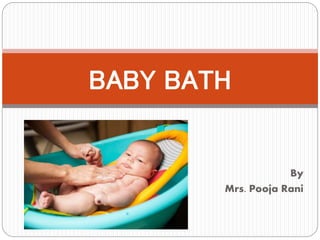
BABY BATH
Definition
 Baby bath is defined as cleaning
the skin of the baby for
promoting hygiene and comfort
in the hospital or home setting.
OBJECTIVES
1. To keep the baby’s skin clean.
2. To refresh the baby.
3. To stimulate the circulation.
4. To prevent any skin infection.
5. To closely observe the body for evidence
of any abnormalities and to note infant’s
growth and development.
6. To induce sleep.
TYPES OF BATH
LAP BATH
 Bathing the baby keeping on the lap. Here the
mother sits on a stool and can sponge and
change his dress on her lap itself. So there is no
need of having additional stool.
SPONGE BATH
 Bathing the child in bed.
TUB BATH
 This is the common method of giving bath to the
GENERAL INSTRUCTIONS FOR
GIVING BATH
1. Use warm room and warm water
(temperature- 90-100’F).
2. Bath quickly and gently.
3. Dry quickly and gently.
4. Never leave the baby unattended in a
bath tub or table.
5. The infant is given bath after the cord
falls and umbilicus is well healed.(within
7th-10th day.)
Cont..
5. Baby should not be bathed within an
hour he is fed because moving may
cause vomit .
6. There should be a fixed time for bath,
which will help the baby to form a habit
on an orderly schedules.
7. The soap used should be mild and avoid
using talcum powders
ARTICLES REQUIRED
1. Hot water
2. Tepid water
3. Buckets-2
4. Mug-1
5. Baby bath tub
6. Mild soap
7. Hair oil
8. Cotton balls in
sterile water.
9. Artery and thumb
forcep
10. Baby clothes
11. Towels-2
12. Thermometer
13. Apron
PRELIMINARY ASSESSMENT
OF THE
CHILD
1. Identify the child and check doctor’s
order for any specific instruction about
bathing the baby.
2. Get further instructions from the ward
sister.
3. Assess the general condition of the baby
and need for bathing.
4. Find out from the mother whether the
child had his feeding within the previous
Cont..
5. Decide the type of bath to be given and
find out the proper place for the same.
6. Check the articles in the unit.
7. Collect the individual soap and towel
from the mother if possible.
PREPARATION OF THE
ENVIRONMENT AND EQUIPMENT
1. Close windows to keep off draught and to
provide privacy.
2. Collect all the articles in readiness before
beginning the procedure.
3. Keep the table against the wall, place the
tub or basin on one end of the table and
the tray with articles on the other end
conveniently so that the baby will be
protected on 3 sides and there is less
chance of the baby’s rolling of the table.
Cont..
4. Place makintosh and towel over the
table, wash hands and wear apron.
5. See whether the baby is wet with urine or
motion. If so clean the part.
6. Bring the baby wrapped in a towel to the
bath table.
Steps of the procedure
1. Explain procedure to the mother and
encourage her Participation.
2. Pour water into the tub and adjust
temperature by checking with the elbow
or dorsal side of the palm.
3. Undress and mummify the baby.
4. Wipe the eyes from inner canthus to
outer canthus with cotton swab
5. Dip hands in water, wipe face in 8 like
manner
Cont..
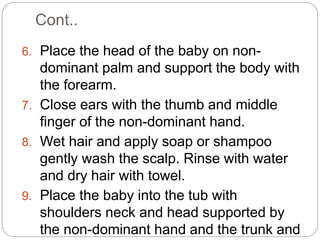
6. Place the head of the baby on non-
dominant palm and support the body with
the forearm.
7. Close ears with the thumb and middle
finger of the non-dominant hand.
8. Wet hair and apply soap or shampoo
gently wash the scalp. Rinse with water
and dry hair with towel.
9. Place the baby into the tub with
shoulders neck and head supported by
the non-dominant hand and the trunk and
Cont..
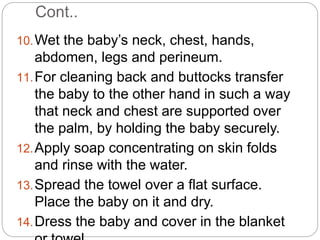
10.Wet the baby’s neck, chest, hands,
abdomen, legs and perineum.
11.For cleaning back and buttocks transfer
the baby to the other hand in such a way
that neck and chest are supported over
the palm, by holding the baby securely.
12.Apply soap concentrating on skin folds
and rinse with the water.
13.Spread the towel over a flat surface.
Place the baby on it and dry.
14.Dress the baby and cover in the blanket
CONTRA INDICATIONS OF
BABY
BATH
1. Hypothermia.
2. Convulsions.
3. Bronchopneumonia.
4. Congenital cyanotic heart disease.
5. Fresh burns.
6. Critical illness.
7. Premature infants.
AFTER CARE
1. Wash and replace the articles in the
proper place.
2. Record the type of bath, any abnormal
findings on the skin with date and time.
3. Hand over the baby to the mother for
feeding.
4. Before discharge demonstrate it to the
mother, so that she can bath her infant
at home.

Baby Bath

  • 1.
  • 2.
    Definition  Baby bathis defined as cleaning the skin of the baby for promoting hygiene and comfort in the hospital or home setting.
  • 3.
    OBJECTIVES 1. To keepthe baby’s skin clean. 2. To refresh the baby. 3. To stimulate the circulation. 4. To prevent any skin infection. 5. To closely observe the body for evidence of any abnormalities and to note infant’s growth and development. 6. To induce sleep.
  • 4.
    TYPES OF BATH LAPBATH  Bathing the baby keeping on the lap. Here the mother sits on a stool and can sponge and change his dress on her lap itself. So there is no need of having additional stool. SPONGE BATH  Bathing the child in bed. TUB BATH  This is the common method of giving bath to the
  • 5.
    GENERAL INSTRUCTIONS FOR GIVINGBATH 1. Use warm room and warm water (temperature- 90-100’F). 2. Bath quickly and gently. 3. Dry quickly and gently. 4. Never leave the baby unattended in a bath tub or table. 5. The infant is given bath after the cord falls and umbilicus is well healed.(within 7th-10th day.)
  • 6.
    Cont.. 5. Baby shouldnot be bathed within an hour he is fed because moving may cause vomit . 6. There should be a fixed time for bath, which will help the baby to form a habit on an orderly schedules. 7. The soap used should be mild and avoid using talcum powders
  • 7.
    ARTICLES REQUIRED 1. Hotwater 2. Tepid water 3. Buckets-2 4. Mug-1 5. Baby bath tub 6. Mild soap 7. Hair oil 8. Cotton balls in sterile water. 9. Artery and thumb forcep 10. Baby clothes 11. Towels-2 12. Thermometer 13. Apron
  • 8.
    PRELIMINARY ASSESSMENT OF THE CHILD 1.Identify the child and check doctor’s order for any specific instruction about bathing the baby. 2. Get further instructions from the ward sister. 3. Assess the general condition of the baby and need for bathing. 4. Find out from the mother whether the child had his feeding within the previous
  • 9.
    Cont.. 5. Decide thetype of bath to be given and find out the proper place for the same. 6. Check the articles in the unit. 7. Collect the individual soap and towel from the mother if possible.
  • 10.
    PREPARATION OF THE ENVIRONMENTAND EQUIPMENT 1. Close windows to keep off draught and to provide privacy. 2. Collect all the articles in readiness before beginning the procedure. 3. Keep the table against the wall, place the tub or basin on one end of the table and the tray with articles on the other end conveniently so that the baby will be protected on 3 sides and there is less chance of the baby’s rolling of the table.
  • 11.
    Cont.. 4. Place makintoshand towel over the table, wash hands and wear apron. 5. See whether the baby is wet with urine or motion. If so clean the part. 6. Bring the baby wrapped in a towel to the bath table.
  • 12.
    Steps of theprocedure 1. Explain procedure to the mother and encourage her Participation. 2. Pour water into the tub and adjust temperature by checking with the elbow or dorsal side of the palm. 3. Undress and mummify the baby. 4. Wipe the eyes from inner canthus to outer canthus with cotton swab 5. Dip hands in water, wipe face in 8 like manner
  • 13.
    Cont.. 6. Place thehead of the baby on non- dominant palm and support the body with the forearm. 7. Close ears with the thumb and middle finger of the non-dominant hand. 8. Wet hair and apply soap or shampoo gently wash the scalp. Rinse with water and dry hair with towel. 9. Place the baby into the tub with shoulders neck and head supported by the non-dominant hand and the trunk and
  • 14.
    Cont.. 10.Wet the baby’sneck, chest, hands, abdomen, legs and perineum. 11.For cleaning back and buttocks transfer the baby to the other hand in such a way that neck and chest are supported over the palm, by holding the baby securely. 12.Apply soap concentrating on skin folds and rinse with the water. 13.Spread the towel over a flat surface. Place the baby on it and dry. 14.Dress the baby and cover in the blanket
  • 15.
    CONTRA INDICATIONS OF BABY BATH 1.Hypothermia. 2. Convulsions. 3. Bronchopneumonia. 4. Congenital cyanotic heart disease. 5. Fresh burns. 6. Critical illness. 7. Premature infants.
  • 16.
    AFTER CARE 1. Washand replace the articles in the proper place. 2. Record the type of bath, any abnormal findings on the skin with date and time. 3. Hand over the baby to the mother for feeding. 4. Before discharge demonstrate it to the mother, so that she can bath her infant at home.