
DEPARTMENT OF
CIVIL ENGINEERING
Jacketing
Er. Ramprasad Kumawat
M.Tech
Jacketing
• Increase bearing load
• Concrete jacketing is needed to increase
bearing load capacity following a modification
of the structural design or to restore structural
design integrity due to a failure in the
structural member.
• This technique is used on vertical surfaces
such as walls, columns and other combinations
such as beam sides and bottoms.
• The initial concrete substrate should e repaired
• - All cracks should be treated
• - All weak, damaged and easily removable
concrete should be chipped away
• - Clean any corroded steel by abrasion or
replace any damaged steel bars
• Installation of reinforcement
• We recommend the use of weberanc 405
BFX. It is applied as follows:
• Drill hole to correct diameter and depth
• Clean the drilled hole and remove all dust
• Inject the weberanc 405 BFX
• Install the rebar
•
• Formwork placement
• Formwork is best attached directly to the
concrete surface with expansion anchors or
standard form ties. Shoring or scaffolding can
be used to support the formwork.
• Pumping application
• The placement of material into the formed
cavity depends on the geometries. Vertical
surfaces start at the lowest point. We
recommend the use of webertec MC1. It is a
pumpable, self-compacting micro concrete.
• Curing ad protection
• Curing is recommended immediately after
removal of framework.
• Column strengthening is a process used to add
or restore ultimate load capacity of reinforced
concrete columns. It is used for seismic
retrofitting, supporting additional live load or
dead load that not included in the original
design, to relieve stresses generated by design
or construction errors, or to restore original
load capacity to damaged structural elements.
• There are several techniques which are used to
strengthen reinforced concrete columns like
reinforced concrete jacketing, steel jacketing,
and FRP confining or jacketing.
When strengthening of R.C. Column
is needed?
• The load carried by the column is increased due
to either increasing the number of floors or due to
mistakes in the design.
• The compressive strength of the concrete or the
percent and type of reinforcement are not
according to the codes’ requirements.
• The inclination of the column is more than the
allowable.
• The settlement in the foundation is more than the
allowable.
• Strengthening Techniques for R.C. Columns
• There are three major techniques for
strengthening reinforced concrete columns
which are discussed below:
• 1. Reinforced Concrete Jacketing
• 2. Steel Jacketing
• 3. FRP Confining or Jacketing
1. Reinforced Concrete Jacketing
• It is one of the techniques used to improve or
restore capacity of reinforced concrete column.
The size of the jacket and the number and
diameter of the steel bars used in the jacketing
process depend on the structural analysis that
was made to the column.
Reinforced Concrete Jacketing
Process
• Initially, reduce or eliminate loads on columns
temporarily if it is required. This is done
by putting mechanical jacks and additional props
between floors.
• After that, if it is found out that reinforcements
are corroded, the remove the concrete cover and
clean the steel bars using a wire brush or sand
compressor.
• Then, coat the steel bars with an epoxy material
that would prevent corrosion.
• If reducing loads and cleaning reinforcement is
not needed, the jacketing process begin by
adding steel connectors into the existing
column.
• The steel connectors are added into the column
by making holes 3-4mm larger than the
diameter of the used steel connectors and 10-
15cm depth.
• The spacing of new stirrups of the jacket in
both the vertical and horizontal directions
should not be more than 50cm.
• Filling the holes with an appropriate epoxy
material then inserting the connectors into the
holes.
• Adding vertical steel connectors to fasten the
vertical steel bars of the jacket following the
same procedure in step 5 and 6.
• Installing the new vertical steel bars and
stirrups of the jacket according to the designed
dimensions and diameters.
• Coating the existing column with an
appropriate epoxy material that would
guarantee the bond between the old and new
concrete.
• Pouring the concrete of the jacket before the
epoxy material dries. The concrete used should
be of low shrinkage and consists of small
aggregates, sand, cement and additional
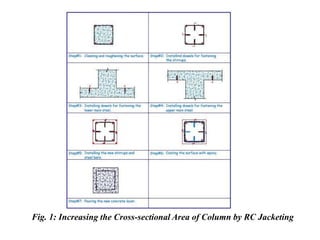
materials to prevent shrinkage. Steps of
reinforced concrete jacketing are illustrated
in Fig. 1.
Fig. 1: Increasing the Cross-sectional Area of Column by RC Jacketing
2. Steel Jacketing
• This technique is chosen when the loads
applied to the column will be increased, and at
the same time, increasing the cross sectional
area of the column is not permitted.
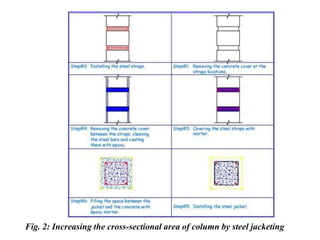
• Steel Jacketing Process
• Removing the concrete cover.
• Cleaning the reinforcement steel bars using a
wire brush or a sand compressor.
• Coating the steel bars with an epoxy material
that would prevent corrosion.
• Installing the steel jacket with the required size
and thickness, according to the design, and
making openings to pour through them the
epoxy material that would guarantee the
needed bond between the concrete column and
the steel jacket.
• Filling the space between the concrete column
and the steel jacket with an appropriate epoxy
material.
Fig. 2: Increasing the cross-sectional area of column by steel jacketing
• In some cases, where the column is needed to
carry bending moment and transfer it
successfully through the floors, one should
install a steel collar at the neck of the column
by means of bolts or a suitable bonding
material.
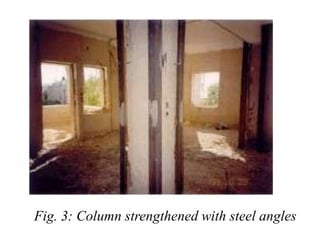
Fig. 3: Column strengthened with steel angles
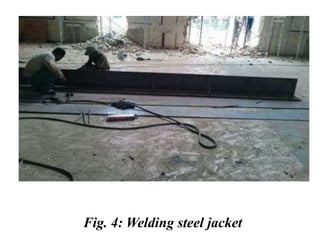
Fig. 4: Welding steel jacket
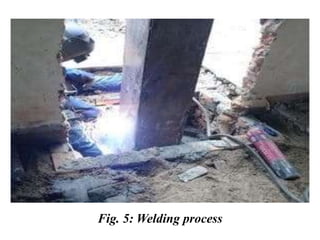
Fig. 5: Welding process
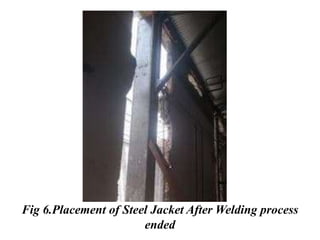
Fig 6.Placement of Steel Jacket After Welding process
ended
• 3. FRP Confining or Jacketing
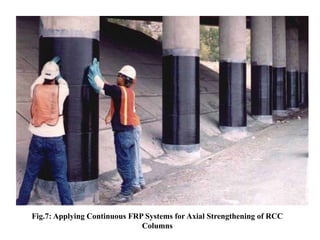
• FRP axial strengthening systems are used to
improve or enhance the capacity of reinforced
concrete columns. It can be used for both
circular and rectangular shaped columns but it
is more effective in the former shape.
Fig.7: Applying Continuous FRP Systems for Axial Strengthening of RCC
Columns
Advantages of FRPAxial Strengthening
Systems for Columns
• Increases the ultimate load carrying capacity of
reinforced concrete member
• Improves shear capacity of reinforced concrete
element
• Reinforcement bar lap splice capacity of the
member is improved due to FRP axial
strengthening system application
• The ductility of reinforced concrete column is
improved considerably.
• THANKS!
• Gmail: ramkumawat001@gmail.com

Jacketing (RR&S)

  • 1.
  • 2.
    Jacketing • Increase bearingload • Concrete jacketing is needed to increase bearing load capacity following a modification of the structural design or to restore structural design integrity due to a failure in the structural member. • This technique is used on vertical surfaces such as walls, columns and other combinations such as beam sides and bottoms.
  • 3.
    • The initialconcrete substrate should e repaired • - All cracks should be treated • - All weak, damaged and easily removable concrete should be chipped away • - Clean any corroded steel by abrasion or replace any damaged steel bars
  • 4.
    • Installation ofreinforcement • We recommend the use of weberanc 405 BFX. It is applied as follows: • Drill hole to correct diameter and depth • Clean the drilled hole and remove all dust • Inject the weberanc 405 BFX • Install the rebar •
  • 5.
    • Formwork placement •Formwork is best attached directly to the concrete surface with expansion anchors or standard form ties. Shoring or scaffolding can be used to support the formwork.
  • 6.
    • Pumping application •The placement of material into the formed cavity depends on the geometries. Vertical surfaces start at the lowest point. We recommend the use of webertec MC1. It is a pumpable, self-compacting micro concrete.
  • 7.
    • Curing adprotection • Curing is recommended immediately after removal of framework.
  • 8.
    • Column strengtheningis a process used to add or restore ultimate load capacity of reinforced concrete columns. It is used for seismic retrofitting, supporting additional live load or dead load that not included in the original design, to relieve stresses generated by design or construction errors, or to restore original load capacity to damaged structural elements.
  • 9.
    • There areseveral techniques which are used to strengthen reinforced concrete columns like reinforced concrete jacketing, steel jacketing, and FRP confining or jacketing.
  • 10.
    When strengthening ofR.C. Column is needed? • The load carried by the column is increased due to either increasing the number of floors or due to mistakes in the design. • The compressive strength of the concrete or the percent and type of reinforcement are not according to the codes’ requirements. • The inclination of the column is more than the allowable. • The settlement in the foundation is more than the allowable.
  • 11.
    • Strengthening Techniquesfor R.C. Columns • There are three major techniques for strengthening reinforced concrete columns which are discussed below: • 1. Reinforced Concrete Jacketing • 2. Steel Jacketing • 3. FRP Confining or Jacketing
  • 12.
    1. Reinforced ConcreteJacketing • It is one of the techniques used to improve or restore capacity of reinforced concrete column. The size of the jacket and the number and diameter of the steel bars used in the jacketing process depend on the structural analysis that was made to the column.
  • 13.
    Reinforced Concrete Jacketing Process •Initially, reduce or eliminate loads on columns temporarily if it is required. This is done by putting mechanical jacks and additional props between floors. • After that, if it is found out that reinforcements are corroded, the remove the concrete cover and clean the steel bars using a wire brush or sand compressor. • Then, coat the steel bars with an epoxy material that would prevent corrosion.
  • 14.
    • If reducingloads and cleaning reinforcement is not needed, the jacketing process begin by adding steel connectors into the existing column. • The steel connectors are added into the column by making holes 3-4mm larger than the diameter of the used steel connectors and 10- 15cm depth. • The spacing of new stirrups of the jacket in both the vertical and horizontal directions should not be more than 50cm.
  • 15.
    • Filling theholes with an appropriate epoxy material then inserting the connectors into the holes. • Adding vertical steel connectors to fasten the vertical steel bars of the jacket following the same procedure in step 5 and 6. • Installing the new vertical steel bars and stirrups of the jacket according to the designed dimensions and diameters.
  • 16.
    • Coating theexisting column with an appropriate epoxy material that would guarantee the bond between the old and new concrete. • Pouring the concrete of the jacket before the epoxy material dries. The concrete used should be of low shrinkage and consists of small aggregates, sand, cement and additional materials to prevent shrinkage. Steps of reinforced concrete jacketing are illustrated in Fig. 1.
  • 17.
    Fig. 1: Increasingthe Cross-sectional Area of Column by RC Jacketing
  • 18.
    2. Steel Jacketing •This technique is chosen when the loads applied to the column will be increased, and at the same time, increasing the cross sectional area of the column is not permitted.
  • 19.
    • Steel JacketingProcess • Removing the concrete cover. • Cleaning the reinforcement steel bars using a wire brush or a sand compressor. • Coating the steel bars with an epoxy material that would prevent corrosion.
  • 20.
    • Installing thesteel jacket with the required size and thickness, according to the design, and making openings to pour through them the epoxy material that would guarantee the needed bond between the concrete column and the steel jacket. • Filling the space between the concrete column and the steel jacket with an appropriate epoxy material.
  • 21.
    Fig. 2: Increasingthe cross-sectional area of column by steel jacketing
  • 22.
    • In somecases, where the column is needed to carry bending moment and transfer it successfully through the floors, one should install a steel collar at the neck of the column by means of bolts or a suitable bonding material.
  • 23.
    Fig. 3: Columnstrengthened with steel angles
  • 24.
    Fig. 4: Weldingsteel jacket
  • 25.
  • 26.
    Fig 6.Placement ofSteel Jacket After Welding process ended
  • 27.
    • 3. FRPConfining or Jacketing • FRP axial strengthening systems are used to improve or enhance the capacity of reinforced concrete columns. It can be used for both circular and rectangular shaped columns but it is more effective in the former shape.
  • 28.
    Fig.7: Applying ContinuousFRP Systems for Axial Strengthening of RCC Columns
  • 29.
    Advantages of FRPAxialStrengthening Systems for Columns • Increases the ultimate load carrying capacity of reinforced concrete member • Improves shear capacity of reinforced concrete element • Reinforcement bar lap splice capacity of the member is improved due to FRP axial strengthening system application • The ductility of reinforced concrete column is improved considerably.
  • 30.
    • THANKS! • Gmail:ramkumawat001@gmail.com