An Introduction to
-Wiki Projects
Digital Heritage Conference, 2013

Shani Evenstein
National GLAM Projects Coordinator
Wikimedia Israel
glam@wikimedia.org.il
Part 1 –
An Intro to Wiki Projects
Around the World
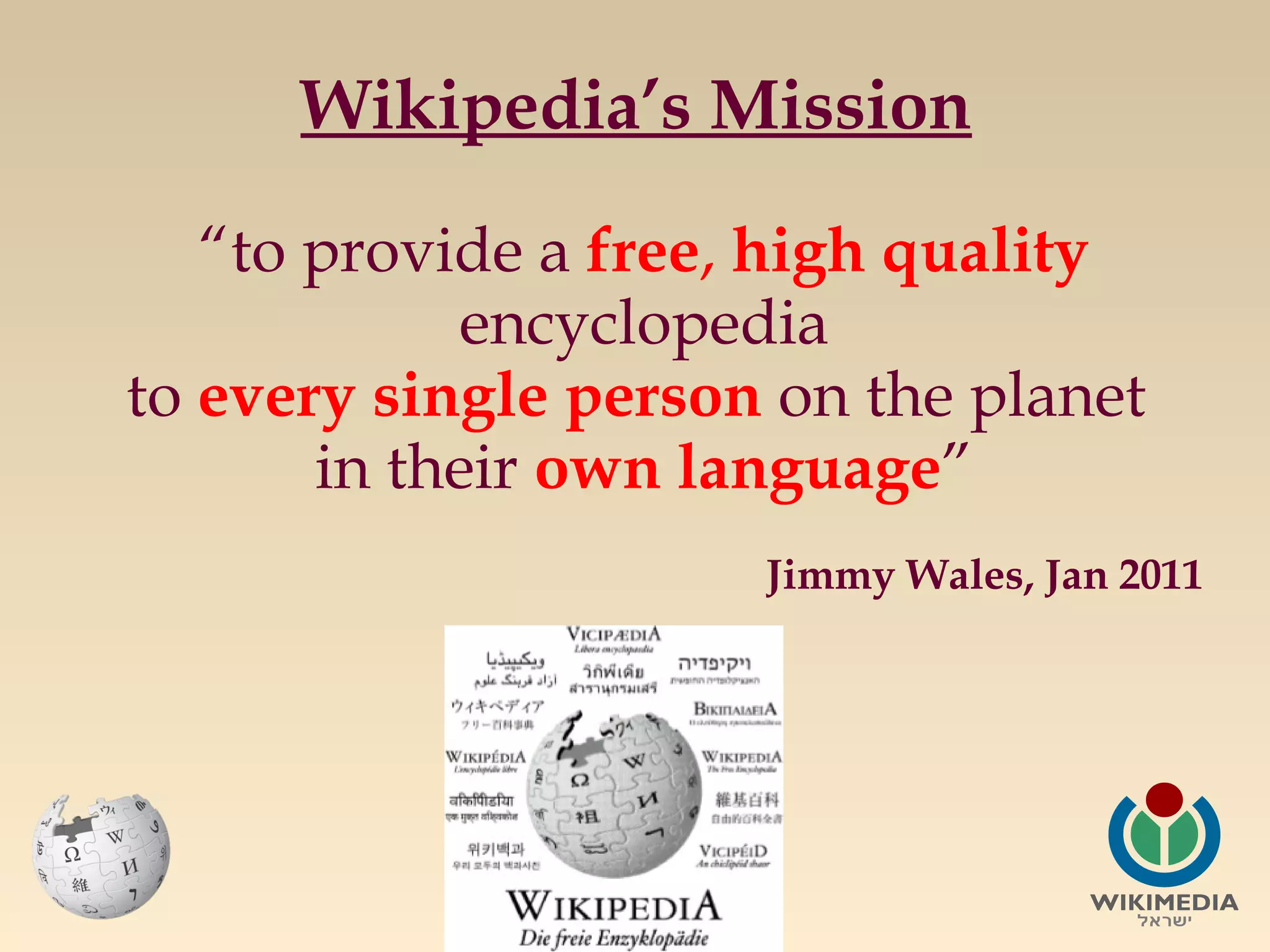
Wikipedia’s Mission
“to provide a free, high quality
encyclopedia
to every single person on the planet
in their own language”
Jimmy Wales, Jan 2011
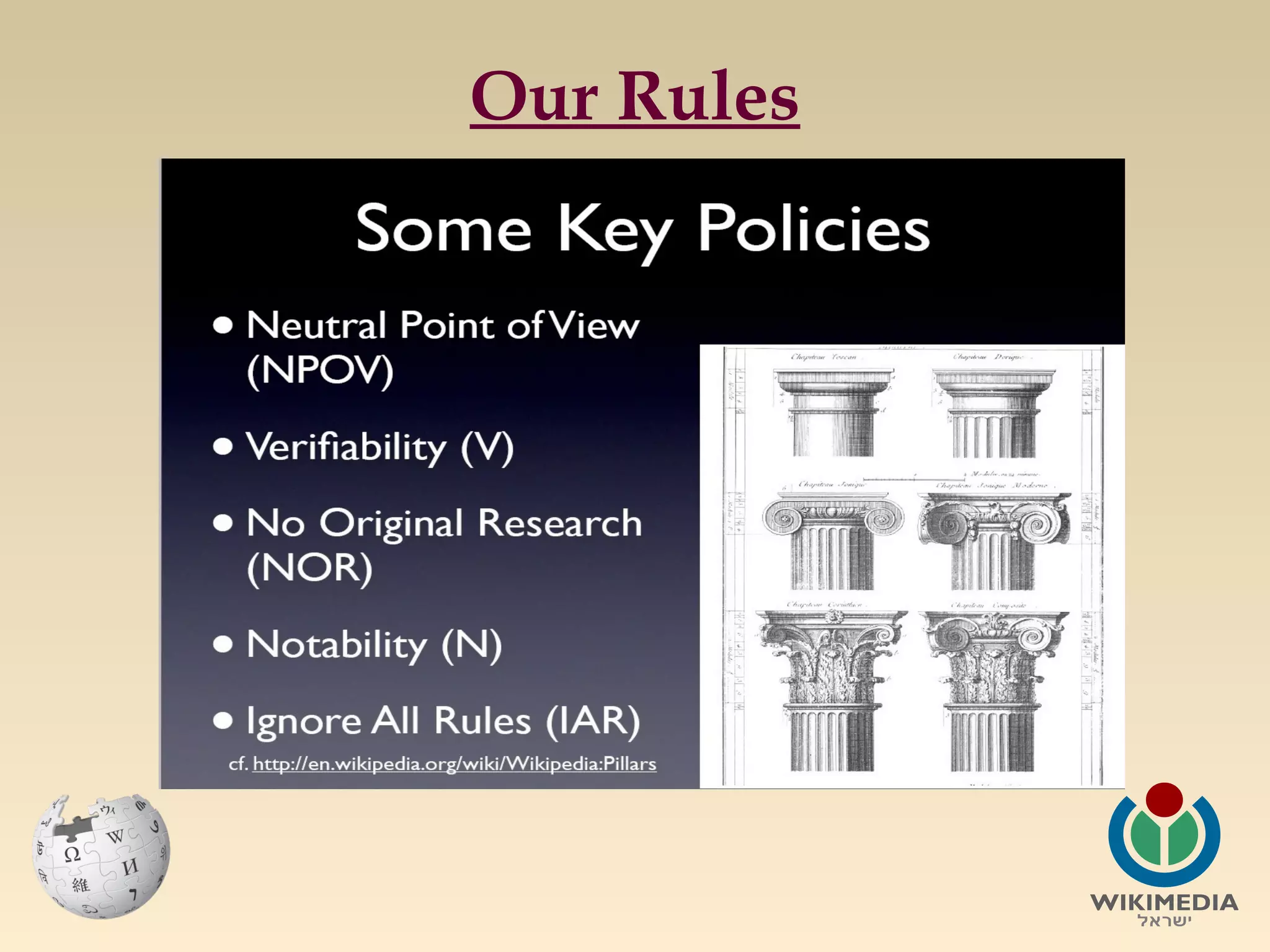
Our Rules
Set Knowledge Free
By the People, For the People
• Created by the public, worldwide
• Maintained by the public, worldwide
• Supported by the public, worldwide
Giving Back and Reaching Out:
Wiki projects
1 - Strengthen the weak: Outreach Projects
2 – Make the strong even stronger: Wiki in the
Academia & GLAM
Outreach Wiki Projects – 1
The most general goal:
to encourage the expansion of smaller language
Wikipedias through advice, encouragement,
and general assistance.
• Empowering the “global south” via access to free
knowledge.
• Preserving cultural knowledge on the verge of
extinction.
Wiki in the Eduction & GLAM – 2
Quantity & Quality
“content improves with more people
involved. There are now 10.000 very active
editors. Many eyes checking and editing loads
of information. System mistakes are fixed by
the community.
So, we want universities, research centers,
professionals and specialists from different
areas to become part of the community,
sharing their experience. This will
automaticly improve the quality”.
Kul Wadhwa (UOC, Open University of Catalonia, 2010)
Wikimedia Head of Bussiness Developement
Collaborations with Educational
institutions
• “Campus Ambassador” projects
• More “expert” writers
• Writing articles as an academic assignment:
education the next generation
• A new, full academic wiki course!
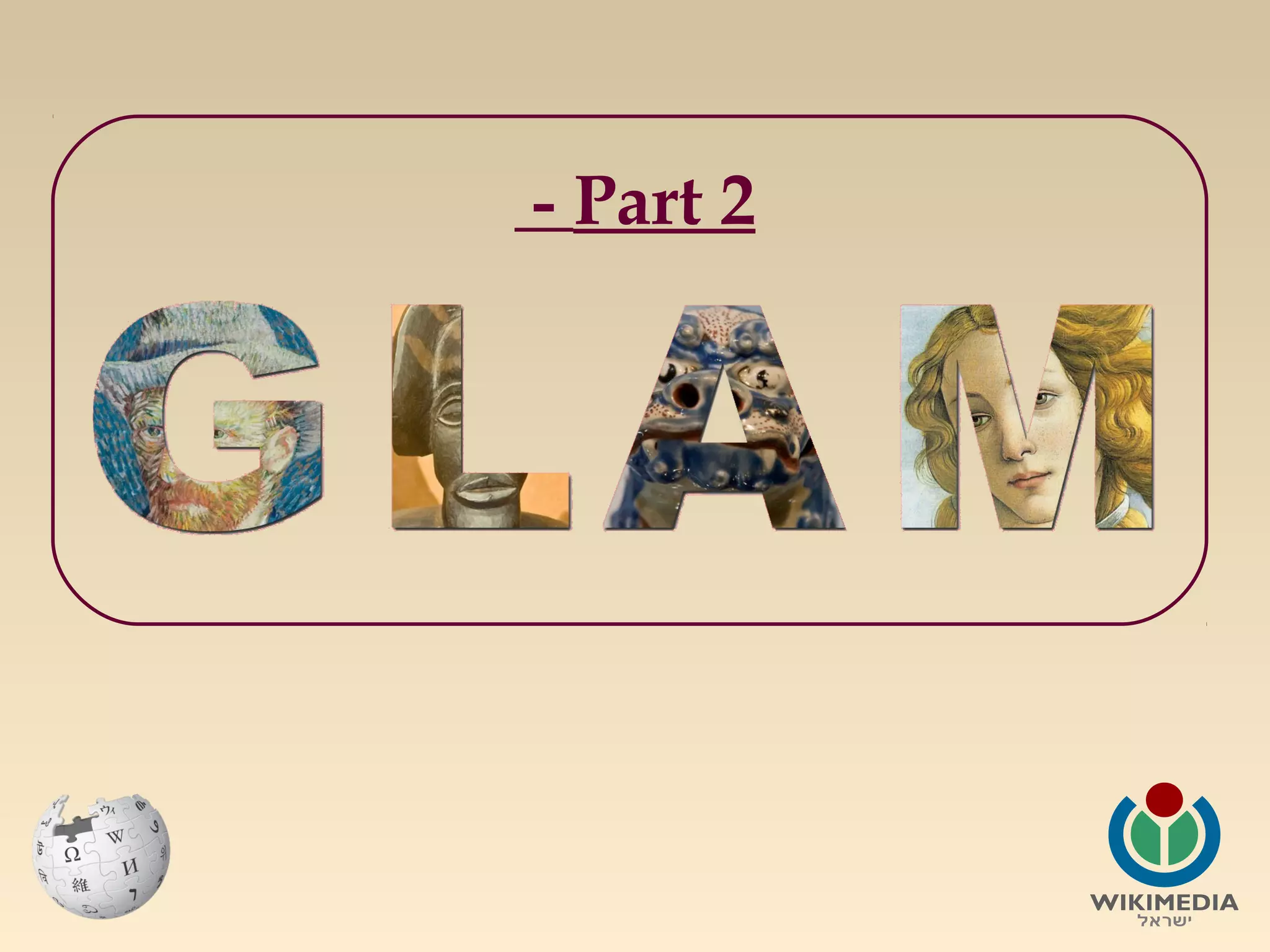
- Part 2
?What’s
• GALLERIES
• LIBRARIES
• ARCHIVES
• MUSEUMS
To begin with..

, anyway
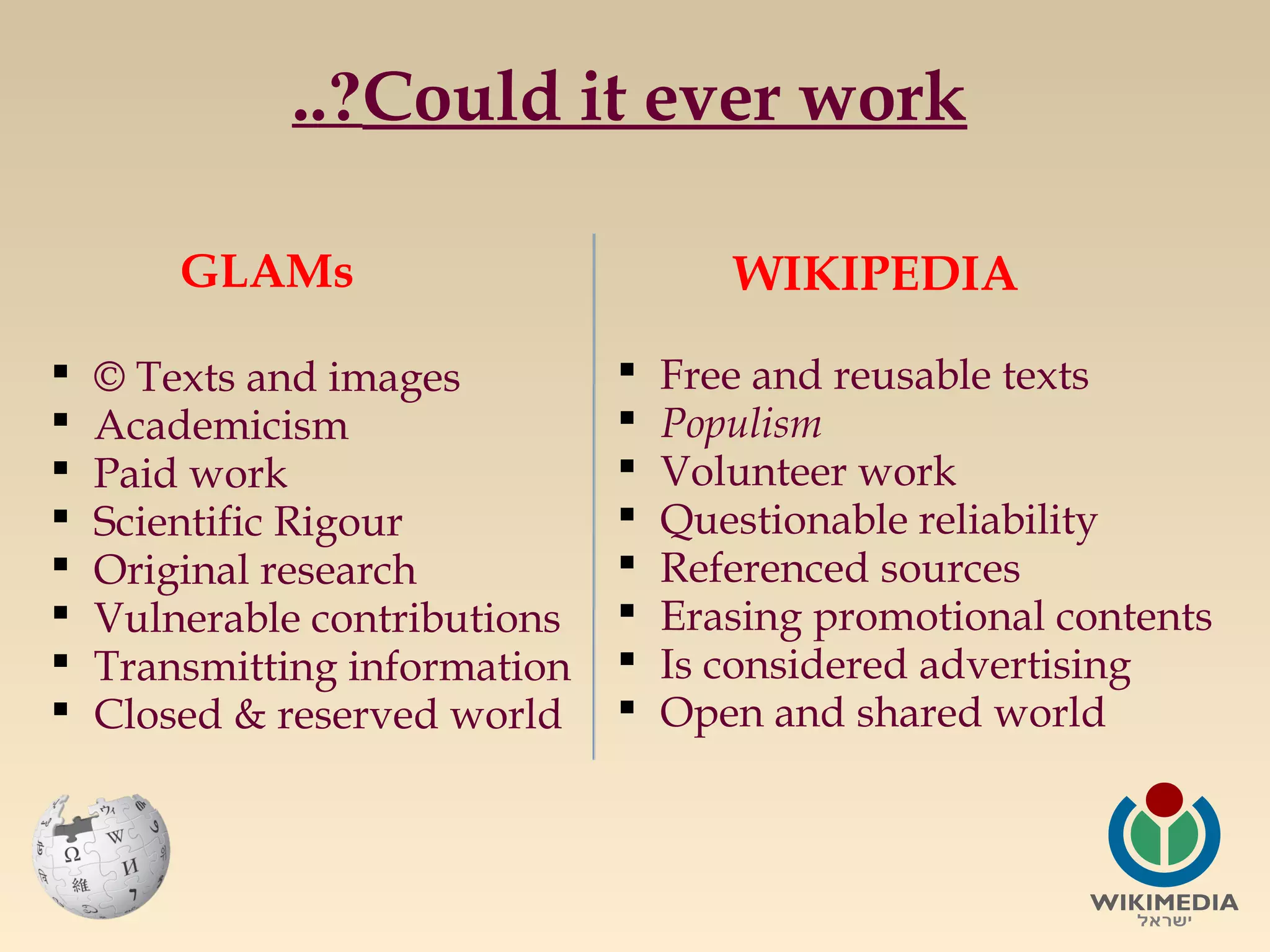
..?Could it ever work
GLAMs









© Texts and images
Academicism
Paid work
Scientific Rigour
Original research
Vulnerable contributions
Transmitting information
Closed & reserved world

WIKIPEDIA









Free and reusable texts
Populism
Volunteer work
Questionable reliability
Referenced sources
Erasing promotional contents
Is considered advertising
Open and shared world
?What’s in it for GLAMs
• It’s affordable (and usually free)
• E-volunteers from around the world
• More traffic back to your site
• A new platform to share your resources;
which often falls in line with your mission
• New energy to an often stale work in
environment
• Challenges traditional GLAM practices
And.. the future is here, baby!
Comitted to collaborate
Spreading knowledge
reaching the maximum audience
with the highest quality
  WIKIPEDIA

MUSEUMS

- Free encyclopedia
- Most consulted in the world
- +250 active editions

- Expertise content
- All knowledge areas
Ways to Collaborate
•
•
•
•
•
•
•
•
•
•

Creating a “Wikipedian-in-Residence” program
Image & Media donation to Commons
Coordinating GLAM outreach events
Updating your Institution’s articles
Using Wikipedia QR codes
Sharing historical footage
Allowing Wikimedians to digitally restore images
Adding a Wikipedia citation template to your database
Improving and using Wikipedia articles for an exhibition
Improving the quality of OCR
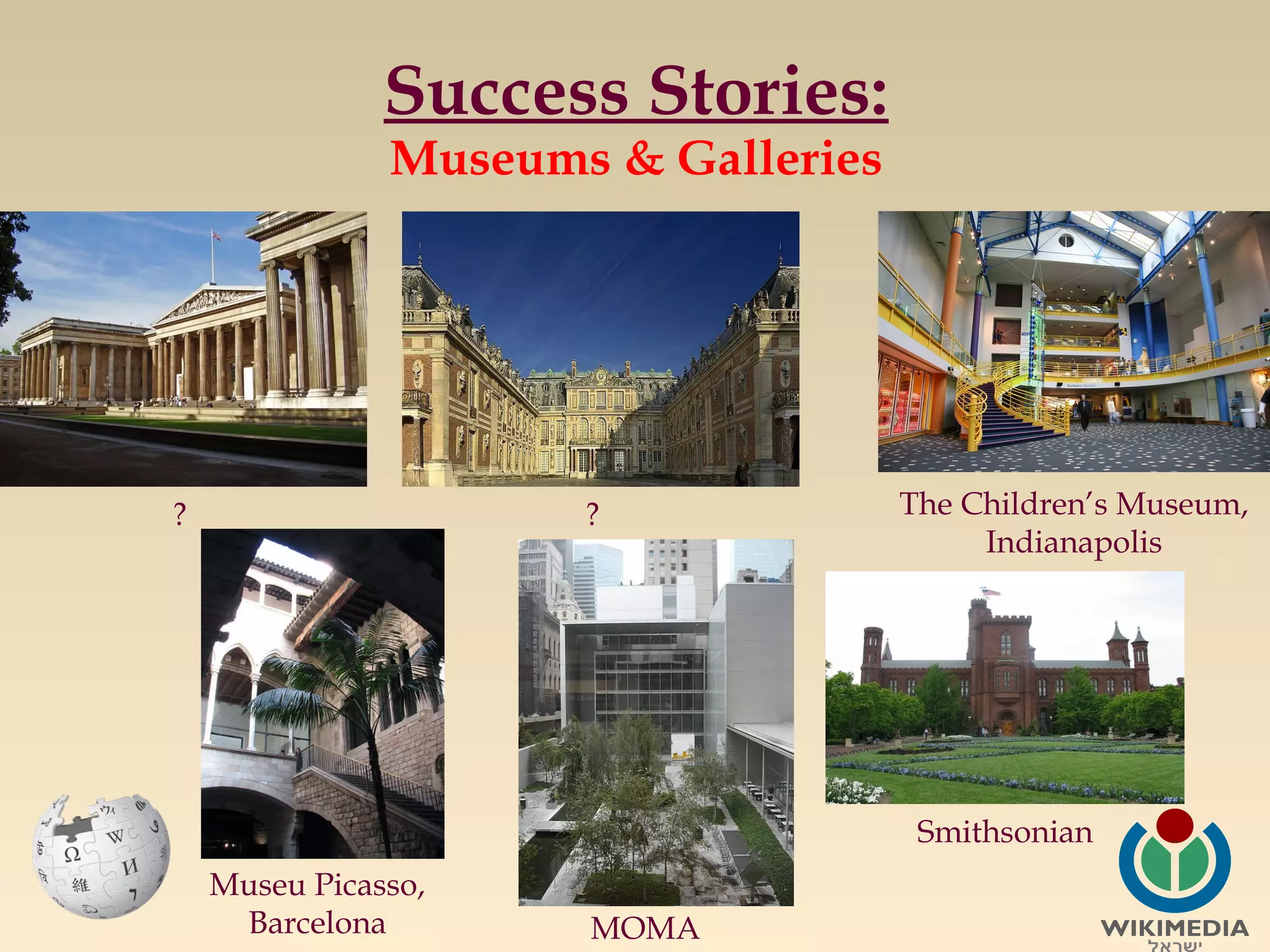
Success Stories:
Museums & Galleries

?

?

The Children’s Museum,
Indianapolis

Smithsonian
Museu Picasso,
Barcelona

MOMA
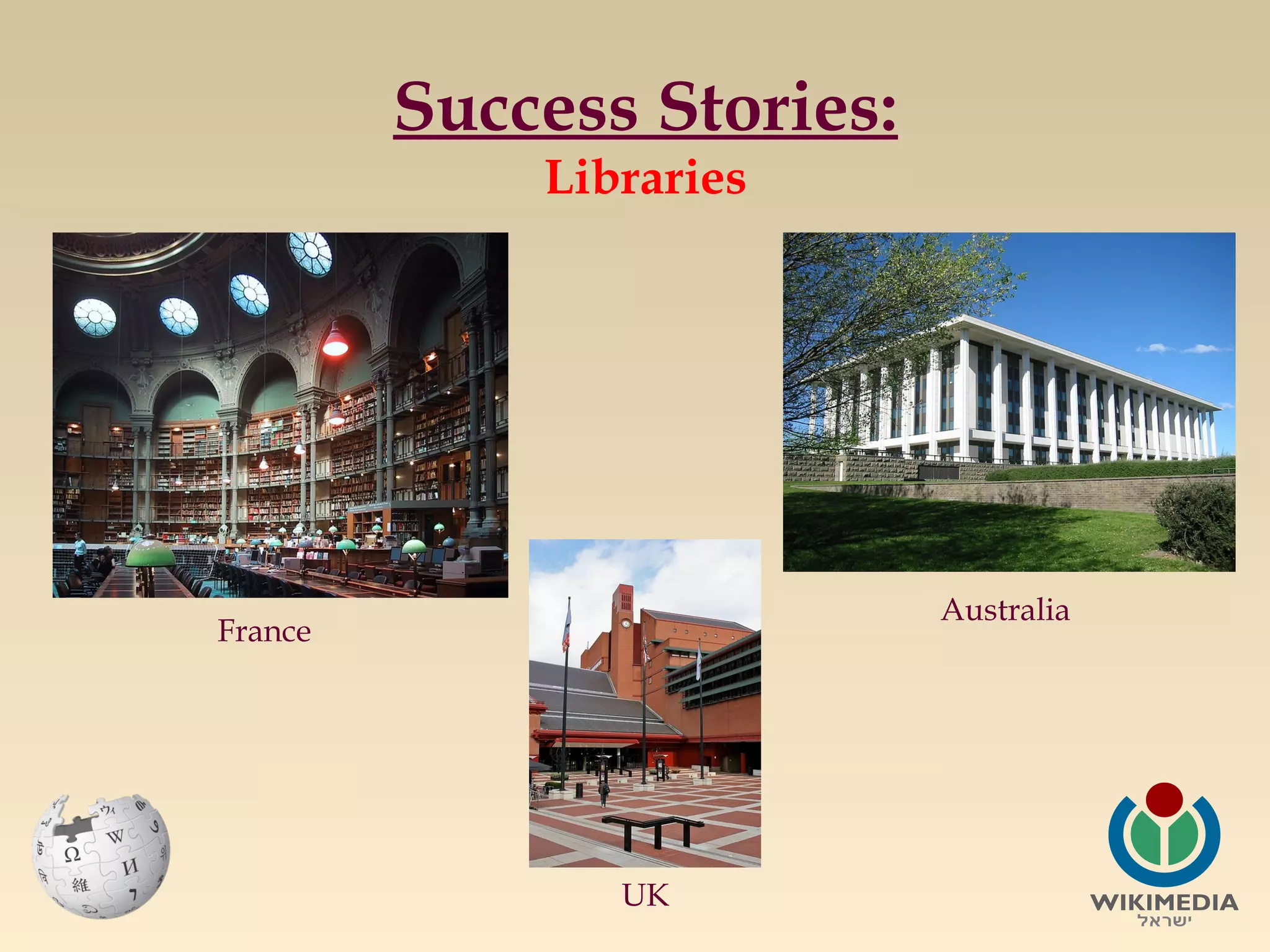
Success Stories:
Libraries

Australia

France

UK
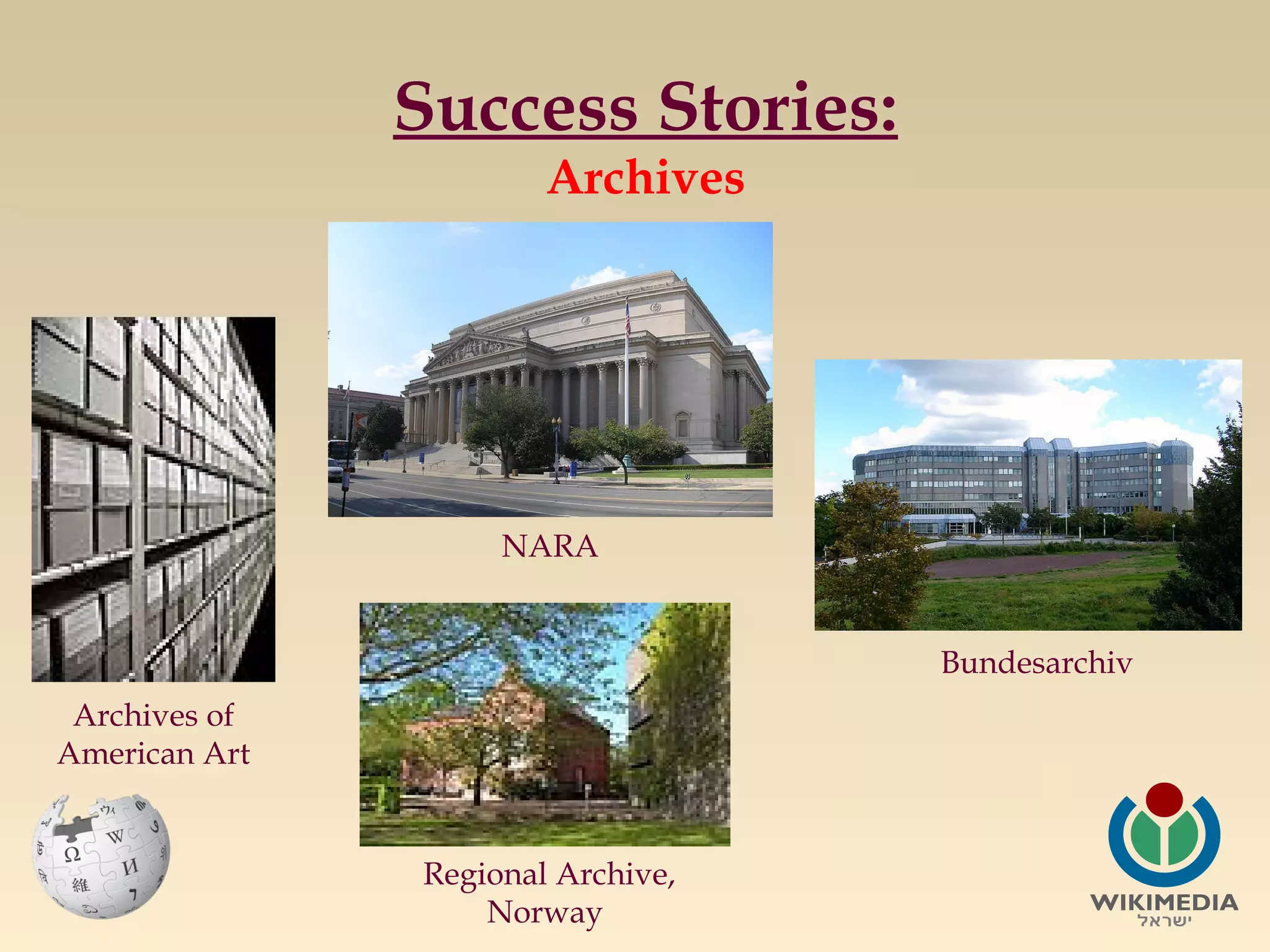
Success Stories:
Archives

NARA
Bundesarchiv
Archives of
American Art

Regional Archive,
Norway
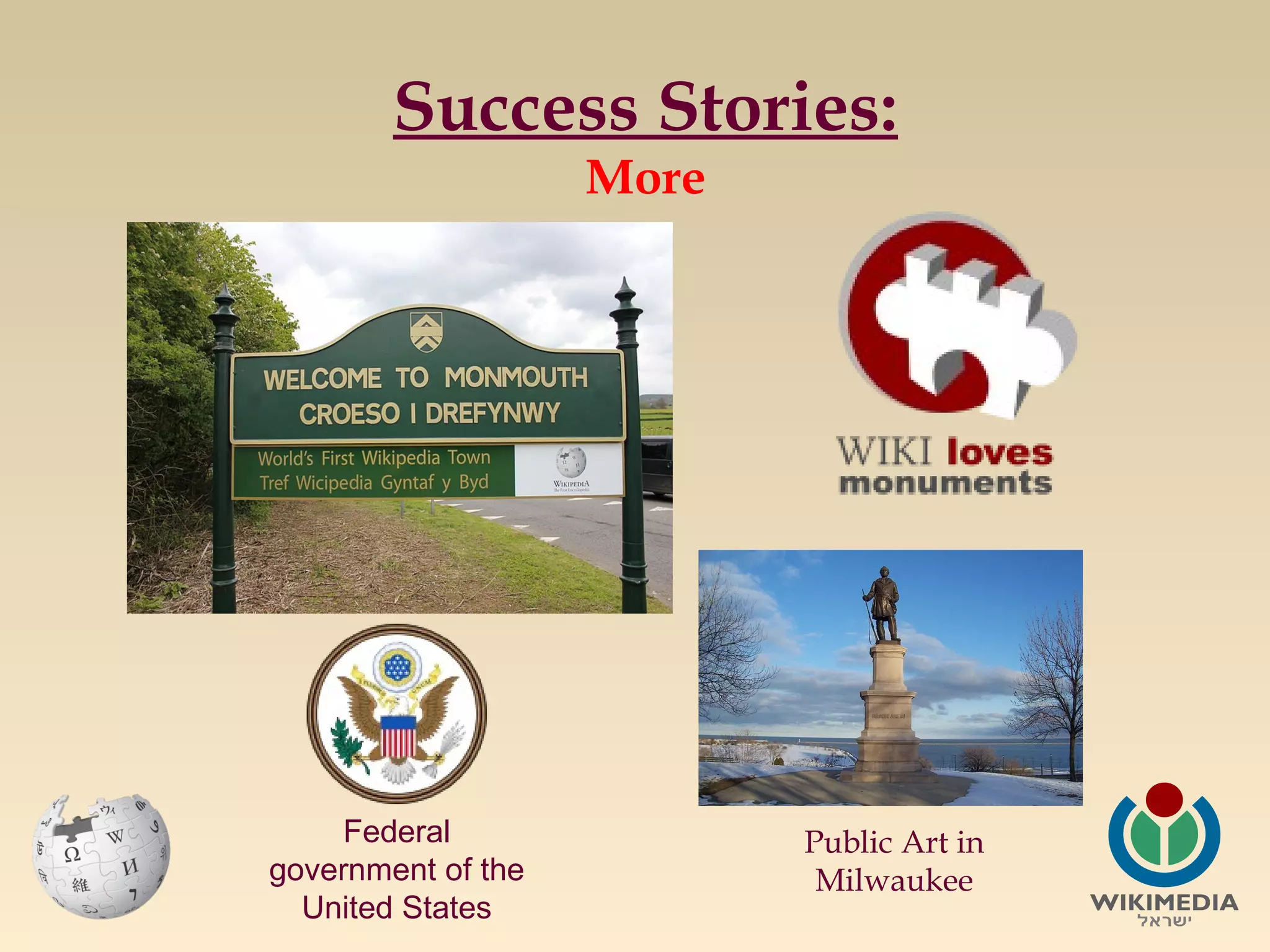
Success Stories:
More

Federal
government of the
United States

Public Art in
Milwaukee
This is a worldwide movement;
!And Israel has joined the party
Part 3 -
!Israel Joins the Global Efforts
• 09/2011 – “GLAM: Israel Museum, Jerusalem” Project
• 12/2011 – “GLAM: National Library of Israel” Project
• 08/2012 – “GLAM: Library of Haifa University” Project
• 09/2012 – “GLAM: Wiki Loves Monuments” Contest
GLAM in Israel: Some Challenges
• Increasing “GLAM awareness” –
– within the Hebrew Wikipedia community
– within the general public: new editors

• Collaborating with more GLAMs & Academic world
• Smaller editing community
• Technical tools
• Lack of infrastructure [WLM, Public Art]
Other / future collaborators
- Bezalel Academy of Art and Design
- Israel State Archives ?
- Museum of Jewish Diaspora ?
- The Israel Philharmonic Orchestra ?
- The Israeli Opera ?
- The Haifa Museums ?
- The Israeli Museum Portal ?

- 10/2013 – “GLAM: Shenkar”!
- 12/2014 - GLAM-Holon
-

And --
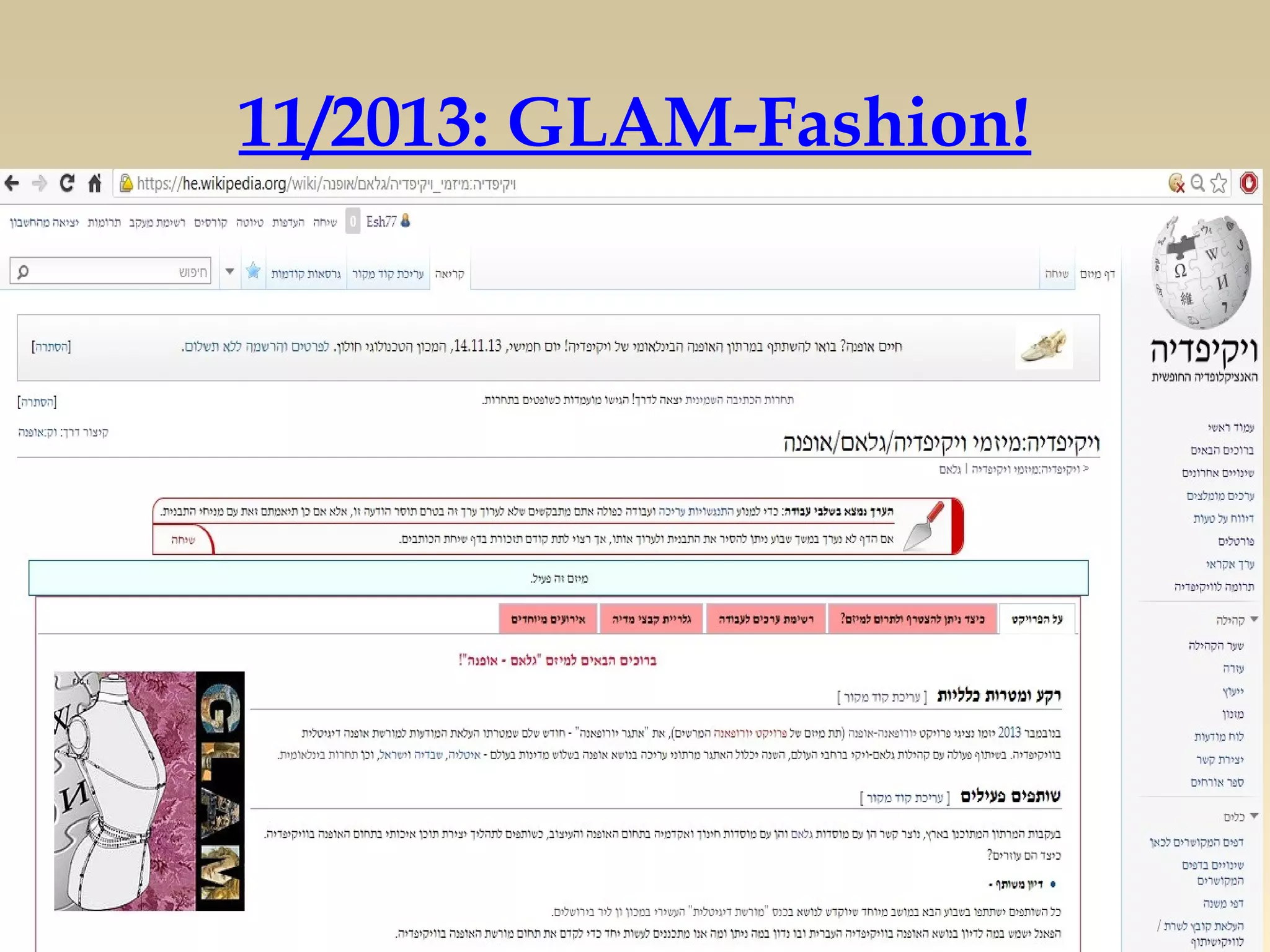
11/2013: GLAM-Fashion!
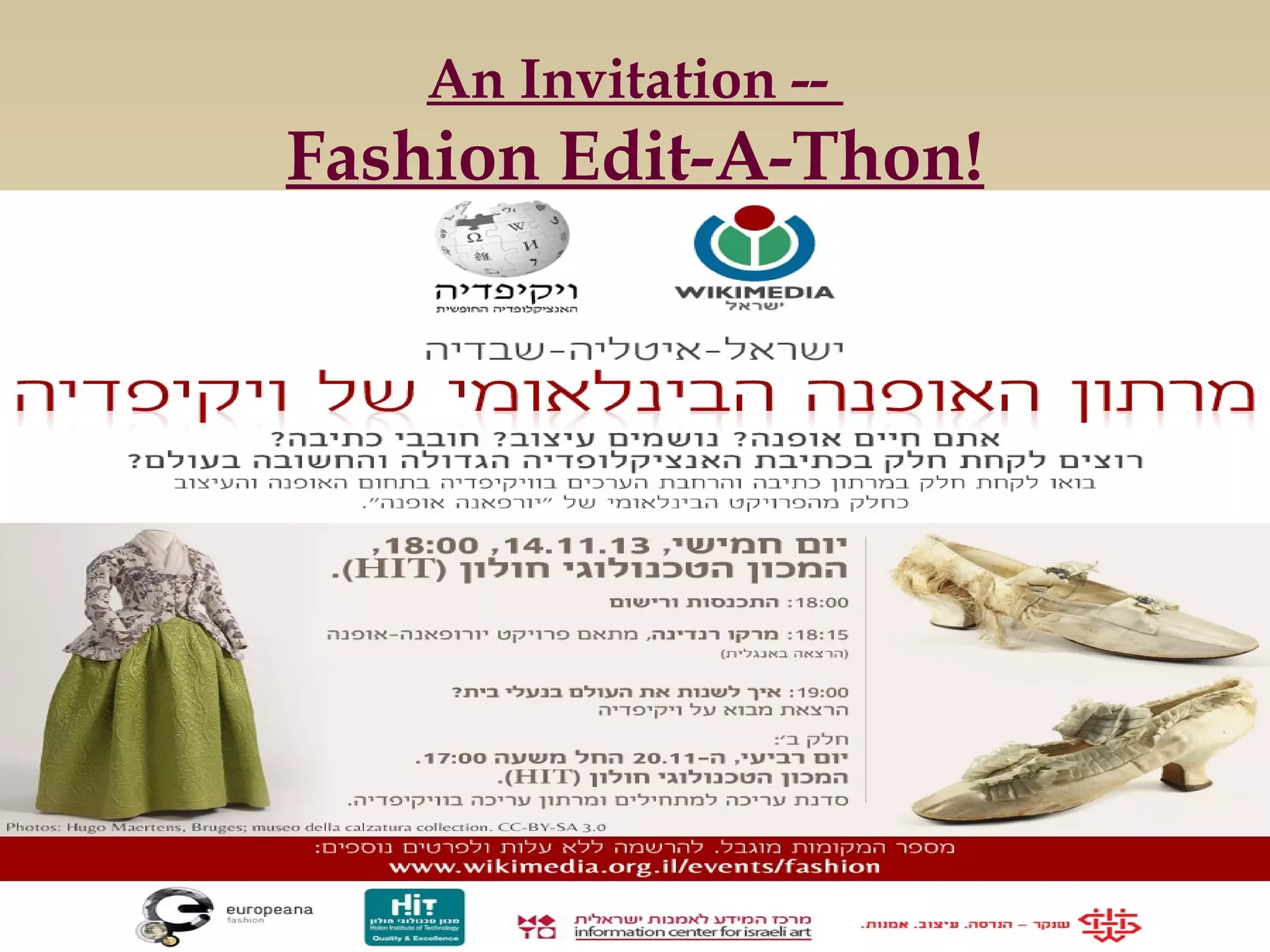
An Invitation --

Fashion Edit-A-Thon!
! Thanks you for Listening
An Introduction to
-Wiki Projects
Digital Heritage Conference, 2013
Shani Evenstein

National GLAM Projects Coordinator
Wikimedia Israel
glam@wikimedia.org.il

J2 shani evenstein_glam_wiki

  • 1.
    An Introduction to -WikiProjects Digital Heritage Conference, 2013 Shani Evenstein National GLAM Projects Coordinator Wikimedia Israel glam@wikimedia.org.il
  • 2.
    Part 1 – AnIntro to Wiki Projects Around the World
  • 3.
    Wikipedia’s Mission “to providea free, high quality encyclopedia to every single person on the planet in their own language” Jimmy Wales, Jan 2011
  • 4.
  • 5.
  • 6.
    By the People,For the People • Created by the public, worldwide • Maintained by the public, worldwide • Supported by the public, worldwide
  • 7.
    Giving Back andReaching Out: Wiki projects 1 - Strengthen the weak: Outreach Projects 2 – Make the strong even stronger: Wiki in the Academia & GLAM
  • 8.
    Outreach Wiki Projects– 1 The most general goal: to encourage the expansion of smaller language Wikipedias through advice, encouragement, and general assistance. • Empowering the “global south” via access to free knowledge. • Preserving cultural knowledge on the verge of extinction.
  • 9.
    Wiki in theEduction & GLAM – 2 Quantity & Quality “content improves with more people involved. There are now 10.000 very active editors. Many eyes checking and editing loads of information. System mistakes are fixed by the community. So, we want universities, research centers, professionals and specialists from different areas to become part of the community, sharing their experience. This will automaticly improve the quality”. Kul Wadhwa (UOC, Open University of Catalonia, 2010) Wikimedia Head of Bussiness Developement
  • 10.
    Collaborations with Educational institutions •“Campus Ambassador” projects • More “expert” writers • Writing articles as an academic assignment: education the next generation • A new, full academic wiki course!
  • 11.
  • 12.
    ?What’s • GALLERIES • LIBRARIES •ARCHIVES • MUSEUMS To begin with.. , anyway
  • 13.
    ..?Could it everwork GLAMs         © Texts and images Academicism Paid work Scientific Rigour Original research Vulnerable contributions Transmitting information Closed & reserved world WIKIPEDIA         Free and reusable texts Populism Volunteer work Questionable reliability Referenced sources Erasing promotional contents Is considered advertising Open and shared world
  • 14.
    ?What’s in itfor GLAMs • It’s affordable (and usually free) • E-volunteers from around the world • More traffic back to your site • A new platform to share your resources; which often falls in line with your mission • New energy to an often stale work in environment • Challenges traditional GLAM practices And.. the future is here, baby!
  • 15.
    Comitted to collaborate Spreadingknowledge reaching the maximum audience with the highest quality   WIKIPEDIA MUSEUMS - Free encyclopedia - Most consulted in the world - +250 active editions - Expertise content - All knowledge areas
  • 16.
    Ways to Collaborate • • • • • • • • • • Creatinga “Wikipedian-in-Residence” program Image & Media donation to Commons Coordinating GLAM outreach events Updating your Institution’s articles Using Wikipedia QR codes Sharing historical footage Allowing Wikimedians to digitally restore images Adding a Wikipedia citation template to your database Improving and using Wikipedia articles for an exhibition Improving the quality of OCR
  • 17.
    Success Stories: Museums &Galleries ? ? The Children’s Museum, Indianapolis Smithsonian Museu Picasso, Barcelona MOMA
  • 18.
  • 19.
  • 20.
    Success Stories: More Federal government ofthe United States Public Art in Milwaukee
  • 21.
    This is aworldwide movement; !And Israel has joined the party
  • 22.
  • 23.
    !Israel Joins theGlobal Efforts • 09/2011 – “GLAM: Israel Museum, Jerusalem” Project • 12/2011 – “GLAM: National Library of Israel” Project • 08/2012 – “GLAM: Library of Haifa University” Project • 09/2012 – “GLAM: Wiki Loves Monuments” Contest
  • 24.
    GLAM in Israel:Some Challenges • Increasing “GLAM awareness” – – within the Hebrew Wikipedia community – within the general public: new editors • Collaborating with more GLAMs & Academic world • Smaller editing community • Technical tools • Lack of infrastructure [WLM, Public Art]
  • 25.
    Other / futurecollaborators - Bezalel Academy of Art and Design - Israel State Archives ? - Museum of Jewish Diaspora ? - The Israel Philharmonic Orchestra ? - The Israeli Opera ? - The Haifa Museums ? - The Israeli Museum Portal ? - 10/2013 – “GLAM: Shenkar”! - 12/2014 - GLAM-Holon - And --
  • 26.
  • 27.
  • 28.
    ! Thanks youfor Listening An Introduction to -Wiki Projects Digital Heritage Conference, 2013 Shani Evenstein National GLAM Projects Coordinator Wikimedia Israel glam@wikimedia.org.il

Editor's Notes

  • #3 My lecture will give you a context and brief overview of worldwide wiki projects, then focusing on GLAM and finally presenting GLAM in Isarel. But let’s begin at the beginning. 
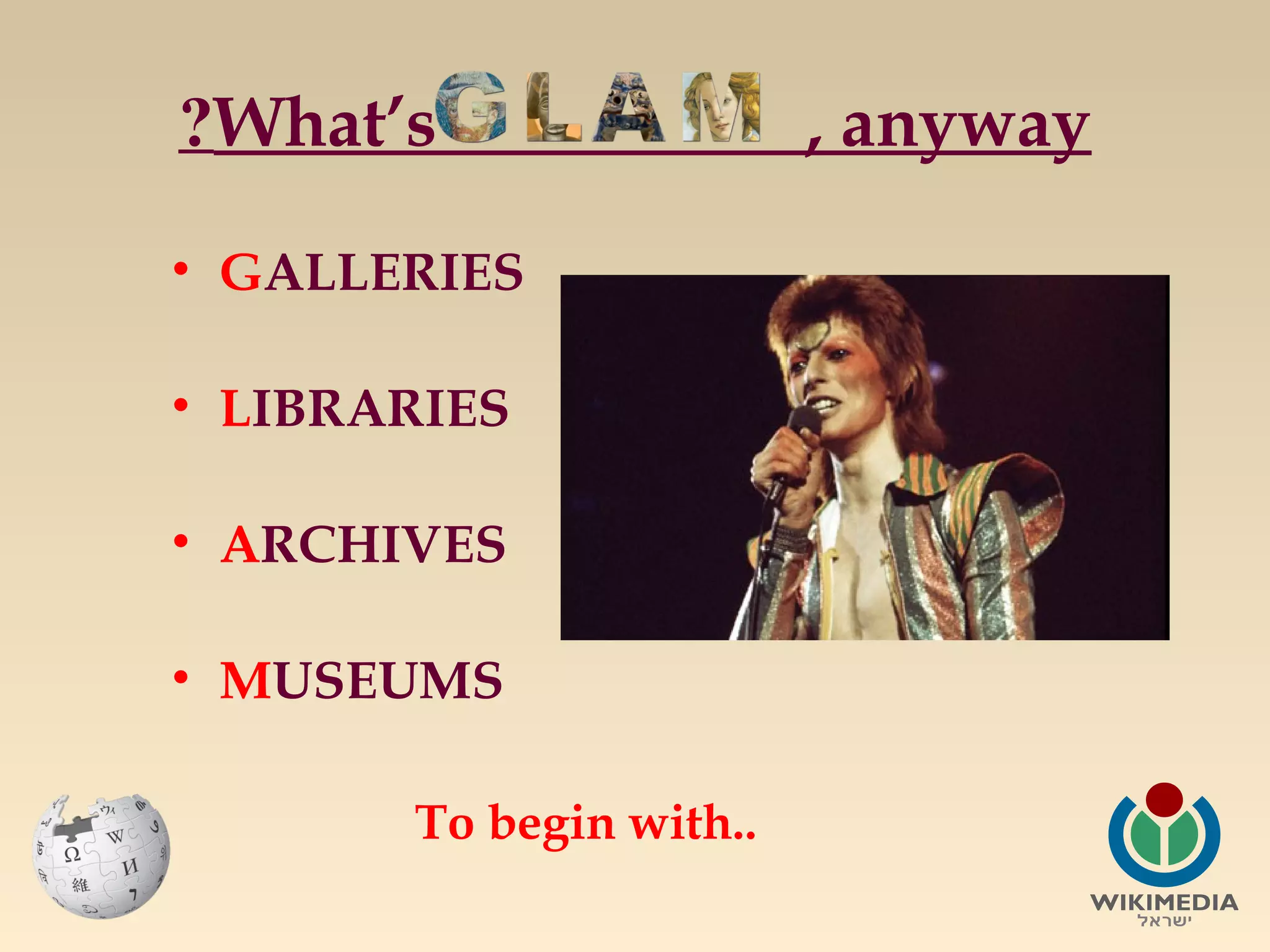
  • #13 GLAM stands for “galleries, libraries, archives and museums.” It’s also an excuse to put a photo of David Bowie in one’s presentation. GLAM was a term coined by Liam Wyatt last year to describe the cultural outreach program of the Wikimedia Foundation. I’m just going to show one aspect of each partnership – keep in mind, all of these partnerships involve a combination, if not all, of these activities in their partnership.
  • #15 The first thing institutions ask, and rightfully so, is how does my GLAM benefit from such partnership? This is just a selection of the benefits that GLAMs find working with Wikipedia. It’s affordable – and often free. Most institutions work with staff, and often interns to help bring their content to the sites. We also have the Wikipedian in Residence program – while most of these are often unpaid internship positions, some institutions have taken it upon themselves to invest monetarily – the Children’s Museum of Indianapolis hired their resident, the National Archives felt so confidently in the opportunity that they funded a paid internship for the summer. Regardless, Wikipedia is free, and primarily ran by volunteers. You also have the benefit of gaining a new troupe of volunteers – e-volunteers – from around the world, bringing your content to hundreds of language Wikipedias. These volunteers can be counted as volunteers on your tax forms, I believe. It’s also a new platform for the dissemination of your resources, which often is incorporated into ones mission. Many organizations have also seen increased traffic back to their site – when I started at the Archives I already knew that Wikipedia was the #1 traffic source, after Google, to their site. The numbers have only increased. At the Archives the staff involved have a new batch of energy about the project – they investigate ways to make content more accessible, the archivists are bothering me left and right about cool new stuff they’ve discovered that can be digitized – and it’s been a really exciting ride. It challenges traditional practice – and I’m sure those of you who have worked in new media have seen this. As a trained museum professional, it’s been a hard road to travel to convince old school staff members and advisors that my work is important – and despite the challenges seen when working with curators, archivists, historians – when they realize you want to SHARE AND MAKE BETTER what they protect, they often want to participate. And c’mon, the future is here, baby.
  • #19 L'objectiu és compartir l'experiència de les les institucions culturals del món real amb la l'experiència dels viquipedistes.  Podrem tenir accés als recursos de la Biblioteca Britànica, guiats per l'experiència dels seus comissaris, amb l'objectiu comú de millorar el contingut de Wikipedia amb informació rellevant a les col·leccions de la Biblioteca Britànica.
  • #20 El seu objectiu és facilitar la prestació i la creació de continguts relacionats amb el Palau de Versalles en tots els projectes de Wikimedia. COMENTAR TAMBÉ EXPERIÊNCIA MUSEU DE TOULOUSSE
  • #21 Museus + universitat + wikipedia =  Diversos projectes de qualitat