Problem-based learning
Jean Jacoby
Manawatu Centre for Teaching and Learning
Steps in PBL
1. Encounter and reason through the problem
2. Define and bound the problem and set learning
goals
3. Self-directed study to complete learning, gather
resources, and prepare reports for group
4. Share learning with group, revisit problem, generate
and review hypotheses
5. Summarise and integrate learning.
The role of the facilitator
In PBL the facilitator is an expert learner, able to
model good strategies for learning and thinking,
rather than providing expertise in specific content.
This role is critical, as the facilitator must continually
monitor the discussion, selecting and implementing
appropriate strategies as needed. As students
become more experienced with PBL, facilitators can
fade their scaffolding until finally the learners adopt
much of their questioning role.
(Hmelo-Silver & Barrows, 2006, p. 24)
• Facilitating collaborative knowledge construction.
• Facilitating the students’ development of thinking
or reasoning skills that promote problem solving,
metacognition, and critical thinking.
• Helping students to become independent and self-
directed learners.
Effective facilitators
“Students deemed tutors as effective and helpful
when they encouraged students to critically evaluate
the information gathered, questioned and probed
the students’ clinical reasoning processes, and,
most importantly, allowed students to control the
learning process.”
(Hung, Jonassen & Liu, n.d. p. 494)
Skills for facilitators
• Elicitation
• Re-elicitation
• Prompting
• Refocusing
• Facilitating
• Evaluating
• Summarising
• Giving feedback
• Informing
• Directing learning
Challenges for facilitators
Cognitive congruence is communication skills
defined as “the ability to express oneself in the
language of the students, using the concepts they
use and explaining things in ways easily grasped by
students” (Schmidt and Moust, 1995, p.709).
• The temptation to lecture
• Facilitating group processes
• Modelling metacognition skills
• Concern for content over process
• Relinquishing control
• Being too passive
• Providing feedback
• Managing assessment
Tips for facilitators
• Find out what skills your students already have
(information gathering, collaboration, etc.)
• Teach group work skills and processes
Strategies for facilitating small
groups
Objectives
• Review the process of planning a small group
teaching session
• Identify the challenges of teaching in small groups
• Discuss the characteristics of an effective small-
group facilitator
• Apply some of the strategies used within small
group teaching
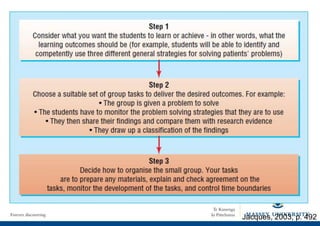
Jacques, 2003, p. 492
What is your experience of teaching (or learning) in
small groups?
Group round method
• Each person has 30 seconds say something.
• The first person chooses who should go
second, the second who should go third, and so
on.
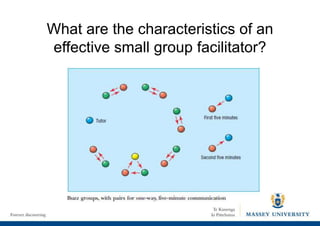
What are the characteristics of an
effective small group facilitator?
• Define expectations
• Tell the students up front how you are going to run
things and what you expect
• Goes over what you are looking for in grading if
relevant
• Goes over the objectives at the beginning
• Nurtures a safe group
• Sets an example with his/her own behaviour
(important in ethics discussions)
• Is willing share own experiences, where appropriate
• Steps in if the discussion crosses boundaries
• Manages time
• Guides the discussion rather than steal the show
• Promotes independent discussion.
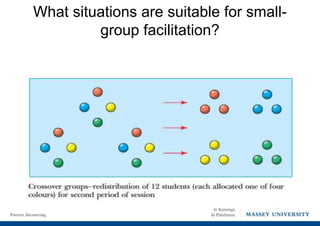
What situations are suitable for small-
group facilitation?
• Case discussions
• Problem-based learning
• Role play
• Open discussion
• Briefing and debriefing following a clinical or
practical learning session
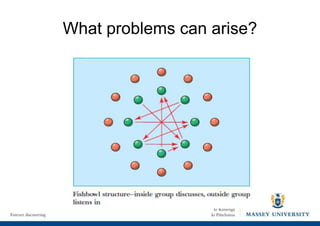
What problems can arise?
• You give a lecture rather than conducting a
dialogue
• You talk too much
• Students will not talk to each other, but will only
respond to questions from you
• Students do not prepare for the sessions
• One student dominates or blocks the discussion
• The students want to be given the solutions to
problems rather than discuss them
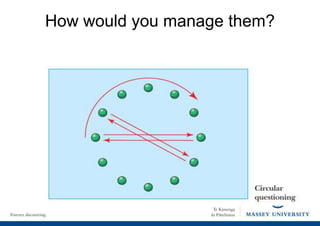
How would you manage them?
Engaging the unengaged student
Uninterested or unengaged?
Constructive alignment + backwash = engagement
References
Hmelo-Silver, C. E. , & Barrows, H. S. (2006). Goals and Strategies of a Problem-based
Learning Facilitator. Interdisciplinary Journal of Problem-based Learning, 1(1), 21-39.
Hung, W., Jonassen, D. H., & Liu, R. (2008). Problem-based learning. In J. M. Spector, J. G.
van Merriënboer, M. D., Merrill, & M. Driscoll (Eds.), Handbook of research on educational
communications and technology (3rd ed., pp. 485-506). Mahwah, NJ: Erlbaum.
Jacques, D. (2003). Teaching small groups. British Medical Journal, 326, pp. 492-494
Steinert, Y. (2004). Student perceptions of effective small group teaching. Medical Education,
38 pp. 286–293

Ivabs workshop

  • 1.
    Problem-based learning Jean Jacoby ManawatuCentre for Teaching and Learning
  • 2.
    Steps in PBL 1.Encounter and reason through the problem 2. Define and bound the problem and set learning goals 3. Self-directed study to complete learning, gather resources, and prepare reports for group 4. Share learning with group, revisit problem, generate and review hypotheses 5. Summarise and integrate learning.
  • 3.
    The role ofthe facilitator In PBL the facilitator is an expert learner, able to model good strategies for learning and thinking, rather than providing expertise in specific content. This role is critical, as the facilitator must continually monitor the discussion, selecting and implementing appropriate strategies as needed. As students become more experienced with PBL, facilitators can fade their scaffolding until finally the learners adopt much of their questioning role. (Hmelo-Silver & Barrows, 2006, p. 24)
  • 4.
    • Facilitating collaborativeknowledge construction. • Facilitating the students’ development of thinking or reasoning skills that promote problem solving, metacognition, and critical thinking. • Helping students to become independent and self- directed learners.
  • 5.
    Effective facilitators “Students deemedtutors as effective and helpful when they encouraged students to critically evaluate the information gathered, questioned and probed the students’ clinical reasoning processes, and, most importantly, allowed students to control the learning process.” (Hung, Jonassen & Liu, n.d. p. 494)
  • 6.
    Skills for facilitators •Elicitation • Re-elicitation • Prompting • Refocusing • Facilitating • Evaluating • Summarising • Giving feedback • Informing • Directing learning
  • 7.
    Challenges for facilitators Cognitivecongruence is communication skills defined as “the ability to express oneself in the language of the students, using the concepts they use and explaining things in ways easily grasped by students” (Schmidt and Moust, 1995, p.709).
  • 8.
    • The temptationto lecture • Facilitating group processes • Modelling metacognition skills • Concern for content over process • Relinquishing control • Being too passive • Providing feedback • Managing assessment
  • 9.
    Tips for facilitators •Find out what skills your students already have (information gathering, collaboration, etc.) • Teach group work skills and processes
  • 10.
  • 11.
    Objectives • Review theprocess of planning a small group teaching session • Identify the challenges of teaching in small groups • Discuss the characteristics of an effective small- group facilitator • Apply some of the strategies used within small group teaching
  • 12.
  • 13.
    What is yourexperience of teaching (or learning) in small groups? Group round method • Each person has 30 seconds say something. • The first person chooses who should go second, the second who should go third, and so on.
  • 14.
    What are thecharacteristics of an effective small group facilitator?
  • 15.
    • Define expectations •Tell the students up front how you are going to run things and what you expect • Goes over what you are looking for in grading if relevant • Goes over the objectives at the beginning • Nurtures a safe group • Sets an example with his/her own behaviour (important in ethics discussions)
  • 16.
    • Is willingshare own experiences, where appropriate • Steps in if the discussion crosses boundaries • Manages time • Guides the discussion rather than steal the show • Promotes independent discussion.
  • 17.
    What situations aresuitable for small- group facilitation?
  • 18.
    • Case discussions •Problem-based learning • Role play • Open discussion • Briefing and debriefing following a clinical or practical learning session
  • 19.
  • 20.
    • You givea lecture rather than conducting a dialogue • You talk too much • Students will not talk to each other, but will only respond to questions from you • Students do not prepare for the sessions • One student dominates or blocks the discussion • The students want to be given the solutions to problems rather than discuss them
  • 21.
    How would youmanage them?
  • 22.
    Engaging the unengagedstudent Uninterested or unengaged?
  • 23.
    Constructive alignment +backwash = engagement
  • 24.
    References Hmelo-Silver, C. E., & Barrows, H. S. (2006). Goals and Strategies of a Problem-based Learning Facilitator. Interdisciplinary Journal of Problem-based Learning, 1(1), 21-39. Hung, W., Jonassen, D. H., & Liu, R. (2008). Problem-based learning. In J. M. Spector, J. G. van Merriënboer, M. D., Merrill, & M. Driscoll (Eds.), Handbook of research on educational communications and technology (3rd ed., pp. 485-506). Mahwah, NJ: Erlbaum. Jacques, D. (2003). Teaching small groups. British Medical Journal, 326, pp. 492-494 Steinert, Y. (2004). Student perceptions of effective small group teaching. Medical Education, 38 pp. 286–293

Editor's Notes

  • #20 The usual fishbowl configuration has an inner group discussing an issue or topic while the outer group listens, looking for themes, patterns, or soundness of argument or uses a group behaviour checklist to give feedback to the group on its functioning.