IT	
  Service	
  Level	
  Agreement	
  
(IT	
  SLA)
Presented	
  by:	
  Piseth	
  Long
To	
  maintain	
  the	
  service	
  for	
  the	
  company
First	
  Thing	
  First
Why	
  do	
  a	
  company	
  need	
  a	
  Network	
  Operator?
“Service	
  is	
  a	
  means	
  of	
  delivering	
  value to	
  
customers…without	
  the	
  ownership of	
  
specific	
  costs and risks.”
-­‐ ITIL	
  2011	
  for	
  IT	
  Service	
  Management.
Example: Bank	
  Service,	
  Internet	
  Service,	
  etc.
Value	
  of	
  Service: Price,	
  Warranty	
  &	
  Utility
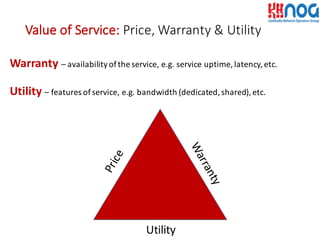
Warranty – availability	
  of	
  the	
  service,	
  e.g.	
  service	
  uptime,	
  latency,	
  etc.
Utility
Utility – features	
  of	
  service,	
  e.g.	
  bandwidth	
  (dedicated,	
  shared),	
  etc.
Value	
  of	
  Service: Price,	
  Warranty	
  &	
  Utility
UtilityUtility
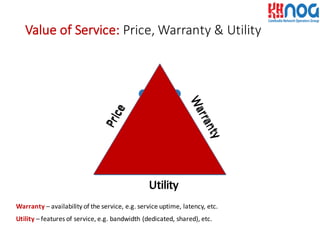
Warranty – availability	
  of	
  the	
  service,	
  e.g.	
  service	
  uptime,	
  latency,	
  etc.
Utility – features	
  of	
  service,	
  e.g.	
  bandwidth	
  (dedicated,	
  shared),	
  etc.
Value	
  of	
  Service: Price,	
  Warranty	
  &	
  Utility
UtilityUtility Utility
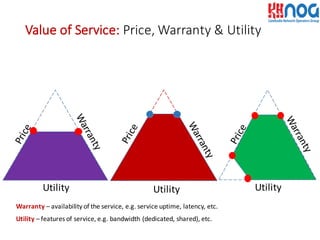
Warranty – availability	
  of	
  the	
  service,	
  e.g.	
  service	
  uptime,	
  latency,	
  etc.
Utility – features	
  of	
  service,	
  e.g.	
  bandwidth	
  (dedicated,	
  shared),	
  etc.
Define	
  a	
  Service	
  Level	
  Agreement	
  (SLA)
How	
  to	
  measure	
  the	
  service?
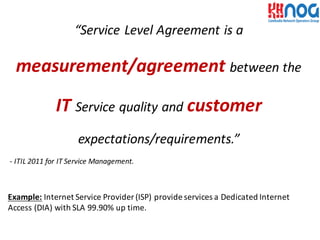
“Service	
  Level	
  Agreement	
  is	
  a	
  
measurement/agreement between	
  the	
  
IT Service	
  quality	
  and	
  customer
expectations/requirements.”
-­‐ ITIL	
  2011	
  for	
  IT	
  Service	
  Management.
Example: Internet	
  Service	
  Provider	
  (ISP)	
  provide	
  services	
  a	
  Dedicated	
  Internet	
  
Access	
  (DIA)	
  with	
  SLA	
  99.90%	
  up	
  time.
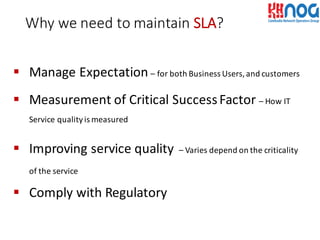
§ Manage	
  Expectation	
  – for	
  both	
  Business	
  Users,	
  and	
  customers
§ Measurement	
  of	
  Critical	
  Success	
  Factor	
  – How	
  IT	
  
Service	
  quality	
  is	
  measured
§ Improving	
  service	
  quality – Varies	
  depend	
  on	
  the	
  criticality	
  
of	
  the	
  service
§ Comply	
  with	
  Regulatory
Why	
  we	
  need	
  to	
  maintain SLA?
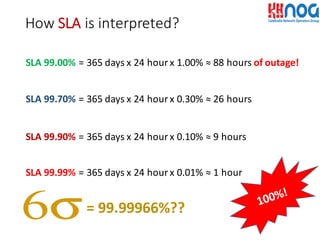
SLA	
  99.00%	
  =	
  365	
  days	
  x	
  24	
  hour	
  x	
  1.00%	
  ≈	
  88	
  hours	
  of	
  outage!
How SLA	
  is	
  interpreted?
SLA	
  99.70%	
  =	
  365	
  days	
  x	
  24	
  hour	
  x	
  0.30%	
  ≈	
  26	
  hours
SLA	
  99.90%	
  =	
  365	
  days	
  x	
  24	
  hour	
  x	
  0.10%	
  ≈	
  9	
  hours
SLA	
  99.99%	
  =	
  365	
  days	
  x	
  24	
  hour	
  x	
  0.01%	
  ≈	
  1	
  hour
=	
  99.99966%??
Maintaining	
  the	
  SLA
Internal
SLA
External
Controls
Internal	
  Factors:
§ High	
  Availability	
  – reduce	
  
Single	
  Point	
  of	
  Failure
External	
  Factors:
§ Powers	
  -­‐ UPS	
  &	
  GenSet
§ Connectivity	
  Provider
Controls:
§ Monitor	
  &	
  Alert
§ Maintenance	
  &	
  Testing
§ Recovery	
  Plan
§ Review
Thank	
  You.

IT Service Level Agreement

  • 1.
    IT  Service  Level  Agreement   (IT  SLA) Presented  by:  Piseth  Long
  • 2.
    To  maintain  the  service  for  the  company First  Thing  First Why  do  a  company  need  a  Network  Operator?
  • 3.
    “Service  is  a  means  of  delivering  value to   customers…without  the  ownership of   specific  costs and risks.” -­‐ ITIL  2011  for  IT  Service  Management. Example: Bank  Service,  Internet  Service,  etc.
  • 4.
    Value  of  Service:Price,  Warranty  &  Utility Warranty – availability  of  the  service,  e.g.  service  uptime,  latency,  etc. Utility Utility – features  of  service,  e.g.  bandwidth  (dedicated,  shared),  etc.
  • 5.
    Value  of  Service:Price,  Warranty  &  Utility UtilityUtility Warranty – availability  of  the  service,  e.g.  service  uptime,  latency,  etc. Utility – features  of  service,  e.g.  bandwidth  (dedicated,  shared),  etc.
  • 6.
    Value  of  Service:Price,  Warranty  &  Utility UtilityUtility Utility Warranty – availability  of  the  service,  e.g.  service  uptime,  latency,  etc. Utility – features  of  service,  e.g.  bandwidth  (dedicated,  shared),  etc.
  • 7.
    Define  a  Service  Level  Agreement  (SLA) How  to  measure  the  service?
  • 8.
    “Service  Level  Agreement  is  a   measurement/agreement between  the   IT Service  quality  and  customer expectations/requirements.” -­‐ ITIL  2011  for  IT  Service  Management. Example: Internet  Service  Provider  (ISP)  provide  services  a  Dedicated  Internet   Access  (DIA)  with  SLA  99.90%  up  time.
  • 9.
    § Manage  Expectation  – for  both  Business  Users,  and  customers § Measurement  of  Critical  Success  Factor  – How  IT   Service  quality  is  measured § Improving  service  quality – Varies  depend  on  the  criticality   of  the  service § Comply  with  Regulatory Why  we  need  to  maintain SLA?
  • 10.
    SLA  99.00%  =  365  days  x  24  hour  x  1.00%  ≈  88  hours  of  outage! How SLA  is  interpreted? SLA  99.70%  =  365  days  x  24  hour  x  0.30%  ≈  26  hours SLA  99.90%  =  365  days  x  24  hour  x  0.10%  ≈  9  hours SLA  99.99%  =  365  days  x  24  hour  x  0.01%  ≈  1  hour =  99.99966%??
  • 11.
    Maintaining  the  SLA Internal SLA External Controls Internal  Factors: § High  Availability  – reduce   Single  Point  of  Failure External  Factors: § Powers  -­‐ UPS  &  GenSet § Connectivity  Provider Controls: § Monitor  &  Alert § Maintenance  &  Testing § Recovery  Plan § Review
  • 12.