ISO 14000
                  ISO -14001


From : Nuwan Darshana
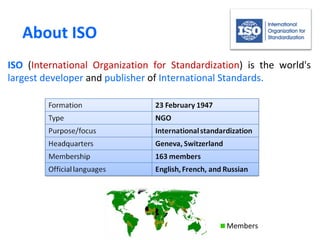
About ISO
ISO (International Organization for Standardization) is the world's
largest developer and publisher of International Standards.


                                                Members
What is ISO 14000?

ISO 14000 is a series of International Standards on
Environmental Management.

It provides a framework for the development of an environmental
management system and the supporting audit program.


The main thrust for its development came as a result of the Rio
Summit on the Environment held in 1992.
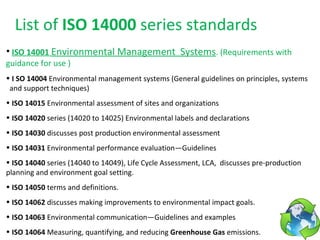
List of ISO 14000 series standards
• ISO 14001 Environmental Management                Systems. (Requirements with
guidance for use )
• I SO 14004 Environmental management systems (General guidelines on principles, systems
 and support techniques)
• ISO 14015 Environmental assessment of sites and organizations
• ISO 14020 series (14020 to 14025) Environmental labels and declarations
• ISO 14030 discusses post production environmental assessment
• ISO 14031 Environmental performance evaluation—Guidelines
• ISO 14040 series (14040 to 14049), Life Cycle Assessment, LCA, discusses pre-production
planning and environment goal setting.
• ISO 14050 terms and definitions.
• ISO 14062 discusses making improvements to environmental impact goals.
• ISO 14063 Environmental communication—Guidelines and examples
• ISO 14064 Measuring, quantifying, and reducing Greenhouse Gas emissions.
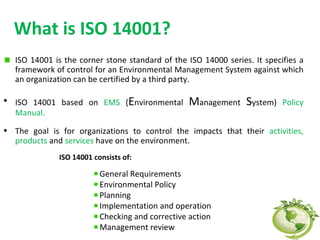
What is ISO 14001?
   ISO 14001 is the corner stone standard of the ISO 14000 series. It specifies a
   framework of control for an Environmental Management System against which
   an organization can be certified by a third party.

• ISO 14001 based on EMS (Environmental           Management System)       Policy
  Manual.
• The goal is for organizations to control the impacts that their activities,
  products and services have on the environment.
              ISO 14001 consists of:

                          General Requirements
                          Environmental Policy
                          Planning
                          Implementation and operation
                          Checking and corrective action
                          Management review
To Whom Do the Standards Apply?
  Standard is Voluntary

  Large and Small Business & Industry anywhere
  in the world

  Products or Service Sectors (Garments ,
  Hospitals, Hotels, etc.)

  Applicable to all types of organizations
  (Private , Public, or governmental )
Why ? ISO 14001 to us

• Implement, Maintain and Improve an Environmental Management
System
• Minimize harmful effects on the environment caused by its activities
• Achieve continual improvement of its environmental performance
  Assure itself of its conformance with its own stated environmental
policy
  Ensure compliance with environmental laws and regulations
• Seek certification of its environmental management system by an
external third party organization
• Marketing Tool: Shows customers, shareholders, vendors, etc. that
we are a “Good Corporate Citizen”
• Increase access to new customers and business partners
• Demonstrate an innovative and forward thinking approach to
customers and prospective employees
• Better manage our environmental risks, now and in the future
  Enhance our reputation
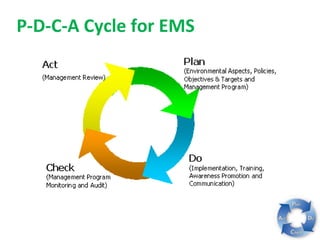
P-D-C-A Cycle for EMS
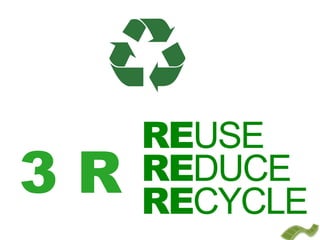
3R
We must do - Today and Everyday

 – We must REUSE, REDUCE, RECYCLE

 – We must REUSE our old glass bottles

 – We must REDUCE the use of paper

 – We must RECYCLE the newspaper

 – We must REUSE the seeds and replant

 – We must REDUCE the plastic we use

 – We must RECYCLE things we can’t reuse
You can - RE USE
 Newspaper, Magazines as wrapping paper.

 Cut used paper as a message pad.

 Old Curtains, Sheets as rags for cleaning purpose.

 Never throw away an old book, donate it or give it someone.

 If you receive a gift in a gift bag, save it and reuse that bag.

 Seeds from Fruits and Vegetables to replant.

 Old clothes donated to charity.

 Use a re useable bags for your grocery shopping.
You can - REDUCE
Re duce the amount of things you throw away by seeing if you can Re use them first.

When making photo copies use the double sided printing.

1-2 minutes less in your shower time.

Use portion controlled scathes for sauce, sugar, milk.

Read online and cut down on buying newspapers.

Use e-mails for internal communication to re duce paper.

Have your own home garden and re duce your buying.

Use SMS to re duce your mobile bill.

Turn off the light, computer A /C before leaving your workplace.

Think before you print.
How to save Energy at Home ?
Do replace a burnt-out light bulb with a new compact fluorescent bulb (CFL)
Switch off the lights of the rooms you are not using.
Charge your Cell phones through USB.
Use as much Sunlight as possible.
Use Solar Lamp for Studies.
Don’t spoil water at home.
Efficient usage of Electric Cooking System.
Don't leave the refrigerator door open
Do turn off dripping faucets
Don't take a long bath - take a short shower instead.
Do close the curtains during hot summer days to block the sun.
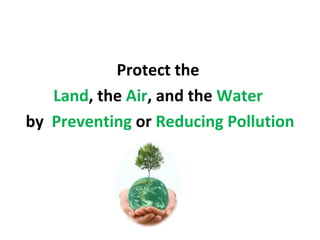
Protect the
   Land, the Air, and the Water
by Preventing or Reducing Pollution
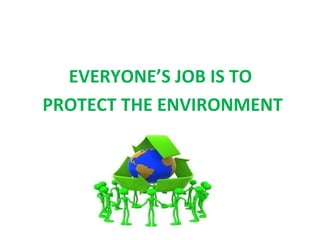
EVERYONE’S JOB IS TO
PROTECT THE ENVIRONMENT

ISO 14001

  • 1.
    ISO 14000 ISO -14001 From : Nuwan Darshana
  • 2.
    About ISO ISO (InternationalOrganization for Standardization) is the world's largest developer and publisher of International Standards. Members
  • 3.
    What is ISO14000? ISO 14000 is a series of International Standards on Environmental Management. It provides a framework for the development of an environmental management system and the supporting audit program. The main thrust for its development came as a result of the Rio Summit on the Environment held in 1992.
  • 4.
    List of ISO14000 series standards • ISO 14001 Environmental Management Systems. (Requirements with guidance for use ) • I SO 14004 Environmental management systems (General guidelines on principles, systems and support techniques) • ISO 14015 Environmental assessment of sites and organizations • ISO 14020 series (14020 to 14025) Environmental labels and declarations • ISO 14030 discusses post production environmental assessment • ISO 14031 Environmental performance evaluation—Guidelines • ISO 14040 series (14040 to 14049), Life Cycle Assessment, LCA, discusses pre-production planning and environment goal setting. • ISO 14050 terms and definitions. • ISO 14062 discusses making improvements to environmental impact goals. • ISO 14063 Environmental communication—Guidelines and examples • ISO 14064 Measuring, quantifying, and reducing Greenhouse Gas emissions.
  • 5.
    What is ISO14001? ISO 14001 is the corner stone standard of the ISO 14000 series. It specifies a framework of control for an Environmental Management System against which an organization can be certified by a third party. • ISO 14001 based on EMS (Environmental Management System) Policy Manual. • The goal is for organizations to control the impacts that their activities, products and services have on the environment. ISO 14001 consists of: General Requirements Environmental Policy Planning Implementation and operation Checking and corrective action Management review
  • 6.
    To Whom Dothe Standards Apply? Standard is Voluntary Large and Small Business & Industry anywhere in the world Products or Service Sectors (Garments , Hospitals, Hotels, etc.) Applicable to all types of organizations (Private , Public, or governmental )
  • 7.
    Why ? ISO14001 to us • Implement, Maintain and Improve an Environmental Management System • Minimize harmful effects on the environment caused by its activities • Achieve continual improvement of its environmental performance Assure itself of its conformance with its own stated environmental policy Ensure compliance with environmental laws and regulations
  • 8.
    • Seek certificationof its environmental management system by an external third party organization • Marketing Tool: Shows customers, shareholders, vendors, etc. that we are a “Good Corporate Citizen” • Increase access to new customers and business partners • Demonstrate an innovative and forward thinking approach to customers and prospective employees • Better manage our environmental risks, now and in the future Enhance our reputation
  • 9.
  • 10.
  • 11.
    We must do- Today and Everyday – We must REUSE, REDUCE, RECYCLE – We must REUSE our old glass bottles – We must REDUCE the use of paper – We must RECYCLE the newspaper – We must REUSE the seeds and replant – We must REDUCE the plastic we use – We must RECYCLE things we can’t reuse
  • 12.
    You can -RE USE Newspaper, Magazines as wrapping paper. Cut used paper as a message pad. Old Curtains, Sheets as rags for cleaning purpose. Never throw away an old book, donate it or give it someone. If you receive a gift in a gift bag, save it and reuse that bag. Seeds from Fruits and Vegetables to replant. Old clothes donated to charity. Use a re useable bags for your grocery shopping.
  • 13.
    You can -REDUCE Re duce the amount of things you throw away by seeing if you can Re use them first. When making photo copies use the double sided printing. 1-2 minutes less in your shower time. Use portion controlled scathes for sauce, sugar, milk. Read online and cut down on buying newspapers. Use e-mails for internal communication to re duce paper. Have your own home garden and re duce your buying. Use SMS to re duce your mobile bill. Turn off the light, computer A /C before leaving your workplace. Think before you print.
  • 14.
    How to saveEnergy at Home ? Do replace a burnt-out light bulb with a new compact fluorescent bulb (CFL) Switch off the lights of the rooms you are not using. Charge your Cell phones through USB. Use as much Sunlight as possible. Use Solar Lamp for Studies. Don’t spoil water at home. Efficient usage of Electric Cooking System. Don't leave the refrigerator door open Do turn off dripping faucets Don't take a long bath - take a short shower instead. Do close the curtains during hot summer days to block the sun.
  • 16.
    Protect the Land, the Air, and the Water by Preventing or Reducing Pollution
  • 17.
    EVERYONE’S JOB ISTO PROTECT THE ENVIRONMENT