ISO 14000 bears the potential to revolutionize the environmental
industry, which historically operated on "command AND control," by
proposing to now operate it on a "self-regulatory" basis. An overview
of the standard follows.
“ISO 14000 is the standards for
organizations committed to taking
care of environment while taking care
of their customers.”
"ISO 14000 series of environmental
management system standards“ collectively
represent a series of generic AND voluntary
environment-related documents, released
by ISO, Geneva.
These documents fall into two categories:
 Guidance (descriptive)
 Specification (prescriptive)
•Organizational Evaluation

•Environmental Management Systems (EMS)
•Environmental Auditing (EA)
•Environmental Performance Evaluation (EPE)

•Product Evaluation

•Environmental Labeling (EL)
•Life-Cycle Assessment (LCA)
•Environmental Aspects in Product Standards (EAPS)

•Terms AND Definitions
Requirements

Technical

Environmental

Customers

Process

Air

Legislation

Storage

Water

Site/Plant

Permits

Transfer

Waste

Department

Banks/Insurance Transport

Soil & Groundwater

Installation/Equip
ment

Complaints

Energy
Consumption

Subcontractor/Su
pplier

Utilities

Corporate &
Product
Policy Guidelines

Nuisance
External Safety

Level




ISO 14050, a terms AND definitions document, harmonizes
the language among all the ISO 14000 series documents.
It is ensured that as much as language as possible coincides
with that in the ISO 9000 quality standards.
Market Drivers


Europe requires ISO 14000 as a part of doing business.



Agencies (eg. USDoD, USDoE) have hinted requiring ISO 14000 a
prequalification criterion for the award of contracts.



Regulatory agencies (viz., USEPA) considering reducing reporting
requirements for certified companies



Community awareness, demand for "clean AND green" image AND
rapport



Customer beginning to screen suppliers by environmental
performance
Operational Excellence Drivers


Extends proven management system's approach to environmental
management



Proactively identifying environmental exposures ("aspects") drives pollution
prevention



"Pollution prevention pays"



"What gets measured, gets done"



Makes environmental protection integral to all employee job functions



"Self-regulatory" privileges induces empowerment AND implants
responsibilities



Provides continually improving environmental management programme
Compliance Drivers


Provides a management system approach to ensure compliance



Violations can be reduced with preventive system



Less scrutiny AND improved relationship with regulators



Easier permitting for objects



Multiple auditing requirements eliminated



Easier clearances for new AND expansion projects



Future liabilities reduced with a management system's approach



Facilities required environmental disclosure
Honeywell Inc









Honeywell has been aggressive in their efforts to
improve environmental performance. These
efforts include the following areas:

Reducing environmental releases
Managing Wastes
Eliminating Ozone-Depleting Chemicals
Saving energy
Green Lights Program
Energy Star Buildings Program


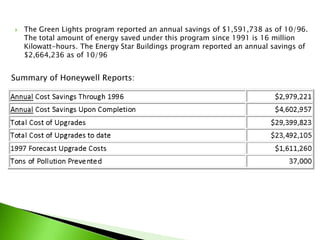
The Green Lights program reported an annual savings of $1,591,738 as of 10/96.
The total amount of energy saved under this program since 1991 is 16 million
Kilowatt-hours. The Energy Star Buildings program reported an annual savings of
$2,664,236 as of 10/96

Summary of Honeywell Reports:
There is too much at stake for businesses not opting to evaluate
the ISO 14000 standard AND its impacts in details. It is becoming
obvious that the organizations that are staking the clearest claims
to a successful future are those that now see the natural
environment as their most indispensable supplier AND their most
valued customer. ISO 14000 will efficiently AND systematically
assist you in doing so.
ISO 14000 Standards

ISO 14000 Standards

  • 2.
    ISO 14000 bearsthe potential to revolutionize the environmental industry, which historically operated on "command AND control," by proposing to now operate it on a "self-regulatory" basis. An overview of the standard follows.
  • 3.
    “ISO 14000 isthe standards for organizations committed to taking care of environment while taking care of their customers.”
  • 4.
    "ISO 14000 seriesof environmental management system standards“ collectively represent a series of generic AND voluntary environment-related documents, released by ISO, Geneva. These documents fall into two categories:  Guidance (descriptive)  Specification (prescriptive)
  • 5.
    •Organizational Evaluation •Environmental ManagementSystems (EMS) •Environmental Auditing (EA) •Environmental Performance Evaluation (EPE) •Product Evaluation •Environmental Labeling (EL) •Life-Cycle Assessment (LCA) •Environmental Aspects in Product Standards (EAPS) •Terms AND Definitions
  • 12.
    Requirements Technical Environmental Customers Process Air Legislation Storage Water Site/Plant Permits Transfer Waste Department Banks/Insurance Transport Soil &Groundwater Installation/Equip ment Complaints Energy Consumption Subcontractor/Su pplier Utilities Corporate & Product Policy Guidelines Nuisance External Safety Level
  • 13.
      ISO 14050, aterms AND definitions document, harmonizes the language among all the ISO 14000 series documents. It is ensured that as much as language as possible coincides with that in the ISO 9000 quality standards.
  • 14.
    Market Drivers  Europe requiresISO 14000 as a part of doing business.  Agencies (eg. USDoD, USDoE) have hinted requiring ISO 14000 a prequalification criterion for the award of contracts.  Regulatory agencies (viz., USEPA) considering reducing reporting requirements for certified companies  Community awareness, demand for "clean AND green" image AND rapport  Customer beginning to screen suppliers by environmental performance
  • 15.
    Operational Excellence Drivers  Extendsproven management system's approach to environmental management  Proactively identifying environmental exposures ("aspects") drives pollution prevention  "Pollution prevention pays"  "What gets measured, gets done"  Makes environmental protection integral to all employee job functions  "Self-regulatory" privileges induces empowerment AND implants responsibilities  Provides continually improving environmental management programme
  • 16.
    Compliance Drivers  Provides amanagement system approach to ensure compliance  Violations can be reduced with preventive system  Less scrutiny AND improved relationship with regulators  Easier permitting for objects  Multiple auditing requirements eliminated  Easier clearances for new AND expansion projects  Future liabilities reduced with a management system's approach  Facilities required environmental disclosure
  • 18.
    Honeywell Inc        Honeywell hasbeen aggressive in their efforts to improve environmental performance. These efforts include the following areas: Reducing environmental releases Managing Wastes Eliminating Ozone-Depleting Chemicals Saving energy Green Lights Program Energy Star Buildings Program
  • 19.
     The Green Lightsprogram reported an annual savings of $1,591,738 as of 10/96. The total amount of energy saved under this program since 1991 is 16 million Kilowatt-hours. The Energy Star Buildings program reported an annual savings of $2,664,236 as of 10/96 Summary of Honeywell Reports:
  • 20.
    There is toomuch at stake for businesses not opting to evaluate the ISO 14000 standard AND its impacts in details. It is becoming obvious that the organizations that are staking the clearest claims to a successful future are those that now see the natural environment as their most indispensable supplier AND their most valued customer. ISO 14000 will efficiently AND systematically assist you in doing so.