FOOD
HYGIENE
Understanding Food Hygiene
Food hygiene is more than cleanliness ......

1. Protecting food from risk of contamination, including harmful
bacteria, poison and other foreign bodies.
2. Preventing any bacteria present multiplying to an extent which
would result in the illness of consumers or the early spoilage of
the food.

3. Destroying any harmful bacteria in the food by thorough cooking
or processing.
4. Discarding unfit or contaminated food.
The cost of poor food hygiene
1.
2.
3.
4.
5.
6.

Food poisoning outbreaks and sometimes death
Food contamination, customer complaints and brand image
Pest infestations
Waste food due to spoilage
The closure of food premises
Fines and costs of legal action taken because of contraventions in
hygiene legislation, or because of the sale of unfit or
unsatisfactory food.
7. Civil action taken by food poisoning suffers
8. Loss of production and food which has to be destroyed
9. Decontamination cleaning and replacement of damaged
equipment.
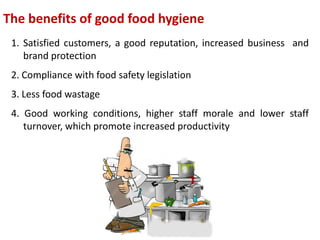
The benefits of good food hygiene
1. Satisfied customers, a good reputation, increased business and
brand protection
2. Compliance with food safety legislation
3. Less food wastage
4. Good working conditions, higher staff morale and lower staff
turnover, which promote increased productivity
Bacteria
Bacteria are microscopic organisms, often referred to as germs, which
are found everywhere, including on and in man, on food ,in water,
soil and air.

Most Bacteria are harmless and some essential.

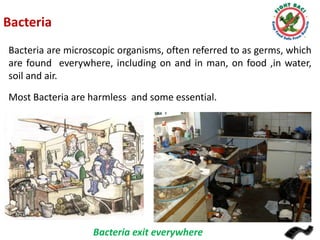
Bacteria exit everywhere
Requirements for bacterial growth
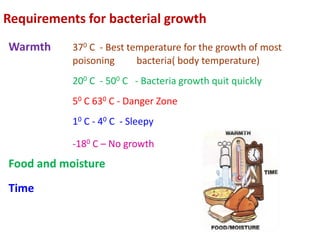
Warmth

370 C - Best temperature for the growth of most
poisoning
bacteria( body temperature)

200 C - 500 C - Bacteria growth quit quickly
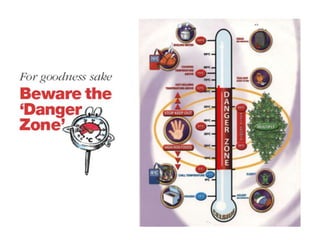
50 C 630 C - Danger Zone
10 C - 40 C - Sleepy
-180 C – No growth

Food and moisture

Time
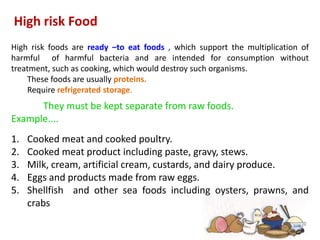
High risk Food
High risk foods are ready –to eat foods , which support the multiplication of
harmful of harmful bacteria and are intended for consumption without
treatment, such as cooking, which would destroy such organisms.
These foods are usually proteins.
Require refrigerated storage.

They must be kept separate from raw foods.
Example....
1.
2.
3.
4.
5.

Cooked meat and cooked poultry.
Cooked meat product including paste, gravy, stews.
Milk, cream, artificial cream, custards, and dairy produce.
Eggs and products made from raw eggs.
Shellfish and other sea foods including oysters, prawns, and
crabs
Ready – to – eat raw food

Raw foods such as lettuce or fruit may be contaminated with low
dose pathogens and must always be double washed in running
water before eating.
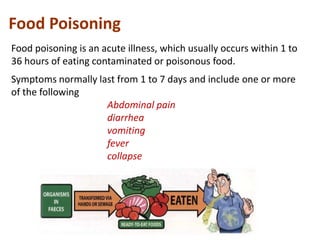
Food Poisoning
Food poisoning is an acute illness, which usually occurs within 1 to
36 hours of eating contaminated or poisonous food.

Symptoms normally last from 1 to 7 days and include one or more
of the following
Abdominal pain
diarrhea
vomiting
fever
collapse
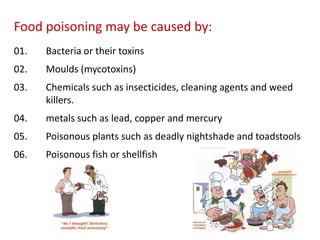
Food poisoning may be caused by:
01.

Bacteria or their toxins

02.

Moulds (mycotoxins)

03.

Chemicals such as insecticides, cleaning agents and weed
killers.

04.

metals such as lead, copper and mercury

05.

Poisonous plants such as deadly nightshade and toadstools

06.

Poisonous fish or shellfish
The Prevention of food poisoning
Food poisoning rarely occurs of a single isolated mistake. Food
poisoning results from management failing to identify hazards and
/or failing to control these hazards.

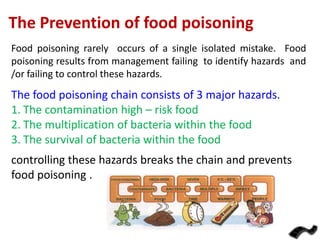
The food poisoning chain consists of 3 major hazards.
1. The contamination high – risk food
2. The multiplication of bacteria within the food
3. The survival of bacteria within the food
controlling these hazards breaks the chain and prevents
food poisoning .
How to Protected food from contamination
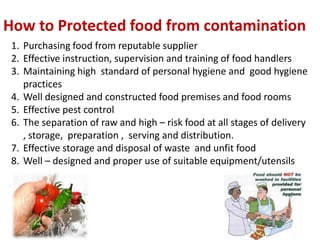
1. Purchasing food from reputable supplier
2. Effective instruction, supervision and training of food handlers
3. Maintaining high standard of personal hygiene and good hygiene
practices
4. Well designed and constructed food premises and food rooms
5. Effective pest control
6. The separation of raw and high – risk food at all stages of delivery
, storage, preparation , serving and distribution.
7. Effective storage and disposal of waste and unfit food
8. Well – designed and proper use of suitable equipment/utensils
How to prevent bacteria within food from multiplying
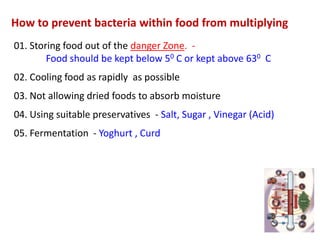
01. Storing food out of the danger Zone. Food should be kept below 50 C or kept above 630 C

02. Cooling food as rapidly as possible
03. Not allowing dried foods to absorb moisture
04. Using suitable preservatives - Salt, Sugar , Vinegar (Acid)

05. Fermentation - Yoghurt , Curd
How to destroy bacteria within food
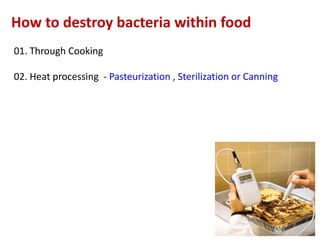
01. Through Cooking

02. Heat processing - Pasteurization , Sterilization or Canning
Food spoilage and preservation
Food spoilage
Spoilage commences in food as soon as it is harvested , taken from
the sea or slaughtered.
Spoilage results from the action of
Bacteria
Moulds
Yeasts
Poor Hygiene Practices
Poor temperature control
Unsuitable packing
Rough handling
result in damage and accelerates spoilage
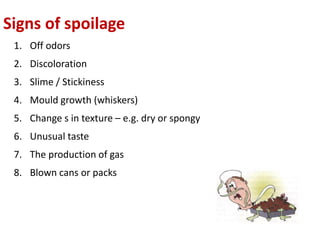
Signs of spoilage
1. Off odors
2. Discoloration

3. Slime / Stickiness
4. Mould growth (whiskers)
5. Change s in texture – e.g. dry or spongy

6. Unusual taste
7. The production of gas
8. Blown cans or packs
Food preservation
Preservation is the treatment of food prevent or delay spoilage and
destroy or inhibit the growth of pathogenic organism.

Main ways to preserving foods
1. High temperature , pasteurization ,ultra –heat treatment
, sterilization , cooking , canning and bottling
2. Low temperatures , refrigeration and freezing
3. Dehydration (the removal of moisture) - e.g. Soup, Vegetables
and Meet
4. Chemicals – e.g. salt, sugar, and Sulphur dioxide
contd/.
5. Vacuum packing - e.g. Fish & Meet
6. Irradiation - e.g. Spices
7. Smoking fish and meet
Packaging is very important to extend the life of preserved foods.
e.g. – cans, tetra packs , bottles, and pouches
Personal Hygiene
Hands and Skins
(Food handlers must wash their hands especially)

1. After visiting the toilet
2. On entering the food room, after a break and before handling any food.
3. After putting on or changing a dressing
4. After dealing with an ill customer or a baby’s nappy
5. After handling raw food Including eggs, and before handling ready – to eat food.
6. After cleaning up animal faces or handling boxes contaminated by bird dropping.
7. After combing or touching the hair, face, nose, mouth or ears

8. After handling waste food.
9. After cleaning , or handling dirty cloths, crockery .etc.
10. After handling external packaging, flowers or money.
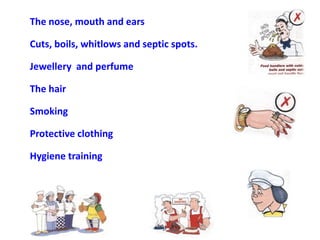
The nose, mouth and ears
Cuts, boils, whitlows and septic spots.
Jewellery and perfume
The hair
Smoking

Protective clothing
Hygiene training
Food hygiene

Food hygiene

  • 1.
  • 2.
    Understanding Food Hygiene Foodhygiene is more than cleanliness ...... 1. Protecting food from risk of contamination, including harmful bacteria, poison and other foreign bodies. 2. Preventing any bacteria present multiplying to an extent which would result in the illness of consumers or the early spoilage of the food. 3. Destroying any harmful bacteria in the food by thorough cooking or processing. 4. Discarding unfit or contaminated food.
  • 3.
    The cost ofpoor food hygiene 1. 2. 3. 4. 5. 6. Food poisoning outbreaks and sometimes death Food contamination, customer complaints and brand image Pest infestations Waste food due to spoilage The closure of food premises Fines and costs of legal action taken because of contraventions in hygiene legislation, or because of the sale of unfit or unsatisfactory food. 7. Civil action taken by food poisoning suffers 8. Loss of production and food which has to be destroyed 9. Decontamination cleaning and replacement of damaged equipment.
  • 4.
    The benefits ofgood food hygiene 1. Satisfied customers, a good reputation, increased business and brand protection 2. Compliance with food safety legislation 3. Less food wastage 4. Good working conditions, higher staff morale and lower staff turnover, which promote increased productivity
  • 5.
    Bacteria Bacteria are microscopicorganisms, often referred to as germs, which are found everywhere, including on and in man, on food ,in water, soil and air. Most Bacteria are harmless and some essential. Bacteria exit everywhere
  • 6.
    Requirements for bacterialgrowth Warmth 370 C - Best temperature for the growth of most poisoning bacteria( body temperature) 200 C - 500 C - Bacteria growth quit quickly 50 C 630 C - Danger Zone 10 C - 40 C - Sleepy -180 C – No growth Food and moisture Time
  • 8.
    High risk Food Highrisk foods are ready –to eat foods , which support the multiplication of harmful of harmful bacteria and are intended for consumption without treatment, such as cooking, which would destroy such organisms. These foods are usually proteins. Require refrigerated storage. They must be kept separate from raw foods. Example.... 1. 2. 3. 4. 5. Cooked meat and cooked poultry. Cooked meat product including paste, gravy, stews. Milk, cream, artificial cream, custards, and dairy produce. Eggs and products made from raw eggs. Shellfish and other sea foods including oysters, prawns, and crabs
  • 9.
    Ready – to– eat raw food Raw foods such as lettuce or fruit may be contaminated with low dose pathogens and must always be double washed in running water before eating.
  • 10.
    Food Poisoning Food poisoningis an acute illness, which usually occurs within 1 to 36 hours of eating contaminated or poisonous food. Symptoms normally last from 1 to 7 days and include one or more of the following Abdominal pain diarrhea vomiting fever collapse
  • 11.
    Food poisoning maybe caused by: 01. Bacteria or their toxins 02. Moulds (mycotoxins) 03. Chemicals such as insecticides, cleaning agents and weed killers. 04. metals such as lead, copper and mercury 05. Poisonous plants such as deadly nightshade and toadstools 06. Poisonous fish or shellfish
  • 12.
    The Prevention offood poisoning Food poisoning rarely occurs of a single isolated mistake. Food poisoning results from management failing to identify hazards and /or failing to control these hazards. The food poisoning chain consists of 3 major hazards. 1. The contamination high – risk food 2. The multiplication of bacteria within the food 3. The survival of bacteria within the food controlling these hazards breaks the chain and prevents food poisoning .
  • 13.
    How to Protectedfood from contamination 1. Purchasing food from reputable supplier 2. Effective instruction, supervision and training of food handlers 3. Maintaining high standard of personal hygiene and good hygiene practices 4. Well designed and constructed food premises and food rooms 5. Effective pest control 6. The separation of raw and high – risk food at all stages of delivery , storage, preparation , serving and distribution. 7. Effective storage and disposal of waste and unfit food 8. Well – designed and proper use of suitable equipment/utensils
  • 14.
    How to preventbacteria within food from multiplying 01. Storing food out of the danger Zone. Food should be kept below 50 C or kept above 630 C 02. Cooling food as rapidly as possible 03. Not allowing dried foods to absorb moisture 04. Using suitable preservatives - Salt, Sugar , Vinegar (Acid) 05. Fermentation - Yoghurt , Curd
  • 15.
    How to destroybacteria within food 01. Through Cooking 02. Heat processing - Pasteurization , Sterilization or Canning
  • 16.
    Food spoilage andpreservation Food spoilage Spoilage commences in food as soon as it is harvested , taken from the sea or slaughtered. Spoilage results from the action of Bacteria Moulds Yeasts Poor Hygiene Practices Poor temperature control Unsuitable packing Rough handling result in damage and accelerates spoilage
  • 17.
    Signs of spoilage 1.Off odors 2. Discoloration 3. Slime / Stickiness 4. Mould growth (whiskers) 5. Change s in texture – e.g. dry or spongy 6. Unusual taste 7. The production of gas 8. Blown cans or packs
  • 18.
    Food preservation Preservation isthe treatment of food prevent or delay spoilage and destroy or inhibit the growth of pathogenic organism. Main ways to preserving foods 1. High temperature , pasteurization ,ultra –heat treatment , sterilization , cooking , canning and bottling 2. Low temperatures , refrigeration and freezing 3. Dehydration (the removal of moisture) - e.g. Soup, Vegetables and Meet 4. Chemicals – e.g. salt, sugar, and Sulphur dioxide contd/.
  • 19.
    5. Vacuum packing- e.g. Fish & Meet 6. Irradiation - e.g. Spices 7. Smoking fish and meet Packaging is very important to extend the life of preserved foods. e.g. – cans, tetra packs , bottles, and pouches
  • 20.
    Personal Hygiene Hands andSkins (Food handlers must wash their hands especially) 1. After visiting the toilet 2. On entering the food room, after a break and before handling any food. 3. After putting on or changing a dressing 4. After dealing with an ill customer or a baby’s nappy 5. After handling raw food Including eggs, and before handling ready – to eat food. 6. After cleaning up animal faces or handling boxes contaminated by bird dropping. 7. After combing or touching the hair, face, nose, mouth or ears 8. After handling waste food. 9. After cleaning , or handling dirty cloths, crockery .etc. 10. After handling external packaging, flowers or money.
  • 21.
    The nose, mouthand ears Cuts, boils, whitlows and septic spots. Jewellery and perfume The hair Smoking Protective clothing Hygiene training