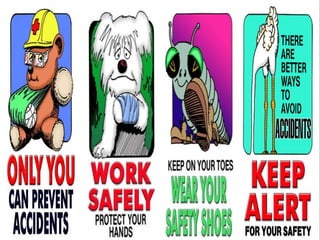
Why is working
safely important?
Because,
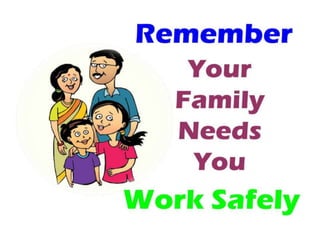
Somebody is waiting for you at
Home.
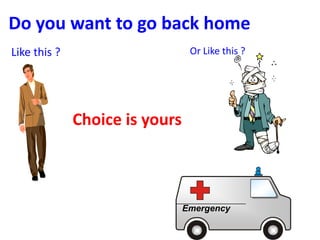
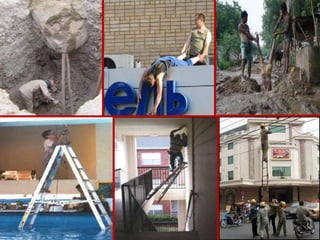
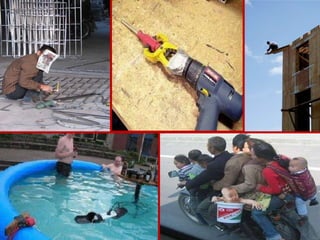
Do you want to go back home
Like this ? Or Like this ?
Choice is yours
Emergency
Your Safety is a matter of
CHOICE not CHANCE
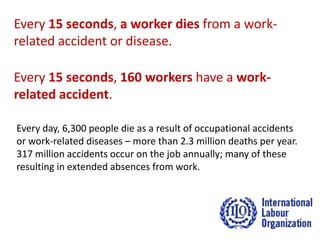
Every 15 seconds, a worker dies from a work-
related accident or disease.
Every 15 seconds, 160 workers have a work-
related accident.
Every day, 6,300 people die as a result of occupational accidents
or work-related diseases – more than 2.3 million deaths per year.
317 million accidents occur on the job annually; many of these
resulting in extended absences from work.
SAFETY
starts from
ME
ACCIDENT
An unplanned, uncontrolled event which
causes or has the potential to cause
injury/death to any living being OR causes
or has the potential to cause damages to
any property / asset.
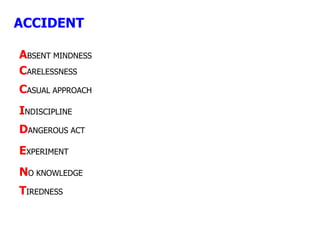
ACCIDENT
ABSENT MINDNESS
CARELESSNESS
CASUAL APPROACH
INDISCIPLINE
DANGEROUS ACT
EXPERIMENT
NO KNOWLEDGE
TIREDNESS
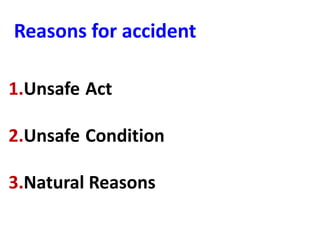
Reasons for accident
1.Unsafe Act
2.Unsafe Condition
3.Natural Reasons
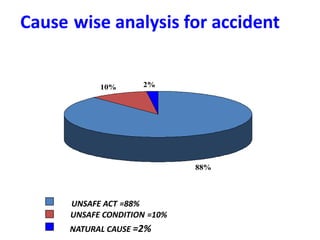
88%
10% 2%
UNSAFE ACT =88%
UNSAFE CONDITION =10%
NATURAL CAUSE =2%
Cause wise analysis for accident
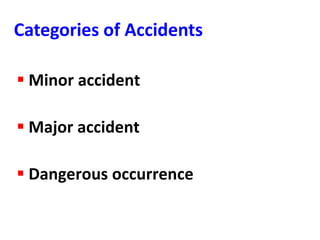
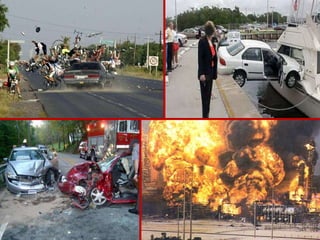
 Minor accident
 Major accident
 Dangerous occurrence
Categories of Accidents
Minor accident
 There is injury or illness to operator
 Immediate medical attention Required
 With or without loss to property
 where the operator returns to duty immediately.
Major accident
 It includes death, loss of limb may have loss of
property or production.
 where the operator takes leave beyond 48 hours
Dangerous occurrence
 which do not cause death or injury but loss to
property or production to a huge extent
(e.g.., Bursting of boilers, Collapse of buildings )
 Except the minor accidents others must be
reported to the relevant Govt. Authorities like
Factory Inspector / Local authority.
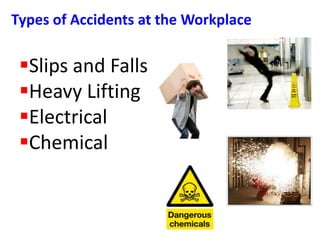
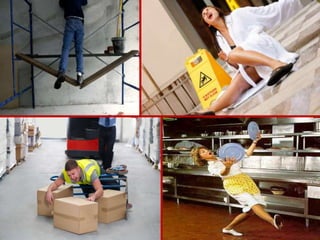
Types of Accidents at the Workplace
Slips and Falls
Heavy Lifting
Electrical
Chemical
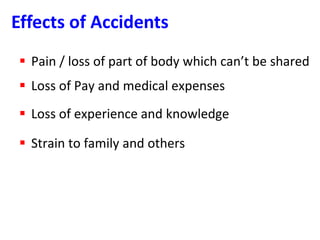
 Pain / loss of part of body which can’t be shared
 Loss of Pay and medical expenses
 Loss of experience and knowledge
 Strain to family and others
Effects of Accidents
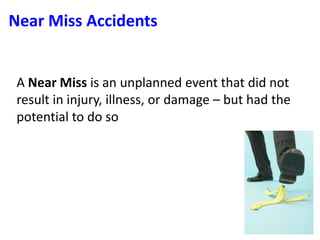
A Near Miss is an unplanned event that did not
result in injury, illness, or damage – but had the
potential to do so
Near Miss Accidents
What is Safety?
Safety is prevention of accidents
which results personal injury and
property damage.
SAFETY Means …
SELF DISCIPLINE
AWARENESS OF DANGER
FOLLOW THE RULES
EDUCATION
TIMELY ACTION
YOU
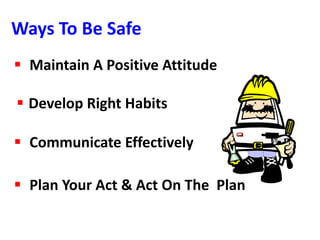
Ways To Be Safe
 Develop Right Habits
 Communicate Effectively
 Plan Your Act & Act On The Plan
 Maintain A Positive Attitude
 Prioritize your work
 Do not assume
 Never take anything for granted
 Respond, don’t react
 If you don’t know, ask.
Things that can make your life safer
PEOPLE SEE WHAT THEY
WANT TO SEE
ALWAYS LOOK FOR UNSAFE
CONDTIONS
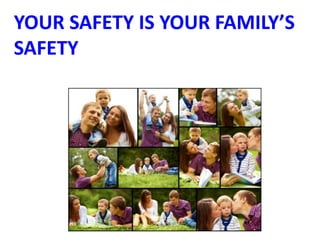
YOUR SAFETY IS YOUR FAMILY’S
SAFETY
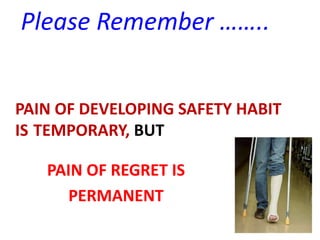
Please Remember ……..
PAIN OF DEVELOPING SAFETY HABIT
IS TEMPORARY, BUT
PAIN OF REGRET IS
PERMANENT
Safety @ Work
Safety @ Work
Safety @ Work
Safety @ Work

Safety @ Work

  • 2.
  • 3.
  • 4.
    Do you wantto go back home Like this ? Or Like this ? Choice is yours Emergency
  • 5.
    Your Safety isa matter of CHOICE not CHANCE
  • 6.
    Every 15 seconds,a worker dies from a work- related accident or disease. Every 15 seconds, 160 workers have a work- related accident. Every day, 6,300 people die as a result of occupational accidents or work-related diseases – more than 2.3 million deaths per year. 317 million accidents occur on the job annually; many of these resulting in extended absences from work.
  • 7.
  • 8.
    ACCIDENT An unplanned, uncontrolledevent which causes or has the potential to cause injury/death to any living being OR causes or has the potential to cause damages to any property / asset.
  • 9.
  • 10.
    Reasons for accident 1.UnsafeAct 2.Unsafe Condition 3.Natural Reasons
  • 11.
    88% 10% 2% UNSAFE ACT=88% UNSAFE CONDITION =10% NATURAL CAUSE =2% Cause wise analysis for accident
  • 12.
     Minor accident Major accident  Dangerous occurrence Categories of Accidents
  • 13.
    Minor accident  Thereis injury or illness to operator  Immediate medical attention Required  With or without loss to property  where the operator returns to duty immediately.
  • 14.
    Major accident  Itincludes death, loss of limb may have loss of property or production.  where the operator takes leave beyond 48 hours
  • 15.
    Dangerous occurrence  whichdo not cause death or injury but loss to property or production to a huge extent (e.g.., Bursting of boilers, Collapse of buildings )  Except the minor accidents others must be reported to the relevant Govt. Authorities like Factory Inspector / Local authority.
  • 16.
    Types of Accidentsat the Workplace Slips and Falls Heavy Lifting Electrical Chemical
  • 17.
     Pain /loss of part of body which can’t be shared  Loss of Pay and medical expenses  Loss of experience and knowledge  Strain to family and others Effects of Accidents
  • 18.
    A Near Missis an unplanned event that did not result in injury, illness, or damage – but had the potential to do so Near Miss Accidents
  • 21.
    What is Safety? Safetyis prevention of accidents which results personal injury and property damage.
  • 22.
    SAFETY Means … SELFDISCIPLINE AWARENESS OF DANGER FOLLOW THE RULES EDUCATION TIMELY ACTION YOU
  • 23.
    Ways To BeSafe  Develop Right Habits  Communicate Effectively  Plan Your Act & Act On The Plan  Maintain A Positive Attitude
  • 24.
     Prioritize yourwork  Do not assume  Never take anything for granted  Respond, don’t react  If you don’t know, ask. Things that can make your life safer
  • 25.
    PEOPLE SEE WHATTHEY WANT TO SEE ALWAYS LOOK FOR UNSAFE CONDTIONS
  • 26.
    YOUR SAFETY ISYOUR FAMILY’S SAFETY
  • 27.
    Please Remember …….. PAINOF DEVELOPING SAFETY HABIT IS TEMPORARY, BUT PAIN OF REGRET IS PERMANENT