ENVIRONMENTAL CHALLENGES FOR
NATURAL RESOURCE BASED INDUSTRIES


                       DR. STEFANOS FOTIOU

 REGIONAL COORDINATOR (ASIA PACIFIC): RESOURCE EFFICIENCY
              UNITED NATIONS ENVIRONMENT PROGRAMME
CONTENTS
           The need for change

     Negative Impacts and Positive
                Benefits
    Main Environmental Challenges

              UNEP’s work
THE STATE OF OUR PLANET

20% of the world’s population consumes
   80% of its resources.
If everyone consumed at this level , then
by 2050 (that is to say tomorrow!)
    it would take four extra planets to
      provide the necessary resources
THE INDUSTRY’S RESPONSIBILITIES

The environment has become a
 major factor in corporate decision
 making.
Environmental issues are more and
 more associated with virtually all
 aspects of an organisation's
 management, from financing to
 production, from marketing to
 corporate reporting.
THE INDUSTRY’S RESPONSIBILITIES

In this scenario, it is all the more
  important to have a systematic
  and integrated approach to
  questions such as
 How to manage environmental issues throughout the
  company's activities?
 How to consistently and visibly improve a company's
  environmental performance?
HOW DO WE RESPOND

Assessment
Principles
Action
Report
IDENTIFYING THE NEGATIVE IMPACTS

The main impacts on environmental
 sustainability come from
 industry’s:
 Energy use and transportation
 Land use
 Water use
 Emissions
 Generation of wastes (and especially hazardous waste)
IDENTIFYING THE POSITIVE EFFECTS

The main contribution towards
 sustainability is based on the
 industry’s potential ability to:
 Stimulate development and employment creation in
  disadvantaged, more remote or/and less-developed
  regions
 Generate local income
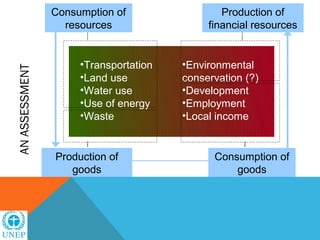
Consumption of                 Production of
                  resources                 financial resources


                     •Transportation   •Environmental
AN ASSESSMENT


                     •Land use         conservation (?)
                     •Water use        •Development
                     •Use of energy    •Employment
                     •Waste            •Local income


                Production of                Consumption of
                   goods                         goods
ENVIRONMENTAL PRINCIPLES
THE UN GLOBAL COMPACT
Support a precautionary approach
 to environmental challenges
Undertake initiatives to promote
 greater environmental
 responsibility
Encourage the development and
 diffusion of environmentally
 friendly technologies
PRECAUTIONARY APPROACH TO ENVIRONMENTAL
CHALLENGES
We need evident that an economic
 activity has positive or at least
 neutral effects on sustainability
When we are not certain of the
 impacts we follow a precautionary
 approach
Think and evaluate before you act
PROMOTE GREATER ENVIRONMENTAL
RESPONSIBILITY
Who in the company currently has
 authority to issue policies?
Who has responsibility for
 environmental issues?
What are the most critical
 environmental issues facing the
 company?
What are the main risks and
 opportunities associated with
 these issues?
PROMOTE GREATER ENVIRONMENTAL
RESPONSIBILITY
Which line managers are most
 directly affected by these issues?
What are the resource implications
 of addressing the
 risks/opportunities?
What further information is needed
 to develop an environmental
 plan?
TOOLS FOR CORPORATE ENVIRONMENTAL
RESPONSIBILITY
Environmental Assessment Tools
Environmental Management Tools
 Standards and labels (ISO 14000, eco-label etch.)
Environmental Monitoring and
 Auditing Tools
Environmental Reporting and
 Communication Tools
ENVIRONMENTALLY FRIENDLY TECHNOLOGIES

Potential Environmental and Social
 Benefits:
 Conserve natural resources
 Reduce quantity of waste and effluent generated
 Reduce pollution
 Create local income
 Improve working conditions
ENVIRONMENTALLY FRIENDLY TECHNOLOGIES

Potential Economic Benefits
 Reduce raw material, energy and water costs
 Reduce waste disposal and transportation costs
 Increase returns by selling waste materials for reuse
 Reduce costs from potential liabilities, risks &
  accidents
 Improve productivity
UNEP’S WORK WITH INDUSTRY

Objectives
 Increase resource efficiency and reduce pollution over
  product life cycles and along supply chains
 Increased investment in efficient, clean and safe
  industrial production methods
 Consumer choice favours more resource efficient and
  environmentally friendly products
UNEP’S WORK WITH INDUSTRY

Selected activities
 The UN Global Compact
 Business & Industry Dialogue Meetings
 Voluntary Initiatives
 Partnerships
 Tools
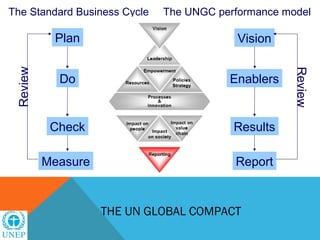
The Standard Business Cycle   The UNGC performance model

           Plan                            Vision
 Review


                                                     Review
            Do                           Enablers


           Check                          Results

          Measure                         Report


                    THE UN GLOBAL COMPACT
BUSINESS & INDUSTRY DIALOGUE MEETINGS

Annual meetings; provide the
 opportunity for UN officials and
 representatives of industry and
 trade associations, to:
 Review progress made in implementing environmental
  management tools
 Exchange information,
 Discuss production and consumption issues, and
 Assess the state of the 2002 Johannesburg Plan of
  Implementation.
VOLUNTARY INITIATIVES

Various sectors
 Building and Construction
 Tourism
 ITC
 Advertising and communication
 Mining
Feasibility of an environmental
 initiative in the elastomer
 industry?
TOOLS

Environmental Management System
 Training Resource Kit (in
 association with the FIDIC and
 ICC)
Environmental Management System
 Handbook
Guide to ISO 14001 for
 Certification / Registration
I THANK YOU VERY MUCH FOR YOUR KIND ATTENTION

Stefanos Fotiou
Regional Coordinator
Resource Efficiency

UNEP - ROAP
stefanos.fotiou@unep.org

Environmental Challenges for Natural Resource Based Industries

  • 1.
    ENVIRONMENTAL CHALLENGES FOR NATURALRESOURCE BASED INDUSTRIES DR. STEFANOS FOTIOU REGIONAL COORDINATOR (ASIA PACIFIC): RESOURCE EFFICIENCY UNITED NATIONS ENVIRONMENT PROGRAMME
  • 2.
    CONTENTS The need for change Negative Impacts and Positive Benefits Main Environmental Challenges UNEP’s work
  • 3.
    THE STATE OFOUR PLANET 20% of the world’s population consumes 80% of its resources. If everyone consumed at this level , then by 2050 (that is to say tomorrow!) it would take four extra planets to provide the necessary resources
  • 4.
    THE INDUSTRY’S RESPONSIBILITIES Theenvironment has become a major factor in corporate decision making. Environmental issues are more and more associated with virtually all aspects of an organisation's management, from financing to production, from marketing to corporate reporting.
  • 5.
    THE INDUSTRY’S RESPONSIBILITIES Inthis scenario, it is all the more important to have a systematic and integrated approach to questions such as  How to manage environmental issues throughout the company's activities?  How to consistently and visibly improve a company's environmental performance?
  • 6.
    HOW DO WERESPOND Assessment Principles Action Report
  • 7.
    IDENTIFYING THE NEGATIVEIMPACTS The main impacts on environmental sustainability come from industry’s:  Energy use and transportation  Land use  Water use  Emissions  Generation of wastes (and especially hazardous waste)
  • 8.
    IDENTIFYING THE POSITIVEEFFECTS The main contribution towards sustainability is based on the industry’s potential ability to:  Stimulate development and employment creation in disadvantaged, more remote or/and less-developed regions  Generate local income
  • 9.
    Consumption of Production of resources financial resources •Transportation •Environmental AN ASSESSMENT •Land use conservation (?) •Water use •Development •Use of energy •Employment •Waste •Local income Production of Consumption of goods goods
  • 10.
    ENVIRONMENTAL PRINCIPLES THE UNGLOBAL COMPACT Support a precautionary approach to environmental challenges Undertake initiatives to promote greater environmental responsibility Encourage the development and diffusion of environmentally friendly technologies
  • 11.
    PRECAUTIONARY APPROACH TOENVIRONMENTAL CHALLENGES We need evident that an economic activity has positive or at least neutral effects on sustainability When we are not certain of the impacts we follow a precautionary approach Think and evaluate before you act
  • 12.
    PROMOTE GREATER ENVIRONMENTAL RESPONSIBILITY Whoin the company currently has authority to issue policies? Who has responsibility for environmental issues? What are the most critical environmental issues facing the company? What are the main risks and opportunities associated with these issues?
  • 13.
    PROMOTE GREATER ENVIRONMENTAL RESPONSIBILITY Whichline managers are most directly affected by these issues? What are the resource implications of addressing the risks/opportunities? What further information is needed to develop an environmental plan?
  • 14.
    TOOLS FOR CORPORATEENVIRONMENTAL RESPONSIBILITY Environmental Assessment Tools Environmental Management Tools  Standards and labels (ISO 14000, eco-label etch.) Environmental Monitoring and Auditing Tools Environmental Reporting and Communication Tools
  • 15.
    ENVIRONMENTALLY FRIENDLY TECHNOLOGIES PotentialEnvironmental and Social Benefits:  Conserve natural resources  Reduce quantity of waste and effluent generated  Reduce pollution  Create local income  Improve working conditions
  • 16.
    ENVIRONMENTALLY FRIENDLY TECHNOLOGIES PotentialEconomic Benefits  Reduce raw material, energy and water costs  Reduce waste disposal and transportation costs  Increase returns by selling waste materials for reuse  Reduce costs from potential liabilities, risks & accidents  Improve productivity
  • 17.
    UNEP’S WORK WITHINDUSTRY Objectives  Increase resource efficiency and reduce pollution over product life cycles and along supply chains  Increased investment in efficient, clean and safe industrial production methods  Consumer choice favours more resource efficient and environmentally friendly products
  • 18.
    UNEP’S WORK WITHINDUSTRY Selected activities  The UN Global Compact  Business & Industry Dialogue Meetings  Voluntary Initiatives  Partnerships  Tools
  • 19.
    The Standard BusinessCycle The UNGC performance model Plan Vision Review Review Do Enablers Check Results Measure Report THE UN GLOBAL COMPACT
  • 20.
    BUSINESS & INDUSTRYDIALOGUE MEETINGS Annual meetings; provide the opportunity for UN officials and representatives of industry and trade associations, to:  Review progress made in implementing environmental management tools  Exchange information,  Discuss production and consumption issues, and  Assess the state of the 2002 Johannesburg Plan of Implementation.
  • 21.
    VOLUNTARY INITIATIVES Various sectors Building and Construction  Tourism  ITC  Advertising and communication  Mining Feasibility of an environmental initiative in the elastomer industry?
  • 22.
    TOOLS Environmental Management System Training Resource Kit (in association with the FIDIC and ICC) Environmental Management System Handbook Guide to ISO 14001 for Certification / Registration
  • 23.
    I THANK YOUVERY MUCH FOR YOUR KIND ATTENTION Stefanos Fotiou Regional Coordinator Resource Efficiency UNEP - ROAP stefanos.fotiou@unep.org