Carbon Footprint
 The amount of carbon dioxide emissions created by a person or industry
 2% of worldwide carbon emissions comes from the global information and
communications technology (ICT) industry
Carbon Footprint
Negative environmental impact
Computer manufacture
Energy use during lifetime
Disposal
Manufacturing
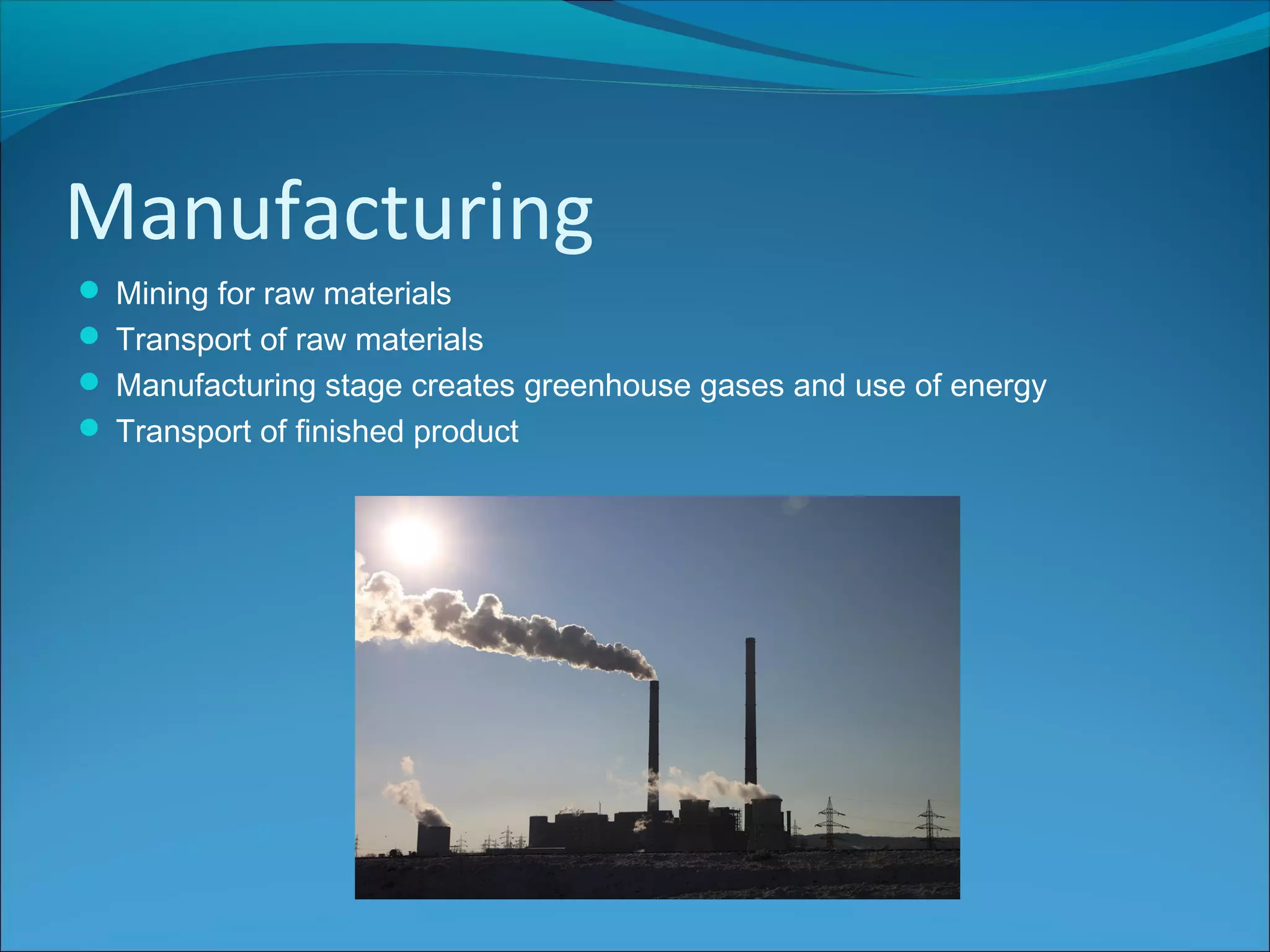
 Mining for raw materials
 Transport of raw materials
 Manufacturing stage creates greenhouse gases and use of energy
 Transport of finished product
Energy Use
After lighting, computers and monitors have the highest energy consumption in
office environments. Power management of computers and monitors can
significantly reduce their energy consumption, saving money on electricity
costs.
Saving Energy
1. Use a laptop instead of a desktop
2. Use a flat panel display over CRT
3. Set power management options
4. Turn of computers at end of day
5. Use energy efficient processors
6. Switch of peripherals not in use
Disposal
A PC may contain 3 to 4 kg of lead, along with lower levels of mercury, arsenic,
cadmium, beryllium and other toxic chemicals.
Ink cartridges will take 400 – 1000 years to decompose
It is important to recycle computers rather than dispose in landfill:
Some of these component materials must be disposed of or reused in a
specific manner to protect the environment.
The materials in the products can be reused in the production of new
products, minimizing the amount of material that goes into landfills and the
need for raw materials.
Consider that disposal itself will have some carbon footprint, machinery
required etc.
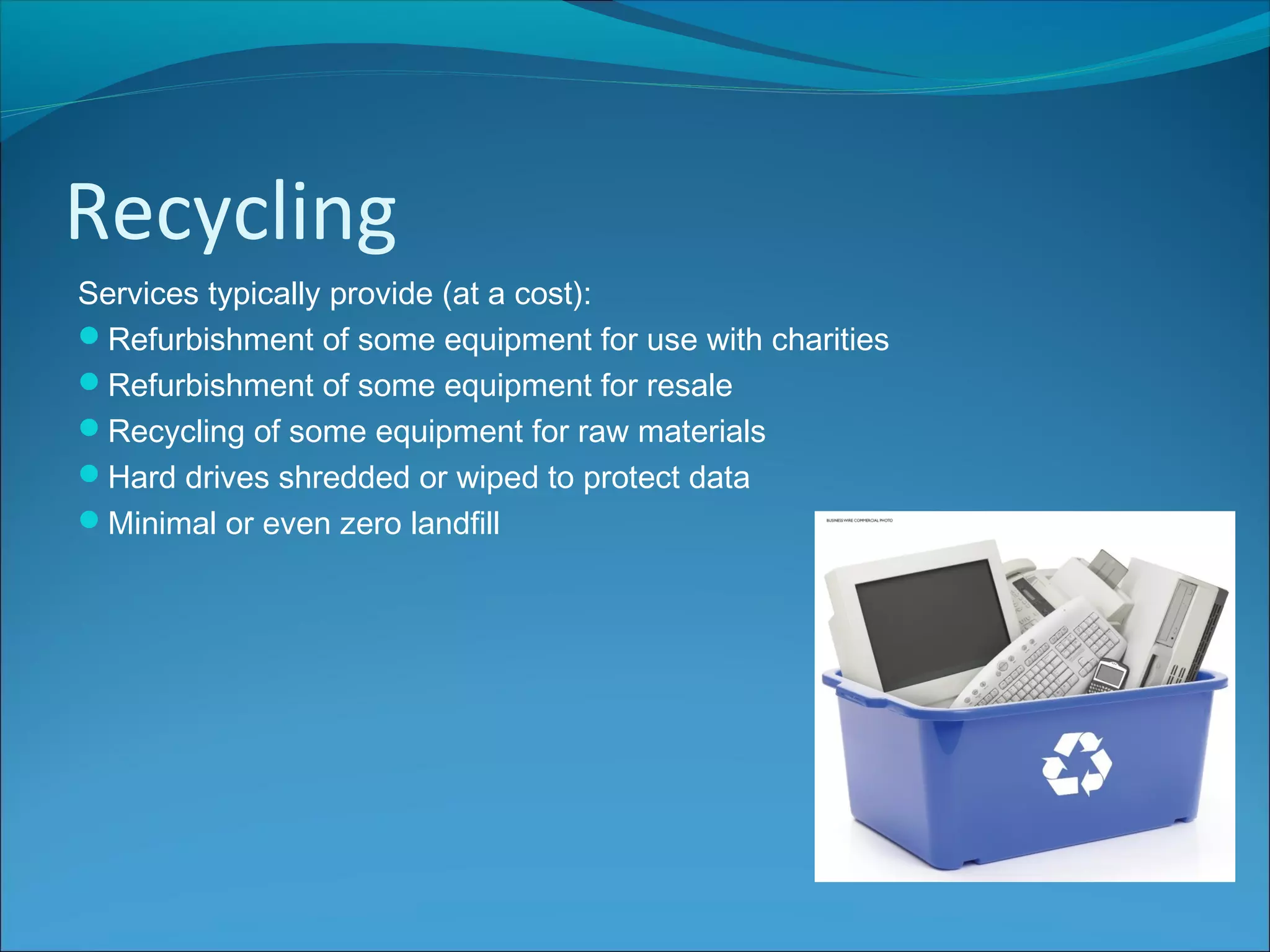
Recycling
Services typically provide (at a cost):
Refurbishment of some equipment for use with charities
Refurbishment of some equipment for resale
Recycling of some equipment for raw materials
Hard drives shredded or wiped to protect data
Minimal or even zero landfill
Carbon Footprint
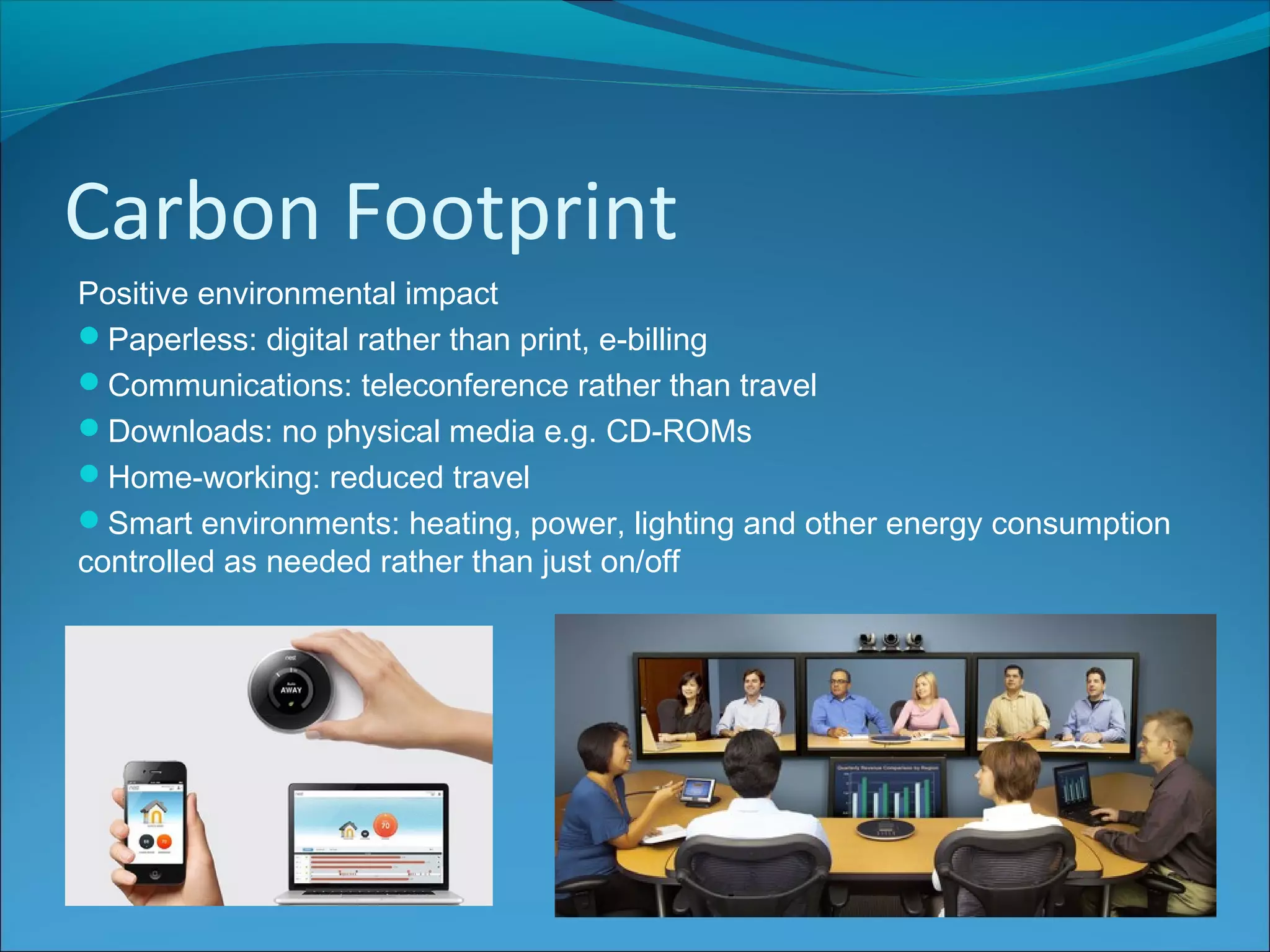
Positive environmental impact
Paperless: digital rather than print, e-billing
Communications: teleconference rather than travel
Downloads: no physical media e.g. CD-ROMs
Home-working: reduced travel
Smart environments: heating, power, lighting and other energy consumption
controlled as needed rather than just on/off
Carbon Footprint
Positive environmental impact
Paperless: digital rather than print, e-billing
Communications: teleconference rather than travel
Downloads: no physical media e.g. CD-ROMs
Home-working: reduced travel
Smart environments: heating, power, lighting and other energy consumption
controlled as needed rather than just on/off

ISDD Environmental Impact

  • 2.
    Carbon Footprint  Theamount of carbon dioxide emissions created by a person or industry  2% of worldwide carbon emissions comes from the global information and communications technology (ICT) industry
  • 3.
    Carbon Footprint Negative environmentalimpact Computer manufacture Energy use during lifetime Disposal
  • 4.
    Manufacturing  Mining forraw materials  Transport of raw materials  Manufacturing stage creates greenhouse gases and use of energy  Transport of finished product
  • 5.
    Energy Use After lighting,computers and monitors have the highest energy consumption in office environments. Power management of computers and monitors can significantly reduce their energy consumption, saving money on electricity costs.
  • 6.
    Saving Energy 1. Usea laptop instead of a desktop 2. Use a flat panel display over CRT 3. Set power management options 4. Turn of computers at end of day 5. Use energy efficient processors 6. Switch of peripherals not in use
  • 7.
    Disposal A PC maycontain 3 to 4 kg of lead, along with lower levels of mercury, arsenic, cadmium, beryllium and other toxic chemicals. Ink cartridges will take 400 – 1000 years to decompose It is important to recycle computers rather than dispose in landfill: Some of these component materials must be disposed of or reused in a specific manner to protect the environment. The materials in the products can be reused in the production of new products, minimizing the amount of material that goes into landfills and the need for raw materials. Consider that disposal itself will have some carbon footprint, machinery required etc.
  • 8.
    Recycling Services typically provide(at a cost): Refurbishment of some equipment for use with charities Refurbishment of some equipment for resale Recycling of some equipment for raw materials Hard drives shredded or wiped to protect data Minimal or even zero landfill
  • 9.
    Carbon Footprint Positive environmentalimpact Paperless: digital rather than print, e-billing Communications: teleconference rather than travel Downloads: no physical media e.g. CD-ROMs Home-working: reduced travel Smart environments: heating, power, lighting and other energy consumption controlled as needed rather than just on/off
  • 10.
    Carbon Footprint Positive environmentalimpact Paperless: digital rather than print, e-billing Communications: teleconference rather than travel Downloads: no physical media e.g. CD-ROMs Home-working: reduced travel Smart environments: heating, power, lighting and other energy consumption controlled as needed rather than just on/off