Roadmap for ‘green’ IT
Roadmap for Green IT

Dr Claire
Cosgrove

“Greener &
Smarter ICT”
Royal
University for
Women
16 May 2012
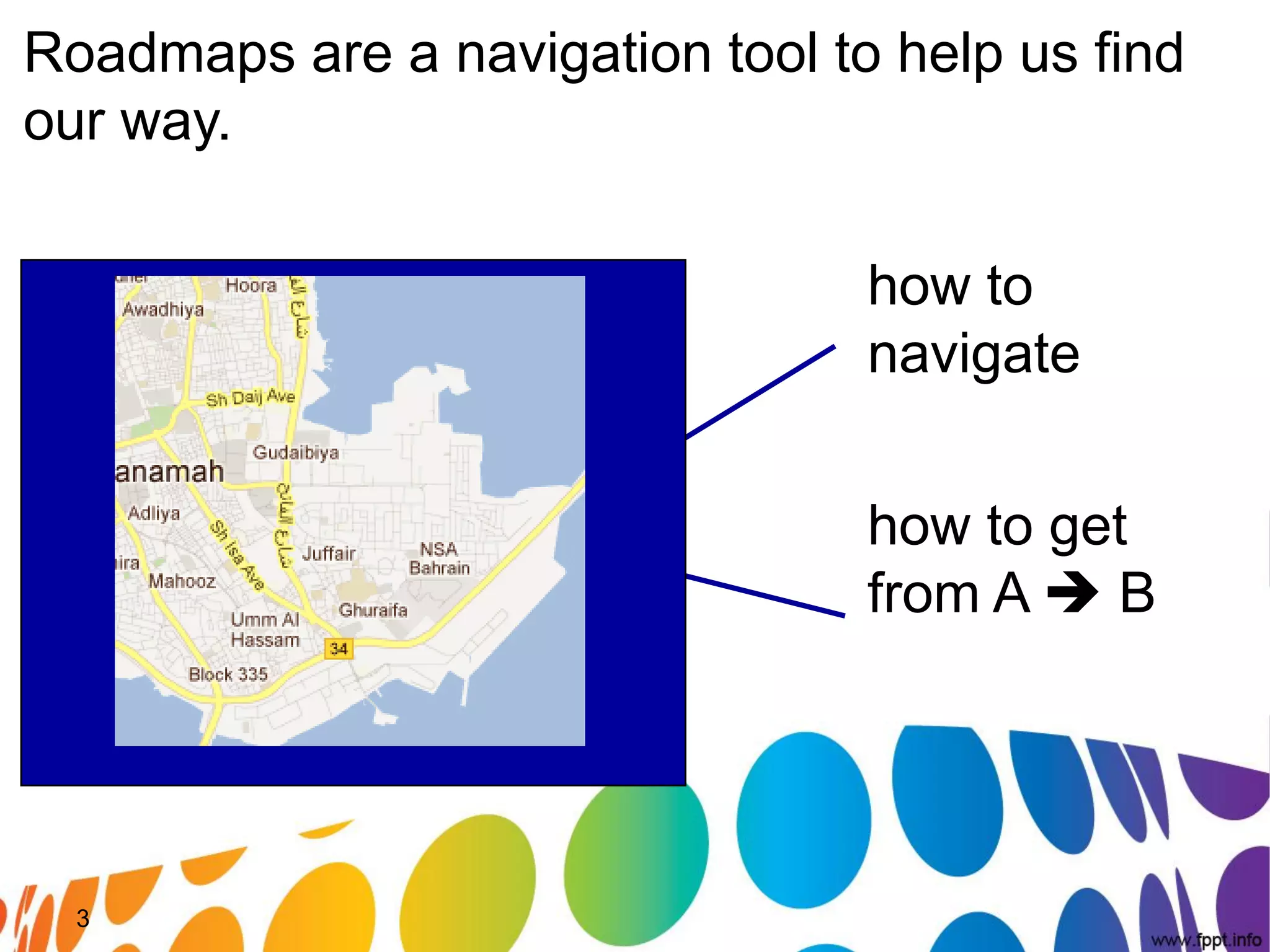
Roadmaps are a navigation tool to help us find
our way.

                                 how to
                                 navigate


                                 how to get
                                 from A  B


  3
This presentation will be a roadmap for a sustainable
Information & Communication Technology (ICT) service


 Eco-Efficiency


 Eco-Innovation


  4
What do we understand by this
         term: eco-efficiency?
• The concept of eco-efficiency is about finding ways to
  deliver competitively priced goods and services that satisfy
  human needs and enhance quality of life while
  progressively reducing the ecological impacts and resource
  intensity of products and services to levels that are in line
  with the earth’s estimated carrying capacity (WCSBD
  1992).


5
Or more simply . . .
• Improving eco-efficiency - achieving the
  same or better levels of economic value
  with the same or better levels of
  environmental performance
And eco-innovation
• either improving the performance of
  existing technologies, or creating new
  technologies
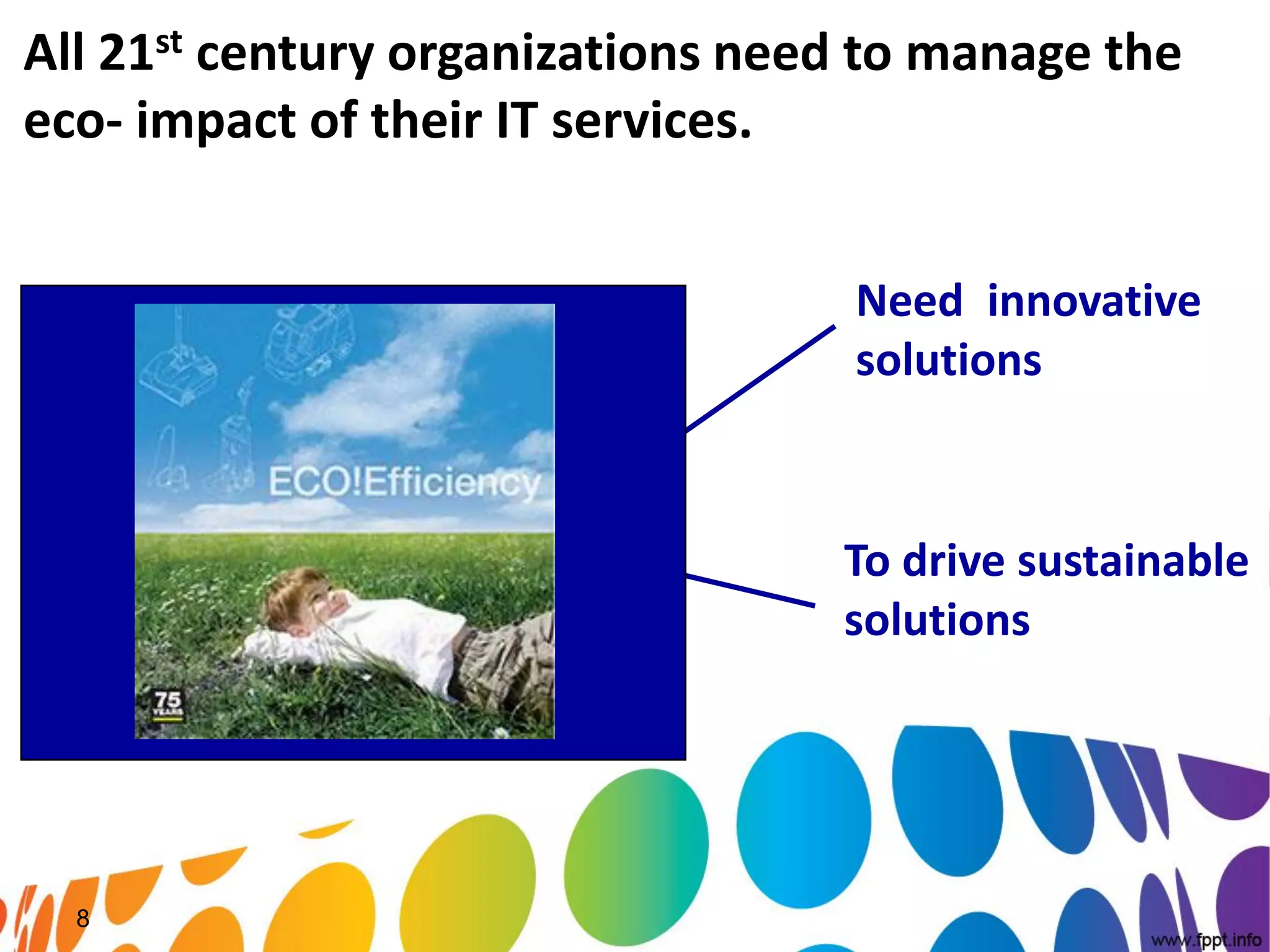
All 21st century organizations need to manage the
eco- impact of their IT services.


                                   Need innovative
                                   solutions


                                  To drive sustainable
                                  solutions


  8
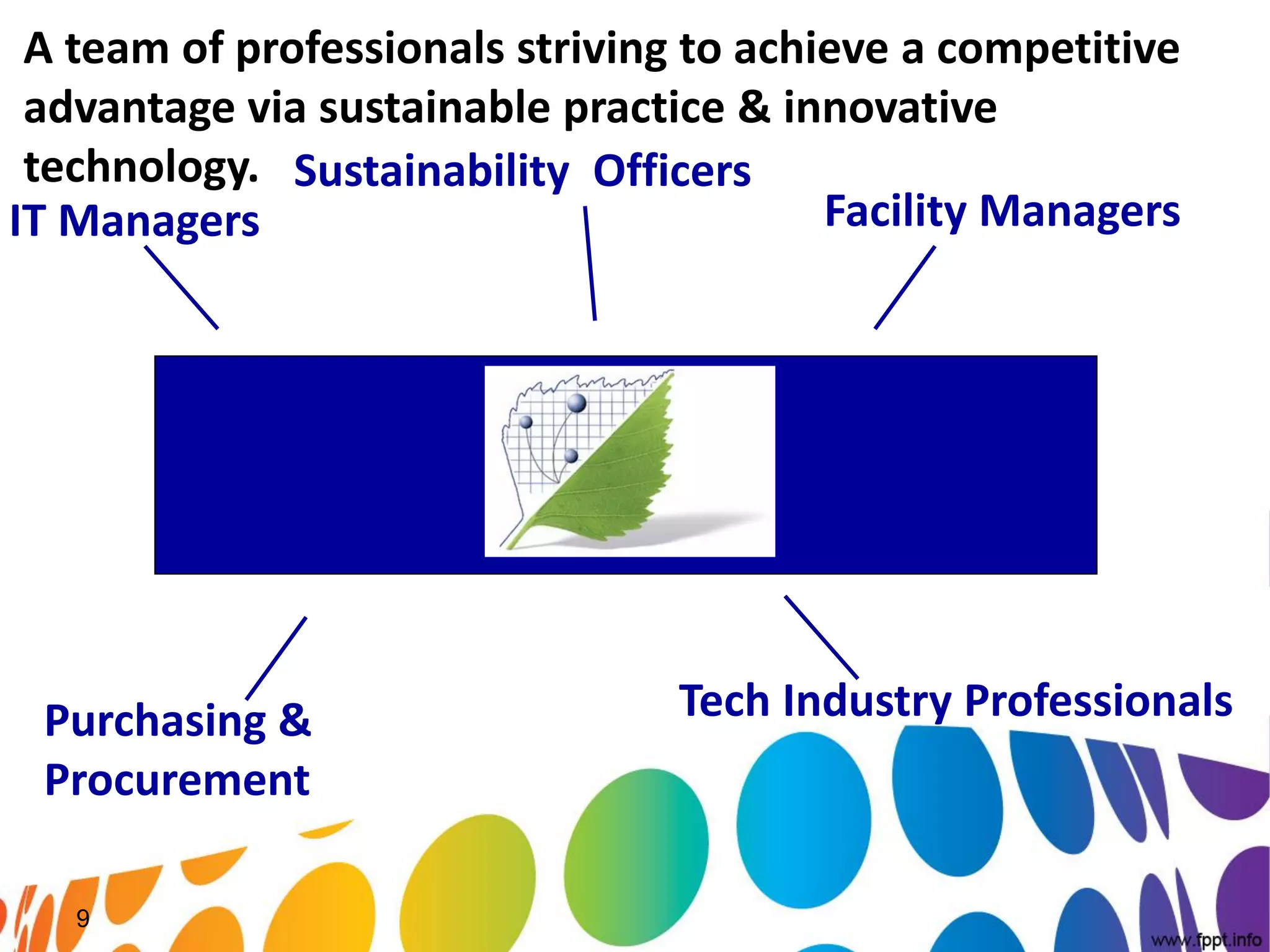
A team of professionals striving to achieve a competitive
 advantage via sustainable practice & innovative
 technology. Sustainability Officers
IT Managers                              Facility Managers


 Purchasing &                    Tech Industry Professionals
 Procurement

   9
How these roles are interrelated?
• IT Managers – turn their        • Facility Management –
  knowledge in action plans         design & manage
                                    sustainable buildings with
• Sustainability / CSR              high tech equipment
  Officers – understand ICT
  role & development of           • P&P – cost-saving
  sustainable organisation          sustainable strategies for
                                    purchasing & supply-chain &
• Tech Professionals lead           EPP
  organisation with sustainable
  operations
Why Green IT?
Our appetite for electronics and energy is outpacing our supply
of renewable and non-renewable resources
Because the world population is increasing rapidly,
exponentially
Because we are generating GHG at an exhaustive rate
Because we generate excessive e-waste
Because we are producing lethal toxic & hazardous wastes
    ……..

  Require socially responsible action
  Smart resource usage
  Savey technological innovations
IT is part of the problem while at the
same time IT is part of the solution


 12
Green IT has significant bottom-line benefits for any
organisation


  13
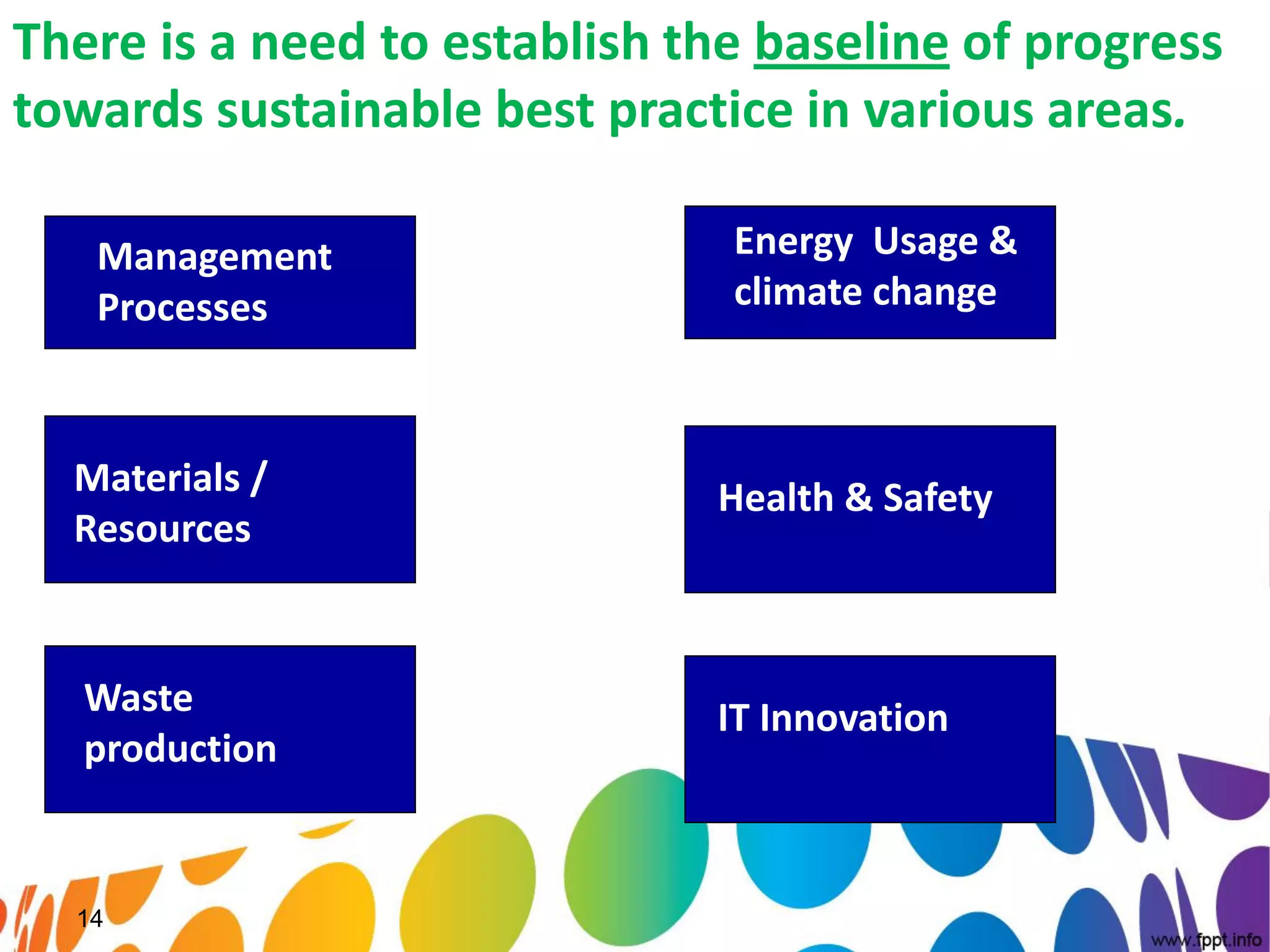
There is a need to establish the baseline of progress
towards sustainable best practice in various areas.

   Management                  Energy Usage &
   Processes                   climate change


  Materials /                 Health & Safety
  Resources


   Waste                      IT Innovation
   production


  14
We cannot measure our improvements if we do not
have a baseline of energy consumption and carbon
emissions


              Green IT Strategy
                 requires a
               Green IT Index


  15
We need to calculate, track and account for IT energy
consumption & carbon emissions for every IT service

                Profile the IT services of your organization


                        Create an IT roadmap of green
                        initiatives


                                  Reduce energy usage &
                                  carbon emissions & save
                                  BDs


  16
we keep addressing carbon emissions & energy usage . . .

CARBON EMISSIONS
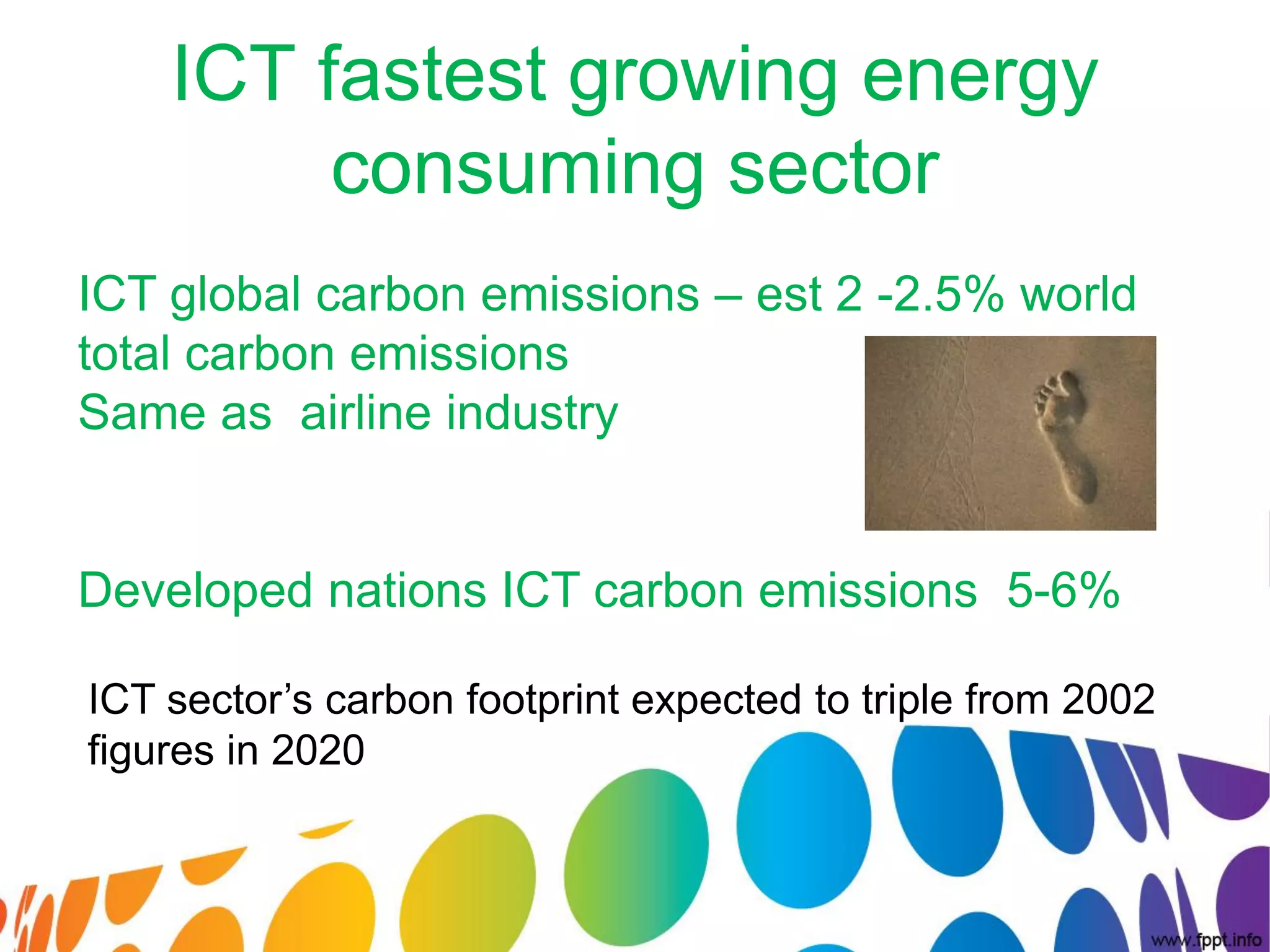
ICT fastest growing energy
         consuming sector
ICT global carbon emissions – est 2 -2.5% world
total carbon emissions
Same as airline industry


Developed nations ICT carbon emissions 5-6%

ICT sector’s carbon footprint expected to triple from 2002
figures in 2020
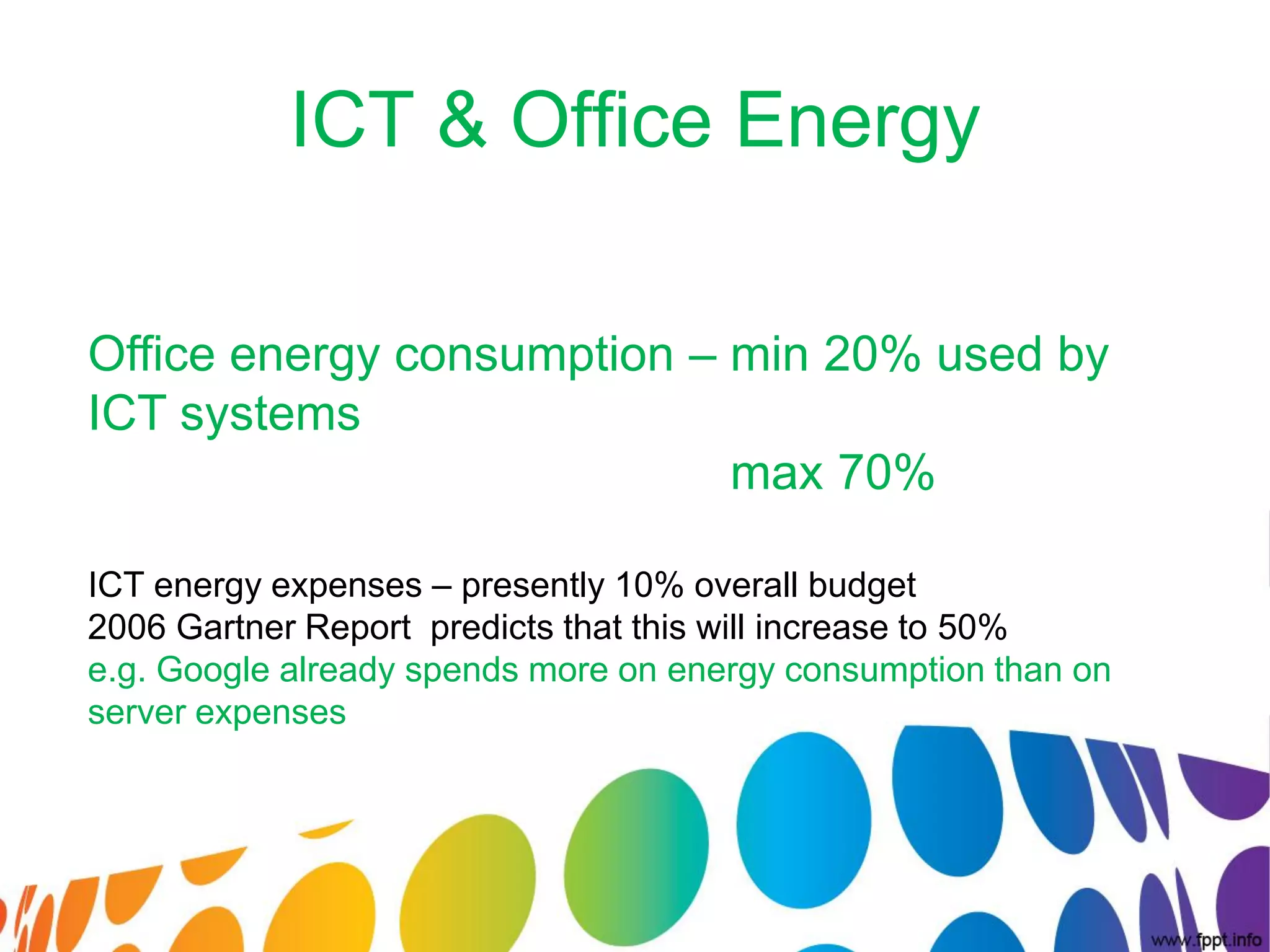
ICT & Office Energy

Office energy consumption – min 20% used by
ICT systems
                            max 70%

ICT energy expenses – presently 10% overall budget
2006 Gartner Report predicts that this will increase to 50%
e.g. Google already spends more on energy consumption than on
server expenses
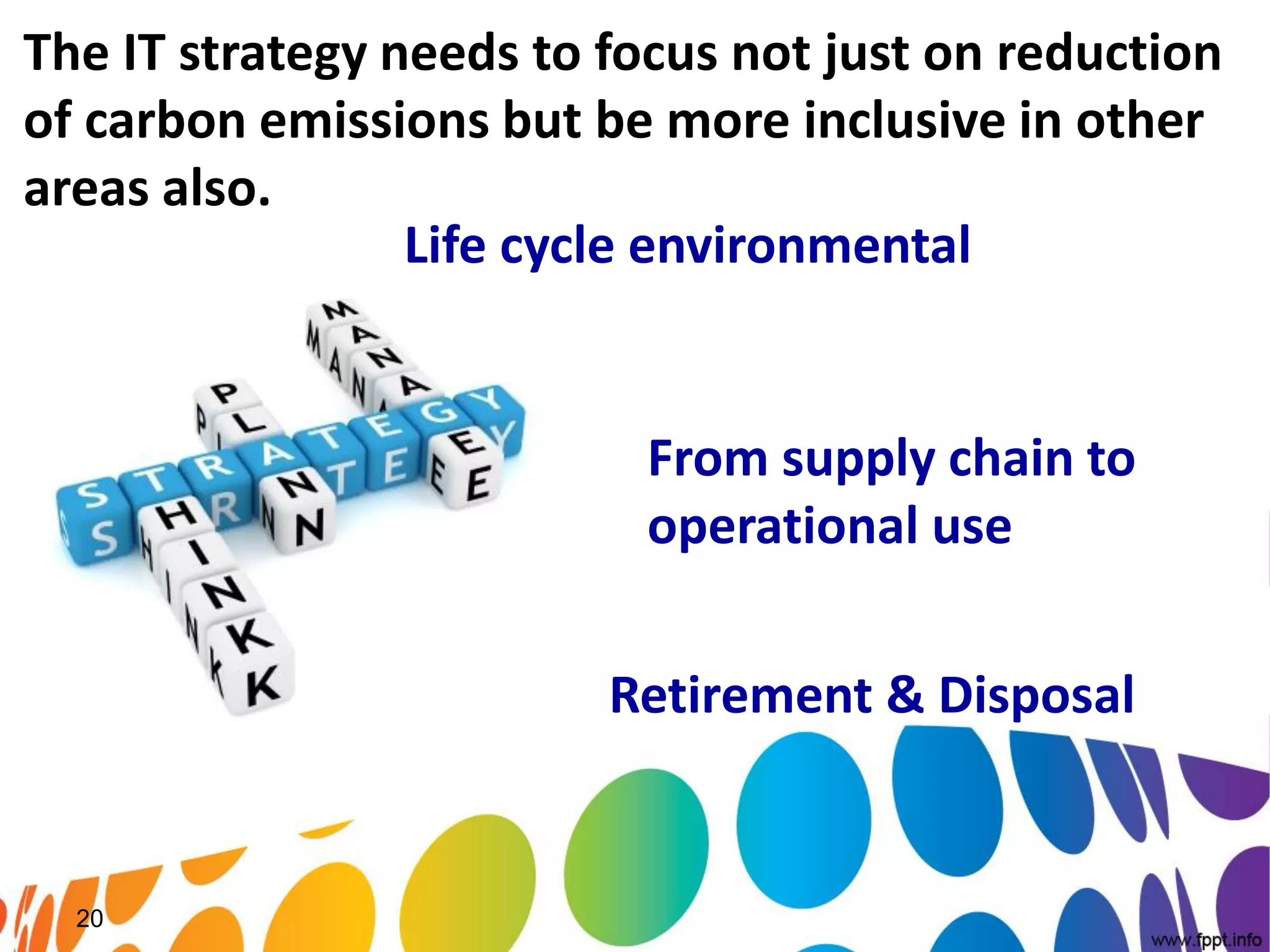
The IT strategy needs to focus not just on reduction
of carbon emissions but be more inclusive in other
areas also.
                 Life cycle environmental
                 impact

                           From supply chain to
                           operational use

                         Retirement & Disposal


  20
Even goldfish have a strategy
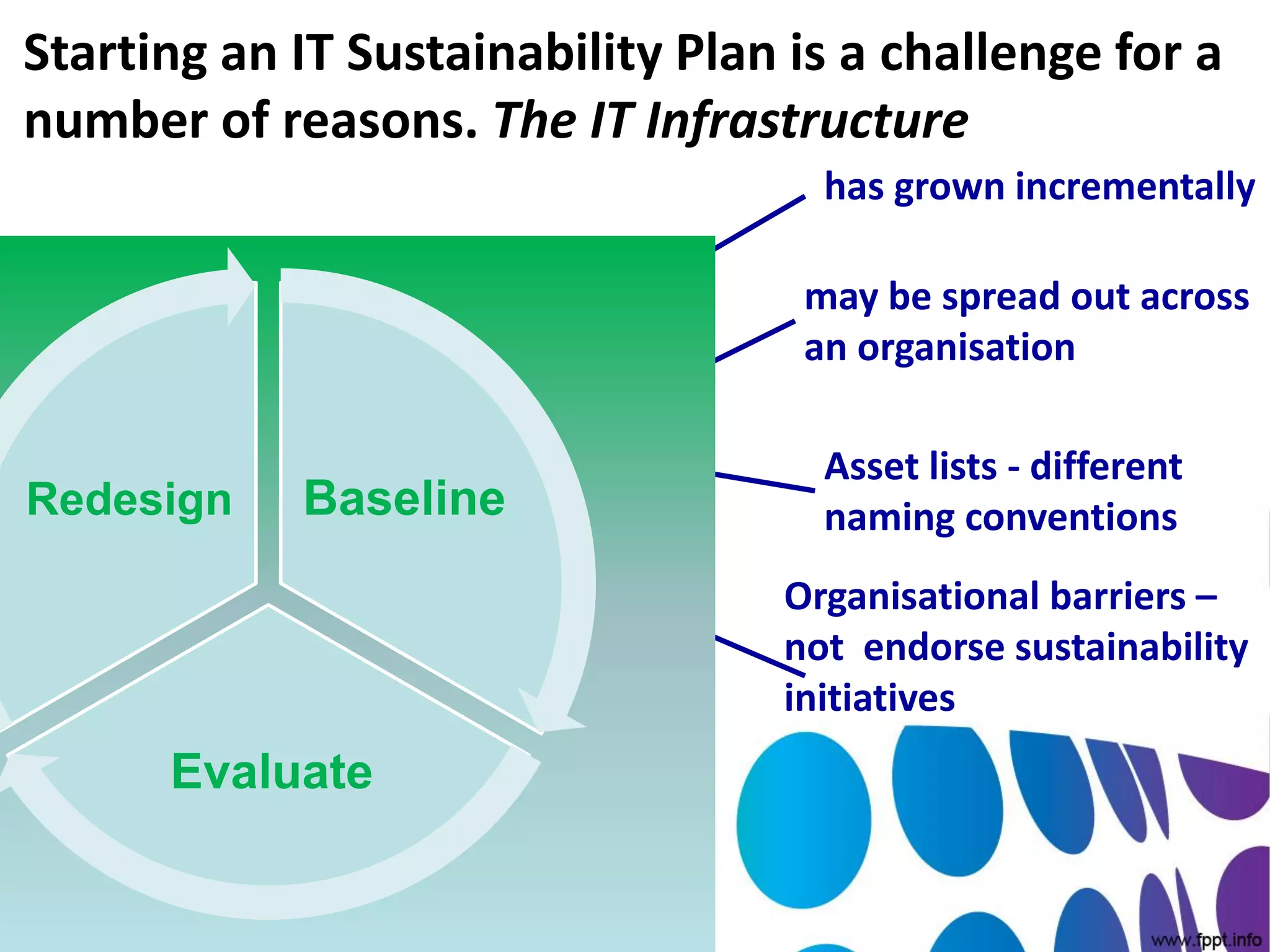
Starting an IT Sustainability Plan is a challenge for a
number of reasons. The IT Infrastructure
                                    has grown incrementally

                                   may be spread out across
                                   an organisation

                                    Asset lists - different
Redesign    Baseline                naming conventions
                                  Organisational barriers –
                                  not endorse sustainability
                                  initiatives
       Evaluate

  22
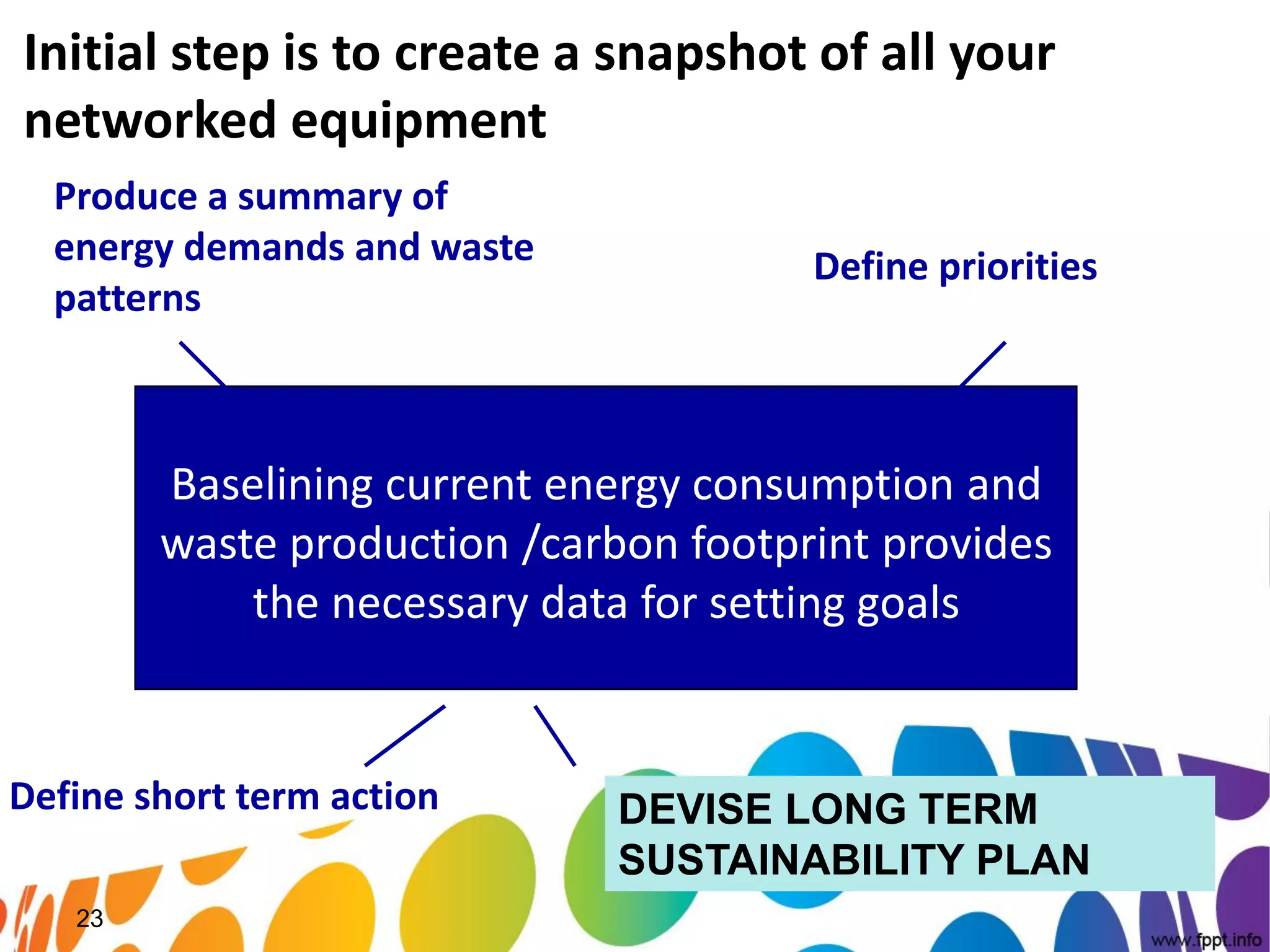
Initial step is to create a snapshot of all your
networked equipment
  Produce a summary of
  energy demands and waste             Define priorities
  patterns


        Baselining current energy consumption and
        waste production /carbon footprint provides
            the necessary data for setting goals


Define short term action      DEVISE LONG TERM
                              SUSTAINABILITY PLAN
   23
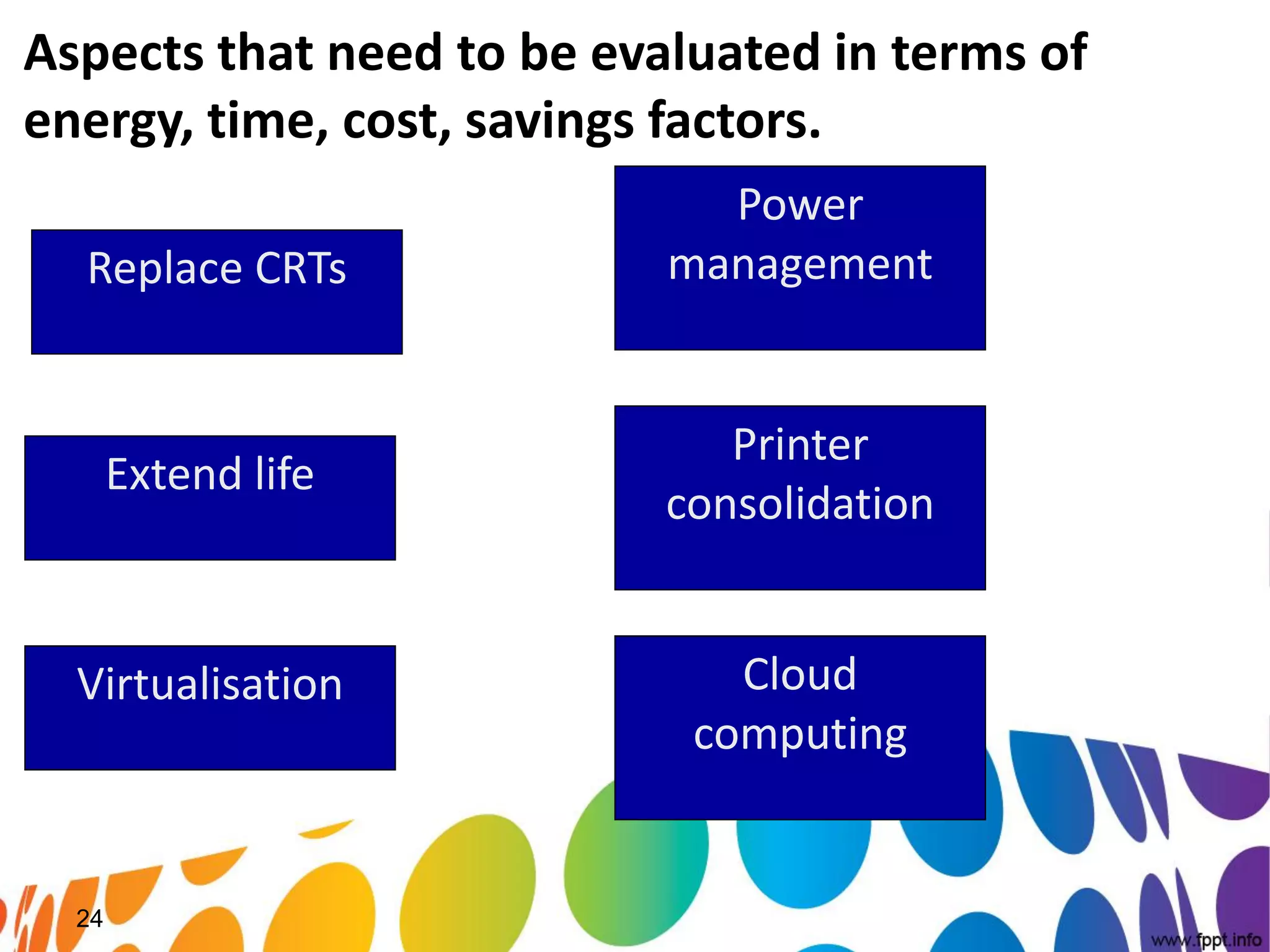
Aspects that need to be evaluated in terms of
energy, time, cost, savings factors.
                             Power
  Replace CRTs             management


                              Printer
       Extend life
                           consolidation


  Virtualisation              Cloud
                            computing


  24
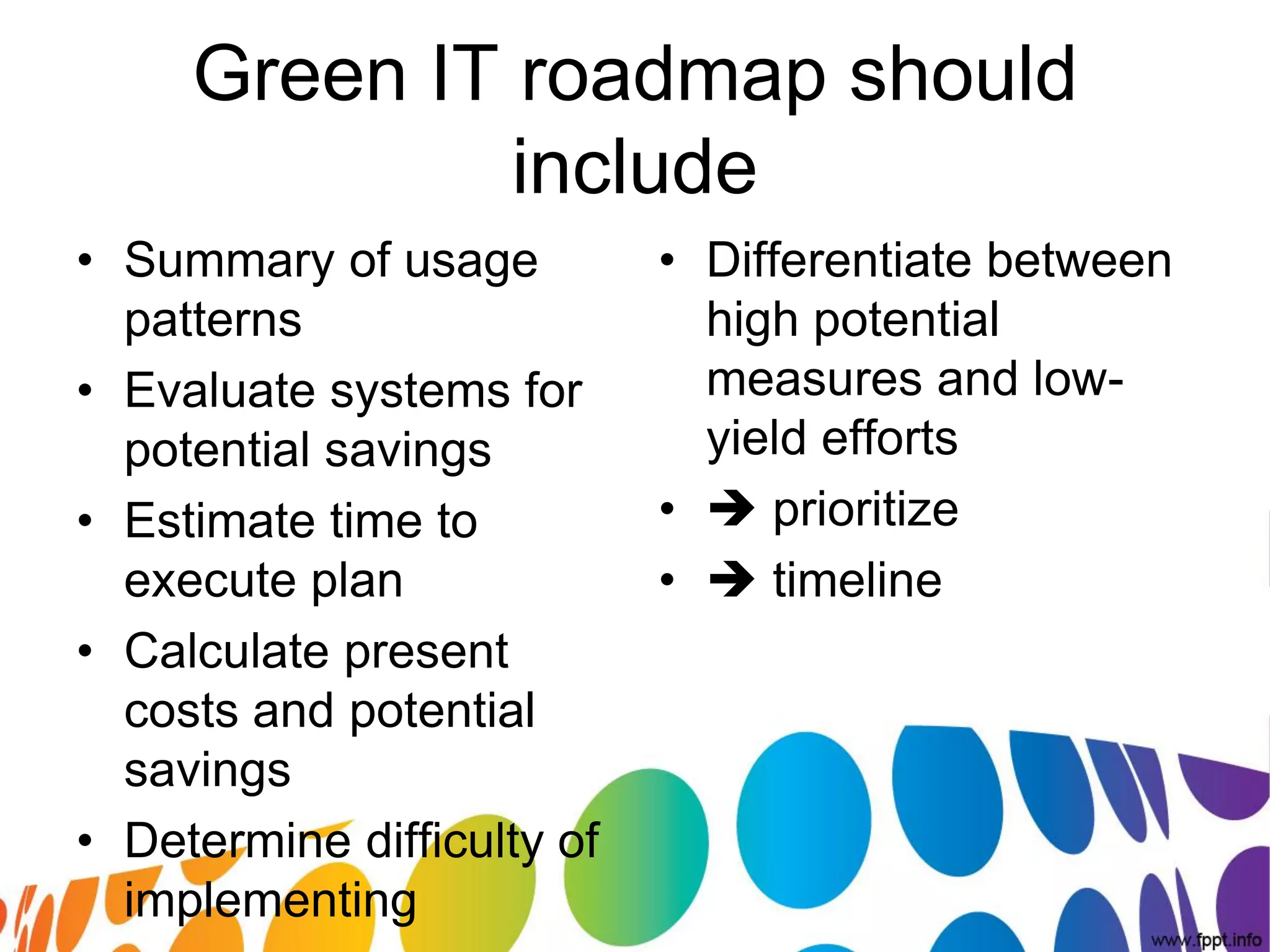
Green IT roadmap should
              include
• Summary of usage          • Differentiate between
  patterns                    high potential
• Evaluate systems for        measures and low-
  potential savings           yield efforts
• Estimate time to          •  prioritize
  execute plan              •  timeline
• Calculate present
  costs and potential
  savings
• Determine difficulty of
  implementing
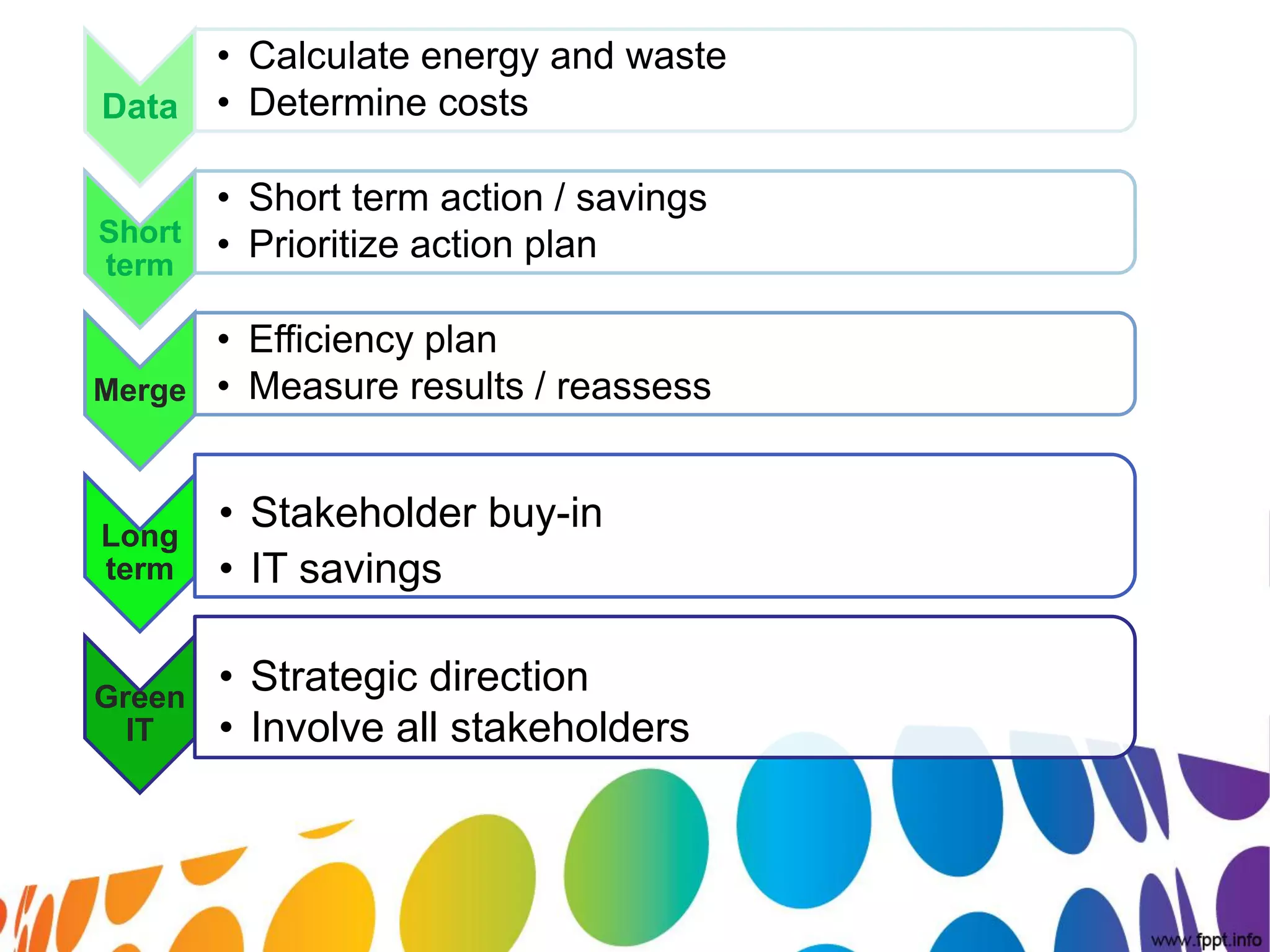
• Calculate energy and waste
Data • Determine costs

      • Short term action / savings
Short • Prioritize action plan
term

      • Efficiency plan
Merge • Measure results / reassess


Long
        • Stakeholder buy-in
term    • IT savings

Green
        • Strategic direction
  IT    • Involve all stakeholders
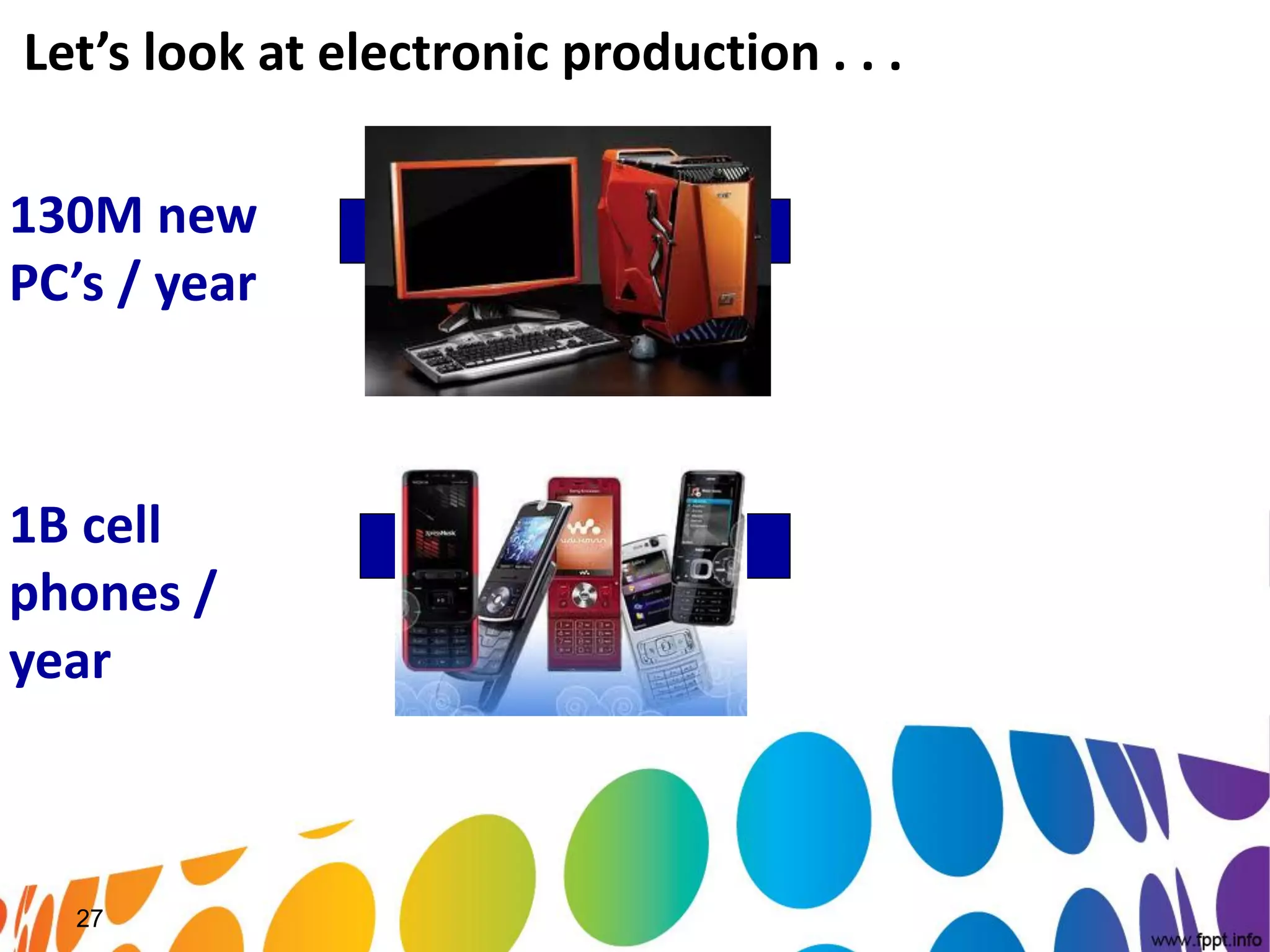
Let’s look at electronic production . . .

130M new
PC’s / year


1B cell
phones /
year


  27
E-waste
FASTEST GROWING WASTE
STREAM GLOBALLY
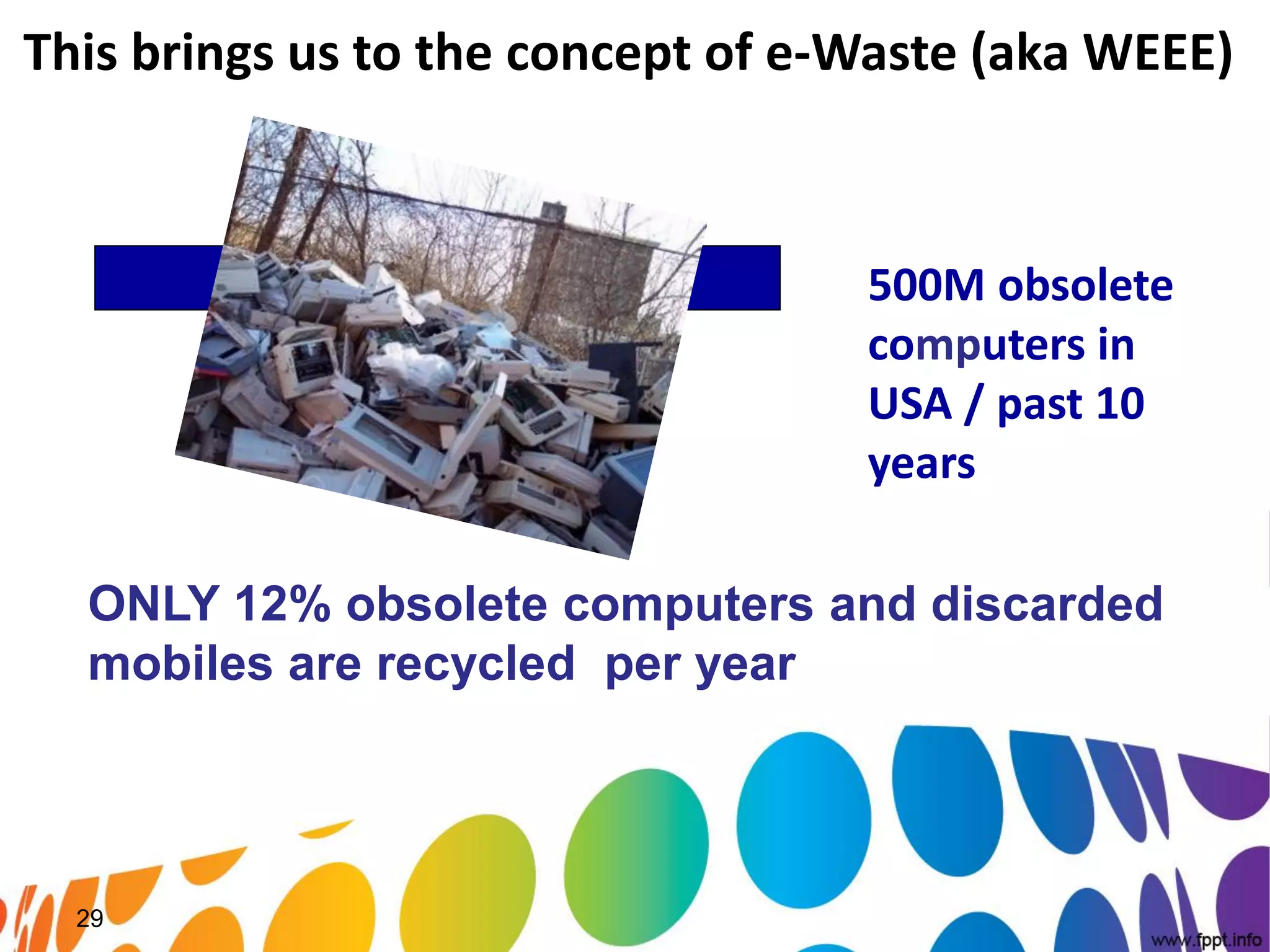
This brings us to the concept of e-Waste (aka WEEE)


                                   500M obsolete
                                   computers in
                                   USA / past 10
                                   years

  ONLY 12% obsolete computers and discarded
  mobiles are recycled per year


  29
Now compare electronic waste with other waste
items (USA statistics – Municipal Solid Waste (MSW))
                  Solid waste items are recycled at
                  rate closer to 42%


                          Household appliance
                          recycled at a rate of 70%

                                    E-Waste only 2%
                                    MSW by weight


 30
BUT there is always a ‘but’

             E-Waste accounts for 70%
             heavy metals in landfill

                    E-waste accounts for
                    40% lead in landfill


 31
And what happens to e-waste that does not go to the
landfill?
                 Exported to
                 developing nations

                        Disassembled by hand
                        – or burned in open air

                                 EVEN
                                 Dumped at seas


  32
And what happens to e-waste that does not go to the
landfill?
                 Stockpiled locally –
                 USA 70% obsolete
                 systems

                          Waiting for disposal
                          solutions


  33
Practical example
• Use power             • e.g. average
  management to           computer and monitor
  reduce energy waste     combination
• Switch from free        consumes 2000 kWh
  running to power        electricity per year
  managed               • Use power
                          management and
                          save 500-1000 kWh
                          per year
Practical example
• Use power             • e.g. replace desktop
  management to           computers with
  reduce energy waste     laptops with LCD
                          monitors
                        • power usage ~ 570
                          kWh per year
What kind of financial savings is
              this?
• USA figures – energy    • SAVINGS!!!
  costs of 0.15c per      • US$100,000 per year
  kWh (2007)
• organisation with 500
  computers
• Switch to power
  management
Practical examples
• Printer default        • Reprogramme users’
  settings                 mindset
   – e.g. double sided     – Preview
                           – Select relevant page
                             ONLY
                           – Margins
                           – # pages per sheet
Requires systematic planning, buy-in across
organisation, staffing and funding
      baseline measurement
      evaluation
      planning – short term and long term
      execution
      re-assessment

ACT ON ECO-RESPONSIBILITY
OTHER OPTIONS
Green IT Initiatives
Teleworking – reduce transportation emissions

Smart energy applications – adjust energy
consumption to real time needs and climate
conditions

Virtualization – eliminate wasteful network
equipment, reduce energy consumption , reduce
floor space requirements
Energy Management Systems
Server rooms currently consume excessive energy and actually waste 30-60%

Integrated planning – use of modern technology – use best
energy management systems - could reduce power
consumption 50-80%
Also reduce the floor space allocated will also reduce
energy consumption – up to 65%
 How can this be done?
 High-efficiency technology for cooling
 power sourcing
 virtualization techniques
Green supply chains
Procurement Departments seeking EPP – environmentally
preferred purchasing

IT sector needs to work with Sustainability Officer and
Purchasing Dept to secure the most desirable providers
The need to evaluate life cycle environmental footprint of
suppliers and buyers
Requires communicating & educating suppliers of the green
needs and expectations
This is an approach to sustainable supply-chain initiatives
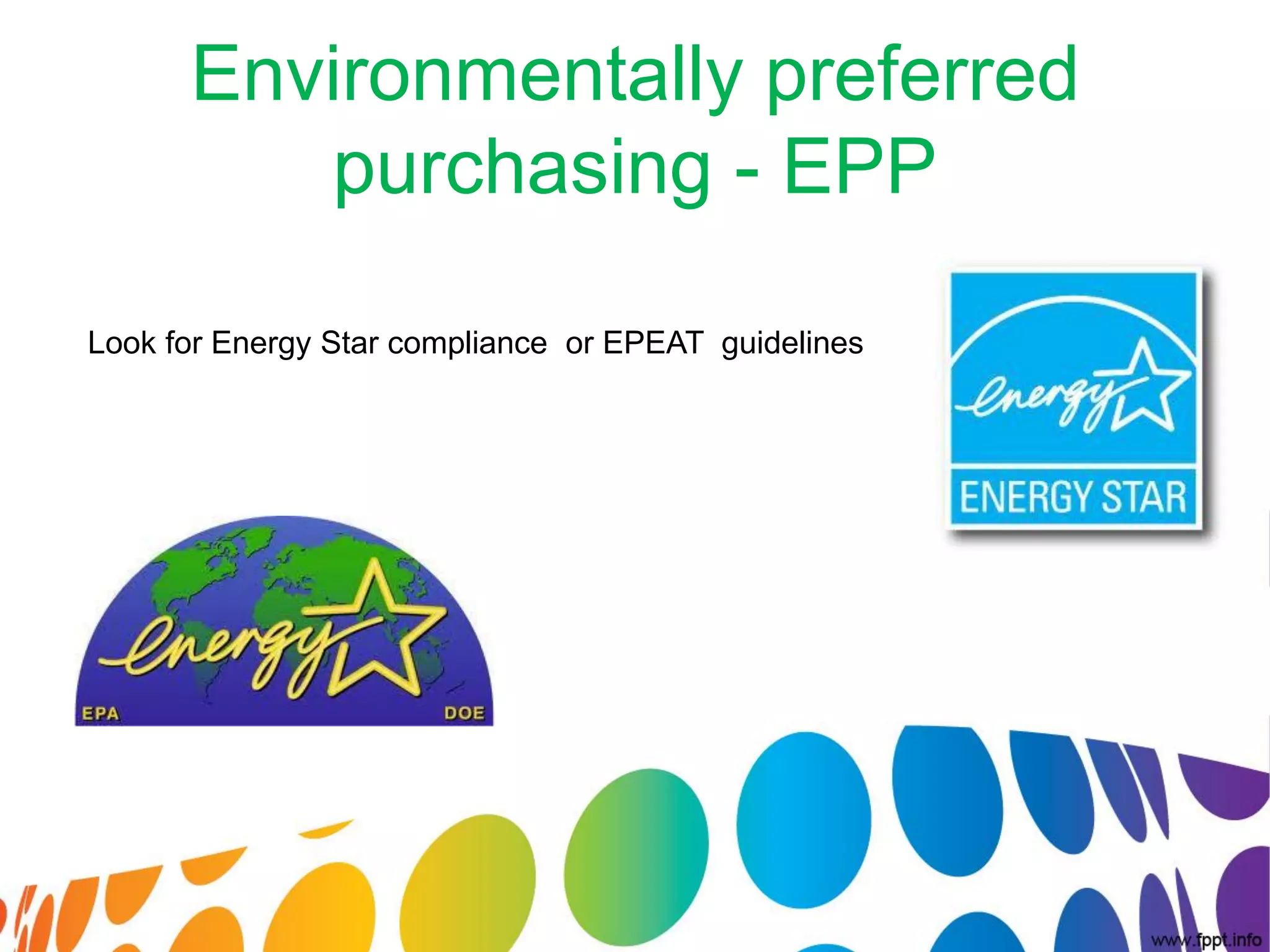
Environmentally preferred
         purchasing - EPP

Look for Energy Star compliance or EPEAT guidelines
Universities campuses
• Capitalize on training   • EXTEND LIFE IT
  opportunities              hardware
• Awareness of waste       • REFURBISH
  cycle                      hardware
• Value of 3R’s            • RESELL REBUILT
• Build up IT technical      PC’s
  skills
• Prepare for workplace
  readiness
Other IT / E-waste initiatives
• Recycle mobiles
• Partner with
  RecycleIT
• Awareness
  campaigns
Unregulated energy waste are
 fast becoming a thing of the past
Governments around the globe are implementing
carbon emission capping measures

Implementing environmental regulations to apply to
IT sector
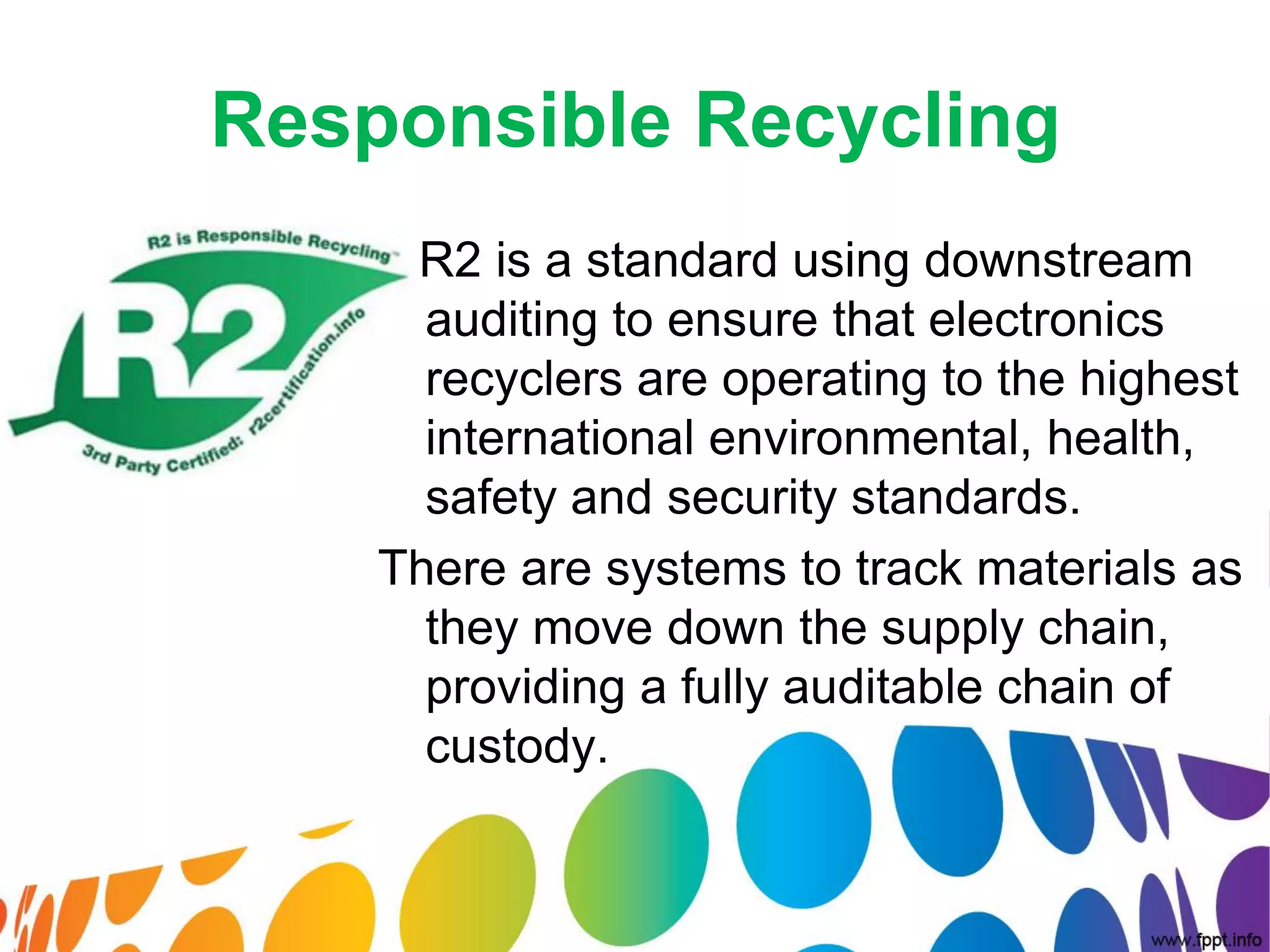
Responsible Recycling
     R2 is a standard using downstream
      auditing to ensure that electronics
      recyclers are operating to the highest
      international environmental, health,
      safety and security standards.
    There are systems to track materials as
      they move down the supply chain,
      providing a fully auditable chain of
      custody.
E-waste programmes
Action plans from producers to suppliers to end user back to
suppliers and on to producers

Educational awareness programmes – schools,
communities, organisations, nation-wide

Government impose a fee on purchase items for recycling
expenses downstream

Purchase recycled policy

Buy-back policy of suppliers
General Summation
Plan and strategize Green IT riadmap

Energy management systems

Purchase greener electronic products

Reduce /reuse minimise impact of products being
used

Dispose of obsolete products in environmentally
safe way

Ruw green i-troadmap

  • 1.
  • 2.
    Roadmap for GreenIT Dr Claire Cosgrove “Greener & Smarter ICT” Royal University for Women 16 May 2012
  • 3.
    Roadmaps are anavigation tool to help us find our way. how to navigate how to get from A  B 3
  • 4.
    This presentation willbe a roadmap for a sustainable Information & Communication Technology (ICT) service Eco-Efficiency Eco-Innovation 4
  • 5.
    What do weunderstand by this term: eco-efficiency? • The concept of eco-efficiency is about finding ways to deliver competitively priced goods and services that satisfy human needs and enhance quality of life while progressively reducing the ecological impacts and resource intensity of products and services to levels that are in line with the earth’s estimated carrying capacity (WCSBD 1992). 5
  • 6.
    Or more simply. . . • Improving eco-efficiency - achieving the same or better levels of economic value with the same or better levels of environmental performance
  • 7.
    And eco-innovation • eitherimproving the performance of existing technologies, or creating new technologies
  • 8.
    All 21st centuryorganizations need to manage the eco- impact of their IT services. Need innovative solutions To drive sustainable solutions 8
  • 9.
    A team ofprofessionals striving to achieve a competitive advantage via sustainable practice & innovative technology. Sustainability Officers IT Managers Facility Managers Purchasing & Tech Industry Professionals Procurement 9
  • 10.
    How these rolesare interrelated? • IT Managers – turn their • Facility Management – knowledge in action plans design & manage sustainable buildings with • Sustainability / CSR high tech equipment Officers – understand ICT role & development of • P&P – cost-saving sustainable organisation sustainable strategies for purchasing & supply-chain & • Tech Professionals lead EPP organisation with sustainable operations
  • 11.
    Why Green IT? Ourappetite for electronics and energy is outpacing our supply of renewable and non-renewable resources Because the world population is increasing rapidly, exponentially Because we are generating GHG at an exhaustive rate Because we generate excessive e-waste Because we are producing lethal toxic & hazardous wastes …….. Require socially responsible action Smart resource usage Savey technological innovations
  • 12.
    IT is partof the problem while at the same time IT is part of the solution 12
  • 13.
    Green IT hassignificant bottom-line benefits for any organisation 13
  • 14.
    There is aneed to establish the baseline of progress towards sustainable best practice in various areas. Management Energy Usage & Processes climate change Materials / Health & Safety Resources Waste IT Innovation production 14
  • 15.
    We cannot measureour improvements if we do not have a baseline of energy consumption and carbon emissions Green IT Strategy requires a Green IT Index 15
  • 16.
    We need tocalculate, track and account for IT energy consumption & carbon emissions for every IT service Profile the IT services of your organization Create an IT roadmap of green initiatives Reduce energy usage & carbon emissions & save BDs 16
  • 17.
    we keep addressingcarbon emissions & energy usage . . . CARBON EMISSIONS
  • 18.
    ICT fastest growingenergy consuming sector ICT global carbon emissions – est 2 -2.5% world total carbon emissions Same as airline industry Developed nations ICT carbon emissions 5-6% ICT sector’s carbon footprint expected to triple from 2002 figures in 2020
  • 19.
    ICT & OfficeEnergy Office energy consumption – min 20% used by ICT systems max 70% ICT energy expenses – presently 10% overall budget 2006 Gartner Report predicts that this will increase to 50% e.g. Google already spends more on energy consumption than on server expenses
  • 20.
    The IT strategyneeds to focus not just on reduction of carbon emissions but be more inclusive in other areas also. Life cycle environmental impact From supply chain to operational use Retirement & Disposal 20
  • 21.
  • 22.
    Starting an ITSustainability Plan is a challenge for a number of reasons. The IT Infrastructure has grown incrementally may be spread out across an organisation Asset lists - different Redesign Baseline naming conventions Organisational barriers – not endorse sustainability initiatives Evaluate 22
  • 23.
    Initial step isto create a snapshot of all your networked equipment Produce a summary of energy demands and waste Define priorities patterns Baselining current energy consumption and waste production /carbon footprint provides the necessary data for setting goals Define short term action DEVISE LONG TERM SUSTAINABILITY PLAN 23
  • 24.
    Aspects that needto be evaluated in terms of energy, time, cost, savings factors. Power Replace CRTs management Printer Extend life consolidation Virtualisation Cloud computing 24
  • 25.

    Green IT roadmapshould include • Summary of usage • Differentiate between patterns high potential • Evaluate systems for measures and low- potential savings yield efforts • Estimate time to •  prioritize execute plan •  timeline • Calculate present costs and potential savings • Determine difficulty of implementing
  • 26.
    • Calculate energyand waste Data • Determine costs • Short term action / savings Short • Prioritize action plan term • Efficiency plan Merge • Measure results / reassess Long • Stakeholder buy-in term • IT savings Green • Strategic direction IT • Involve all stakeholders
  • 27.
    Let’s look atelectronic production . . . 130M new PC’s / year 1B cell phones / year 27
  • 28.
  • 29.
    This brings usto the concept of e-Waste (aka WEEE) 500M obsolete computers in USA / past 10 years ONLY 12% obsolete computers and discarded mobiles are recycled per year 29
  • 30.
    Now compare electronicwaste with other waste items (USA statistics – Municipal Solid Waste (MSW)) Solid waste items are recycled at rate closer to 42% Household appliance recycled at a rate of 70% E-Waste only 2% MSW by weight 30
  • 31.
    BUT there isalways a ‘but’ E-Waste accounts for 70% heavy metals in landfill E-waste accounts for 40% lead in landfill 31
  • 32.
    And what happensto e-waste that does not go to the landfill? Exported to developing nations Disassembled by hand – or burned in open air EVEN Dumped at seas 32
  • 33.
    And what happensto e-waste that does not go to the landfill? Stockpiled locally – USA 70% obsolete systems Waiting for disposal solutions 33
  • 34.
    Practical example • Usepower • e.g. average management to computer and monitor reduce energy waste combination • Switch from free consumes 2000 kWh running to power electricity per year managed • Use power management and save 500-1000 kWh per year
  • 35.
    Practical example • Usepower • e.g. replace desktop management to computers with reduce energy waste laptops with LCD monitors • power usage ~ 570 kWh per year
  • 36.
    What kind offinancial savings is this? • USA figures – energy • SAVINGS!!! costs of 0.15c per • US$100,000 per year kWh (2007) • organisation with 500 computers • Switch to power management
  • 37.
    Practical examples • Printerdefault • Reprogramme users’ settings mindset – e.g. double sided – Preview – Select relevant page ONLY – Margins – # pages per sheet
  • 38.
    Requires systematic planning,buy-in across organisation, staffing and funding baseline measurement evaluation planning – short term and long term execution re-assessment ACT ON ECO-RESPONSIBILITY
  • 39.
  • 40.
    Green IT Initiatives Teleworking– reduce transportation emissions Smart energy applications – adjust energy consumption to real time needs and climate conditions Virtualization – eliminate wasteful network equipment, reduce energy consumption , reduce floor space requirements
  • 41.
    Energy Management Systems Serverrooms currently consume excessive energy and actually waste 30-60% Integrated planning – use of modern technology – use best energy management systems - could reduce power consumption 50-80% Also reduce the floor space allocated will also reduce energy consumption – up to 65% How can this be done? High-efficiency technology for cooling power sourcing virtualization techniques
  • 42.
    Green supply chains ProcurementDepartments seeking EPP – environmentally preferred purchasing IT sector needs to work with Sustainability Officer and Purchasing Dept to secure the most desirable providers The need to evaluate life cycle environmental footprint of suppliers and buyers Requires communicating & educating suppliers of the green needs and expectations This is an approach to sustainable supply-chain initiatives
  • 43.
    Environmentally preferred purchasing - EPP Look for Energy Star compliance or EPEAT guidelines
  • 44.
    Universities campuses • Capitalizeon training • EXTEND LIFE IT opportunities hardware • Awareness of waste • REFURBISH cycle hardware • Value of 3R’s • RESELL REBUILT • Build up IT technical PC’s skills • Prepare for workplace readiness
  • 45.
    Other IT /E-waste initiatives • Recycle mobiles • Partner with RecycleIT • Awareness campaigns
  • 46.
    Unregulated energy wasteare fast becoming a thing of the past Governments around the globe are implementing carbon emission capping measures Implementing environmental regulations to apply to IT sector
  • 47.
    Responsible Recycling R2 is a standard using downstream auditing to ensure that electronics recyclers are operating to the highest international environmental, health, safety and security standards. There are systems to track materials as they move down the supply chain, providing a fully auditable chain of custody.
  • 48.
    E-waste programmes Action plansfrom producers to suppliers to end user back to suppliers and on to producers Educational awareness programmes – schools, communities, organisations, nation-wide Government impose a fee on purchase items for recycling expenses downstream Purchase recycled policy Buy-back policy of suppliers
  • 49.
    General Summation Plan andstrategize Green IT riadmap Energy management systems Purchase greener electronic products Reduce /reuse minimise impact of products being used Dispose of obsolete products in environmentally safe way