Subhajit Nath
Green Computing
Presented by
Green computing is the practice of using computing
resources efficiently.
Reduce the power consumption and thus reduce the global
warming.
To reduce the use of Hazardous materials, maximize
energy efficiency during product’s lifetime.
Also called as Green IT.
What is Green Computing?
Minimizing energy consumption.
Purchasing green energy.
Reducing the paper and other consumables used.
Minimizing equipment disposal requirements.
Reducing the requirements for the employees / customers.
Core objectives of green computing
It originated in 1992 at the U.S. Environmental protection
Agency that launched energy star program.
Shortly after that the term “Green Computing” was coined.
Shortly after that the Swedish also launched the TCO
certification.
History
Green design
Pathways of Green Computing
Efficient design of data centers and workstations. Designing energy-
efficient and environmentally sound components, computers, servers,
cooling equipment, and data centers.
Green disposal
Informed purchasing of components, peripherals and equipments
manufactured with the environment in mind. Manufacturing
electronic computers, and other associated subsystems with minimal
impact on the environment.
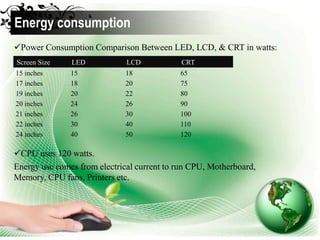
Power Consumption Comparison Between LED, LCD, & CRT in watts:
Energy consumption
Screen Size LED LCD CRT
15 inches 15 18 65
17 inches 18 20 75
19 inches 20 22 80
20 inches 24 26 90
21 inches 26 30 100
22 inches 30 40 110
24 inches 40 50 120
CPU uses 120 watts.
Energy use comes from electrical current to run CPU, Motherboard,
Memory, CPU fans, Printers etc.
Green use
Pathways of Green Computing
Intelligent use of energy and information systems. Reducing the energy
consumption of computers and other information systems as well as
using them in an environmentally sound manner.
Green disposal
Reduction of waste, reuse and refurbishment of hardware and
recycling of out of use peripherals and other items. Refurbishing and
reusing old computers and properly recycling unwanted computers
and other electronic equipment.
Product longevity
Software and deployment optimization
Power management materials
Recycling
Approaches of green computing
The goals of green computing reduce the use of hazardous
materials, maximize energy efficiency during the products
lifetime, and promote the recyclability or biodegradability of
defunct products and factory waste.
Goals of Green Computing
Research continues into key areas such as making the use of
computers as energy-efficient as possible, and designing
algorithms and systems for efficiency-related computer
technologies.
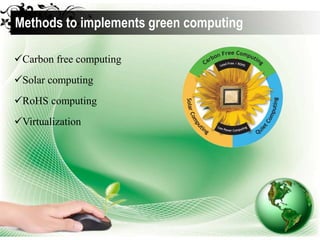
Carbon free computing
Solar computing
RoHS computing
Virtualization
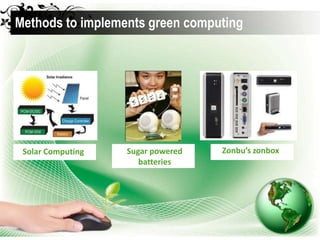
Methods to implements green computing
Sugar powered
batteries
Zonbu’s zonboxSolar Computing
Turn off the computer when not in use, even if just for an one hour.
Turn off the monitor when not in use.
Use power saver mode.
Use LCDs instead of CRTs as they are more power efficient.
Use hardware/software with the energy star label.
Don’t print unless required.
Choose Intel and VIA processor in comparison to AMD processor.
Reducing the power consumptions
Energy saving
Environmentally friendly
Cost-effective
Save more money per year
Can give you a tax right off
Benefits
www.google .com
Bibliography
www.en.wikipedia.org
www.authorstream.comwww.slideshare.net
Green computing

Green computing

  • 1.
  • 2.
    Green computing isthe practice of using computing resources efficiently. Reduce the power consumption and thus reduce the global warming. To reduce the use of Hazardous materials, maximize energy efficiency during product’s lifetime. Also called as Green IT. What is Green Computing?
  • 3.
    Minimizing energy consumption. Purchasinggreen energy. Reducing the paper and other consumables used. Minimizing equipment disposal requirements. Reducing the requirements for the employees / customers. Core objectives of green computing
  • 4.
    It originated in1992 at the U.S. Environmental protection Agency that launched energy star program. Shortly after that the term “Green Computing” was coined. Shortly after that the Swedish also launched the TCO certification. History
  • 5.
    Green design Pathways ofGreen Computing Efficient design of data centers and workstations. Designing energy- efficient and environmentally sound components, computers, servers, cooling equipment, and data centers. Green disposal Informed purchasing of components, peripherals and equipments manufactured with the environment in mind. Manufacturing electronic computers, and other associated subsystems with minimal impact on the environment.
  • 6.
    Power Consumption ComparisonBetween LED, LCD, & CRT in watts: Energy consumption Screen Size LED LCD CRT 15 inches 15 18 65 17 inches 18 20 75 19 inches 20 22 80 20 inches 24 26 90 21 inches 26 30 100 22 inches 30 40 110 24 inches 40 50 120 CPU uses 120 watts. Energy use comes from electrical current to run CPU, Motherboard, Memory, CPU fans, Printers etc.
  • 7.
    Green use Pathways ofGreen Computing Intelligent use of energy and information systems. Reducing the energy consumption of computers and other information systems as well as using them in an environmentally sound manner. Green disposal Reduction of waste, reuse and refurbishment of hardware and recycling of out of use peripherals and other items. Refurbishing and reusing old computers and properly recycling unwanted computers and other electronic equipment.
  • 8.
    Product longevity Software anddeployment optimization Power management materials Recycling Approaches of green computing
  • 9.
    The goals ofgreen computing reduce the use of hazardous materials, maximize energy efficiency during the products lifetime, and promote the recyclability or biodegradability of defunct products and factory waste. Goals of Green Computing Research continues into key areas such as making the use of computers as energy-efficient as possible, and designing algorithms and systems for efficiency-related computer technologies.
  • 10.
    Carbon free computing Solarcomputing RoHS computing Virtualization Methods to implements green computing
  • 11.
    Methods to implementsgreen computing Sugar powered batteries Zonbu’s zonboxSolar Computing
  • 12.
    Turn off thecomputer when not in use, even if just for an one hour. Turn off the monitor when not in use. Use power saver mode. Use LCDs instead of CRTs as they are more power efficient. Use hardware/software with the energy star label. Don’t print unless required. Choose Intel and VIA processor in comparison to AMD processor. Reducing the power consumptions
  • 13.
    Energy saving Environmentally friendly Cost-effective Savemore money per year Can give you a tax right off Benefits
  • 14.