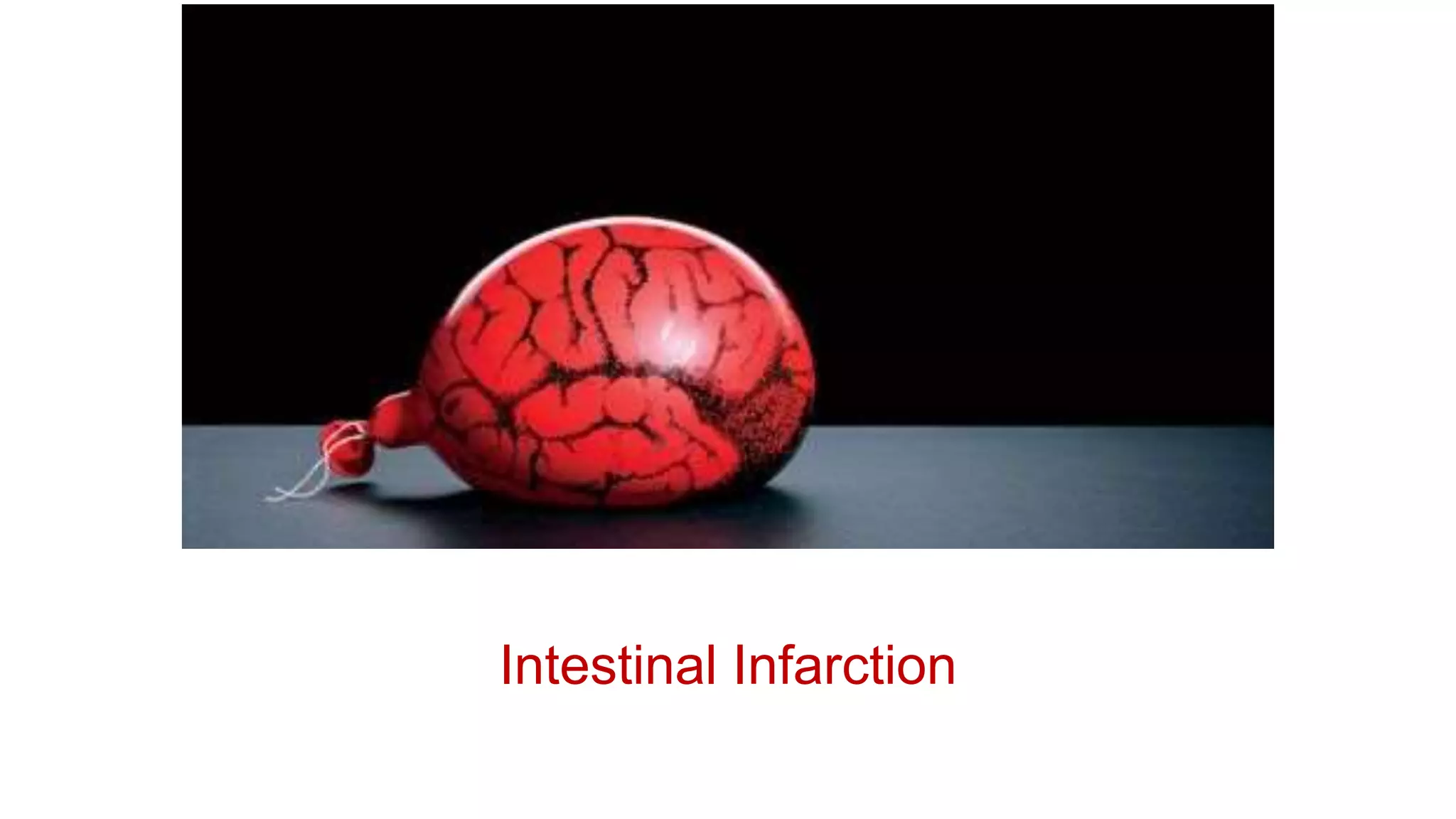

Intestinal Infarction
Blood supply of Intestine: Celiac, superior and inferior mesenteric arteries
Intestine receives 20-25% of cardiac output
Small intestine may compensate 75% drop in blood flow for 12 hours-
increase oxygen uptake
Colon more vulnerable to hypo-perfusion due to decrease blood flow
Water shed areas at increased risk of ischemia
Acute compromise of any major vessel can lead to infarction of several
meters of intestine
Causes of Intestinal Ischemia
Acute arterial obstruction
Severe atherosclerosis of mesenteric vessels
Aortic aneurysm
Hypercoagulable states
Oral contraceptive use
Embolization of cardiac vegetation or aortic
atheromas, atrial fibrillation
Intestinal hypoperfusion (Non-occlusive ischemia)
Cardiac failure
Shock
Dehydration
Vasoconstrictive drugs
Mesenteric venous thrombosis
Systemic vasculitis
Other causes;
Invasive neoplasms
Cirrhosis/portal hypertension
Abdominal masses compressing portal
drainage
PATHOGENESIS
Intestinal responses to ischemia occur in two phases
First phase initial hypoxic injury:
Intestinal capillaries run alongside the glands, from crypt to surface, supplying
oxygenated blood to crypts leaving surface epithelium vulnerable to ischemic injury,
(relatively resistant to transient hypoxia), protected crypts containing epithelial stem
cells repopulate the necrotic epithelium
Second phase, reperfusion injury: restoration of blood supply leads to greatest
mucosal damage, by free radical production, neutrophil infiltration, and release of
inflammatory mediators, such as complement proteins and cytokines
Watershed zones susceptible to ischemia, include splenic flexure and sigmoid
colon and rectum, generalized hypotension or hypoxemia causes focal colitis of
splenic flexure or recto-sigmoid colon
Gross Morphology
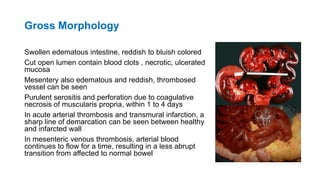
Swollen edematous intestine, reddish to bluish colored
Cut open lumen contain blood clots , necrotic, ulcerated
mucosa
Mesentery also edematous and reddish, thrombosed
vessel can be seen
Purulent serositis and perforation due to coagulative
necrosis of muscularis propria, within 1 to 4 days
In acute arterial thrombosis and transmural infarction, a
sharp line of demarcation can be seen between healthy
and infarcted wall
In mesenteric venous thrombosis, arterial blood
continues to flow for a time, resulting in a less abrupt
transition from affected to normal bowel
Microscopy
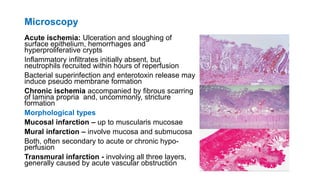
Acute ischemia: Ulceration and sloughing of
surface epithelium, hemorrhages and
hyperproliferative crypts
Inflammatory infiltrates initially absent, but
neutrophils recruited within hours of reperfusion
Bacterial superinfection and enterotoxin release may
induce pseudo membrane formation
Chronic ischemia accompanied by fibrous scarring
of lamina propria and, uncommonly, stricture
formation
Morphological types
Mucosal infarction – up to muscularis mucosae
Mural infarction – involve mucosa and submucosa
Both, often secondary to acute or chronic hypo-
perfusion
Transmural infarction - involving all three layers,
generally caused by acute vascular obstruction
Clinical Features
Small bowel ischemia younger than 50 years of age and colonic ischemia
occur in older persons with coexisting cardiac or vascular disease
Severe abdominal pain out of proportion to clinical examination
Acute transmural infarction; sudden, severe abdominal pain and tenderness,
sometimes accompanied by nausea, vomiting, bloody diarrhea, which may
progress to shock within hours
Bowel sounds disappear and muscular spasm creates board like rigidity
Mucosal barrier breaks allows bacteria to enter the circulation causing
sepsis with mortality rate may exceed 50%
Mucosal and mural infarctions may not be fatal, however, they may progress
to transmural infarction if the vascular supply is not restored
Clinical Features
Chronic ischemia may present as inflammatory bowel disease, with episodes of
bloody diarrhea interspersed with periods of healing.
CMV infect endothelial cells causes ischemic gastrointestinal disease
Acute radiation enteritis manifests as anorexia, abdominal cramps, and diarrhea
and chronic radiation enteritis or colitis often is more indolent and may present as
an inflammatory colitis
Necrotizing enterocolitis is an acute disorder of the small and large intestines
that can result in transmural necrosis. It is the most common acquired
gastrointestinal emergency of neonates, particularly those who are premature or of
low birth weight, and occurs most often when oral feeding is initiated. Ischemic
injury generally is considered to contribute to its pathogenesis.
Angiodysplasia is characterized by malformed submucosal and mucosal blood
vessels, usually presents after the sixth decade of life, and accounts for 20% of
major episodes of lower intestinal bleeding
Summary
Small Intestine (mesenteric) Ischemia
Causes:
Arterial occlusion (due to emboli or thrombus)
Venous occlusion (due to thrombus)
Arterial vasospasm (hypotension ,cardiogenic shock)
Risk factors:
Atrial fibrillation ( generate blood clot – block superior mesenteric artery
Smokers
Established vascular disease like atherosclerosis
Summary
Acute cases
Younger than 50 years
Severe abdominal pain out of proportion to clinical examination, little or no tenderness
Metabolic acidosis due to dead and necrotic bowel
Diagnosis history, C/F, angiography
Treatment: Thrombolysis, embolectomy, long term anticoagulant
Clinical features in Chronic cases
Abdominal pain after taking meal, H/O weight loss
Abdominal guarding and later rigidity
Bowel distension decrease bowel sounds,
Transmural infarction, feculent breath
Surgical resection
Colonic ischemia
Acute Ischemia
Causes:
Non-occlusive mesenteric ischemia
95% of the cases
Arterial emboli or thrombus
Vein thrombus
C/F; Elderly peoples, abdominal
pain and tenderness, bloody
diarrhea, hematochezia
Later pain and tenderness
decreases followed by increase
distension and decrease bowel
sounds, decrease fluid and shock
Chronic Ischemia
Recurrent bacteremia and sepsis
Protein loosing enteropathy
Recurrent abdominal pain
Misdiagnosed as IBD but do not
respond to immunosuppressant's
Fibrotic scaring of veins
X-rays shows linear Ca++
CT scan mesenteric vein Ca++
Diagnosis: H/O RF, Colonoscopy,
Angiography, CT scan
Self assessment
Q. A 79 year old man with atrial fibrillation develops an acute
abdomen. When seen two days after the onset of abdominal pain he
has a silent abdomen with diffuse tenderness and mild rebound. There
is a trace of blood on rectal examination. He also has acidosis and look
quite sick. X-ray shows distended right colon up to the middle of the
transverse colon. Which of the following is the most likely diagnosis
a. Acute pancreatitis
b. Mesenteric ischemia
c. Mid gut volvulus
d. Perforated viscus
References
Robbins Basic Pathology 10th edition 2017
www.webpathology.com

Ischemic bowel disease

  • 1.
  • 2.
    Intestinal Infarction Blood supplyof Intestine: Celiac, superior and inferior mesenteric arteries Intestine receives 20-25% of cardiac output Small intestine may compensate 75% drop in blood flow for 12 hours- increase oxygen uptake Colon more vulnerable to hypo-perfusion due to decrease blood flow Water shed areas at increased risk of ischemia Acute compromise of any major vessel can lead to infarction of several meters of intestine
  • 3.
    Causes of IntestinalIschemia Acute arterial obstruction Severe atherosclerosis of mesenteric vessels Aortic aneurysm Hypercoagulable states Oral contraceptive use Embolization of cardiac vegetation or aortic atheromas, atrial fibrillation Intestinal hypoperfusion (Non-occlusive ischemia) Cardiac failure Shock Dehydration Vasoconstrictive drugs Mesenteric venous thrombosis Systemic vasculitis Other causes; Invasive neoplasms Cirrhosis/portal hypertension Abdominal masses compressing portal drainage
  • 4.
    PATHOGENESIS Intestinal responses toischemia occur in two phases First phase initial hypoxic injury: Intestinal capillaries run alongside the glands, from crypt to surface, supplying oxygenated blood to crypts leaving surface epithelium vulnerable to ischemic injury, (relatively resistant to transient hypoxia), protected crypts containing epithelial stem cells repopulate the necrotic epithelium Second phase, reperfusion injury: restoration of blood supply leads to greatest mucosal damage, by free radical production, neutrophil infiltration, and release of inflammatory mediators, such as complement proteins and cytokines Watershed zones susceptible to ischemia, include splenic flexure and sigmoid colon and rectum, generalized hypotension or hypoxemia causes focal colitis of splenic flexure or recto-sigmoid colon
  • 5.
    Gross Morphology Swollen edematousintestine, reddish to bluish colored Cut open lumen contain blood clots , necrotic, ulcerated mucosa Mesentery also edematous and reddish, thrombosed vessel can be seen Purulent serositis and perforation due to coagulative necrosis of muscularis propria, within 1 to 4 days In acute arterial thrombosis and transmural infarction, a sharp line of demarcation can be seen between healthy and infarcted wall In mesenteric venous thrombosis, arterial blood continues to flow for a time, resulting in a less abrupt transition from affected to normal bowel
  • 6.
    Microscopy Acute ischemia: Ulcerationand sloughing of surface epithelium, hemorrhages and hyperproliferative crypts Inflammatory infiltrates initially absent, but neutrophils recruited within hours of reperfusion Bacterial superinfection and enterotoxin release may induce pseudo membrane formation Chronic ischemia accompanied by fibrous scarring of lamina propria and, uncommonly, stricture formation Morphological types Mucosal infarction – up to muscularis mucosae Mural infarction – involve mucosa and submucosa Both, often secondary to acute or chronic hypo- perfusion Transmural infarction - involving all three layers, generally caused by acute vascular obstruction
  • 7.
    Clinical Features Small bowelischemia younger than 50 years of age and colonic ischemia occur in older persons with coexisting cardiac or vascular disease Severe abdominal pain out of proportion to clinical examination Acute transmural infarction; sudden, severe abdominal pain and tenderness, sometimes accompanied by nausea, vomiting, bloody diarrhea, which may progress to shock within hours Bowel sounds disappear and muscular spasm creates board like rigidity Mucosal barrier breaks allows bacteria to enter the circulation causing sepsis with mortality rate may exceed 50% Mucosal and mural infarctions may not be fatal, however, they may progress to transmural infarction if the vascular supply is not restored
  • 8.
    Clinical Features Chronic ischemiamay present as inflammatory bowel disease, with episodes of bloody diarrhea interspersed with periods of healing. CMV infect endothelial cells causes ischemic gastrointestinal disease Acute radiation enteritis manifests as anorexia, abdominal cramps, and diarrhea and chronic radiation enteritis or colitis often is more indolent and may present as an inflammatory colitis Necrotizing enterocolitis is an acute disorder of the small and large intestines that can result in transmural necrosis. It is the most common acquired gastrointestinal emergency of neonates, particularly those who are premature or of low birth weight, and occurs most often when oral feeding is initiated. Ischemic injury generally is considered to contribute to its pathogenesis. Angiodysplasia is characterized by malformed submucosal and mucosal blood vessels, usually presents after the sixth decade of life, and accounts for 20% of major episodes of lower intestinal bleeding
  • 9.
    Summary Small Intestine (mesenteric)Ischemia Causes: Arterial occlusion (due to emboli or thrombus) Venous occlusion (due to thrombus) Arterial vasospasm (hypotension ,cardiogenic shock) Risk factors: Atrial fibrillation ( generate blood clot – block superior mesenteric artery Smokers Established vascular disease like atherosclerosis
  • 10.
    Summary Acute cases Younger than50 years Severe abdominal pain out of proportion to clinical examination, little or no tenderness Metabolic acidosis due to dead and necrotic bowel Diagnosis history, C/F, angiography Treatment: Thrombolysis, embolectomy, long term anticoagulant Clinical features in Chronic cases Abdominal pain after taking meal, H/O weight loss Abdominal guarding and later rigidity Bowel distension decrease bowel sounds, Transmural infarction, feculent breath Surgical resection
  • 11.
    Colonic ischemia Acute Ischemia Causes: Non-occlusivemesenteric ischemia 95% of the cases Arterial emboli or thrombus Vein thrombus C/F; Elderly peoples, abdominal pain and tenderness, bloody diarrhea, hematochezia Later pain and tenderness decreases followed by increase distension and decrease bowel sounds, decrease fluid and shock Chronic Ischemia Recurrent bacteremia and sepsis Protein loosing enteropathy Recurrent abdominal pain Misdiagnosed as IBD but do not respond to immunosuppressant's Fibrotic scaring of veins X-rays shows linear Ca++ CT scan mesenteric vein Ca++ Diagnosis: H/O RF, Colonoscopy, Angiography, CT scan
  • 12.
    Self assessment Q. A79 year old man with atrial fibrillation develops an acute abdomen. When seen two days after the onset of abdominal pain he has a silent abdomen with diffuse tenderness and mild rebound. There is a trace of blood on rectal examination. He also has acidosis and look quite sick. X-ray shows distended right colon up to the middle of the transverse colon. Which of the following is the most likely diagnosis a. Acute pancreatitis b. Mesenteric ischemia c. Mid gut volvulus d. Perforated viscus
  • 13.
    References Robbins Basic Pathology10th edition 2017 www.webpathology.com

Editor's Notes

  • #5 Watershed zones susceptible to ischemia, include splenic flexure where the superior and inferior mesenteric arterial circulations terminate, and the sigmoid colon and rectum where inferior mesenteric, pudendal, and iliac arterial circulations end Generalized hypotension or hypoxemia cause localized injury like, focal colitis of splenic flexure or rectosigmoid colon