Dr Muhammad Omair Riaz
 Types
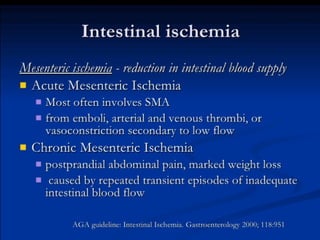
 Mesenteric ischemia
 Colonic ischemia
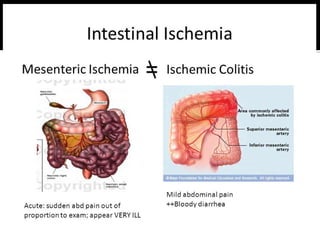
 Ischemia of the colon most often affects the
elderly (90% of patients > 60 y/o ).
 Ischemic colitis is almost always
nonocclusive. (emboli are the most common cause of acute
mesenteric ischemia)
 Shunting of blood away from the mucosa
may contribute to this condition, but the
mechanism is unknown.
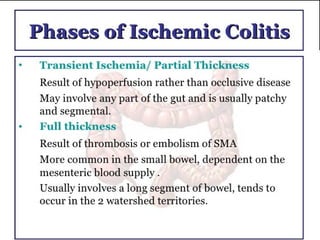
 In most patients, ischemia occurs
secondary to arteriolar shunting, spasm,
or poor perfusion of mucosal vessels.
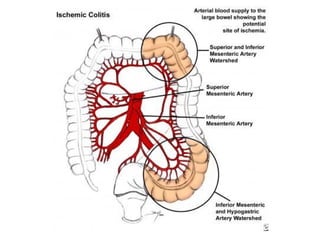
 Most cases involve the splenic flexure,
which is supplied by end-arteries.
 The rectum is usually spared, because its
blood supply is different from the rest of
the colon and less dependent on the
inferior mesenteric artery .
Marx: Rosen's Emergency Medicine: Concepts and Clinical Practice, 5th ed
1. Acute fulminant ischemic colitis
2. Subacute ischemic colitis
HARRISON’S ONLINE 15TH
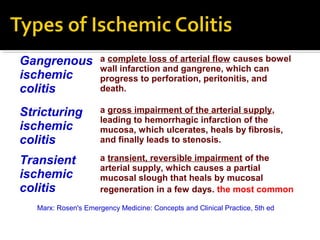
Gangrenous
ischemic
colitis
a complete loss of arterial flow causes bowel
wall infarction and gangrene, which can
progress to perforation, peritonitis, and
death.
Stricturing
ischemic
colitis
a gross impairment of the arterial supply,
leading to hemorrhagic infarction of the
mucosa, which ulcerates, heals by fibrosis,
and finally leads to stenosis.
Transient
ischemic
colitis
a transient, reversible impairment of the
arterial supply, which causes a partial
mucosal slough that heals by mucosal
regeneration in a few days. the most common
Marx: Rosen's Emergency Medicine: Concepts and Clinical Practice, 5th ed
1. The onset is characteristically acute, with
generalized lower abdominal pain, usually
in the left lower quadrant, followed within
24 hours by bloody diarrhea or rectal
bleeding .
2. Dilation of the colon and physical signs of
peritonitis are seen in severe cases.
3. With the gangrenous type, both symptoms
and signs progress rapidly.
 No specific serum markers proven in the
diagnosis of intestinal ischemia.
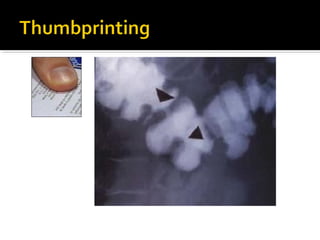
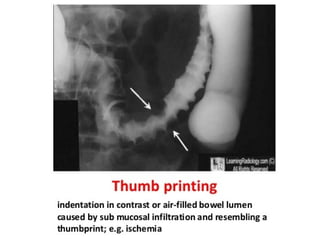
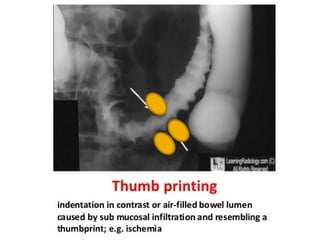
 Abdominal films may reveal thumbprinting
from submucosal hemorrhage and edema .
* (barium enema is contraindicated in cases of gangrenous
ischemic colitis because of the risk of perforation )
                         
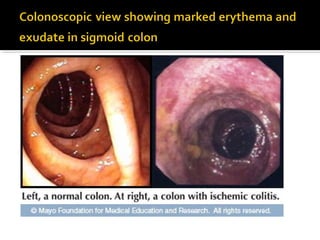
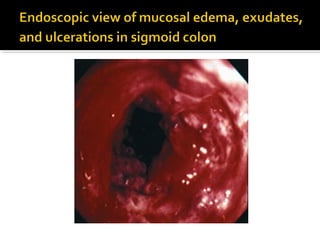
 Sigmoidoscopy or colonoscopy may detect
ulcerations, friability, and bulging folds from
submucosal hemorrhage. (Colonoscopy is preferred
over sigmoidoscopy )
 The segmental distribution and rectal
sparing of the disease process are
suggestive but are not diagnostic.
Angiography is not helpful in the
management of patients with presumed
ischemic colitis because a remediable
occlusive lesion is very rarely found.
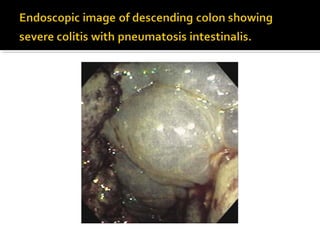
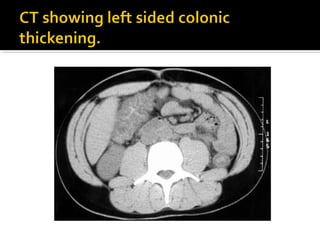
 CT scan is normal in early stages of bowel
infarction, although it may show nonspecific
findings such as bowel wall thickening and
pneumatosis.
When ischemic colitis is suspected, a
surgeon should be consulted.
Gangrenous ischemic colitis or
evidence of perforation requires
immediate surgery as soon as the
patient is stabilized.
Vasopressors should be avoided, if
possible.
Low blood-flow states (hypotension)
should be aggressively reversed.
1. Acute fulminant ischemic colitis
2. Subacute ischemic colitis
 Ischemic colitis often mimics infectious
colitis, inflammatory bowel disease, or even
colon carcinoma.
 Many cases of colitis in the elderly once
considered to be Crohn’s disease or ulcerative
colitis in retrospect were really colonic
ischemia.
Mesenteric ischemia?
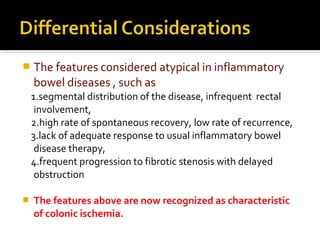
 The features considered atypical in inflammatory
bowel diseases , such as
1.segmental distribution of the disease, infrequent rectal
involvement,
2.high rate of spontaneous recovery, low rate of recurrence,
3.lack of adequate response to usual inflammatory bowel
disease therapy,
4.frequent progression to fibrotic stenosis with delayed
obstruction
 The features above are now recognized as characteristic
of colonic ischemia.
Always consider the diagnosis of
ischemic colitis whenever
contemplating the diagnosis of
inflammatory bowel disease in an
elderly patient.
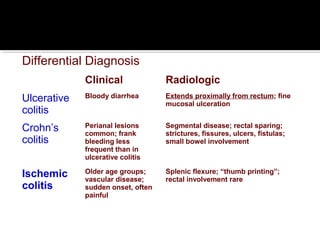
Differential Diagnosis
Clinical Radiologic
Ulcerative
colitis
Bloody diarrhea Extends proximally from rectum; fine
mucosal ulceration
Crohn’s
colitis
Perianal lesions
common; frank
bleeding less
frequent than in
ulcerative colitis
Segmental disease; rectal sparing;
strictures, fissures, ulcers, fistulas;
small bowel involvement
Ischemic
colitis
Older age groups;
vascular disease;
sudden onset, often
painful
Splenic flexure; “thumb printing”;
rectal involvement rare
 Always consider the diagnosis of ischemic
colitis whenever contemplating the diagnosis
of inflammatory bowel disease in the elderly.
 Thumbprinting of the colon on plain
abdominal radiographs suggests ischemic
colitis.
 Surgical consultation is warranted in all cases
of suspected ischemic colitis.
Ischemic colitis

Ischemic colitis

  • 1.
  • 2.
     Types  Mesentericischemia  Colonic ischemia
  • 6.
     Ischemia ofthe colon most often affects the elderly (90% of patients > 60 y/o ).  Ischemic colitis is almost always nonocclusive. (emboli are the most common cause of acute mesenteric ischemia)  Shunting of blood away from the mucosa may contribute to this condition, but the mechanism is unknown.
  • 7.
     In mostpatients, ischemia occurs secondary to arteriolar shunting, spasm, or poor perfusion of mucosal vessels.  Most cases involve the splenic flexure, which is supplied by end-arteries.  The rectum is usually spared, because its blood supply is different from the rest of the colon and less dependent on the inferior mesenteric artery . Marx: Rosen's Emergency Medicine: Concepts and Clinical Practice, 5th ed
  • 9.
    1. Acute fulminantischemic colitis 2. Subacute ischemic colitis HARRISON’S ONLINE 15TH
  • 10.
    Gangrenous ischemic colitis a complete lossof arterial flow causes bowel wall infarction and gangrene, which can progress to perforation, peritonitis, and death. Stricturing ischemic colitis a gross impairment of the arterial supply, leading to hemorrhagic infarction of the mucosa, which ulcerates, heals by fibrosis, and finally leads to stenosis. Transient ischemic colitis a transient, reversible impairment of the arterial supply, which causes a partial mucosal slough that heals by mucosal regeneration in a few days. the most common Marx: Rosen's Emergency Medicine: Concepts and Clinical Practice, 5th ed
  • 12.
    1. The onsetis characteristically acute, with generalized lower abdominal pain, usually in the left lower quadrant, followed within 24 hours by bloody diarrhea or rectal bleeding . 2. Dilation of the colon and physical signs of peritonitis are seen in severe cases. 3. With the gangrenous type, both symptoms and signs progress rapidly.
  • 13.
     No specificserum markers proven in the diagnosis of intestinal ischemia.  Abdominal films may reveal thumbprinting from submucosal hemorrhage and edema . * (barium enema is contraindicated in cases of gangrenous ischemic colitis because of the risk of perforation )
  • 14.
  • 17.
     Sigmoidoscopy orcolonoscopy may detect ulcerations, friability, and bulging folds from submucosal hemorrhage. (Colonoscopy is preferred over sigmoidoscopy )  The segmental distribution and rectal sparing of the disease process are suggestive but are not diagnostic.
  • 22.
    Angiography is nothelpful in the management of patients with presumed ischemic colitis because a remediable occlusive lesion is very rarely found.  CT scan is normal in early stages of bowel infarction, although it may show nonspecific findings such as bowel wall thickening and pneumatosis.
  • 24.
    When ischemic colitisis suspected, a surgeon should be consulted. Gangrenous ischemic colitis or evidence of perforation requires immediate surgery as soon as the patient is stabilized.
  • 25.
    Vasopressors should beavoided, if possible. Low blood-flow states (hypotension) should be aggressively reversed.
  • 26.
    1. Acute fulminantischemic colitis 2. Subacute ischemic colitis
  • 27.
     Ischemic colitisoften mimics infectious colitis, inflammatory bowel disease, or even colon carcinoma.  Many cases of colitis in the elderly once considered to be Crohn’s disease or ulcerative colitis in retrospect were really colonic ischemia. Mesenteric ischemia?
  • 29.
     The featuresconsidered atypical in inflammatory bowel diseases , such as 1.segmental distribution of the disease, infrequent rectal involvement, 2.high rate of spontaneous recovery, low rate of recurrence, 3.lack of adequate response to usual inflammatory bowel disease therapy, 4.frequent progression to fibrotic stenosis with delayed obstruction  The features above are now recognized as characteristic of colonic ischemia.
  • 30.
    Always consider thediagnosis of ischemic colitis whenever contemplating the diagnosis of inflammatory bowel disease in an elderly patient.
  • 31.
    Differential Diagnosis Clinical Radiologic Ulcerative colitis Bloodydiarrhea Extends proximally from rectum; fine mucosal ulceration Crohn’s colitis Perianal lesions common; frank bleeding less frequent than in ulcerative colitis Segmental disease; rectal sparing; strictures, fissures, ulcers, fistulas; small bowel involvement Ischemic colitis Older age groups; vascular disease; sudden onset, often painful Splenic flexure; “thumb printing”; rectal involvement rare
  • 32.
     Always considerthe diagnosis of ischemic colitis whenever contemplating the diagnosis of inflammatory bowel disease in the elderly.  Thumbprinting of the colon on plain abdominal radiographs suggests ischemic colitis.  Surgical consultation is warranted in all cases of suspected ischemic colitis.