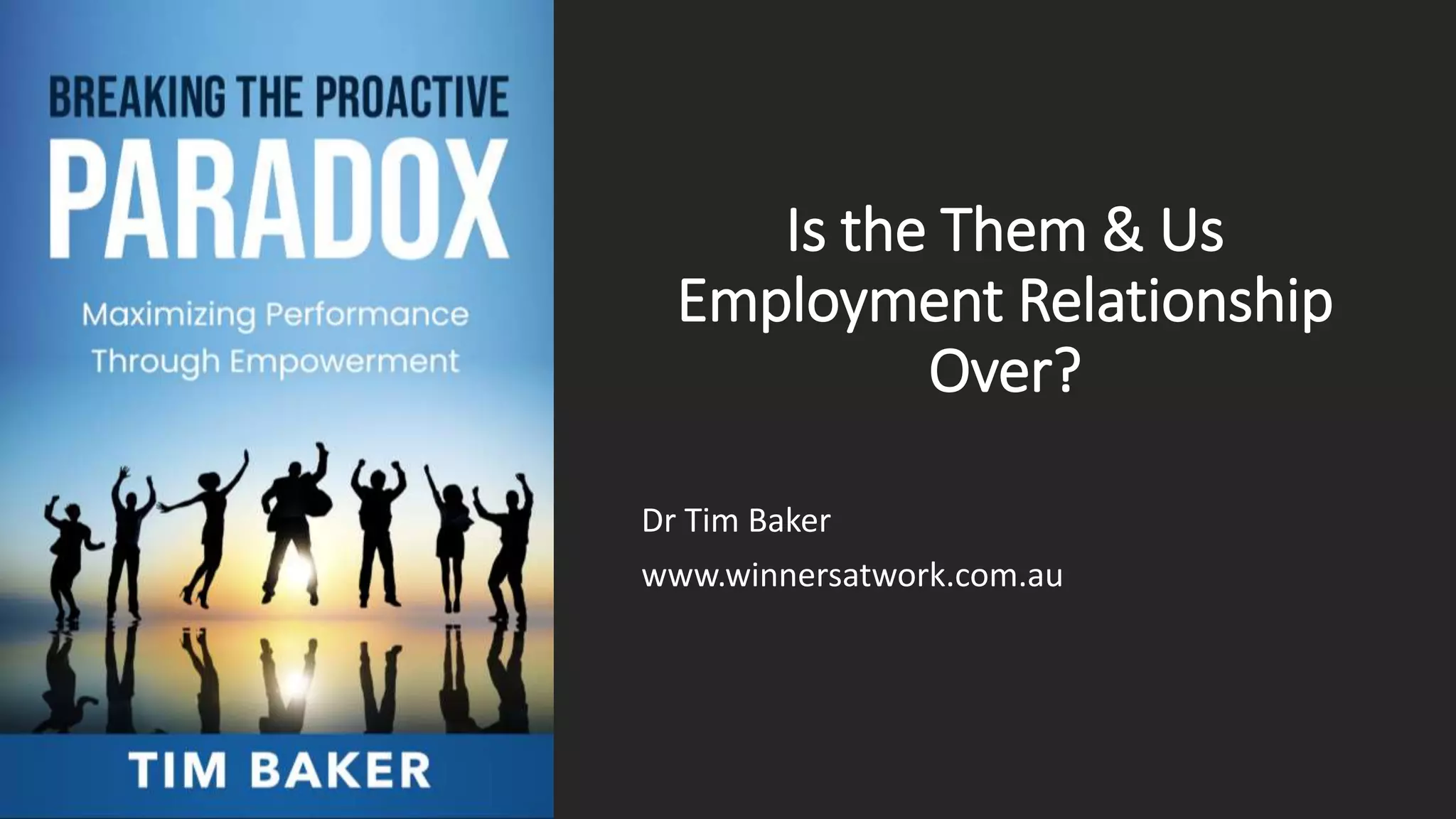
Is the Them & Us
Employment Relationship
Over?
Dr Tim Baker
www.winnersatwork.com.au
Dr. Tim Baker
Surely, the them &
us employment
relationship is long
gone.
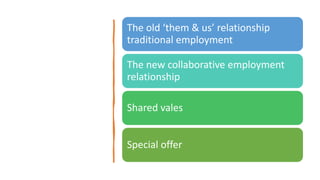
The old ‘them & us’ relationship
traditional employment
The new collaborative employment
relationship
Shared vales
Special offer
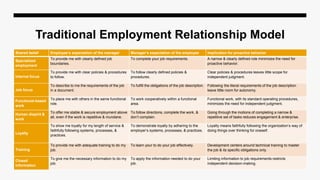
Traditional Employment Relationship Model
Shared belief Employee’s expectation of the manager Manager’s expectation of the employee Implication for proactive behavior
Specialized
employment
To provide me with clearly defined job
boundaries.
To complete your job requirements. A narrow & clearly defined role minimizes the need for
proactive behavior.
Internal focus
To provide me with clear policies & procedures
to follow.
To follow clearly defined policies &
procedures.
Clear policies & procedures leaves little scope for
independent judgment.
Job focus
To describe to me the requirements of the job
in a document.
To fulfill the obligations of the job description. Following the literal requirements of the job description
leave little room for autonomy.
Functional-based
work
To place me with others in the same functional
role.
To work cooperatively within a functional
area.
Functional work, with its standard operating procedures,
minimizes the need for independent judgment.
Human dispirit &
work
To offer me stable & secure employment above
all, even if the work is repetitive & mundane.
To follow directions, complete the work, &
don’t complain.
Going through the motions of completing a narrow &
repetitive set of tasks reduces engagement & enterprise.
Loyalty
To show me loyalty for my length of service &
faithfully following systems, processes, &
practices.
To demonstrate loyalty by adhering to the
employer’s systems, processes, & practices.
Loyalty means faithfully following the organization’s way of
doing things over thinking for oneself.
Training
To provide me with adequate training to do my
job.
To learn your to do your job effectively. Development centers around technical training to master
the job & its specific obligations only.
Closed
information
To give me the necessary information to do my
job.
To apply the information needed to do your
job.
Limiting information to job requirements restricts
independent decision-making.
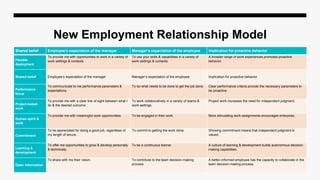
New Employment Relationship Model
Shared belief Employee’s expectation of the manager Manager’s expectation of the employee Implication for proactive behavior
Flexible
deployment
To provide me with opportunities to work in a variety of
work settings & contexts.
To use your skills & capabilities in a variety of
work settings & contexts.
A broader range of work experiences promotes proactive
behavior.
Shared belief Employee’s expectation of the manager Manager’s expectation of the employee Implication for proactive behavior
Performance
focus
To communicate to me performance parameters &
expectations.
To do what needs to be done to get the job done. Clear performance criteria provide the necessary parameters to
be proactive.
Project-based
work
To provide me with a clear line of sight between what I
do & the desired outcome.
To work collaboratively in a variety of teams &
work-settings.
Project work increases the need for independent judgment.
Human spirit &
work
To provide me with meaningful work opportunities. To be engaged in their work. More stimulating work assignments encourages enterprise.
Commitment
To be appreciated for doing a good job, regardless of
my length of tenure.
To commit to getting the work done. Showing commitment means that independent judgment is
valued.
Learning &
development
To offer me opportunities to grow & develop personally
& technically.
To be a continuous learner. A culture of learning & development builds autonomous decision-
making capabilities.
Open information
To share with me their vision. To contribute to the team decision-making
process.
A better-informed employee has the capacity to collaborate in the
team decision-making process.
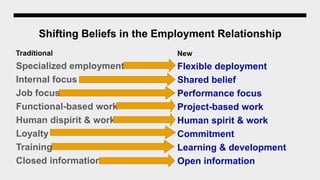
Shifting Beliefs in the Employment Relationship
Traditional
Specialized employment
Internal focus
Job focus
Functional-based work
Human dispirit & work
Loyalty
Training
Closed information
New
Flexible deployment
Shared belief
Performance focus
Project-based work
Human spirit & work
Commitment
Learning & development
Open information
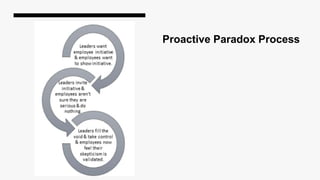
Proactive Paradox Process
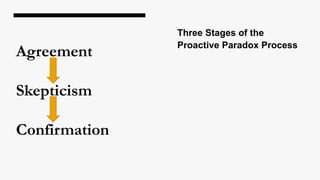
Agreement
Skepticism
Confirmation
Three Stages of the
Proactive Paradox Process
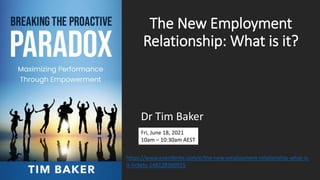
The New Employment
Relationship: What is it?
Dr Tim Baker
Fri, June 18, 2021
10am – 10:30am AEST
https://www.eventbrite.com/e/the-new-employment-relationship-what-is-
it-tickets-148128360915
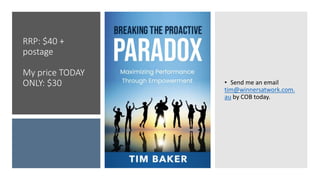
RRP: $40 +
postage
My price TODAY
ONLY: $30 • Send me an email
tim@winnersatwork.com.
au by COB today.

Is The Old Them & Us Relationship Over?

  • 1.
    Is the Them& Us Employment Relationship Over? Dr Tim Baker www.winnersatwork.com.au
  • 2.
  • 3.
    Surely, the them& us employment relationship is long gone.
  • 4.
    The old ‘them& us’ relationship traditional employment The new collaborative employment relationship Shared vales Special offer
  • 5.
    Traditional Employment RelationshipModel Shared belief Employee’s expectation of the manager Manager’s expectation of the employee Implication for proactive behavior Specialized employment To provide me with clearly defined job boundaries. To complete your job requirements. A narrow & clearly defined role minimizes the need for proactive behavior. Internal focus To provide me with clear policies & procedures to follow. To follow clearly defined policies & procedures. Clear policies & procedures leaves little scope for independent judgment. Job focus To describe to me the requirements of the job in a document. To fulfill the obligations of the job description. Following the literal requirements of the job description leave little room for autonomy. Functional-based work To place me with others in the same functional role. To work cooperatively within a functional area. Functional work, with its standard operating procedures, minimizes the need for independent judgment. Human dispirit & work To offer me stable & secure employment above all, even if the work is repetitive & mundane. To follow directions, complete the work, & don’t complain. Going through the motions of completing a narrow & repetitive set of tasks reduces engagement & enterprise. Loyalty To show me loyalty for my length of service & faithfully following systems, processes, & practices. To demonstrate loyalty by adhering to the employer’s systems, processes, & practices. Loyalty means faithfully following the organization’s way of doing things over thinking for oneself. Training To provide me with adequate training to do my job. To learn your to do your job effectively. Development centers around technical training to master the job & its specific obligations only. Closed information To give me the necessary information to do my job. To apply the information needed to do your job. Limiting information to job requirements restricts independent decision-making.
  • 6.
    New Employment RelationshipModel Shared belief Employee’s expectation of the manager Manager’s expectation of the employee Implication for proactive behavior Flexible deployment To provide me with opportunities to work in a variety of work settings & contexts. To use your skills & capabilities in a variety of work settings & contexts. A broader range of work experiences promotes proactive behavior. Shared belief Employee’s expectation of the manager Manager’s expectation of the employee Implication for proactive behavior Performance focus To communicate to me performance parameters & expectations. To do what needs to be done to get the job done. Clear performance criteria provide the necessary parameters to be proactive. Project-based work To provide me with a clear line of sight between what I do & the desired outcome. To work collaboratively in a variety of teams & work-settings. Project work increases the need for independent judgment. Human spirit & work To provide me with meaningful work opportunities. To be engaged in their work. More stimulating work assignments encourages enterprise. Commitment To be appreciated for doing a good job, regardless of my length of tenure. To commit to getting the work done. Showing commitment means that independent judgment is valued. Learning & development To offer me opportunities to grow & develop personally & technically. To be a continuous learner. A culture of learning & development builds autonomous decision- making capabilities. Open information To share with me their vision. To contribute to the team decision-making process. A better-informed employee has the capacity to collaborate in the team decision-making process.
  • 7.
    Shifting Beliefs inthe Employment Relationship Traditional Specialized employment Internal focus Job focus Functional-based work Human dispirit & work Loyalty Training Closed information New Flexible deployment Shared belief Performance focus Project-based work Human spirit & work Commitment Learning & development Open information
  • 8.
  • 9.
  • 10.
    The New Employment Relationship:What is it? Dr Tim Baker Fri, June 18, 2021 10am – 10:30am AEST https://www.eventbrite.com/e/the-new-employment-relationship-what-is- it-tickets-148128360915
  • 11.
    RRP: $40 + postage Myprice TODAY ONLY: $30 • Send me an email tim@winnersatwork.com. au by COB today.