The New Employment Relationship: 
Its Implications for Performance 
Dr Tim Baker 
www.winnersatwork.com.au 
QLD Performance and Reward Network forum 
- Brisbane, Tuesday 18 Nov 2014
Understand the eight values supporting an employer of choice 
Aims & 
Objectives 
Apply practical strategies to assist their organisation become an 
employer of choice 
Learn how to benchmark their organisation against the New 
Employment Relationship
An 
employer of choice 
is a great place to work; 
it reflects the changing 
needs and interests 
of 
employees and 
organisations
Why is becoming an employer of choice important? 
It is about creating a 
workplace culture 
that is likely to 
attract and retain top talent
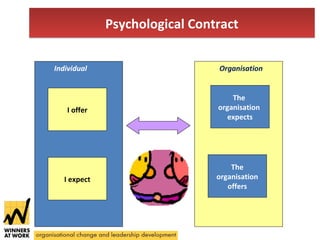
PPssyycchhoollooggiiccaall CCoonnttrraacctt 
Individual Organisation 
I offer 
I expect 
The 
organisation 
expects 
The 
organisation 
offers
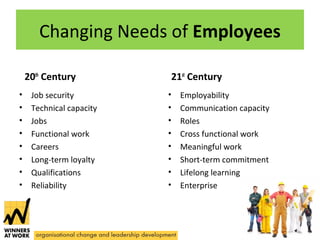
Changing Needs of Employees 
20th Century 21st Century 
• Job security 
• Technical capacity 
• Jobs 
• Functional work 
• Careers 
• Long-term loyalty 
• Qualifications 
• Reliability 
• Employability 
• Communication capacity 
• Roles 
• Cross functional work 
• Meaningful work 
• Short-term commitment 
• Lifelong learning 
• Enterprise
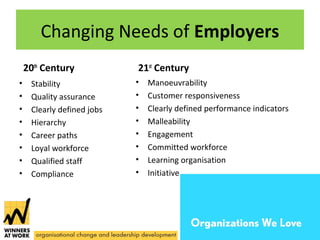
Changing Needs of Employers 
20th Century 21st Century 
• Stability 
• Quality assurance 
• Clearly defined jobs 
• Hierarchy 
• Career paths 
• Loyal workforce 
• Qualified staff 
• Compliance 
• Manoeuvrability 
• Customer responsiveness 
• Clearly defined performance indicators 
• Malleability 
• Engagement 
• Committed workforce 
• Learning organisation 
• Initiative
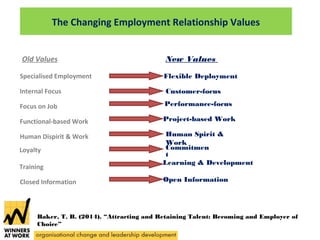
The Changing Employment Relationship Values 
Old Values New Values 
Specialised Employment Flexible Deployment 
Internal Focus Customer-focus 
Focus on Job Performance-focus 
Functional-based Work Project-based Work 
Human Dispirit & Work Human Spirit & 
Work 
Loyalty Commitmen 
t 
Training Learning & Development 
Closed Information Open Information 
Baker, T. B. (2014). “Attracting and Retaining Talent: Becoming and Employer of 
Choice”
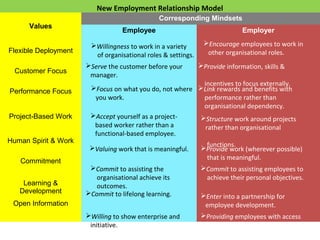
New Employment Relationship Model 
Values 
Corresponding Mindsets 
Employee Employer 
Flexible Deployment 
Customer Focus 
Performance Focus 
Project-Based Work 
Human Spirit & Work 
Commitment 
Learning & 
Development 
Open Information 
Willingness to work in a variety 
of organisational roles & settings. 
 S erve the customer before your 
manager. 
Focus on what you do, not where 
you work. 
Accept yourself as a project-based 
worker rather than a 
functional-based employee. 
Valuing work that is meaningful. 
Commit to assisting the 
organisational achieve its 
outcomes. 
Commit to lifelong learning. 
Willing to show enterprise and 
initiative. 
Encourage employees to work in 
other organisational roles. 
Provide information, skills & 
incentives to focus externally. 
Link rewards and benefits with 
performance rather than 
organisational dependency. 
Structure work around projects 
rather than organisational 
functions. Provide work (wherever possible) 
that is meaningful. 
Commit to assisting employees to 
achieve their personal objectives. 
Enter into a partnership for 
employee development. 
Providing employees with access 
to a wide range of information.
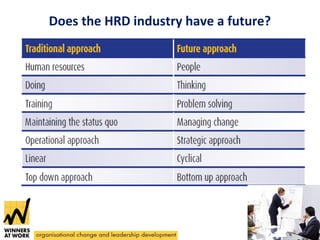
Does the HRD industry have a future?
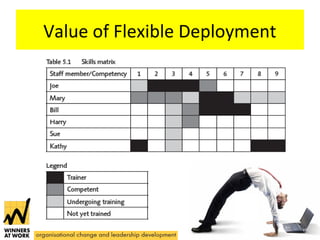
Value of Flexible Deployment
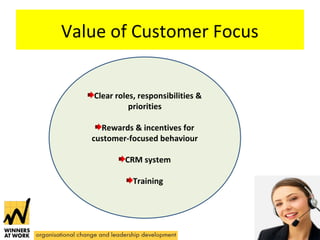
Value of Customer Focus 
Clear roles, responsibilities & 
priorities 
Rewards & incentives for 
customer-focused behaviour 
CRM system 
Training
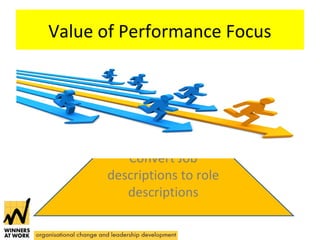
Value of Performance Focus 
Convert Job 
descriptions to role 
descriptions
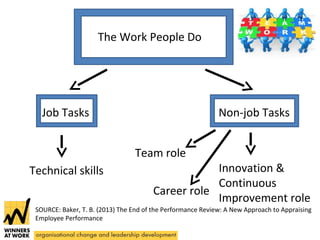
The Work People Do 
Job Tasks Non-job Tasks 
Technical skills 
Team role 
Career role 
Innovation & 
Continuous 
Improvement role 
SOURCE: Baker, T. B. (2013) The End of the Performance Review: A New Approach to Appraising 
Employee Performance
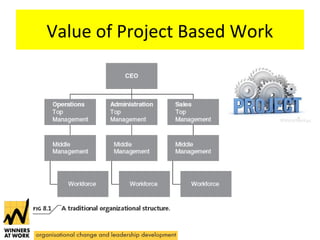
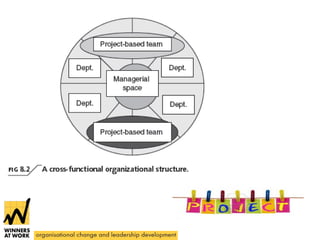
Value of Project Based Work
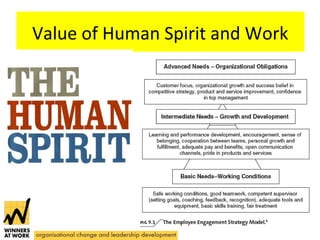
Value of Human Spirit and Work
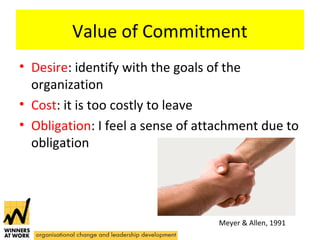
Value of Commitment 
• Desire: identify with the goals of the 
organization 
• Cost: it is too costly to leave 
• Obligation: I feel a sense of attachment due to 
obligation 
Meyer & Allen, 1991
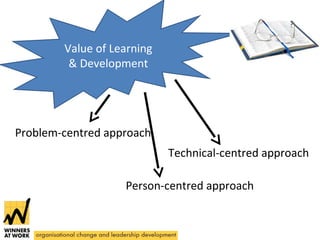
Value of Learning 
& Development 
Technical-centred approach 
Problem-centred approach 
Person-centred approach
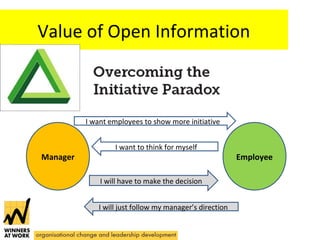
Value of Open Information 
I want employees to show more initiative 
I want to think for myself 
Manager Employee 
I will have to make the decision 
I will just follow my manager’s direction
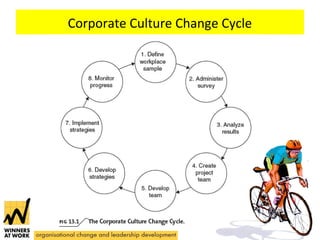
Corporate Culture Change Cycle
20% off the price 
Normally $35 plus postage 
You get my new book 
signed for $28 signed plus 
postage!! 
Send me an email 
tim@winnersatwork.com.au 
by 12 midnight tonight

The New Employment Relationship

  • 1.
    The New EmploymentRelationship: Its Implications for Performance Dr Tim Baker www.winnersatwork.com.au QLD Performance and Reward Network forum - Brisbane, Tuesday 18 Nov 2014
  • 2.
    Understand the eightvalues supporting an employer of choice Aims & Objectives Apply practical strategies to assist their organisation become an employer of choice Learn how to benchmark their organisation against the New Employment Relationship
  • 3.
    An employer ofchoice is a great place to work; it reflects the changing needs and interests of employees and organisations
  • 4.
    Why is becomingan employer of choice important? It is about creating a workplace culture that is likely to attract and retain top talent
  • 5.
    PPssyycchhoollooggiiccaall CCoonnttrraacctt IndividualOrganisation I offer I expect The organisation expects The organisation offers
  • 6.
    Changing Needs ofEmployees 20th Century 21st Century • Job security • Technical capacity • Jobs • Functional work • Careers • Long-term loyalty • Qualifications • Reliability • Employability • Communication capacity • Roles • Cross functional work • Meaningful work • Short-term commitment • Lifelong learning • Enterprise
  • 7.
    Changing Needs ofEmployers 20th Century 21st Century • Stability • Quality assurance • Clearly defined jobs • Hierarchy • Career paths • Loyal workforce • Qualified staff • Compliance • Manoeuvrability • Customer responsiveness • Clearly defined performance indicators • Malleability • Engagement • Committed workforce • Learning organisation • Initiative
  • 8.
    The Changing EmploymentRelationship Values Old Values New Values Specialised Employment Flexible Deployment Internal Focus Customer-focus Focus on Job Performance-focus Functional-based Work Project-based Work Human Dispirit & Work Human Spirit & Work Loyalty Commitmen t Training Learning & Development Closed Information Open Information Baker, T. B. (2014). “Attracting and Retaining Talent: Becoming and Employer of Choice”
  • 10.
    New Employment RelationshipModel Values Corresponding Mindsets Employee Employer Flexible Deployment Customer Focus Performance Focus Project-Based Work Human Spirit & Work Commitment Learning & Development Open Information Willingness to work in a variety of organisational roles & settings.  S erve the customer before your manager. Focus on what you do, not where you work. Accept yourself as a project-based worker rather than a functional-based employee. Valuing work that is meaningful. Commit to assisting the organisational achieve its outcomes. Commit to lifelong learning. Willing to show enterprise and initiative. Encourage employees to work in other organisational roles. Provide information, skills & incentives to focus externally. Link rewards and benefits with performance rather than organisational dependency. Structure work around projects rather than organisational functions. Provide work (wherever possible) that is meaningful. Commit to assisting employees to achieve their personal objectives. Enter into a partnership for employee development. Providing employees with access to a wide range of information.
  • 11.
    Does the HRDindustry have a future?
  • 12.
  • 13.
    Value of CustomerFocus Clear roles, responsibilities & priorities Rewards & incentives for customer-focused behaviour CRM system Training
  • 14.
    Value of PerformanceFocus Convert Job descriptions to role descriptions
  • 15.
    The Work PeopleDo Job Tasks Non-job Tasks Technical skills Team role Career role Innovation & Continuous Improvement role SOURCE: Baker, T. B. (2013) The End of the Performance Review: A New Approach to Appraising Employee Performance
  • 16.
    Value of ProjectBased Work
  • 18.
    Value of HumanSpirit and Work
  • 19.
    Value of Commitment • Desire: identify with the goals of the organization • Cost: it is too costly to leave • Obligation: I feel a sense of attachment due to obligation Meyer & Allen, 1991
  • 20.
    Value of Learning & Development Technical-centred approach Problem-centred approach Person-centred approach
  • 21.
    Value of OpenInformation I want employees to show more initiative I want to think for myself Manager Employee I will have to make the decision I will just follow my manager’s direction
  • 22.
  • 23.
    20% off theprice Normally $35 plus postage You get my new book signed for $28 signed plus postage!! Send me an email tim@winnersatwork.com.au by 12 midnight tonight

Editor's Notes

  • #3 Workplace culture is a product of the employment relationship.