







Flushing out / washing out the urinary
bladder with specific solution.
4/28/2013 www.drjayeshpatidar.blogspot.in 2
Toflush clots & debris out of the catheter &
bladder.
Toinstill medication to bladder lining
Torestore patency of the catheter.
4/28/2013
www.drjayeshpatidar.blogspot.in
10
 Disposable gloves
 Disposable, water resistant, sterile towel/mackintosh
 Threeway retention catheter
 Strile drainage tubing & bag in place
 Sterile antiseptic swab
 Sterile receptable
 Sterile irrigating solution warmed or at room temperature
• Normal saline
• Distilled water
• Solution as prescribe by physician
 Infusion tubing
 IV pole
 Kidney basin 4/28/2013
www.drjayeshpatidar.blogspot.in
11
Check physician's order & nursing care plan for type, amount
& strength of irrigation fluid & reason for irrigation.
Prepare the patient
a. Explain the procedure & purpose to the patient
b. Provide for privacy & drape the patient
c. Empty, measure & record the amount & appearance of
urine present in the urinebag
4/28/2013
www.drjayeshpatidar.blogspot.in
12
Prepare the equipment
a. Wash hand
b. Connect the irrigation infusion tubing to the irrigating
solution & flush the tubing with solution
c. Connect the irrigation tubing to the input port of the 3-
way catheter.Connect the drainage bag & tubing to the
urinary drainage port if not already in place
4/28/2013
www.drjayeshpatidar.blogspot.in
13
Irrigate the bladder
a. Continuous irrigation
 Open the flow clamp on the urinary drainage tubing (if
present)
 Open the regulating clamp on theirrigating
tubing & adjust the flow rate as prescribed by the physician
or to 40- 60 drops/minute if not specified.
 Assess the drainage for amount, colour &
clarity.
4/28/2013
www.drjayeshpatidar.blogspot.in
14
b. Intermittent Irrigation
I. Determine whether the solution is to remain in the bladder for a
specified time.
• If solution is to remain in the bladder during a bladder
irrigation or instillation close the flow clamp on the urinary
drainage tubing.
• Open the flow clamp on the irrigation
tubing, allowing the specified amount of solution (75-100 ml) to
infuse & then clamp the tubing
• After retaining the solution for specific periodof time, open the
drainage tubing flow clamp & allow the bladder to empty
4/28/2013
www.drjayeshpatidar.blogspot.in
15
II. If the solution being instilled is to irrigate the catheter,
open the flow clamp on the urinary drainage tubing.
 Assess the patient condition, urinary output, color,
odour & clarity of drainage.
 Discard all used disposable articles, clean& replace
reusable articles.
 Wash hands
 Record procedure in nurse’s record.
4/28/2013
www.drjayeshpatidar.blogspot.in
16
Colonic Irrigation
Definition
• Colonic Irrigation or enteroclysis or bowel wash
refers to the treatment of washing out the colon
with large quantities of a solution in order to
clear the colon of faeces
Purposes
• To clean the colon of faeces , gas , excess mucus ,
barium etc .
• To dilute & remove any of the toxic agents that may be
present in the large intestine
• To keep the individual clean in faecal incontinence and
to check the diarrhoea
• To supply heat to the colon or to the pelvic &
abdominal organs surrounding the large intestine to (to
relieve pain & bring about circulatory changes in these
organs )
Purposes
• To reduce temperature in hyperpyrexia & heat
stroke
• To apply medications locally
• To supply the body with fluid & electrolytes that
are absorbed from the intestine
• As a preparation for diagnostic examinations &
certain surgeries to cleanse the bowel
Solutions used
• Plain water
• Cold water
• Normal saline
• Sodium bi-carbonate solution 1 to 2 %
• Antiseptic solution such as silver nitrate 1 : 5000 ;
potassium permanganate solutions 1 : 5000 ; thymol 1
: 100 ; alum 1 : 100 ; boric solution 1 to 2 %
•Amount of solution used :
•2 to 3 liter or till the return flow is clear
•Temperature of the solution :
•For cleansing purpose 104 ºF ( 40 º C )
•For thermal effect 110 to 115 ºF ( 43.3 to 46
ºC)
•For reducing temperature 80 to 90 ºF ( 27 to 32
ºC )
General Instruction
• A cleansing enema should be given 1 hour before the
colon irrigation is started , so that the rectum will be
free of faecal matter
• The bladder should be emptied before a colonic
irrigation to reduce the intra-abdominal pressure
• The temperature of the solution be kept constant
throughout the procedure
• Do not allow the air to enter into the intestine by :
• Expelling the air from the tube
• Not letting the fluid into to run in completely from the tube
• Make sure that the return flow is not blocked
• Stop the procedure temporarily if the client complaints
of pain
• Use a smooth & flexible rectal tube & lubricate it well to
prevent damage to the rectal mucosa
• Listen to the complaints of the client should not ignore
any discomfort however small they may be
• Stop the treatment if the client shows the signs of
fatigue & collapse
• Allow only 200 to 300 ml of fluid to run into the rectum
at a time
• Then it should be drained out completely before
introducing the fluid 2nd time
• Regulate the flow of fluid . Do not have the ingoing
tube higher than 45 to 60 cm above the bed level & do
not have the outgoing tube more than 30 cm below the
bed
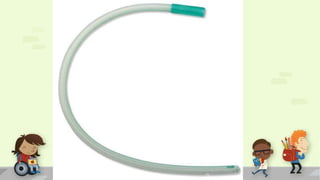
By using
funnel & catheter
Thank you…

Irrigation of medication

Irrigation of medication

  • 9.
    Flushing out /washing out the urinary bladder with specific solution. 4/28/2013 www.drjayeshpatidar.blogspot.in 2
  • 10.
    Toflush clots &debris out of the catheter & bladder. Toinstill medication to bladder lining Torestore patency of the catheter. 4/28/2013 www.drjayeshpatidar.blogspot.in 10
  • 11.
     Disposable gloves Disposable, water resistant, sterile towel/mackintosh  Threeway retention catheter  Strile drainage tubing & bag in place  Sterile antiseptic swab  Sterile receptable  Sterile irrigating solution warmed or at room temperature • Normal saline • Distilled water • Solution as prescribe by physician  Infusion tubing  IV pole  Kidney basin 4/28/2013 www.drjayeshpatidar.blogspot.in 11
  • 12.
    Check physician's order& nursing care plan for type, amount & strength of irrigation fluid & reason for irrigation. Prepare the patient a. Explain the procedure & purpose to the patient b. Provide for privacy & drape the patient c. Empty, measure & record the amount & appearance of urine present in the urinebag 4/28/2013 www.drjayeshpatidar.blogspot.in 12
  • 13.
    Prepare the equipment a.Wash hand b. Connect the irrigation infusion tubing to the irrigating solution & flush the tubing with solution c. Connect the irrigation tubing to the input port of the 3- way catheter.Connect the drainage bag & tubing to the urinary drainage port if not already in place 4/28/2013 www.drjayeshpatidar.blogspot.in 13
  • 14.
    Irrigate the bladder a.Continuous irrigation  Open the flow clamp on the urinary drainage tubing (if present)  Open the regulating clamp on theirrigating tubing & adjust the flow rate as prescribed by the physician or to 40- 60 drops/minute if not specified.  Assess the drainage for amount, colour & clarity. 4/28/2013 www.drjayeshpatidar.blogspot.in 14
  • 15.
    b. Intermittent Irrigation I.Determine whether the solution is to remain in the bladder for a specified time. • If solution is to remain in the bladder during a bladder irrigation or instillation close the flow clamp on the urinary drainage tubing. • Open the flow clamp on the irrigation tubing, allowing the specified amount of solution (75-100 ml) to infuse & then clamp the tubing • After retaining the solution for specific periodof time, open the drainage tubing flow clamp & allow the bladder to empty 4/28/2013 www.drjayeshpatidar.blogspot.in 15
  • 16.
    II. If thesolution being instilled is to irrigate the catheter, open the flow clamp on the urinary drainage tubing.  Assess the patient condition, urinary output, color, odour & clarity of drainage.  Discard all used disposable articles, clean& replace reusable articles.  Wash hands  Record procedure in nurse’s record. 4/28/2013 www.drjayeshpatidar.blogspot.in 16
  • 17.
  • 18.
    Definition • Colonic Irrigationor enteroclysis or bowel wash refers to the treatment of washing out the colon with large quantities of a solution in order to clear the colon of faeces
  • 19.
    Purposes • To cleanthe colon of faeces , gas , excess mucus , barium etc . • To dilute & remove any of the toxic agents that may be present in the large intestine • To keep the individual clean in faecal incontinence and to check the diarrhoea • To supply heat to the colon or to the pelvic & abdominal organs surrounding the large intestine to (to relieve pain & bring about circulatory changes in these organs )
  • 20.
    Purposes • To reducetemperature in hyperpyrexia & heat stroke • To apply medications locally • To supply the body with fluid & electrolytes that are absorbed from the intestine • As a preparation for diagnostic examinations & certain surgeries to cleanse the bowel
  • 21.
    Solutions used • Plainwater • Cold water • Normal saline • Sodium bi-carbonate solution 1 to 2 % • Antiseptic solution such as silver nitrate 1 : 5000 ; potassium permanganate solutions 1 : 5000 ; thymol 1 : 100 ; alum 1 : 100 ; boric solution 1 to 2 %
  • 22.
    •Amount of solutionused : •2 to 3 liter or till the return flow is clear •Temperature of the solution : •For cleansing purpose 104 ºF ( 40 º C ) •For thermal effect 110 to 115 ºF ( 43.3 to 46 ºC) •For reducing temperature 80 to 90 ºF ( 27 to 32 ºC )
  • 23.
    General Instruction • Acleansing enema should be given 1 hour before the colon irrigation is started , so that the rectum will be free of faecal matter • The bladder should be emptied before a colonic irrigation to reduce the intra-abdominal pressure • The temperature of the solution be kept constant throughout the procedure • Do not allow the air to enter into the intestine by : • Expelling the air from the tube • Not letting the fluid into to run in completely from the tube
  • 24.
    • Make surethat the return flow is not blocked • Stop the procedure temporarily if the client complaints of pain • Use a smooth & flexible rectal tube & lubricate it well to prevent damage to the rectal mucosa • Listen to the complaints of the client should not ignore any discomfort however small they may be • Stop the treatment if the client shows the signs of fatigue & collapse
  • 25.
    • Allow only200 to 300 ml of fluid to run into the rectum at a time • Then it should be drained out completely before introducing the fluid 2nd time • Regulate the flow of fluid . Do not have the ingoing tube higher than 45 to 60 cm above the bed level & do not have the outgoing tube more than 30 cm below the bed
  • 26.
  • 28.