A New Service Model
through Technology
IOLUG Spring Program, May 3, 2013
Brian C. Gray
Team Leader Research Services
Case Western Reserve University
Kelvin Smith Library
bcg8@case.edu
A New Service Model
through Technology
• Highlights of changes we made
with help of technology
• Other technologies we are using
or trying
• Some other sources of inspiration
Case Western Reserve University
• Private, research intensive
• http://www.case.edu/
• Below 10,000 students, 40% undergraduate
• 2,600+ faculty
• Alumni: 100,000+
• Annual research revenue about $400 million
• 2012/13: largest first year class ever, ~1400
Kelvin Smith Library (KSL)
http://library.case.edu
• Main library, includes arts &
sciences, engineering, business, & undergraduate
• New strategic plan: April 2011
• http://library.case.edu/ksl/whoweare/strategicplan/
• Staff & budget reorganization to match
• New approaches: small pilots, increased listening
to patron opinions, assessment/data
focus, customization, transparency
Kelvin Smith Library (KSL)
Mission: KSL is the knowledge and creativity commons of
CWRU.
Vision: KSL will be the information laboratory for knowledge
collection, connection, creation, and curation.
Values:
• Openness
• Collaboration
• Personalized service
• Agility & innovation through experimentation
New Service Models
• Implement Summon
• Phase out the formal reference desk in order
to go “on call” and “get out” of building
• Go to users
• Build relationships
• Grow LibGuides & virtual instruction
• Completely redesign website
Highlights From & During
Summon Implementation
• Live in only a few weeks
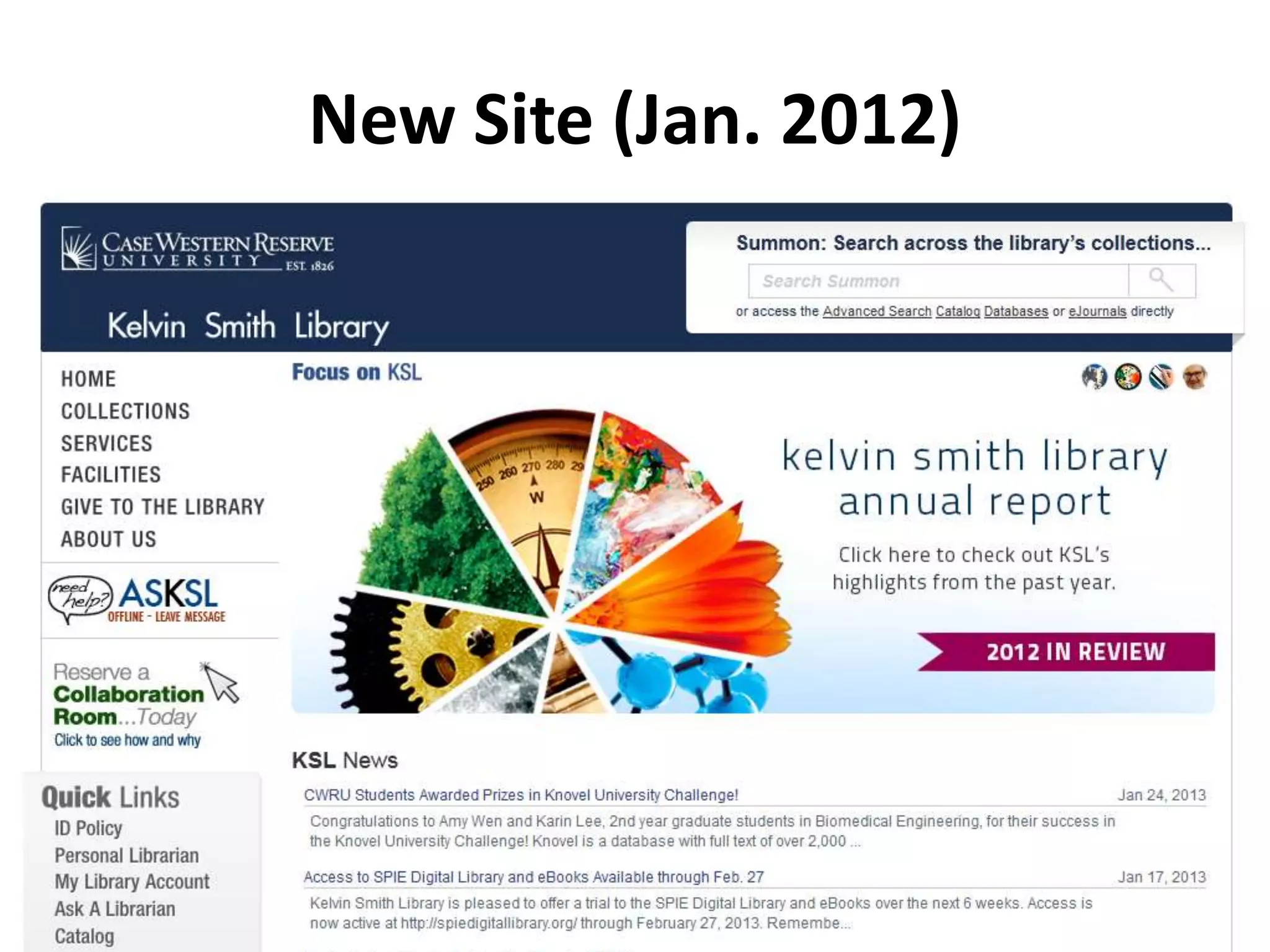
• Entire website was redesigned
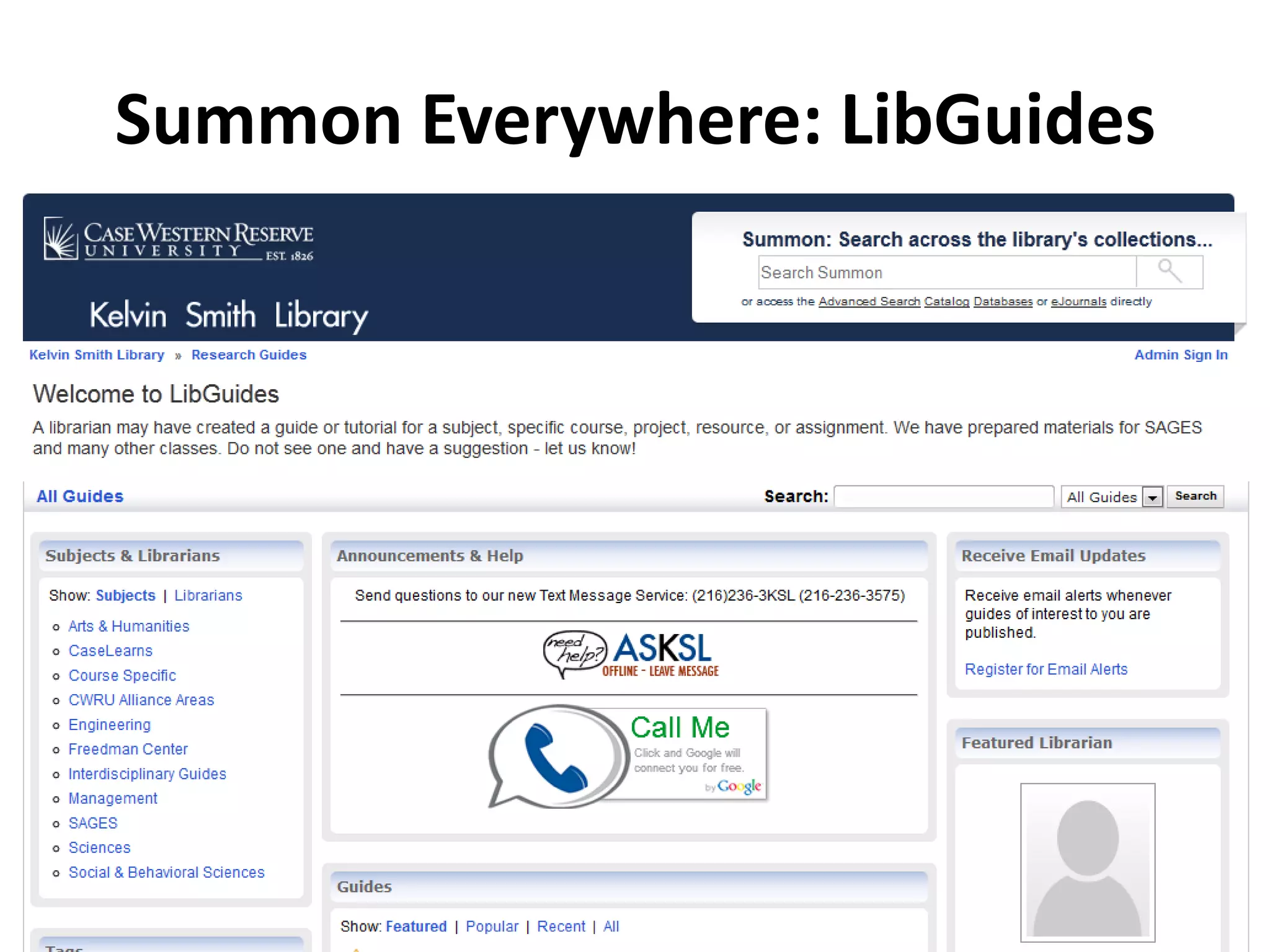
• Every page in site & LibGuides has search box
• Rolled out the same time we phased out the
formal reference desk
• Balanced Scorecard method of assessment
with data shared publicly
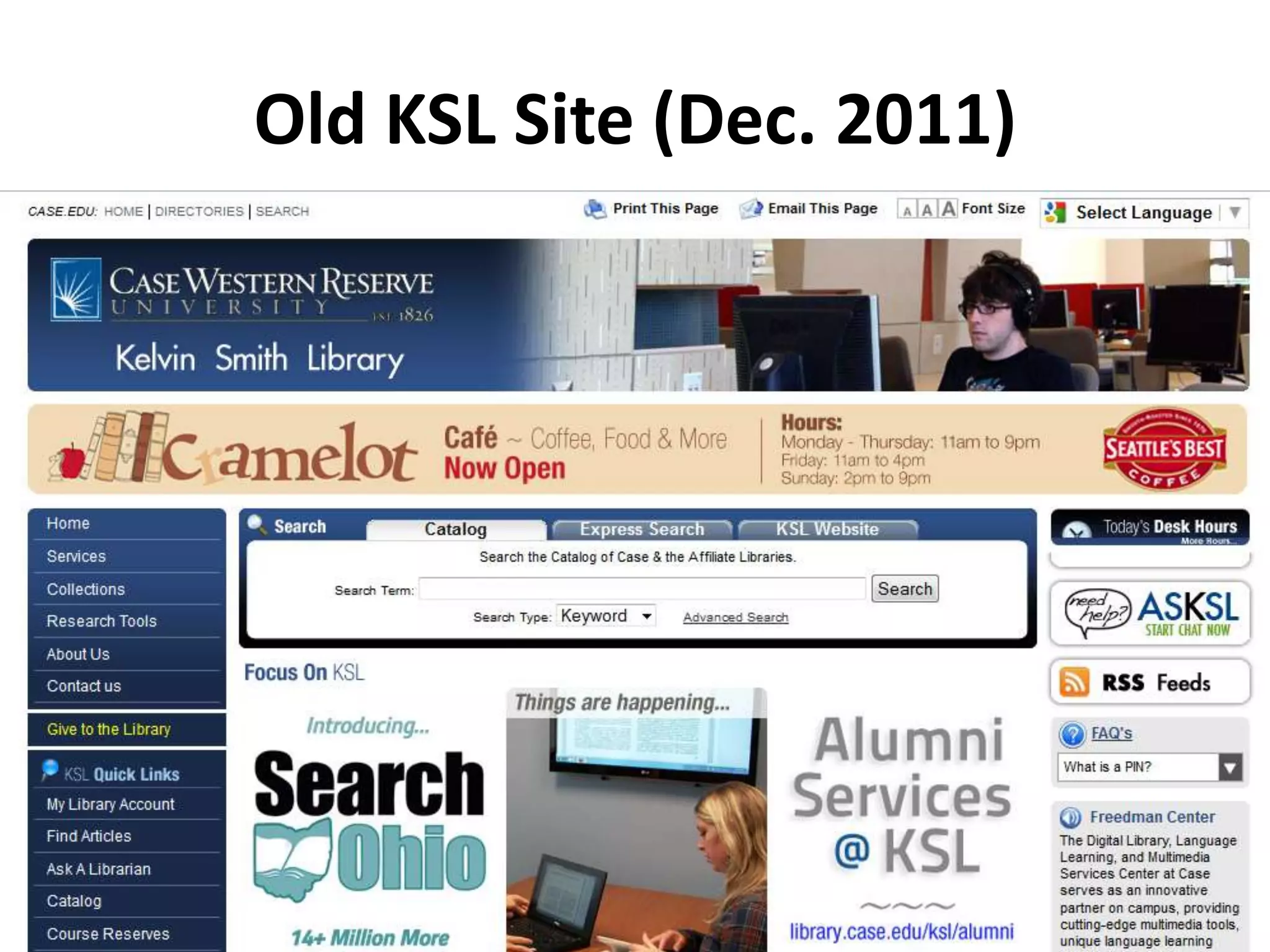
Old KSL Site (Dec. 2011)
New Site (Jan. 2012)
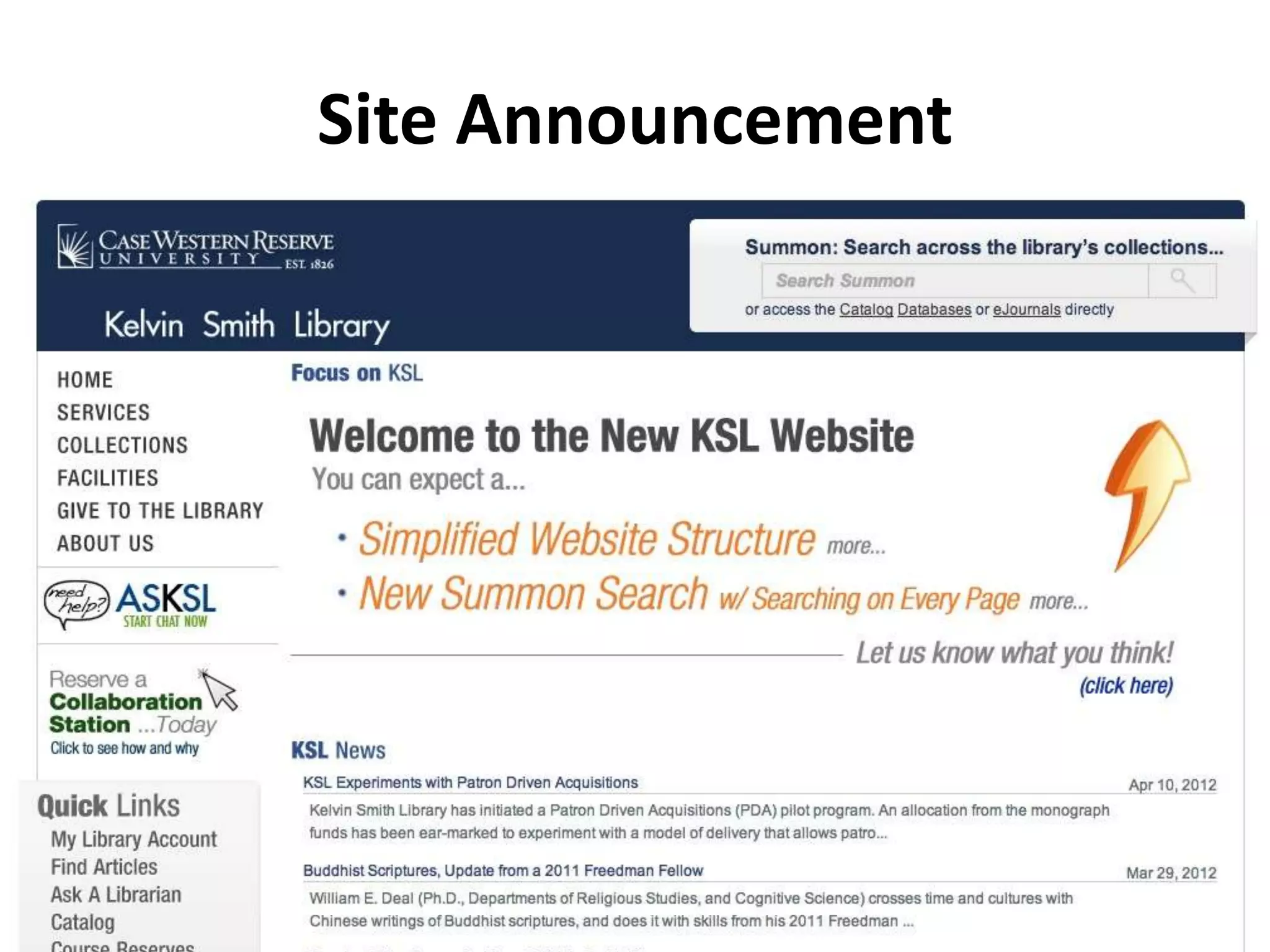
Site Announcement
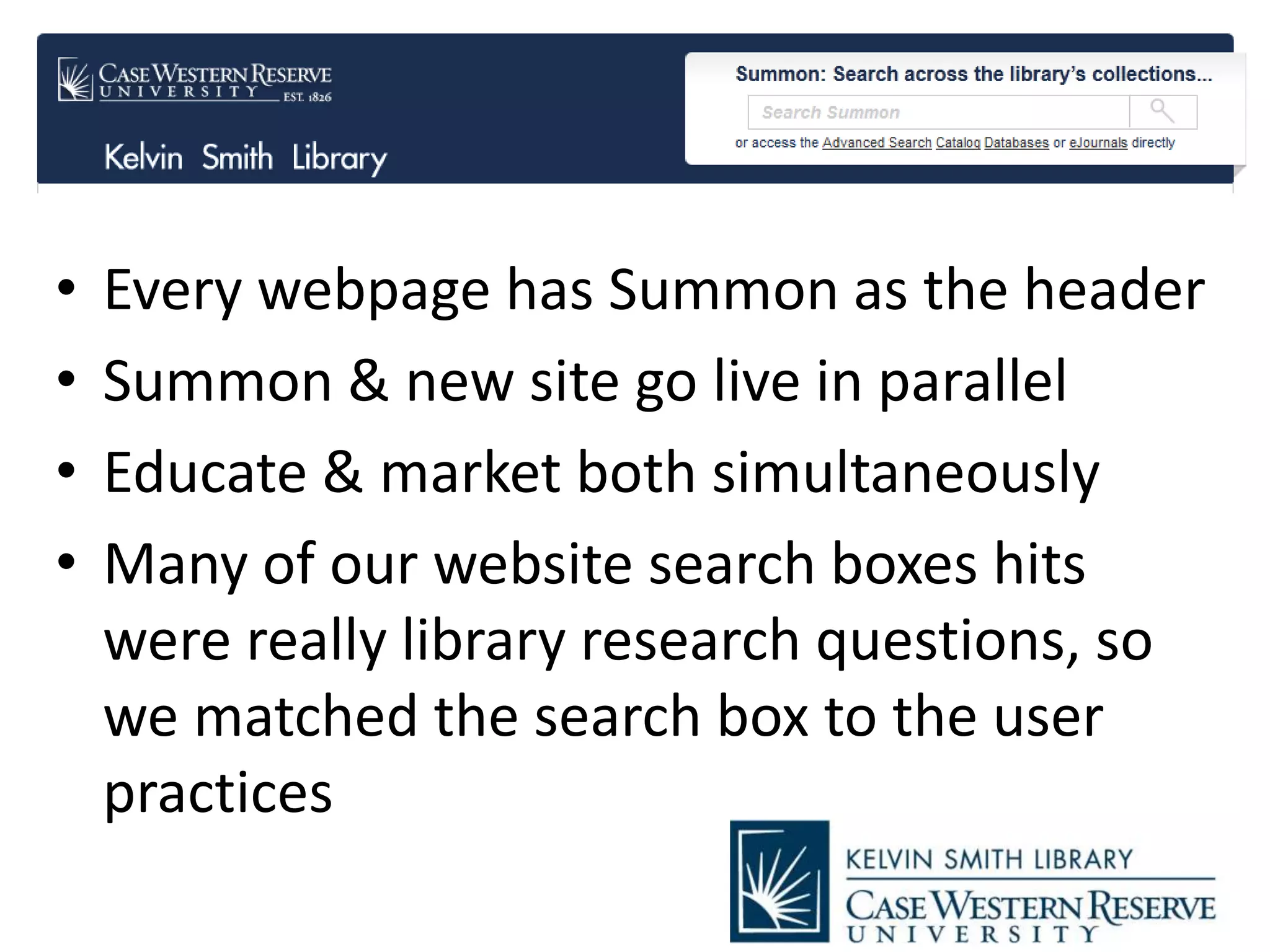
• Every webpage has Summon as the header
• Summon & new site go live in parallel
• Educate & market both simultaneously
• Many of our website search boxes hits
were really library research questions, so
we matched the search box to the user
practices
Summon Everywhere: LibGuides
Balanced Scorecard
• Ensure strategic plan accomplishes intended
outcomes
• Articulate success
• Follow a strategy map
• Specific qualitative & quantitative success metrics
• Create & adopt outcome assessment tools
• Communicate progress through public
dashboards
Balanced Scorecard
• Metric for Year 1: 25% of all searches performed
on Summon (totaling up all searches performed
between the catalog and summon, and create a
percentage).
• We hit 28.4%
• Developing a new metric comparing a “core” and
stable set of databases with strong COUNTER
data to compare usage against Summon over
similar time periods
New Walk-in Service Model
Old:
• Reference Desk, Circulation Desk, Freedman
Center (multimedia) desk
New:
• Welcome Desk (greeting & IDs only; no services)
and Service Desk (circulation, reference
“triage”, and multimedia) with staff roaming the
computer spaces
• Research Services Librarians called when needed
Reference Model Changed
• All reference, collection, & instruction
librarians combined into a single team
(Research Services)
• Service Desk staff take initial questions
• Librarians scheduled virtual and “on call”
• Librarians hit the road & leave the library to
be where the users are
• Focus on faculty relationship building
Reference Model Changed
• Service Desk trained regularly in reference
resources and techniques
Summon allowed:
• Non-librarians to answer more questions easier
than previously
• Increased instruction to occur when answering
virtual reference question by being able to focus
on a single research tool
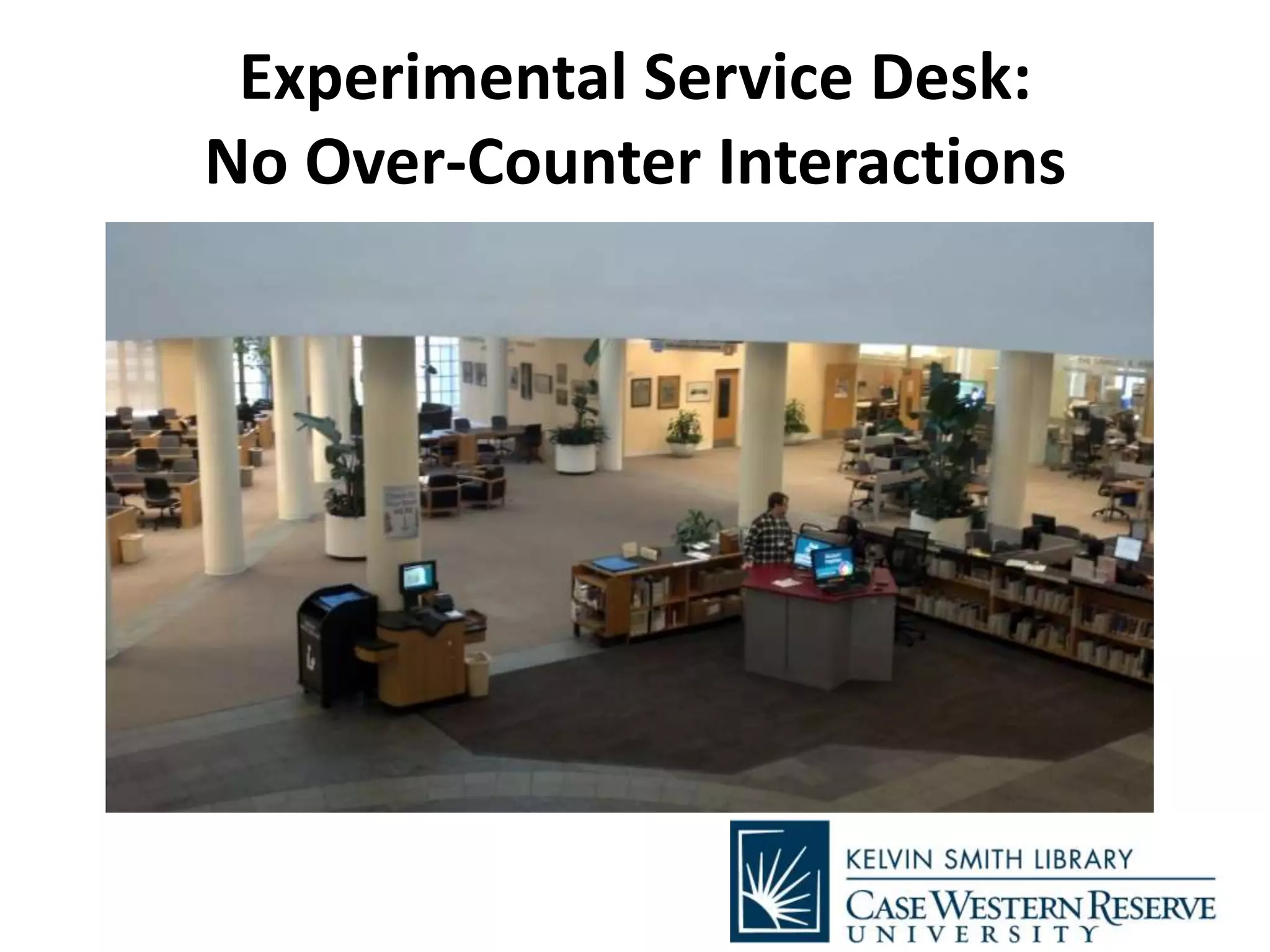
Experimental Service Desk:
No Over-Counter Interactions
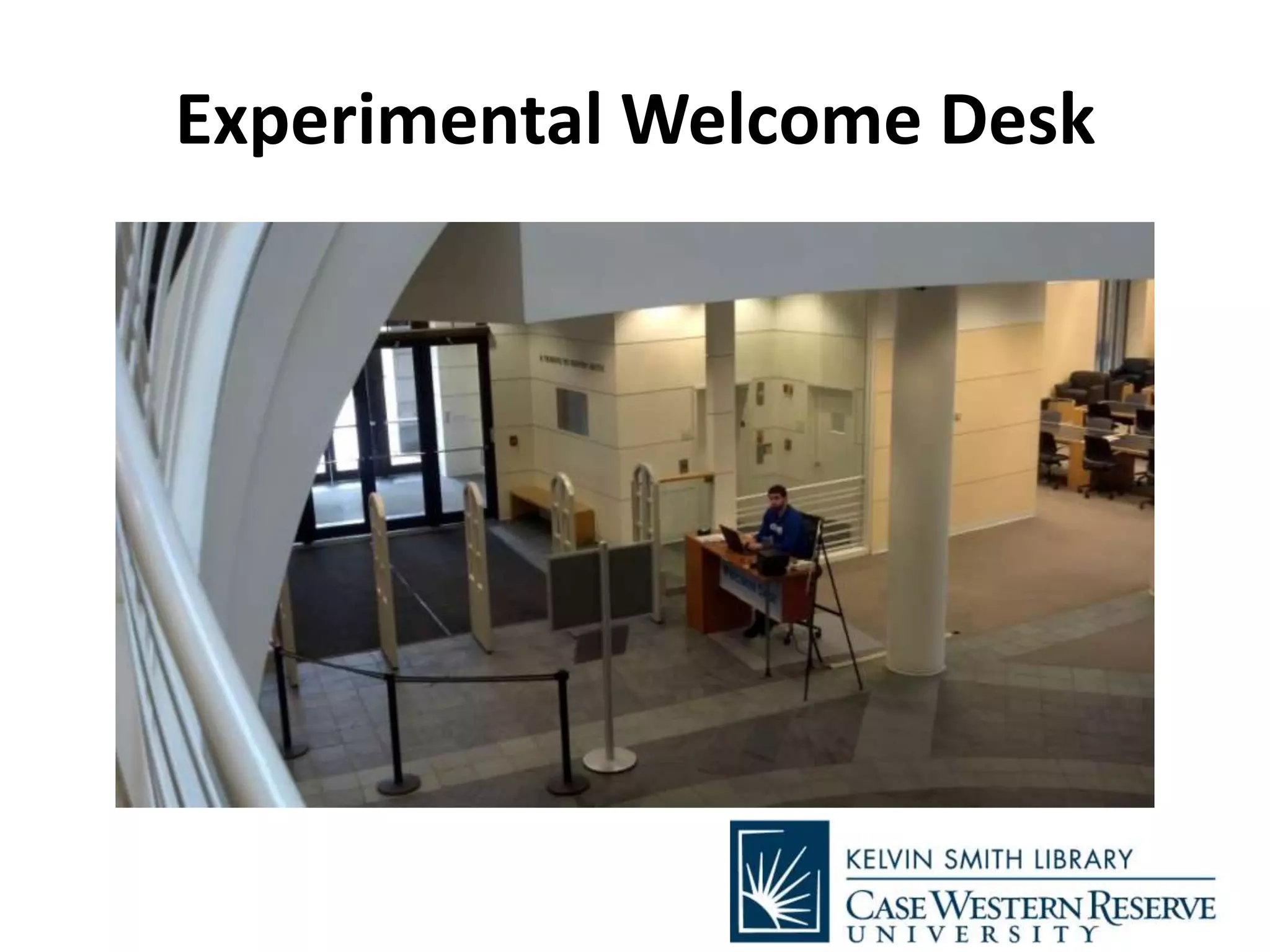
Experimental Welcome Desk
New Roles & New Styles
New roles:
• Director of Development
• Marketing & Communications Officer
New communications:
• http://library.case.edu/ksl/annualreport/
• Balanced Scorecard dashboards
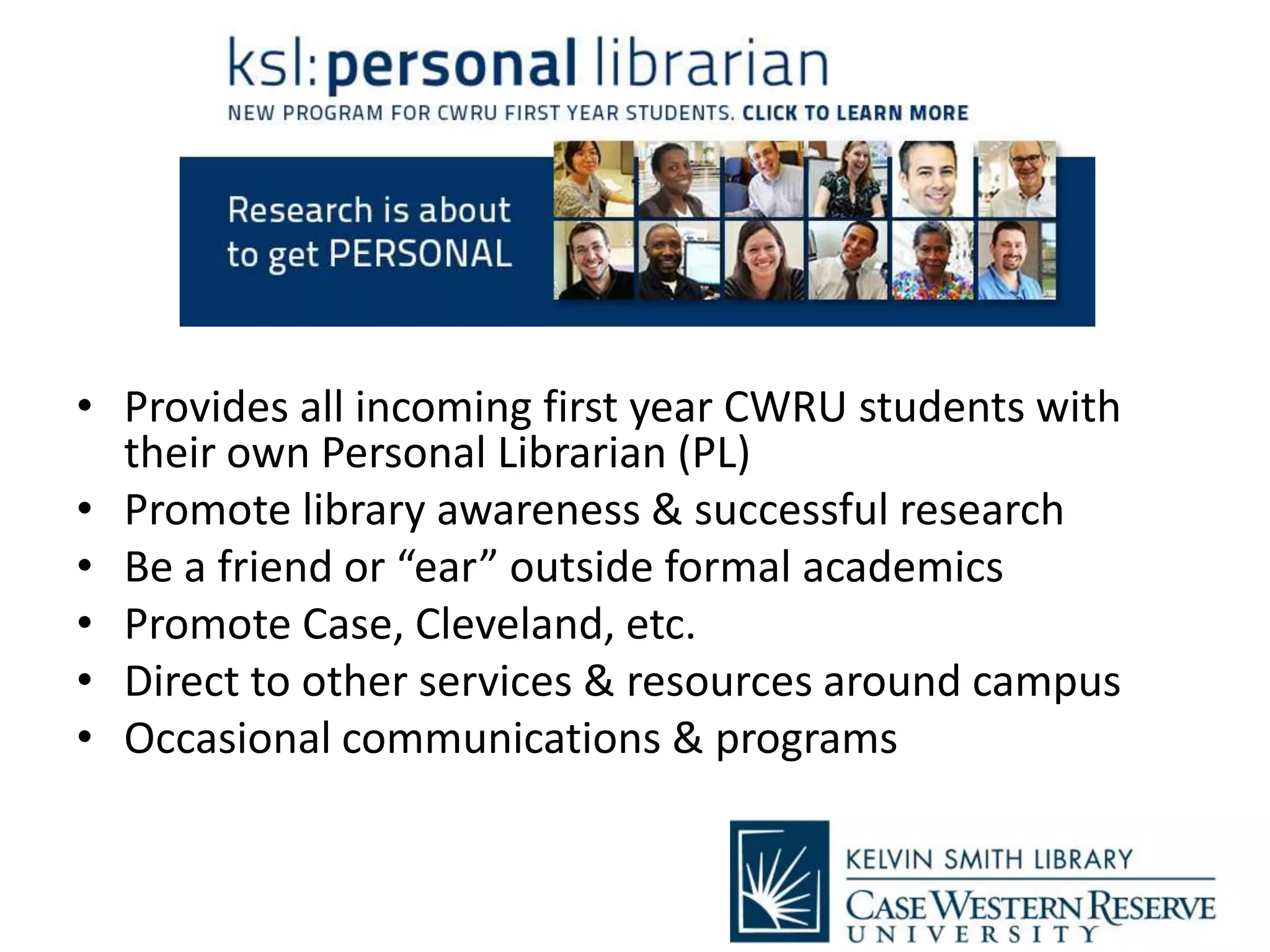
• Provides all incoming first year CWRU students with
their own Personal Librarian (PL)
• Promote library awareness & successful research
• Be a friend or “ear” outside formal academics
• Promote Case, Cleveland, etc.
• Direct to other services & resources around campus
• Occasional communications & programs
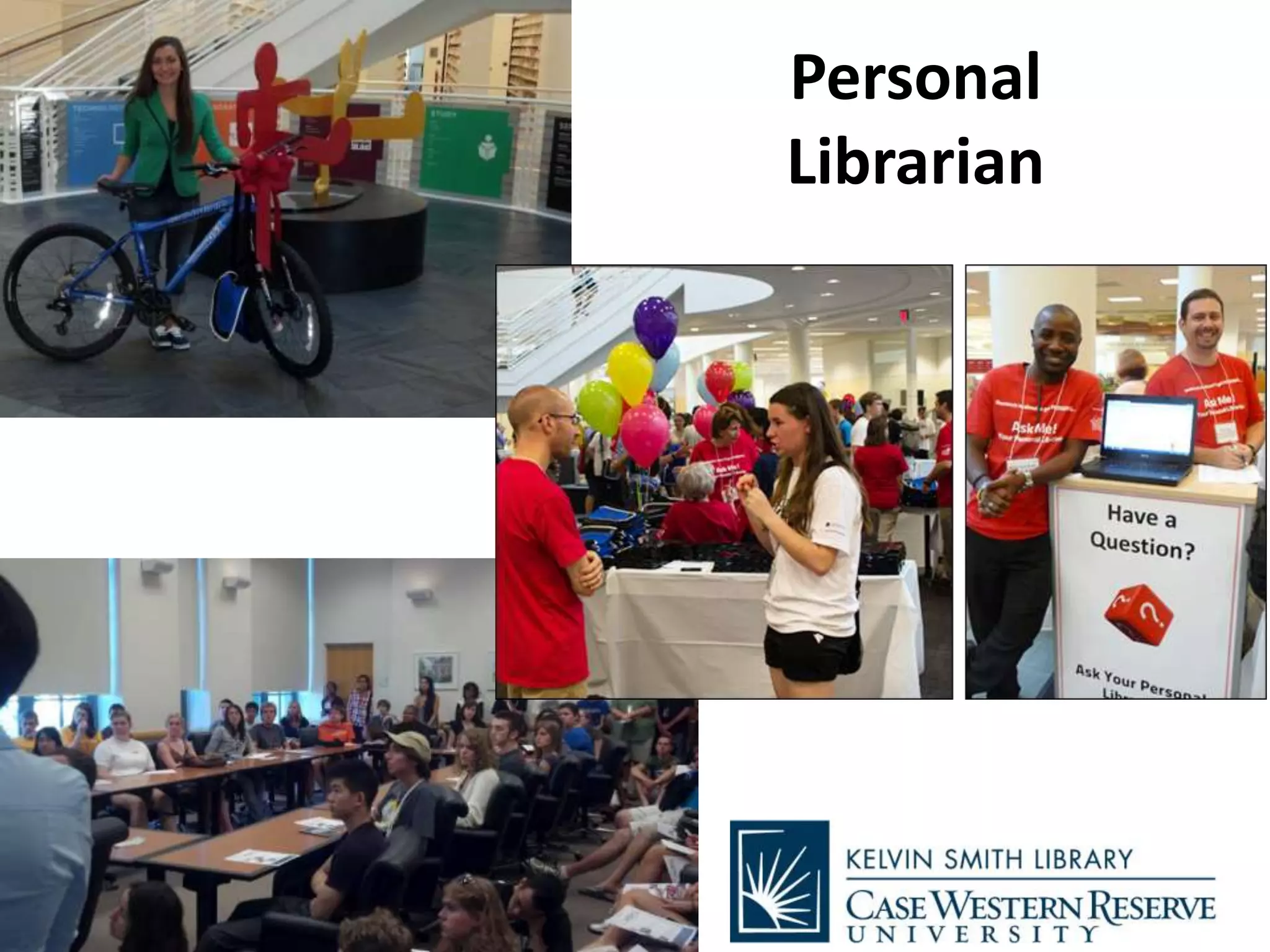
Personal
Librarian
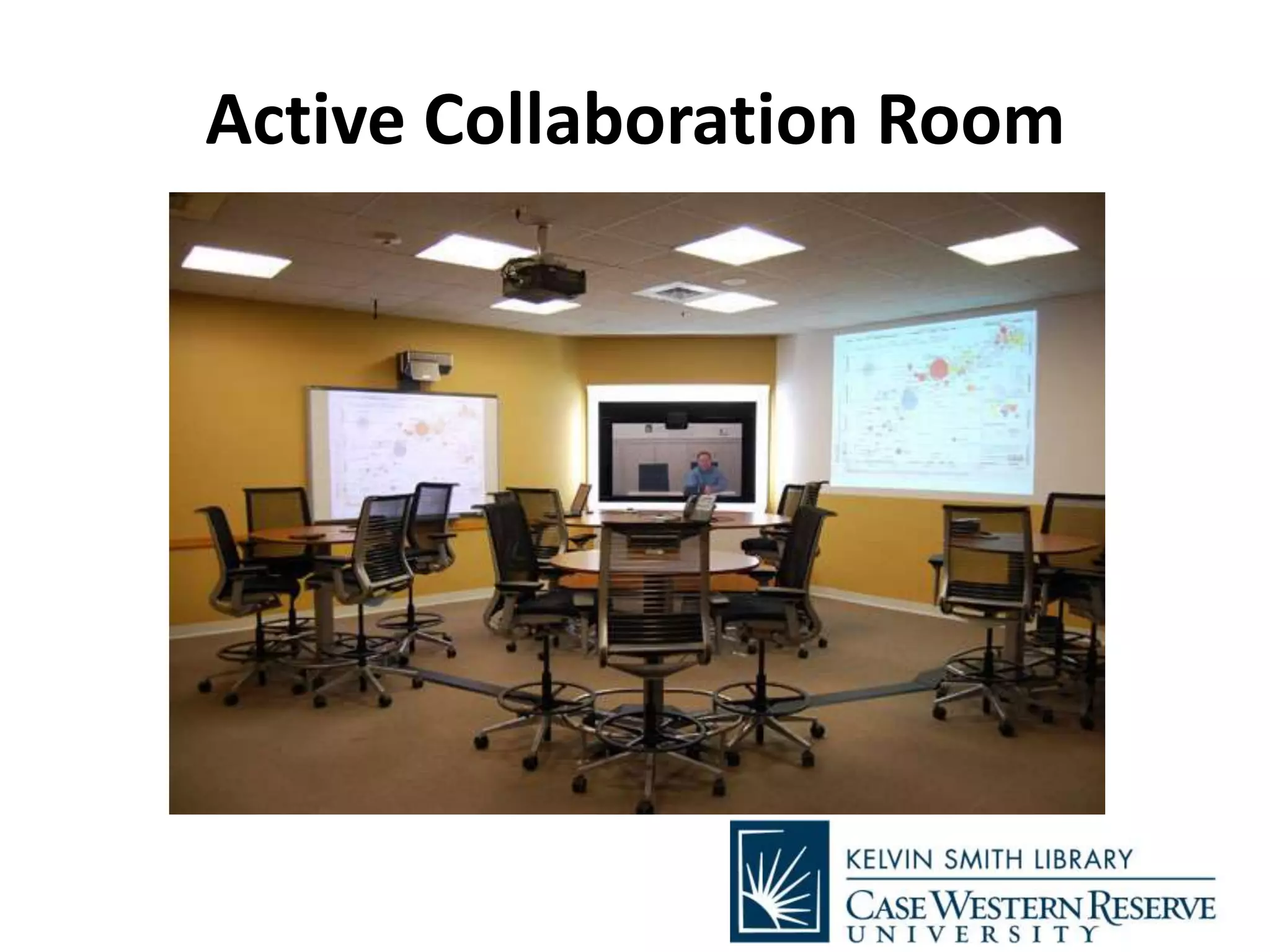
Active Collaboration Room
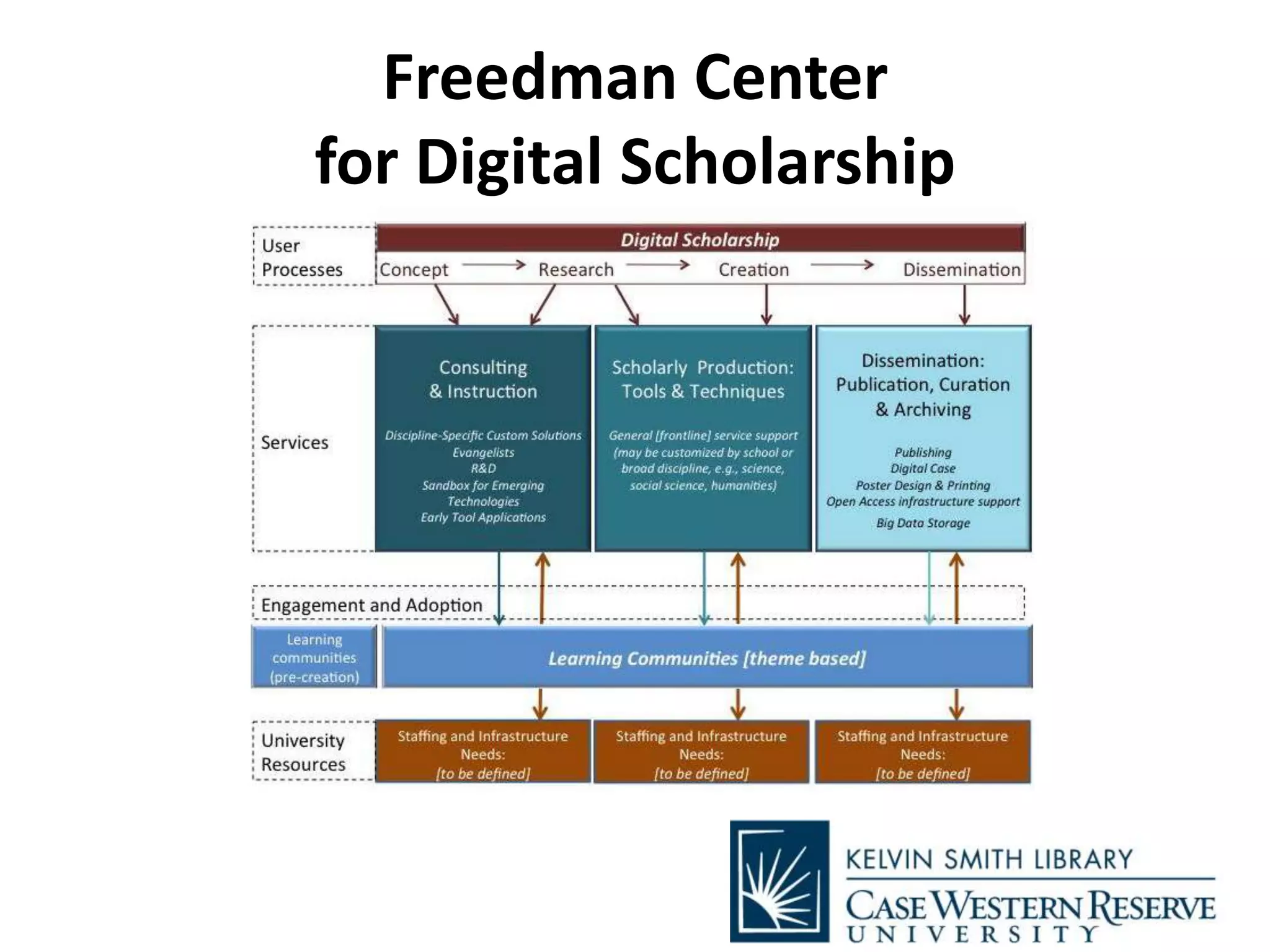
Freedman Center
for Digital Scholarship
CaseLearns New Media Workshops
• PowerPoint
• Digital images
• Twitter
• Desktop Publishing
• Video
• GIS
• Various Adobe software
• Google tools
Alumni Online Library
• Databases, e-journals, e-books
• Chat, text messages, & other reference
support
• Coming Soon: Webinars
• Coming Soon: Video & other tutorials
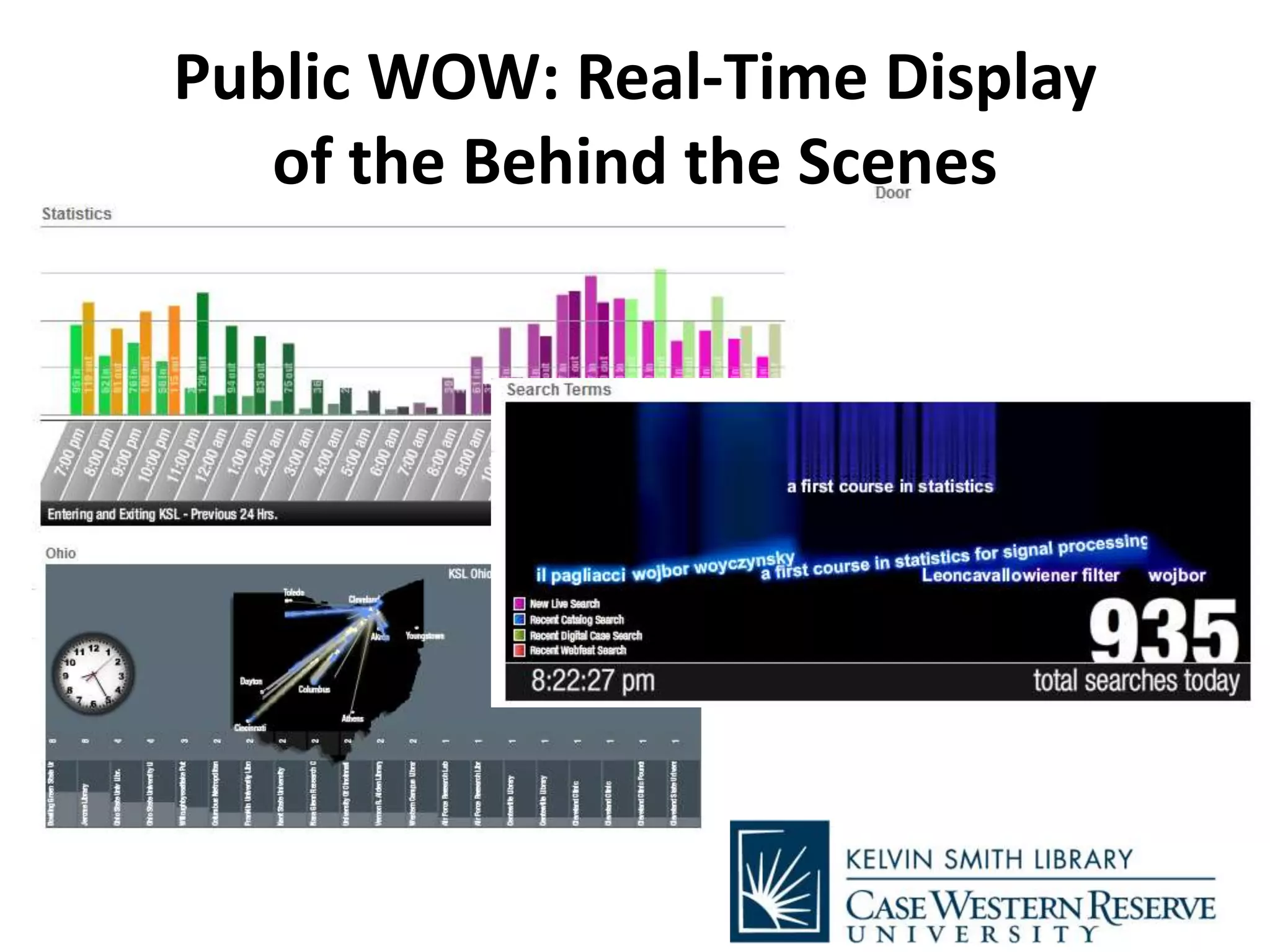
Public WOW: Real-Time Display
of the Behind the Scenes
Coming Soon: CRM
• Customer Relationship Management
• Assist with succession planning
• Provide better services
• Document “value” from user perspective
• Support “team” models to service
• Considering Microsoft Dynamics
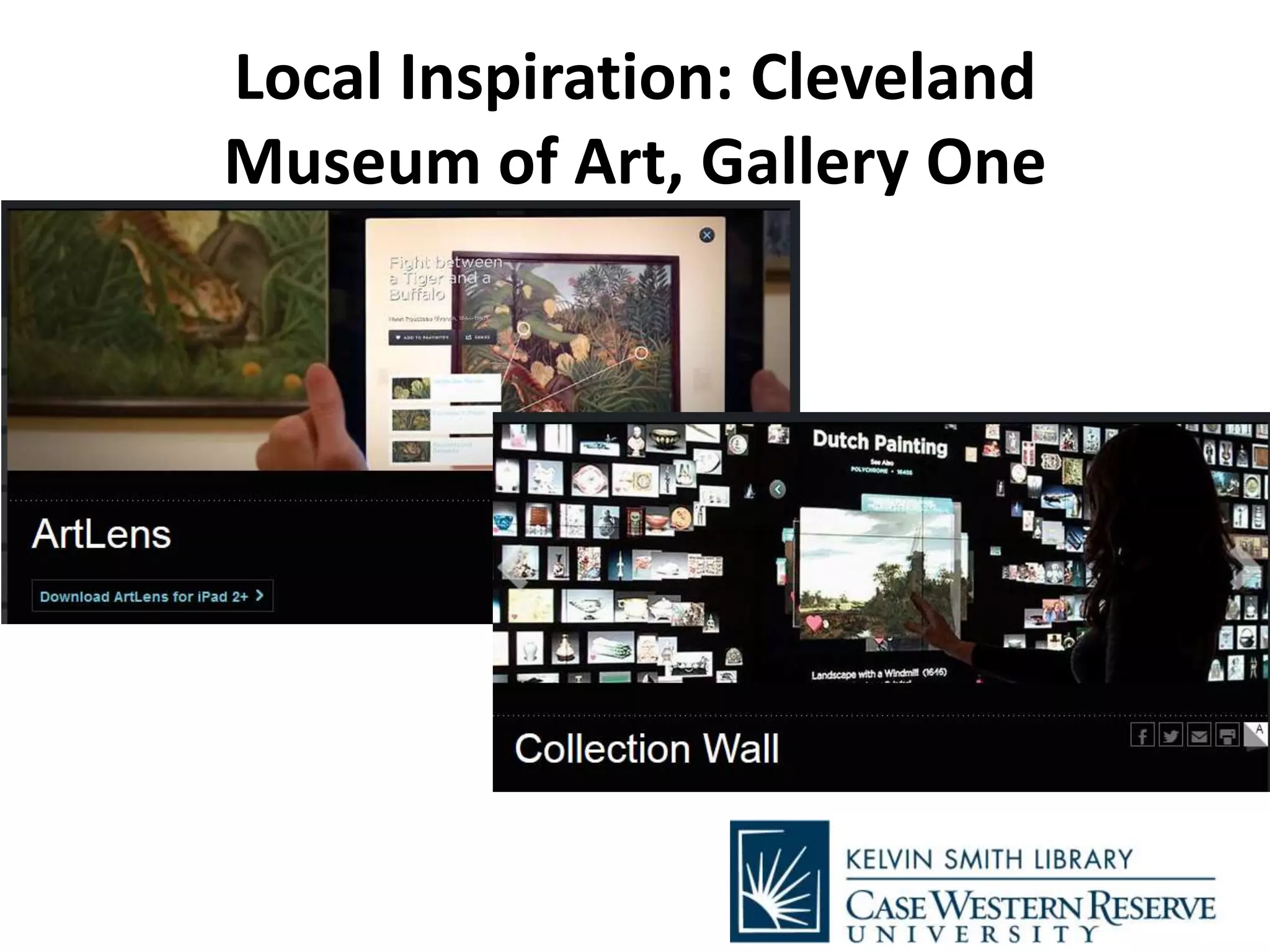
Local Inspiration: Cleveland
Museum of Art, Gallery One
Future Plans
• Issue Balanced Scorecard dashboards
• Virtual & point-of-need instruction tools
• Instruction assessment
• Digital Scholarship tools & resources
• Grow alumni virtual relationships
• Grow faculty relationships: CRM, etc.
KSL Successes
• Best colleagues anywhere – “team” does
really mean something in my library
• Willing to experiment
• Willing to collaborate
• Exploration
• No when to walk away from failures or
underutilized services
A New Service Model
through Technology
IOLUG Spring Program, May 3, 2013
Brian C. Gray
Team Leader Research Services
Case Western Reserve University
Kelvin Smith Library
bcg8@case.edu

A New Service Model through Technology

  • 1.
    A New ServiceModel through Technology IOLUG Spring Program, May 3, 2013 Brian C. Gray Team Leader Research Services Case Western Reserve University Kelvin Smith Library bcg8@case.edu
  • 2.
    A New ServiceModel through Technology • Highlights of changes we made with help of technology • Other technologies we are using or trying • Some other sources of inspiration
  • 3.
    Case Western ReserveUniversity • Private, research intensive • http://www.case.edu/ • Below 10,000 students, 40% undergraduate • 2,600+ faculty • Alumni: 100,000+ • Annual research revenue about $400 million • 2012/13: largest first year class ever, ~1400
  • 4.
    Kelvin Smith Library(KSL) http://library.case.edu • Main library, includes arts & sciences, engineering, business, & undergraduate • New strategic plan: April 2011 • http://library.case.edu/ksl/whoweare/strategicplan/ • Staff & budget reorganization to match • New approaches: small pilots, increased listening to patron opinions, assessment/data focus, customization, transparency
  • 5.
    Kelvin Smith Library(KSL) Mission: KSL is the knowledge and creativity commons of CWRU. Vision: KSL will be the information laboratory for knowledge collection, connection, creation, and curation. Values: • Openness • Collaboration • Personalized service • Agility & innovation through experimentation
  • 6.
    New Service Models •Implement Summon • Phase out the formal reference desk in order to go “on call” and “get out” of building • Go to users • Build relationships • Grow LibGuides & virtual instruction • Completely redesign website
  • 7.
    Highlights From &During Summon Implementation • Live in only a few weeks • Entire website was redesigned • Every page in site & LibGuides has search box • Rolled out the same time we phased out the formal reference desk • Balanced Scorecard method of assessment with data shared publicly
  • 8.
    Old KSL Site(Dec. 2011)
  • 9.
  • 10.
  • 11.
    • Every webpagehas Summon as the header • Summon & new site go live in parallel • Educate & market both simultaneously • Many of our website search boxes hits were really library research questions, so we matched the search box to the user practices
  • 12.
  • 13.
    Balanced Scorecard • Ensurestrategic plan accomplishes intended outcomes • Articulate success • Follow a strategy map • Specific qualitative & quantitative success metrics • Create & adopt outcome assessment tools • Communicate progress through public dashboards
  • 14.
    Balanced Scorecard • Metricfor Year 1: 25% of all searches performed on Summon (totaling up all searches performed between the catalog and summon, and create a percentage). • We hit 28.4% • Developing a new metric comparing a “core” and stable set of databases with strong COUNTER data to compare usage against Summon over similar time periods
  • 15.
    New Walk-in ServiceModel Old: • Reference Desk, Circulation Desk, Freedman Center (multimedia) desk New: • Welcome Desk (greeting & IDs only; no services) and Service Desk (circulation, reference “triage”, and multimedia) with staff roaming the computer spaces • Research Services Librarians called when needed
  • 16.
    Reference Model Changed •All reference, collection, & instruction librarians combined into a single team (Research Services) • Service Desk staff take initial questions • Librarians scheduled virtual and “on call” • Librarians hit the road & leave the library to be where the users are • Focus on faculty relationship building
  • 17.
    Reference Model Changed •Service Desk trained regularly in reference resources and techniques Summon allowed: • Non-librarians to answer more questions easier than previously • Increased instruction to occur when answering virtual reference question by being able to focus on a single research tool
  • 18.
    Experimental Service Desk: NoOver-Counter Interactions
  • 19.
  • 20.
    New Roles &New Styles New roles: • Director of Development • Marketing & Communications Officer New communications: • http://library.case.edu/ksl/annualreport/ • Balanced Scorecard dashboards
  • 21.
    • Provides allincoming first year CWRU students with their own Personal Librarian (PL) • Promote library awareness & successful research • Be a friend or “ear” outside formal academics • Promote Case, Cleveland, etc. • Direct to other services & resources around campus • Occasional communications & programs
  • 22.
  • 23.
  • 24.
  • 25.
    CaseLearns New MediaWorkshops • PowerPoint • Digital images • Twitter • Desktop Publishing • Video • GIS • Various Adobe software • Google tools
  • 26.
    Alumni Online Library •Databases, e-journals, e-books • Chat, text messages, & other reference support • Coming Soon: Webinars • Coming Soon: Video & other tutorials
  • 27.
    Public WOW: Real-TimeDisplay of the Behind the Scenes
  • 28.
    Coming Soon: CRM •Customer Relationship Management • Assist with succession planning • Provide better services • Document “value” from user perspective • Support “team” models to service • Considering Microsoft Dynamics
  • 29.
  • 30.
    Future Plans • IssueBalanced Scorecard dashboards • Virtual & point-of-need instruction tools • Instruction assessment • Digital Scholarship tools & resources • Grow alumni virtual relationships • Grow faculty relationships: CRM, etc.
  • 31.
    KSL Successes • Bestcolleagues anywhere – “team” does really mean something in my library • Willing to experiment • Willing to collaborate • Exploration • No when to walk away from failures or underutilized services
  • 32.
    A New ServiceModel through Technology IOLUG Spring Program, May 3, 2013 Brian C. Gray Team Leader Research Services Case Western Reserve University Kelvin Smith Library bcg8@case.edu

Editor's Notes

  • #2 Implementing the Summon service at Case Western Reserve University was about more than adding a discovery service to the library’s offerings, it is a key component in the library’s new service model.  Rolled out concurrently with phasing out the formal reference desk, students and front-line library staff rely on Summon—prominently featured in LibGuides as well as a completely re-designed website—to get started.  That gives the librarians time to go where the users are and build relationships with faculty. In this session of our Information Literacy series, Brian Gray shares how being “on call” and “out and about” is helping Case Western’s librarians connect with users and provide more in-depth instruction.Respond to:“The Summon service has helped us to move away from the mechanics of searching. It has enabled us to spend more time teaching students to use the library effectively, and how to become better at finding relevant information.”  Alison Sharman, University of HuddersfieldKristen Hatchman (our marketing person) welcoming everyoneMe welcoming and running through a few housekeeping slides promoting our seriesMe introducing youMe reading the quote (I just sent) and asking you to commentHand off presenter control to you to run through your slides (20-25 minutes)Me bring up a Q&A slide and asking you some questions that have come in via Chat  (Q&A will be 5-10 minutes tops) 
  • #33 Implementing the Summon service at Case Western Reserve University was about more than adding a discovery service to the library’s offerings, it is a key component in the library’s new service model.  Rolled out concurrently with phasing out the formal reference desk, students and front-line library staff rely on Summon—prominently featured in LibGuides as well as a completely re-designed website—to get started.  That gives the librarians time to go where the users are and build relationships with faculty. In this session of our Information Literacy series, Brian Gray shares how being “on call” and “out and about” is helping Case Western’s librarians connect with users and provide more in-depth instruction.Respond to:“The Summon service has helped us to move away from the mechanics of searching. It has enabled us to spend more time teaching students to use the library effectively, and how to become better at finding relevant information.”  Alison Sharman, University of HuddersfieldKristen Hatchman (our marketing person) welcoming everyoneMe welcoming and running through a few housekeeping slides promoting our seriesMe introducing youMe reading the quote (I just sent) and asking you to commentHand off presenter control to you to run through your slides (20-25 minutes)Me bring up a Q&A slide and asking you some questions that have come in via Chat  (Q&A will be 5-10 minutes tops)