Increasing the Value of Our History with the Web   Brian C. Gray Case Western Reserve University Kelvin Smith Library Head of Reference & Engineering Librarian Society of Ohio Archivists Spring Program, Plenary, May 8, 2008
Today & the Future Why, how, when, etc. Potential challenges Learning web 2.0 Examples & best practices Squash the fear and jumpstart new environments, processes, & methods
It is not too late Do not panic, web 2.0 implementations are still fairly new, you are not the last Library job ads: NextGen Librarian Librarian 2.0 Need for various web 2.0 skills “ Gamey” librarian Library school classes & workshops
It Can Be Simple Not every tool and technique works for every need and/or user I do not have time… I do not have money… The old way works… Try to leave with one potential new tool or idea for personal or professional usage
Methods of the Past In-person Events Phone Promotional Signage Microfilm Email Static Internet (web 1.0)
Technology & Generational Changes Blogs Wikis Video Podcasts Photosharing Tagging, social bookmarking RSS 3-D web (Second Life)
Why Web 2.0? Key concepts or focus points: Collaboration & sharing Participant’s ownership in activities Creation & creativity Web-based rather than software based Data/information Social Connections/relationships Trust (2-way)
Web 2.0 Concepts Enrichment Can be personalized Participation Decentralized User “tagged” or defined Experiences Remixable Behavior rather than the actual tools Beyond static web pages
The Long Tail No longer just focusing on the majority of users or the primary “hits” Web 2.0 allows exposure of information, data, images, etc. to the “niche” users
http://www.oreillynet.com/pub/a/oreilly/tim/news/2005/09/30/what-is-web-20.html#mememap
Where do I start? Look at the examples that exist Many of these tools are simple and require minimal web skills Read and learn from the experts Hands-on, get dirty, and play
Learning 2.0 http://plcmclearning.blogspot.com/ Public Library of Charlotte & Mecklenburg County Helene Blowers
Learning 2.0 23 Things over couple of months Incentives for staff Creative Commons License Self-paced or guided Exploration of web 2.0 basics The model for bringing everything under one umbrella
Learning 2.0 Blogging Photos RSS Tagging Wikis Online applications Podcasts Many other tools
 
 
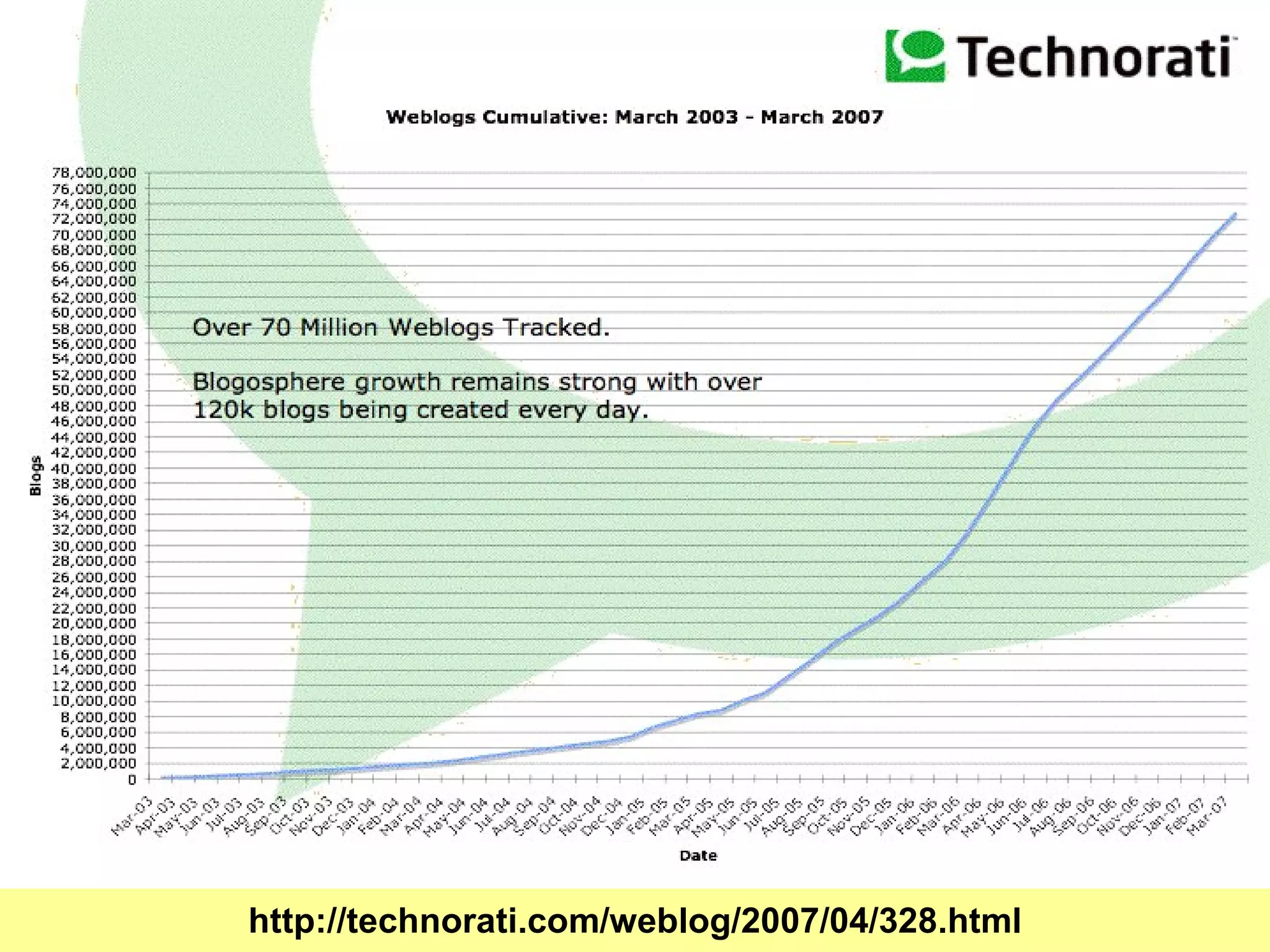
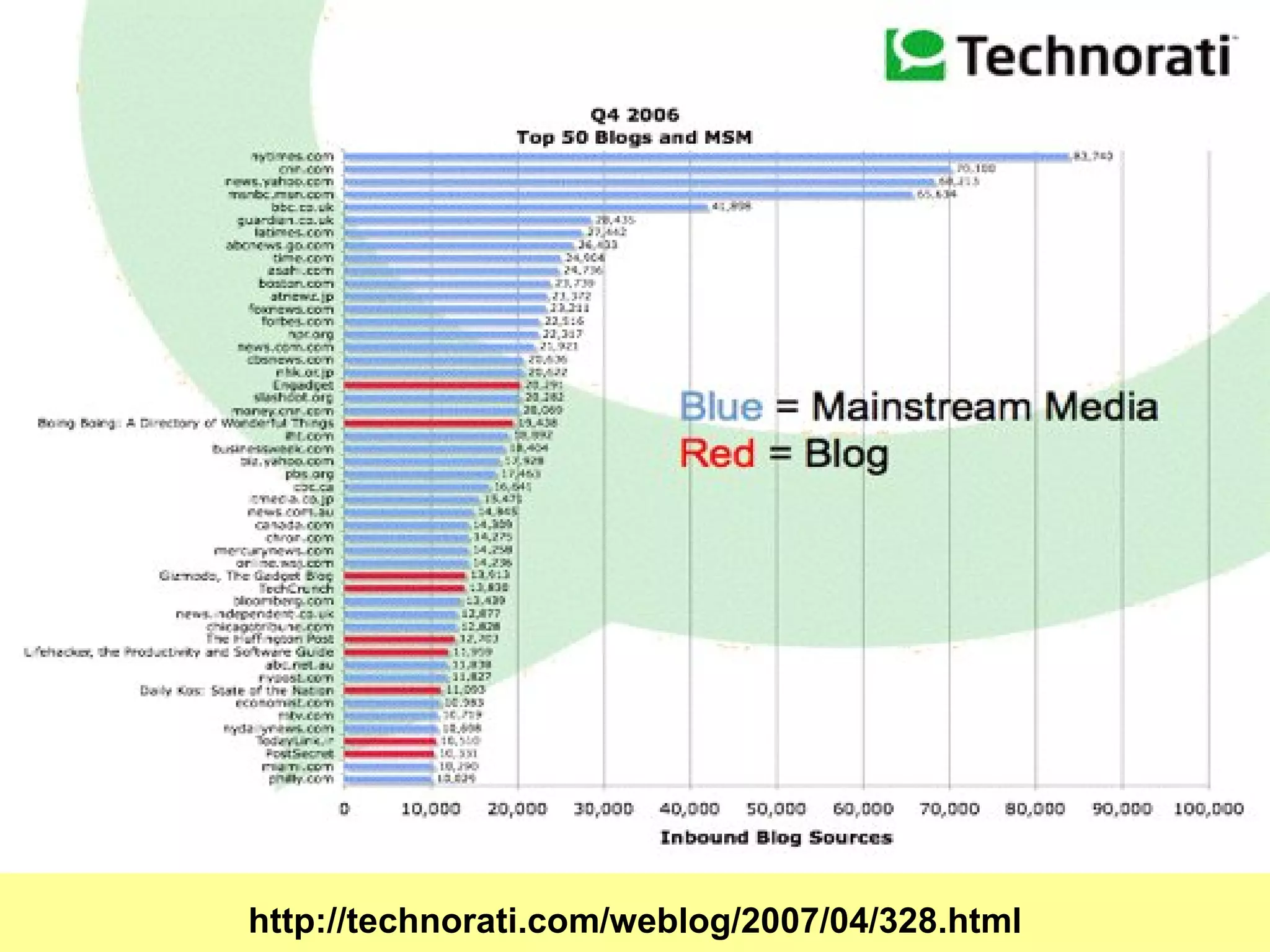
http://technorati.com/weblog/2007/04/328.html
Spam Blogs (Splogs) Technorati has been tracking between 3,000 - 7,000 new splogs created each day Significant spike in splog creation during early December, when 11,000 splogs created each day http://technorati.com/weblog/2007/04/328.html
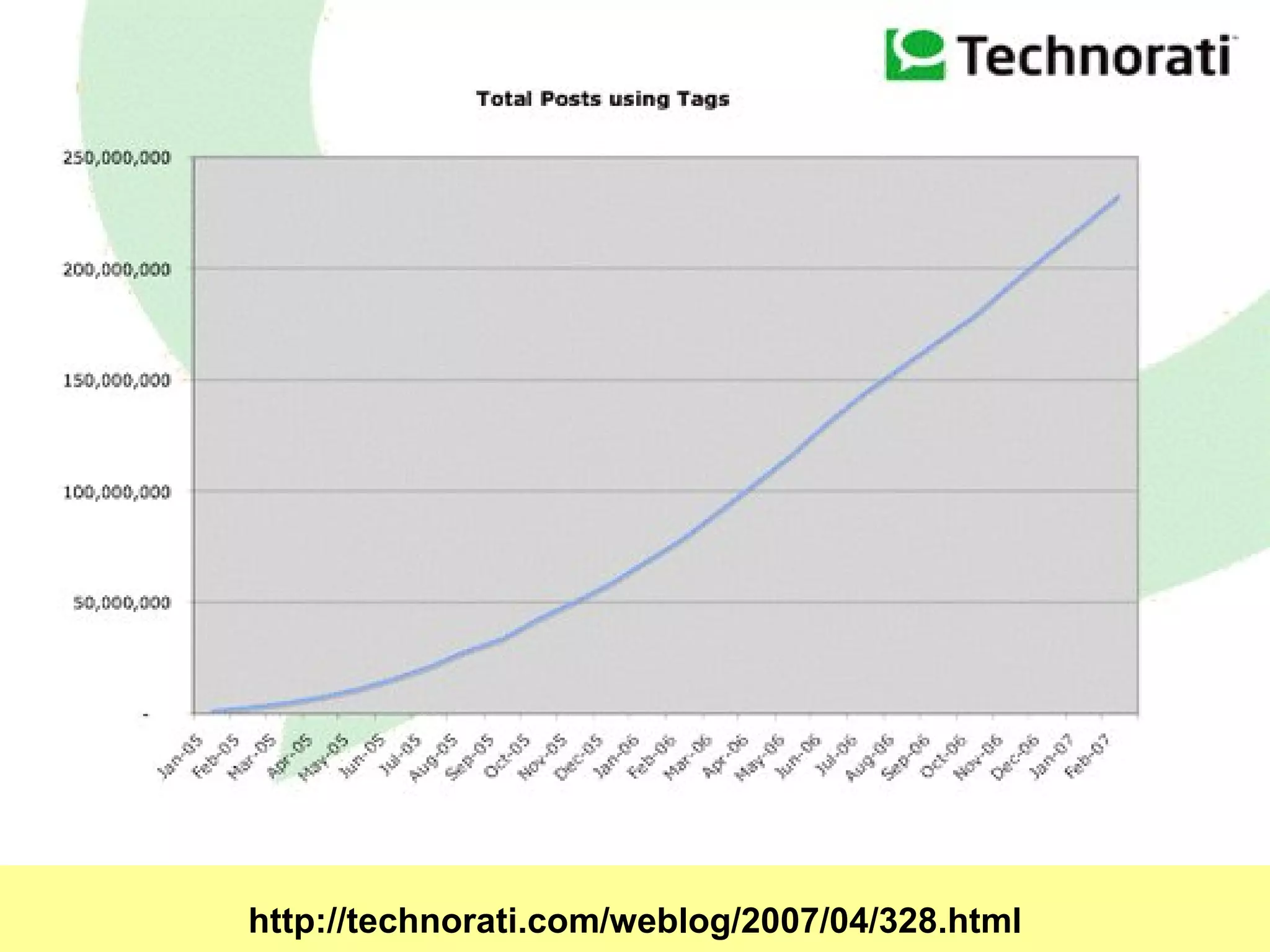
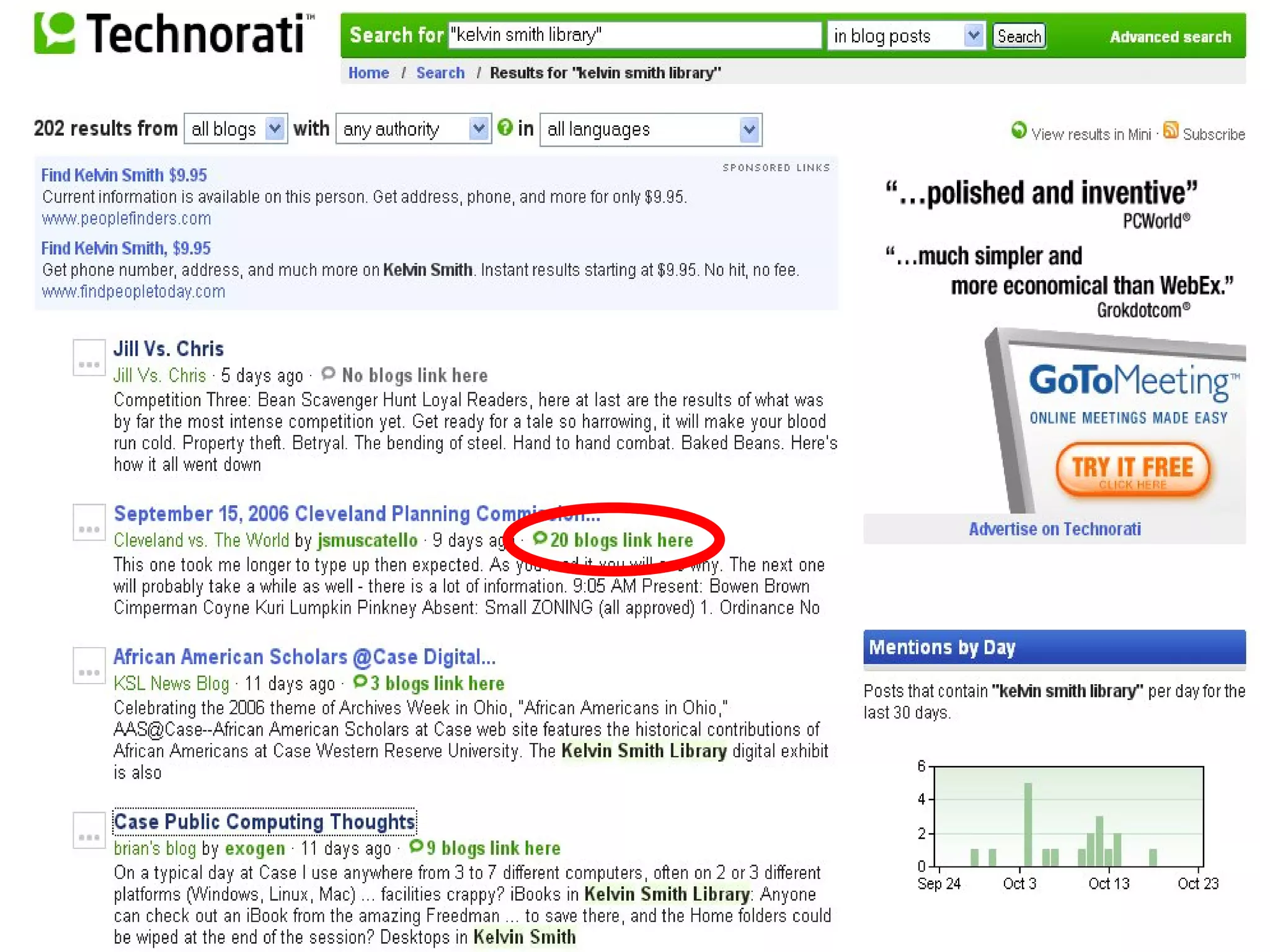
http://technorati.com/weblog/2007/04/328.html
Do you recognize RSS?
RSS RSS drives the data transfer in many web 2.0 tools Efficient way to share news and data, plus support research User initiated  subscriptions to a “web address containing data”
KSL RSS Feeds
 
PBwiki
 
 
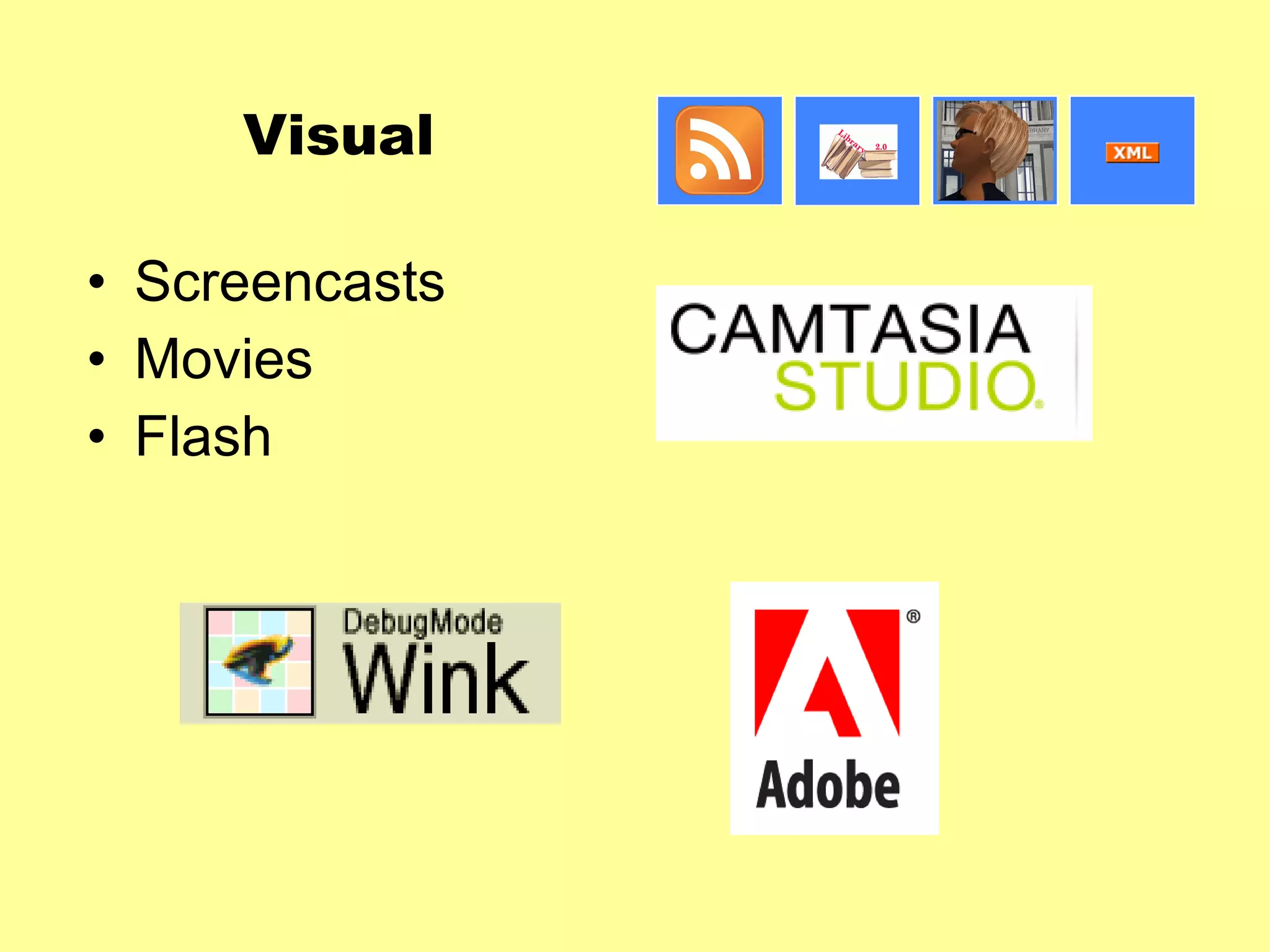
Visual Screencasts Movies Flash


Podcasts


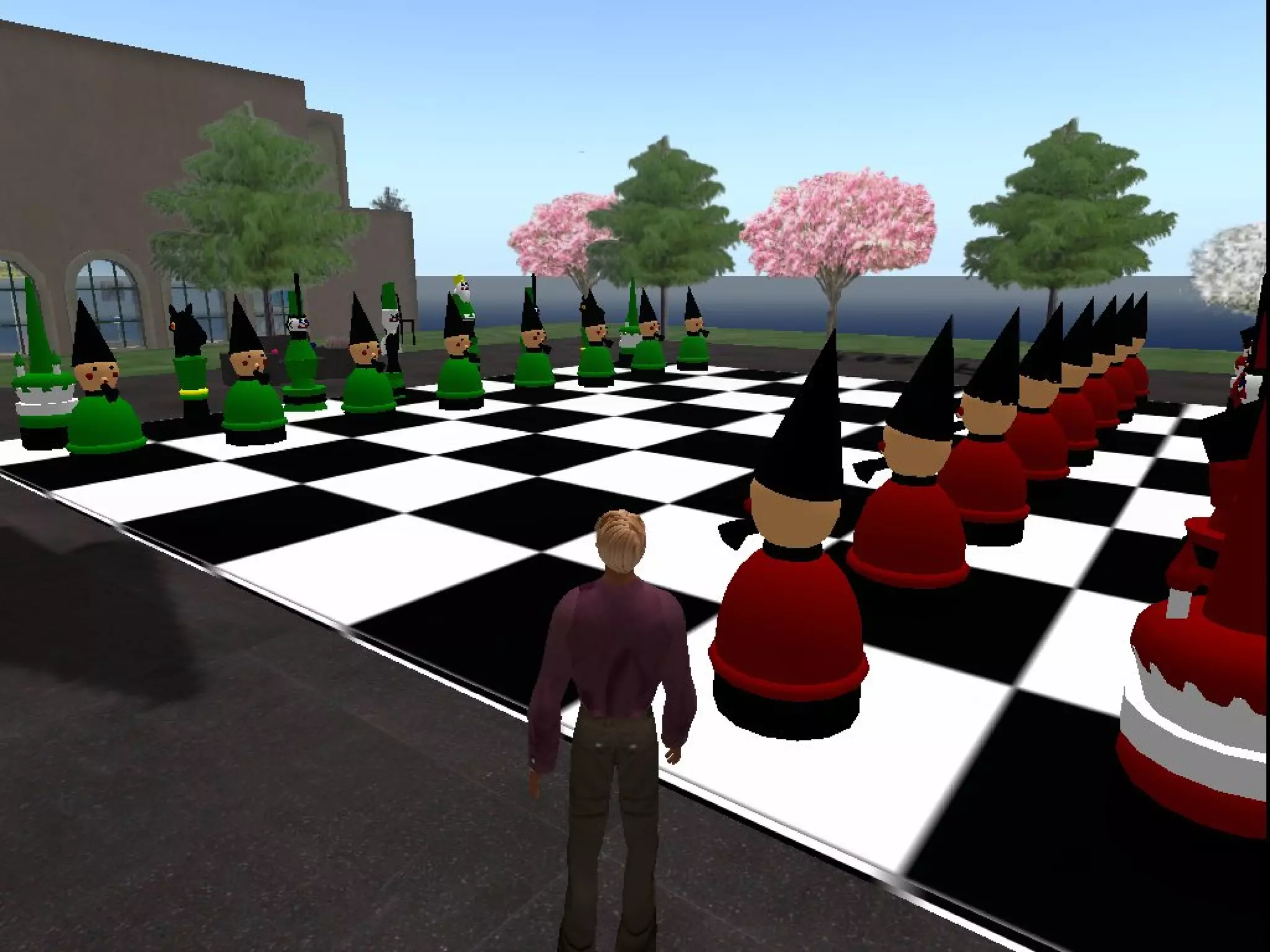
Second Life
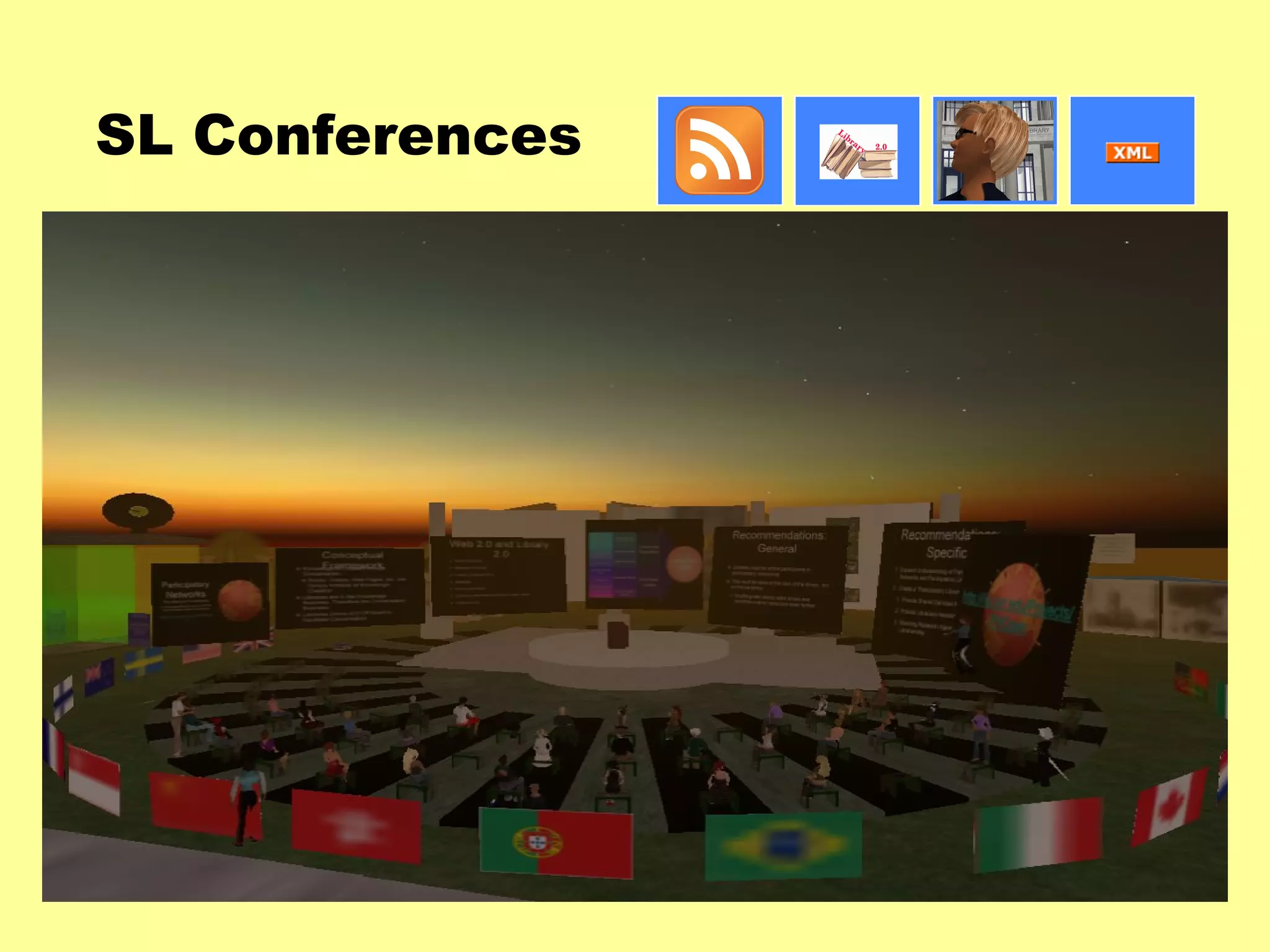
SL Conferences
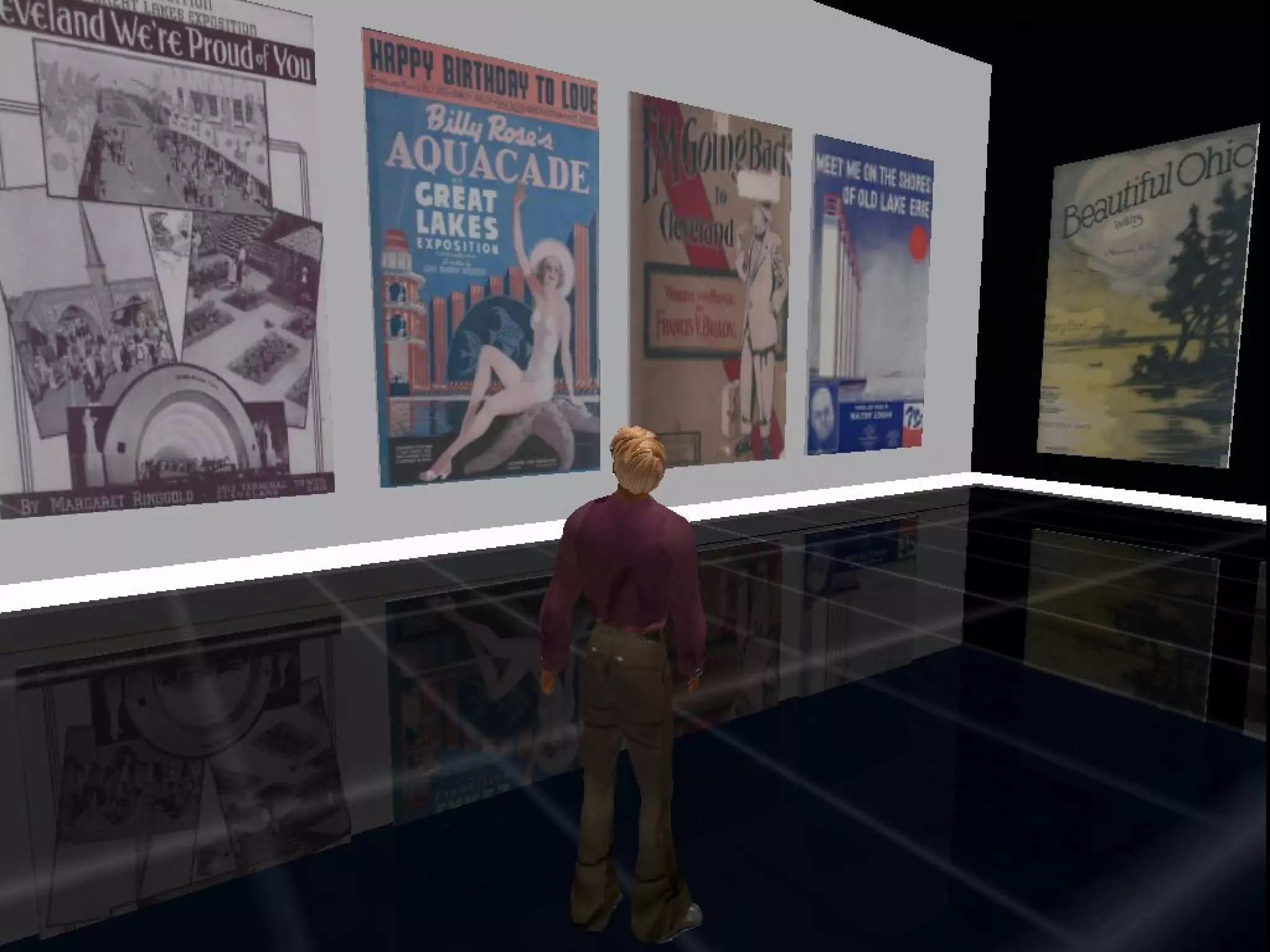
Cleveland Public Library


Renaissance Island
Vincent Van Gogh
SL Libraries
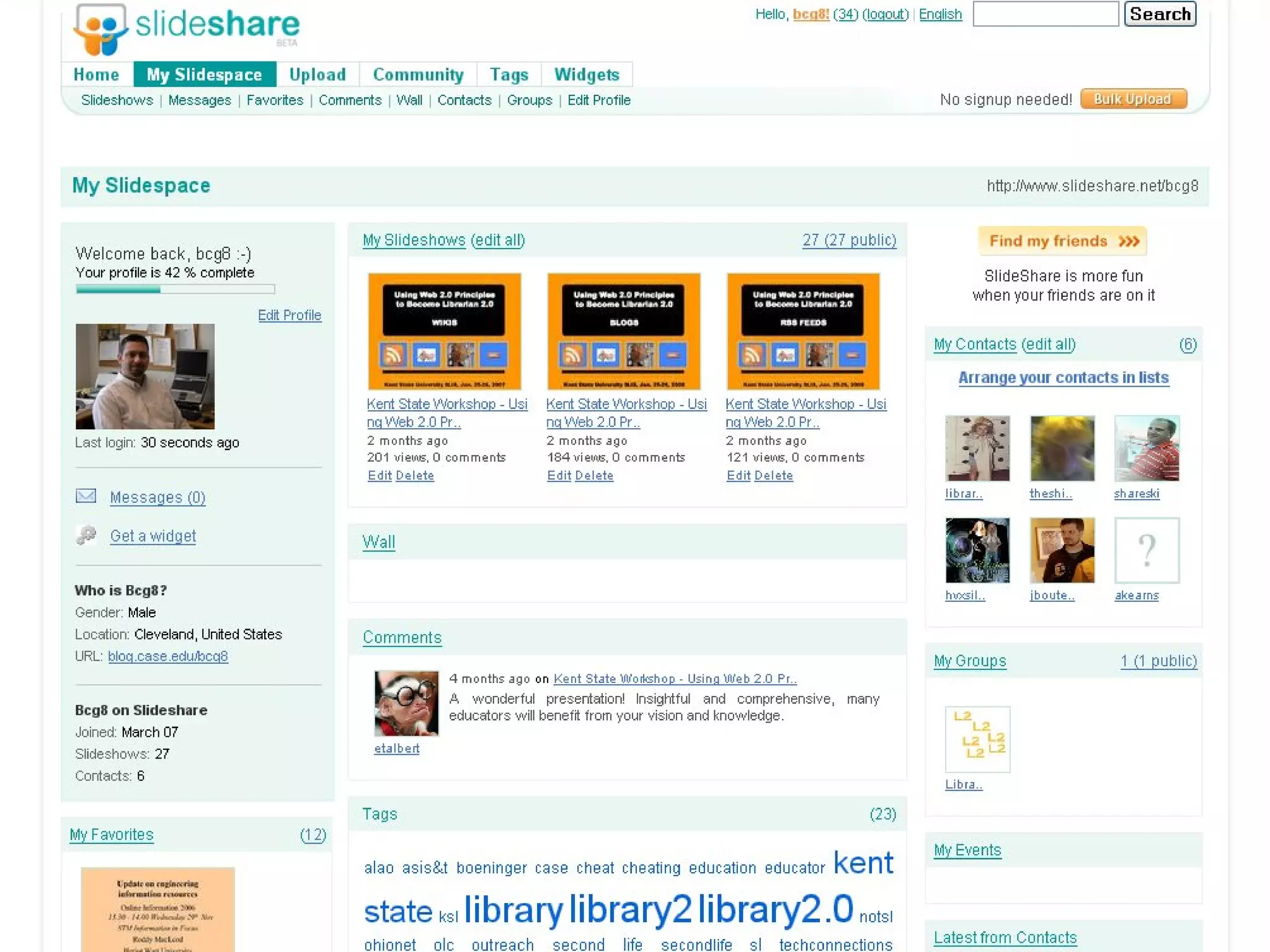
Brian C. Gray Head of Reference & Engineering Librarian Case Western Reserve University Kelvin Smith Library bcg8@case.edu or (216) 368-8685 http://blog.case.edu/bcg8/ http://www.squidoo.com/library2point0/ http://www.slideshare.net/bcg8

Increasing the Value of Our History with the Web