Kent State University SLIS, July 18-19, 2008 Using Web 2.0 Principles to Become Librarian 2.0 Welcome & Introduction
Instructor: Brian C. Gray Head of Reference Librarian: Engineering, Mathematics, & Statistics Kelvin Smith Library, Case Western Reserve University Work email: bcg8@case.edu Work phone: 216-368-8685 IM: AIM - kslbcg8 ICQ - 499284601 Google Chat - kslbcg8@gmail.com MSN - bcg8@case.edu Yahoo - kslbcg8
My Interest in Web 2.0 Teach RSS workshop at KSL Contribute to 3 Case KSL blogs ALA Library 2.0 participant ALA LAMA Web Coordinator Blogs, RSS, Wiki, Communities Regular IM user Over a dozen presentations/trainings at various venues See benefits of “free” tools to libraries & library  users Non-techie trained person that likes to “play”
Topics for the Next 2 Days What is Web 2.0 What is Library 2.0 Why should we care RSS and OPML Blogs Wikis Various Web 2.0 Tools Users Library concerns
Introduce Yourself Name Degree in progress and/or library employer Goals for career Goals for this workshop Web/library 2.0 experience
Class Resources http://www.squidoo.com/library2point0/ http://www.slideshare.net/bcg8
What do we already know? http://ksuslisweb2.pbwiki.com Look for “Take the class survey”.
Reasons Why You Must Care Online competition to libraries Alternative method of PR/marketing Alternative method of communication Alternative publishing practices User awareness Efficiency “ Buzz” word right now Users are unaware and/or are creating alternatives to library resources
 
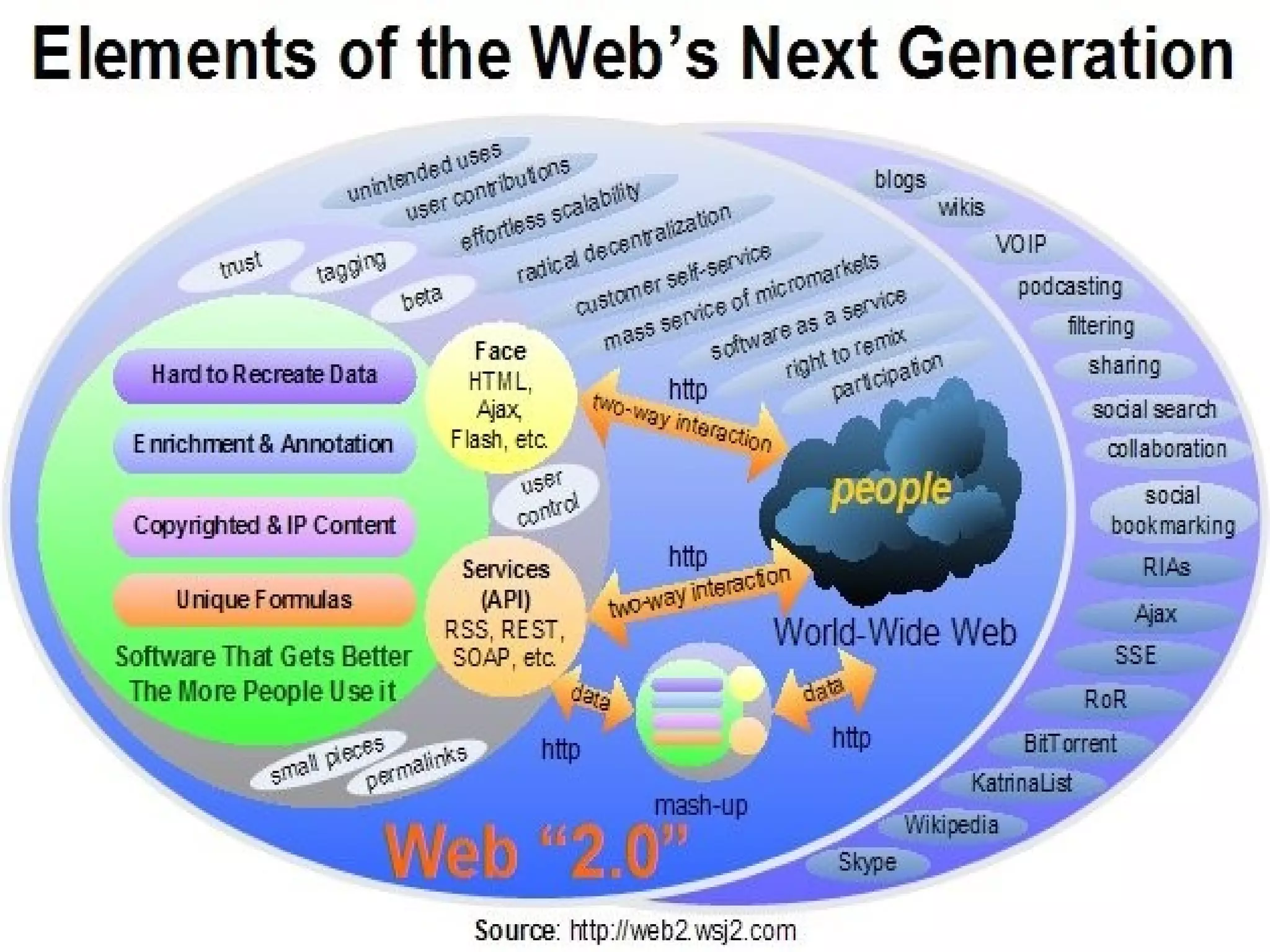
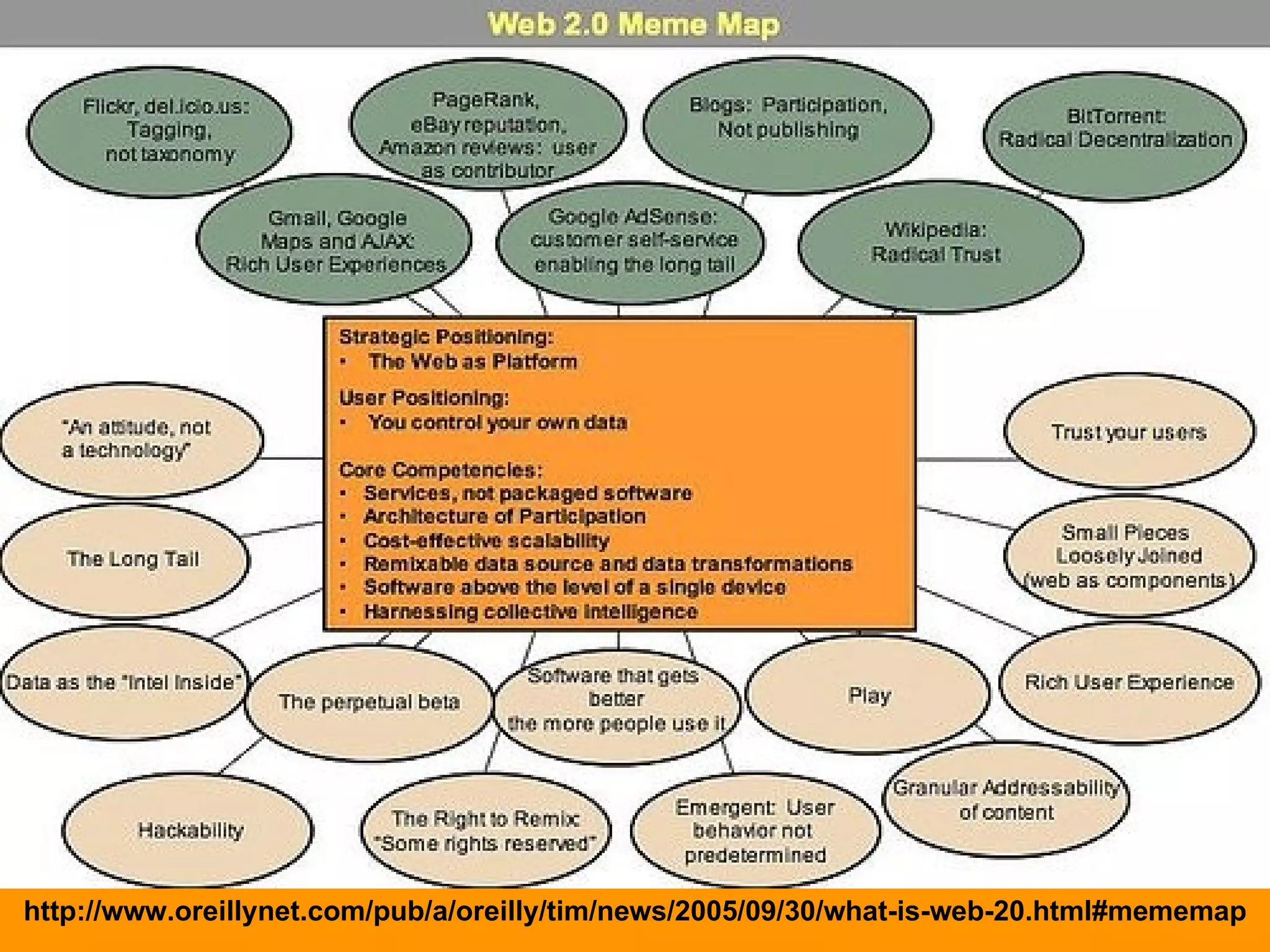
Coined by O'Reilly Media (2004) http://www.oreillynet.com/pub/a/oreilly/tim/news/2005/09/30/what-is-web-20.html#mememap
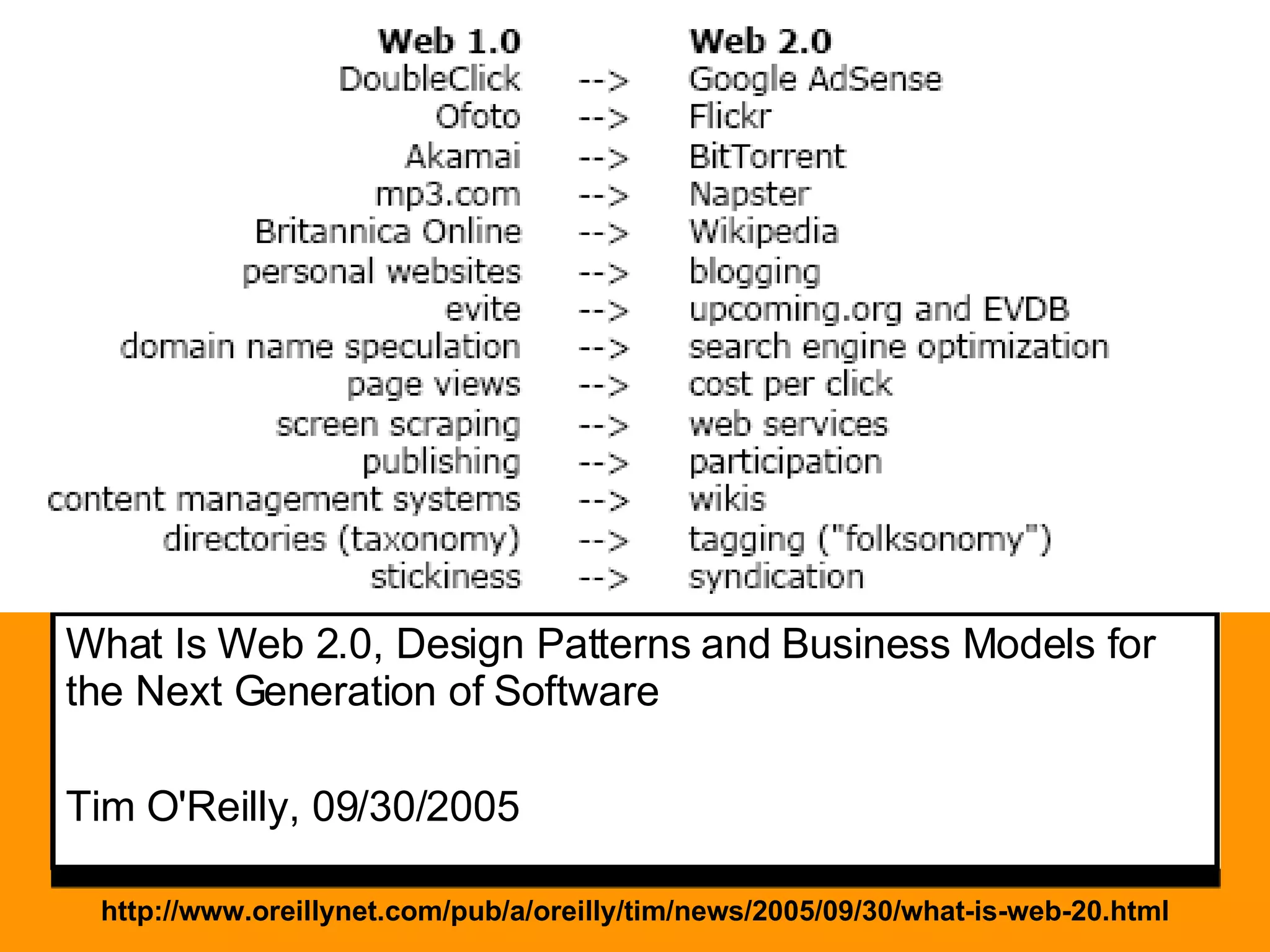
What Is Web 2.0, Design Patterns and Business Models for the Next Generation of Software Tim O'Reilly, 09/30/2005 http://www.oreillynet.com/pub/a/oreilly/tim/news/2005/09/30/what-is-web-20.html
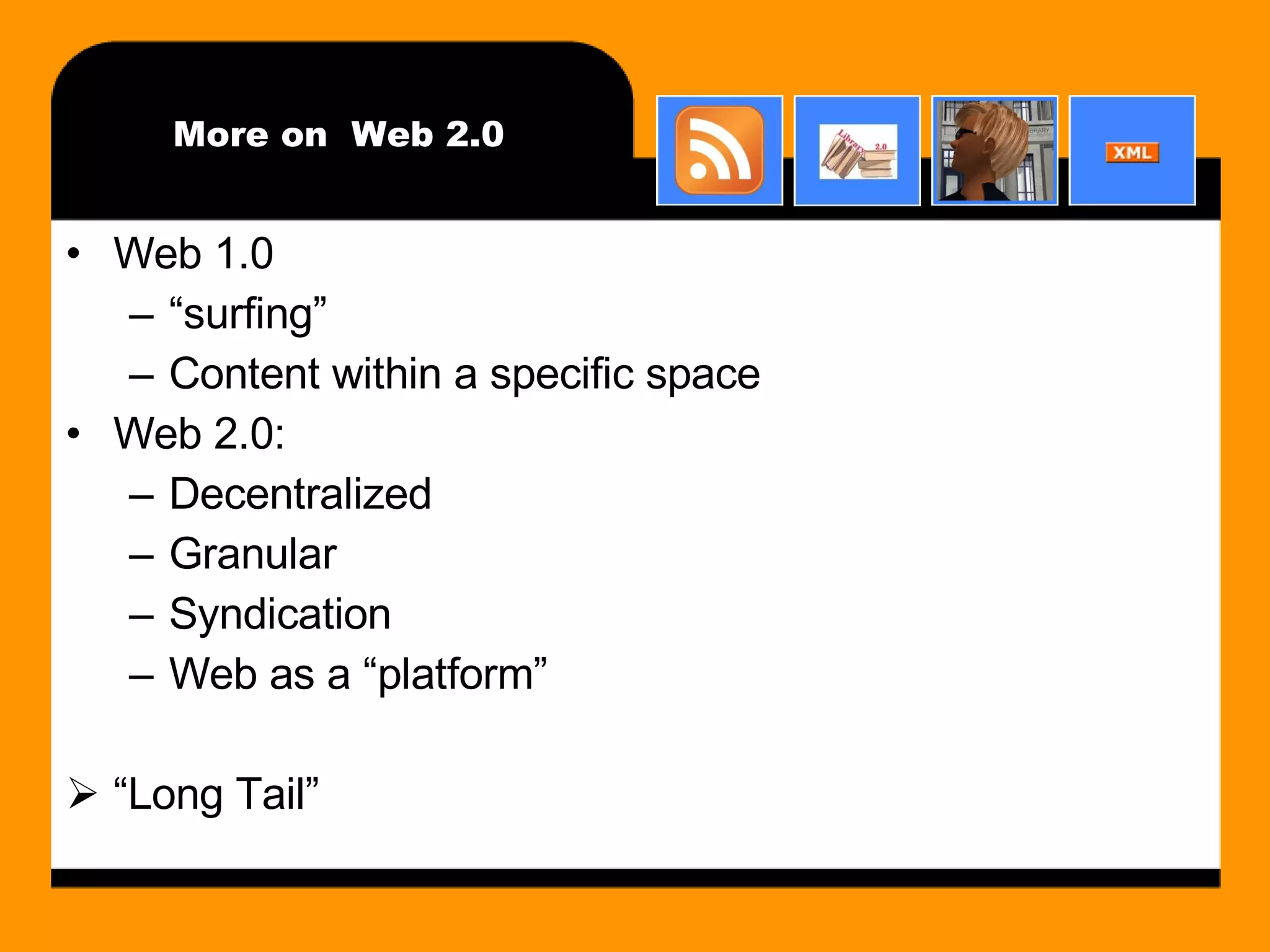
More on  Web 2.0 Web 1.0 “ surfing” Content within a specific space Web 2.0: Decentralized Granular Syndication Web as a “platform” “ Long Tail”
WEB 2.0 Concepts (Mindset) Key concepts or focus points: Collaboration Sharing Ownership Creation Web-based rather than software based Data/information Social Connections/relationships Trust
WEB 2.0 Concepts Enrichment Personal data Participation Decentralized User “tagged” or defined Experience Services Remixable Behavior
Library 2.0 Coined by Michael Casey on his blog LibraryCrunch Some other library contributors: Stephen Abram (SirsiDynix’s VP of Innovation):  http://stephenslighthouse.sirsidynix.com John Blyberg:  www.blyberg.net
Library 2.0 Some other library contributors: Jenny Levine (Internet Development Specialist and Strategy Guide @ ALA):  www.theshiftedlibrarian.com Michael Stephens:  http://tametheweb.com/
Library 2.0 Concepts Delivery Constant and purposeful change Adaptation User designed User created Participation User feedback 2-way information Reaching new users
Warnings (or Thoughts) What do users want? Investment in technology and/or time worth it? What do users expect? What are users doing on their own? How can users contribute?

Kent State Workshop - Using Web 2.0 Principles to Become Librarian 2.0, web 2 introduction, July 2008

  • 1.
    Kent State UniversitySLIS, July 18-19, 2008 Using Web 2.0 Principles to Become Librarian 2.0 Welcome & Introduction
  • 2.
    Instructor: Brian C.Gray Head of Reference Librarian: Engineering, Mathematics, & Statistics Kelvin Smith Library, Case Western Reserve University Work email: bcg8@case.edu Work phone: 216-368-8685 IM: AIM - kslbcg8 ICQ - 499284601 Google Chat - kslbcg8@gmail.com MSN - bcg8@case.edu Yahoo - kslbcg8
  • 3.
    My Interest inWeb 2.0 Teach RSS workshop at KSL Contribute to 3 Case KSL blogs ALA Library 2.0 participant ALA LAMA Web Coordinator Blogs, RSS, Wiki, Communities Regular IM user Over a dozen presentations/trainings at various venues See benefits of “free” tools to libraries & library users Non-techie trained person that likes to “play”
  • 4.
    Topics for theNext 2 Days What is Web 2.0 What is Library 2.0 Why should we care RSS and OPML Blogs Wikis Various Web 2.0 Tools Users Library concerns
  • 5.
    Introduce Yourself NameDegree in progress and/or library employer Goals for career Goals for this workshop Web/library 2.0 experience
  • 6.
  • 7.
    What do wealready know? http://ksuslisweb2.pbwiki.com Look for “Take the class survey”.
  • 8.
    Reasons Why YouMust Care Online competition to libraries Alternative method of PR/marketing Alternative method of communication Alternative publishing practices User awareness Efficiency “ Buzz” word right now Users are unaware and/or are creating alternatives to library resources
  • 9.
  • 10.
    Coined by O'ReillyMedia (2004) http://www.oreillynet.com/pub/a/oreilly/tim/news/2005/09/30/what-is-web-20.html#mememap
  • 11.
    What Is Web2.0, Design Patterns and Business Models for the Next Generation of Software Tim O'Reilly, 09/30/2005 http://www.oreillynet.com/pub/a/oreilly/tim/news/2005/09/30/what-is-web-20.html
  • 12.
    More on Web 2.0 Web 1.0 “ surfing” Content within a specific space Web 2.0: Decentralized Granular Syndication Web as a “platform” “ Long Tail”
  • 13.
    WEB 2.0 Concepts(Mindset) Key concepts or focus points: Collaboration Sharing Ownership Creation Web-based rather than software based Data/information Social Connections/relationships Trust
  • 14.
    WEB 2.0 ConceptsEnrichment Personal data Participation Decentralized User “tagged” or defined Experience Services Remixable Behavior
  • 15.
    Library 2.0 Coinedby Michael Casey on his blog LibraryCrunch Some other library contributors: Stephen Abram (SirsiDynix’s VP of Innovation): http://stephenslighthouse.sirsidynix.com John Blyberg: www.blyberg.net
  • 16.
    Library 2.0 Someother library contributors: Jenny Levine (Internet Development Specialist and Strategy Guide @ ALA): www.theshiftedlibrarian.com Michael Stephens: http://tametheweb.com/
  • 17.
    Library 2.0 ConceptsDelivery Constant and purposeful change Adaptation User designed User created Participation User feedback 2-way information Reaching new users
  • 18.
    Warnings (or Thoughts)What do users want? Investment in technology and/or time worth it? What do users expect? What are users doing on their own? How can users contribute?