Introduction to Research Kent Kawashima STR 1
Outline What is research? Aims Significance Types of research By application By approach By type of data sought
What is Research? Research is a careful, systematic, patient study and investigation in some field of knowledge, undertaken to establish facts or principles. (Grinnel, 1993)
What is Research? Research is the systematic and objective analysis and recording of controlled observations that may lead to the development of generalizations, principles or theories resulting in prediction and possibly ultimate control of events. (Kumar, 1996).
In short… Research is a process by which people discover or create new knowledge about the world in which they live. (Intel Corporation, 2008)
Aims of Research To obtain solutions to problems through the discovery of cause-and-effect relationships (or systematic relationships) between variables
Aims of Research To be able to develop generalizations, principles or theories that will be helpful in predicting future occurrences
Aims of Research To obtain some observable experiences or gather empirical evidences as a means to verify knowledge
Aims of Research To establish new methodologies or processes that may be used to improve the quality of life or the environment
Significance of Research “ More than a set of skills,  research is a way of thinking : examining critically the various aspects of your profession; understanding and formulating guiding principles that govern a particular procedure; and developing and testing new theories for the enhancement of your profession. It is a habit of questioning about what you do, and empirical examination to find answers, with a view to instituting changes for a more effective professional service” - Ranjit Kumar, 1996
Significance of Research “ It is a habit of questioning about what you do, and empirical examination to find answers, with a view to instituting changes…” Research generates new knowledge
Types of Research Based on application of research Basic or Pure Applied
Basic Research Research problem deals with fundamental or problems of facts New knowledge or verifies theories Knowledge for its own sake
 
Applied Research Problems deals with the “means” Find solutions to human problems Practical use
 
Types of Research Based on approach under which the study is conducted Descriptive/Observational Experimental Technical
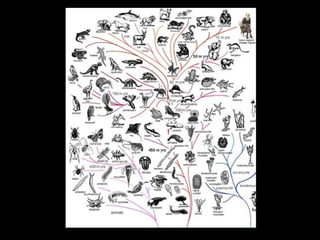
Descriptive Research Defines characteristics of an organism and makes comparisons with others without manipulating factors or conditions No manipulation of independent variables
 
 
Experimental Research Alteration of factor/s and variable/s in a controlled manner or under controlled conditions to test an organism’s response to the factors applied Involves cause and effect
 
 
Technical Research Development of a technique or procedure using established knowledge as a basis for coming up with the methodology
 
Types of Research Based on the type of information sought Quantitative Qualitative
TeleMed: The Mechanization and Control of a Microscope for Remote Conferencing Christian O. Sanchez, Ernest Baello III, Lorenzo Lorilla, Patrick Estorninos TeleMed is a system that aims to control a microscope from a computer, for use in pathology and other fields of medicine. To achieve this system, a trinocular microscope was acquired and stepper motors were connected to its knobs using motor belts. Software was created to run these motors through a specially designed interface board. Based on the signals sent by the software, the corresponding motors were made to operate the knobsof the microscope, thereby enabling the user to move the stage (x and y movement), adjust the focus and change the objective, all through mouse and keyboard control. Another program was also created and installed in a remote computer. This software enables off-site control of the microscope by sending signals through a computer network. Both pieces of software were designed to run under the Windows 95 environment. They exhibit user-friendly visual controls and online help documentation to guide the user through the program.
Comparative Evaluation of the Antibacterial properties of Chili Pepper Fruit Varieties on Human Dental Microflora Joan C. de Guzman, Mark-Lawrence T. Tirao, Rosemary Gutierrez Chili pepper growth and use span the globe. The unique pungent nature is due chiefly to its component capsaicin. Herbalists postulate that capsaicin sterilizes tooth cavities white soothing a toothache. To investigae on this observation, a comparative evaluation was done on the antibacterial action of three Capsicum fruit varieties namely Capsicum frutescens, Capsicum annuum “de Arbo” and Capsicum annuum var. longgum on toothache-causing bacteria which include Lactobacillus acidophilus, Bacillus subtilis and an isolate from an individual with dental caries. Steam distillation was employed to extract the essential oil which contains the substance capsaicin. The paper disc diffusion method was used for the microbiological assays of extracts in their pure and diluted forms. The Minimum Inhibitory Concentration (MIC) and Minimum Bactericidal Concentration (MBC) were also determined. Results revealed that among the three capsicum varieties, C. frutescens is the most effective inhibitor  of bacterial growth for L. acidophilus and B. subtilis and C. annuum var longgum is the most effective against a bacterial isolate, hypothesized to be Neisseria sp. The MIC of the plant extracts was found to be at 25% in all of the three bacterial test organisms, while MBS was determined to be 100%.

Introduction To Research

  • 1.
    Introduction to ResearchKent Kawashima STR 1
  • 2.
    Outline What isresearch? Aims Significance Types of research By application By approach By type of data sought
  • 3.
    What is Research?Research is a careful, systematic, patient study and investigation in some field of knowledge, undertaken to establish facts or principles. (Grinnel, 1993)
  • 4.
    What is Research?Research is the systematic and objective analysis and recording of controlled observations that may lead to the development of generalizations, principles or theories resulting in prediction and possibly ultimate control of events. (Kumar, 1996).
  • 5.
    In short… Researchis a process by which people discover or create new knowledge about the world in which they live. (Intel Corporation, 2008)
  • 6.
    Aims of ResearchTo obtain solutions to problems through the discovery of cause-and-effect relationships (or systematic relationships) between variables
  • 7.
    Aims of ResearchTo be able to develop generalizations, principles or theories that will be helpful in predicting future occurrences
  • 8.
    Aims of ResearchTo obtain some observable experiences or gather empirical evidences as a means to verify knowledge
  • 9.
    Aims of ResearchTo establish new methodologies or processes that may be used to improve the quality of life or the environment
  • 10.
    Significance of Research“ More than a set of skills, research is a way of thinking : examining critically the various aspects of your profession; understanding and formulating guiding principles that govern a particular procedure; and developing and testing new theories for the enhancement of your profession. It is a habit of questioning about what you do, and empirical examination to find answers, with a view to instituting changes for a more effective professional service” - Ranjit Kumar, 1996
  • 11.
    Significance of Research“ It is a habit of questioning about what you do, and empirical examination to find answers, with a view to instituting changes…” Research generates new knowledge
  • 12.
    Types of ResearchBased on application of research Basic or Pure Applied
  • 13.
    Basic Research Researchproblem deals with fundamental or problems of facts New knowledge or verifies theories Knowledge for its own sake
  • 14.
  • 15.
    Applied Research Problemsdeals with the “means” Find solutions to human problems Practical use
  • 16.
  • 17.
    Types of ResearchBased on approach under which the study is conducted Descriptive/Observational Experimental Technical
  • 18.
    Descriptive Research Definescharacteristics of an organism and makes comparisons with others without manipulating factors or conditions No manipulation of independent variables
  • 19.
  • 20.
  • 21.
    Experimental Research Alterationof factor/s and variable/s in a controlled manner or under controlled conditions to test an organism’s response to the factors applied Involves cause and effect
  • 22.
  • 23.
  • 24.
    Technical Research Developmentof a technique or procedure using established knowledge as a basis for coming up with the methodology
  • 25.
  • 26.
    Types of ResearchBased on the type of information sought Quantitative Qualitative
  • 27.
    TeleMed: The Mechanizationand Control of a Microscope for Remote Conferencing Christian O. Sanchez, Ernest Baello III, Lorenzo Lorilla, Patrick Estorninos TeleMed is a system that aims to control a microscope from a computer, for use in pathology and other fields of medicine. To achieve this system, a trinocular microscope was acquired and stepper motors were connected to its knobs using motor belts. Software was created to run these motors through a specially designed interface board. Based on the signals sent by the software, the corresponding motors were made to operate the knobsof the microscope, thereby enabling the user to move the stage (x and y movement), adjust the focus and change the objective, all through mouse and keyboard control. Another program was also created and installed in a remote computer. This software enables off-site control of the microscope by sending signals through a computer network. Both pieces of software were designed to run under the Windows 95 environment. They exhibit user-friendly visual controls and online help documentation to guide the user through the program.
  • 28.
    Comparative Evaluation ofthe Antibacterial properties of Chili Pepper Fruit Varieties on Human Dental Microflora Joan C. de Guzman, Mark-Lawrence T. Tirao, Rosemary Gutierrez Chili pepper growth and use span the globe. The unique pungent nature is due chiefly to its component capsaicin. Herbalists postulate that capsaicin sterilizes tooth cavities white soothing a toothache. To investigae on this observation, a comparative evaluation was done on the antibacterial action of three Capsicum fruit varieties namely Capsicum frutescens, Capsicum annuum “de Arbo” and Capsicum annuum var. longgum on toothache-causing bacteria which include Lactobacillus acidophilus, Bacillus subtilis and an isolate from an individual with dental caries. Steam distillation was employed to extract the essential oil which contains the substance capsaicin. The paper disc diffusion method was used for the microbiological assays of extracts in their pure and diluted forms. The Minimum Inhibitory Concentration (MIC) and Minimum Bactericidal Concentration (MBC) were also determined. Results revealed that among the three capsicum varieties, C. frutescens is the most effective inhibitor of bacterial growth for L. acidophilus and B. subtilis and C. annuum var longgum is the most effective against a bacterial isolate, hypothesized to be Neisseria sp. The MIC of the plant extracts was found to be at 25% in all of the three bacterial test organisms, while MBS was determined to be 100%.