Arabic and Persian
     Literature
    A taste of the Middle East
Why is this study
          important?
• 7thCentury Islam expanded from Persia and
  Arabia (Modern day Saudi Arabia, Iran, Iraq,
  Oman, Jordan, Syria, Yemen, Israel, Pakistan,
  Afghanistan)

• Islam is a powerful and misunderstood culture

• Islam brought modern mail service, banking,
  astronomy, navigation, medicine, math, and
  literature across Africa and Europe.
Pre-Islamic Influence of
                   Persia
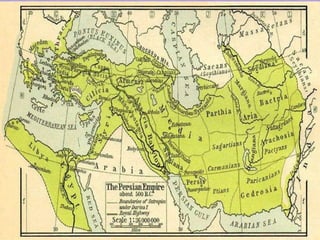
               1000 BC-642 AD
• Nomadic people

• Zoroaster founder of Persian religion (Zoroastrianism)

• Military Power Cyrus the Great (showed mercy, an example of
  Zoroastrianism influence)

• Cambyses II expanded Persia

• Darius I introduced roads, coinage, and weights to promote trade

• 490 BC GreeksBattle of Marathon

• 331 BC Alexander the Great

• 224 BC Persia regains power

• 651 AD Arabs defeat Persia Islam is introduced
Spread of Islam
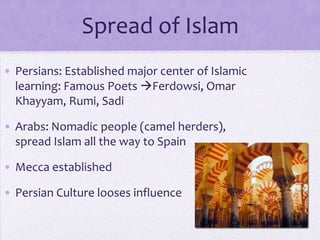
• Persians: Established major center of Islamic
  learning: Famous Poets Ferdowsi, Omar
  Khayyam, Rumi, Sadi

• Arabs: Nomadic people (camel herders),
  spread Islam all the way to Spain

• Mecca established

• Persian Culture looses influence
Arabic Traditions: After
             570 AD
• Abraham
• Desert nomads farmers and traders
• Oases
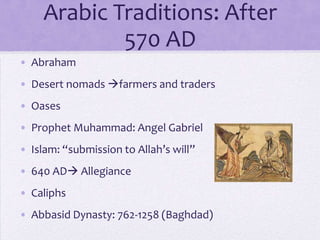
• Prophet Muhammad: Angel Gabriel
• Islam: “submission to Allah’s will”
• 640 AD Allegiance
• Caliphs
• Abbasid Dynasty: 762-1258 (Baghdad)
Persia and the Islamic
           Empire
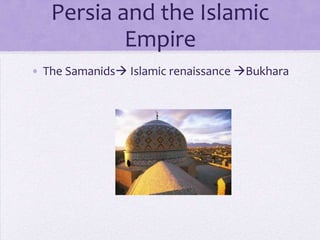
• The Samanids Islamic renaissance Bukhara
The People of Islam
• Nomads Bedouins warriors
• Rulers break of theocracy emits, Sultans, Shahs
• Lower class  taxed for not being Muslim, no slavery
• Merchants/traders bazaars
• Educated House of Wisdom (Caliph al Ma’mum
• Mystics dervishes or fakirs (Sufism)
• Women  their rights improved (equals in the eyes of
  Allah)
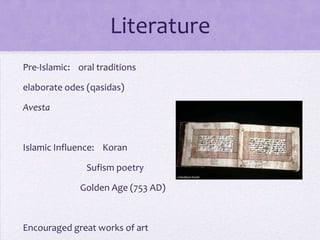
Literature
Pre-Islamic: oral traditions

elaborate odes (qasidas)

Avesta


Islamic Influence: Koran

               Sufism poetry

              Golden Age (753 AD)


Encouraged great works of art

Introduction to m e lit

  • 1.
    Arabic and Persian Literature A taste of the Middle East
  • 2.
    Why is thisstudy important? • 7thCentury Islam expanded from Persia and Arabia (Modern day Saudi Arabia, Iran, Iraq, Oman, Jordan, Syria, Yemen, Israel, Pakistan, Afghanistan) • Islam is a powerful and misunderstood culture • Islam brought modern mail service, banking, astronomy, navigation, medicine, math, and literature across Africa and Europe.
  • 3.
    Pre-Islamic Influence of Persia 1000 BC-642 AD • Nomadic people • Zoroaster founder of Persian religion (Zoroastrianism) • Military Power Cyrus the Great (showed mercy, an example of Zoroastrianism influence) • Cambyses II expanded Persia • Darius I introduced roads, coinage, and weights to promote trade • 490 BC GreeksBattle of Marathon • 331 BC Alexander the Great • 224 BC Persia regains power • 651 AD Arabs defeat Persia Islam is introduced
  • 5.
    Spread of Islam •Persians: Established major center of Islamic learning: Famous Poets Ferdowsi, Omar Khayyam, Rumi, Sadi • Arabs: Nomadic people (camel herders), spread Islam all the way to Spain • Mecca established • Persian Culture looses influence
  • 6.
    Arabic Traditions: After 570 AD • Abraham • Desert nomads farmers and traders • Oases • Prophet Muhammad: Angel Gabriel • Islam: “submission to Allah’s will” • 640 AD Allegiance • Caliphs • Abbasid Dynasty: 762-1258 (Baghdad)
  • 7.
    Persia and theIslamic Empire • The Samanids Islamic renaissance Bukhara
  • 8.
    The People ofIslam • Nomads Bedouins warriors • Rulers break of theocracy emits, Sultans, Shahs • Lower class  taxed for not being Muslim, no slavery • Merchants/traders bazaars • Educated House of Wisdom (Caliph al Ma’mum • Mystics dervishes or fakirs (Sufism) • Women  their rights improved (equals in the eyes of Allah)
  • 9.
    Literature Pre-Islamic: oral traditions elaborateodes (qasidas) Avesta Islamic Influence: Koran Sufism poetry Golden Age (753 AD) Encouraged great works of art