An Introduction to Information
Security – What?
 http://www.shaolintiger.com
 http://www.darknet.org.uk
 @ShaolinTiger & @THEdarknet on Twitter
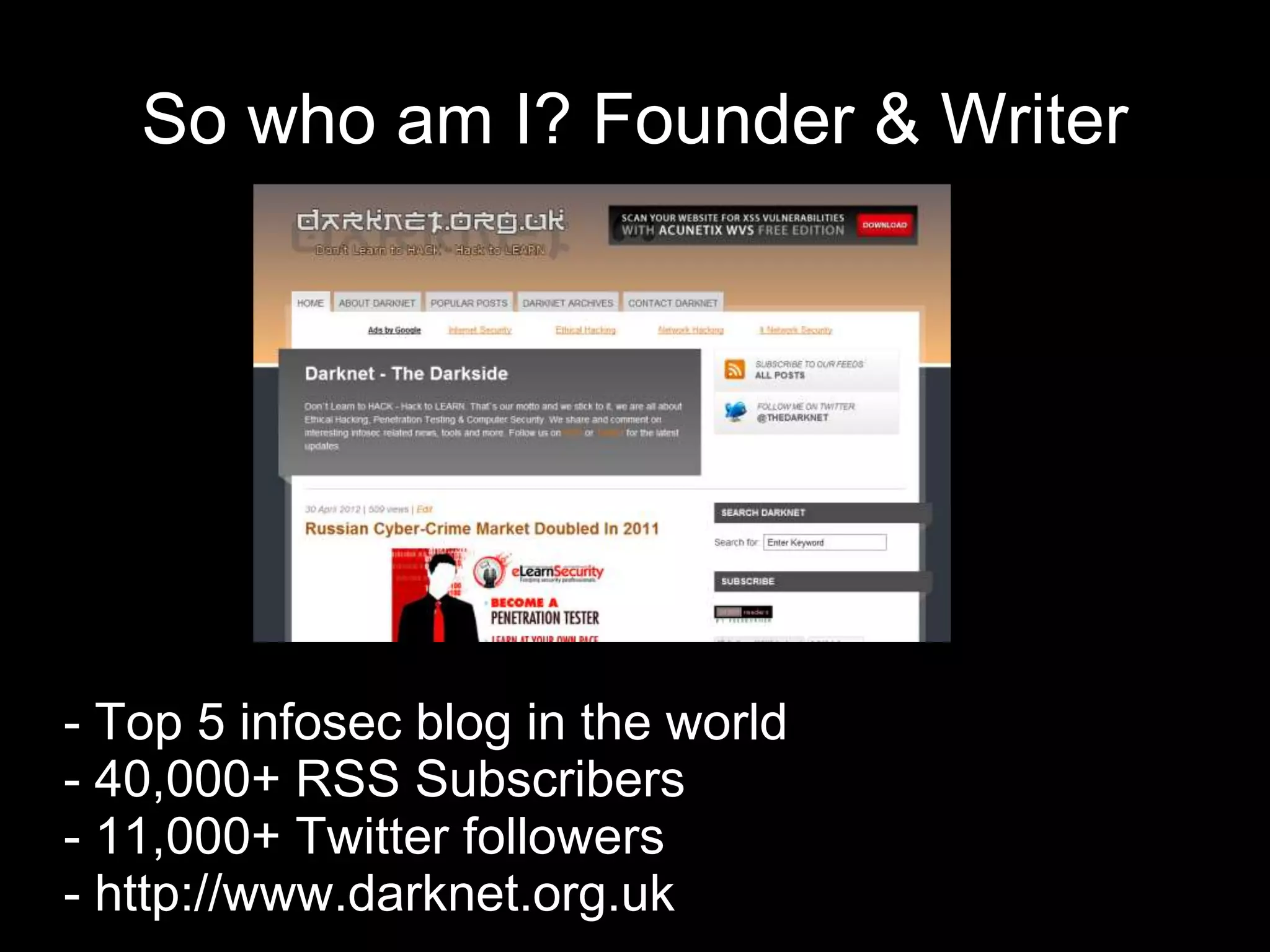
So who am I? Founder & Writer
- Top 5 infosec blog in the world
- 40,000+ RSS Subscribers
- 11,000+ Twitter followers
- http://www.darknet.org.uk
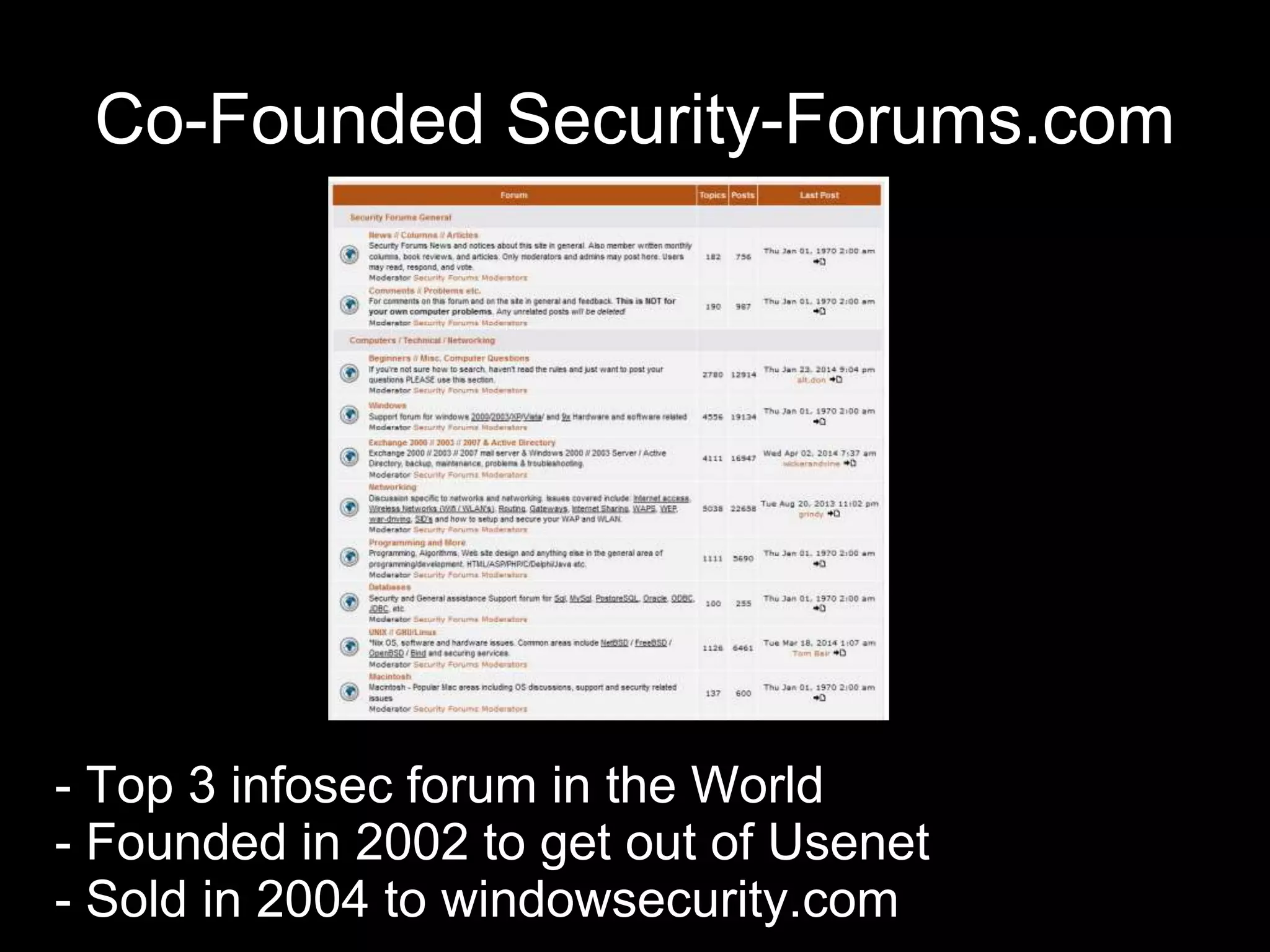
Co-Founded Security-Forums.com
- Top 3 infosec forum in the World
- Founded in 2002 to get out of Usenet
- Sold in 2004 to windowsecurity.com
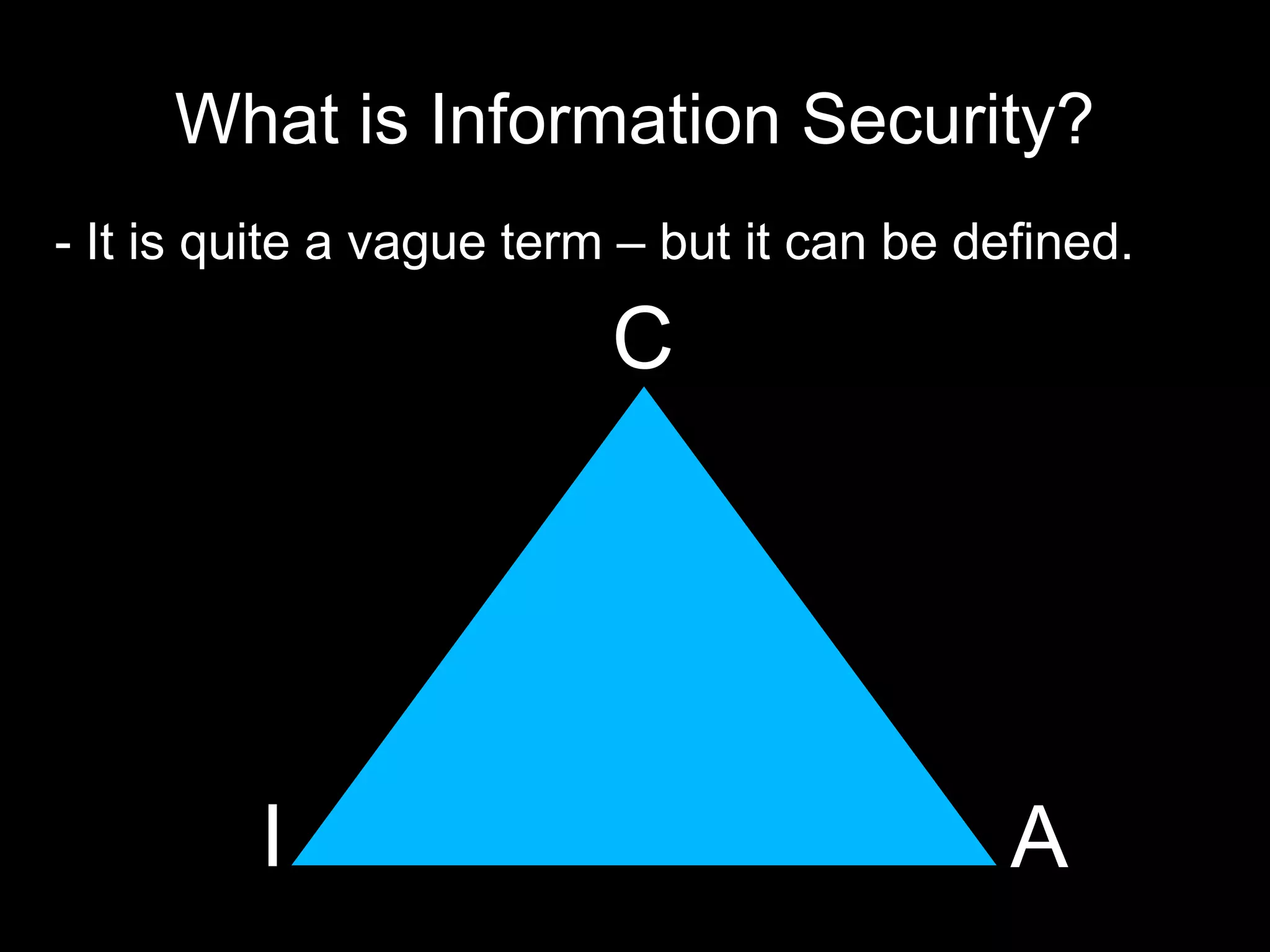
What is Information Security?
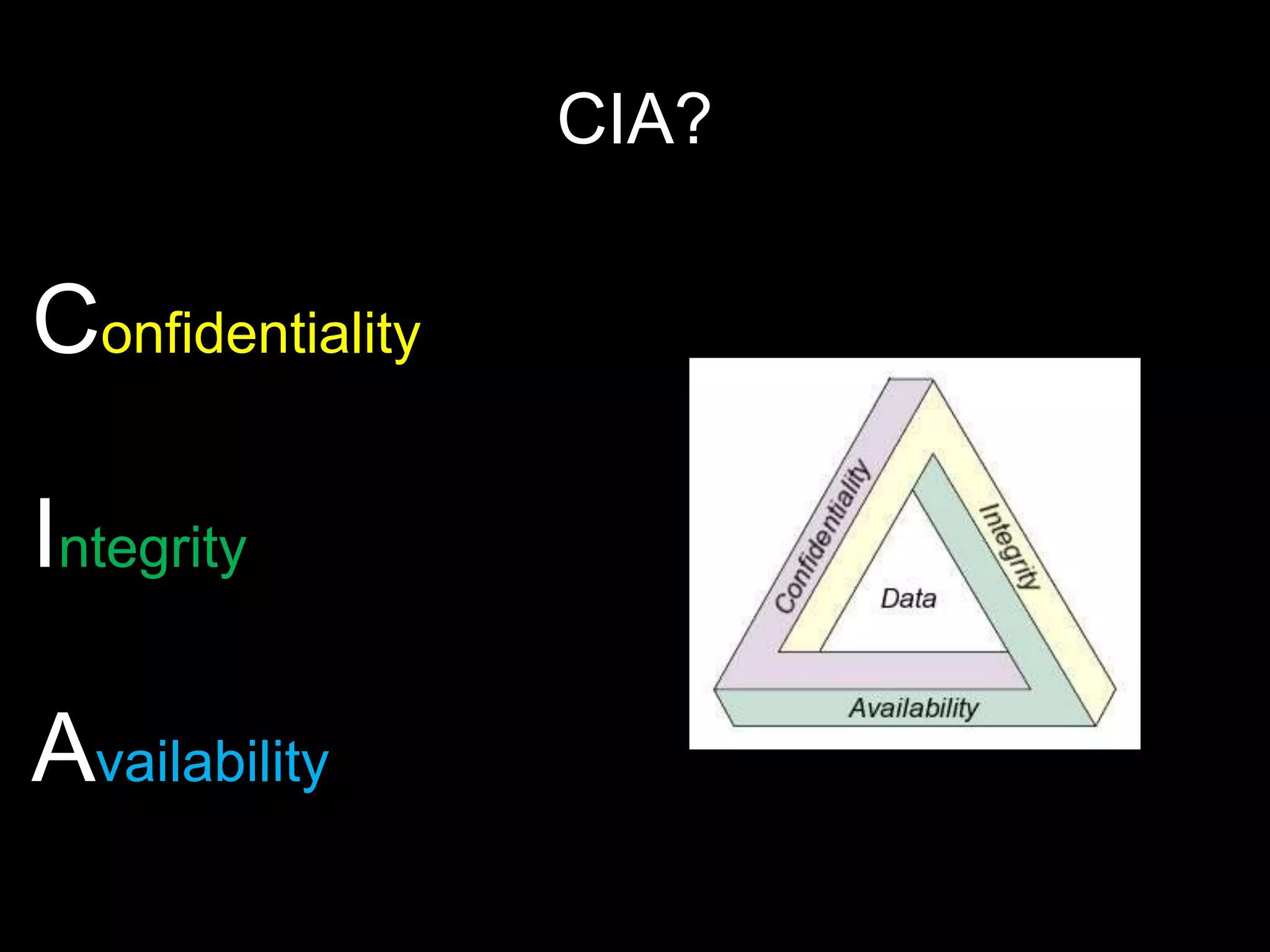
- It is quite a vague term – but it can be defined.
C
AI
CIA?
Confidentiality
Integrity
Availability
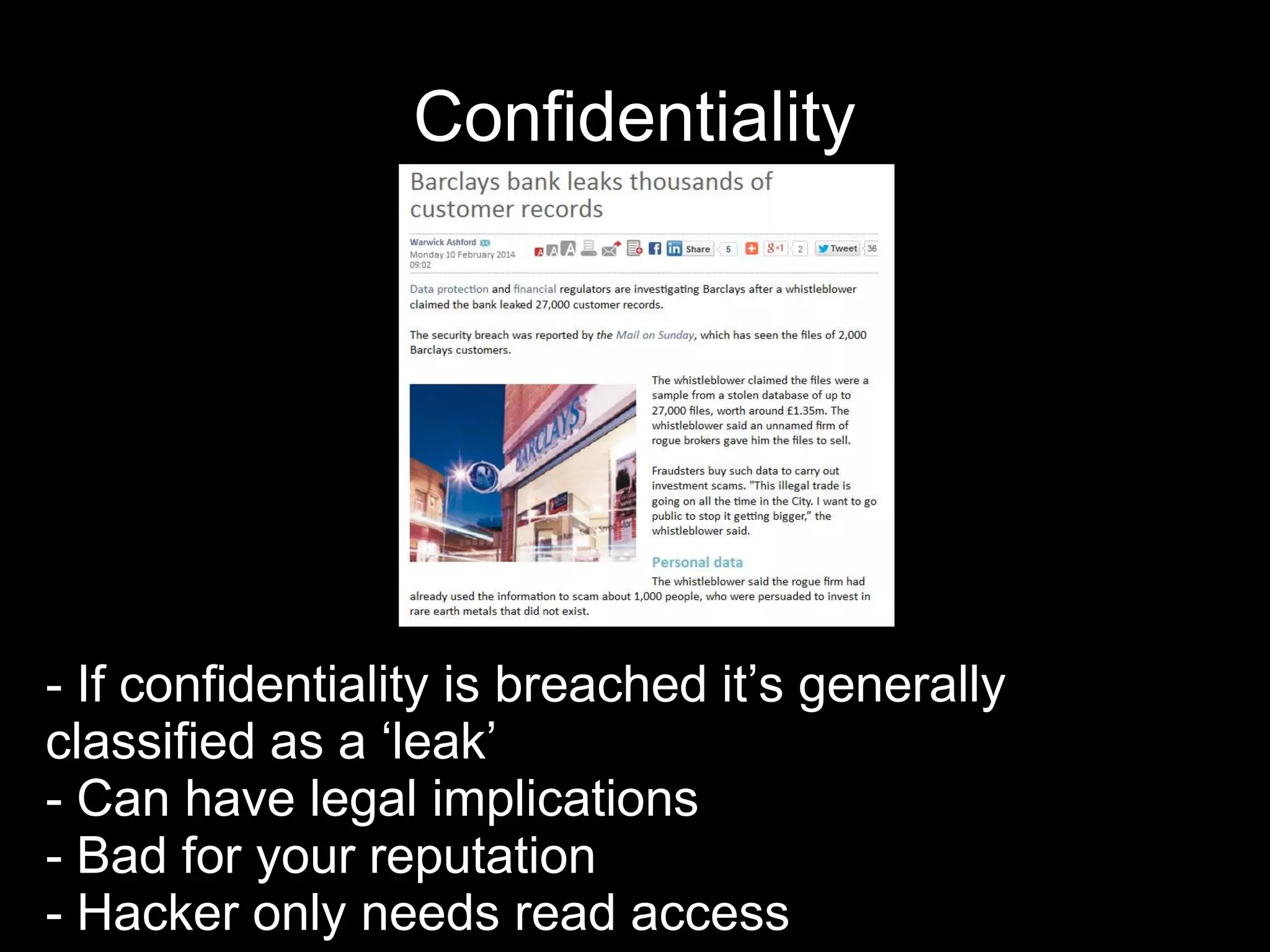
Confidentiality
- If confidentiality is breached it’s generally
classified as a ‘leak’
- Can have legal implications
- Bad for your reputation
- Hacker only needs read access
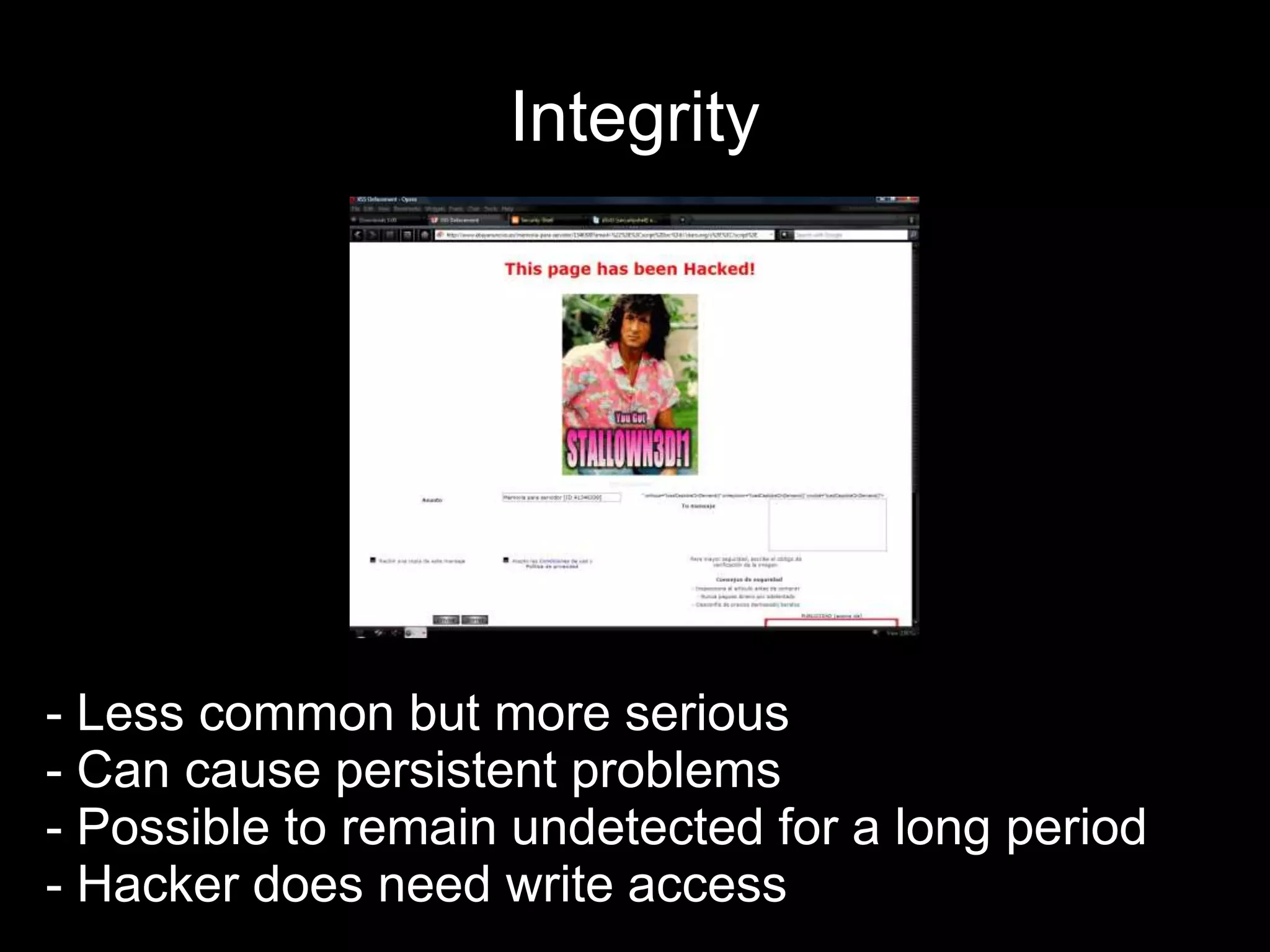
Integrity
- Less common but more serious
- Can cause persistent problems
- Possible to remain undetected for a long period
- Hacker does need write access
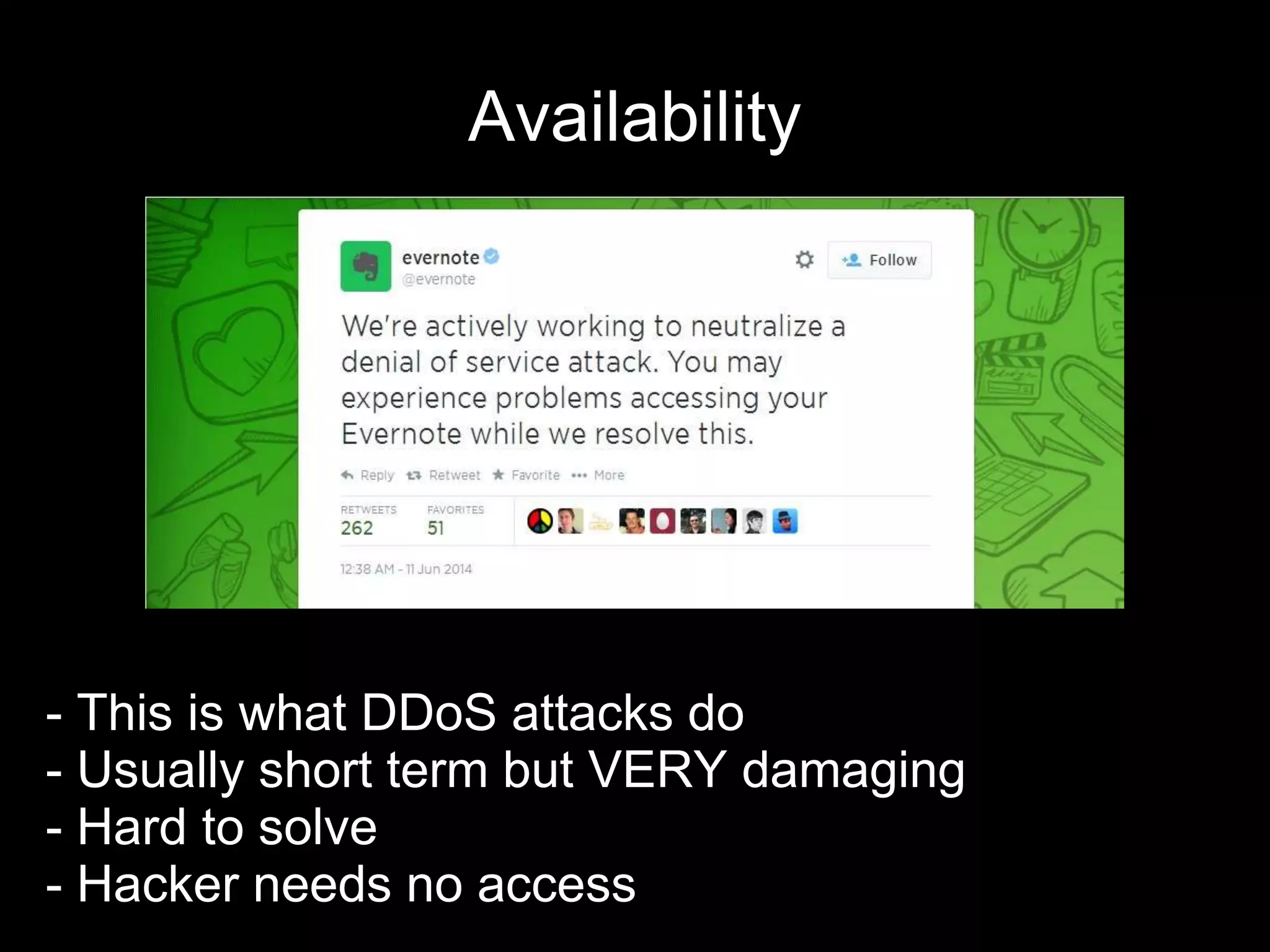
Availability
- This is what DDoS attacks do
- Usually short term but VERY damaging
- Hard to solve
- Hacker needs no access
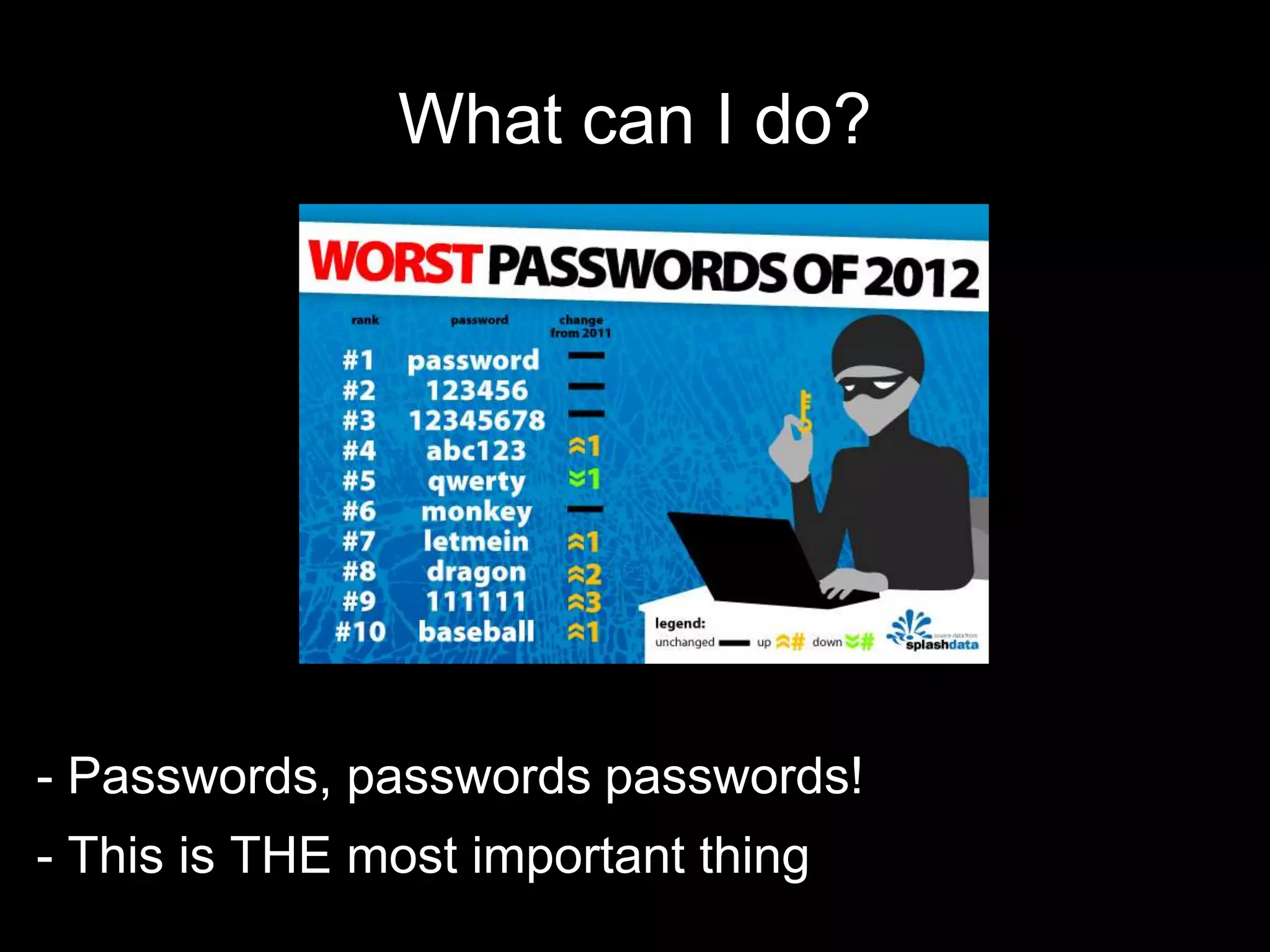
What can I do?
- Passwords, passwords passwords!
- This is THE most important thing
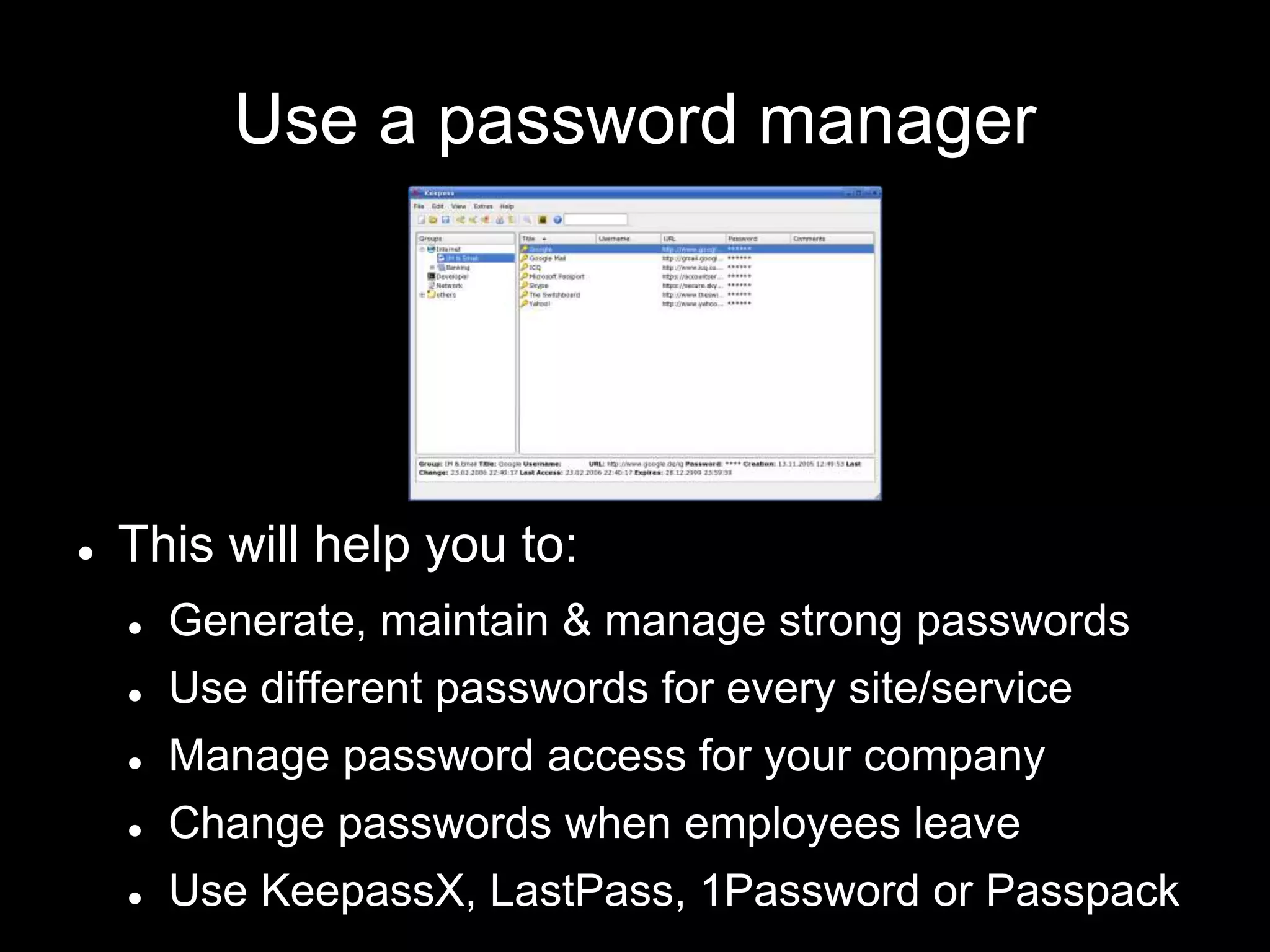
Use a password manager
 This will help you to:
 Generate, maintain & manage strong passwords
 Use different passwords for every site/service
 Manage password access for your company
 Change passwords when employees leave
 Use KeepassX, LastPass, 1Password or Passpack
Resource Management
- People can be bad, make sure all master
accounts are under the company not under
individuals
- Separate access so changes can be logged
- This is especially critical for tech services such
as:
- Github
- Amazon Web Services
- Linode
- Bitbucket
- Dropbox
- Anywhere that your code/resources are stored
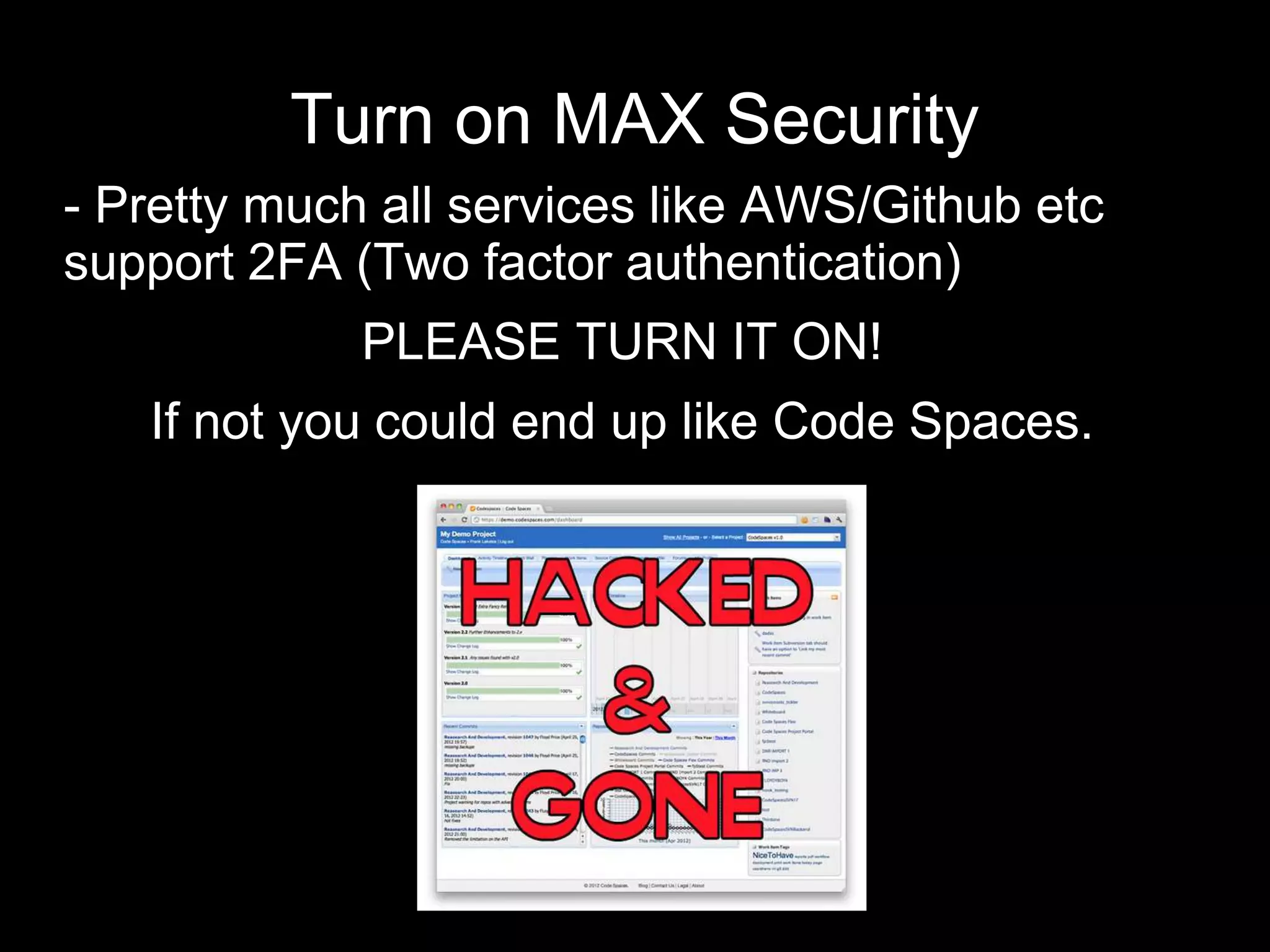
Turn on MAX Security
- Pretty much all services like AWS/Github etc
support 2FA (Two factor authentication)
PLEASE TURN IT ON!
If not you could end up like Code Spaces.
Education
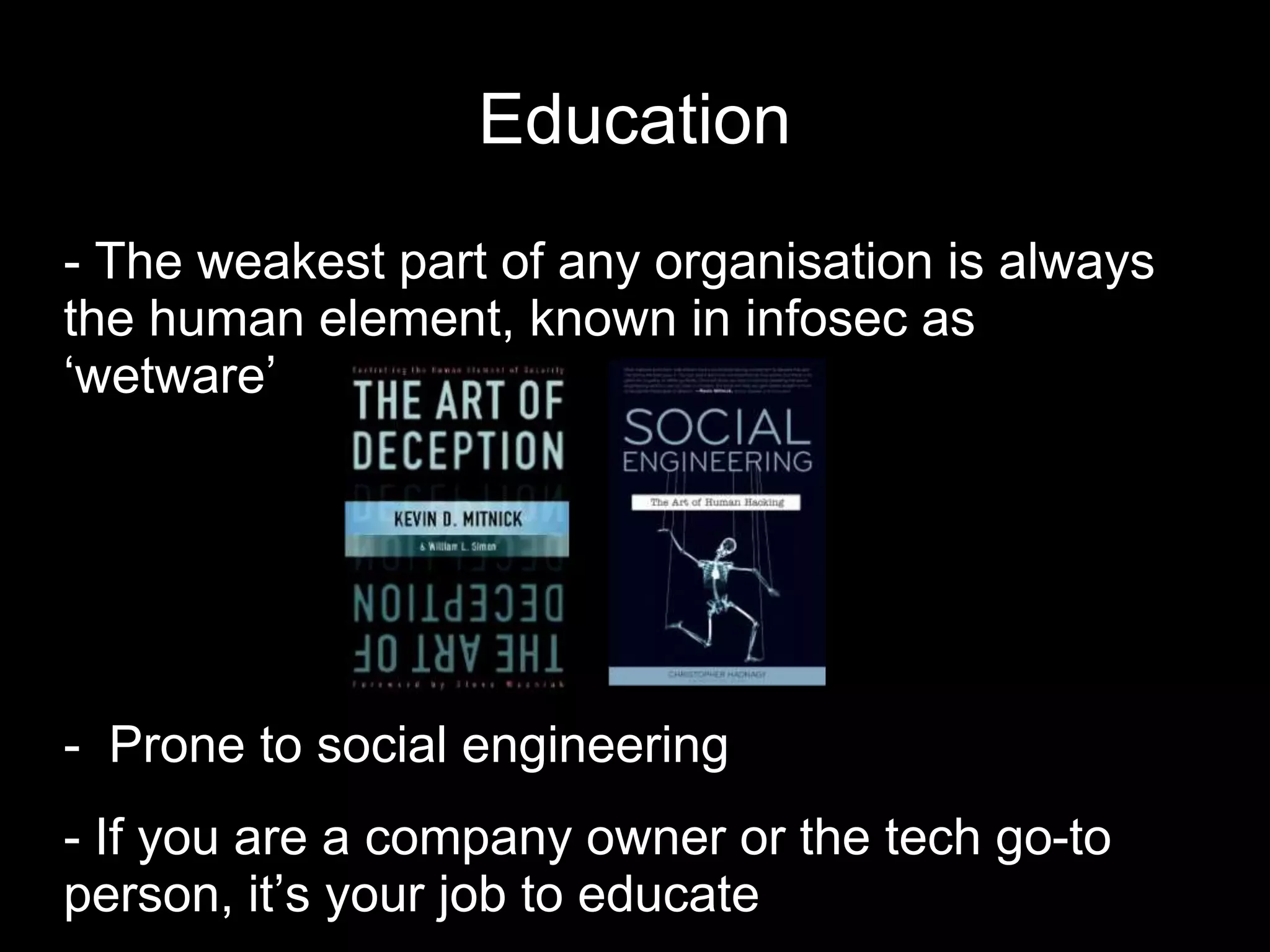
- The weakest part of any organisation is always
the human element, known in infosec as
‘wetware’
- Prone to social engineering
- If you are a company owner or the tech go-to
person, it’s your job to educate
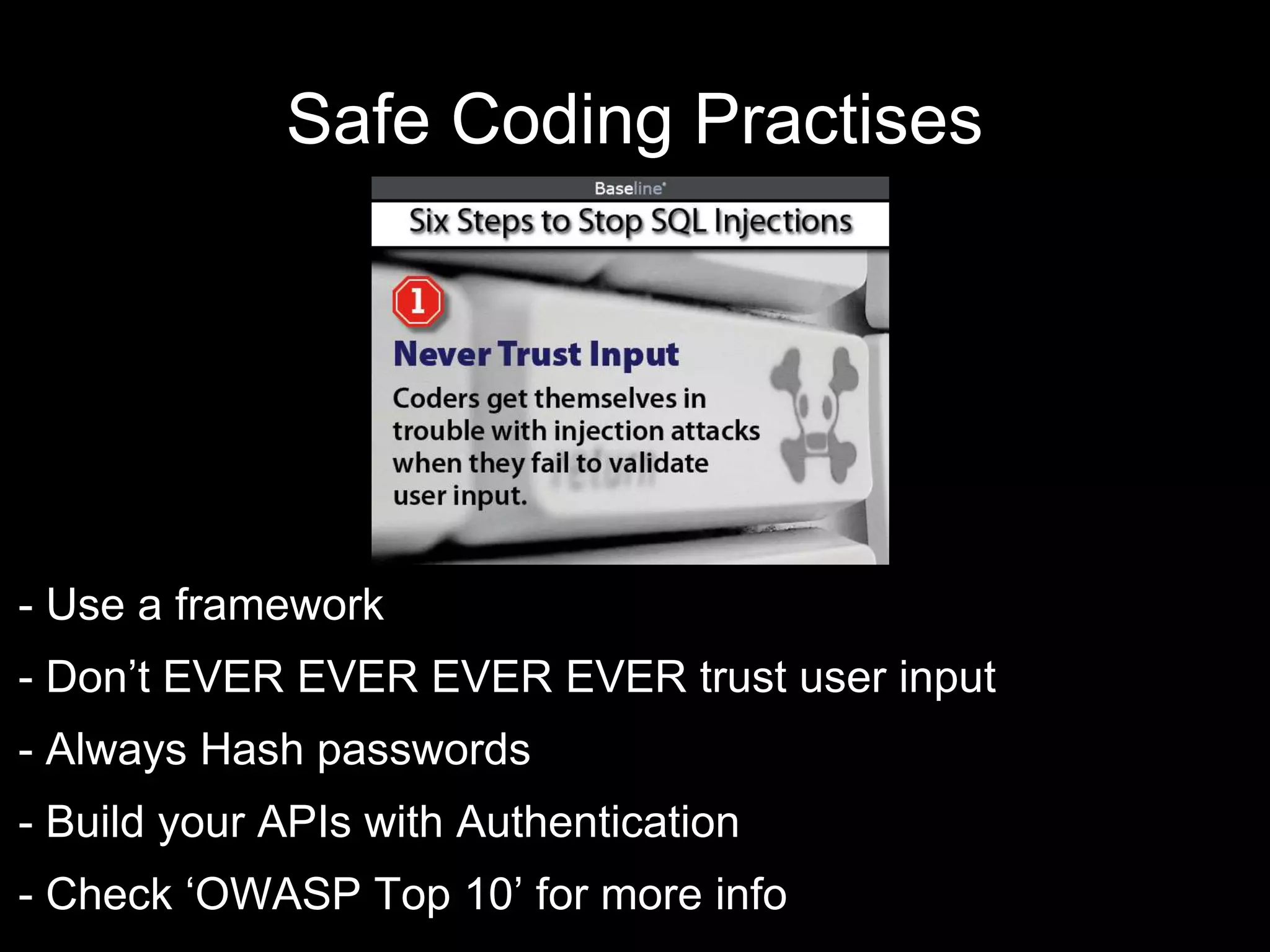
Safe Coding Practises
- Use a framework
- Don’t EVER EVER EVER EVER trust user input
- Always Hash passwords
- Build your APIs with Authentication
- Check ‘OWASP Top 10’ for more info
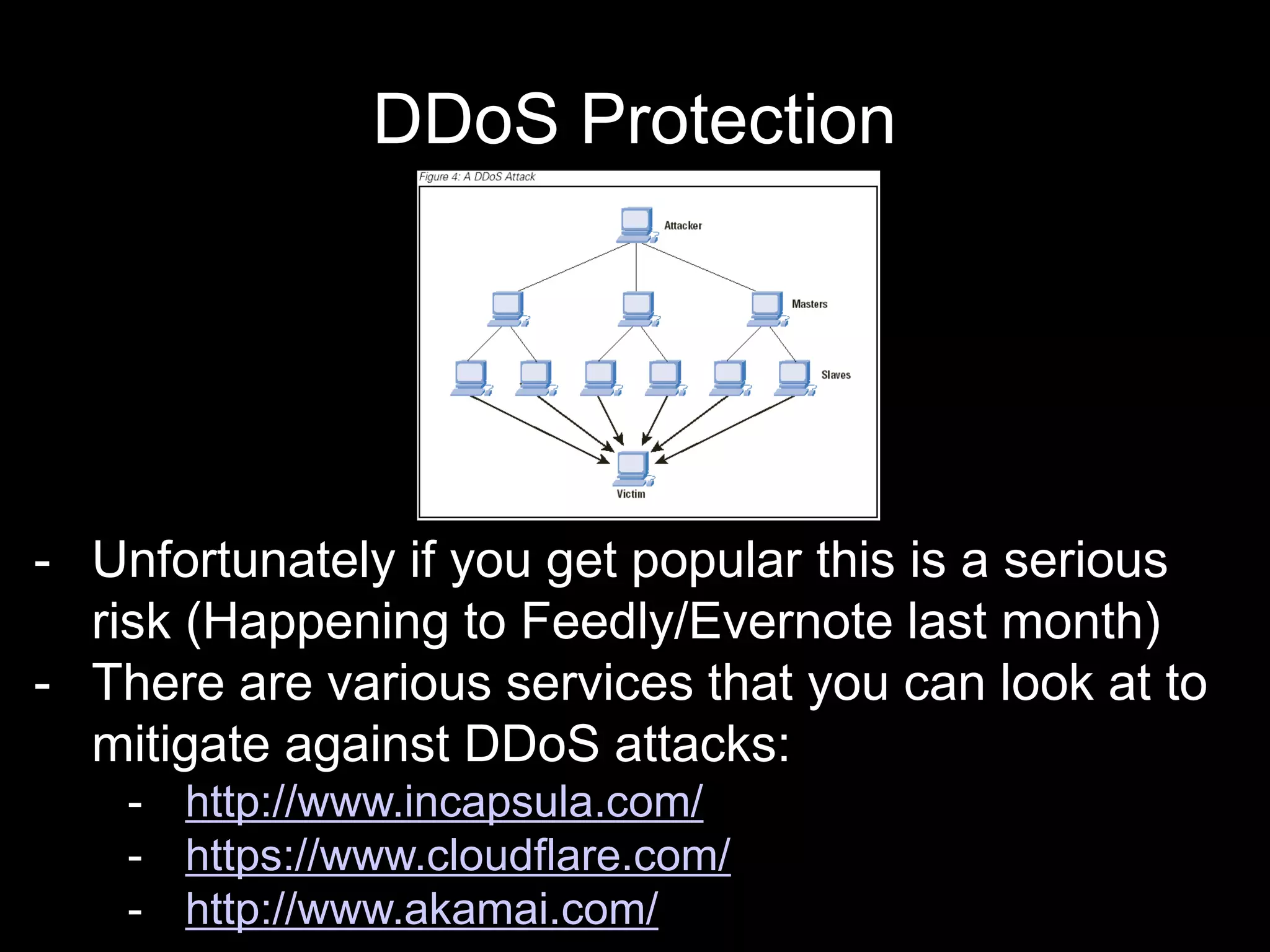
DDoS Protection
- Unfortunately if you get popular this is a serious
risk (Happening to Feedly/Evernote last month)
- There are various services that you can look at to
mitigate against DDoS attacks:
- http://www.incapsula.com/
- https://www.cloudflare.com/
- http://www.akamai.com/
Platform Security
- ALWAYS keep the core up to date
- If you can use a specialist host (WPengine/Page.ly)
- Use as few plugins as possible
- NEVER pirate themes/plugins as they often contain
malware
The END!
Questions?
Stalk me @ShaolinTiger or @THEdarknet on Twitter
If you are interested in Infosec – http://fb.me/darknetorguk
This preso will be on http://slideshare.net/shaolintiger

Introduction to Information Security

  • 1.
    An Introduction toInformation Security – What?  http://www.shaolintiger.com  http://www.darknet.org.uk  @ShaolinTiger & @THEdarknet on Twitter
  • 2.
    So who amI? Founder & Writer - Top 5 infosec blog in the world - 40,000+ RSS Subscribers - 11,000+ Twitter followers - http://www.darknet.org.uk
  • 3.
    Co-Founded Security-Forums.com - Top3 infosec forum in the World - Founded in 2002 to get out of Usenet - Sold in 2004 to windowsecurity.com
  • 4.
    What is InformationSecurity? - It is quite a vague term – but it can be defined. C AI
  • 5.
  • 6.
    Confidentiality - If confidentialityis breached it’s generally classified as a ‘leak’ - Can have legal implications - Bad for your reputation - Hacker only needs read access
  • 7.
    Integrity - Less commonbut more serious - Can cause persistent problems - Possible to remain undetected for a long period - Hacker does need write access
  • 8.
    Availability - This iswhat DDoS attacks do - Usually short term but VERY damaging - Hard to solve - Hacker needs no access
  • 9.
    What can Ido? - Passwords, passwords passwords! - This is THE most important thing
  • 10.
    Use a passwordmanager  This will help you to:  Generate, maintain & manage strong passwords  Use different passwords for every site/service  Manage password access for your company  Change passwords when employees leave  Use KeepassX, LastPass, 1Password or Passpack
  • 11.
    Resource Management - Peoplecan be bad, make sure all master accounts are under the company not under individuals - Separate access so changes can be logged - This is especially critical for tech services such as: - Github - Amazon Web Services - Linode - Bitbucket - Dropbox - Anywhere that your code/resources are stored
  • 12.
    Turn on MAXSecurity - Pretty much all services like AWS/Github etc support 2FA (Two factor authentication) PLEASE TURN IT ON! If not you could end up like Code Spaces.
  • 13.
    Education - The weakestpart of any organisation is always the human element, known in infosec as ‘wetware’ - Prone to social engineering - If you are a company owner or the tech go-to person, it’s your job to educate
  • 14.
    Safe Coding Practises -Use a framework - Don’t EVER EVER EVER EVER trust user input - Always Hash passwords - Build your APIs with Authentication - Check ‘OWASP Top 10’ for more info
  • 15.
    DDoS Protection - Unfortunatelyif you get popular this is a serious risk (Happening to Feedly/Evernote last month) - There are various services that you can look at to mitigate against DDoS attacks: - http://www.incapsula.com/ - https://www.cloudflare.com/ - http://www.akamai.com/
  • 16.
    Platform Security - ALWAYSkeep the core up to date - If you can use a specialist host (WPengine/Page.ly) - Use as few plugins as possible - NEVER pirate themes/plugins as they often contain malware
  • 17.
    The END! Questions? Stalk me@ShaolinTiger or @THEdarknet on Twitter If you are interested in Infosec – http://fb.me/darknetorguk This preso will be on http://slideshare.net/shaolintiger