HIGHWAY CROSS-
SECTIONAL ELEMENTS
By
Pinki Deb
Highway cross sectional elements
■ Under cross sectional elements, the consideration for
the width of pavement, formation and land, the
surface characteristics and cross slope of pavement
are included
■ The cross sectional elements are one of the important
element of geometric design
The cross-sectional elements are as
follows
■ Cross-slope or Camber
■ Width of pavement or carriageway
■ Medians or traffic separators
■ Kerbs
■ Road Margins
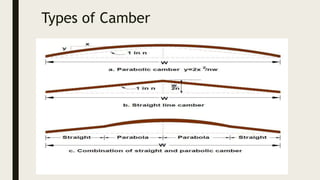
Cross slope or Camber
■ It is the slope provided to the road surface in the
transverse direction to drain off the rain water from
the road surface
■ The objectives are
i. To drain off the water from the surface
ii. To prevent entry of water into pavement layers
iii. Quick drying of pavement
Types of Camber
Width of pavement or carriage way
■ Width of pavement or carriage way depends on
i. Width of traffic lane
ii. No of lane
 The width of traffic lane depends on the width of
vehicle and the clearance
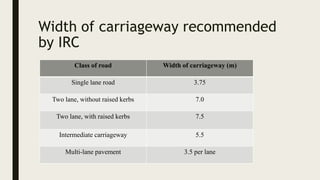
Width of carriageway recommended
by IRC
Class of road Width of carriageway (m)
Single lane road 3.75
Two lane, without raised kerbs 7.0
Two lane, with raised kerbs 7.5
Intermediate carriageway 5.5
Multi-lane pavement 3.5 per lane
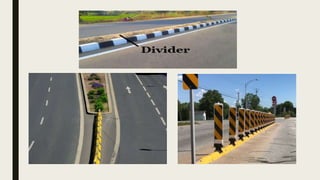
Median
■ Median is provided between two sets of traffic lanes
intended to divide the traffic moving in opposite
direction
■ Functions of median are
i. To channelize traffic into streams at intersection
ii. To shadow the crossing or turning traffic
iii. To segregate slow traffic
iv. To protect pedestrians
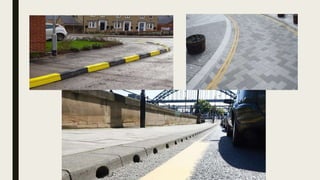
Kerbs
Kerb indicate the boundary between the pavement and
median or footpath.
The types of Kerb
i. Low kerb or mountable type kerb (height above 100 mm)
ii. Semi barrier type kerb (height above 150 mm)
iii.Barrier type kerb (height above 200 mm)
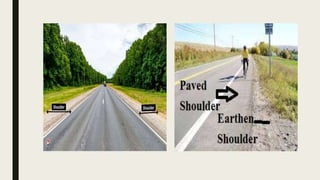
Shoulder
■ Shoulders are provided along the road edge and is
intended for accommodation of stopped vehicles,
serves as an emergency lane for vehicles, provides
lateral support to base and surface course.
■ The minimum shoulder width as per IRC is 2.5 m
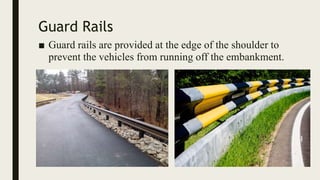
Guard Rails
■ Guard rails are provided at the edge of the shoulder to
prevent the vehicles from running off the embankment.
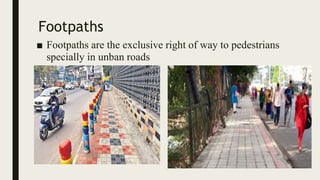
Footpaths
■ Footpaths are the exclusive right of way to pedestrians
specially in unban roads
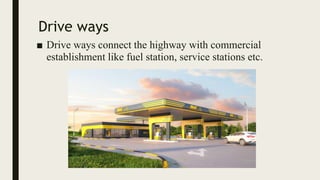
Drive ways
■ Drive ways connect the highway with commercial
establishment like fuel station, service stations etc.
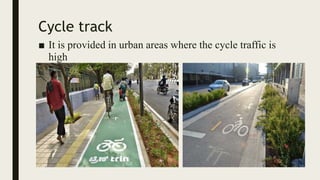
Cycle track
■ It is provided in urban areas where the cycle traffic is
high
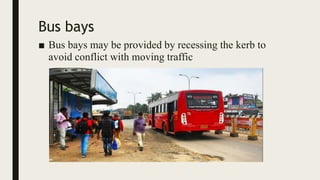
Bus bays
■ Bus bays may be provided by recessing the kerb to
avoid conflict with moving traffic
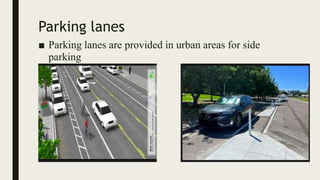
Parking lanes
■ Parking lanes are provided in urban areas for side
parking
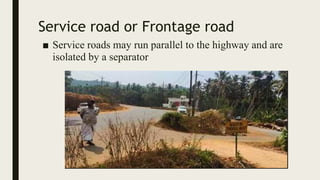
Service road or Frontage road
■ Service roads may run parallel to the highway and are
isolated by a separator
Thank You

Introduction to Highway Cross-Sectional Elements .pptx

  • 1.
  • 2.
    Highway cross sectionalelements ■ Under cross sectional elements, the consideration for the width of pavement, formation and land, the surface characteristics and cross slope of pavement are included ■ The cross sectional elements are one of the important element of geometric design
  • 3.
    The cross-sectional elementsare as follows ■ Cross-slope or Camber ■ Width of pavement or carriageway ■ Medians or traffic separators ■ Kerbs ■ Road Margins
  • 4.
    Cross slope orCamber ■ It is the slope provided to the road surface in the transverse direction to drain off the rain water from the road surface ■ The objectives are i. To drain off the water from the surface ii. To prevent entry of water into pavement layers iii. Quick drying of pavement
  • 5.
  • 6.
    Width of pavementor carriage way ■ Width of pavement or carriage way depends on i. Width of traffic lane ii. No of lane  The width of traffic lane depends on the width of vehicle and the clearance
  • 7.
    Width of carriagewayrecommended by IRC Class of road Width of carriageway (m) Single lane road 3.75 Two lane, without raised kerbs 7.0 Two lane, with raised kerbs 7.5 Intermediate carriageway 5.5 Multi-lane pavement 3.5 per lane
  • 8.
    Median ■ Median isprovided between two sets of traffic lanes intended to divide the traffic moving in opposite direction ■ Functions of median are i. To channelize traffic into streams at intersection ii. To shadow the crossing or turning traffic iii. To segregate slow traffic iv. To protect pedestrians
  • 10.
    Kerbs Kerb indicate theboundary between the pavement and median or footpath. The types of Kerb i. Low kerb or mountable type kerb (height above 100 mm) ii. Semi barrier type kerb (height above 150 mm) iii.Barrier type kerb (height above 200 mm)
  • 12.
    Shoulder ■ Shoulders areprovided along the road edge and is intended for accommodation of stopped vehicles, serves as an emergency lane for vehicles, provides lateral support to base and surface course. ■ The minimum shoulder width as per IRC is 2.5 m
  • 14.
    Guard Rails ■ Guardrails are provided at the edge of the shoulder to prevent the vehicles from running off the embankment.
  • 15.
    Footpaths ■ Footpaths arethe exclusive right of way to pedestrians specially in unban roads
  • 16.
    Drive ways ■ Driveways connect the highway with commercial establishment like fuel station, service stations etc.
  • 17.
    Cycle track ■ Itis provided in urban areas where the cycle traffic is high
  • 18.
    Bus bays ■ Busbays may be provided by recessing the kerb to avoid conflict with moving traffic
  • 19.
    Parking lanes ■ Parkinglanes are provided in urban areas for side parking
  • 20.
    Service road orFrontage road ■ Service roads may run parallel to the highway and are isolated by a separator
  • 21.