Introduction to Health Systems & 
Health Services Systems 
Borwornsom Leerapan, MD PhD 
MGMG 548: Health Service Systems and Health Systems 
CMMU, Mahidol University 
May 18, 2014 
Pix source: ra.mahidol.ac.th
Course Description 
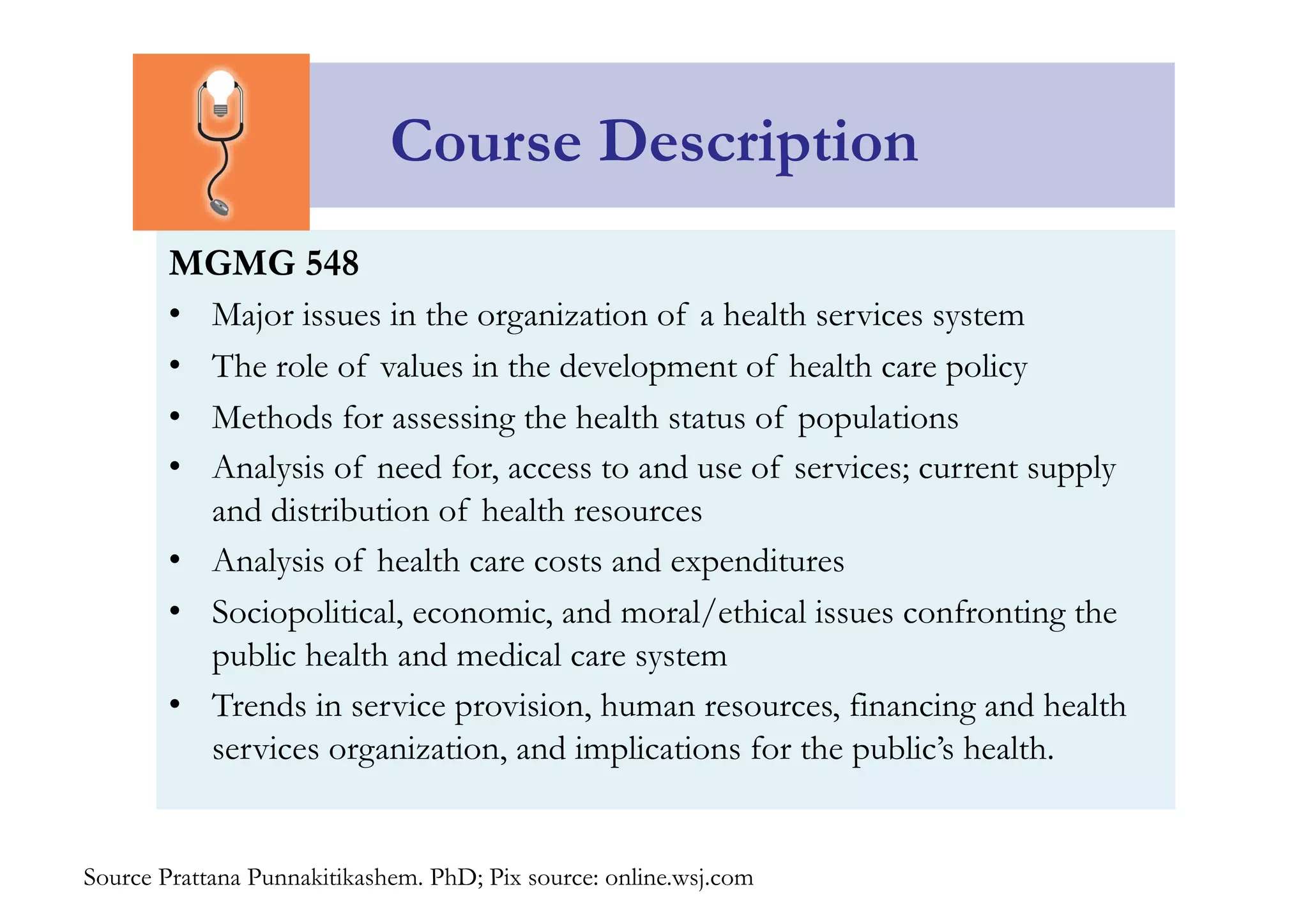
MGMG 548 
• Major issues in the organization of a health services system 
• The role of values in the development of health care policy 
• Methods for assessing the health status of populations 
• Analysis of need for, access to and use of services; current supply 
and distribution of health resources 
• Analysis of health care costs and expenditures 
• Sociopolitical, economic, and moral/ethical issues confronting the 
public health and medical care system 
• Trends in service provision, human resources, financing and health 
services organization, and implications for the public’s health. 
Source Prattana Punnakitikashem. PhD; Pix source: online.wsj.com
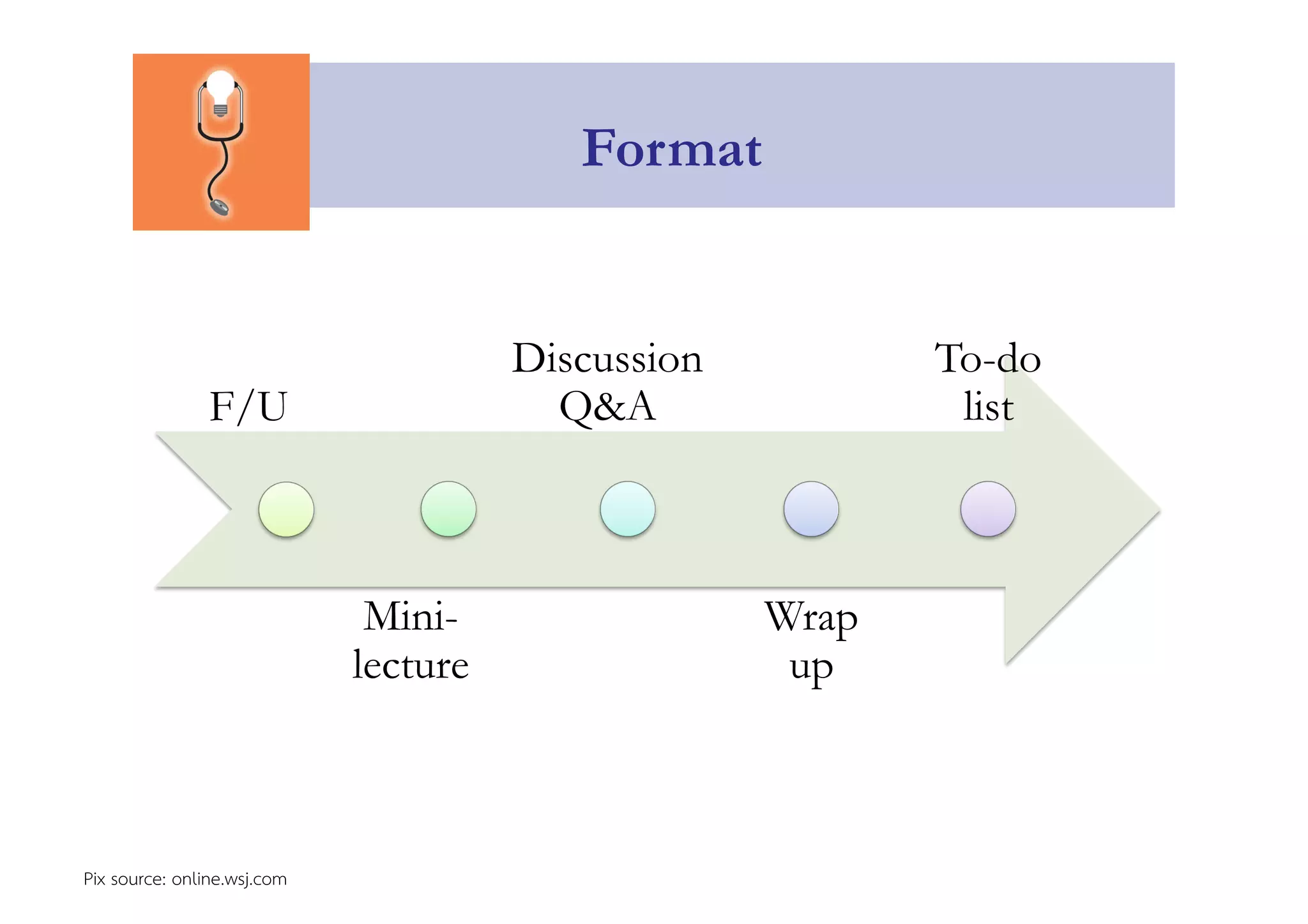
Format 
F/U 
Pix source: online.wsj.com 
Mini-lecture 
Discussion 
Q&A 
Wrap 
up 
To-do 
list
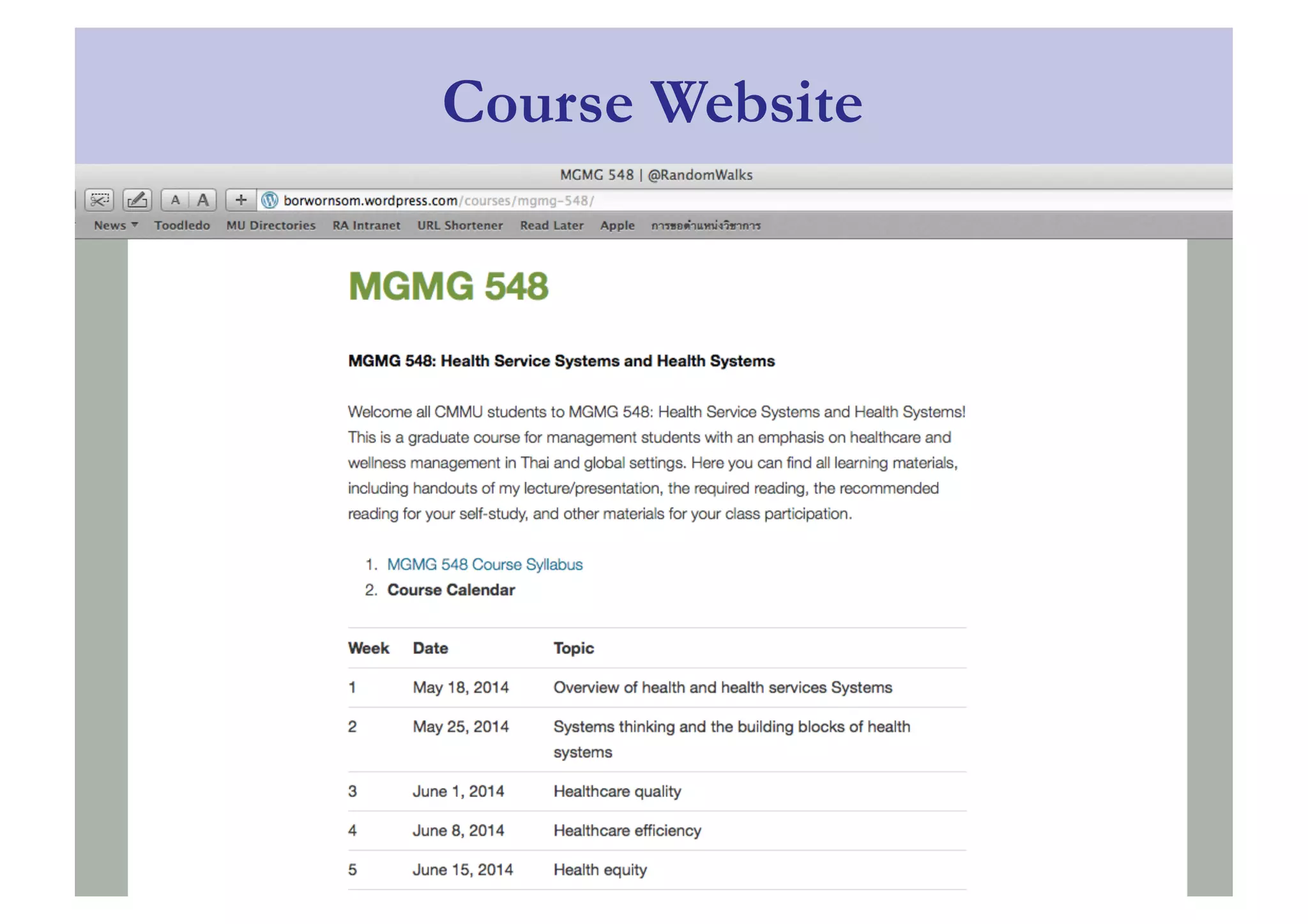
Course Website
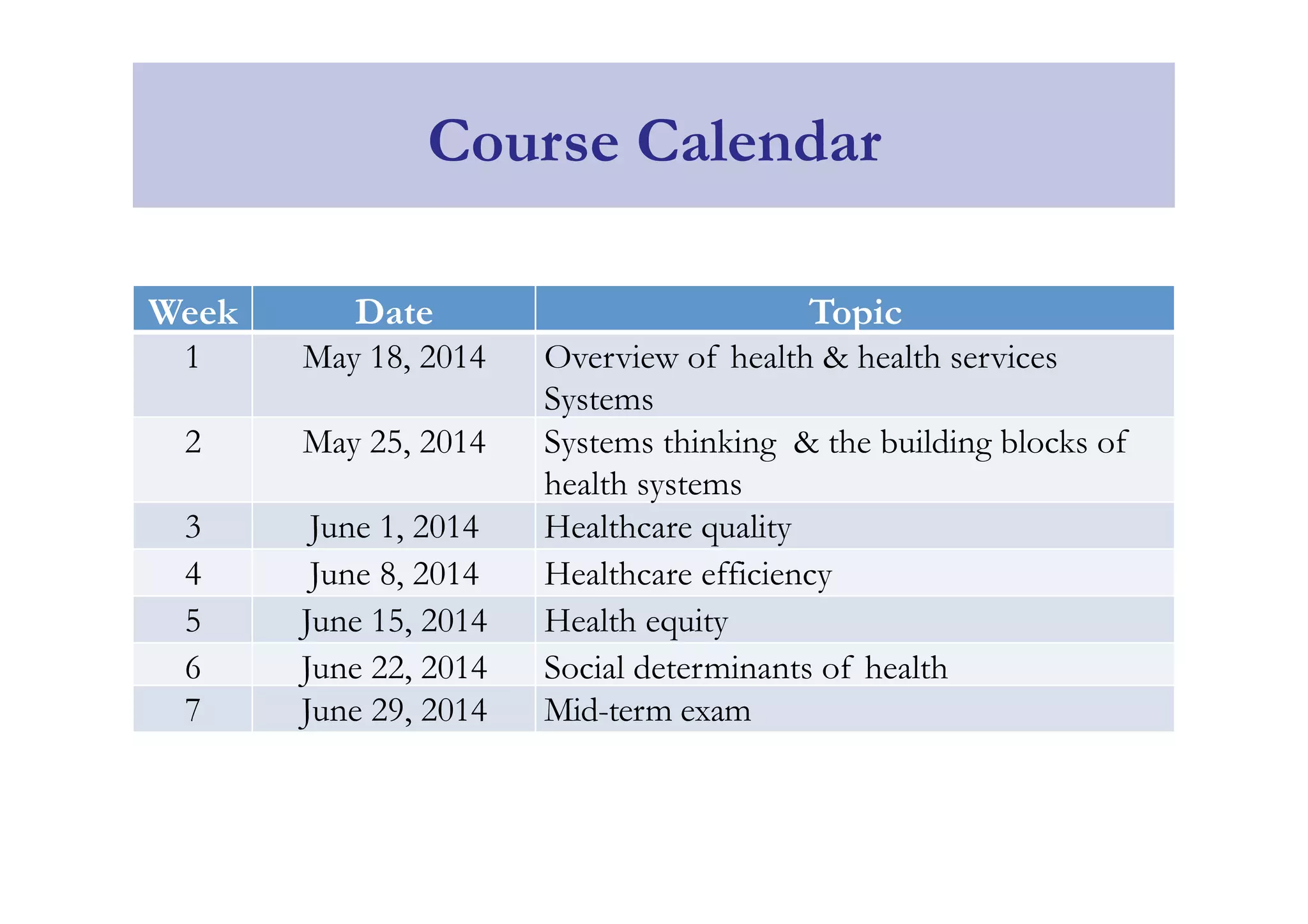
Course Calendar 
Week Date Topic 
1 May 18, 2014 Overview of health & health services 
Systems 
2 May 25, 2014 Systems thinking & the building blocks of 
health systems 
3 June 1, 2014 Healthcare quality 
4 June 8, 2014 Healthcare efficiency 
5 June 15, 2014 Health equity 
6 June 22, 2014 Social determinants of health 
7 June 29, 2014 Mid-term exam
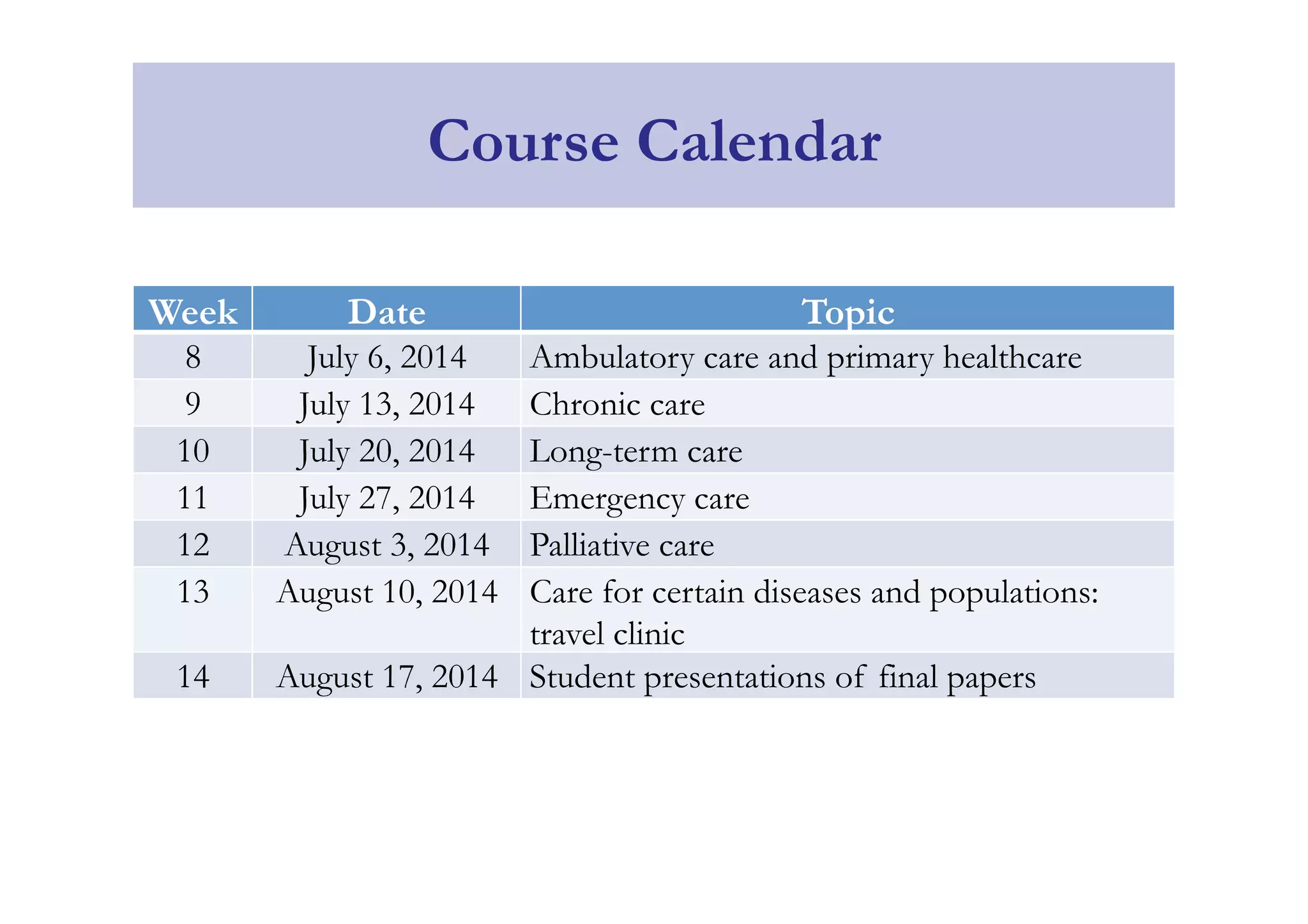
Course Calendar 
Week Date Topic 
8 July 6, 2014 Ambulatory care and primary healthcare 
9 July 13, 2014 Chronic care 
10 July 20, 2014 Long-term care 
11 July 27, 2014 Emergency care 
12 August 3, 2014 Palliative care 
13 August 10, 2014 Care for certain diseases and populations: 
travel clinic 
14 August 17, 2014 Student presentations of final papers
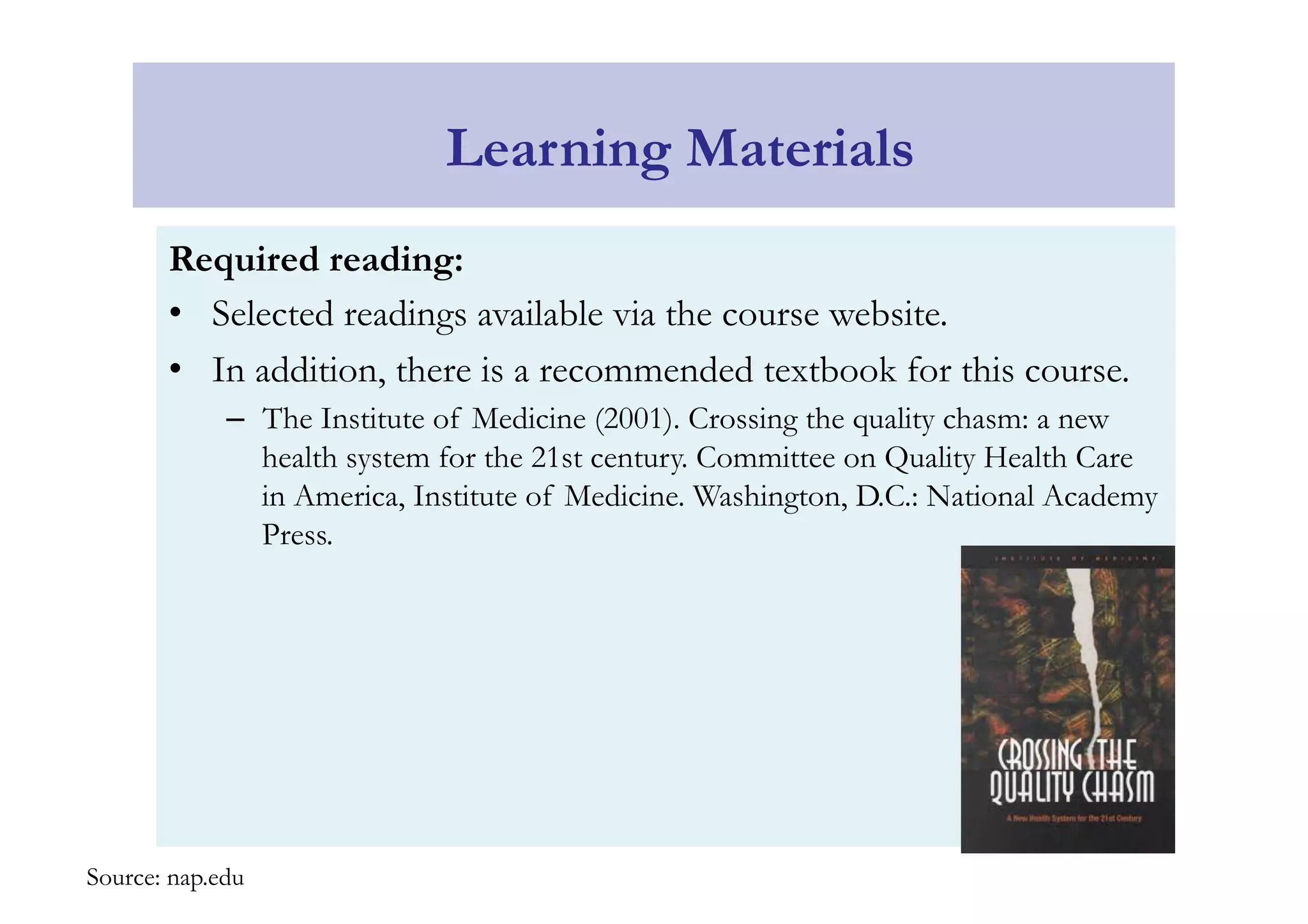
Learning Materials 
Required reading: 
• Selected readings available via the course website. 
• In addition, there is a recommended textbook for this course. 
– The Institute of Medicine (2001). Crossing the quality chasm: a new 
health system for the 21st century. Committee on Quality Health Care 
in America, Institute of Medicine. Washington, D.C.: National Academy 
Press. 
Source: nap.edu
Learning Materials 
Optional textbook/resource: 
• Garwande, A. (2002). Complications: a surgeon's notes on an imperfect 
science. New York, NY: Picador Press. 
• Roberts, M. J., Hsiao, W., Berman, P., & Reich, M. R. (2004). Getting health 
reform right: a guide to improving performance and equity. New York, 
USA: Oxford University Press. 
• Aday, L. A., Begley, C. E., Lairson, D. R., & Balkrishnan, R. (2013). 
Evaluating the healthcare system: effectiveness, efficiency, and equity. 
Chicago, IL: Health Administration Press. 
• Wibulpolprasert, S., Sirilak, S., Ekachampaka, P., & Wattanamano, N. (2011). 
Thailand health profile 2008-2010. Bangkok; The War Veterans 
Organization of Thailand Press.
Up and Down the Ladder of Abstraction 
Abstract: 
• Concepts 
• Theories 
• Principles 
• Strategies 
Concrete: 
• Case studies 
• Data, Evidence 
• Analysis, Synthesis 
• Presentations
Outline for Today 
1. Pre-test 
2. Concepts of health and health determinants 
3. Health systems vs. Health services systems 
4. Desirable characteristics of health services systems 
5. Case study and discussion 
– Healthcare managers vs. policy/systems analysts. 
Pix source: online.wsj.com
Pretest 
(in-class exam, no grade) 
Pix source: online.wsj.com
Considering the provided VDO presentation, please give 
your best answers to these two following questions: 
1. What “health systems issues” are dominated in the 
provided VDO presentation? (Please describe.) 
2. As a (future) administrators in your healthcare 
organizations, what could you do to address such 
issues? (Elaborate more on what, why, and how.) 
(30 min) 
Pre-test Exam
Concepts of Health 
& Health Determinants 
Pix source: online.wsj.com
“Heath” 
WHO definition of Health: 
“Health is a state of complete 
physical, mental and social well-being 
and not merely the absence of 
disease or infirmity.” 
Source: reamble to the Constitution of the World Health Organization as adopted by the International Health 
Conference, New York, 19-22 June, 1946; signed on 22 July 1946 by the representatives of 61 States (Official 
Records of the World Health Organization, no. 2, p. 100) and entered into force on 7 April 1948.
“Heath” 
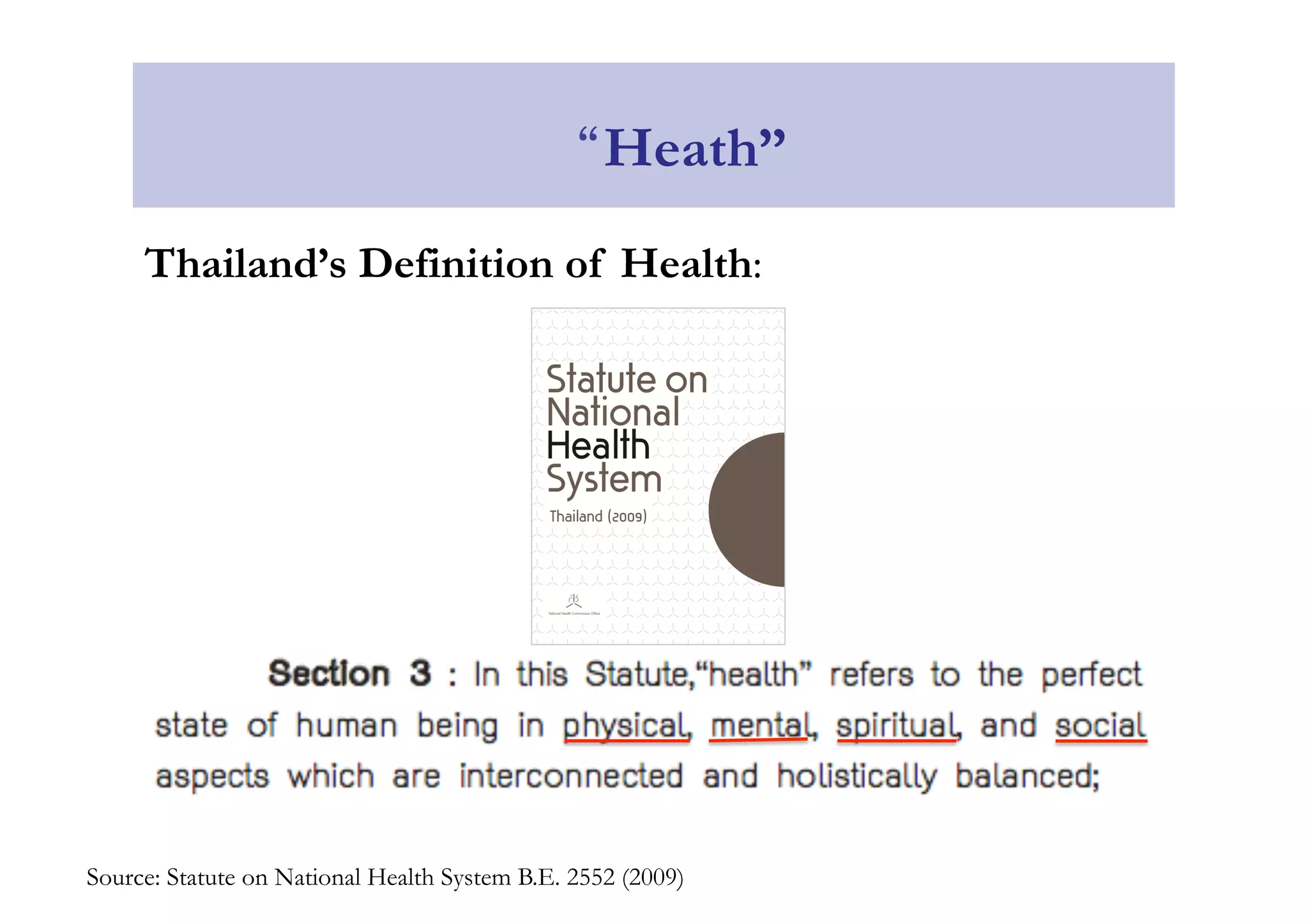
Thailand’s Definition of Health: 
Source: Statute on National Health System B.E. 2552 (2009)
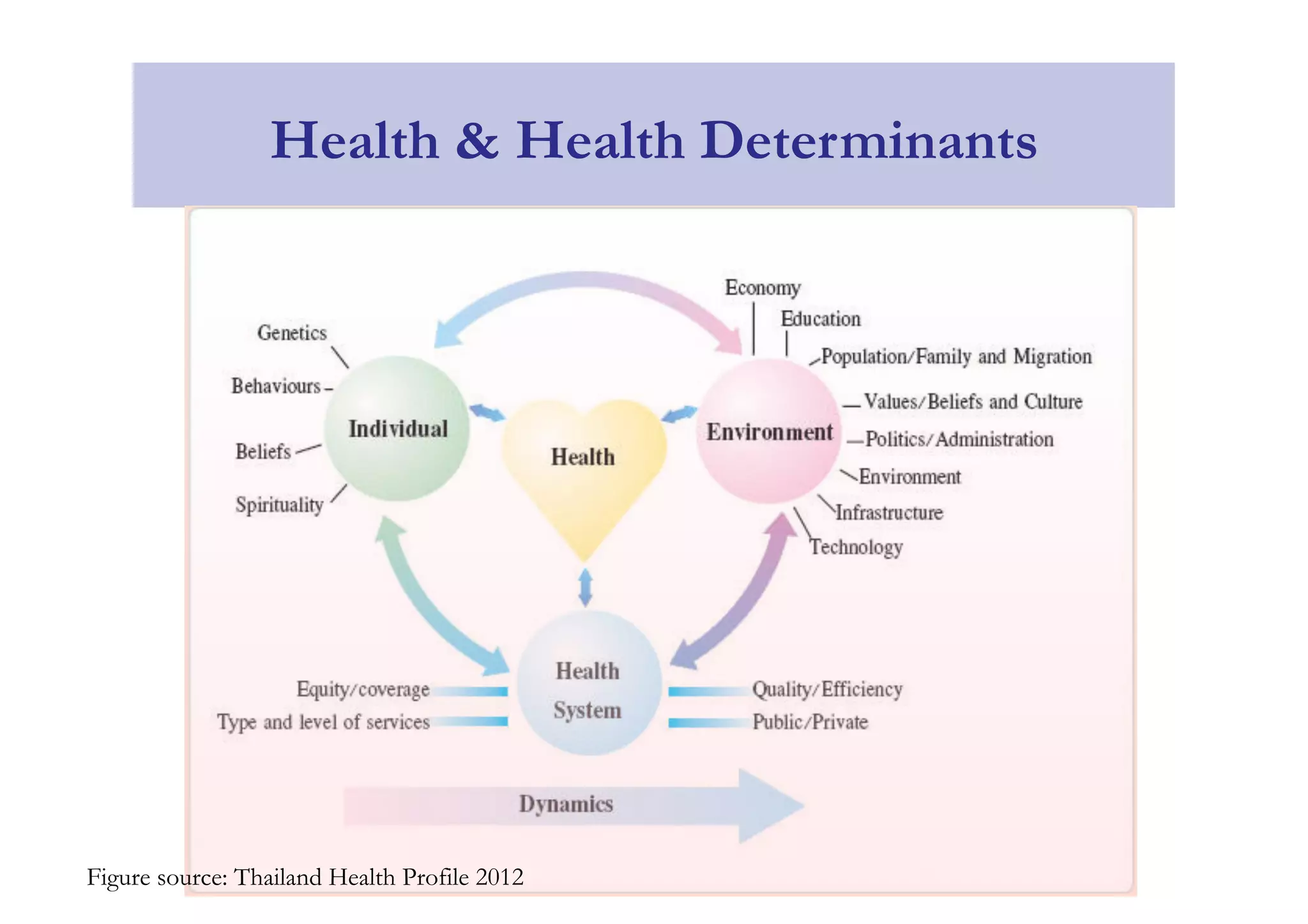
Health & Health Determinants 
Figure source: Thailand Health Profile 2012
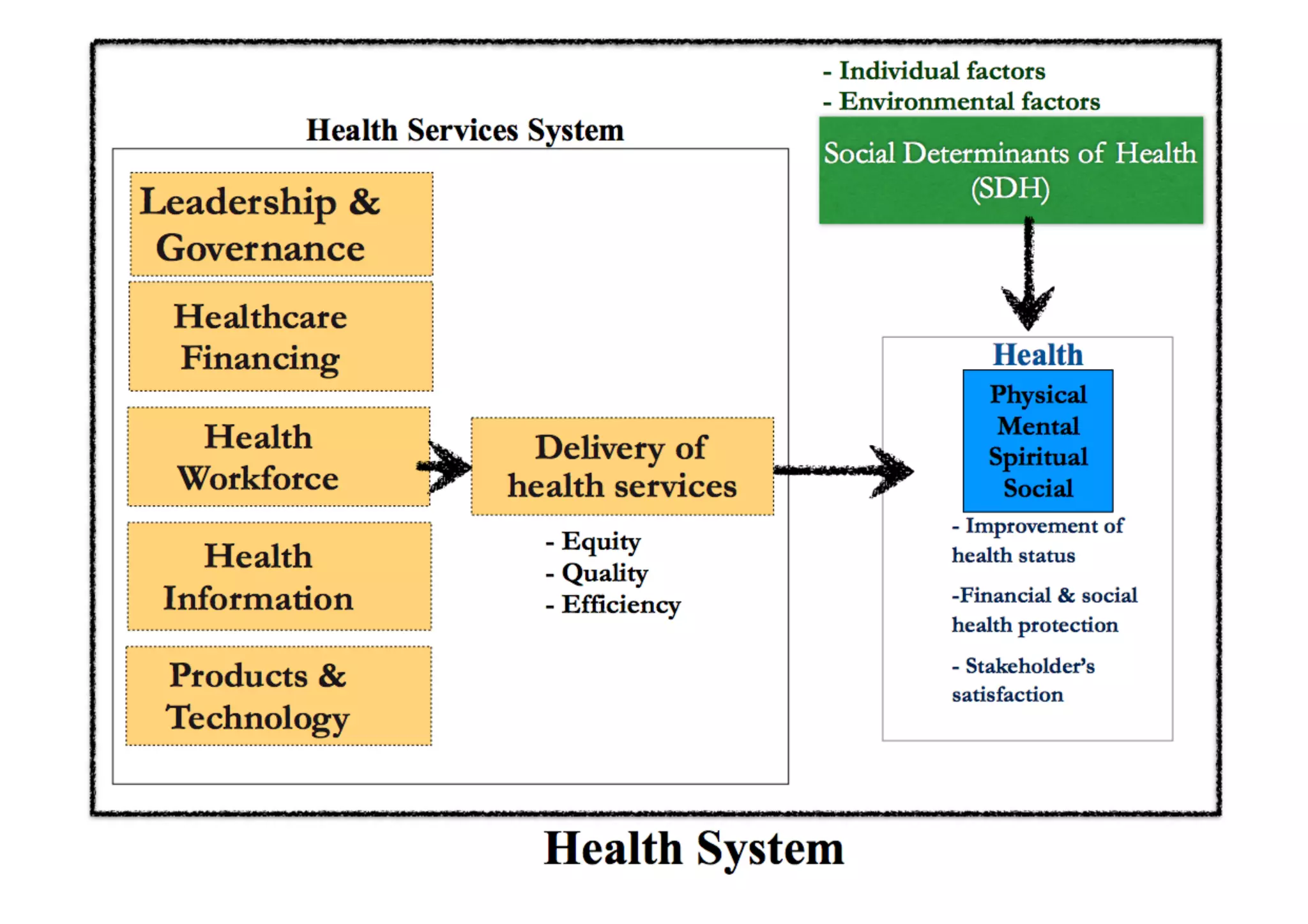
Health Systems 
& Health Services Systems 
Pix source: online.wsj.com
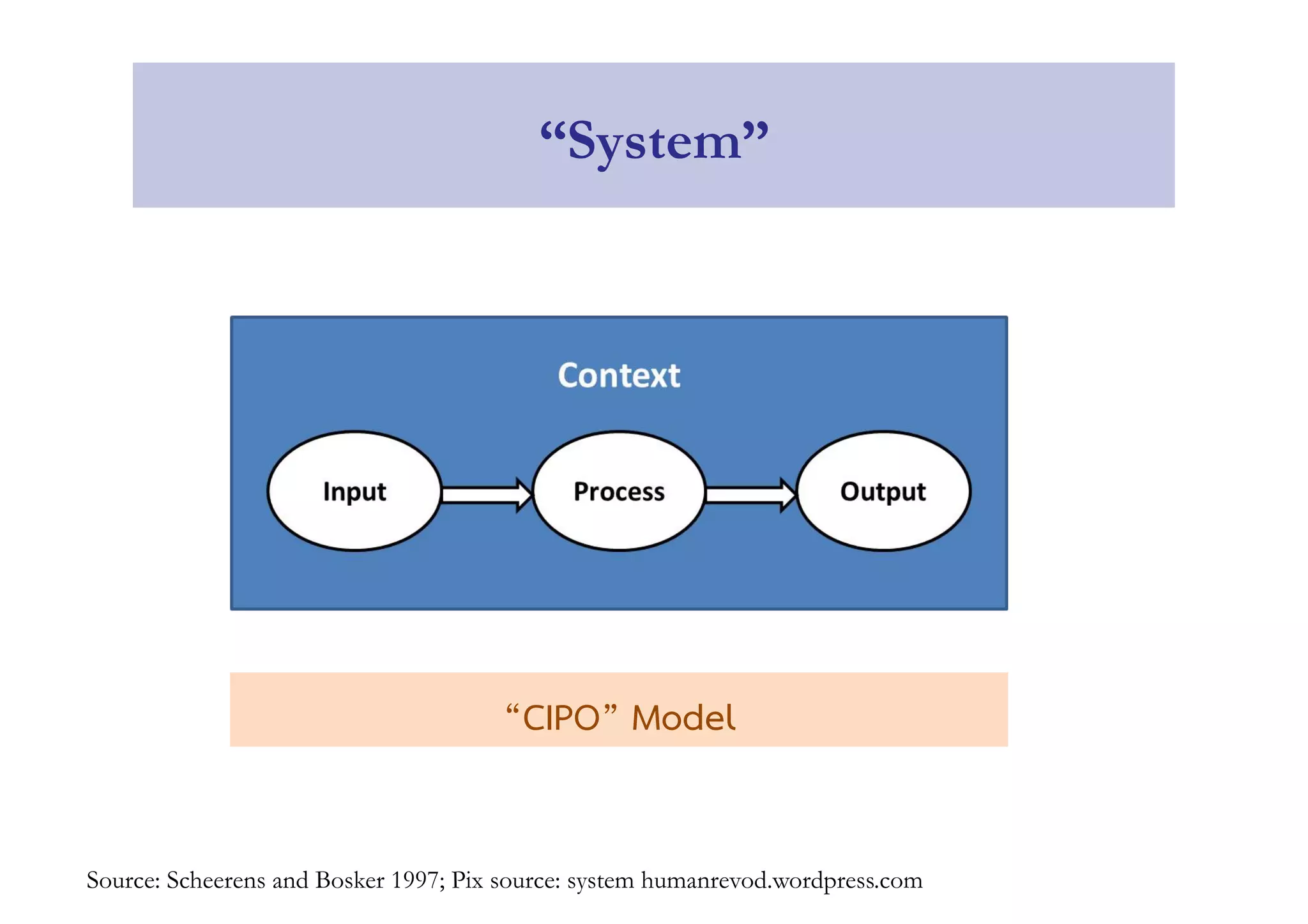
“System” 
“CIPO” Model 
Source: Scheerens and Bosker 1997; Pix source: system humanrevod.wordpress.com
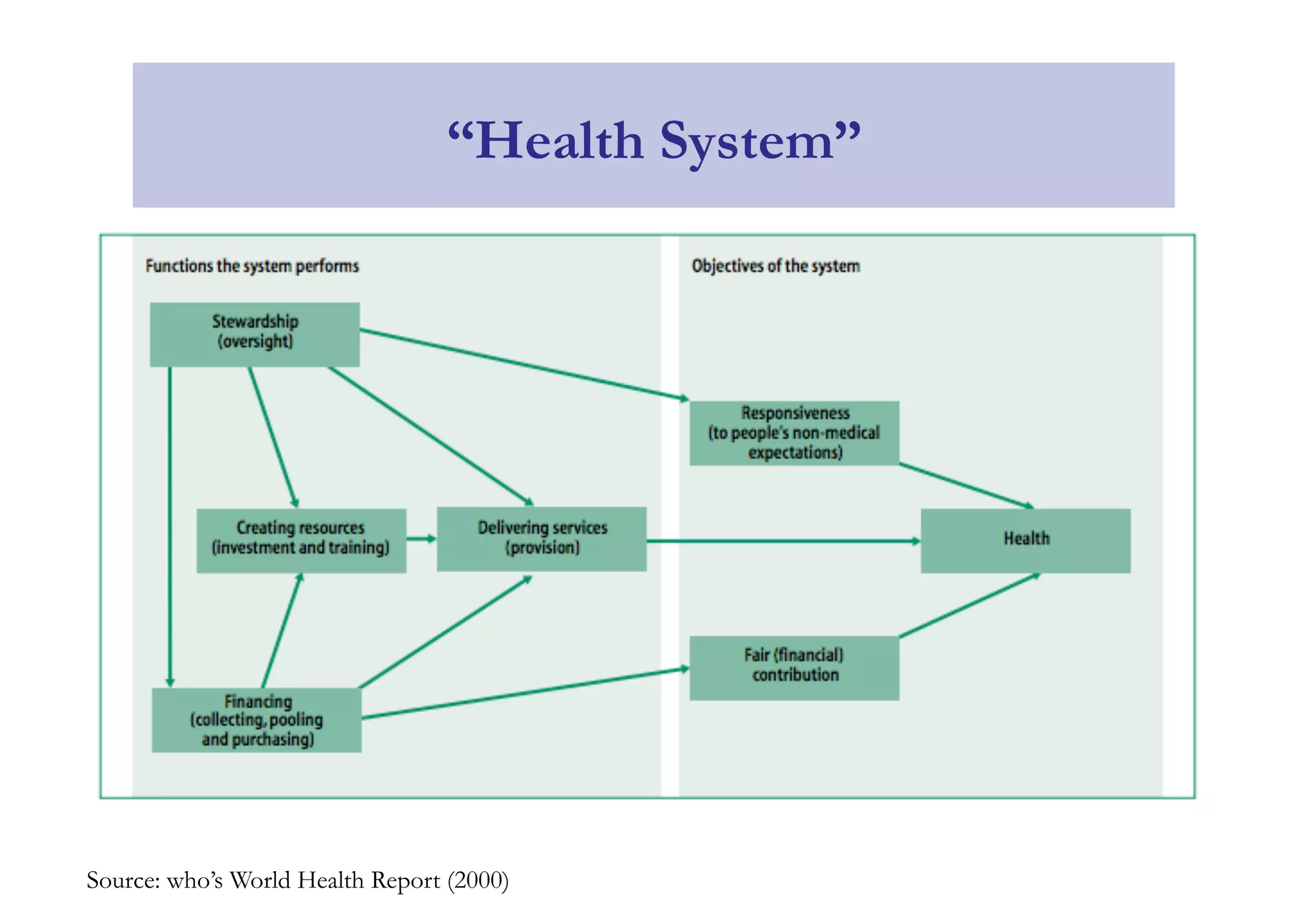
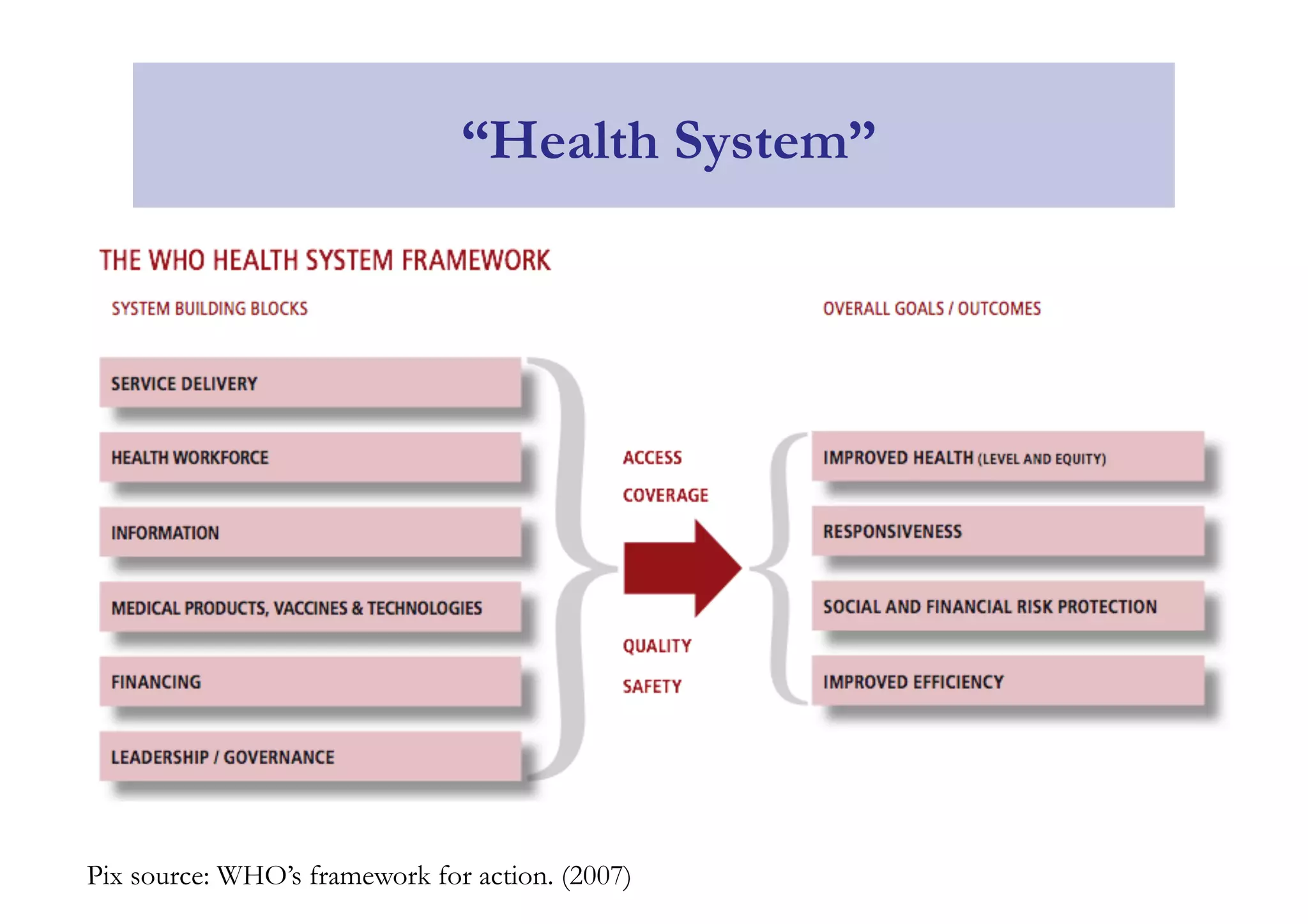
“Health System” 
Source: who’s World Health Report (2000)
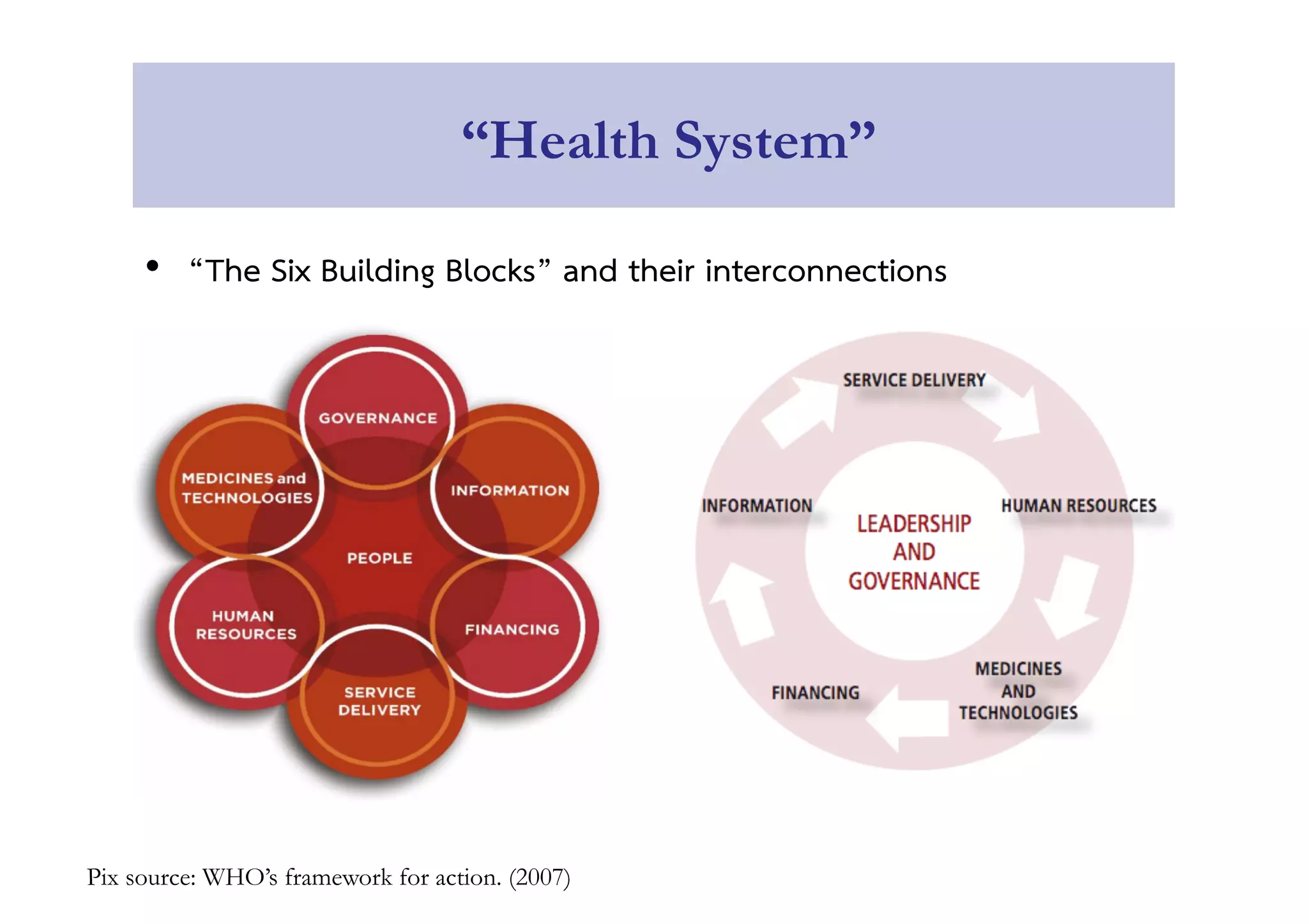
“Health System” 
• “The Six Building Blocks” and their interconnections 
Pix source: WHO’s framework for action. (2007)
“Health System” 
Pix source: WHO’s framework for action. (2007)
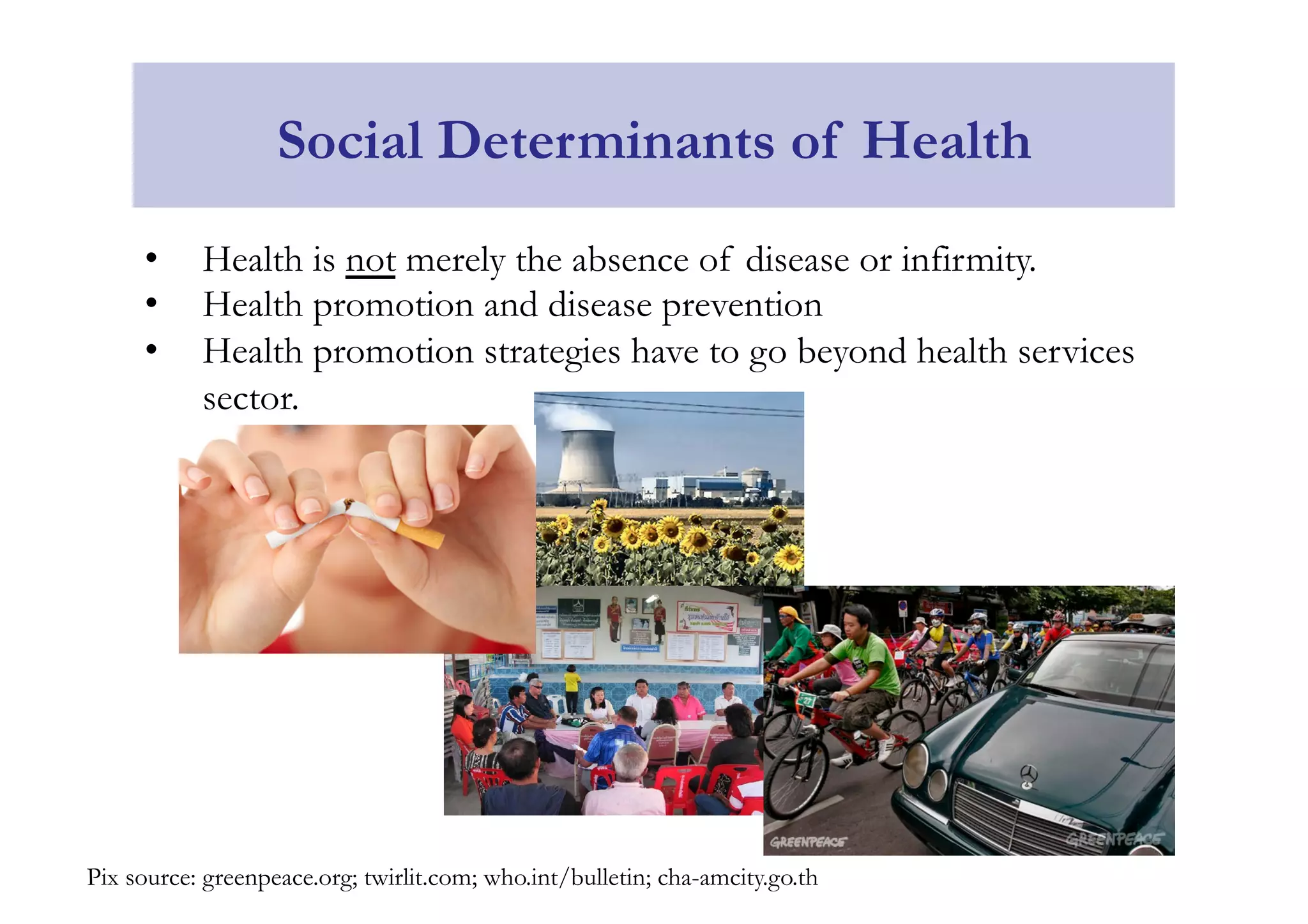
Social Determinants of Health 
• Health is not merely the absence of disease or infirmity. 
• Health promotion and disease prevention 
• Health promotion strategies have to go beyond health services 
sector. 
Pix source: greenpeace.org; twirlit.com; who.int/bulletin; cha-amcity.go.th
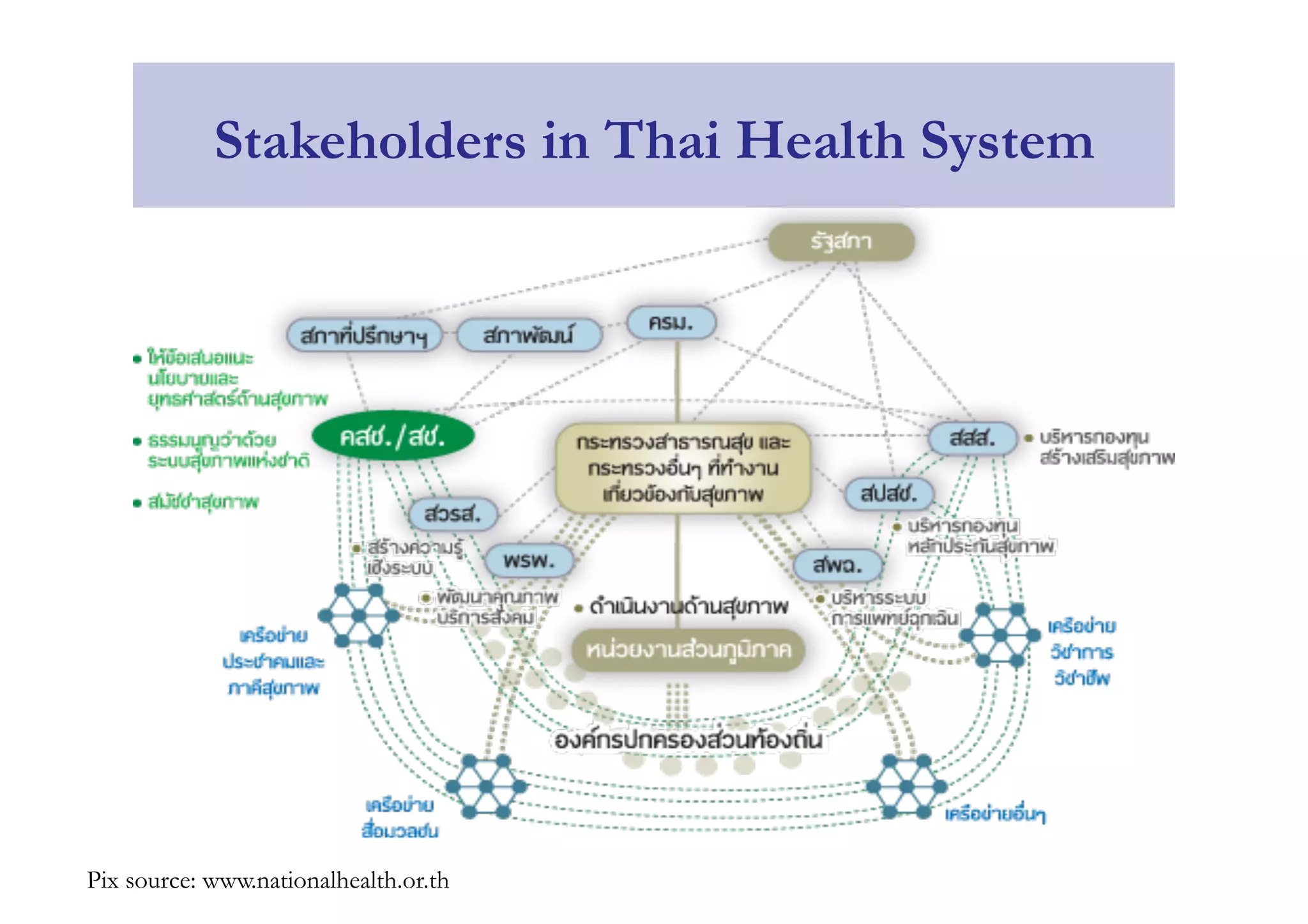
Stakeholders in Thai Health System 
Pix source: www.nationalhealth.or.th
Desirable Characteristics of 
Health Services Systems 
Pix source: online.wsj.com
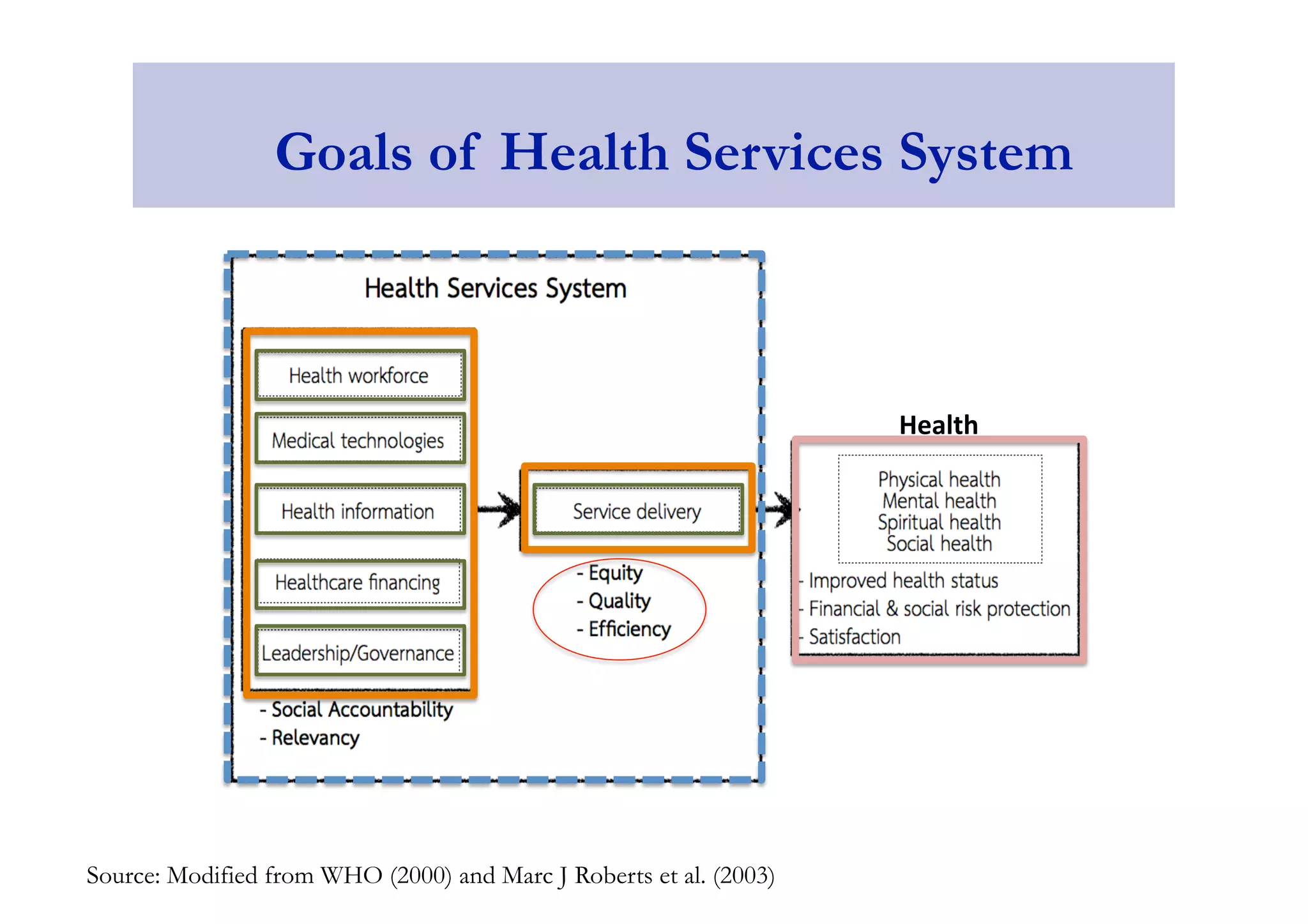
Goals of Health Services System 
Source: Modified from WHO (2000) and Marc J Roberts et al. (2003) 
Health
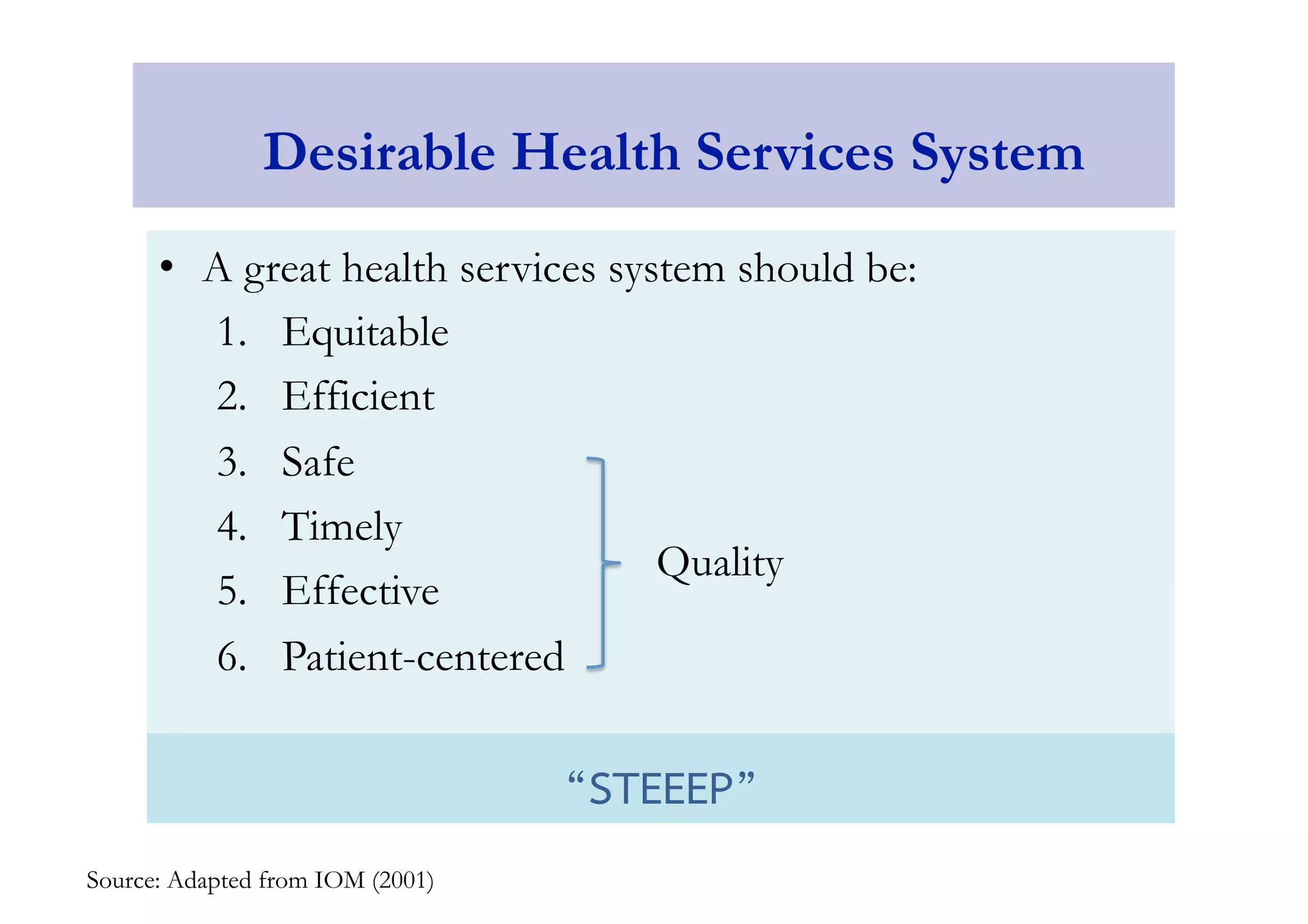
Desirable Health Services System 
• A great health services system should be: 
1. Equitable 
2. Efficient 
3. Safe 
4. Timely 
5. Effective 
6. Patient-centered 
Source: Adapted from IOM (2001) 
Quality 
“STEEEP”
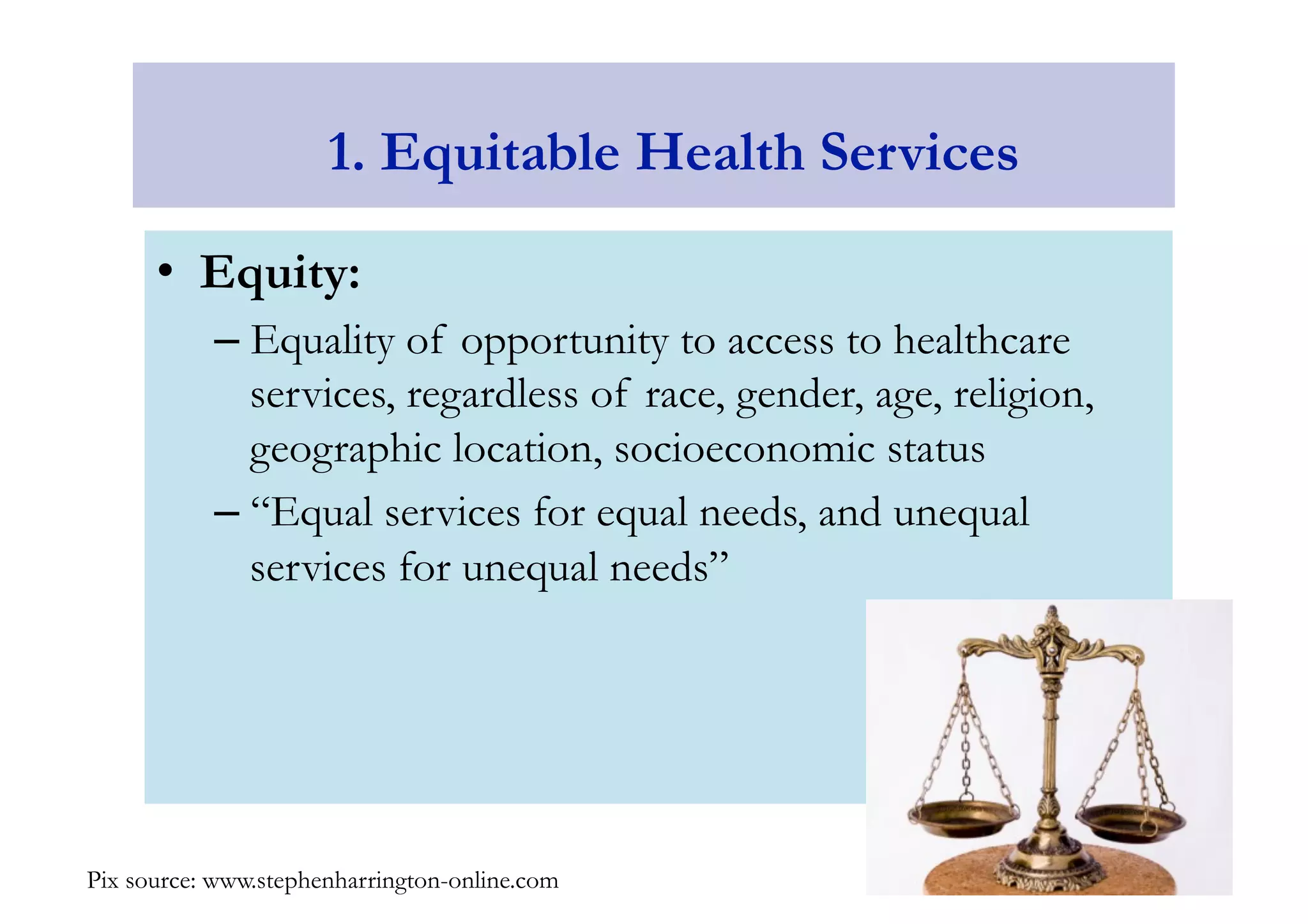
1. Equitable Health Services 
• Equity: 
– Equality of opportunity to access to healthcare 
services, regardless of race, gender, age, religion, 
geographic location, socioeconomic status 
– “Equal services for equal needs, and unequal 
services for unequal needs” 
Pix source: www.stephenharrington-online.com
What is Your Theory of Justice? 
• How would you fairly cut this cake into two 
pieces for each of the twins? 
Pix source: hp-lexicon.org/wizards; helenicproducts.com
Theory of Justice 
• John Rawls: “Justice as Fairness” 
– Fair decisions should be made 
from “the original position” 
where no one knows what 
burdens or benefits he or she 
might receive once “the veil of 
ignorance” is lifted. 
Source: John Rawls. The Theory of Justice (1971, 2001): Pix source: irwinbartlet.wordpress.com
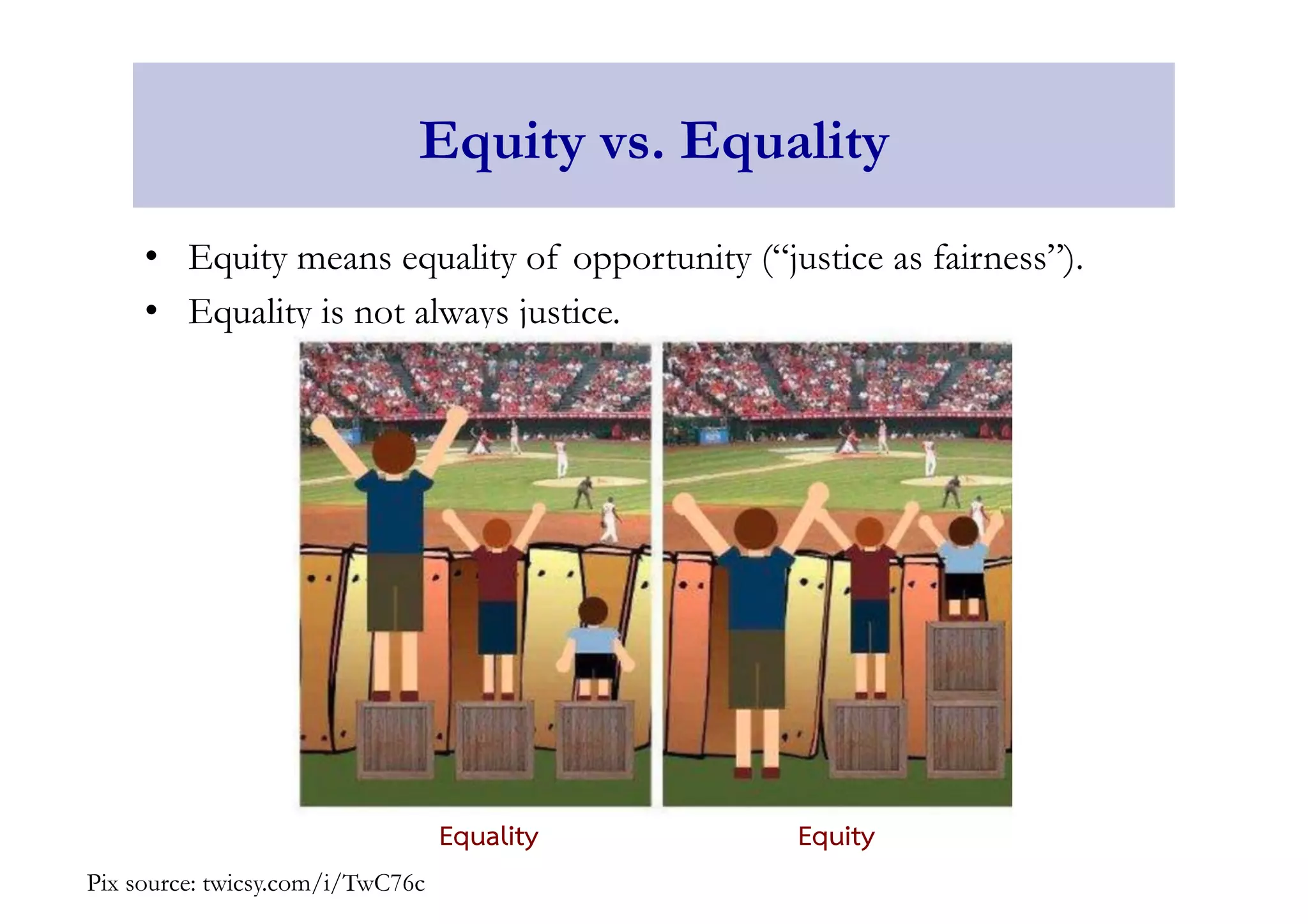
Equity vs. Equality 
• Equity means equality of opportunity (“justice as fairness”). 
• Equality is not always justice. 
Pix source: twicsy.com/i/TwC76c 
Equality Equity
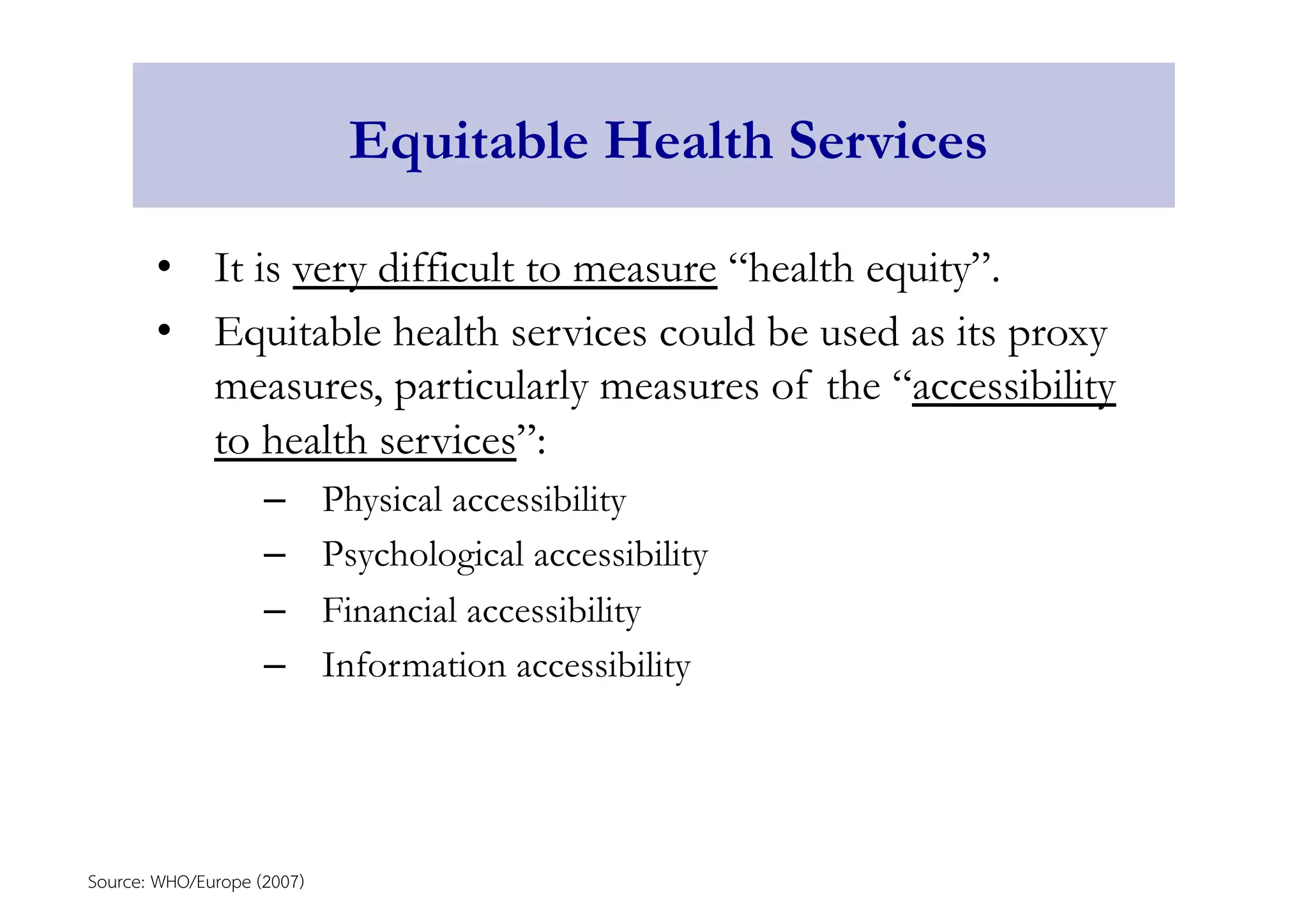
Equitable Health Services 
• It is very difficult to measure “health equity”. 
• Equitable health services could be used as its proxy 
measures, particularly measures of the “accessibility 
to health services”: 
– Physical accessibility 
– Psychological accessibility 
– Financial accessibility 
– Information accessibility 
Source: WHO/Europe (2007)
2. Efficient Health Services 
• Efficiency: 
– Efficient health services means a system that utilize 
health resources (drugs, human resources, budgets) 
in a cost-effective fashion, with utility maximization 
and waste reduction. 
Source: Modified from IOM (2001)
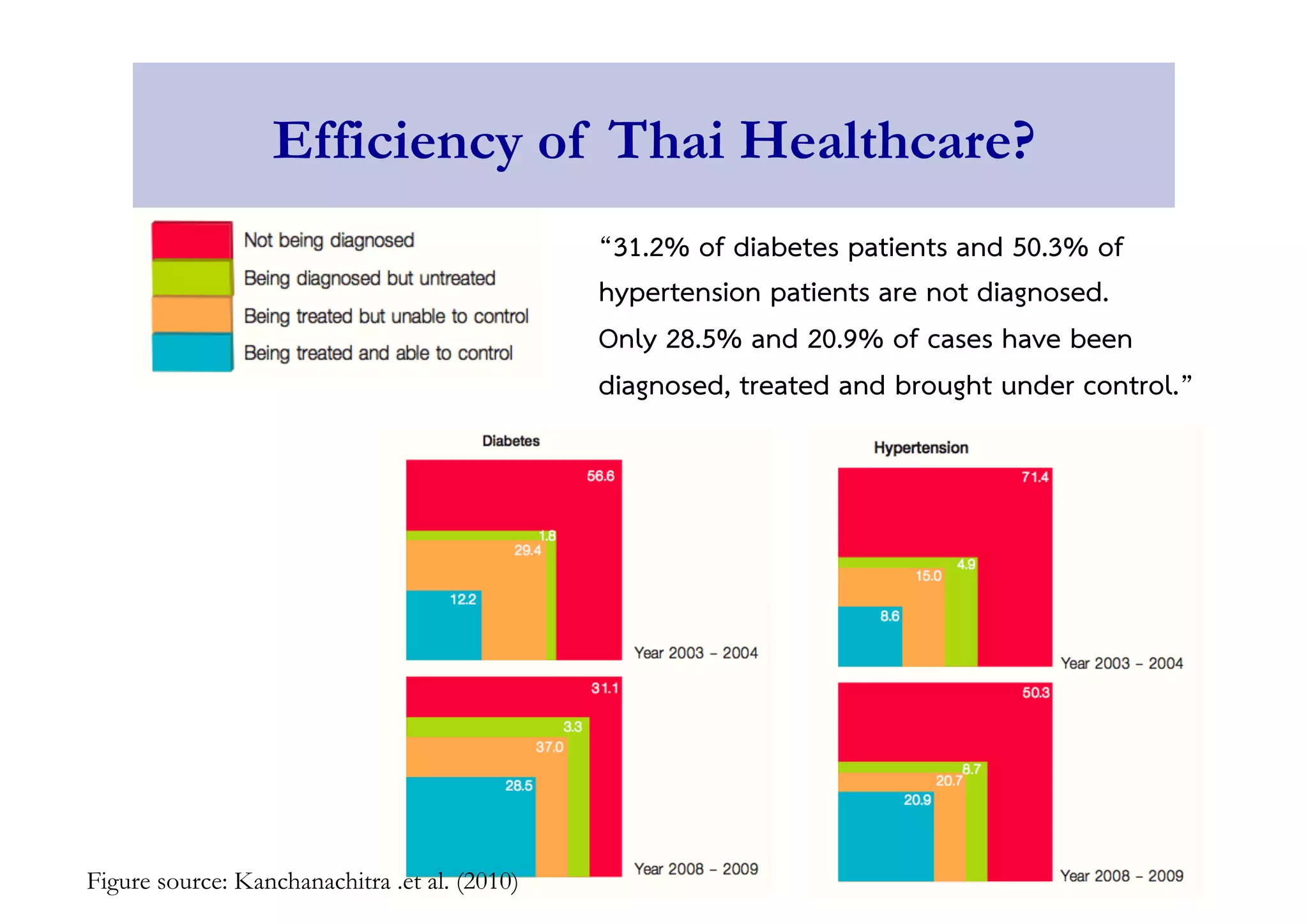
Efficiency of Thai Healthcare? 
“31.2% of diabetes patients and 50.3% of 
hypertension patients are not diagnosed. 
Only 28.5% and 20.9% of cases have been 
diagnosed, treated and brought under control.” 
Figure source: Kanchanachitra .et al. (2010)
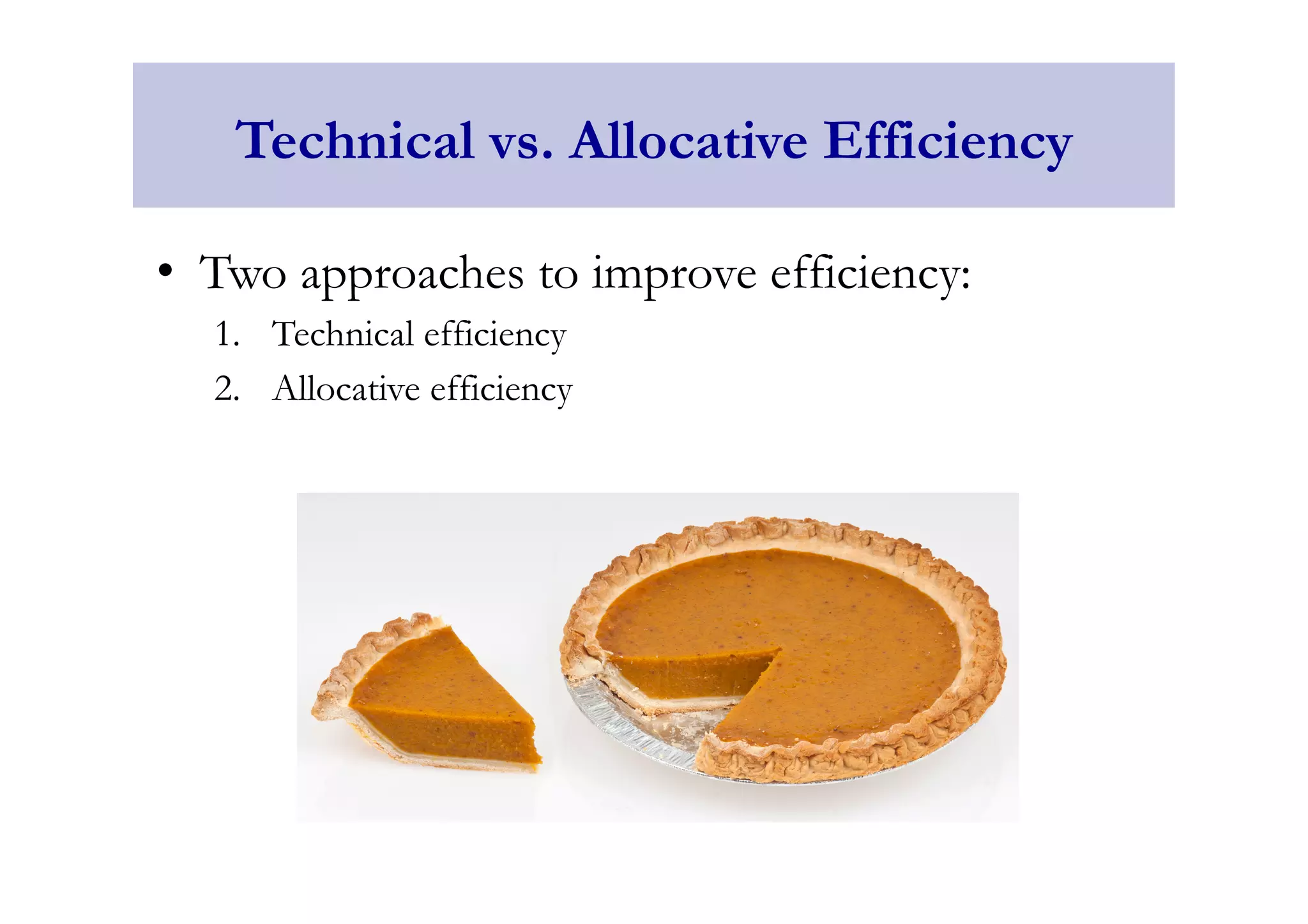
Technical vs. Allocative Efficiency 
• Two approaches to improve efficiency: 
1. Technical efficiency 
2. Allocative efficiency
3. Quality Health Services 
• Quality: 
– “Quality is in the eye of the beholder.” 
– Nonetheless, all health services should be “safe, 
timely, effective, patient-centered”. 
Source: Adapted from IOM (2001)
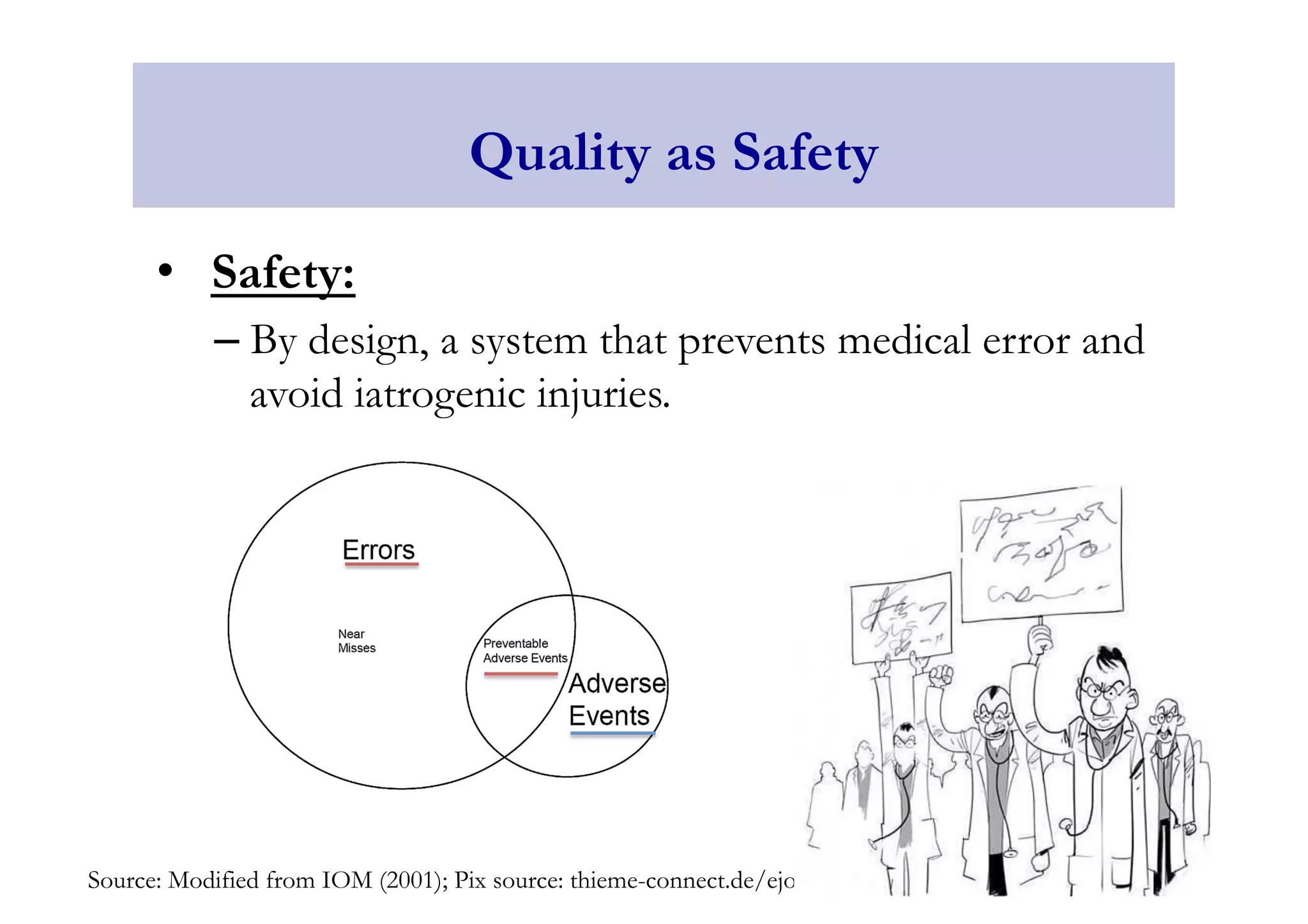
Quality as Safety 
• Safety: 
– By design, a system that prevents medical error and 
avoid iatrogenic injuries. 
Source: Modified from IOM (2001); Pix source: thieme-connect.de/ejournals; tumblr.com
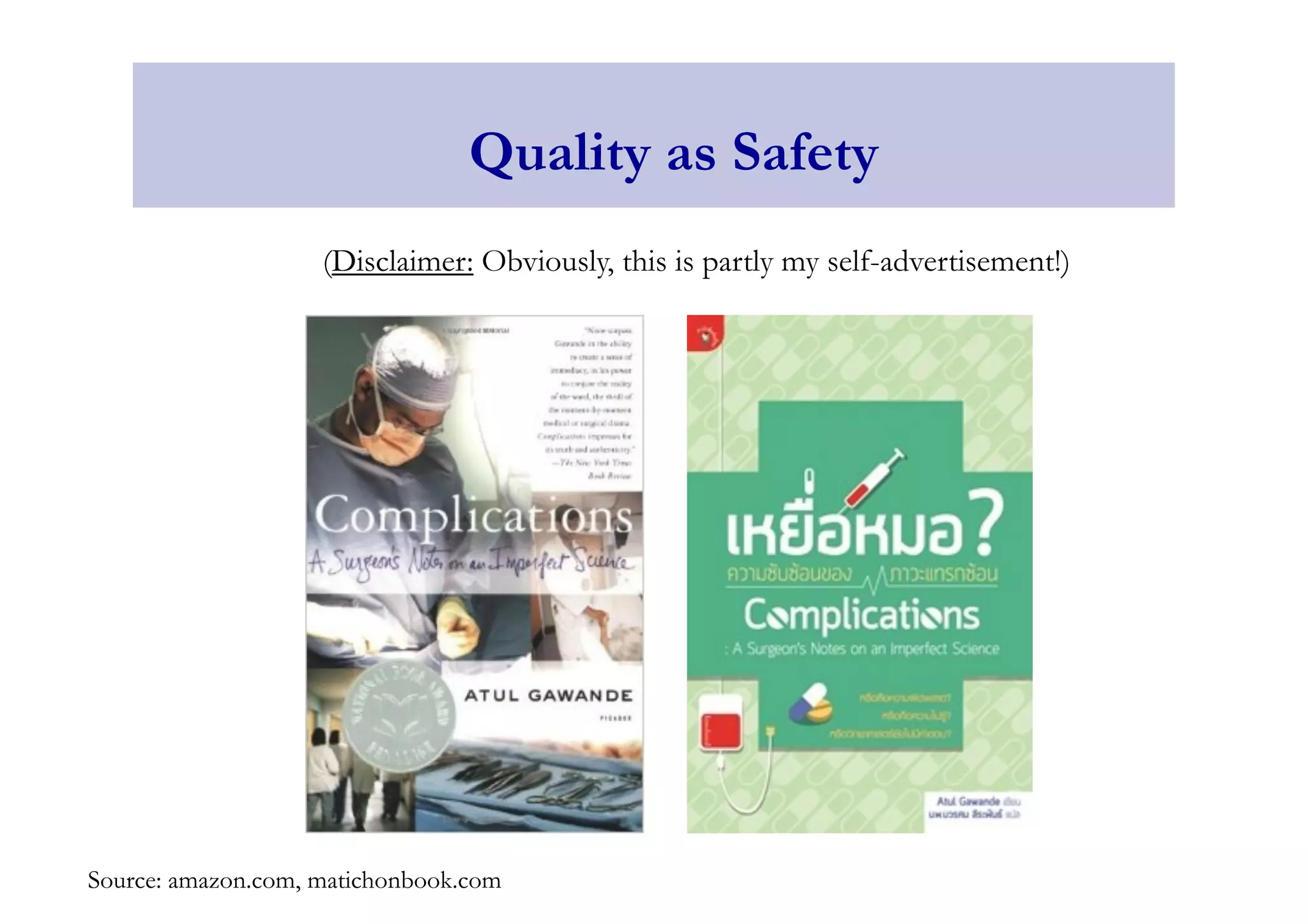
Quality as Safety 
(Disclaimer: Obviously, this is partly my self-advertisement!) 
Source: amazon.com, matichonbook.com
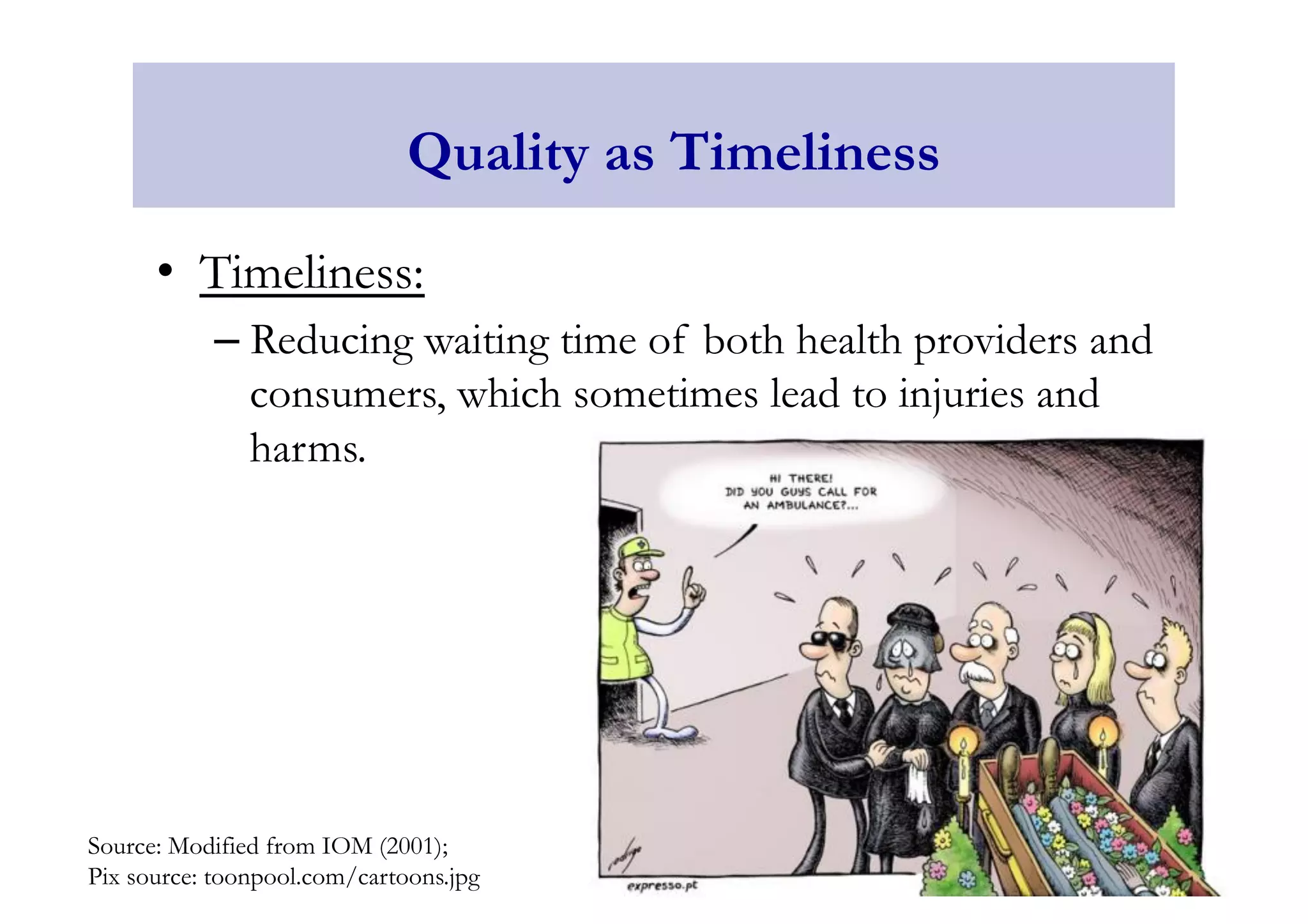
Quality as Timeliness 
• Timeliness: 
– Reducing waiting time of both health providers and 
consumers, which sometimes lead to injuries and 
harms. 
Source: Modified from IOM (2001); 
Pix source: toonpool.com/cartoons.jpg
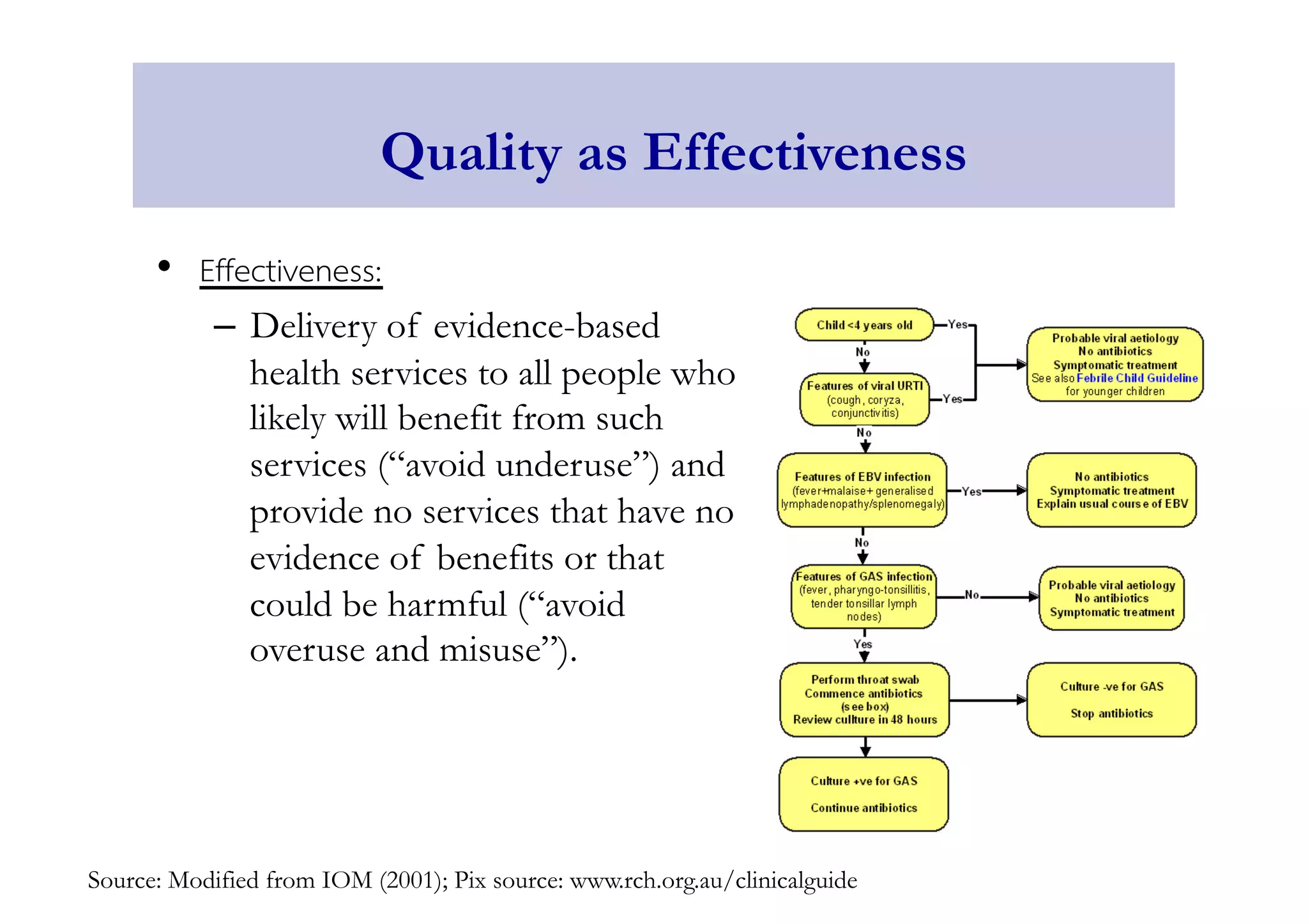
Quality as Effectiveness 
• Effectiveness: 
– Delivery of evidence-based 
health services to all people who 
likely will benefit from such 
services (“avoid underuse”) and 
provide no services that have no 
evidence of benefits or that 
could be harmful (“avoid 
overuse and misuse”). 
Source: Modified from IOM (2001); Pix source: www.rch.org.au/clinicalguide
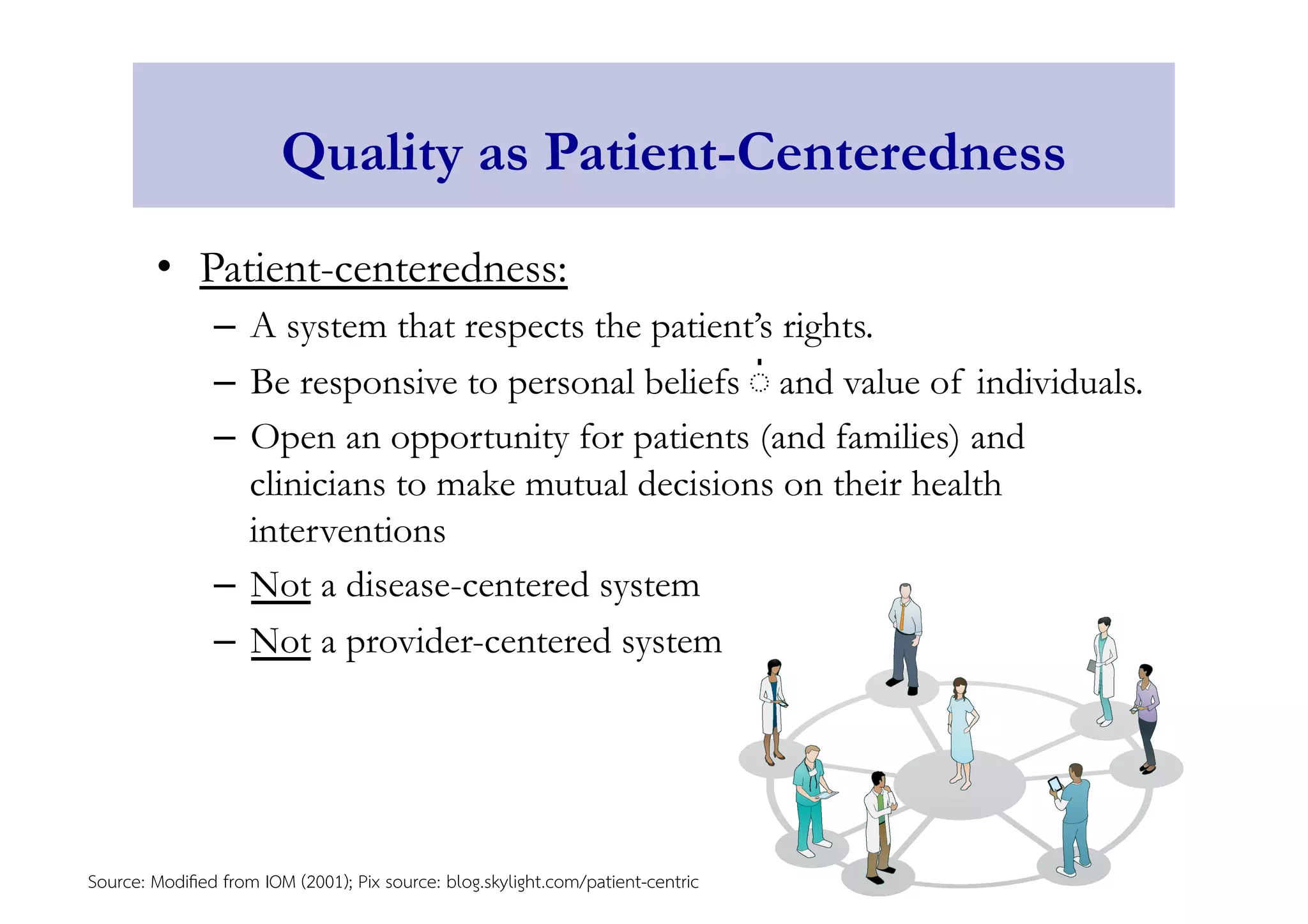
Quality as Patient-Centeredness 
• Patient-centeredness: 
– A system that respects the patient’s rights. 
– Be responsive to personal beliefs ่ and value of individuals. 
– Open an opportunity for patients (and families) and 
clinicians to make mutual decisions on their health 
interventions 
– Not a disease-centered system 
– Not a provider-centered system 
Source: Modified from IOM (2001); Pix source: blog.skylight.com/patient-centric
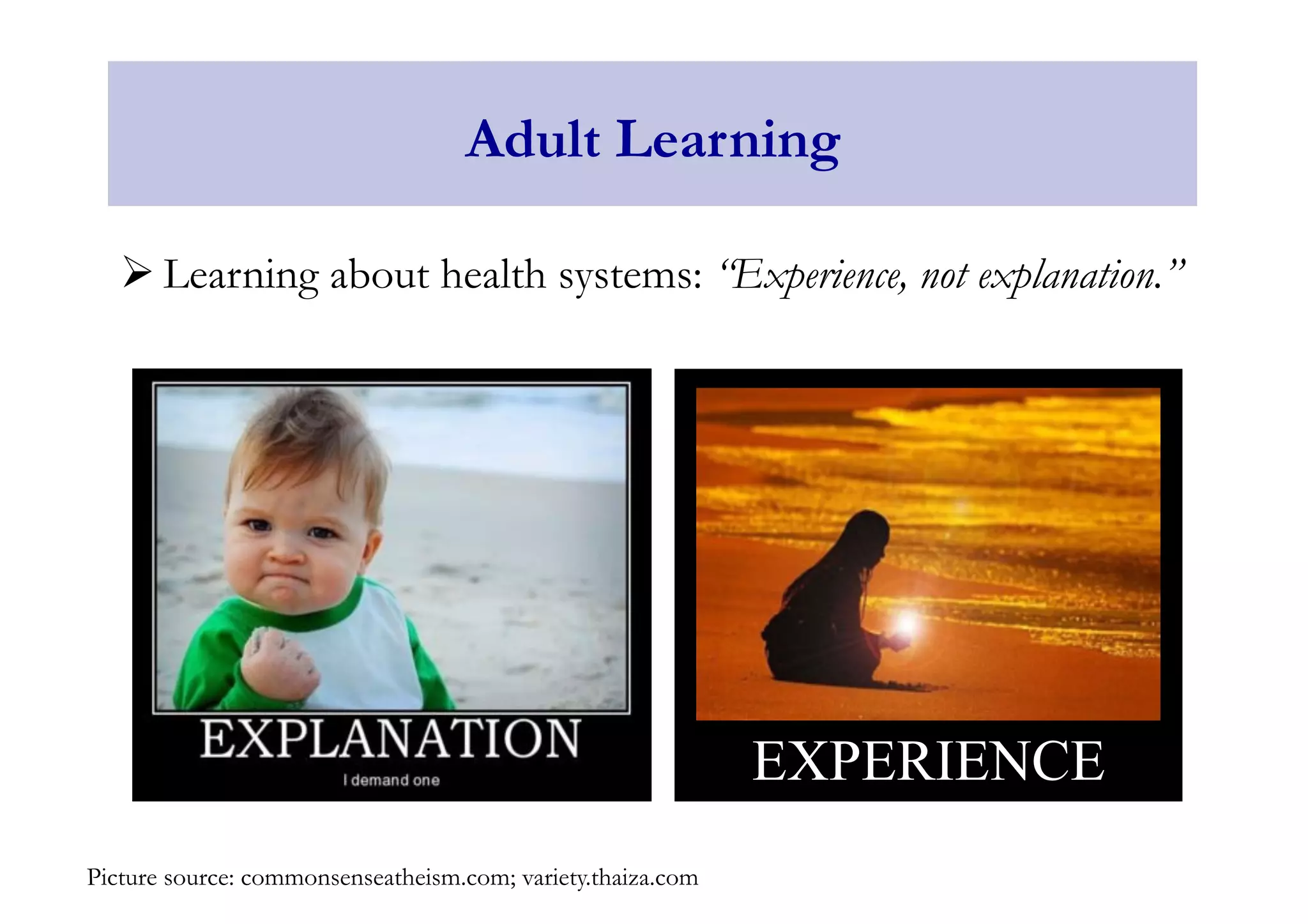
Adult Learning 
Ø Learning about health systems: “Experience, not explanation.” 
Picture source: commonsenseatheism.com; variety.thaiza.com 
EXPERIENCE
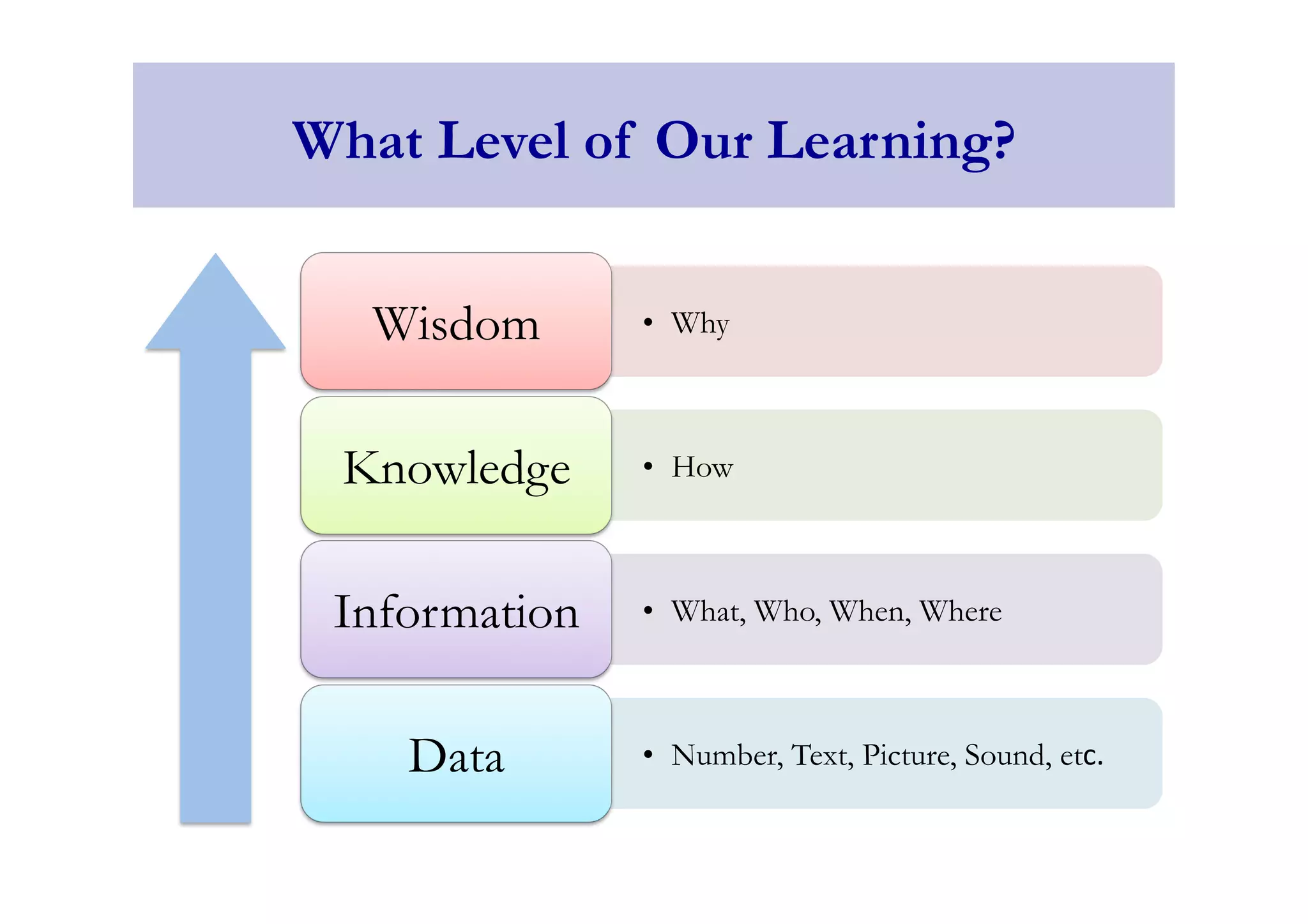
What Level of Our Learning? 
Wisdom • Why 
Knowledge • How 
Information • What, Who, When, Where 
Data • Number, Text, Picture, Sound, etc.
Q& A 
Discussions 
Pix source: online.wsj.com

Introduction to Health Systems & Health Services Systems

  • 1.
    Introduction to HealthSystems & Health Services Systems Borwornsom Leerapan, MD PhD MGMG 548: Health Service Systems and Health Systems CMMU, Mahidol University May 18, 2014 Pix source: ra.mahidol.ac.th
  • 2.
    Course Description MGMG548 • Major issues in the organization of a health services system • The role of values in the development of health care policy • Methods for assessing the health status of populations • Analysis of need for, access to and use of services; current supply and distribution of health resources • Analysis of health care costs and expenditures • Sociopolitical, economic, and moral/ethical issues confronting the public health and medical care system • Trends in service provision, human resources, financing and health services organization, and implications for the public’s health. Source Prattana Punnakitikashem. PhD; Pix source: online.wsj.com
  • 4.
    Format F/U Pixsource: online.wsj.com Mini-lecture Discussion Q&A Wrap up To-do list
  • 5.
  • 6.
    Course Calendar WeekDate Topic 1 May 18, 2014 Overview of health & health services Systems 2 May 25, 2014 Systems thinking & the building blocks of health systems 3 June 1, 2014 Healthcare quality 4 June 8, 2014 Healthcare efficiency 5 June 15, 2014 Health equity 6 June 22, 2014 Social determinants of health 7 June 29, 2014 Mid-term exam
  • 7.
    Course Calendar WeekDate Topic 8 July 6, 2014 Ambulatory care and primary healthcare 9 July 13, 2014 Chronic care 10 July 20, 2014 Long-term care 11 July 27, 2014 Emergency care 12 August 3, 2014 Palliative care 13 August 10, 2014 Care for certain diseases and populations: travel clinic 14 August 17, 2014 Student presentations of final papers
  • 8.
    Learning Materials Requiredreading: • Selected readings available via the course website. • In addition, there is a recommended textbook for this course. – The Institute of Medicine (2001). Crossing the quality chasm: a new health system for the 21st century. Committee on Quality Health Care in America, Institute of Medicine. Washington, D.C.: National Academy Press. Source: nap.edu
  • 9.
    Learning Materials Optionaltextbook/resource: • Garwande, A. (2002). Complications: a surgeon's notes on an imperfect science. New York, NY: Picador Press. • Roberts, M. J., Hsiao, W., Berman, P., & Reich, M. R. (2004). Getting health reform right: a guide to improving performance and equity. New York, USA: Oxford University Press. • Aday, L. A., Begley, C. E., Lairson, D. R., & Balkrishnan, R. (2013). Evaluating the healthcare system: effectiveness, efficiency, and equity. Chicago, IL: Health Administration Press. • Wibulpolprasert, S., Sirilak, S., Ekachampaka, P., & Wattanamano, N. (2011). Thailand health profile 2008-2010. Bangkok; The War Veterans Organization of Thailand Press.
  • 10.
    Up and Downthe Ladder of Abstraction Abstract: • Concepts • Theories • Principles • Strategies Concrete: • Case studies • Data, Evidence • Analysis, Synthesis • Presentations
  • 11.
    Outline for Today 1. Pre-test 2. Concepts of health and health determinants 3. Health systems vs. Health services systems 4. Desirable characteristics of health services systems 5. Case study and discussion – Healthcare managers vs. policy/systems analysts. Pix source: online.wsj.com
  • 12.
    Pretest (in-class exam,no grade) Pix source: online.wsj.com
  • 13.
    Considering the providedVDO presentation, please give your best answers to these two following questions: 1. What “health systems issues” are dominated in the provided VDO presentation? (Please describe.) 2. As a (future) administrators in your healthcare organizations, what could you do to address such issues? (Elaborate more on what, why, and how.) (30 min) Pre-test Exam
  • 14.
    Concepts of Health & Health Determinants Pix source: online.wsj.com
  • 15.
    “Heath” WHO definitionof Health: “Health is a state of complete physical, mental and social well-being and not merely the absence of disease or infirmity.” Source: reamble to the Constitution of the World Health Organization as adopted by the International Health Conference, New York, 19-22 June, 1946; signed on 22 July 1946 by the representatives of 61 States (Official Records of the World Health Organization, no. 2, p. 100) and entered into force on 7 April 1948.
  • 16.
    “Heath” Thailand’s Definitionof Health: Source: Statute on National Health System B.E. 2552 (2009)
  • 17.
    Health & HealthDeterminants Figure source: Thailand Health Profile 2012
  • 18.
    Health Systems &Health Services Systems Pix source: online.wsj.com
  • 19.
    “System” “CIPO” Model Source: Scheerens and Bosker 1997; Pix source: system humanrevod.wordpress.com
  • 20.
    “Health System” Source:who’s World Health Report (2000)
  • 21.
    “Health System” •“The Six Building Blocks” and their interconnections Pix source: WHO’s framework for action. (2007)
  • 22.
    “Health System” Pixsource: WHO’s framework for action. (2007)
  • 23.
    Social Determinants ofHealth • Health is not merely the absence of disease or infirmity. • Health promotion and disease prevention • Health promotion strategies have to go beyond health services sector. Pix source: greenpeace.org; twirlit.com; who.int/bulletin; cha-amcity.go.th
  • 25.
    Stakeholders in ThaiHealth System Pix source: www.nationalhealth.or.th
  • 26.
    Desirable Characteristics of Health Services Systems Pix source: online.wsj.com
  • 27.
    Goals of HealthServices System Source: Modified from WHO (2000) and Marc J Roberts et al. (2003) Health
  • 28.
    Desirable Health ServicesSystem • A great health services system should be: 1. Equitable 2. Efficient 3. Safe 4. Timely 5. Effective 6. Patient-centered Source: Adapted from IOM (2001) Quality “STEEEP”
  • 29.
    1. Equitable HealthServices • Equity: – Equality of opportunity to access to healthcare services, regardless of race, gender, age, religion, geographic location, socioeconomic status – “Equal services for equal needs, and unequal services for unequal needs” Pix source: www.stephenharrington-online.com
  • 30.
    What is YourTheory of Justice? • How would you fairly cut this cake into two pieces for each of the twins? Pix source: hp-lexicon.org/wizards; helenicproducts.com
  • 31.
    Theory of Justice • John Rawls: “Justice as Fairness” – Fair decisions should be made from “the original position” where no one knows what burdens or benefits he or she might receive once “the veil of ignorance” is lifted. Source: John Rawls. The Theory of Justice (1971, 2001): Pix source: irwinbartlet.wordpress.com
  • 32.
    Equity vs. Equality • Equity means equality of opportunity (“justice as fairness”). • Equality is not always justice. Pix source: twicsy.com/i/TwC76c Equality Equity
  • 33.
    Equitable Health Services • It is very difficult to measure “health equity”. • Equitable health services could be used as its proxy measures, particularly measures of the “accessibility to health services”: – Physical accessibility – Psychological accessibility – Financial accessibility – Information accessibility Source: WHO/Europe (2007)
  • 34.
    2. Efficient HealthServices • Efficiency: – Efficient health services means a system that utilize health resources (drugs, human resources, budgets) in a cost-effective fashion, with utility maximization and waste reduction. Source: Modified from IOM (2001)
  • 35.
    Efficiency of ThaiHealthcare? “31.2% of diabetes patients and 50.3% of hypertension patients are not diagnosed. Only 28.5% and 20.9% of cases have been diagnosed, treated and brought under control.” Figure source: Kanchanachitra .et al. (2010)
  • 36.
    Technical vs. AllocativeEfficiency • Two approaches to improve efficiency: 1. Technical efficiency 2. Allocative efficiency
  • 37.
    3. Quality HealthServices • Quality: – “Quality is in the eye of the beholder.” – Nonetheless, all health services should be “safe, timely, effective, patient-centered”. Source: Adapted from IOM (2001)
  • 38.
    Quality as Safety • Safety: – By design, a system that prevents medical error and avoid iatrogenic injuries. Source: Modified from IOM (2001); Pix source: thieme-connect.de/ejournals; tumblr.com
  • 39.
    Quality as Safety (Disclaimer: Obviously, this is partly my self-advertisement!) Source: amazon.com, matichonbook.com
  • 40.
    Quality as Timeliness • Timeliness: – Reducing waiting time of both health providers and consumers, which sometimes lead to injuries and harms. Source: Modified from IOM (2001); Pix source: toonpool.com/cartoons.jpg
  • 41.
    Quality as Effectiveness • Effectiveness: – Delivery of evidence-based health services to all people who likely will benefit from such services (“avoid underuse”) and provide no services that have no evidence of benefits or that could be harmful (“avoid overuse and misuse”). Source: Modified from IOM (2001); Pix source: www.rch.org.au/clinicalguide
  • 42.
    Quality as Patient-Centeredness • Patient-centeredness: – A system that respects the patient’s rights. – Be responsive to personal beliefs ่ and value of individuals. – Open an opportunity for patients (and families) and clinicians to make mutual decisions on their health interventions – Not a disease-centered system – Not a provider-centered system Source: Modified from IOM (2001); Pix source: blog.skylight.com/patient-centric
  • 43.
    Adult Learning ØLearning about health systems: “Experience, not explanation.” Picture source: commonsenseatheism.com; variety.thaiza.com EXPERIENCE
  • 44.
    What Level ofOur Learning? Wisdom • Why Knowledge • How Information • What, Who, When, Where Data • Number, Text, Picture, Sound, etc.
  • 45.
    Q& A Discussions Pix source: online.wsj.com